The Best Collagen Peptides Powders
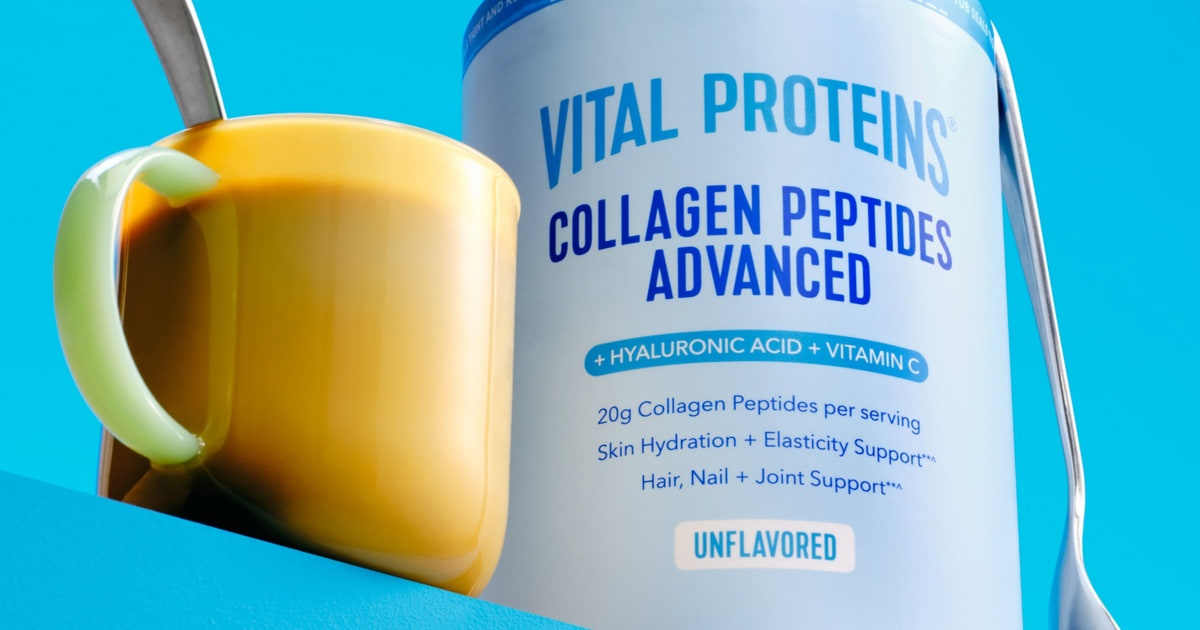
Collagen powder is one of the few supplements you'll actually notice in your routine, because you have to stir it into something every single morning. That makes the boring stuff matter most: whether it dissolves in hot coffee without leaving grit on your tongue, whether it tastes like anything, and whether the number on the label is a dose the research actually supports. Your body's own collagen production starts slipping in your mid-twenties and keeps sliding from there. That's the reason most people start buying it.
But no collagen powder is fast, and none of them let you aim. You swallow amino acids, and your body decides where they go. The research behind these products runs eight weeks at a minimum, and the joint studies run far longer, so a two-week trial tells you nothing at all. A scoop also can't undo what sun, smoking and four hours of sleep are doing on the other side of the ledger. Treat collagen as a small, slow input rather than a fix.
So the decision comes down to things you can actually check: how many grams you get, whether an independent lab has looked inside the tub, how the powder behaves in your mug, and how long a container lasts before you reorder. We compared spec sheets, published reviews and owner feedback across the powders people buy most. We think that the Vital Proteins Collagen Peptides Powder is the best collagen peptides powder for most people, and that the NeoCell Super Collagen Peptides Powder is the one to buy if your goal is skin and you want a canister that stretches.
Everything we recommend
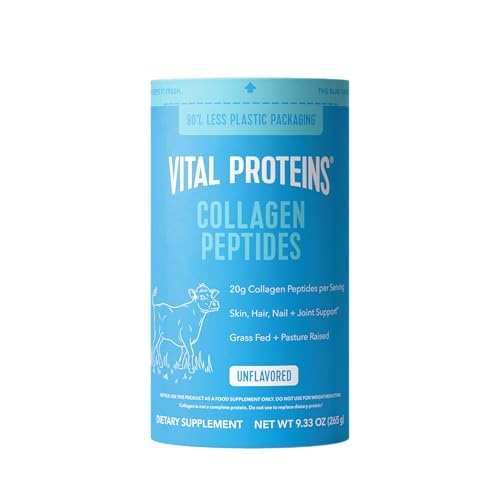
A big certified dose that mixes clean, with fewer servings per tub

Skin-focused and lasts longer, with a lighter dose per serving

Costs less per gram, though the dose per scoop is smaller

Extra skin ingredients and clinical pedigree, at a premium
At a glance
| Product | Collagen/Serving | Servings | Price | |
|---|---|---|---|---|
| Vital Proteins Collagen Peptides Powder - SupportsTop pick | — | 13 | $18.65 |
| Sports Research Collagen Peptides - Hydrolyzed TypeBudget pick | 11g | — | $32.95 |
 | Ancient Nutrition Collagen Peptides PowderAlso in lineup | — | 40 | $39.40 |
| NeoCell Super Collagen Peptides PowderRunner-up | 10g | 40 | $26.99 |
| THORNE - Collagen Plus - Collagen PeptidesUpgrade pick | 15g | 30 | $67 |
How we picked
Dose per serving. We read every supplement panel and compared grams of collagen per serving against the amounts used in published trials, which cluster between 2.5 and 15 grams a day. Anything that needed three scoops to reach a research-backed dose lost ground.
Third-party testing. We looked at which certifications each brand carries and what those certifications actually cover, since label-accuracy checks and banned-substance screening are very different things. Products with no outside verification at all couldn't be picks.
Mixing behavior. We weighed manufacturer claims about cold solubility against what owners repeatedly report, because clumping and a filmy residue are the complaints that make people abandon a tub. Powders that only dissolve in hot liquid were marked down.
Source and label clarity. We favored grass-fed, pasture-raised bovine and wild-caught marine sourcing, and we read for proprietary blends that hide how much of each collagen type is in the scoop. A transparent panel beat a long marketing bullet list every time.
Cost per gram. We compared grams of collagen per container rather than price per tub, since serving sizes range from one scoop to two. A powder you'll take daily for a year has to survive that math.
Top pick
A big certified dose that mixes clean, with fewer servings per tub
Vital Proteins Collagen Peptides Powder - Supports
Vital Proteins gives you 18 grams of hydrolyzed bovine collagen in two scoops, and it disappears into hot coffee or a cold smoothie without grit or aftertaste. It's the safest all-purpose choice if you want a high dose with independent certification behind the label.
$18.65fromAmazonThe dose is the whole point, and this one clears the bar without trying. Two scoops give you 18 grams of hydrolyzed collagen, well past the 2.5-gram floor used in skin research and comfortably inside the 10-to-15-gram range where trials tend to show measurable changes in hydration and elasticity. You won't have to double up to reach a meaningful amount. One serving in your morning cup does it.
It actually dissolves, which sounds trivial until you've drunk a gritty coffee. The powder is processed to go into cold liquid as well as hot, and owners consistently report it vanishing in a stirred mug within seconds, with no film left on the sides. It works the same way in cold water, orange juice or a blended smoothie. The unflavored version really is flavorless, so it won't fight your coffee.
NSF certification is the part you can't taste or see. An independent lab checks the product for heavy metals, contaminants and label accuracy, which most collagen brands never bother to pursue. Supplements aren't approved before they hit the shelf, so third-party testing is close to the only outside check you get. If you're going to take something daily for a year, that's worth a lot.
The sourcing and the diet labels are stated plainly. The collagen comes from grass-fed, pasture-raised bovine hides, and the powder is Whole30 Approved and paleo friendly, with no dairy, no gluten and no sugar per serving. There's no proprietary blend hiding a token scoop of something expensive. What you see on the panel is what's in the tub.
Flaws but not dealbreakers
You're only getting Type I and III collagen. Those are the types tied to skin, hair, nails and bone in the research, and they're the right ones for most buyers. But Type II, the collagen that makes up articular cartilage, isn't in here at all. If your knees are the reason you're shopping, this isn't the targeted choice.
The tub empties quickly, and there are no cofactors. A serving is two scoops, so the standard container runs about 13 servings and you'll reorder more often than with a 40-serving canister. There's also no vitamin C in the formula, and vitamin C is required for your body to build collagen. You'll want to take it alongside something that has some.
Runner-up
Skin-focused and lasts longer, with a lighter dose per serving
NeoCell Super Collagen Peptides Powder
NeoCell puts 10 grams of hydrolyzed Type I and III collagen into a two-scoop serving and 40 servings into a canister. It's the one to get if your goal is skin — hydration, elasticity, fine lines — and you'd rather not reorder every other week.
$26.99fromAmazonThis is a skin formula and it doesn't pretend to be anything else. Type I and III bovine collagen are the forms that show up in most of the published dermatology research on hydration, elasticity and skin density, largely because that's what the trials used. NeoCell's panel is built around exactly those two. If you're taking collagen for how your skin looks and feels, you're not paying for anything off-target.
A canister goes a long way. Forty servings from a 14-ounce tub means most people get well over a month out of one, which matters when the research asks you to stay consistent for eight weeks or more. Running out is the most common reason people quit a supplement. The bigger count quietly solves that.
The brand has been at this longer than nearly anyone selling collagen today. NeoCell was commercializing hydrolyzed peptides as a skin supplement long before collagen became a wellness-aisle staple, and the formula hasn't chased trends since. It's IGEN non-GMO tested, grass-fed, keto-friendly and gluten-free, with no soy, lactose, corn or starch. For a daily powder, boring consistency is a feature.
Flaws but not dealbreakers
The dose is modest for the scoop count. Two scoops get you 10 grams, where our top pick's two scoops get you 18. That's enough for the skin research, but if you want a bigger daily amount you'll be measuring out extra and burning through the tub faster than the serving count suggests.
Contents certification isn't the same as full certification. NSF Contents Certification confirms that what's on the label is really in the bottle. It doesn't include the broader contaminant screening or banned-substance testing of the higher NSF tiers. For most people that distinction is academic, but if you're drug-tested for sport, look at the budget or upgrade picks instead.
Budget pick
Costs less per gram, though the dose per scoop is smaller
Sports Research Collagen Peptides - Hydrolyzed Type
Each scoop is 11 grams of low-molecular-weight Type I and III collagen, and a one-pound tub lasts. If you want a clean, third-party-tested powder without paying for the name on the front, this is the one to buy.
$32.95fromAmazonCost per gram is where this one wins, and that's the metric that matters. A one-pound tub at 11 grams a scoop stretches much further than the small containers premium brands sell, so the real question — what does a year of daily collagen cost you — lands in its favor. Nothing else here comes close on that math. You give up nothing important to get it.
Third-party testing is the reason competitive athletes reach for this brand. Batches are screened against the banned-substance lists that govern professional and Olympic sport, which is a far stricter bar than most collagen powders even attempt. For everyone else it just means a serious outside check on purity. The tub is also Keto Certified, Certified Paleo Friendly and non-GMO.
It mixes without a fight. The peptides are low molecular weight and the powder is unflavored, so it goes into coffee, water or a smoothie with a stir. Owners report no clumping and no taste bleeding into whatever they're drinking. If you take it in plain water on the way out the door, that matters more than any spec on the panel.
The ingredient list is short, which is exactly what you want here. Each scoop is 11 grams of collagen delivering 10 grams of protein and a full spread of 18 amino acids, including the glycine, proline and hydroxyproline that make collagen collagen. There are no artificial flavors, sweeteners, dairy, soy or gluten. Nothing in the tub is there to pad the label.
Flaws but not dealbreakers
One scoop isn't a big dose. At 11 grams you're near the bottom of the range used in the joint research, so if you want something closer to our top pick's 18 grams you'll be doubling scoops and the cost advantage narrows. It's still ahead, just not by as much as the sticker suggests.
There's no Type II collagen and no vitamin C. This is a Type I and III powder with nothing added, so cartilage-specific support isn't part of the pitch and you'll want a vitamin C source alongside it. That's fine for skin, hair and nails. It's a gap if joints are your main concern.
Upgrade pick
Extra skin ingredients and clinical pedigree, at a premium
THORNE - Collagen Plus - Collagen Peptides
Thorne pairs 15 grams of hydrolyzed Type I and III collagen with nicotinamide riboside, white peach ceramides and currant extracts aimed at skin texture and moisture. It's the most expensive powder here, and the most complicated formula in the guide.
$67fromAmazonYou're buying more than peptides, and that's the entire argument for it. Alongside the collagen, Thorne adds white peach ceramides plus red and black currant extracts, ingredients the company points to for hydration, elasticity and skin strength. If you've been stacking a separate skin supplement on top of a plain collagen scoop, this collapses two purchases into one. That's the case for the higher price.
The collagen dose itself is serious, not a garnish. You get 15 grams of hormone-free Type I and III collagen per serving, broken into short peptide chains that are easier to digest, across 30 servings per tub. Some multi-ingredient formulas skimp on the base to fund the extras. This one doesn't, which is why it stands up as a daily driver rather than an add-on.
Thorne's testing reputation is the quiet reason clinicians recommend it. Every product is third-party tested and certified to confirm the contents match the label and that contaminant levels stay within safe limits. The brand supplies more than a hundred professional sports teams and is a partner of U.S. National Teams, which is not a claim a company makes casually. If certification rigor is your deciding factor, this is the top of the pile.
Flaws but not dealbreakers
Nicotinamide riboside may be an ingredient you never asked for. It's a NAD+ precursor studied for cellular energy, and it's a meaningful part of what you're paying for. If that's not on your list, you're funding an active compound you don't need. Nothing in the formula lets you skip it.
This isn't a plain, single-ingredient powder. If you want collagen and only collagen — because you're already taking other supplements, or you just want a clean panel — the added actives are a complication rather than a bonus. Go with the budget pick instead and keep control over what else you're swallowing.
Who this is for
This guide is for anyone who wants a plain daily collagen powder to stir into a drink — most often for skin, hair and nails, sometimes for joints and connective tissue. If you're in your thirties or older and you've noticed skin that feels drier or less springy, you're the core reader. If you're an athlete or you're drug-tested for sport, skip straight to the certification section, because that narrows your options fast. And if you want joint cartilage support specifically, know that the bovine powders here supply Type I and III, not the Type II found in chicken cartilage.
This isn't for you if you're expecting a quick change. Give any of these eight weeks of daily use before you judge, and longer if joints are the goal. We cover unflavored hydrolyzed powders you mix yourself, so collagen capsules, ready-to-drink shots, flavored creamers and topical creams are all outside the scope. Vegans are out of luck here too: every product in this guide is animal-sourced, because collagen is an animal protein and plant boosters aren't the same thing.
How we picked
Dose: we compared grams of collagen per serving with the 2.5-to-15-gram range used in published research, and marked down anything that needed a triple scoop to get there. Testing: we looked at which third-party certifications each brand carries and what they cover, since verifying a label is not the same as screening for contaminants or banned substances. Mixing: we weighed cold-solubility claims against the clumping and residue complaints owners actually report, because a powder that won't dissolve is a powder you'll quit. Source and label: we favored grass-fed, pasture-raised and wild-caught sourcing with a transparent panel, and we were skeptical of proprietary blends that never say how much of each collagen type you're getting. Cost per gram: we compared grams per container rather than price per tub, since serving sizes here run from one scoop to two.
The competition
The collagen aisle is enormous and new brands appear constantly, so treat this as what our research surfaced rather than a survey of everything for sale. We focused on powders with a clear supplement panel, a real dose and some form of outside verification, which rules out a large share of the market on its own. Here's the one that came close without earning a spot.
The Ancient Nutrition Collagen Peptides Powder ($39.40) — Ancient Nutrition Multi Collagen Protein is the broadest formula we looked at: 10 collagen types drawn from beef, chicken, fish and fermented eggshell membrane, plus vitamin C at twice the daily value and soil-based probiotics, across 40 servings. It's made in a GMP-certified facility and tested by outside labs. It lost to our picks on two counts. Spreading collagen across that many types means each one lands at a smaller dose than a focused single-source powder delivers, and the brand doesn't carry the batch-level banned-substance certification that Thorne and Sports Research do. The chicken and fish sources also rule it out for some diets. Still, it's the only powder here with Type II collagen for cartilage and the only one that includes marine collagen, so if you want joint coverage, gut support and built-in vitamin C from a single scoop, it's a reasonable choice.
Mixing, timing and storage
Hot coffee won't hurt your collagen. Hydrolyzed peptides are already broken down during manufacturing, so heat doesn't undo anything, and every powder here is labeled for hot and cold liquids. Stir it into the hot drink first, then add milk — it goes in faster that way. For cold smoothies or water, a shaker bottle beats a spoon. Keep the scoop dry and out of the tub between uses, because a damp scoop is how a powder turns into a brick. Seal the lid tight and store it somewhere cool. If joints are your goal, take your dose 30 to 60 minutes before you exercise, with a vitamin C source, since research suggests that timing helps connective tissue most. And give it eight weeks before you decide it isn't working.
Questions we get
How long does collagen take to work?
Plan on eight weeks of daily use before you can fairly judge anything, and longer for joints — the joint studies commonly run six months. Skin research tends to show hydration and elasticity changes somewhere in the eight-to-24-week window. Consistency matters far more than which day you start. If you skip half the week, you're not really running the experiment.
Is marine collagen better than bovine for skin?
Marine peptides are smaller on average, roughly a third the molecular weight of bovine ones, which may mean slightly faster absorption. But the strongest skin evidence comes from bovine Type I and III, mostly because that's what the majority of trials used. Marine collagen's real advantage is dietary: it's the option if you don't eat red meat. Ancient Nutrition's blend is the only one here that includes wild-caught fish collagen.
How much should I take for joint pain?
The most-cited joint research uses 10 grams of hydrolyzed collagen peptides a day. A long study in athletes with activity-related joint pain used that amount and found reduced pain both at rest and during activity. Pair it with at least 48 milligrams of vitamin C and take it 30 to 60 minutes before you exercise, which appears to boost collagen synthesis in connective tissue.
Do I need Type II collagen?
Only if cartilage is your specific concern. Type II is the dominant collagen in articular cartilage and it's the type studied for joint pain and osteoarthritis, and it comes from chicken sources rather than bovine hide. For skin, hair, nails and bone, Type I and III are what the research supports, and that's what four of the five powders here provide. Ancient Nutrition is the option that includes Type II.
What should I look for on the label?
Grams of collagen per serving, the collagen types listed individually, and a third-party certification mark. Be wary of anything that says collagen complex or multi-collagen blend without disclosing how much of each type is inside — that often means a token amount of the expensive type propping up cheap bovine filler. A certified product can't legally hide undisclosed ingredients, which is the strongest practical argument for buying one.
Which powder is best for skin after 50?
NeoCell is the straightforward answer: a Type I and III formula aimed squarely at skin, verified for label accuracy, with 40 servings per canister. If you want skin plus joint and connective tissue support in one scoop, Thorne's formula adds ceramides and currant extracts to a 15-gram collagen dose. Vital Proteins remains the best all-around choice if you'd rather have the biggest certified dose and nothing extra.
Why you should trust us
For this guide:
- We read the supplement panels, ingredient lists and manufacturer specifications for every powder in this guide, line by line.
- We compared what each brand's third-party certification actually covers, since label verification, contaminant screening and banned-substance testing are separate standards with very different scopes.
- We worked through owner feedback looking for recurring themes — clumping, aftertaste, scoop size and how fast a container empties — and let those patterns shape the flaws we call out.
- We read owner reviews on every listing, weighted toward the critical ones, because that is where the recurring failures show up.
- We have a systematic way of automatically fetching the latest prices, so the numbers on this page stay current.
- This is a research-focused guide, so the team may not own every product listed — though we often do own the top winners, which gives us extra context for the recommendations.
- We don't accept free products, and the retailer commission never changes which product we recommend.
Sources
Collagen — Health Effects and Research Summary, Examine.com
Collagen Supplements Review — Product Testing Results, ConsumerLab
Collagen Supplements Review and Rankings, Labdoor
Oral Collagen Supplementation: A Systematic Review of Dermatological Applications, PubMed / Journal of Drugs in Dermatology
Beneficial Effects of Food Supplements Based on Hydrolyzed Collagen for Skin Care, PubMed
24-Week Study on the Use of Collagen Hydrolysate as a Dietary Supplement in Athletes with Activity-Related Joint Pain, PubMed / Current Medical Research and Opinion
Vitamin C–Enriched Gelatin Supplementation Before Intermittent Activity Augments Collagen Synthesis, PubMed / American Journal of Clinical Nutrition
The Best Collagen Supplements, According to a Dietitian, Healthline
Amazon product listings and owner reviews for all 5 products
Manufacturer specification pages for each product
Some passages in this guide may be paraphrased with AI help. Prices are refreshed automatically.
More like this.
Continue exploring health reviews and recommendations.

The Best Protein Powders for Muscle Building
Protein powder is a convenience food, not a magic one. If you're lifting three or four times a week, you need somewhere between 1.6 and 2.2 grams of…

The Best Protein Powders
Most people don't buy protein powder because they love shakes. You buy it because hitting a daily protein target with chicken and eggs alone takes more…

The Best Vegan Protein Powders
Plant protein is something you drink almost every day, so the small stuff matters more than the marketing does. Does it dissolve in a shaker bottle, or…

The Best Mini Trampolines and Rebounders
A rebounder is one of the few pieces of home cardio gear that people actually keep using. It takes up about as much floor space as an armchair, it doesn't…

The Best Continuous Glucose Monitors and Sensor Covers
A continuous glucose monitor is a small sensor you wear on the back of your arm. It reads your glucose every few minutes and sends the number to your…

The Best Electric Toothbrushes for Sensitive Teeth
If your gums bleed when you brush, or a sip of cold water makes you wince, the problem often isn't the toothbrush - it's how hard you're pushing it.…