The Best Camera Drones
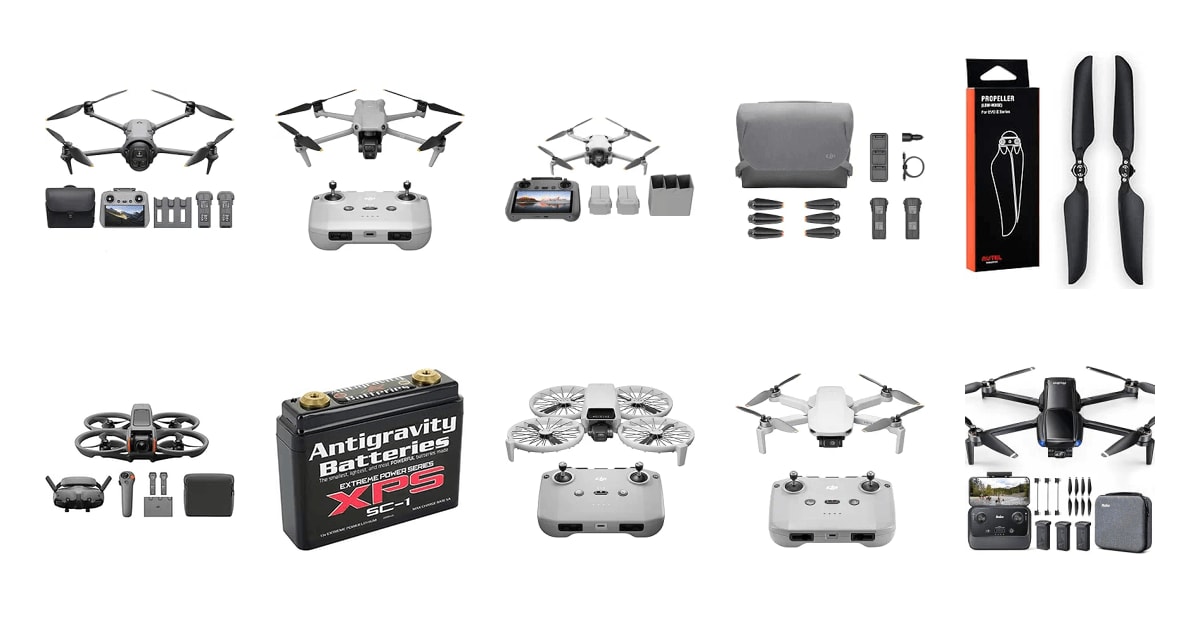
A camera drone earns its keep in the ten minutes after you park the car. You unfold it, it finds satellites, and you get a shot of the coastline that no phone can match. So the specs that sell drones aren't really the ones that matter. What matters is how fast it's ready, whether it holds still in a breeze, how confident you feel flying it near trees, and whether you can legally launch where you're standing. A drone you leave at home takes no pictures.
Here's what no drone in this category does well: none of them makes the rules simple. Weight class, registration, Remote ID, local restrictions and app-side geofencing all shape what you can actually do, and owners regularly find out the hard way that a spot they assumed was fine is locked out in software. Battery claims deserve the same suspicion. Rated flight times assume calm air and a gentle hover, so plan on landing well before the app starts nagging you.
Most people should start with the lightest drone that still has real safety features. Under 249 grams you skip FAA registration and Remote ID for recreational flying, and you're far more likely to actually bring the thing along. Step up only once you know you need a bigger sensor, more reach, or the mass to stay steady in wind. We think that the DJI Mini 4 Pro is the best camera drone for most people, and that the DJI Air 3 is the one to buy if you fly in gusty weather or want two focal lengths.
Everything we recommend

Pro-grade footage in a drone light enough to skip registration

Bigger, steadier, and two focal lengths instead of one
Stable 4K and little else, which is enough for most beginners

Three cameras and a gimbal that spins, if the work pays for it

A completely different kind of flying, and a different kind of shot
At a glance
| Product | Video Resolution | Flight Time | Price | |
|---|---|---|---|---|
| DJI Mavic 4 Pro Drone Fly MoreUpgrade pick | 6K/60fps HDR | 51 Min | $2,650On sale |
| DJI Air 3Runner-up | 4K/60fps HDR | 46 Min | $999 |
| DJI Mini 4 Pro Fly More ComboTop pick | 4K/60fps HDR | — | $1,249 |
 | DJI Mavic 3 Fly More KitAlso in lineup | — | 46 Min | $549 |
 | 2026 Autel Robotics EVO 2 Low NoiseAlso in lineup | — | — | $25.99 |
| DJI Avata 2 Fly More ComboAlso great | 4K/60fps | 23 Min | $1,019 |
 | Aig Antigravity AG-SC-1 Lithium Battery.Also in lineup | — | — | $145.88 |
 | DJI FlipAlso consider | 4K/60fps HDR | 31 Min | $439 |
| DJI Mini 4KBudget pick | 4K Ultra HD | 31 Min | $299 |
 | Ruko U11MINI 4KAlso in lineup | 8K Photo/4K Video | 96 Min | $239.97On sale |
How we picked
Weight and rules. The 249-gram line decides whether a recreational pilot registers with the FAA and broadcasts Remote ID. We checked the stated weight on every listing and treated staying under it as a genuine advantage, not a technicality.
Camera and sensor. Sensor size predicts low-light quality far better than megapixels do. We looked for at least a 1/1.3-inch sensor on anything we'd call a serious pick, and for a second focal length on the drones sold for video work.
Obstacle sensing. Forward-only sensing misses the branch you back into. We favored omnidirectional systems on the picks meant for tracking shots, and we say plainly which drones have no sensing at all.
Wind and endurance. Rated flight times assume calm air and a gentle hover. We weighed those numbers against mass and motor power, since a light drone fighting gusts burns a battery much faster than the spec suggests.
What owners hit. Published reviews rarely live with a drone for a year. We read owner feedback for the problems that repeat — app lockouts, glacial file transfers, batteries that stop holding charge — and let those shape the flaws.
Top pick
Pro-grade footage in a drone light enough to skip registration
DJI Mini 4 Pro Fly More Combo
This is the rare small drone that doesn't feel like a compromise. It weighs under 249 grams, sees obstacles in every direction, shoots vertical 4K for phones, and tracks a moving subject well enough that you can hike, ride or paddle while it films you.
$1,249fromAmazonThe weight is the whole point. Under 249 grams, a drone doesn't need FAA registration or Remote ID for recreational flying in the US, which removes the single biggest hassle for casual pilots. It also changes how you travel with it. You'll drop it in a daypack instead of planning your day around it, and that's the difference between a drone you use and one that lives in a closet.
What's surprising is how little DJI cut to get there. The camera uses a 1/1.3-inch 48MP sensor, shoots 4K HDR, and can stretch footage to 100 frames per second for clean slow motion. The gimbal rotates to true vertical, so your phone-shaped clips aren't cropped-down landscape shots. That last one sounds like a small thing until you post something.
Obstacle sensing is the other reason we'd hand this drone to a first-time pilot. It looks in every direction, not just forward, so a tracking shot through a stand of trees is much less likely to end in a repair bill. Published reviews and owner feedback point the same way here. People describe it as forgiving, which is not a word small drones usually earn.
Battery math forces one real decision. The standard pack is good for roughly 34 minutes in calm air. The larger Intelligent Flight Battery Plus pushes that closer to 45, but it also pushes the drone past 249 grams, and then you're living under the same rules as a much bigger machine. Most people should stay on the standard battery and carry a spare or two instead.
Flaws but not dealbreakers
Wind is the tax you pay for the weight. In gusts the Mini 4 Pro works harder to hold position, which eats into flight time and can put a little wobble into slow, deliberate moves. It's fine on a breezy afternoon in a park. It's less fun on an exposed ridge.
And it isn't a cheap way into flying. Among the sub-249-gram drones here it's the expensive one, and a lot of what you're paying for — omnidirectional sensing, the better sensor, the tracking modes — only pays off once you're flying somewhere complicated. If you mostly want a hovering camera over a beach, you can spend far less.
Runner-up
Bigger, steadier, and two focal lengths instead of one
DJI Air 3
Get the Air 3 if wind and reach matter more to you than pocketability. Two primary cameras, a wide and a medium telephoto, let you change the look of a shot without moving the drone, and the extra mass holds footage steady when a mini starts fighting the breeze.
$999fromAmazonTwo cameras sounds like a spec-sheet flourish. It isn't. A wide lens pushes everything into the distance and flattens it, while a medium telephoto compresses the background so your subject actually reads against it. Orbit a lighthouse with the tele and the horizon swings behind it. That parallax is what people mean when they say a clip looks cinematic rather than like a real estate flyover.
The extra weight is what buys you calm footage. At about a pound and a half, the Air 3 shrugs off the gusts that make a sub-250-gram drone jitter, and it holds a straight line through long moves. Omnidirectional obstacle sensing is standard, the O4 link is rated to 20 kilometers in clear conditions, and a full battery is good for up to 46 minutes.
Beginners do fine with it, which is not obvious from the size. Owner feedback repeatedly describes people getting stable, usable footage on their very first outing, because the automatic modes handle most of the flying. If you already know you're serious about video, starting here saves you an upgrade in six months.
It's portable the way a big mirrorless camera is portable. It folds, it fits a small backpack, but you'll feel it on your shoulder, and in the US it needs registration and Remote ID. Think of this as the drone you plan a shoot around, not the one you bring along just in case the light gets good.
Flaws but not dealbreakers
Geofencing is the complaint that comes up again and again. DJI restricts flight around a long list of areas in software, and owners — including licensed pilots — report being grounded in places they had every right to fly. Check your intended airspace in the app at home, not at the trailhead.
There's also the ladder problem. DJI iterates fast, and a newer Air model sits above this one with a larger main sensor and better low-light behavior. The Air 3 is still an excellent camera in the air, but you should go in knowing you're buying the previous rung.
Budget pick
Stable 4K and little else, which is enough for most beginners
DJI Mini 4K
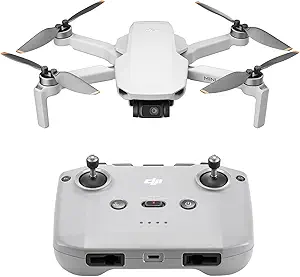
The Mini 4K strips a camera drone back to the parts that matter: a stabilized 4K camera, GPS return-to-home, and enough wind resistance to stay where you put it. You give up obstacle sensing and the clever tracking modes, so you fly it yourself and you pay attention.
$299fromAmazonNothing here is trying to impress you, and that's the appeal. A three-axis gimbal keeps the horizon level, the 4K footage is clean in decent light, and one-tap takeoff plus return-to-home handle the two scariest parts of flying. It stays under 249 grams, so recreational flyers skip registration. As a first drone, that's a complete package with nothing to grow out of immediately.
It holds up in more wind than you'd expect from something this small. DJI rates it for Level 5 gusts, around 38 km/h, and the brushless motors will still lift at altitude, which matters if you fly in the mountains. Owners moving up from toy quadcopters describe the difference in how it hovers as night and day.
The sensor is the honest limitation. At 1/2.3 inches it's meaningfully smaller than what's in the Mini 4 Pro or the Flip, so shadows go noisy and a sunset loses its gradients faster. In bright, even light you'd have trouble picking the footage out of a lineup. Push into dusk and the gap shows up immediately.
Flaws but not dealbreakers
There's no obstacle avoidance at all. Point it at a branch and it will fly into the branch. The tracking and automatic cinematic moves that make the pricier minis feel like they're flying themselves simply aren't here either. That's a fair trade at this level, but it means you are the safety system.
App setup trips people up. The DJI Fly app isn't on Google Play, so Android owners have to download it from DJI's site, and plenty of buyers grab the wrong app first and assume the drone is broken. It's a ten-minute annoyance rather than a defect, but it sours a lot of first flights.
Upgrade pickOn sale
Three cameras and a gimbal that spins, if the work pays for it
DJI Mavic 4 Pro Drone Fly More
This is a commercial tool that happens to be sold to consumers. A 100MP Hasselblad main camera, two telephotos and a gimbal that rotates a full 360 degrees give you shots the rest of this lineup can't frame, plus a 51-minute rating to go looking for them.
$2,650fromAmazonList priceStart with the gimbal, because it's the part that changes how you shoot. Most drone cameras tilt up a little and down a lot, and that's the entire range. This one rotates a full circle, so you can point straight up at a bridge deck, roll into a Dutch angle mid-move, or spin the frame while the aircraft flies level. Those used to be post-production tricks.
The camera system is the whole argument. A 4/3-inch Hasselblad sensor pulls 6K/60 HDR video and 100MP stills with Hasselblad's color profile, and two telephoto lenses sit alongside it for portraits and distant detail. For paid work — real estate, tourism, documentary — that extra latitude in the grade is what you're actually buying, and it survives a client asking for changes.
Flying it is a calm experience. Forward LiDAR extends obstacle sensing into near-total darkness, which takes the edge off dusk shoots over unfamiliar terrain, and the O4+ link carries a 10-bit HDR feed rated to 30 kilometers. The 51-minute figure assumes ideal air. Owner reports suggest something closer to 35 or 40 minutes once there's wind and you're actually flying.
It's also big. Owners stepping up from a Mavic 3 say the bulk is the first thing they notice, and at over two pounds it needs registration, Remote ID and a bag you've thought about in advance. This is not a drone you bring on a whim, and it isn't discreet in a crowd.
Flaws but not dealbreakers
The software is the weak link. Owners consistently gripe about DJI's closed workflow, and offloading a day of 6K footage over the drone's USB connection is slow enough that people schedule around it. There's no open interface to build a faster pipeline. Shoot to a fast card and pull the card out instead.
A few pilots have flagged sluggishness in the vertical shooting mode. Firmware may sort it out. Still, it's the most expensive drone here, and paying the most for a platform that's visibly still settling in stings a little.
Also great
A completely different kind of flying, and a different kind of shot
DJI Avata 2 Fly More Combo
The Avata 2 is an FPV drone with training wheels. You wear goggles, steer with hand motions, and dive through gaps at speed, and the built-in propeller guards mean clipping a wall usually isn't the end of the flight.
$1,019fromAmazonFPV footage doesn't look like drone footage, and that's the point. A 155-degree lens flying low and fast turns a mountain-bike run or a warehouse walkthrough into something with real momentum. Traditional drones glide. This one swoops. If your videos keep feeling static no matter how carefully you fly, this is the thing that fixes it.
DJI made it approachable, which FPV historically was not. The motion controller maps to the tilt of your hand instead of two sticks, one button triggers flips and rolls, and a pause button stops the drone dead the moment you get in over your head. The 1/1.3-inch sensor records 4K at 60 frames, so the footage cuts together with clips from a normal camera drone.
Indoors is where it earns a spot in a kit. The integrated guards let it brush a doorframe and keep flying, which makes one-take interior walkthroughs practical instead of terrifying. Owners who fly it alongside a Mini or an Air describe it as the second drone rather than the only one, and that's exactly the right way to think about it.
Flaws but not dealbreakers
Flight time is short. Figure roughly 23 minutes per battery when you're flying gently, and noticeably less when you're actually ripping around, so the three-battery combo is the minimum rather than an upsell. Fast charging softens the blow between sessions.
Return-to-home is the other soft spot. Several owners report it behaving unpredictably, which is unnerving in a drone you fly by feel and often can't see. Stay where you can watch your takeoff point, and don't rely on the drone to find its own way back.
Who this is for
Buy now if you want aerial photos and video and you're willing to spend ten minutes learning the rules where you live. Every drone here is a camera first: it hovers, it holds a level horizon, and it flies deliberate paths. If what you actually want is to race through a wooded trail at speed, or a knockabout toy your kid can bounce off the living room wall, this isn't your guide. A dedicated racing quad or a cheap indoor flyer will make you happier.
This guide covers folding consumer camera drones, plus one FPV drone whose camera is good enough to count. It leaves out enterprise platforms, agricultural sprayers, thermal rigs and the true toy category, along with the spare batteries, propellers and carry kits that turn up alongside drones in search results. Those accessories can be worth buying — they're just not a drone, and we've said so where they appear in this lineup.
How we picked
Weight: we treated the 249-gram threshold as a real feature, because it decides whether you register and broadcast Remote ID. Camera: sensor size counted for more than megapixels, and a second focal length earned points on anything sold for video. Sensing: omnidirectional obstacle detection is what makes automatic tracking shots survivable, so we noted exactly which drones go without it. Endurance: we read rated flight times as best-case numbers and weighed them against mass, since a light drone in wind drains fast. Owner reports: the complaints that repeat — geofencing lockouts, slow offloading, batteries that quit early — shaped the flaws more than any spec sheet did.
Other camera drones worth considering
If you want the simplest possible launch: The DJI Flip ($439) — The DJI Flip takes off from your palm. No controller, no sticks, just a hand or voice command, and full-coverage carbon-fiber propeller guards that make it safe to hand to a nervous friend. It uses the same 1/1.3-inch sensor as the Mini 4 Pro for 4K/60 HDR, stays under 249 grams, and flies about 31 minutes, so the footage is genuinely good rather than merely acceptable. What you give up is obstacle avoidance, and owners note it doesn't take crashes gracefully — the guards protect the props, not the airframe. Android buyers also need to pull the DJI Fly app from DJI's site rather than the Play Store, which has confused plenty of people on day one.
The competition
This is what our research surfaced, not a census of everything flying. Drone listings are a jumble of current models, leftover stock, accessory kits and no-name quadcopters, so we concentrated on the machines a real buyer is likely to be weighing against each other.
The Ruko U11MINI 4K ($239.97) — The Ruko U11MINI 4K undercuts the DJI minis and ships with three batteries, spare props and a case, which is a genuinely generous box. The spec list reads well too: under 249 grams, a three-axis gimbal with electronic stabilization, GPS with a locator beeper, triple return-to-home modes and a combined 96 minutes across the batteries. But the marketing does some heavy lifting. Those 8K photos are upscaled from a 48MP 1/2-inch sensor, and video tops out at 4K/30 rather than 60. The real gap is the flight stack: DJI's positioning, transmission and return-to-home are the quiet reason its drones come home, and that's usually where budget brands give ground. Worth considering if the bundle is what's drawing you in and you'll fly in open, calm places.
Flying, care and preflight
Two habits prevent most drone losses. Check your airspace in the app before you leave home rather than when you're standing in a field, because geofencing and local restrictions can ground you somewhere you assumed was fine, and unlocking a zone sometimes needs a data connection you won't have. Then treat the advertised flight time as a best case. Start heading back at 30 percent, not 10, since a headwind on the return leg eats reserve alarmingly fast. Beyond that, store batteries at partial charge instead of full, check propellers for nicks before every flight and replace them in pairs, and warm a cold pack in a pocket before takeoff. Cold cells sag under load and trigger early landings.
Questions we get
Do I have to register my drone?
In the US, recreational flyers don't need FAA registration or Remote ID for a drone under 249 grams, which is why so much of this lineup sits just under that line. Anything heavier does need both. Rules differ by country and change over time, so check the FAA site or your national authority before your first flight.
Is a second camera lens actually worth it?
For video, yes. A wide lens makes everything look distant and flat, while a medium telephoto compresses the background so your subject stands out and the scenery sweeps past more dramatically as you fly. If you're mostly shooting landscapes and family footage, one good wide lens is plenty.
How much flight time will I really get?
Take about 70 to 80 percent of the rated number and you'll be close. Manufacturers measure in still air at a steady hover, and real flying means wind, climbing, repositioning and a return trip. A 51-minute rating tends to land around 35 to 40 minutes in practice, and a 31-minute mini gets you a comfortable 20 to 25.
Should my first drone be an FPV drone?
Probably not your only one. FPV flying with goggles is thrilling and produces footage a normal drone can't touch, but it demands a different skill set and it doesn't do calm, sweeping landscape shots well. Most people are better served by a traditional camera drone first, then adding FPV once they know they want that look.
What's the real difference between the Mini 4K and the Mini 4 Pro?
Sensor and safety. The Mini 4 Pro has a larger 1/1.3-inch sensor, omnidirectional obstacle sensing, subject tracking and true vertical shooting; the Mini 4K has a smaller sensor and no obstacle detection at all. Both stay under 249 grams and both shoot stabilized 4K. If you'll fly in open spaces in good light, the cheaper one is genuinely enough.
Why you should trust us
For this guide:
- We read published reviews and detailed write-ups from drone-focused outlets alongside each manufacturer's own specifications for sensor size, rated flight time, transmission range and obstacle sensing.
- We compared owner feedback across the whole lineup to find the failure modes that repeat — geofencing lockouts, slow file offloading, batteries that stop holding charge — rather than one-off complaints.
- We checked every listing's stated weight against the 249-gram threshold, because that one number decides how much paperwork a buyer faces.
- We read owner reviews on every listing, weighted toward the critical ones, because that is where the recurring failures show up.
- We have a systematic way of automatically fetching the latest prices, so the numbers on this page stay current.
- This is a research-focused guide, so the team may not own every product listed — though we often do own the top winners, which gives us extra context for the recommendations.
- We don't accept free products, and the retailer commission never changes which product we recommend.
Sources
Best Drones 2026: Take your pick of the very best - Space
What drone should you buy in 2026? | DJI vs Specta - YouTube
DJI Air 3S review: An almost perfect dual-camera drone - Android Police
DJI Mini 4 Pro review: A mighty mini with minor missteps - Videomaker
DJI Mavic 4 Pro Review - Heliguy
DJI Mavic 4 Pro Review — 100 Megapixels Just a Big Number? - Pix Pro
DJI Mavic 4 Pro: My New Drone Photography Workhorse? - Jeroen Van Nieuwenhove
Mavic 4 Pro problems nobody's talking about : r/drones - Reddit
These are the best drones in 2026 - The only ones I carry for every flight! - YouTube
My Time with the DJI Air 3S - Review 2026 - Doccy darko
The DJI Air 3S Drone Is Almost Perfect! - DroneXL
DJI Air 3S - LONGTERM REVIEW After 6 Months Of Flying! - DroneXL
Top 15 Best Drones for 2026 — This List Will Blow Your Mind! - YouTube
DJI Air 3S vs. DJI Mini 4 Pro: how to choose the best drone for you
Is the DJI Mini 4 Pro Too Small for Professional Use? | Fstoppers
Mini 4 Pro Vs. Air 3 Vs. Mavic 3 Pro: Which DJI drone is right for you - DrDrone.ca
Ultimate Drone Buying Guide for Total Beginners 2026 - YouTube
Air 3s Vs mini 4 pro : r/dji - Reddit
Review - DJI Mavic 3 Pro — Samuel Scicluna Photography
Reviewing the powerhouse DJI Mavic 3 Pro (With Photos) - Explore With Alec
DJI Mavic 3 Pro Review | Tested & Rated - Tech Gear Lab
Getting Up Close with the DJI Mavic 3 Pro: An Honest Review - DSLRPros
DJI Mavic 3 Pro Review - PCMag
Autel EVO II Pro V3 Review | Tested & Rated - Tech Gear Lab
Review: The Autel EVO II is a solid drone and an alternative to DJI - DPReview
Autel Robotics EVO II Pro Review - PCMag
I Flew Antigravity's 8K 360-Degree Drone and It Felt Like Using a Wii Remote - CNET
BEST DRONE for Beginners 2026! - DJI Flip - YouTube
The Best Drone for Beginners 2026 A Complete Guide - YouTube
Ryze Tello drone review: precise moves and incredible stability - T3
DJI Tello Review | Tested & Rated - Tech Gear Lab
Why this Wins "BEST DRONE OF 2026." - YouTube
Amazon product listings and owner reviews for all 10 products
Manufacturer specification pages for each product
Some passages in this guide may be paraphrased with AI help. Prices are refreshed automatically.
More like this.
Continue exploring electronics reviews and recommendations.

The Best Camera Lens Attachments for iPhone
Your iPhone already has three cameras, so the question isn't whether you need more glass - it's whether an add-on lens gets you something the phone…

The Best Indoor Security Cameras
An indoor camera earns its keep in small moments. You're at work and the dog has gone quiet. A package gets dropped inside the door and you want to know…

The Best Dash Cams
Most days your dash cam does nothing at all. It sits on the glass, loops over yesterday's commute, and asks nothing of you. Then someone drifts into your…

The Best Outdoor Security Cameras Without a Subscription
An outdoor camera earns its keep on ordinary days, not dramatic ones. You check who rang the bell. You find out whether the package actually landed on the…

The Best Smart Home Security Cameras
A security camera earns its keep on ordinary days, not dramatic ones. You want to know the dog walker showed up, the package landed, the kid got home. So…

The Best Blink Security Cameras
Most home security cameras want a monthly fee before they'll do much of anything. Blink's pitch is different: buy the camera, skip the contract, and get…