The Best Gifts for Backyard Chicken Keepers
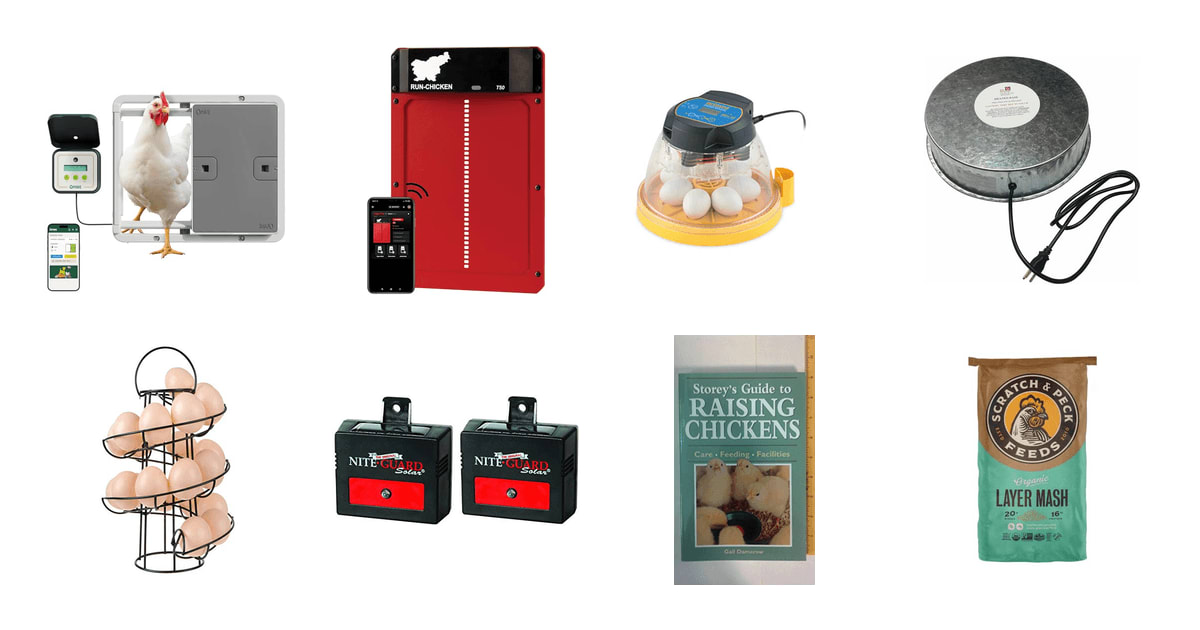
Keeping chickens is a hobby made of small daily chores. Someone has to walk out at dawn to open the coop and walk back out at dusk to shut it. Water needs checking, eggs need collecting, and a fox only has to get lucky once. The USDA estimates predators cause about 37% of backyard flock losses each year, so the stakes aren't abstract. That's good news for you, because the best gifts here aren't decorative. They hand your recipient back an hour of their day or a night of sleep.
The honest caveat: almost nothing in this category is a perfect fit out of the box. Automatic coop doors have to match an opening your recipient built themselves, and even the good ones occasionally fail in ice or after a hard freeze. Heated bases only work with the right kind of waterer. Feed sizes and breeds vary. If you're buying for someone whose setup you've never seen, lean toward the gifts that fit any flock — a book, a bag of good feed, a counter rack — rather than something that has to bolt onto a specific wall.
We've sorted these by the kind of keeper you're shopping for, from the person who just got their first four hens to the one who's been at it a decade and owns everything. Our favorite gift here is the Run-Chicken T50 automatic coop door, which solves the chore every keeper complains about most. And Storey's Guide to Raising Chickens is the safe choice when you're less sure of their setup or their taste.
Everything we recommend

Ends the dawn-and-dusk coop run without a big spend
For the keeper who's tired of sunrise alarms
$129.99 from Amazon
The one you can check on from anywhere, if you can pay for it
For the one who travels and worries about the flock
$229 from Amazon
The winter fix that works with the waterer they already own
For anyone who keeps chickens through a real winter
$49.99 from Amazon
The reference every new keeper ends up borrowing anyway
For the friend who just brought home their first four hens
$16.75 from Amazon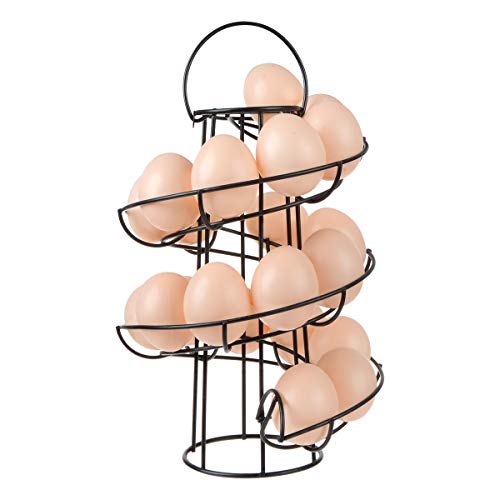
Small, cheap, and it fixes a real daily annoyance
For the keeper whose counter is covered in egg cartons
$15.65 from Amazon
For the keeper who reads every ingredient label
$64.99 from Amazon
For the friend who lost a hen to something in the night
$39.95 from Amazon
For the established keeper who's been talking about hatching
$249.99 from AmazonAt a glance
| Product | Price | |
|---|---|---|
| Omlet Smart Automatic Chicken Coop Door OpenerBest splurge | $229 |
| Run-Chicken Door T50Our favorite gift | $129.99 |
| Brinsea Mini II Advance Incubator with AutomaticMore good gifts | $249.99 |
| Farm Innovators HP-125 Heated Base for MetalSafest bet | $49.99On sale |
| Egg Skelter Deluxe Modern Spiraling Dispenser RackBest stocking stuffer | $15.65 |
| Nite Guard Solar NG-001 Predator Control LightAlso consider | $39.95 |
| Storey's Guide to Raising ChickensBest for beginners | $16.75On sale |
| Scratch and Peck FeedsAlso consider | $64.99 |
How we picked
Solves a daily chore. We prioritized gifts that remove a recurring task rather than adding an object to a shelf. Coop doors, heated water, and egg organization all came up repeatedly in owner feedback as the pain points keepers wish someone had fixed sooner.
Works in real weather. We read manufacturer specs for operating temperature ranges and weatherproof ratings, then checked those claims against what owners in cold and wet regions describe. Anything meant to live outdoors had to have a stated cold-weather floor.
Fits an unknown coop. Because a giver rarely knows the exact setup, we weighted compatibility heavily. Products that mount without tools, work with existing gear, or have no fit requirement at all scored better than ones needing a specific opening.
Unwraps well. A gift has to look like a gift. We favored items with real perceived value at the price and passed over anything that arrives looking like a spare part.
Credible sourcing. We leaned on university extension guidance and USDA figures for what actually matters in flock management, and on long-running community discussion for which products keepers recommend to each other.
Our favorite gift
Ends the dawn-and-dusk coop run without a big spend
Run-Chicken Door T50
For the keeper who's tired of sunrise alarms
The Run-Chicken T50 opens the coop at sunrise and closes it at dusk, either on a timer or by light sensor. It runs on a rechargeable battery with no wiring, mounts with six screws, and gives your recipient their mornings and evenings back.
$129.99fromAmazonThis is the gift chicken keepers ask for by name. On BackyardChickens.com, where more than 500,000 members trade advice, automatic coop doors draw more wish-I-had-this replies than any other product category. The reason is simple. Without one, someone has to be home at dawn and home at dusk, every single day, forever. No weekend trips without a neighbor on call. The T50 removes that constraint for less than the premium doors cost.
Setup won't eat their afternoon. The aluminum housing mounts with six screws and no wiring, and it works with either timer mode or light-sensor mode through the app. Light-sensor mode drifts with the seasons on its own, which matters more than it sounds — sunset moves by hours between June and December, and a fixed timer means someone's still adjusting it every few weeks.
Owners who've had one for a couple of years report the battery comfortably clearing twelve months on a charge, and many swap it annually just to be safe. The anti-pinch sensor stops the door if something's in the way, which is the feature you want when a slow hen decides to stand in the doorway. Run-Chicken rates the door from -15°F to 140°F, so it covers most of the country.
It also unwraps well, which isn't nothing. The red aluminum door looks like real hardware rather than a plastic gadget, and it's the kind of gift where the recipient immediately understands what problem it solves. Several owners mention buying a second and third one for additional coops — a decent sign that the first one earned its keep.
Flaws but not dealbreakers
It won't fit every opening. Several owners had to cut their coop wall or add PVC board to narrow an existing gap before mounting it. If your recipient isn't handy or you don't know their coop, that's a real risk — consider pairing it with a gift receipt.
Ice is the one condition that trips it up. Owners in hard-winter regions describe the track icing over during storms, which needs a quick manual clear. A minority also report programming headaches and doors that opened at odd hours, usually resolved with support but frustrating in the meantime.
App control needs you close by. This isn't a WiFi door you can check from a hotel room, so someone still has to be on the property to change settings.
The T50 comes with a one-year warranty.
Best splurge
The one you can check on from anywhere, if you can pay for it
Omlet Smart Automatic Chicken Coop Door Opener
For the one who travels and worries about the flock
Omlet's smart door adds real WiFi to the automatic coop door idea, so your recipient gets a phone notification every time it opens or closes. It works with Alexa and Google Home and carries an IPX6 weatherproof rating.
$229fromAmazonThe difference between this and a standard auto door is the peace of mind at 11 p.m. from a hotel. Omlet's door connects to home WiFi and pushes a notification when it opens and when it closes, and your recipient can open or shut it remotely. For anyone who travels for work, keeps a flock at a second property, or simply lies awake wondering, that's the whole gift.
The safety sensor is the quiet reason to spend more here. Built-in sensors stop the door rather than closing on a bird, a feature that's missing from a lot of cheaper automatic doors. Combined with an IPX6-rated housing and a stated operating floor of -4°F, it's built to keep working through weather that kills lesser hardware.
Installation is genuinely toolless, and the door can be mounted either way up so it slides left or right depending on the coop layout. That flexibility matters when you're buying for someone whose coop you've never seen. Owners with used Omlet Eglu coops report it as the only auto door they could find that fit properly.
Long-time owners are the most convincing voices here. Several describe replacing three or four other automatic doors before landing on this one and finally being able to stop checking every night. Replaceable parts are part of that pitch — this is meant to be repaired, not thrown out.
Flaws but not dealbreakers
WiFi mode is hungry. Battery power gets you up to six months in basic operation, but keeping it connected really pushes you toward a wired connection, and non-rechargeable batteries are specified. If the coop has no power nearby, factor that in before you buy.
Reliability isn't universal. A meaningful slice of owners report units failing outright within weeks, with the control panel going dead. Support generally sorts it out, but for the most expensive door here that's a rougher record than you'd hope.
It's the priciest item in this guide by a wide margin, which makes it a gift for someone close rather than an office exchange.
Safest betOn sale
The winter fix that works with the waterer they already own
Farm Innovators HP-125 Heated Base for Metal
For anyone who keeps chickens through a real winter
This thermostatically controlled base sits under a metal poultry fount and kicks on below 35°F, keeping water liquid in serious cold. It's the rare chicken gift that fits almost any existing setup, because it heats a waterer rather than replacing one.
$49.99fromAmazonList priceFrozen water is the single worst chore of the chicken year. Utah State University Extension documents that hens stop laying within 48 hours of losing access to clean, unfrozen water. In January that means hauling a fresh jug out two or three times a day, breaking ice with a boot heel, and doing it in the dark. This base ends that, and your recipient will think of you every cold morning.
It's the safest bet in this guide precisely because it doesn't demand anything new. It works with double-wall metal founts your recipient almost certainly already owns, and the surface is wide enough that people also park smaller cup waterers on top. Nothing to assemble, nothing to fit to a coop wall — just set it down and plug it in.
Owners in Maine and other hard-winter states report no ice through entire seasons, including single-digit nights, and the thermostat means it isn't drawing 125 watts around the clock. It only wakes up below 35°F. The protective bottom cover keeps bedding and dirt off the element, which is why these things tend to last years.
A word on what it isn't. This is a base, not a waterer, and it needs an outlet within reach of the coop. If your recipient's coop has no power at all, this is the wrong gift and you should look at the book or the feed instead.
Flaws but not dealbreakers
It only works with metal founts. Plastic waterers can soften or warp on a heated base, so if that's all your recipient has, this becomes a two-item gift.
A handful of owners report units that never heat at all and had to run a freezer test for the manufacturer to sort out a replacement. It's a small minority, but worth including a gift receipt.
The cord is a permanent extension-cord situation for most coops, which some people find annoying enough to mention.
Best for beginnersOn sale
The reference every new keeper ends up borrowing anyway
Storey's Guide to Raising Chickens
For the friend who just brought home their first four hens
Gail Damerow's Storey's Guide to Raising Chickens covers breeds, coop design, health problems, and egg production in one thick, plainly written volume. It's the book new keepers reach for at 10 p.m. when a hen looks wrong and they need an answer.
$16.75fromAmazonList priceThis is the gift you buy when you don't know their setup. It fits any coop, any flock size, any climate, and it never needs batteries or an outlet. If your recipient got chickens in the last year, they have questions they haven't thought to ask yet — about molting, about mites, about why the laying stopped — and this answers essentially all of them.
Its credentials are unusually solid for a hobby book. It has sold more than 500,000 copies across four editions and appears on the recommended-reading pages of more than 14 U.S. land-grant university extension programs. That's the sort of endorsement that doesn't come from marketing. Readers repeatedly describe it as the most complete of the several chicken books they bought.
Damerow writes for people starting from zero, which is exactly the register a first-year keeper needs. Coverage runs from picking breeds through building a coop through diagnosing sick birds, organized well enough that you can find the relevant page during an actual problem rather than reading cover to cover.
It's also the easy add-on. Pair it with a bag of feed or the egg rack and you've built a thoughtful gift out of two modest items, which works well when you're shopping for a coworker or a nephew's family rather than a partner.
Flaws but not dealbreakers
This particular listing is a used copy in good condition, so don't expect pristine gift-table presentation. Wrap it well or check the condition note before it goes under a tree.
It's a reference book, not a fun read. Some readers describe it as overwhelming in the way a textbook is — thorough to the point of density. Someone who wants an inspiring homesteading narrative will find it dry.
Best stocking stuffer
Small, cheap, and it fixes a real daily annoyance
Egg Skelter Deluxe Modern Spiraling Dispenser Rack
For the keeper whose counter is covered in egg cartons
The Egg Skelter Deluxe is a spiral steel rack that holds around 20 eggs on a counter, oldest at the bottom. It turns a pile of mismatched cartons into something worth looking at, and it solves the which-egg-is-oldest problem.
$15.65fromAmazonFour productive hens can generate up to 1,200 eggs a year, and fresh eggs don't come date-stamped. The spiral works first-in, first-out: new eggs go on top, the oldest sit at the bottom waiting to be used. That's a genuinely useful system for anyone who's ever stood at the counter wondering how old the blue one is.
It's the most giftable object in this guide. It's small, it's inexpensive, it needs no installation, and it shows off the thing your recipient is proudest of. Backyard eggs come in greens and browns and speckles that get hidden in a carton, and people consistently say putting them on display is half the appeal. Powder-coated steel in black keeps it looking modern rather than farmhouse-kitschy.
For a giver, this is the low-risk option. There's no compatibility question, no wiring, no sizing, and it works whether your recipient has three hens or fifteen. It also pairs neatly with the book if you want to spend a bit more without picking something they might already own.
Flaws but not dealbreakers
The rolling doesn't really work with backyard eggs. Larger fresh eggs sit tight in the spiral and won't tumble down as one is removed, so your recipient will nudge them along by hand. Owners with smaller eggs — bantams, guineas — report it working as designed.
It's a little wobbly, and it lives on the counter, so it's a surface-space commitment in a small kitchen.
Who this is for
This guide is for you if you're shopping for someone else's chickens. That could be a parent who added four hens to the backyard last spring, a partner who's now on a first-name basis with all of them, or a friend deep enough into homesteading that they've named the rooster. Roughly 13 million U.S. households keep backyard chickens now, up about 42% since 2019 according to APPA data, so odds are decent someone on your list qualifies. We've covered the range from a stocking stuffer to a genuine splurge.
A few caveats on situation. If your recipient is new — first flock, under a year — favor the book, the feed, or the egg rack over hardware that has to fit a coop you've never measured. If you're doing an office exchange, stay in the small-gift range; nobody wants to explain a coop door at a party. And skip the incubator entirely unless your recipient has said out loud that they want to hatch chicks. This guide doesn't cover coops themselves, live birds, or fencing, all of which depend too much on local ordinances and yard layout to recommend blind.
How we picked
We started from what actually goes wrong in a backyard flock and worked backward to the gifts that help. Daily chores: the best gifts eliminate a task that repeats forever, like the dawn-and-dusk coop run or breaking ice out of a waterer. Weather: anything living outside needed a stated operating range and owner reports backing it up in real cold. Fit: because you probably haven't measured your recipient's coop, we favored gear that mounts without tools or works with equipment they already own. Flock safety: predators account for a large share of losses, so deterrence and anti-pinch safety features counted. Giftability: it has to look like a present, not a hardware-store errand, and it has to be returnable without drama if the fit is wrong.
Other gifts for backyard chicken keepers worth considering
If you want a gift they'd never buy themselves: The Scratch and Peck Feeds ($64.99) — Scratch and Peck's layer mash is USDA Organic and Non-GMO Project Verified, corn-free and soy-free, with visible whole grains at 16% protein. It's the kind of premium consumable that health-conscious keepers admire in the store and then put back because the everyday bag costs so much less. As a gift that's exactly the point — you're covering a splurge they've talked themselves out of. Owners report their birds eating it enthusiastically and it ferments well, which is a small ritual a lot of keepers enjoy. Two things to weigh: it's a 40-pound bag, so it's heavy and awkward to wrap, and some owners found they needed to supplement calcium alongside it after seeing thinner shells.
If you want to give them a night of better sleep: The Nite Guard Solar NG-001 Predator Control Light ($39.95) — The Nite Guard Solar light flashes a red LED from dusk to full daylight, reading to a nocturnal predator as a pair of eyes watching back. It's solar, weatherproof, and needs no switch — peel the tape off the panel and mount it. Given that predators account for roughly 37% of backyard flock losses, this is a small gift aimed squarely at a big problem. Owners in wooded areas credit it with ending coyote and bear visits, some using the same units for years. Fair warning on the limits: reports on raccoons are mixed at best, deer ignore it entirely, and a handful of buyers received dead units out of the box. Think of it as one layer on top of a secure coop, not a replacement for one.
More good gifts
Here's the rest of what our research surfaced. This isn't everything sold to chicken keepers — it's the products that came up repeatedly in extension guidance, manufacturer specs, and community discussion, and each one suits a specific person on your list even if it wasn't the right pick for the broadest audience.
The Brinsea Mini II Advance Incubator with Automatic ($249.99) — The Brinsea Mini II Advance is the small incubator serious hobbyists point beginners toward, holding seven standard eggs under a clear dome with an automatic turning arm and temperature control rated to ±0.1°C. That turning arm is the real feature: manual turning three times a day is where most cheap still-air incubators lose their hatches. Alarms flag temperature problems, humidity tops up from outside the dome, and it's backed by a three-year warranty. Owners include teachers who've hatched full clutches with a classroom watching. It's a premium gift with one firm condition — only buy it for someone who has actually said they want to hatch chicks. Hatching means brooder space, a plan for roosters, and time. It's a wonderful gift for the right person and an obligation for anyone else. The menu is also a bit fussy; a stray press of the cool-down setting will drop the temperature on a cycle.
Giving this well
A few things make these gifts land better. Include a gift receipt with anything that has to mount to a coop — openings are homemade and sizes vary, and your recipient shouldn't feel stuck. If you're giving the heated base, confirm there's an outlet within reach of the coop and that they use a metal fount, or add one. Automatic doors are worth pairing with a note that installation takes an afternoon, so it doesn't get opened and quietly shelved. For the feed, the 40-pound bag is genuinely heavy; tie a ribbon on it rather than trying to wrap it, or hand over a photo and have it shipped. And if you're stacking a smaller gift, the book plus the egg rack is the combination that works for almost any keeper, new or experienced.
Questions we get
What do backyard chicken keepers actually want as gifts?
Overwhelmingly, they want their time back. In community gift threads on BackyardChickens.com, automatic coop doors draw more wish-I-had-this responses than any other category, because they end the twice-daily walk to the coop. After that, winter water solutions and predator deterrence are the practical requests. Decorative chicken-themed items rank far lower with people who actually keep birds.
What's the best gift for someone who just got their first flock?
Storey's Guide to Raising Chickens. A first-year keeper runs into molting, mites, mysterious drops in laying, and a dozen other things nobody warned them about. It's also the safest choice when you don't know their setup, since a book fits every coop. Pair it with a small item like the egg rack if you want the gift to feel more substantial.
Is an automatic coop door worth giving?
Yes, if you know their coop will fit one. It's the highest-impact gift in this category because it removes a chore that otherwise happens every single day, and it locks the flock in at dusk when predators are most active. The catch is fit — coop openings are usually homemade, and several owners had to modify their wall to mount one. Send a gift receipt.
How do you keep chickens' water from freezing without power at the coop?
Honestly, you mostly can't. Every reliable solution — heated bases, heated founts, submersible heaters — needs electricity. Without it, keepers fall back on swapping in fresh water two or three times a day, using rubber bowls they can flex the ice out of, or running a heavy outdoor extension cord. That last option is what most people end up doing, and it's what makes a heated base a workable gift.
Do chickens need a predator deterrent light if the run is fenced?
A fence and a secure coop do the heavy lifting, and a flashing light isn't a substitute for either. But predators still account for roughly 37% of backyard flock losses, and a solar deterrent light is a cheap extra layer at the perimeter. Owner reports suggest it works better on coyotes, foxes, and bears than on raccoons, which are famously undeterred by most things.
Are organic feeds and treats worth the extra cost as a gift?
As a gift, yes — that's precisely why they work. Clean-label feed like Scratch and Peck's is something a lot of keepers want but won't buy at the everyday price difference, which makes it an ideal present. Whether it changes the birds' health is harder to prove; owners report enthusiastic eating and good egg quality, though some found they needed to add calcium separately.
Why you should trust us
For this guide:
- We read manufacturer specifications for every product here, including stated operating temperature ranges, power draw, capacity, and warranty terms.
- We compared those claims against university extension guidance from Penn State and Utah State on winter water, supplemental light, and flock management, plus USDA figures on predator losses.
- We reviewed recurring themes in owner feedback and long-running BackyardChickens.com community discussion to identify which products keepers recommend to each other and where the common failure points are.
- We read owner reviews on every listing, weighted toward the critical ones, because that is where the recurring failures show up.
- We have a systematic way of automatically fetching the latest prices, so the numbers on this page stay current.
- This is a research-focused guide, so the team may not own every product listed — though we often do own the top winners, which gives us extra context for the recommendations.
- We don't accept free products, and the retailer commission never changes which product we recommend.
Sources
BackyardChickens.com — Largest Online Backyard Poultry Community, BackyardChickens.com
Fresh Eggs Daily — Chicken Keeping Tips by Lisa Steele, Fresh Eggs Daily
The Chicken Chick — Backyard Chicken Keeping Resources, The Chicken Chick
USDA National Agricultural Statistics Service — Poultry Loss Survey, USDA NASS
American Pet Products Association — National Pet Owners Survey 2025–2026, APPA
Penn State Extension — Raising Chickens at Home, Penn State Extension
Utah State University Extension — Backyard Poultry Management, Utah State University Extension
Brinsea Products — Mini II Advance Incubator Specifications, Brinsea Products
Omlet — Automatic Chicken Coop Door, Omlet
Farm Innovators — Heated Poultry Products, Farm Innovators
Storey's Guide to Raising Chickens, 4th Edition — Gail Damerow, Storey Publishing
Mother Earth News — Backyard Chicken Keeping, Mother Earth News
Amazon product listings and owner reviews for all 8 products
Manufacturer specification pages for each product
Some passages in this guide may be paraphrased with AI help. Prices are refreshed automatically.
More like this.
Continue exploring pet reviews and recommendations.

The Best Automatic Chicken Coop Doors
The riskiest twenty minutes of your chickens' day happen right at dusk. That's the gap between when your hens have settled onto the roost and when you…

The Best Chicken Coop Heaters and Heated Waterers
Winter in a backyard coop isn't really about temperature. It's about water. A laying hen drinks close to a pint a day, and when her waterer turns into a…

The Best Chicken Coops
A coop is where your hens sleep, lay and hide from whatever's prowling the yard at night. So the things that matter most are boring ones: enough floor…

The Best Portable Backyard Volleyball Nets
A backyard volleyball net earns its keep by staying put. You want to stake it, pull the lines tight, and then forget it exists for three hours while…

The Best Pickleball Sets for Your Backyard
A pickleball set lives or dies on how fast you can get it out of the closet. If the net takes twenty minutes to assemble, you'll play twice all summer. If…

The Best Electric Smokers for Backyard BBQ
Smoking meat used to mean babysitting a fire for twelve hours. An electric smoker takes that job away. You set a temperature, load some wood chips, and…