The Best Chicken Coops
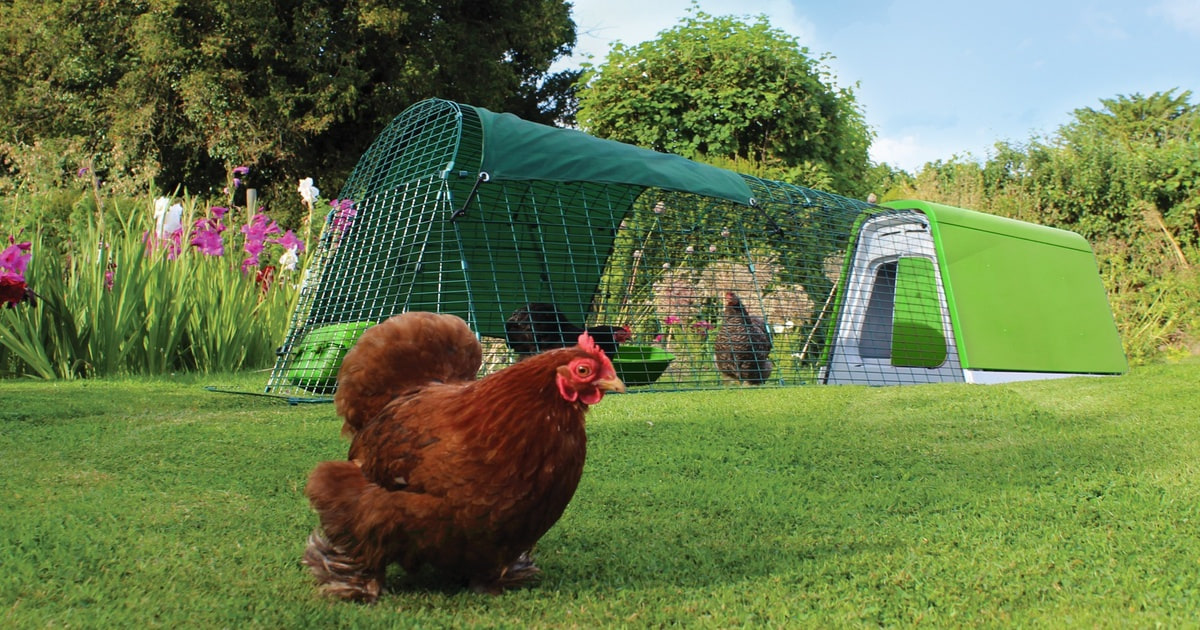
A coop is where your hens sleep, lay and hide from whatever's prowling the yard at night. So the things that matter most are boring ones: enough floor space per bird, air that moves without blowing across the roost, a latch a raccoon can't work open, and a tray you can pull out without crawling inside. Cooperative extension guidance puts the target at roughly 3 to 4 square feet of indoor space per standard hen, plus about 10 square feet each in the run. Most listings quietly ignore that math.
Here's the catch with nearly every coop you can order online: the hen count on the label is optimistic. A coop sold for six birds is usually right for three. Owner feedback lands on the same complaints across brands — thin fir panels that warp after a wet season, staples where screws belong, and chicken wire where you want half-inch hardware cloth. None of these arrive predator-proof, whatever the marketing says. Plan on a weekend of reinforcing, and plan on sizing down from the number on the box.
So shop by square footage and hardware, not by capacity claims. If you keep three or four birds and want something that still looks tidy in a suburban yard, a mid-size wooden coop with real roost bars and side vents will do. If you'd rather hose out plastic than scrub wood, you'll pay more for a smaller house. We think that the Petsfit Large Chicken Coop is the best chicken coop for a backyard small flock for most people, and that the Aivituvin Chicken Coop Hen House is the one to buy if you want a longer attached run.
Everything we recommend

Enough room for three or four hens, with roosts and vents done right

A longer run and a second level, if you can live with softer wood
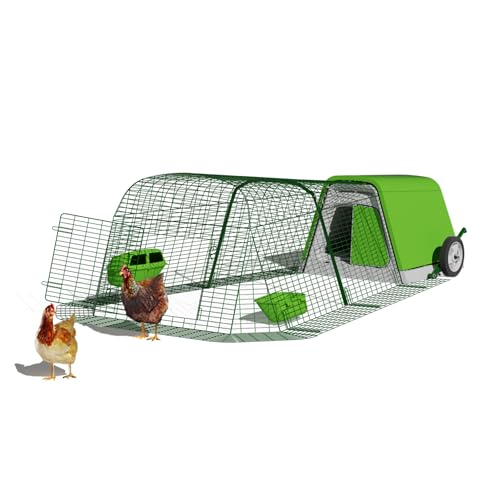
Hose-out plastic and twin-wall insulation, for two or three hens
At a glance
| Product | Hens claimed | Footprint (L×W×H) | Price | |
|---|---|---|---|---|
| Omlet Eglu Go Chicken CoopUpgrade pick | 3 large or 4 bantams | 32 x 16 x 30 in | $949 |
 | PawHut 59" Small Wooden Chicken coop HenAlso in lineup | No more than 2 | 59.3 x 21.3 x 34.3 in | $113.99On sale |
| Aivituvin Chicken Coop Hen HouseRunner-up | 2–4 chickens | 74.9 x 26 x 39.4 in | $199.99 |
| Petsfit Large Chicken Coop with Upgraded PerchesTop pick | 3–5 chickens | 55 x 26.5 x 28 in | $161.98 |
 | Large Wooden Chicken CoopAlso in lineup | 2–8 chickens | 161.5 x 26 x 44.5 in | $189.99On sale |
 | Omlet Walk in Chicken RunAlso consider | — | 6ft x 9ft x 6ft | $1,699 |
How we picked
Real space per hen. We took the floor dimensions from each spec sheet and compared them against cooperative extension guidance of about 3 to 4 square feet of indoor space per standard hen. Where a listing's hen count didn't survive that math, we said so.
Predator hardware. USDA Wildlife Services and extension guidance both favor welded half-inch hardware cloth over chicken wire, because raccoons can reach through or tear the thin stuff. We looked for stated mesh and gauge, latches that need two steps to open, and a base a digging animal can't slip under.
Ventilation and climate. Ventilation is the feature new keepers overlook, and stale damp air causes most respiratory and moisture trouble. We favored coops with vents or windows above bird level, plus roofing or insulation that keeps the nest box from overheating.
Cleaning access. A removable droppings tray and doors big enough to get a rake through are the difference between a 5-minute chore and a dreaded one. We counted access points on each spec sheet and checked owner feedback for trays that jam or warp.
Durability and assembly. Owner feedback across wooden kits keeps circling the same failures: warped fir, stripped hardware, broken ramps. We weighted those themes heavily, along with reports of whether the parts line up during assembly.
Top pick
Enough room for three or four hens, with roosts and vents done right
Petsfit Large Chicken Coop with Upgraded Perches
The Petsfit is a 55-inch fir coop with two widened perches, three side vents and a nesting box roomy enough for two hens at once. It's reasonably honest about holding three to five birds, the bottom plate detaches for cleaning, and three access areas mean you're never reaching in blind.
$161.98fromAmazonIt gets the two details most cheap coops botch. Coops this size usually give you one thin dowel to roost on and a single gap for airflow. Petsfit specs two widened, thickened perches and three side vents — the combination that keeps feet comfortable and moisture off the walls. Damp, still air is what drives the respiratory trouble new keepers run into, and side vents move it without blowing across the birds while they sleep.
Cleaning is the chore that decides whether you enjoy keeping chickens. The bottom plate detaches, so you slide the bedding out instead of shoveling it through a doorway. Three access areas let you reach the nest box, the roost and the floor separately. If you've ever tried to rake pine shavings out of a coop through a 10-inch hatch, you'll understand why that's worth something.
Size it for three or four hens, not five. The listing says three to five, and the floor measures 55 by 26.5 inches. Run the extension math at 3 to 4 square feet per standard hen and you land at three birds, maybe four if they're bantams or out foraging all day. Crowding is what starts feather-picking and bullying, so give yourself margin.
The nest box is 14 by 23 by 15 inches with removable dividers, which is enough that two hens aren't squabbling over the same corner, and the overhead asphalt roof lifts for eggs. Hardware is stainless, and the paint is food-safe. Owner feedback on this one skews positive about assembly and looks, with the usual wooden-coop caveat attached: it's soft fir, and it'll want fresh sealant before its second wet season.
Flaws but not dealbreakers
At 28 inches tall, this isn't a coop you walk into or even work beside comfortably. Everything happens at knee height, through doors, which gets old fast if you have a bad back. There's no attached run worth the name either, so your hens need a separate enclosure or supervised time on the grass.
Fir is soft, and the finish is paint rather than a deep stain. Owners of coops in this class consistently report warping and loose hinges after a year outside, especially where the ground stays damp. Set it on blocks or gravel, re-seal it, and tighten the hardware now and then, and you'll get years out of it. Skip all that and you won't.
Runner-up
A longer run and a second level, if you can live with softer wood
Aivituvin Chicken Coop Hen House
The Aivituvin AIR31 runs about 75 inches long, with a ramp up to the roosting level and a wire-enclosed run underneath. It's rated for two to four chickens, the sliding bottom tray makes cleanup quick, and the asphalt roof panel keeps the house from cooking in direct sun.
$199.99fromAmazonPicture the usual morning: top off the water, check for eggs, get back inside. The AIR31 is laid out for that, with four access areas and an end section that lifts for feeding and cleaning. Owners describe clear labeling and parts that actually line up, which isn't a given with flat-packed wooden coops. If you dread assembly instructions, this is one of the friendlier builds here.
The attached run is the real reason to choose it over our top pick. Most of those 75 inches is wire-enclosed ground level, so your hens can scratch at dirt on days you can't let them out. It's still nowhere near the 10 square feet per bird that extension guidance suggests for a run, so treat it as a secure annex, not their whole world.
Aivituvin uses steel wire fencing with predator-safe latches, and at least one owner describes a raccoon working at it all night without getting in. That's the right direction. But the listing doesn't state the mesh size or wire gauge, so if raccoons, weasels or snakes are a known problem where you live, staple half-inch hardware cloth over the openings and add a skirt at the base.
Call it a two-hen coop that three can tolerate. The listing says two to four depending on breed, and owner feedback lands at the low end of that — silkies and bantams are happy, full-size Orpingtons less so. If you're starting with four standard hens, you want more indoor floor than this gives you, since our top pick devotes more of its length to the house itself.
Flaws but not dealbreakers
The wood is thin and the fittings are the weak point. Owner feedback repeatedly flags a ramp that works loose and nest-box hinges that give out, sometimes within weeks. Longer screws and a few corner brackets fix most of it, but you shouldn't have to do that on a new coop.
It's also 39 inches tall, so you're bending for everything, and the wheels don't roll well on anything but flat, dry ground. Don't buy it imagining you'll tow it around the lawn like a chicken tractor.
Upgrade pick
Hose-out plastic and twin-wall insulation, for two or three hens
Omlet Eglu Go Chicken Coop
The Eglu Go is a twin-wall plastic coop that ships with a 2-meter run and wheels, sized for up to three large hens or four bantams. Plastic doesn't soak up droppings or give red mites anywhere to hide, so cleaning is a hose and a brush instead of a weekend project.
$949fromAmazonMites are the best reason to go plastic. Red mites live in the cracks of wooden coops, feed at night and are miserable to clear out once they're established. Molded plastic gives them nowhere to shelter, and the Eglu's shell wipes down with soapy water. If you've already fought mites in a fir coop, that one difference probably justifies the step up on its own.
Omlet builds the shell as twin-wall plastic, with a layer of air between the inner and outer skins — the same idea as a double-glazed window. That buffers both directions, so hens stay warmer through a hard freeze and the house doesn't bake during a heat wave. Wooden coops this size depend entirely on shade and vents, which is fine in mild weather and less fine at the extremes.
Day to day, it's the least fussy coop here. You lift the egg port instead of opening the whole nest area, the droppings tray slides out, and the kit includes wheels plus a run, so you can shift the setup onto fresh grass when the ground gets bare. For a first-time keeper who wants fewer chores and fewer chances to get something wrong, that adds up.
It's the smallest coop we recommend, and that's the trade. Omlet rates it for up to three large hens or four bantams, and we'd take that at face value — the house itself is 32 by 16 inches. If your flock is four to six birds, you need a bigger house or the walk-in run below. It also makes a good broody or grow-out coop parked next to a larger setup.
Flaws but not dealbreakers
It costs considerably more than any wooden coop here, and you're getting a smaller house for the money. That math only works if you genuinely value the easy cleaning and the mite resistance, or if you plan to keep adding Omlet run panels over time.
Plastic doesn't look like a barn, and some people won't want it in a cottage garden. It's heavy for its size too — about 75 pounds with the run — so decide where it lives before you fill it with bedding. And treat the predator-proof talk with the same skepticism you'd apply to any coop: owners point out that no manufacturer really promises that, and a determined raccoon is a determined raccoon.
Who this is for
This guide is for anyone keeping roughly three to six hens in a backyard, which is most new keepers and plenty of experienced ones. If you're starting with chicks, you've got a few weeks before they need the coop, so use that time to check your local ordinance and your HOA rules — many cap flock size, ban roosters outright, or dictate how far a coop has to sit from a property line. A coop you have to move or return is an expensive lesson.
If you're housing eight or more birds, running a breeding operation, or living somewhere with bears or coyotes testing the fence nightly, skip these and look at a shed conversion or a custom build with a buried wire apron. We also don't cover automatic pop doors here — that's a separate guide — and we're not evaluating brooders, incubators or feed. Every coop below is a flat-packed or molded consumer product you assemble yourself, and all of them assume your hens get run time, either in an attached run or under your supervision.
How we picked
We built the shortlist from manufacturer spec sheets, published guidance and owner feedback themes, judged on five things. Space: actual floor dimensions measured against extension guidance of 3 to 4 square feet per standard hen indoors and about 10 square feet each in the run, rather than the capacity on the label. Predator hardware: stated mesh and gauge, two-step latches, and a base an animal can't dig under, with half-inch hardware cloth as the standard to beat. Ventilation: vents or windows above roost height, so damp air leaves without a draft crossing the birds. Cleaning: a removable tray and doors you can fit a rake through. Durability: how the wood, hardware and hinges hold up outdoors, judged by the failures owners report most often.
Other chicken coops worth considering
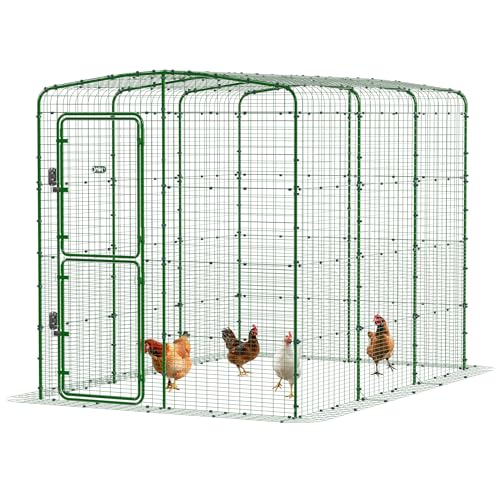
If you want to give your flock real run space: The Omlet Walk in Chicken Run ($1,699) — The Omlet Walk In Chicken Run is a 6-by-9-by-6-foot steel enclosure, not a coop, and it solves the problem every coop on this list shares: the attached runs are too small. At that size you're close to the 10 square feet per bird that extension guidance suggests for four to five hens, and the anti-tunnel skirt addresses digging predators, which most wire runs ignore. You can stand up inside it, which makes cleaning and catching a bird enormously easier. Pair it with the Eglu Go or either wooden pick and you've got a complete setup. The downsides are real: it's expensive for what amounts to panels and clips, it's a heavy build at roughly 165 pounds, and owner feedback on the steel includes rust and panels that don't stay rigid. It also isn't a substitute for secure night housing — your hens still need a coop that locks.
The competition
This is what our research turned up among widely available coops, not a survey of everything sold. Local farm stores and custom builders both sell coops you won't find online, and those are often better wood for similar money. The two below came up repeatedly in searches but didn't earn a pick.
The PawHut 59" Small Wooden Chicken coop Hen ($113.99) — The PawHut 59-inch coop is the small, simple, inexpensive option, and it does have the basics: solid fir, a slide-out tray, a sliding window for airflow, a side door for deep cleaning and a two-part nest box. But read PawHut's own bullet — it recommends no more than two chickens, and owners who tried more say even that's generous. The bigger problem is the one owners raise constantly: there's no solid front door to shut the hens in, so at night they're behind wire only, exposed to cold wind and to anything that can work a latch. If you need a grow-out pen for chicks or a broody box for one bantam, it's fine. As a main coop for a small flock, it isn't.
The Large Wooden Chicken Coop ($189.99) — The TANGJEAMER coop is 161.5 inches long with a double-decker layout, galvanized wire, a removable tray and a waterproof wooden roof, and it claims two to eight chickens. That claim is the issue. At 26 inches deep, the house section can't come close to 3 to 4 square feet per bird for eight hens, and most of that length is run, not shelter. Owner feedback is the roughest of anything here, skewing negative on build quality and longevity. If you want this much footprint, you're better off with a smaller coop plus a proper run.
Care and maintenance
Plan on a quick pass every day or two — dump or scrape the droppings tray, top off the water, collect eggs — plus a full strip-out every few weeks, more often in wet weather or if the coop is crowded. Pine shavings over the tray make that faster than straw or sand. Once a season, walk the coop with a screwdriver and tighten every hinge and latch, since loose hardware is where these kits fail first. Give painted fir a fresh coat of exterior sealant before a wet stretch, paying attention to the roof edges and the feet, and keep the whole thing off soggy ground on blocks or gravel. Then check the mesh for any gap you can push two fingers through, and patch it with hardware cloth.
Questions we get
How big of a chicken coop do I need for 4 chickens?
Figure about 3 to 4 square feet of indoor floor per standard hen, which puts four birds at roughly 12 to 16 square feet, plus about 10 square feet each in the run. That's larger than most coops advertised for four chickens. Measure the floor dimensions on the spec sheet yourself and do the multiplication — don't trust the hen count in the title.
Is chicken wire or hardware cloth better for predator-proofing?
Hardware cloth, and it isn't close. Extension and wildlife agency guidance favors welded half-inch hardware cloth because raccoons can reach through chicken wire or tear it open, and chicken wire is really just a fence to keep birds in. If a coop ships with thin mesh, staple hardware cloth over every opening and extend it a foot out along the ground as a skirt.
How many nesting boxes do I need for 5 hens?
Two is plenty. The common guidance is one box per three to four hens, and in practice your whole flock will queue up for the same favorite box anyway. Make sure each box is at least about a foot square and sits lower than the roost bars, or your hens will sleep in the boxes and foul the bedding.
How much ventilation does a chicken coop need?
More than most coops come with. You want openings near the roofline, above where the birds sleep, so moisture and ammonia can escape without a draft crossing the roost. A good rule is that the coop shouldn't smell sharp or feel damp when you open it in the morning. If it does, add vents — even in winter, when keepers are most tempted to seal everything shut.
Are plastic chicken coops better than wooden ones?
They're easier, not universally better. Plastic doesn't absorb droppings, hoses clean, and gives red mites nowhere to hide, which is a genuine advantage if you've dealt with an infestation. Wood breathes well, looks better to most people, and gives you far more coop for the money. Plastic coops also tend to be smaller for the price, so a large flock usually pushes you back toward wood.
Can I keep chickens in my backyard under HOA rules?
Check before you buy anything. City ordinances and HOA covenants are separate rules, and either can cap your flock size, ban roosters, require a setback from property lines, or forbid poultry entirely. Your city's zoning office or clerk can tell you the ordinance, and your HOA's covenants are usually a searchable PDF. Also worth reading USDA's Defend the Flock guidance, which covers keeping your birds away from wild birds and influences how you cover the run.
Why you should trust us
For this guide:
- We read the manufacturer spec sheets and listing dimensions for every coop here and checked each one against cooperative extension guidance on space per bird, roost length and nest box counts.
- We worked through the recurring themes in owner feedback — assembly, warping, hardware failures, and how honest the stated capacities are — rather than going by overall scores.
- We relied on USDA APHIS and extension guidance for predator exclusion and backyard flock biosecurity, including why half-inch hardware cloth is recommended over chicken wire.
- We read owner reviews on every listing, weighted toward the critical ones, because that is where the recurring failures show up.
- We have a systematic way of automatically fetching the latest prices, so the numbers on this page stay current.
- This is a research-focused guide, so the team may not own every product listed — though we often do own the top winners, which gives us extra context for the recommendations.
- We don't accept free products, and the retailer commission never changes which product we recommend.
Sources
Poultry housing and space guidelines - University extension services, University of Minnesota Extension
Backyard poultry resources, USDA APHIS Defend the Flock
Chickens in the backyard, Penn State Extension
Backyard chicken guidance, eXtension / Cooperative Extension Poultry
Omlet Eglu product specifications, Omlet (manufacturer)
Producer's Pride coop listings, Tractor Supply (manufacturer/retailer specs)
Backyard poultry housing, Cornell CALS
Wildlife damage management - predator control, USDA APHIS Wildlife Services
Amazon product listings and owner reviews for all 6 products
Manufacturer specification pages for each product
Some passages in this guide may be paraphrased with AI help. Prices are refreshed automatically.
More like this.
Continue exploring lifestyle reviews and recommendations.

The Best Automatic Chicken Coop Doors
The riskiest twenty minutes of your chickens' day happen right at dusk. That's the gap between when your hens have settled onto the roost and when you…

The Best Chicken Coop Heaters and Heated Waterers
Winter in a backyard coop isn't really about temperature. It's about water. A laying hen drinks close to a pint a day, and when her waterer turns into a…

The Best Gifts for Backyard Chicken Keepers
Keeping chickens is a hobby made of small daily chores. Someone has to walk out at dawn to open the coop and walk back out at dusk to shut it. Water needs…

The Best Rock Climbing Harnesses
A harness is the piece of gear you notice least when it's right and constantly when it's wrong. You hang in it at the anchor. You sit in it while your…

The Best Smart Sprinkler Controllers
An in-ground sprinkler system is the one appliance in your yard that runs whether you're paying attention or not. A dial timer waters on Tuesday because…

The Best Car Windshield Sunshades
Leave your car in an open lot on a hot afternoon and the cabin climbs fast. Interior temperatures reach 130 to 170 degrees within minutes, which is enough…