The Best Gifts for Runners
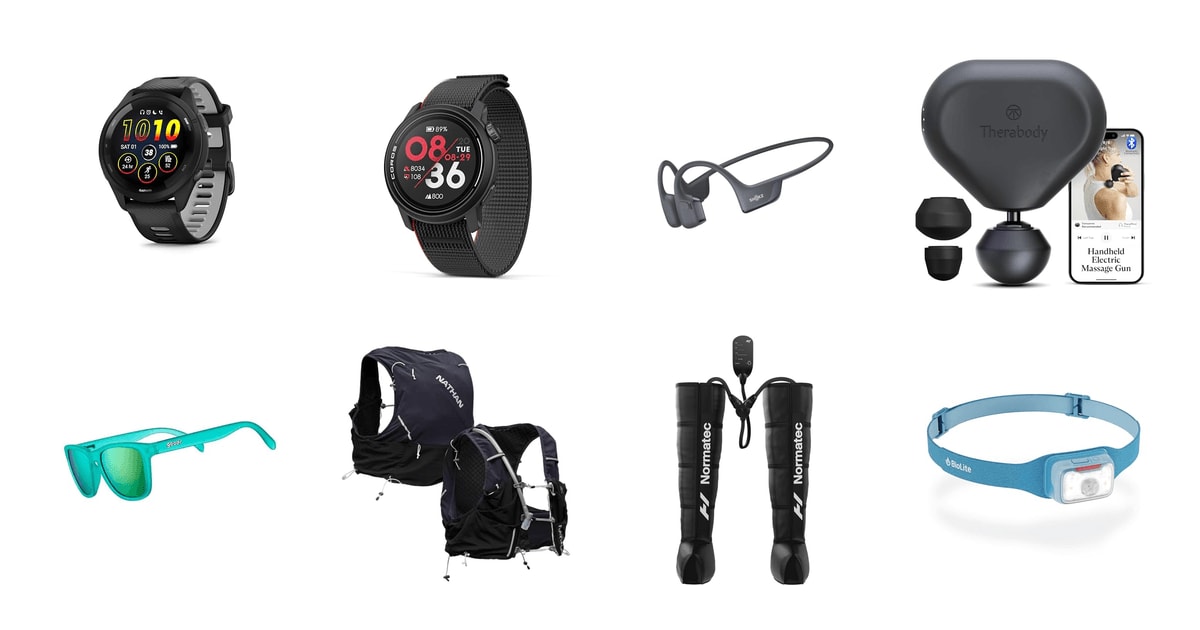
Running looks like the simplest sport there is until you know a runner. Then you find out about the watch that tracks sleep, the vest that carries water without sloshing, the headlamp for 5 a.m. loops around the neighborhood. That's good news if you're shopping for one. The gear a runner actually uses gets used constantly — most of it goes out the door three or four times a week — so a well-chosen gift here doesn't sit in a closet. It just needs to match how they actually run.
But some running gifts are traps. Shoes are the big one: fit, gait and rotation are personal enough that even a spouse gets it wrong, and a gift card to a specialty shop is the kinder move. Apparel runs into the same sizing problem. And the recovery gear that helps most is also the gear a dedicated runner may already own, so it's worth a little snooping before you commit. Nothing here fixes a bad training plan, either.
We've sorted these by recipient rather than by rank, so you can start from the runner you know instead of a leaderboard. A first-timer training for a 5K wants different things than someone deep into ultramarathon mileage. Our favorite gift here is the Garmin Forerunner 265, which suits nearly any runner who takes their training seriously, and the Shokz OpenRun Pro 2 is the safe choice when you're less sure of their taste or their gear ecosystem.
Everything we recommend

The one running gift a data-minded runner will wear daily
For the runner chasing a marathon PR next spring
$349.99 from Amazon
Music without shutting out the street, at almost any budget
For the road runner who won't wear earbuds in traffic
$179.95 from Amazon
Sunglasses they'll actually run in, not baby
For the runner squinting into every sunrise
$34.99 from Amazon
Real training data without the intimidating price
For the friend six weeks into a Couch-to-5K
$199 from Amazon
Serious recovery at home, if the budget is there
For the marathoner who pays for recovery-lounge sessions
$799 from Amazon
For the runner with cranky calves and a suitcase
$179.99 from Amazon
For the trail runner training past 20 miles
$165 from Amazon
For the runner out the door before sunrise
$52.39 from AmazonHow we picked
Real running utility. We looked for gear that gets used several times a week, not once a season. Published reviews and owner feedback both had to show the product surviving regular training, not just a novelty first month.
Giftability. We favored products where you don't need the recipient's measurements, gait or exact preferences. Anything requiring a fitting — shoes above all — we left out on purpose.
Safety and visibility. For anything worn outdoors in traffic or in the dark, we leaned on published measurements of ambient sound passthrough and manufacturer lumen and beam specs rather than marketing language.
Recovery evidence. Recovery tools had to have peer-reviewed support behind the category, not just testimonials. We checked published research on compression therapy and overuse injury rates in recreational runners.
Battery and durability. We compared manufacturer battery specs against what owners report over months of use, and we read the low-star reviews closely for patterns in charging, syncing and build failures.
Our favorite giftOn sale
The one running gift a data-minded runner will wear daily
Garmin Forerunner® 265
For the runner chasing a marathon PR next spring
A GPS running watch with a bright AMOLED screen, sleep and recovery tracking, and daily workout suggestions that adapt to how the last run went. It's the gift a serious runner unwraps and puts on immediately.
$349.99fromAmazonList priceA GPS watch is the most-requested running gift there is, and the Forerunner 265 is the well-rounded version. Runner's World's gear awards have put GPS watches at the top of the running wish list for years running. The 265 covers the whole picture: pace and distance, sleep, heart rate variability, and a training readiness score that tells your runner whether to push or back off today. That last one changes how people train.
Battery life is where a running watch either fits into someone's life or annoys them. Garmin's specs list up to 13 days in smartwatch mode and up to 20 hours with GPS running. Practically, that means your runner charges it once a week and never thinks about it on a long run. Owners coming from an Apple Watch mention this constantly — the freedom from a nightly charger is the thing they notice first.
The screen is the part that makes it feel like a present. It's a bright AMOLED touchscreen, and it looks like a nice watch rather than a fitness tracker. Physical buttons are still there for gloved hands and sweaty fingers mid-workout. If your recipient has been wearing something plasticky and dim, the upgrade is obvious the moment they open the box.
It's also flexible enough that you don't need to know their exact discipline. There are more than 30 activity profiles built in — road running, trail, triathlon, cycling, open-water swimming. So if your runner also lifts twice a week or is thinking about a triathlon, you haven't boxed them in. That matters when you're guessing at someone's next goal.
Flaws but not dealbreakers
Firmware updates are the recurring complaint. Some owners report syncing hiccups with Garmin Connect after an update, usually fixed by re-pairing but irritating in the meantime. If your gift recipient has no patience for troubleshooting, factor that in.
This is the most expensive watch here by a wide margin, and it's a lot of watch for someone running two easy miles a couple of times a week. It's also a poor surprise if they already wear a Garmin — the upgrade path within the brand is confusing enough that you'd be guessing. Check their wrist first.
Garmin is its own ecosystem. It plays with Apple Health and Strava, but a devoted Apple Watch user is being asked to switch phones' worth of habits. Some love that; some quietly go back.
Garmin covers the Forerunner 265 under its standard one-year limited warranty.
Safest bet
Music without shutting out the street, at almost any budget
SHOKZ OpenRun Pro 2 Bone Conduction Bluetooth
For the road runner who won't wear earbuds in traffic
Bone conduction headphones that sit in front of the ear instead of inside it, so your runner hears cars, dogs and other people on the path. They're sweat-rated, they don't fall out, and they suit nearly every kind of runner.
$179.95fromAmazonIf you only half-know your runner, this is the gift least likely to miss. There's no sizing to get wrong, no fit test, no ecosystem to match. The frame wraps behind the head with a titanium memory wire and ergonomic hooks, and it fits basically everyone. Owners who've bounced between earbuds for years describe these as the pair that finally stays put.
The safety case is the real argument. RTINGS' headphone measurements show bone conduction designs pass through close to all of the surrounding sound, while sealed in-ear running earbuds let under a fifth of it through. For anyone running on roads, at dusk, or anywhere a car might turn without looking, that difference is the whole point. Running coaches and physical therapists have been pushing open-ear designs for exactly this reason.
Battery isn't a worry either. Shokz rates the OpenRun Pro 2 for up to 12 hours of playback with an IP55 rating for sweat and rain. Your runner can knock out back-to-back long runs on a weekend without hunting for the charger. And rain mid-run isn't a crisis.
The Pro 2 adds a small air-conduction driver alongside the bone conduction, which fills in bass that older open-ear headphones just didn't have. Music sounds like music now, not like a tinny podcast. It's still not sealed-earbud sound — physics wins — but it's a genuine step up from what your runner may remember trying years ago.
Flaws but not dealbreakers
Volume tops out lower than in-ear headphones, and on a windy road or a busy street they can get drowned out. That's the trade for hearing everything else. A few owners of the older model say the upgrade sounds better but not dramatically so.
Bone conduction is a texture some people never like — there's a faint buzz against the cheekbone at high volume. If your recipient is an audiophile who runs, they may prefer their sealed earbuds and just be careful. It's worth knowing whether they've tried the format before.
Best stocking stuffer
Sunglasses they'll actually run in, not baby
goodr OG Running Sunglasses
For the runner squinting into every sunrise
Polarized running sunglasses with a grippy coating that keeps them from sliding down a sweaty nose. They're light enough to forget you're wearing them, and cheap enough that losing a pair isn't a tragedy.
$34.99fromAmazonMost runners own nice sunglasses they refuse to run in, because a good pair bouncing off the pavement is a bad afternoon. That's the gap these fill. They're light — around 26 grams — and the grip-coated frame is built for exactly the sweaty, jostling conditions that make normal sunglasses slide. Owners who train outdoors in heat report they simply don't move.
As a small gift, these punch well above their size. The lenses are polarized with UV400 protection, so they cut glare off wet roads and windshields rather than just tinting the world. Goodr says the OG frame has been worn at more than 150 major marathons and endurance events. Whatever you make of brand claims, the running-community affection here is real and long-standing.
The colorways are the giftable part. There are hundreds, and picking a loud one is a low-risk way to make a small present feel personal — this is a gift you can match to someone's personality rather than their spec sheet. If they hate it, they've lost very little, and they'll probably still wear it on trash runs.
Flaws but not dealbreakers
Optical quality is the compromise. Several owners who love the fit note the lenses aren't as crisp as premium sunglasses, with some edge distortion. For running, most people never notice; for driving all day, they might.
Fit skews medium. Runners with very large or very small heads sometimes find them off, and you can't try them on for someone else. It's a forgiving gift to return, at least.
Best for beginners
Real training data without the intimidating price
COROS PACE 3 GPS Sport Watch
For the friend six weeks into a Couch-to-5K
A featherweight GPS watch with training load, VO2 max and route navigation for roughly half what a comparable Garmin costs. It's the right first serious running watch for someone still figuring out whether this sticks.
$199fromAmazonFor a new runner, this is the smarter gift than a flagship watch. The Pace 3 gives them the metrics that actually change behavior — pace, training load, sleep, VO2 max — without handing someone a device with more features than their training has miles. Beginners in owner feedback describe it as the watch that finally made their runs feel measurable.
It's genuinely tiny. COROS lists it at 30 grams with the nylon band and an 11.7mm profile, which makes it the lightest GPS multisport watch in its class. That matters more than it sounds: a watch that disappears on the wrist gets worn to sleep, which is where the recovery data comes from. Bulky watches come off at night and the sleep tracking never happens.
Battery is almost absurd for the size — COROS rates it at up to 38 hours of continuous GPS or 24 days of daily use. A new runner will charge it roughly once a month. There's also dual-frequency GPS, so pace stays honest between tall buildings, and route planning that syncs from the app if they start venturing somewhere unfamiliar.
Flaws but not dealbreakers
The COROS app doesn't talk to Apple Health as cleanly as Garmin does, and owners describe workarounds rather than a fix. If your recipient lives inside Apple's fitness world, that friction shows up on day one.
A recurring annoyance: some units ship with the language defaulted to Chinese, which is fixable in settings but a rough first thirty seconds for a gift. Consider setting it up before you wrap it. Support experiences are also mixed — a few owners report slow help with charging-cable replacements.
The app ecosystem is smaller than Garmin's. If your runner wants third-party watch faces and apps, they'll find it thin.
Best splurgeOn sale
Serious recovery at home, if the budget is there
Hyperice Normatec 3 Legs Compression Boots Full
For the marathoner who pays for recovery-lounge sessions
Pneumatic compression boots that squeeze the legs in overlapping zones to flush out post-run soreness. They're what recovery studios charge by the session for, sitting in your runner's living room instead.
$799fromAmazonList priceBetween 37% and 56% of recreational runners pick up an overuse injury in a given year, per a systematic review in the British Journal of Sports Medicine. That's why recovery gear reads as indulgent but functions as practical. A meta-analysis in the Journal of Strength and Conditioning Research found pneumatic compression significantly reduced perceived muscle soreness at 24 and 48 hours after hard endurance work compared with just resting.
This is the gift for the runner who's already paying someone else for it. Recovery lounges charge by the session, and owners who train for marathons point out that the boots do what they were renting. Seven compression levels, five overlapping zones, and app control mean it's not a one-setting gimmick. It was designed by an MD-PhD, and it's the most studied system of its type.
It also unwraps well, which is not nothing for a splurge. The Normatec 3 has a clean interface and enough presence in the box that it lands as an event. For a milestone — a first marathon finished, a big birthday — it's a gift the recipient would rarely buy themselves.
Flaws but not dealbreakers
It's bulky and heavy, roughly 13 pounds with the boots, so it lives in a corner rather than traveling. Storage is a real consideration in a small apartment.
Getting in and out is the common gripe. Deflating between sessions takes patience, and a couple of owners found the process genuinely annoying when two people wanted to use it back to back.
Sizing is fixed on Amazon: the standard boots fit a 31 to 35 inch inseam with a maximum 30 inch thigh circumference. Check that your recipient falls inside those numbers before buying, because there's no adjusting around it.
Who this is for
This guide is for anyone shopping for a runner and unsure where to start — a partner logging early-morning miles, a sibling training for a first half marathon, a coworker who talks about splits. We've covered road runners, trail runners, beginners and people deep into marathon training, and every product here is something the recipient could open and use that week without measurements or a fitting.
We've deliberately left out running shoes and apparel. Fit, gait and rotation are too personal to guess at, and a gift card to a specialty running store beats a wrong-size shoe every time. If your runner already owns a GPS watch, skip that section entirely — ecosystem switching is a big ask, and duplicating a watch is the most common way a running gift goes wrong. A little reconnaissance goes a long way here.
How we picked
We weighed a handful of things when sorting this lineup. Real running utility: the gear had to hold up across weeks of training, per published reviews and long-term owner feedback, not just look good out of the box. Giftability: we favored things you can buy without knowing someone's shoe size or gait, which is why shoes and apparel aren't here. Safety and visibility: for outdoor gear we leaned on published passthrough measurements and manufacturer lumen and beam specs, not marketing copy. Recovery evidence: compression and percussive tools needed peer-reviewed backing for the category. Battery and durability: we compared manufacturer specs against owner reports and read the low-star reviews for repeating failures.
Other gifts for runners worth considering
If you want a recovery gift that travels: The TheraGun Therabody Mini 3rd Gen Massage Gun ($179.99) — The TheraGun Mini is the pocketable end of percussive massage — about 30% smaller and quieter than the original, with three speeds, three attachments and a battery that runs long enough for weeks of short sessions. It's the recovery gift for someone who flies to races or works out of hotels, and it fits in a carry-on where compression boots never will. What it gives up is depth and coverage: it's a targeted tool for a tight calf or a knotted quad, not a full-leg flush. Owners note it takes real hand pressure to work deep tissue, which the boots do for you.
If you want a gift for someone running long and off-road: The 12L Pinnacle Pro Hydration Race Vest by ($165) — Trail and ultra runners need to carry water, and the Pinnacle Pro 12L is the vest built for that. It's got a Quick-Fit adjustment system, six stretch mesh front pockets for gels and a phone, and an insulated 1.6L bladder that keeps water cold and cuts sloshing. Owners consistently describe it as bounce-free once dialed in, which is the only thing that matters at mile 18. Two caveats for a giver: sizing is real here, so you need to know their size, and the soft flasks aren't included. It's also overkill for someone whose long run is six miles.
If you want a practical gift for dark-hour running: The BioLite Range 500 Headlamp ($52.39) — The BioLite Range 500 puts out 500 lumens with a 100-meter beam, runs 6 hours on high or 200 on low, and charges over USB-C fast enough that 30 minutes gets it to 80%. It's IP67 waterproof, so a downpour or a dropped-in-a-puddle moment doesn't end it. The low-profile band is the running-specific part — it's meant not to bounce, and the moisture-wicking fabric helps on warm mornings. Owner reports on the band are mixed, though: some find it slips and needs re-tightening, and a few units have had charging problems. It's a great add-on gift rather than a centerpiece.
More good gifts
Everything below came out of the same research, and none of it is here because it fell short. These are simply the products in this lineup that suit a narrower recipient than the picks do. Depending on who's on your list, one of them may be the better present. This isn't the whole market, either — it's what our research surfaced for road, trail and recovery-focused runners.
Before you wrap it
A few things save a running gift from an awkward morning. Charge anything with a battery before you wrap it, and if you're giving the COROS, power it up and set the language to English first — it's a two-minute fix that spares your recipient a confused start. For the Garmin, know whether they already wear one; switching Garmin models is exciting, but owning two is not. Check inseam and thigh measurements against the Normatec's standard sizing before buying, since there's no adjusting around a bad fit. The Nathan vest needs their actual size. And keep the receipt or gift receipt for anything worn on the body — sunglasses, vests and headphones all have a small chance of just not sitting right, and an easy return is part of a thoughtful gift.
Questions we get
What's the best gift for a runner who already has everything?
Look at recovery and safety rather than training tech, since those are the categories dedicated runners put off buying for themselves. Compression boots or a portable massage gun both land well with someone who already owns a watch and good headphones. A headlamp is another common gap — plenty of experienced runners are still using a dim old one.
What's the difference between the COROS Pace 3 and the Garmin Forerunner 265?
The Garmin has a brighter AMOLED screen, a deeper app ecosystem and smoother syncing with other services, and it costs meaningfully more. The COROS is lighter, lasts far longer between charges and covers the core training metrics for about half as much. Give the Garmin to a committed runner who wants the full picture; give the COROS to someone newer or anyone who'd rather not fuss with a charger.
Are bone conduction headphones actually good for running?
For outdoor running, yes. Published measurements show open-ear designs pass through nearly all ambient sound, while sealed in-ear buds let through under a fifth of it — which is the difference between hearing a car and not. The trade-off is lower maximum volume and less bass than sealed earbuds. Most runners decide that's a fair swap for hearing traffic.
Should I buy running shoes as a gift?
We'd say no, unless the runner is standing next to you at the store. Fit, gait and how a shoe slots into someone's rotation are personal enough that even close family gets it wrong. A gift card to a specialty running shop, where they can get a proper fitting, is the better version of that gift.
What's the best gift for a trail runner versus a road runner?
Trail runners need to carry things and see in the dark, so a hydration vest and a headlamp are the practical picks — road-focused gift lists tend to skip both. Road runners benefit more from awareness and visibility around traffic, which points to open-ear headphones and good sunglasses. A GPS watch works for either, since most track both disciplines.
What should I get someone training for their first half marathon?
Comfort and safety accessories go further than advanced tech at this stage. Sunglasses, open-ear headphones and an entry-level GPS watch cover the things that make longer runs pleasant rather than intimidating. Save the recovery hardware for after they've built up mileage and started feeling it.
Why you should trust us
For this guide:
- We compared published manufacturer specifications for every watch, headphone, headlamp and recovery device here, including battery ratings, weight and water resistance.
- We read peer-reviewed research on running overuse injury rates and pneumatic compression therapy, along with published headphone passthrough measurements, to judge which categories are genuinely useful rather than just popular.
- We read through owner feedback for each product looking for repeating themes in fit, durability and setup problems that a gift-giver would want to know about.
- We read owner reviews on every listing, weighted toward the critical ones, because that is where the recurring failures show up.
- We have a systematic way of automatically fetching the latest prices, so the numbers on this page stay current.
- This is a research-focused guide, so the team may not own every product listed — though we often do own the top winners, which gives us extra context for the recommendations.
- We don't accept free products, and the retailer commission never changes which product we recommend.
Sources
Best Gifts for Runners 2026 — Wirecutter, Wirecutter
Best GPS Running Watches 2026 — Runner's World, Runner's World
Garmin Forerunner 265 In-Depth Review — DC Rainmaker, DC Rainmaker
COROS Pace 3 In-Depth Review — DC Rainmaker, DC Rainmaker
Best Headphones for Running — RTINGS.com, RTINGS.com
Best Trail Running Vests and Packs — Outside Online, Outside Online
Theragun Mini 2.0 Review — Men's Health, Men's Health
Best Running Headlamps 2026 — Runner's World, Runner's World
Normatec Compression: Clinical Evidence Summary — Hyperice, Hyperice / peer-reviewed partners
Running Injury Epidemiology — British Journal of Sports Medicine, British Journal of Sports Medicine
Amazon product listings and owner reviews for all 8 products
Manufacturer specification pages for each product
Some passages in this guide may be paraphrased with AI help. Prices are refreshed automatically.
More like this.
Continue exploring health reviews and recommendations.

The Best Running Shoes for Plantar Fasciitis
Plantar fasciitis announces itself the same way for almost everyone: those first few steps out of bed feel like stepping on a stone. The band of tissue…

The Best Adjustable Dumbbells
A pair of adjustable dumbbells replaces a rack you don't have room for. Instead of ten or fifteen pairs of fixed weights eating a wall of your garage, you…

The Best Mushroom Coffee
Mushroom coffee is a morning ritual with the volume turned down. Most blends pair coffee with hot-water extracts of lion's mane, chaga, reishi or…

The Best Blue Light Blocking Glasses
If you spend your workday staring at a screen, you've probably had that late-afternoon feeling: gritty eyes, a dull ache behind your forehead, and the…

The Best Power Towers for Home Gyms
A power tower earns its floor space by doing three things you can't easily do anywhere else at home: pull-ups, dips, and hanging knee raises. Those three…

The Best Boxing Gloves and Punching Bags for Home Training
Hitting a bag at home is one of the few workouts that doubles as stress relief. You don't need a gym membership or a training partner. But the gear…