The Best Gifts for Writers
Writers are easy to shop for and easy to get wrong. Almost every writer already owns a pen, a laptop and a drawer of half-filled notebooks, so a gift lands when it makes the daily act of writing feel better — quieter, smoother, less interrupted. That's a low bar in theory. In practice it means paying attention to how your person actually works: longhand at a kitchen table, drafting on a train, or typing at one desk for six hours. Match the tool to the habit and you're most of the way there.
Here's the catch. Nothing on this list will make anyone write more. The distraction-free gadget still gets set aside, the beautiful notebook still sits unopened because it feels too nice to ruin, and a good pen doesn't fix a stuck chapter. Writing tools are also personal in a way that makes returns awkward — grip, key feel and paper texture are matters of taste, and half of these can't be judged from a photo. So buy for the ritual, not the results, and keep the gift receipt handy.
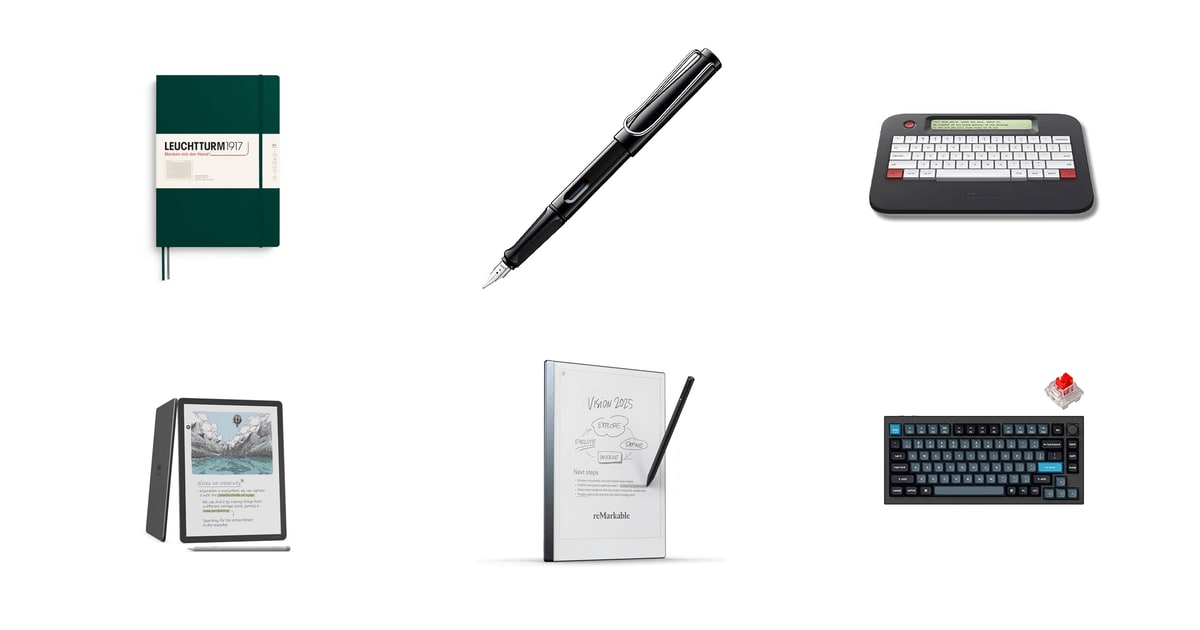
We looked at the things writers keep reaching for: a portable word processor that can't open a browser, a big hardcover notebook that takes fountain ink without bleeding, a starter fountain pen that's been the standard recommendation for decades, and a tablet for marking up drafts. Some of these unwrap beautifully. Some need a sentence of explaining. Our favorite gift here is the Freewrite Alpha, and the Leuchtturm1917 Master Classic notebook is the safe choice when you're less sure of their taste.
Everything we recommend

A typing machine that can't open a browser — for better or worse
For the novelist who loses an hour to email every session
$349 from Amazon
Big, beautiful pages that take fountain ink without bleeding
For the longhand writer who fills a notebook every few months
$42.50 from Amazon
A first fountain pen that doesn't feel like a starter pen
For the writer who's curious about fountain pens but hasn't started
$30 from Amazon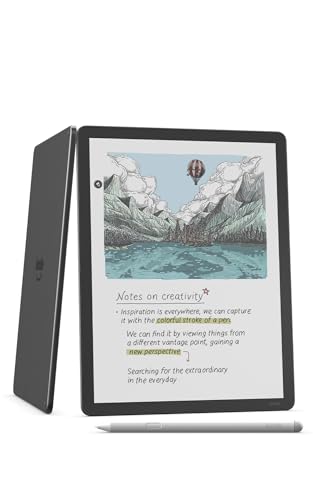
One device for reading research and marking up drafts
For the writer buried in PDFs, research and printed-out drafts
$679.99 from Amazon
For the desk-bound writer typing eight hours a day
$157 from Amazon
For the note-taker who wants paper, not a second screen
$419.90 from AmazonHow we picked
Analog or digital. We treated these as two different shopping trips, because plenty of writers actively reject screens and plenty of others haven't written longhand in years. Every pick here is clearly one or the other, so you can match it to what your person already reaches for.
Comfort over hours. Writing is a repetitive-motion activity, so we leaned on spec sheets and published reviews for the things that matter across a long session: key switch feel and gasket mounting, pen grip shape and weight, and whether a notebook lies flat.
Distraction resistance. For the digital picks, we favored devices that make wandering online harder rather than devices that merely ask nicely. A machine with no browser and a tablet with no app store both qualify; a general-purpose tablet doesn't.
Unwraps well. A gift should be usable within a minute of opening. We preferred products that arrive ready to write — ink included, pen in the box, no account to create first — and we flag the ones that need a companion purchase.
Return risk. Owner feedback themes told us where taste and reliability go wrong: notebook ruling, pen grip shape, keyboard switch preference, and hardware that fails early. Anything with a known risk gets a plain warning in its flaws.
Our favorite gift
A typing machine that can't open a browser — for better or worse
Freewrite Alpha
For the novelist who loses an hour to email every session
The Alpha is a full-size mechanical keyboard bolted to a small backlit screen, and that's the whole idea. There's no browser, no notifications and no apps — just a draft that syncs to the cloud over Wi-Fi and can be emailed to yourself when you're done.
$349fromAmazonThe best gift for a writer is usually a smaller set of choices. The Alpha boots straight into a blank line — no loading screen, no lock screen, nothing to wander into. Owners who struggle with focus describe that as the entire value: the thought arrives, the machine is already ready, and there's nowhere else to click. If your person keeps apologizing for how much time they lose online, this is the one they'll actually pick up.
It weighs about as much as a paperback and slides into a tote next to a laptop, so it travels to cafés and kitchen tables without complaint. The keyboard uses low-profile Kailh Choc V2 tactile switches, and the typing feel is the part owners praise most — fast, cushioned, easy on the fingers over a long stretch. Internal storage holds up to a million words, and published reviews report battery life stretching past three weeks of regular use.
You can approximate all of this with a laptop in airplane mode, and plenty of writers do. The difference is friction. Switching Wi-Fi back on takes one keystroke; owning a machine with no browser at all is a decision you only make once. Drafts back up to the device and to the cloud whenever it finds a network, so the words don't stay trapped on a gadget when it's time to build a real manuscript.
It also unwraps well, which not every writing gadget does. It looks like a small typewriter, it needs no account setup before the first sentence, and your writer can be typing thirty seconds after the box opens. Compare that with gifting software or a course, which arrives as a code and lands on somebody's to-do list. On a birthday morning, that immediacy is worth a lot.
Flaws but not dealbreakers
Reliability is the real worry. Owner feedback on this model is mixed in a way it isn't for the notebooks and pens here, with reports of power buttons failing early, units going dark without warning, and confusion over whether a draft actually saved. The two-place backup is meant to prevent lost work, and usually it does, but a writer who never confirms that a sync happened can get burned.
It's a single-purpose machine that costs more than plenty of full tablets, and the screen shows only a handful of lines at a time. That's deliberate — you're meant to draft forward, not polish — but it frustrates anyone who revises as they go. If your person edits every paragraph twice before moving on, they'll fight this thing.
Safest bet
Big, beautiful pages that take fountain ink without bleeding
LEUCHTTURM1917 - Notebook Hardcover Master Classic A4+
For the longhand writer who fills a notebook every few months
This is a large hardcover notebook — a bit bigger than A4 — with 235 numbered pages, a blank table of contents and heavy 100 gsm paper. It opens flat, shrugs off fountain pens and felt-tips, and looks like a present before you've even wrapped it.
$42.50fromAmazonMost notebooks fail in the same two places: the paper is too thin and the spine won't stay open. This one fixes both. The 100 gsm stock is noticeably heavier than what goes into standard pocket notebooks, and owners who write with fountain pens report that even a fine marker doesn't show through to the next page. The thread binding lets it lie flat, so the left-hand page stops fighting your wrist.
The size is the reason to give this version instead of the pocket one. These pages give a novelist room to draft a whole scene without turning every ninety seconds, and they suit anyone who thinks in margins, arrows and diagrams. It's a desk notebook, not a handbag notebook. If your writer works mostly on trains and in waiting rooms, a smaller one is the kinder gift.
The small stuff is what earns the loyalty. Pages are numbered, there's a contents page to fill in as you go, two ribbon markers, an elastic band, a gusseted pocket in the back for loose paper, and a sheet of labeling stickers. Writers who keep a shelf of past notebooks care about that last detail far more than you'd expect.
Flaws but not dealbreakers
The ruling is the one thing your recipient can't work around, and this listing is squared. Grid pages are great for planners, sketchers and anyone who mixes notes with layouts, and slightly busy for someone writing straight prose. Check what they use now before you order.
A hardcover this large is also heavy and a little unwieldy in a bag. And a notebook this nice intimidates some people — a few owners admit theirs sat blank for months because the first page felt too important to spoil.
Best stocking stuffer
A first fountain pen that doesn't feel like a starter pen
LAMY safari black - Fountain Pen with
For the writer who's curious about fountain pens but hasn't started
The Safari is the pen most stationery shops put in a beginner's hand, and it's held that spot for decades. The molded triangular grip places your fingers correctly, the polished steel medium nib writes smoothly out of the box, and it's small enough to tuck into a stocking.
$30fromAmazonHanding someone their first fountain pen is a small gamble — plenty of them are fussy, precious or both. This one is neither. It's a workhorse made in Germany with a snap cap that closes with a solid click and a flat-sided body that won't roll off a sloped desk. Owners keep coming back to it after trying pens that cost many times more, which tells you most of what you need to know.
The grip is the whole teaching trick. The barrel has molded flats where your thumb and fingers land, which nudges a new user into the hold a nib actually needs. Fountain pens punish a death grip and reward a light one, and this pen makes that lesson physical instead of theoretical. It's why teachers and shop staff keep steering ballpoint users here first.
It arrives with a blue cartridge already included, so there's no assembly project on a holiday morning — cap off, write. Later your writer can drop in colored cartridges or add a converter and start using bottled ink, which is usually where the hobby quietly begins. Pair it with the Leuchtturm above and you've built one very good gift out of two small boxes.
Flaws but not dealbreakers
That molded grip is opinionated. It's shaped around a conventional right-handed hold, so writers who grip unusually — or lefties who hook their wrist — often find it uncomfortable rather than corrective. There's no way to adjust it.
A minority of owners report skipping or a blob of ink at the end of strokes, usually on slick coated paper that fountain ink doesn't like. And the converter for bottled ink is a separate purchase, so add one to the same order if you want the gift to feel complete.
Best splurge
One device for reading research and marking up drafts
Amazon Kindle Scribe Colorsoft 64GB
For the writer buried in PDFs, research and printed-out drafts
The Scribe Colorsoft is an 11-inch e-ink tablet with a color display, a front light and a pen that never needs charging. Your writer can read on it, keep notebooks on it, and mark up imported drafts by hand without printing a single page.
$679.99fromAmazonThis is the gift for a writer who's drowning in paper. It pulls files in from Google Drive or OneDrive, takes handwritten markup right on the page, and exports the marked-up result as a PDF — so a manuscript that used to mean a trip to the printer becomes one file and a stylus. Notebooks can be sent out to OneNote too. For anyone who edits other people's work, that alone earns the desk space.
The writing feel is the part that surprises people. The surface has a slight tooth to it, the display keeps up with the pen instead of trailing behind it, and the included stylus has an eraser end and a shortcut button for tools like the highlighter. At 5.4mm thin and about 400g, it reads comfortably in one hand for an hour, which is more than you can say for a laptop.
Color is the new part, and it matters more for reading than for writing. Charts, highlights, diagrams and illustrated books look right rather than gray, and the display avoids the distracting flash that some color e-ink screens produce when you write. The note tools can clean up messy handwriting or convert it to text, and the AI features can summarize or answer questions about notes your writer has already taken — handy for someone who fills notebooks faster than they reread them.
Flaws but not dealbreakers
It's the most expensive thing in this guide by a wide margin, and it does two jobs well rather than either job perfectly. Writers coming from a dedicated paper tablet consistently report that the note-taking side feels shallower — fewer organizing options, less control over how the pen behaves — and some owners want a screen-sensitivity setting that simply isn't there.
It also ties your recipient to one bookstore and one account. If they only want to write by hand, they'll be happier with a purpose-built paper tablet; if they only want to read, a plain Kindle does that for far less. This one is for the person who genuinely does both.
Who this is for
This guide shops for people who make writing rather than people who read it — novelists and NaNoWriMo participants, journalists and bloggers, screenwriters, poets, journalers and creative writing students. That's a deliberate line. A book lover wants a good edition of something; a writer wants better tools for the hours between the idea and the draft, and the two gift lists barely overlap.
It fits a few giver situations. If you know the person well, the bigger picks — the Alpha, the Scribe — are safe because you already know whether they draft on screens or on paper. If you don't, the notebook and the pen are the low-risk moves; they're personal without being presumptuous, and they work for a colleague, a secret santa or a teenager who's just started keeping a journal. What this guide doesn't cover is software, subscriptions and courses, which can be wonderful gifts but arrive as a code rather than a box.
How we picked
We shopped these the way a giver has to. Analog or digital: we split the field early, since some writers want nothing to do with a screen and others haven't handwritten a page in years. Comfort over hours: spec sheets and published reviews carried the weight here — switch feel, gasket mounting, grip shape, whether the spine stays open. Distraction resistance: we favored devices that structurally can't go online over ones that politely suggest you don't. Unwraps well: ink in the box, pen in the box, nothing to configure before the first sentence. Return risk: owner feedback showed us where taste and hardware go wrong, and we say so plainly in each pick's flaws.
Other gifts for writers worth considering
If you want a gift for a writer who types all day at one desk: The Keychron Q1 Pro Wireless Custom Mechanical Keyboard ($157) — The Keychron Q1 Pro is a full-aluminum 75% mechanical keyboard, which means it's dense, compact and built to sit in one place. Its double-gasket construction puts silicone between the plates and the case, and reviewers at RTINGS singled out that design for soaking up keystroke vibration — the result is a softer, less clacky feel over a long drafting session. It connects over Bluetooth to three devices, works with Mac and Windows, and the hot-swappable sockets let your writer change switch feel later without soldering. Two caveats. Key feel is deeply personal, so this is a confident gift only if you've heard them complain about their current keyboard. And it's heavy, so it's a desk anchor, not a café companion. This listing is a renewed unit, so check the condition and the return window when it arrives.
More good gifts
These are the products our research surfaced, not a survey of everything a writer would be glad to receive. Plenty of great gifts for writers aren't objects at all — an online course subscription, a standing coffee order, an hour of quiet — and none of those have a listing we could check. What follows is one more product worth considering, framed by the kind of person it suits.
The reMarkable 2 Paper Tablet Digital ($419.90) — The reMarkable 2 is the strictest of the paper tablets: grayscale only, no store, no browser, nothing but a very thin slab and a pen. That's the appeal. Its display is widely cited as the closest digital match for pen on paper, the battery is rated for around two weeks of normal use, and it converts handwriting to text and syncs to Google Drive, Dropbox or OneDrive when you want the notes elsewhere. It suits the writer who takes constant longhand notes, hates the glare of a lit screen, and would resent color and AI features as clutter — the opposite temperament from a Kindle Scribe recipient. One important caution: this listing is a renewed bundle, and owner feedback on used units includes worn pen tips and software old enough to refuse an update. If you're giving it, unbox it early enough to test the sync before it's wrapped.
Wrapping and setup notes
A few things make these land better. Charge anything with a battery before you wrap it, so the first experience isn't a cable hunt. Add a converter and a couple of ink cartridges to the Lamy order — the pen ships with one cartridge, and running dry in week two is a sad way to end a new habit. Don't write an inscription on the first page of a notebook; it's a lovely instinct, and it makes some writers hesitate to use the thing. If you're giving a renewed device, open it yourself, connect it to Wi-Fi, and confirm it updates while the return window is still open. And include the gift receipt with anything grip- or key-related, because taste in these is stubborn and nobody should feel stuck.
Questions we get
How is a gift for a writer different from a gift for a book lover?
A book lover's gift serves reading; a writer's gift serves the hours of making something. That's why a nice edition of a novel and a distraction-free word processor rarely appeal to the same person on the same day. If you're not sure which you're shopping for, ask yourself whether they talk more about what they're reading or what they're working on.
What's a good gift for someone doing NaNoWriMo?
Anything that removes friction between the idea and the draft. The Freewrite Alpha is the strongest fit here, because a 50,000-word push in a single month lives or dies on how easy it is to start a session. A big hardcover notebook works for people who outline by hand first. Give it before the month starts, not during it.
Is a paper tablet worth giving to a writer?
Only if they already take a lot of handwritten notes. A paper tablet replaces a stack of notebooks; it doesn't replace a laptop, and it won't turn a keyboard person into a longhand person. For someone who marks up manuscripts, reads research PDFs, or hauls three notebooks around, it's genuinely useful. For everyone else it becomes an expensive gadget in a drawer.
What fountain pen should I buy for someone who's never used one?
The Lamy Safari, in a medium nib. It writes smoothly straight out of the box, the shaped grip teaches a light hold, and it's forgiving enough that a beginner won't blame themselves when something smudges. Add spare cartridges or a converter so they can keep going once the included one runs out.
What if they already have everything?
Then go for the thing they'd never buy themselves. Writers tend to under-spend on their own comfort — a keyboard that doesn't hurt after four hours, a notebook that costs more than a grocery-store pad, a device whose only job is drafting. The gift that works is usually an upgrade to something they already use daily, not a new category.
Is the Freewrite Alpha better than just using a laptop?
For drafting, often yes — not because it's more capable, but because it's less. There's no browser to slip into and no notifications to answer, and undoing that takes buying a different device rather than flipping a switch. For editing, research or anything involving formatting, a laptop wins easily. Most owners use both.
Why you should trust us
For this guide:
- We read the manufacturer specifications and full listing details for every product here, including paper weight, switch type, display size, battery claims and what's actually in the box.
- We compared published coverage from outlets including The Verge, Digital Trends, RTINGS and stationery specialists such as JetPens and Goulet Pens, and used it only for claims those sources make directly.
- We read through owner feedback for recurring themes — early hardware failures, grip and ruling complaints, renewed-unit condition problems — and let those shape the flaws and cautions in each entry rather than any single account.
- We read owner reviews on every listing, weighted toward the critical ones, because that is where the recurring failures show up.
- We have a systematic way of automatically fetching the latest prices, so the numbers on this page stay current.
- This is a research-focused guide, so the team may not own every product listed — though we often do own the top winners, which gives us extra context for the recommendations.
- We don't accept free products, and the retailer commission never changes which product we recommend.
Sources
Best Notebooks 2026 — Wirecutter (NYT), Wirecutter
Best Mechanical Keyboards 2026 — Wirecutter (NYT), Wirecutter
reMarkable 2 Review — The Verge, The Verge
Best E-Ink Tablets for Writing — Tom's Guide 2026, Tom's Guide
Best Gifts for Writers 2026 — Good Housekeeping, Good Housekeeping
Freewrite Alpha Review — Digital Trends, Digital Trends
Best Fountain Pens for Beginners — The Pen Addict, The Pen Addict
Keychron Q1 Pro Review — RTINGS.com, RTINGS.com
Kindle Scribe Review — Engadget, Engadget
Best Writing Gifts for Authors — Writer's Digest, Writer's Digest
MasterClass Writing Courses Overview — MasterClass, MasterClass
Baron Fig Pen & Notebook Review — The Sweet Setup, The Sweet Setup
Amazon product listings and owner reviews for all 6 products
Manufacturer specification pages for each product
Some passages in this guide may be paraphrased with AI help. Prices are refreshed automatically.
More like this.
Continue exploring lifestyle reviews and recommendations.

The Best Hiking Backpacks
A backpack is the one piece of gear you can't set down. Your tent gets pitched, your stove gets stowed, but the pack rides with you every step. That's why…

The Best Ski Touring Bindings
A touring binding is the one piece of gear you interact with every few minutes on a backcountry day. You step in at the trailhead, flip a heel lifter…

The Best Trail Mountain Bike Accessories
The bike you already own is probably fine. What's holding you back on a wet descent or a ride that runs long is usually smaller and cheaper than a new…

The Best Outdoor Deck Boxes
A deck box does one boring job well: it keeps your cushions dry and off the ground. That matters more than it sounds. Wet cushions take two days to dry,…

The Best Noise-Cancelling Sleep Earbuds
Sleeping through a snoring partner, a bus route, or a neighbor who slams doors at 2 a.m. is a real problem, and regular earbuds don't solve it. They stick…

The Best Leadership and Business Books
A leadership book earns its place on your shelf by changing what you do on Monday morning. Most don't. You read a chapter on the train, nod along, and…