The Best Gifts for Skiers and Snowboarders
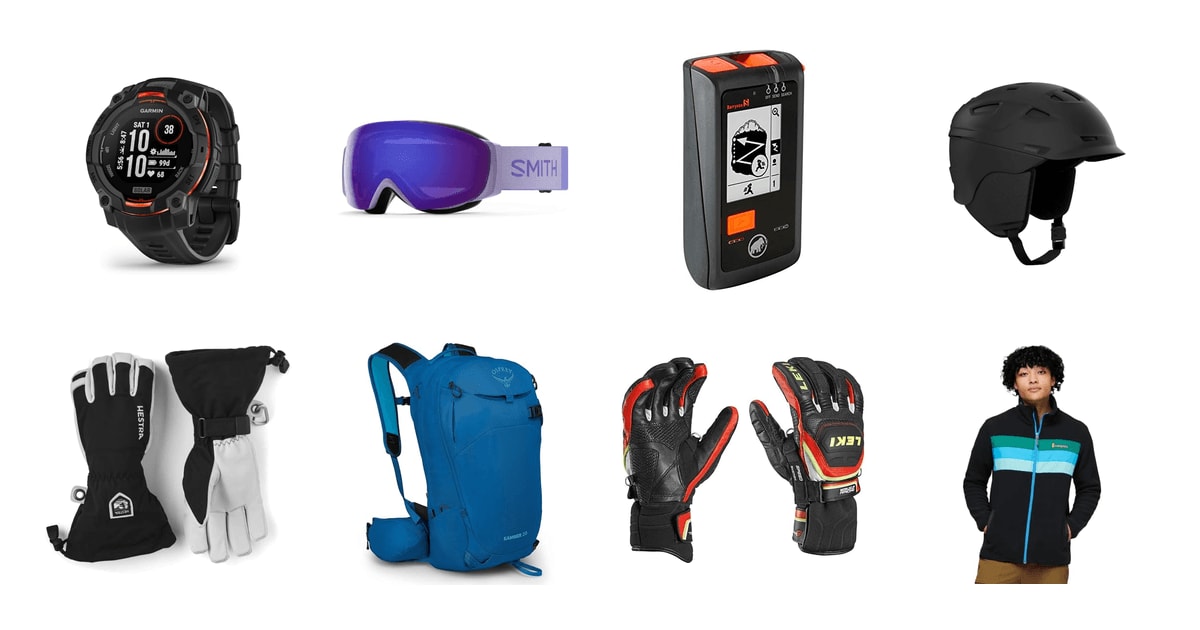
Skiers and snowboarders are easy to shop for and easy to get wrong. They already own the big stuff, so the gifts that land are the ones that fix a small daily annoyance: a scratched goggle lens, cold fingers on the last chair, a beat-up backpack with no place for a shovel. Snow sports gear also lives outside, gets dropped in parking lots, and freezes solid overnight. Anything you give has to survive that. The best presents here are things they'd eventually buy for themselves and keep putting off.
Here's the honest caveat. Nothing in this category solves fit for you. Boots, bindings, skis and boards need the person standing in the shop, and even gloves and helmets come down to a centimeter here or there. Brand loyalty runs deep too, and a rider with strong opinions about their setup may quietly return whatever you pick. So the safest gifts are the ones sized loosely, sized by hand or head measurement you can get in advance, or not sized at all.
We've split this list by who you're shopping for rather than by score, because a beacon for a backcountry tourer and a fleece for a weekend cruiser aren't competing for the same slot. Some picks reward someone who's deep in the sport. Others work for a coworker you barely know. Our favorite gift here is the Smith I/O MAG S goggle, and the Garmin Instinct 3 Solar is the safe choice when you're less sure of their taste.
Everything we recommend

Magnetic lenses that swap in seconds, in a small-face fit
For the rider still squinting through a scratched starter goggle
$119.95 from Amazon
A rugged tracker they'll wear off the mountain too
For the skier who wants to know how much vertical they logged
$299.99 from Amazon
The fastest searcher here, for someone who tours past the gates
For the backcountry partner who's been putting off a new beacon
$339.99 from Amazon
Leather gloves that break in and outlast the cheap ones
For the instructor or patroller who shreds a pair of gloves a season
$184.95 from Amazon
A loud recycled fleece for the drive home and the bar
For the friend whose après outfit is a damp base layer
$219.95 from Amazon
For the sidecountry skier hauling a shovel, probe and skins
$148.55 from Amazon
For the holdout still wearing a beanie on powder days
$195.96 from Amazon
For the gate basher training on Leki race poles
$119.99 from AmazonHow we picked
Low return risk. We favored gifts that don't hinge on an exact size. Where fit matters — gloves, a helmet — we flagged what you need to measure first and how forgiving the sizing scale is.
Published review consensus. We leaned on comparisons from outlets that do this work full time, including Outdoor Gear Lab, Backcountry Magazine, Powder Magazine and Switchback Travel, and looked for products that placed well across more than one of them.
Owner feedback themes. We read through owner reviews looking for repeated complaints rather than one-off duds. Scratching lenses, compressing glove insulation and fiddly firmware updates all showed up often enough to belong in the flaws.
Unwraps well. A good gift should be understandable in the first five seconds. We skipped anything that needs a fitting appointment, a second purchase to function, or a long explanation of what it is.
Useful past the season. Where possible we picked things that keep earning their keep after the lifts close, like a watch that tracks hikes or a fleece that works in the fall.
Our favorite gift
Magnetic lenses that swap in seconds, in a small-face fit
SMITH Optics I/O MAG S Women's Snow
For the rider still squinting through a scratched starter goggle
A spherical goggle with magnets holding the lens in, so changing tints on a chairlift takes seconds instead of a wrestling match. It ships with a bright-light and a low-light ChromaPop lens, which covers bluebird mornings and flat-light afternoons in one box.
$119.95fromAmazonA two-lens goggle is the upgrade most riders never buy themselves. Almost everyone starts with one dark lens, then spends half the season squinting through fog and flat light because swapping tints on a cheap frame is a chore. The MAG system uses magnets plus a lock, so the lens pops off with cold hands and clicks back in without fingerprints all over the inside. That's the whole pitch, and it's a good one.
Outdoor Gear Lab compared eighteen goggles and called ChromaPop the best contrast-enhancing lens technology it has looked at. In practical terms, that means bumps and ice patches show up as shapes instead of a wall of white when the clouds roll in. If the person you're shopping for skis the Northeast, the Midwest, or anywhere with more gray days than sun, contrast matters more than any other feature on the box.
The fit is the other reason this one works as a gift. It's the small frame, built for narrower faces, and it comes in a low bridge version too. Owners with smaller heads consistently say it seals where full-size goggles gap at the cheeks. The QuickFit strap adjusts one-handed, and the silicone strip on the back keeps it from creeping up a helmet all morning.
Goggles rank near the top of the list every time skiers are asked what they actually want. In a big r/skiing gift thread, lift pass vouchers came first and high-end goggles came second. Snowsports Industries America puts goggles, gloves and heated accessories together at 41% of holiday gift purchases in the category. You're not going out on a limb here.
Flaws but not dealbreakers
The lenses scratch. Owners bring this up more than anything else, usually after tossing the goggle in a pack or wiping snow off with a jacket sleeve. The included microfiber bag isn't optional storage — it's the difference between one season and three. If you're giving these, it's worth saying so out loud.
Fog resistance is good, not bulletproof. A handful of owners riding wet, rainy snow report icing and fogging that a cheaper goggle handled better, which usually comes down to venting getting overwhelmed in warm precipitation. And a few have had the strap separate early. That's rare, but it means keeping the gift receipt.
Safest betOn sale
A rugged tracker they'll wear off the mountain too
Garmin Instinct® 3 Solar
For the skier who wants to know how much vertical they logged
A tough solar GPS watch with a metal-reinforced bezel, multi-band GPS, an altimeter and a battery that stretches for weeks. It tracks runs, vertical and speed on snow, then keeps going for hikes, sleep and everything else the rest of the year.
$299.99fromAmazonList priceAlmost nobody returns a Garmin. There's no sizing gamble beyond a 45mm case, it works for skiers and snowboarders equally, and it stays useful in July. Garmin holds more than 60% share among resort skiers using GPS ski wearables, according to a Skiing Magazine reader survey, so odds are good the people your recipient rides with already have one and can talk them through the app.
Battery life is the feature that matters on a cold chairlift. The solar lens tops the watch up during a full day outside, and owners upgrading from older Instinct models describe going weeks between charges rather than nights. Cold drains most smartwatches fast. This one uses a memory-in-pixel display that stays readable in direct sun and sips power, which is exactly backwards from a phone-style screen.
The hardware is built for abuse. A fiber-reinforced polymer case, a metal bezel, a 10 ATM water rating and MIL-STD-810 thermal and shock testing mean a fall on ice or a scrape against a lift bar isn't a crisis. There's a barometric altimeter and a three-axis compass for vertical and navigation, plus a built-in LED flashlight that's genuinely handy digging through a dark parking lot at the end of the day.
It's also a fine everyday watch, which is why it works for a giver who doesn't know the sport well. Wrist heart rate, sleep tracking and Pulse Ox come standard. If your recipient skis fifteen days a year and runs or hikes the rest, this doesn't sit in a drawer from April to November.
Flaws but not dealbreakers
The display is monochrome and low-resolution by phone standards, and that's the trade for the battery life. Anyone expecting an Apple Watch–style screen will find it plain, and there's no resort trail map rendered in color on your wrist.
There's a real learning curve. Owners routinely mention there are more features and menus than they know what to do with, which is charming if your recipient likes tinkering and irritating if they don't. The stock band also slides on smaller wrists for some owners.
Best splurgeOn sale
The fastest searcher here, for someone who tours past the gates
Mammut Barryvox S Avalanche Beacon
For the backcountry partner who's been putting off a new beacon
A three-antenna digital avalanche transceiver with a 70-meter search strip, analog extended range and a group-check function. It's the beacon avalanche professionals reach for, and it's the rare gift that could matter more than everything else on this list combined.
$339.99fromAmazonList priceIf your person tours in the backcountry, this is the most meaningful thing you can give them. The American Avalanche Association puts recovery odds at 93% when a buried victim is found within fifteen minutes, and beacon use cuts backcountry mortality risk by more than half. That's not a marketing claim. It's the entire reason the device exists, and it's why partners buy each other beacons instead of sweaters.
Speed is what separates good transceivers from great ones, and this one is quick in the hardest scenario. In Backcountry Magazine's beacon comparison, the Barryvox S located a second buried victim in an average of 41 seconds — the fastest result in the group. Multiple burials are where cheaper beacons stall out and searchers panic. Signal suppression lets the searcher mark a found victim and move on.
The range is generous. A 70-meter digital search strip width means fewer passes across a debris field, and the analog mode extends receiving to roughly 95 meters when a signal is faint or the burial is deep. The circular receiving field means the antennas perform about the same regardless of how the buried unit is oriented, which removes one variable from an already bad situation.
Owners who've switched from older transceivers describe the navigation as noticeably simpler, and the group check function catches the classic mistake of a partner leaving the trailhead in search mode. It also runs on lithium batteries, which hold voltage better in the cold and leak less — worth knowing if it spends the summer in a gear bin.
Flaws but not dealbreakers
Firmware updates aren't a plug-in-at-home affair for everyone. Owners have run into shops that won't run a device-to-device update and insist the unit go to a service technician, which is a hassle when you just want current software before a trip.
A beacon is also only a third of the kit. Without a probe and a shovel, and without practice using all three, it's an expensive piece of insurance that nobody knows how to cash. If you're giving this, consider pointing them toward an avalanche course — that's the gift behind the gift.
Mammut has issued transceiver recalls in the past, so it's worth having the recipient register the unit and check the serial number against the manufacturer's notices before the first tour.
Most personal
Leather gloves that break in and outlast the cheap ones
Hestra Ski Gloves: Army Leather Heli Leather
For the instructor or patroller who shreds a pair of gloves a season
Goatskin palms, a windproof and water-resistant backhand, and a removable liner you can swap or dry separately. These are the gloves ski instructors and patrollers keep buying, and with a little leather conditioner they hold up for years.
$184.95fromAmazonMost ski gloves die the same way. The palm wears through from grabbing chairlift bars and dragging on edges, the shell wets out, and after a season or two they go in the trash. Powder Magazine's glove comparison put the Army Leather Heli at five-plus seasons with proper conditioning, against one to two for most synthetic-shell alternatives. That gap is the whole argument for leather.
These are a gift with a story attached, which is why they land so well. The Army Leather Heli has been the default choice for guides, patrollers and instructors for a long time, and someone deep in the sport will recognize the box. It's a five-finger design, so dexterity is decent for a glove this warm — good enough to work a zipper or a buckle without stripping down.
The construction is thoughtful in ways you notice on cold days. A long gauntlet goes over a jacket sleeve instead of fighting it, and owners specifically mention it never bunching up at the wrist. There's a snow lock, an elastic wrist strap, and an Eagle Grip cut that follows the natural curve of your hand so you're not fighting the leather to hold a pole.
The removable liner is the underrated part. Wet liners come out to dry overnight instead of sitting damp inside the shell, and you can swap in a warmer or thinner liner as conditions change. Some owners size up a half size and run a thin wool glove underneath on the coldest days.
Flaws but not dealbreakers
Sizing is the risk, and it's a real one. Hestra uses its own measurement method, and owners who follow it report near-perfect fits while people who guess often don't. Measure their hand or find an existing pair in their closet before you order, and keep the receipt.
They're warm, not the warmest. Several owners describe them as great in spring and marginal on deep-freeze February mornings, partly because the thin insulation compresses over a few dozen days of use. Anyone with chronically cold hands may be happier in a mitten.
Leather also asks for a little upkeep. A wax or balm once or twice a season is what gets you the long lifespan, and the lighter palms show dirt quickly.
Best budget gift
A loud recycled fleece for the drive home and the bar
Cotopaxi Teca Fleece Full-Zip Jacket - Men's
For the friend whose après outfit is a damp base layer
A full-zip fleece made entirely from repurposed materials, in one-off multicolor combinations that no two jackets share. It's the layer that goes from the parking lot to dinner, and it's an easy gift for someone whose ski wardrobe stops at the mountain.
$219.95fromAmazonAprès is half the sport and nobody dresses for it. Your recipient probably owns a technical shell and three base layers and nothing comfortable to put on afterward. This fleece fills that gap: soft, packable, and warm enough for a parking-lot beer without looking like gear. Two hand pockets, elastic binding at the hem and cuffs, and it machine washes and tumble dries.
The colorways are the reason to give this one rather than a plain fleece. Cotopaxi builds the Teca line from leftover fabric, so the panels come out in combinations that are effectively one-off. That makes it feel chosen rather than ordered, which matters for a present. It also means you can't pick the exact pattern, which some givers love and some find nerve-racking.
The recycled construction isn't a footnote either. It's repurposed fleece with repurposed polyester taffeta stripes and a DWR finish, and sustainability credentials land well with younger skiers and riders. If you're shopping for someone in their twenties who cares where their gear comes from, the brand does a lot of the work for you.
It also travels well. Light, compressible, and warm without bulk, it's the layer that goes in a carry-on for a ski trip and gets worn every evening of it. Owners describe it as an all-season spring and fall jacket, so it doesn't get shelved when the lifts stop turning.
Flaws but not dealbreakers
It's a mid-layer, not a jacket. There's no insulation to speak of and the DWR finish handles a light flurry at best, so it won't stand alone on a cold night.
Sizing and pattern are both a coin flip. You can't see the exact colorway you'll get, and fleece fit varies enough between people that a gift receipt is essential. If your recipient is picky about clothes, this is the wrong list item for them.
Who this is for
This list is for people shopping for someone who already skis or rides and already owns the basics. Think an intermediate who's been on the same starter goggle for four seasons, a college kid heading out west, a partner who mentions cold hands every February, or a friend who's started touring and hasn't upgraded their safety kit. If you're shopping for a total beginner, most of this is overkill — a lesson package or a day pass does more for them than a beacon ever will.
It covers accessories, safety gear, packs and layers, and it deliberately leaves out skis, boards, boots and bindings. Those need the person present and a boot fitter, and returning them is miserable. The list works for both close-friend and family gifts, where you can reasonably find out a glove size or a head measurement, and for looser situations like an office exchange, where the fleece or a goggle is a better bet than anything that has to fit.
How we picked
We built this list around a handful of things that make a snow-sports gift land rather than get returned. Low return risk: we favored gifts sized loosely or not at all, and we say up front where you need a measurement first. Published review consensus: we leaned on head-to-head comparisons from Outdoor Gear Lab, Backcountry Magazine, Powder Magazine and Switchback Travel instead of marketing copy. Owner feedback themes: we looked for complaints that repeat across many owners, not one bad unit, and wrote them into the flaws. Unwraps well: the gift should make sense immediately, without a second purchase to be useful. Useful past the season: the best of these keep working once the snow melts.
Other gifts for skiers and snowboarders worth considering
If you want zero sizing risk and they're starting to ski off-piste: The Osprey Kamber 20L Men's Backcountry Ski and ($148.55) — Switchback Travel puts the Kamber at the top of its all-around ski daypack rankings, and the details are why. There's a dedicated avalanche kit compartment with shovel handle and probe sleeves, diagonal ski carry plus vertical and horizontal board carry, a scratch-free goggle pocket and a stow-away helmet carry. It fits nobody wrong, which makes it a great gift. The trade is weight: at over two and a half pounds for 20 liters, owners note it's heavy and bulky for the capacity, because all that organization costs material. Anyone chasing a minimalist touring pack should look elsewhere.
If you can get their head measurement and they're still riding bare-headed: The Anon Prime MIPS Ski & Snowboard Helmet ($195.96) — The Prime is a MIPS helmet, meaning a low-friction layer inside lets the shell rotate slightly against the head during an angled impact — the kind of hit that does the most damage. A 360-degree BOA dial built into the shell tunes the fit with gloves on, and the Fidlock magnetic buckle closes one-handed. Twenty-three vents open and close, and a goggle channel helps keep lenses clear. Sizing runs by centimeter — small is 52–55, medium 56–59 — so wrap a tape measure around their head above the ears first, or this becomes a return.
More good gifts
Here's what else our research surfaced. This isn't everything on the market — it's the rest of the lineup we looked at, framed by who it actually suits. A gift that's wrong for most people can be exactly right for one person, so read these as matches rather than rejects.
The LEKI World Cup Race Flex Lite Speed ($119.99) — These are race gloves in the narrow sense: thin, close-fitting and built around Leki's strap-free pole attachment, the system most of the top alpine racers on the World Cup circuit use. If your recipient trains gates, runs beer-league slalom, or already owns Leki poles with the compatible grip, this is a genuinely thoughtful gift that a general-purpose glove can't match. For everyone else it's the wrong tool — a race-cut glove trades warmth and gauntlet coverage for feel, and the trigger system needs matching poles to make sense. Buy it only if you know they race.
Sizing, returns and gift receipts
Two habits save most snow-gear gifts. First, get the measurement before you order rather than after: hand circumference for gloves, head circumference above the ears for a helmet, and a look at whether they have a narrow face before you commit to a goggle frame size. Brands don't share a sizing scale, and Hestra in particular expects you to use its own method. Second, include the gift receipt and say so — nobody is offended, and it turns a risky present into a safe one. After that, the upkeep is simple. Leather gloves want a wax or balm once or twice a season, goggles live in their microfiber bag and never get wiped with a jacket sleeve, and a beacon needs fresh alkaline or lithium batteries and a registered serial number.
Questions we get
What's a good gift for a skier who already owns everything?
Go for the thing they'd replace but keep postponing. A second goggle lens system, a proper leather glove, or a ski-specific pack all beat another base layer. Lift pass vouchers and resort credit also rank at the very top whenever skiers are surveyed about what they actually want.
What gifts are safe to buy without knowing someone's size?
Backpacks, goggles, watches, and anything electronic. A pack adjusts to almost any torso, and a goggle only needs a rough sense of face width. Gloves, helmets and clothing are where returns happen, so if you go that route, measure first and include the receipt.
Are heated gloves and insoles worth giving?
For someone with chronically cold hands or feet, yes — they have real wow factor and they solve a problem no amount of insulation fixes. REI reported 34% year-over-year unit growth in heated accessories heading into the winter season, so the category is booming. Just remember heated gloves still carry the same sizing risk as regular ones, while insoles are more forgiving.
Should I give ski boots or bindings?
No. Boots need a fitter, a shell check and often a heat mold, and bindings need to be mounted and DIN-adjusted for the specific skier and boot. Both are miserable to return. If you want to give the experience of new boots, give a gift card to a shop with a good bootfitter instead.
Is an avalanche beacon an appropriate gift?
It's one of the best gifts you can give a backcountry rider, and it's often skipped because it feels like an awkward thing to spend on. Recovery odds are around 93% when a buried victim is found within fifteen minutes, so it's genuinely consequential. Pair it with the suggestion of an avalanche course — a transceiver without training doesn't do much.
What do snowboarders want that skiers don't?
Most of this list works for both, but a few things skew. Snowboarders don't use poles, so pole-related gear is out, and they care more about a pack with a proper vertical or horizontal board carry. Gloves and mittens with longer gauntlets also matter more when you're sitting in the snow strapping in.
Why you should trust us
For this guide:
- We read head-to-head comparisons from Outdoor Gear Lab, Backcountry Magazine, Powder Magazine and Switchback Travel, along with avalanche safety data from the American Avalanche Association.
- We compared manufacturer specifications across the lineup — lens systems, beacon search widths, helmet sizing scales and pack carry options — to see where the meaningful differences actually are.
- We read owner feedback for each product and looked for complaints that repeat across many buyers rather than isolated bad units.
- We read owner reviews on every listing, weighted toward the critical ones, because that is where the recurring failures show up.
- We have a systematic way of automatically fetching the latest prices, so the numbers on this page stay current.
- This is a research-focused guide, so the team may not own every product listed — though we often do own the top winners, which gives us extra context for the recommendations.
- We don't accept free products, and the retailer commission never changes which product we recommend.
Sources
Best Ski Goggles 2025–2026 — Outdoor Gear Lab, Outdoor Gear Lab
Best Avalanche Beacons 2025 — Backcountry Magazine, Backcountry Magazine
Best Ski Gloves 2025–2026 — Powder Magazine, Powder Magazine
Ski Gear Gift Guide 2025 — REI Expert Advice, REI
Best GPS Ski Watches 2025 — Skiing Magazine, Skiing Magazine
WaveCel Helmet Technology Independent Review — Virginia Tech Helmet Ratings, Virginia Tech Helmet Lab
Backcountry Skiing Safety Statistics — American Avalanche Association, American Avalanche Association
Ski & Snowboard Gift Ideas — r/skiing and r/snowboarding Reddit Community Surveys, Reddit Ski Community
Best Ski Backpacks 2025 — Switchback Travel, Switchback Travel
Snow Sports Participation & Retail Trends 2025 — Snowsports Industries America, Snowsports Industries America (SIA)
Amazon product listings and owner reviews for all 8 products
Manufacturer specification pages for each product
Some passages in this guide may be paraphrased with AI help. Prices are refreshed automatically.
More like this.
Continue exploring lifestyle reviews and recommendations.

The Best Labubu Figures and Blind Boxes
Labubu started as a drawing. Belgian-Hong Kong artist Kasing Lung put the fanged little creature in a self-published picture book called The Monsters in…

The Best Hiking Poles
Hiking poles change how a trail feels. On a steep descent, they take a real bite out of what your knees absorb - research published in Clinical…

The Best Archery Release Aids for Compound Bows
Your release aid is the last piece of gear touching the bowstring, and it decides how cleanly that string leaves your hand. Get it right and your groups…

The Best Outdoor Deck Boxes
A deck box does one boring job well: it keeps your cushions dry and off the ground. That matters more than it sounds. Wet cushions take two days to dry,…

The Best Camping and Hiking Gear Essentials
Gear failures rarely announce themselves at home. They show up at 2 a.m. when a zipper jams, or three miles from the trailhead when your headlamp dies and…

The Best Ground Blinds for Deer Hunting
A ground blind does one job: it hides you at eye level with the deer. That's harder than it sounds. You're sitting where a whitetail's nose, ears and eyes…