The Best Griddle Grills
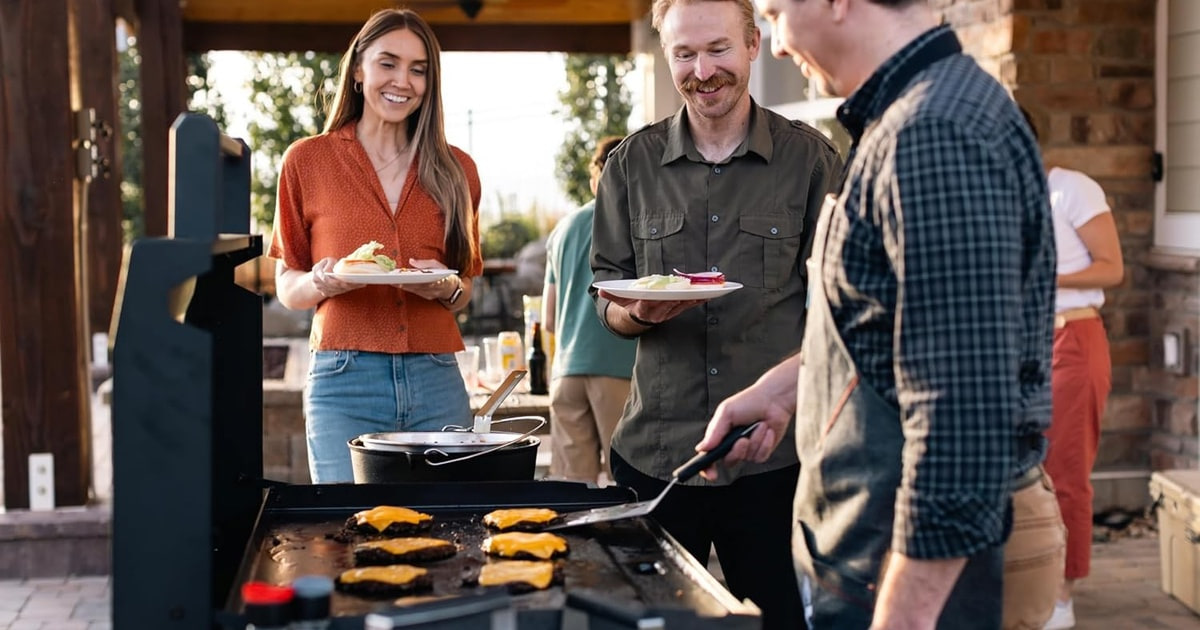
A griddle grill is a big steel pancake that happens to sit on a cart. That sounds silly until you cook on one. Eggs, bacon, hash browns, and toast all go down at once, and nothing falls through the grates. Smash burgers pick up the lacy brown crust you can't get over an open flame. Fried rice, quesadillas, cheesesteaks, and fajitas all work. If you own a grill and keep wishing you had a flat surface, this is the machine you're missing.
No griddle is low-maintenance, though. Steel plates rust if you leave them wet, so you'll oil the surface after every cook and keep a cover on it. Even four-burner models run hotter in the middle than at the edges, so you learn to park finished food near the corners. Grease has to go somewhere, and it'll find your driveway if you skip the tray. These things are also heavy. Once a 36-inch griddle lands on your patio, it mostly stays there.
So the real question is how much steel you need and how much fuss you'll tolerate. Four burners give you a searing zone and a warming zone at the same time, which matters more than raw size once you're feeding a crowd. Two burners are plenty for a family of four. Coated plates skip most of the seasoning work but won't sear quite as hard. We think that the Blackstone Original Portable Griddle with Built-in Hood is the best griddle grill for most people, and that the Pit Boss Ultimate Gas 4 Burner Griddle is the one to buy if you'd rather not season steel.
Everything we recommend

The most cooking space and control, if you have room for it
Nearly as much room, with a coating you don't have to season

Four heat zones on a budget griddle, with rougher edges

A side burner and a lid, for cooks who want a full kitchen
Prices as of Oct 24, 6:27 AM PT · Details
At a glance
| Product | Cooking surface | Burners | Price | |
|---|---|---|---|---|
| Blackstone Original Portable Griddle with Built-in HoodTop pick | 768 sq. in. | — | $539.99 |
| Camp Chef Gridiron Pro 36 Flat-Top GrillUpgrade pick | 2,304 sq. in. | — | $599.99 |
| Royal Gourmet GB4001F 4-Burner Propane Griddle forBudget pick | 582 sq. in. | — | $279.99 |
 | Blackstone Adventure Ready 2-Burner 28" Outdoor GriddleAlso consider | 448 sq. in. | — | Check price |
| Pit Boss Ultimate Gas 4 Burner Non-StickRunner-up | 673 sq. in. | — | $832.56 |
Prices as of Oct 24, 6:27 AM PT · Details
How we picked
Surface and heat zones. We compared listed cooking area against burner count, because a big plate with two valves gives you less control than a smaller one with four. Four independently controlled zones was the bar for anything meant to feed a crowd.
Plate material. Wirecutter's testing puts cold-rolled steel roughly 30 percent faster to searing heat than porcelain-coated plates, and Good Housekeeping rates seasoned steel higher for smash-burger crust. We weighed that against the upkeep coated surfaces let you skip.
Grease management. Consumer Reports found rear-trough designs captured more than 90 percent of rendered fat, while front-drain griddles spilled more onto the cart and the ground. We favored rear drains and trays you can pull without reaching under hot steel.
Portability and storage. We looked at folding legs, lift-off plates, and shipping weight to sort the griddles that can travel from the ones that stay put. Anything over roughly 80 pounds is a two-person job.
What owners report. We read owner feedback across each listing for recurring themes around rust, sticking, and assembly. Models with only a handful of reports got treated as less proven, and we say so where that's the case.
Top pick
The most cooking space and control, if you have room for it
Blackstone Original Portable Griddle with Built-in Hood
With 768 square inches and four independently controlled burners, this is the griddle that turns out a full breakfast for a dozen people without anyone waiting. The hinged hood also lets you melt cheese and steam vegetables, which most flat tops can't do at all.
$539.99fromAmazonPrices as of Oct 24, 6:27 AM PT · Details
Four burners are the whole point. You get four separate heat zones, so bacon crisps on the left while pancakes hold at low heat on the right. On a two-burner griddle you're constantly shuffling food around to make room. Blackstone puts the plate at 768 square inches and says that's enough for a dozen people at once. That's the difference between cooking breakfast and serving it.
The hood is the part people underestimate. Drop it and the griddle becomes a low oven, so cheese melts on burgers, onions steam soft, and a stack of tortillas warms without drying out. It also keeps leaves and pollen off the plate between cooks, which matters a lot if the griddle lives outside. Built-in wind guards help too, and Blackstone credits them for steadier heat on breezy days.
The plate is bare steel, not a coating, and that's a real advantage once it's seasoned. Wirecutter found cold-rolled steel griddles reached searing temperatures of 450 to 500 degrees roughly 30 percent faster than porcelain-coated plates. Good Housekeeping's test kitchen also rated seasoned steel above nonstick cooktops for the crust it builds on a smash burger. You pay for that in upkeep, not in performance.
Grease drains out the back, which is the layout you want. Consumer Reports found rear-trough designs caught more than 90 percent of rendered fat, while front-drain griddles let more of it run onto the cart and the ground. In practice you just scrape toward the back corner and forget about it. The tray pulls out from behind, so you're never reaching under a hot plate with a paper towel.
Flaws but not dealbreakers
It weighs about 128 pounds and it doesn't fold. The casters roll fine across a flat patio, but you aren't carrying this up steps or lifting it into a truck bed by yourself. Assembly takes a while and a second set of hands.
Bare steel rusts. Leave the plate wet after a rain or skip the oil wipe-down, and you'll be scrubbing orange spots before the next cook. The Spruce Eats recommends three to four coats of high-smoke-point oil before you ever cook on it, and the people who skip that step are usually the ones complaining that food sticks.
Runner-up
Nearly as much room, with a coating you don't have to season
Pit Boss Ultimate Gas 4 Burner Non-Stick
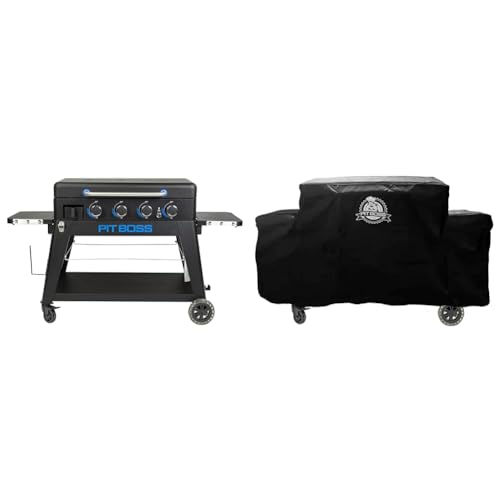
The armored ceramic surface skips the seasoning ritual entirely, so you can cook eggs on it the day it arrives. You still get four burners and 673 square inches, plus a fitted cover in the box.
$832.56fromAmazonPrices as of Oct 24, 6:27 AM PT · Details
The non-stick surface is the reason to pick this one. Pit Boss uses a proprietary armored ceramic coating instead of raw steel, so there's no multi-coat seasoning session before your first cook and no panic when it gets rained on. Eggs slide. Cleanup is a wipe rather than a scrape. If the maintenance side of griddle ownership is what's kept you from buying one, start here.
You're not giving up much space either. At 673 square inches across four burners, it's within a hundred square inches of the biggest griddles here, and 46,000 BTUs is enough to hold a hot searing zone while another burner idles. Cook for a family of six with friends over and you'll run out of appetite before you run out of plate.
The cover comes in the box, which sounds minor and isn't. A cover is the single accessory that most affects how long a griddle survives outdoors, and buying one later means another purchase and some guessing at dimensions. This one is cut for this griddle, in heavy polyester with a PVC backing. Throw it on once the plate cools and you've handled most of the rust problem.
The griddle top also lifts off. That drops the weight you're carrying, and it turns the plate into something you can take to a utility sink instead of scrubbing in place. Nobody's backpacking with a four-burner griddle. But a lift-off top makes deep cleaning and off-season storage far less of a project than it is on the fixed-plate models.
Flaws but not dealbreakers
A coating is a coating. Ceramic non-stick wears down over years of metal spatulas and hard scraping, and when it does you can't re-season your way back the way you can with bare steel. Treat it gently and it lasts a long time. Attack it with a sharpened griddle scraper and it won't.
Coated surfaces don't sear quite as hard as seasoned steel, either. Wirecutter's research put cold-rolled plates about 30 percent faster to searing heat than porcelain-coated ones. For pancakes and eggs you'll never notice the difference. For a hard crust on a smash burger, you might.
Budget pick
Four heat zones on a budget griddle, with rougher edges
Royal Gourmet GB4001F 4-Burner Propane Griddle for
Four independently controlled stainless burners and 582 square inches make this the budget option that doesn't force you down to two heat zones. Fit and finish are ordinary, but the part that cooks your food works.
$279.99fromAmazonPrices as of Oct 24, 6:27 AM PT · Details
Most budget griddles hand you two burners, which means one hot side and one slightly less hot side. Royal Gourmet gives you four, each with its own valve, and 52,000 BTUs total. That's enough to sear steaks on one end while tortillas warm on the other. The heat control you get here is the same kind of control you get on griddles that cost a lot more.
The legs fold completely and tuck under the body, which is unusual on a four-burner griddle this size. Royal Gourmet tells you to take the cooking plate off first, and you should, because the plate is the heavy part. Folded, it'll ride in a truck bed to a campsite and then go back on the patio. At about 82 pounds, though, plan on two people.
The honest caveat is how little owner feedback exists on it. This listing hasn't been around long enough to build the pile of reports that makes a verdict feel settled, so we're leaning on the spec sheet and on Royal Gourmet's record in budget outdoor cooking gear. If you'd rather buy something thousands of people have already lived with, either Blackstone is the more conservative choice.
The prep space is better than you'd expect down here. Folding shelves on both sides give you somewhere to land a sheet pan, and they fold up over the plate to shield it during storage. A middle shelf underneath holds the tank and your tools. The control panel is stainless, which is the part that tends to corrode first on cheap griddles.
Flaws but not dealbreakers
Stainless burners and a stainless control panel don't make the whole griddle stainless. The body and shelves are painted steel, and painted steel on a patio eventually chips and rusts at the corners. No cover is included, and you'll want one.
There's no hood. That rules out melting cheese under cover and steaming vegetables, and it means wind pulls heat off the plate on a cold morning. If either of those matters to you, the griddles with lids are worth the step up.
Upgrade pick
A side burner and a lid, for cooks who want a full kitchen
Camp Chef Gridiron Pro 36 Flat-Top Grill
The included Sidekick burner turns this into an outdoor kitchen, so sauces, sautéed onions, and a cast-iron sear all happen next to the griddle instead of on it. The plate arrives factory-seasoned, so you can cook the day you finish assembly.
$599.99fromAmazonPrices as of Oct 24, 6:27 AM PT · Details
The Sidekick burner is the reason to step up. It's a separate open-flame burner beside the griddle, so you can hold a pot of queso, boil corn, or get a cast-iron skillet ripping hot while the flat top stays busy. On every other griddle here, that pan has to sit on the plate and steal cooking space from whatever else you're making. This one keeps the whole surface free.
It comes factory-seasoned, which removes the most annoying part of owning a new griddle. The Spruce Eats recommends three to four coats of high-smoke-point oil before the first cook on bare steel, and that's an evening you don't get back. Camp Chef does it for you at the factory. You'll still oil the plate after each cook, but you can skip the initiation entirely.
The hinged lid does double duty. While you cook, it blocks wind, which matters more than people expect when a breeze pulls heat off the plate faster than the burners replace it. Closed, it keeps rain, dust, and curious squirrels off the steel. Add the flamethrower ignition and a heavy bottom shelf for tanks and cast iron, and it's the most complete package in this guide.
It's also the biggest thing here by a wide margin. Camp Chef lists the footprint at just over 72 inches long and nearly 40 inches tall, which is a serious chunk of patio. Measure first, especially if the griddle has to live under an eave, fit beside a table, or squeeze through a gate on its way to the backyard.
Flaws but not dealbreakers
Owner feedback on this model is thin so far, which is normal for a recent release but worth knowing before you commit to the most expensive griddle here. There's no long-term pattern of reports to lean on yet, so we're weighting the spec sheet more heavily than we'd like.
Factory seasoning is a head start, not a permanent coating. It wears off in patches around the hottest spots, and you re-season those areas the same way you would on any bare steel plate. If you wanted something genuinely maintenance-free, the ceramic-coated Pit Boss is the one to look at.
Who this is for
Buy a griddle if you already grill and keep hitting the limits of grates: eggs, pancakes, fried rice, chopped vegetables, cheesesteaks, anything small enough to fall through. Serious Eats points out that a flat plate reuses rendered fat and residue as it cooks, which is why big batches brown more evenly on steel than over an open flame. Griddles are also the right answer if you host breakfast, feed a youth sports team, or make smash burgers more than a few times a year. If you mostly cook two steaks and some corn, a regular grill still does that better.
This guide covers freestanding propane griddles you'd put on a patio, in a driveway, or at a campsite. It doesn't cover electric countertop griddles, pellet grills, flat-top inserts that drop into an existing grill, or the accessories that fit those machines. If your outdoor space is a small balcony where propane isn't allowed, none of these will work for you, and an indoor electric griddle is a different shopping trip.
How we picked
Surface and zones: We compared listed square inches against burner count, because four valves beat a big plate with two. Plate material: Wirecutter puts cold-rolled steel roughly 30 percent faster to searing heat than coated plates, so we treated bare steel as the performance choice and ceramic as the low-maintenance one. Grease: Consumer Reports found rear troughs caught more than 90 percent of rendered fat, so front-drain designs lost points. Portability: Folding legs, lift-off plates, and shipping weight decided which griddles can actually travel. Owner feedback: We read each listing's reports for patterns around rust and sticking, and flagged the models too new to have any.
Other griddle grills worth considering
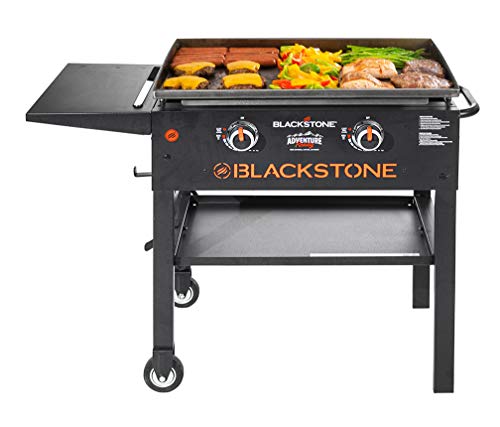
If you want a griddle that folds into a trunk: The Blackstone Adventure Ready 2-Burner 28" Outdoor Griddle — The Adventure Ready 28 gives up two burners and about 320 square inches next to the 36-inch model, and gets folding legs in return. Wirecutter singled out the smaller 22-inch version for how shallow it packs for trunk storage, and the 28 follows the same idea with more room to cook. Its 448 square inches still holds 44 hot dogs, which covers most tailgates and campsites. You get rear grease management, a built-in igniter, and by far the longest owner track record in this lineup. What you lose is the hood, the extra heat zones, and the side shelves.
The competition
This is what our research surfaced in the griddle category, not a map of everything sold. Griddle lineups turn over fast, and plenty of decent models from smaller brands never show up in the published testing and spec comparisons we relied on. Everything else in this lineup ended up as a pick, a close alternative, or an accessory rather than a griddle in its own right.
Seasoning and upkeep
Bare steel needs a patina, not a coating. The Spruce Eats recommends three to four thin coats of a high-smoke-point oil before your first cook: wipe on a little, heat until it stops smoking, let it cool, repeat. After that the routine is short. Scrape the plate while it's still warm, wipe it with a paper towel, then rub a thin film of oil across the whole surface. Empty the grease tray before it overflows, because a full tray is how griddles end up staining a patio. Keep a cover on it between cooks, and dry the plate after rain. Ceramic-coated plates skip the seasoning but still want oil, a cover, and a soft scraper.
Questions we get
What's the difference between a griddle and a flat top grill?
Not much, and the terms get used interchangeably. Both are solid steel plates heated from below by gas burners instead of open grates. Some brands reserve flat top for larger, restaurant-style units with a thicker plate. If a listing calls itself either one, you're looking at the same kind of machine.
What's the best griddle for smash burgers?
A seasoned bare steel plate with enough burners to keep one zone screaming hot. Good Housekeeping's test kitchen rated properly seasoned steel above nonstick cooktops for the crust it builds, and Wirecutter found steel reaches searing heat faster than coated plates. Among our picks, the Blackstone 36 is the one to get.
How many burners do you actually need?
Two burners handle a family of four fine. Four burners let you sear, hold, and warm at the same time, which is what makes cooking a full meal on one surface realistic. If you host, go with four. If you cook for two or three people, you'll rarely miss them.
Do griddle grills rust, and how do you stop it?
Bare steel griddles absolutely rust if you leave them wet or store them uncovered. The fix is boring and effective: scrape the plate warm, wipe it, oil it thinly, and put a cover on. Ceramic-coated plates like the Pit Boss are far more forgiving here, which is a big part of their appeal.
Can you leave a griddle outside all year?
You can, with a fitted cover and a dry spot. Snow and standing water are the enemies, since moisture that sits on the plate does the damage, not cold. Pull the propane tank off for long storage, and check the surface after storms. If you can move it into a shed or garage over winter, do that instead.
How much cooking surface do you really need?
Roughly 400 to 450 square inches feeds a family of four with room to move food around. Something near 600 square inches handles six to eight people. Once you're regularly cooking for a dozen, the 700-plus range stops being excessive. Buy for how you actually cook, not for the one party a year.
Why you should trust us
For this guide:
- We read published griddle testing and comparisons from Wirecutter, Consumer Reports, Good Housekeeping, and Serious Eats on plate materials, grease routing, and how flat tops brown food.
- We pulled cooking area, burner counts, and BTU figures from each manufacturer's own listing and spec sheet rather than from secondhand summaries.
- We read owner feedback across these listings for recurring themes, and treated models with only a handful of reports behind them as less proven.
- We read owner reviews on every listing, weighted toward the critical ones, because that is where the recurring failures show up.
- We have a systematic way of automatically fetching the latest prices, so the numbers on this page stay current.
- This is a research-focused guide, so the team may not own every product listed — though we often do own the top winners, which gives us extra context for the recommendations.
- We don't accept free products, and the retailer commission never changes which product we recommend.
Sources
Blackstone 36-Inch Culinary Griddle Review, Consumer Reports
We Tested 12 Outdoor Griddles to Find the Best Ones, Wirecutter
Best Griddles of 2026, Tested by Food Network Kitchen, Food Network
Ninja Woodfire Outdoor Grill & Griddle Review, RTINGS.com
Blackstone Official Griddle Specifications and Care Guide, Blackstone Products
Camp Chef Flat Top Grill 600 Product Specs, Camp Chef
Traeger Flatrock Griddle Technology Overview, Traeger
Best Outdoor Griddles Tested 2026, Good Housekeeping
Griddle vs. Grill: What's the Difference and Which Should You Buy, Serious Eats
How to Season a Steel Griddle Properly, The Spruce Eats
Best Budget Griddle Grills Reviewed, Better Homes & Gardens
Outdoor Griddle Market Trends and Buyer Survey 2026, Statista
Amazon product listings and owner reviews for all 5 products
Manufacturer specification pages for each product
Some passages in this guide may be paraphrased with AI help.
Product prices and availability are accurate as of the date/time indicated and are subject to change. Any price and availability information displayed on Amazon.com at the time of purchase will apply to the purchase of this product.
More like this.
Continue exploring lifestyle reviews and recommendations.

The Best Gas Grills for Outdoor Entertaining
A grill that's fine for two pork chops on a Tuesday falls apart when twelve people show up. You need enough grate space to get everything off at once,…

The Best Outdoor Grills
A grill gets used more than almost anything else you keep outside. On a Tuesday you want it hot in ten minutes so the chicken is done before the kids melt…

The Best Pellet Grills
A pellet grill runs on compressed hardwood and a small electric brain. An auger feeds pellets into a firepot, a fan pushes the heat around, and a…

The Best Wireless Bluetooth Grill Thermometers
A wireless thermometer changes how you cook more than almost any other grill accessory. You stop lifting the lid every ten minutes. You stop cutting into…

The Best Backyard Gas Grills
A gas grill earns its keep on a Tuesday, not just on the Fourth of July. You want it to light on the first try, get hot enough to sear a steak, and hold a…

The Best Outdoor Grills and BBQ Smokers
Most of the cooking you'll do on a grill isn't brisket. It's burgers on a Tuesday, chicken thighs before the kids melt down, a couple of steaks when…