The Best Hardside Spinner Suitcases
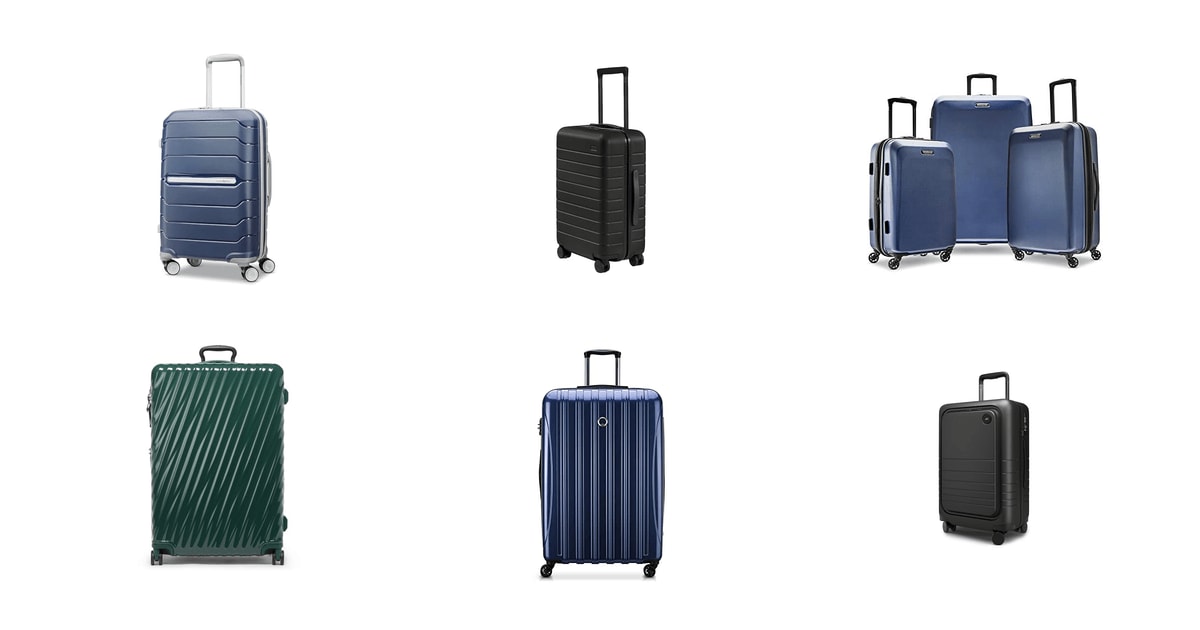
A hardside spinner is the bag you'll shove into an overhead bin at 6 a.m., hand to a baggage handler who's moving a hundred bags an hour, and drag across a parking garage in the rain. So the things that matter aren't glamorous. Does the shell flex instead of cracking? Do the wheels still roll straight after a year? Can you lift it into the bin without a shoulder workout? Everything else — the finish, the interior mesh pockets, the color you picked — is secondary to those three.
Here's the honest part: no hardside bag is immune to airline abuse, and none of them fixes the trade-off at the center of the category. A hard shell protects your contents better than fabric, but it can't squish into a tight bin the way a soft bag can. Four spinner wheels glide beautifully on airport tile and fight you on cobblestones and broken sidewalks. And warranties sound generous until you read them — most cover manufacturing defects only, which is not the same thing as covering the cracked corner an airline gave you.
We looked at what published reviews, manufacturer spec sheets and owner feedback say about shells, wheels, weight and warranty coverage, and we weighted durability over looks. We think that the Samsonite Freeform Hardside Carry-On is the best hardside spinner suitcase for most people, and that the Travelpro Platinum Elite Hardside Carry-On is the one to buy if you fly most weeks and want the wheel system that holds up longest.
Everything we recommend

Light, tough, and priced where most people are shopping

Wheels and hardware built for people who fly every week

Three matching bags for less than one good carry-on

The best interior organization if you overpack
At a glance
| Product | Weight | Dimensions | Price | |
|---|---|---|---|---|
| Samsonite Freeform Hardside Carry-On Luggage with SpinnerTop pick | 6.5 lbs | 21.25x15.25x10in | $149On sale |
| Away The Carry-On LuggageAlso great | 7.5 lbs | 21.7x9x14.4in | $275 |
| American Tourister Moonlight Hardside Expandable Luggage withBudget pick | — | 30x20x13in | $183.06 |
 | TUMI - 19 Degree Large Expandable CheckedAlso consider | — | 30.5x20x11in | $1,050 |
 | DELSEY PARIS Helium Aero Hardside Expandable LuggageAlso in lineup | 12.5 lbs | 29x12.5x19.5in | $219.99 |
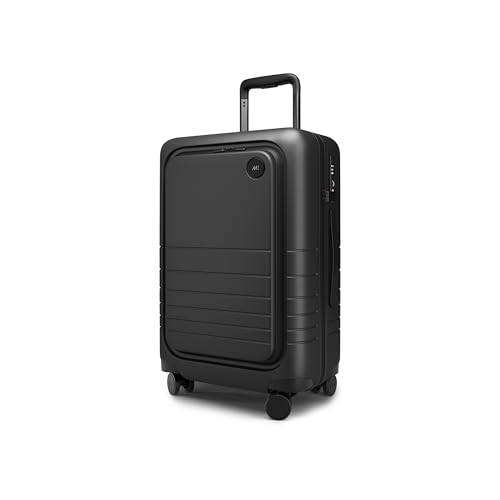 | Monos Carry-On Pro Plus Luggage 21 InchAlso consider | 8.38 lbs | 23x9.5x15in | $275.93 |
| Travelpro Platinum Elite Hardside Carry-On Luggage SpinnerUpgrade pick | 8.2 lbs | 23x14.5x9.5in | $365 |
How we picked
Shell material. We favored polycarbonate over ABS based on manufacturer materials documentation and Good Housekeeping Institute lab testing, both of which show polycarbonate is lighter and flexes on impact rather than cracking. ABS bags had to earn their place on price and package value.
Wheel system. Consumer Reports' wheel durability work found premium inline-style spinners stay smooth through 1,500-plus simulated miles versus 600 to 900 for standard plastic wheels. We noted which bags use engineered systems like MagnaTrac or Hinomoto and which use generic spinners.
Empty weight. We compared published weights against the 50-pound checked limit and the weight caps international carriers apply to cabin bags. Every pound of suitcase is a pound you can't pack.
Size compliance. We checked listed exterior dimensions, wheels and handles included, against the 22 by 14 by 9 inch limit that American, Delta and United publish. Several popular bags exceed it, and we flag them.
Warranty scope. We read what each warranty actually covers, because most only cover manufacturing defects rather than airline damage. Coverage that extends to rough handling scored higher than a longer term that covers less.
Top pickOn sale
Light, tough, and priced where most people are shopping
Samsonite Freeform Hardside Carry-On Luggage with Spinner
The Freeform pairs a scratch-resistant polycarbonate shell with four oversized spinner wheels and a built-in TSA lock, at 6.5 pounds empty. It's the lightest carry-on here by a real margin, which means more of your airline weight allowance goes toward what you actually packed.
$149fromAmazonList priceWeight is the spec that quietly changes your trip, and this one wins it. At 6.5 pounds, the Freeform gives you a pound and a half to nearly two pounds more packing headroom than most of the other carry-ons here before you hit a weight limit. If you fly international carriers that weigh cabin bags, that's a shirt, a pair of shoes, or the difference between walking through and repacking at the counter.
The shell is polycarbonate rather than ABS, and that matters more than the marketing suggests. Samsonite's own materials documentation puts polycarbonate at roughly 20 to 30 percent lighter than an equivalent ABS shell, and it flexes on impact instead of cracking. Good Housekeeping's lab work found polycarbonate cases scored 15 to 20 percent better on drop-impact tests than same-price ABS bags. The textured finish also hides the scuffs that gloss finishes broadcast.
Owners who've had this bag through multiple trips consistently describe the same two things: it rolls smoothly, and it holds more than they expected for the size. The interior gets elastic cross straps, a divider and a zip pouch — not a lot of engineering, but enough to keep a week of clothes from turning into a pile. The 10-year warranty covers defects in materials and workmanship.
One caveat you should know before you order. The listed exterior runs 23 by 15.3 by 9.8 inches with wheels, which is over the 22 by 14 by 9 standard that American, Delta and United publish. In practice it fits most domestic overhead bins fine, and owners fly it constantly. But if your route includes a European budget carrier or a strict gate agent, this is the bag most likely to get flagged.
Flaws but not dealbreakers
It's over the published 22 by 14 by 9 carry-on standard. Most of the time nobody measures, but "most of the time" isn't a guarantee, and the expansion zipper makes it worse if you use it. If you fly Spirit, Frontier or European low-cost carriers regularly, treat this as a bag you might have to gate-check.
The wheels are competent, not exceptional. They're generic spinner wheels rather than the inline-skate-style or magnetically self-aligning systems on the premium bags here, and Consumer Reports' wheel durability work found standard plastic spinners degrade after roughly 600 to 900 simulated miles, versus 1,500-plus for premium wheels. For a few trips a year that's irrelevant. For weekly flying, it isn't.
Samsonite backs the Freeform with a 10-year warranty against defects in materials and workmanship.
Upgrade pick
Wheels and hardware built for people who fly every week
Travelpro Platinum Elite Hardside Carry-On Luggage Spinner
Travelpro's Platinum Elite Hardside runs eight MagnaTrac self-aligning spinner wheels, aluminum corner armor and a polycarbonate shell. It's the bag to buy if your luggage does a hundred airport miles a month and you're tired of replacing wheels.
$365fromAmazonTravelpro built its reputation on bags that flight crews drag through terminals five days a week, and this is the hardside version of that thinking. The PrecisionGlide system uses eight 360-degree MagnaTrac wheels with a magnetic self-alignment mechanism that re-centers them when you push forward. Per Travelpro's technical documentation, that's what kills the lateral drift you get on smooth tile — the wobble that makes a bag veer off while you're walking.
The corner armor is the detail that separates this from every other bag here. Aluminum reinforcement sits at the high-stress zones, which is exactly where hardside shells fail — corners take the hit when a bag goes off a belt or gets wedged into a cargo hold. Polycarbonate flexes well across a flat panel. Corners are where it gives up.
The interior is the most thought-through of the group: packing dividers, hold-down straps, removable shoe bags, essentials storage and a water-resistant compartment for wet swimsuits or toiletries. There are external USB-A and USB-C ports wired to a concealed battery sleeve in the expansion gusset, and the power bank is removable, which is what FAA rules on lithium batteries in checked luggage require. The power bank isn't included.
There's a hidden pocket sized for an AirTag or similar tracker, plus a built-in TSA lock that resets from the default 0-0-0. The PowerScope handle adjusts between 36 and 42.5 inches, which is a wider range than most, and it matters if you're tall enough that standard handles put your wrist at an odd angle.
Flaws but not dealbreakers
It's expensive relative to what it does on paper, and owners say so directly — the phrase that comes up is that it's a nice bag priced above where it should be. If you fly a few times a year, you will not get your money back out of the wheel system.
At 8.2 pounds it's among the heavier carry-ons here, nearly two pounds more than the Freeform. Aluminum armor and eight wheels have to weigh something. And at a listed 23 by 14.5 by 9.5 inches, it's also over the published domestic carry-on standard, so the same gate-agent caveat applies.
Travelpro covers the Platinum Elite line under a Limited Lifetime Warranty.
Budget pick
Three matching bags for less than one good carry-on
American Tourister Moonlight Hardside Expandable Luggage with
The American Tourister Moonlight set gives you 21-, 24- and 28-inch spinners with expansion, book-opening interiors and a 10-year warranty. The ABS shell is heavier and less forgiving than polycarbonate, but for a family that flies twice a year, it's a lot of luggage for very little.
$183.06fromAmazonIf you're outfitting a household rather than buying one bag, the math here is hard to argue with. You get a carry-on, a mid-size checked bag and a large checked bag for less than what a single premium carry-on costs. The 21-inch meets domestic carry-on limits, and the 24 and 28 handle the trips where you're gone for two weeks or packing for kids.
The shell is ABS, and you should go in knowing what that means. ABS is heavier than polycarbonate at the same dimensions and it cracks under repeated pressure rather than flexing. Good Housekeeping's drop-impact testing puts polycarbonate 15 to 20 percent ahead. For occasional travel that gap rarely surfaces. For fifty flights a year it absolutely will.
The interiors are more useful than the price suggests. Each bag opens flat like a book, with a mesh divider and cross straps on one side and a zipped pocket on the other, plus 1.5 inches of expansion. Owners report keeping these five years and longer through college semesters and cross-country moves, with zippers usually being the first thing to go.
American Tourister has been a wholly-owned Samsonite subsidiary since 1993, which is why the TSA lock hardware and manufacturing feel familiar if you've owned a Samsonite. It's positioned as the entry tier of the same company, and the 10-year warranty against defects matches what Samsonite offers on the Freeform.
Flaws but not dealbreakers
ABS is the compromise, full stop. It's heavier per bag than polycarbonate and more likely to crack at a corner after enough rough handling. The 28-inch bag in particular is a heavy piece before you put anything in it, and you'll feel that against a 50-pound checked limit.
Zipper failure is the most common long-term complaint from people who've owned these for years. It's usually what ends the bag's life rather than the shell, and it's the sort of thing warranty claims get argued over.
American Tourister backs the Moonlight set with a 10-year limited warranty against defects in materials and workmanship.
Also great
The best interior organization if you overpack
Away The Carry-On Luggage
Away's Carry-On uses a dual-buckle compression panel that lets you flatten a genuinely over-full bag until it zips. The polycarbonate shell, WhisperGlide wheels and TSA lock are solid, but the compression system is the reason to pick it.
$275fromAmazonThe compression panel is the feature people actually change their packing around. Two buckles pull a panel down over one side of the bag, flattening clothes until the zipper closes on a load that shouldn't fit. If you're the person who sits on the suitcase, this replaces that. Away also includes three mesh pockets and a laundry bag for the dirty half of the trip.
At 21.7 by 14.4 by 9 inches, this is one of the few bags here that lands inside the 22 by 14 by 9 standard that American, Delta and United publish. That's genuinely useful. If you fly routes where gate agents check sizers, or you're connecting through a European carrier with a tighter limit, this is the safer bet than the Freeform.
Away's LifetimeCare coverage is broader than most warranties in this category, and that's the real argument for the brand. It covers repair for functional damage from manufacturing defects and from what Away calls unexpected rough travel — which is closer to covering what airlines do to bags than a standard defects-only warranty. Most of the competition stops at defects.
The four WhisperGlide 360-degree spinner wheels get consistent praise from owners for rolling smoothly, including on the kind of uneven European street surfaces where spinners usually struggle. The trolley handle has three height positions with a quick release, and there are grab handles on both the top and the underside for hoisting it into a bin.
Flaws but not dealbreakers
At 7.5 pounds it's a pound heavier than the Freeform, and it's a zippered bag in a lineup that includes latch-closure alternatives. Some owners specifically want a zipperless version at this size and it isn't offered.
Away is a newer brand with a smaller ownership track record than Samsonite or Travelpro, so there's less multi-decade evidence of how these hold up. The bags that have been in circulation a while report well — it's just a thinner history to lean on.
Away includes LifetimeCare coverage, with repair support for functional damage from manufacturing defects and rough travel.
Who this is for
This guide is for anyone buying a hard-shelled suitcase on four spinner wheels — the standard airport bag, in carry-on and checked sizes. If you fly a handful of times a year and want one bag that survives a decade, the top pick will do it. If you're outfitting a family, the budget set covers everyone for less than a single premium carry-on. And if your job puts you in a terminal most weeks, spending up on the wheel system and corner armor is the one upgrade that pays for itself.
Skip hardside entirely if most of your travel involves cobblestones, gravel or long walks on broken sidewalk — two-wheel rollaboards you tilt and pull handle rough ground far better than four spinner wheels, which want smooth floors. Skip it too if you regularly cram a bag into a full overhead bin, since fabric compresses and a shell doesn't. We didn't cover softside luggage, duffels, backpacks or aluminum-shell bags here, and we only wrote about products we could confirm in the current lineup.
How we picked
Shell: We favored polycarbonate over ABS, based on materials documentation and Good Housekeeping Institute lab testing showing polycarbonate is lighter and flexes rather than cracks on impact. Wheels: Consumer Reports found premium spinner systems stay smooth roughly twice as long as generic plastic wheels, so engineered systems like MagnaTrac and Hinomoto scored higher. Weight: Every pound of empty suitcase comes out of your packing allowance, so we compared published weights directly. Size: We checked listed exteriors against the 22 by 14 by 9 inch limit American, Delta and United publish, wheels and handles included. Warranty: We read the fine print, because coverage that includes airline damage is worth far more than a long term that only covers defects.
Other hardside spinner suitcases worth considering
If you want a laptop pocket you can reach at security: The Monos Carry-On Pro Plus Luggage 21 Inch ($275.93) — The Monos Carry-On Pro Plus puts a padded front compartment on the outside of the shell, sized for laptops up to 16 inches, with open pockets and zip pouches for chargers, a passport and a boarding pass. That's a real workflow improvement — you pull the laptop without opening the bag on a conveyor. The Hinomoto Japanese spinner wheels are rated to 88 pounds per wheel, well above the roughly 50-pound rating typical of budget luggage, and owners describe them as unusually quiet. The trade-offs are weight and warranty. At 8.38 pounds it's the heaviest carry-on here, and multiple owners report the warranty covers manufacturing defects only — normal wear and airline handling damage aren't included, which is a meaningful step down from Away's coverage.
If you want a large checked bag with real brand presence: The TUMI - 19 Degree Large Expandable Checked ($1,050) — The Tumi 19 Degree Large Expandable is the bag for someone who travels for work and wants the hardware to look the part. The angled shell is genuinely distinctive on a carousel, and Tumi Tracer registers the bag to a serial number in the lining, so airlines and hotels can match a found bag back to you through Tumi's global database. You also get a low-profile integrated lock, compression straps, a hanger bracket and monogramming. What you give up is warranty length — five years, against lifetime coverage from Travelpro, Away and Monos — and some owners report wheel and lock problems within the first couple of years. It's also the most expensive bag in this guide by a wide margin.
The competition
These are the bags our research surfaced alongside the picks, not a survey of everything sold. Luggage lineups change constantly and most brands sell a dozen near-identical variants, so treat this as the shortlist we could confirm rather than the full market.
The DELSEY PARIS Helium Aero Hardside Expandable Luggage ($219.99) — The Delsey Paris Helium Aero is a 28-inch checked bag with a 100 percent polycarbonate shell, double spinner wheels for a wider and steadier base, a 3-dial TSA lock and two inches of expansion. At 12.5 pounds it's light for its size, and owners who fly internationally single out that unpacked weight as the reason they keep it — on a 50-pound limit, every pound of shell is a pound of clothes. The reason it isn't a pick is the glossy metallic finish, which looks sharp for one trip and shows every scuff after that. It's a good option if you check a big bag a few times a year and want the packing volume without the weight penalty.
Fit, sizing and care
Measure before you fly, not at the gate. American, Delta and United publish a 22 by 14 by 9 inch carry-on limit including wheels and handles, and several popular hardside bags — including our top pick — run over it. Spirit allows 22 by 18 by 10, but European low-cost carriers are usually tighter. For checked bags, the standard ceiling is 62 total linear inches; go over and you'll pay an oversize fee each way. Skip the expansion zipper on anything you plan to carry on, since that extra inch or two is exactly what makes a sizer reject it. For upkeep, wipe scuffs off polycarbonate with mild soap and a soft cloth rather than a solvent, keep the telescoping handle free of grit, and don't store the bag packed and compressed for months — sustained pressure is what warps a shell.
Questions we get
Is polycarbonate or ABS better for hardside luggage?
Polycarbonate, for almost everyone. Samsonite's materials documentation puts it 20 to 30 percent lighter than ABS at the same dimensions, and it flexes on impact instead of cracking. Good Housekeeping Institute lab testing found polycarbonate cases scored 15 to 20 percent better on drop-impact resistance than same-price ABS bags. ABS is worth considering only when the price gap buys you something else you need, like a full three-piece set.
Are 4-wheel spinners better than 2-wheel rollaboards?
It depends entirely on where you walk. Four spinner wheels are better inside airports — you push the bag upright beside you instead of dragging it, which is easier on your shoulder and lets you steer through crowds. Two-wheel rollaboards win outdoors, on cobblestones, gravel and cracked sidewalks, because you tilt them and the larger wheels roll over obstacles that stop a spinner. If most of your travel is city streets rather than terminals, buy two wheels.
How long should a hardside spinner last with frequent use?
For occasional travel, a good polycarbonate bag should go a decade or more, and owners routinely report five-plus years even on budget sets. Frequent flyers wear them out faster, and wheels are almost always the first failure. Consumer Reports found standard plastic spinner wheels start degrading around 600 to 900 simulated miles, while premium inline-style wheels hold up past 1,500. Zippers are the second most common thing to fail.
What hardside suitcase has the best warranty coverage?
Read what's covered, not how long it lasts. Most warranties — including the 10-year terms on the Samsonite and American Tourister bags — cover manufacturing defects only, which excludes the cracked corner an airline gave you. Away's LifetimeCare explicitly covers functional damage from rough travel as well as defects, and Travelpro's Limited Lifetime Warranty is the standard frequent flyers point to. Monos owners specifically report that normal wear and airline handling damage are not covered.
Can a cracked hardside shell be repaired?
Usually not well. Polycarbonate can be patched, but a crack is a stress point and it tends to spread from wherever it started, so a repair often buys you a trip or two rather than years. If the crack is at a corner or near a wheel housing, replace the bag. Check your warranty first — some brands will repair or replace a shell even when the damage came from handling.
Does hardside protect fragile contents better than softside?
Yes, for crush protection specifically. A rigid shell spreads the load when heavier bags stack on top of yours in a cargo hold, which is where softside bags let things get squashed. The trade-off is that a hard shell can't compress into a tight overhead bin, and it can't absorb a sharp point impact the way padding does. For electronics, ceramics or anything you'd wince at breaking, hardside is the safer bet.
Why you should trust us
For this guide:
- We compared manufacturer spec sheets for shell material, empty weight and listed exterior dimensions across every bag here, and checked those dimensions against the carry-on limits U.S. airlines publish.
- We read published lab work on shell impact resistance and wheel durability from the Good Housekeeping Institute and Consumer Reports, and used it to weigh polycarbonate against ABS and premium spinner systems against generic ones.
- We read owner feedback across each listing to find the failure patterns that show up repeatedly — wheel loss, zipper wear, lock trouble and warranty claims that got denied.
- We read owner reviews on every listing, weighted toward the critical ones, because that is where the recurring failures show up.
- We have a systematic way of automatically fetching the latest prices, so the numbers on this page stay current.
- This is a research-focused guide, so the team may not own every product listed — though we often do own the top winners, which gives us extra context for the recommendations.
- We don't accept free products, and the retailer commission never changes which product we recommend.
Sources
Best Carry-On Luggage 2026 — Wirecutter (NYT), Wirecutter
Best Hardside Luggage — Travel + Leisure, Travel + Leisure
Best Hardside Luggage Picks — Forbes Vetted, Forbes Vetted
Best Hard Shell Suitcases 2026 — Good Housekeeping, Good Housekeeping
Best Hardside Luggage 2026 — Condé Nast Traveler, Condé Nast Traveler
Best Hardside Luggage — Reviewed (USA Today), Reviewed / USA Today
Carry-On Size Restrictions for All Airlines 2026 — The Points Guy, The Points Guy
Luggage Ratings and Reviews — Consumer Reports, Consumer Reports
Best Hardside Luggage — CNN Underscored, CNN Underscored
FAA Hazardous Materials — Lithium Battery Carry-On Rules, Federal Aviation Administration
Amazon product listings and owner reviews for all 7 products
Manufacturer specification pages for each product
Some passages in this guide may be paraphrased with AI help. Prices are refreshed automatically.
More like this.
Continue exploring lifestyle reviews and recommendations.

The Best Dusters
Dust isn't just ugly. It's mostly you - dead skin makes up somewhere between 20 and 50 percent of household dust, according to the American Lung…

The Best Griddle Grills
A griddle grill is a big steel pancake that happens to sit on a cart. That sounds silly until you cook on one. Eggs, bacon, hash browns, and toast all go…

The Best Weber Grill Accessories
A Weber grill is a long-term relationship. The kettle or the Genesis in your yard will probably outlast the car in your driveway, and the accessories you…

The Best Osprey Backpacks
A backpack is one of the few things you buy that has to fit you, not just hold your stuff. Get the torso length wrong and a loaded pack digs into your…

The Best Polarized Sunglasses for Driving and Fishing
Glare is the thing you stop noticing until it's gone. On the highway it's the sheet of white light that comes off wet asphalt after a rain, or off the…

The Best Gifts for LEGO-Loving Adults
A good LEGO gift buys someone hours away from a screen. That's the real present here - a quiet evening at the kitchen table, a podcast on, a pile of…