The Best Home Gym Systems
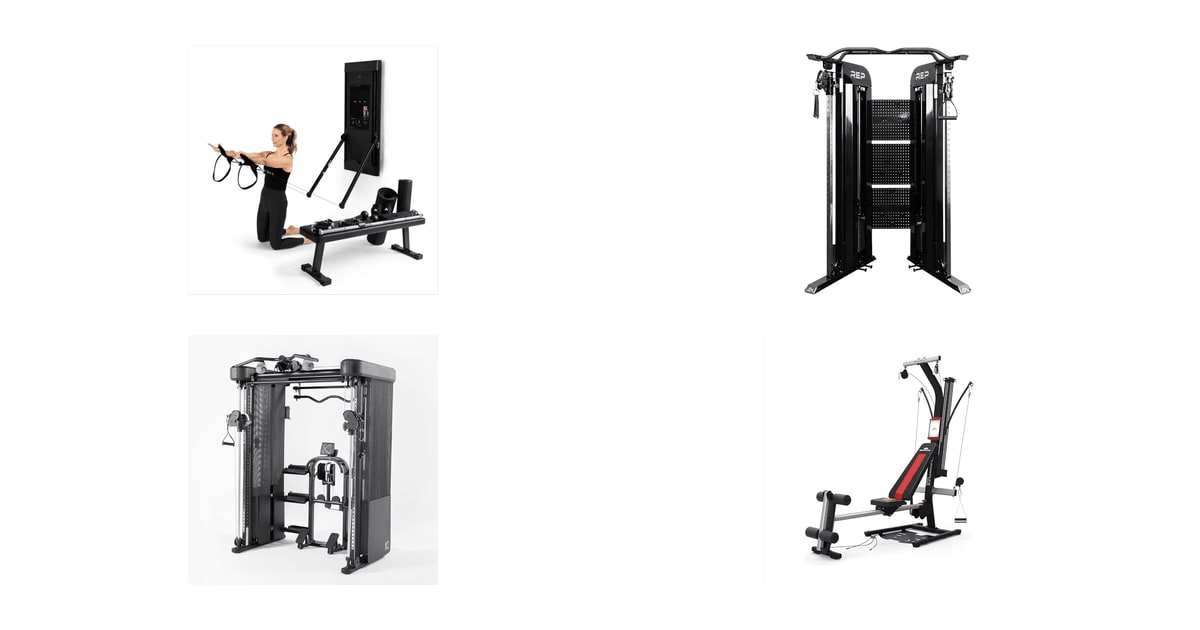
A home gym earns its keep in the small moments. You've got 40 minutes between a meeting and dinner, and the drive to the gym would eat half of it. Cable-based systems make that window usable. You pin a weight, grab a handle, and go — no loading plates, no spotter, no waiting for the rack. And because the resistance comes from a cable rather than a barbell over your chest, you can train close to your limit alone without much risk. That's the real argument for one of these machines.
Here's the part nobody puts in the marketing copy: no home gym gives you everything. Cable machines are excellent for pressing, rowing, curls and flyes, but they're awkward for heavy squats and deadlifts unless you buy a rack-style unit that eats your garage. Smart systems save floor space and then charge you a monthly fee forever. Budget multi-stations are quiet and cheap but cap out at a weight a committed lifter will pass in a year. Pick the compromise that matches how you actually train, not the one that matches your ambitions.
We spent our time on the machines that show up again and again in published reviews and owner feedback, comparing spec sheets, cable ratios, footprints and warranty terms. The lineup below runs from a wall-mounted smart trainer to a 150-pound multi-station that costs a fraction as much. We think that the REP Fitness Arcadia is the best home gym system for most people, and that the Tonal 2 is the one to buy if you have no floor space to spare and want the machine to program your workouts.
Everything we recommend
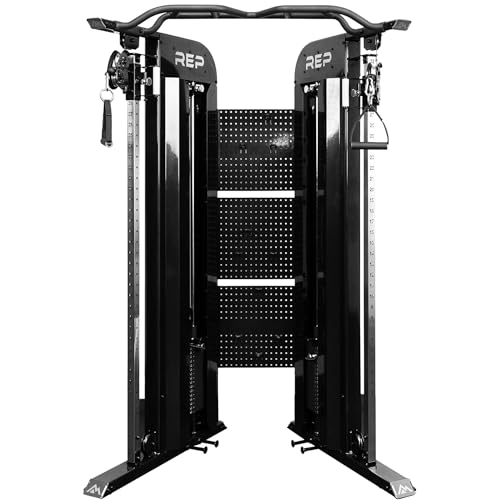
Commercial-feeling cable work in a garage-sized footprint

Zero floor space and a coach built in, if you'll pay monthly forever

Adds a Smith bar, so you can actually squat and press heavy
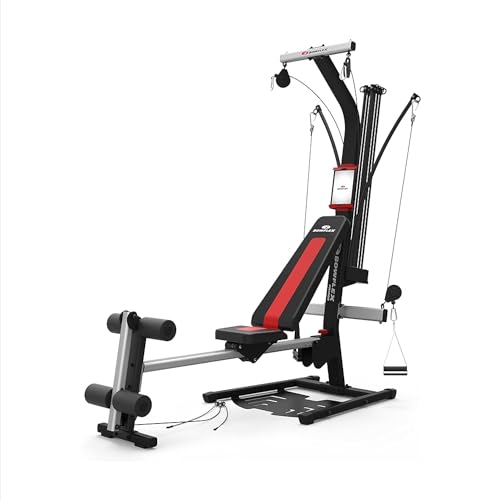
Quiet, gentle on joints, and easy to live with in a spare room
At a glance
| Product | Weight Stack | Max Resistance | Price | |
|---|---|---|---|---|
| Tonal 2 Smart Home Gym System: AI-PoweredAlso great | — | 250 lbs | $5,185 |
| REP Fitness Arcadia Functional TrainerTop pick | 170 lbs x2 | 540 lbs w/bands | $2,199.99 |
| Inspire Series FT2 PRO Smith Functional TrainerUpgrade pick | 165 lbs x2 | 350 lbs | $6,999 |
| BowFlex PR1000 Home GymBudget pick | — | 200+ lbs | $639.99On sale |
 | Marcy Multifunction Steel Home Gym 150lb WeightAlso consider | 150 lbs | 150 lbs | $599.99 |
How we picked
Real resistance, not stack numbers. We checked pulley ratios against advertised stack weights, because a 2:1 ratio halves what you actually feel. A machine had to offer enough felt resistance to stay challenging for at least a couple of years of consistent training.
Exercise range. We compared cable positions, attachment points and documented movement lists from manufacturer specs. Functional trainers with independent adjustable pulleys cover well over 100 movements, while fixed multi-stations tend to top out around 70.
Space and installation. We read the published dimensions, weights and ceiling requirements for every unit, and weighed how hard each one is to get into a basement or garage. Assembly complexity and whether professional installation is needed factored in.
Build and durability. We looked at frame steel, weight capacity, and what owners report after months of use — cable smoothness, hardware completeness, and whether anything rattles loose. Commercial-grade steel and lifetime structural warranties carried real weight.
Total cost of ownership. We counted mandatory subscriptions and required add-ons as part of the purchase, not extras. A machine that needs a bench, attachments and a monthly fee to function is a different proposition than one that works out of the box.
Top pick
Commercial-feeling cable work in a garage-sized footprint
REP Fitness Arcadia Functional Trainer
The Arcadia is a free-standing functional trainer with dual 170-pound stacks and 32 cable positions, so one machine covers presses, rows, flyes, pulldowns and cable squats. It's the rare home unit that feels like gym equipment rather than a compromise.
$2,199.99fromAmazonA functional trainer with two independent stacks is the most exercise you can buy per square foot. Two cables, adjustable to 32 heights each, means you're not locked into the handful of movements a multi-station bolts you into. Chest press, single-arm rows, face pulls, wood chops, cable curls, lateral raises, pallof presses — you set the pulley height and the exercise exists. That's the whole reason serious lifters keep landing on this format.
The stacks are 170 pounds each at a 2:1 ratio, which is the number that trips people up. A 2:1 pulley halves what you feel, so a full stack gives you roughly 85 pounds per hand. That sounds low until you try a strict single-arm row with it. For most people it's plenty, and REP sells a 220-pound stack upgrade if you outgrow it. The ratio also doubles your cable travel, which is what makes long-range movements like pulldowns feel natural.
Owners consistently praise the build. The steel is thick, the coating is even, and the cable action gets described as smooth by nearly everyone who mentions it. Assembly runs a few hours and takes two people for a stretch of it, but the instructions are clear and the hardware is complete — a genuinely low bar that plenty of fitness brands still trip over. If you've assembled a piece of flat-pack furniture and survived, you'll manage this.
Small details make it livable day to day. There's built-in storage for handles and ropes with repositionable pegs, so your attachments aren't in a pile on the floor. Integrated band pegs on the base and headplate let you add band resistance up to a 540-pound capacity for accommodating-resistance work. It ships with two steel D-handles, and it takes the usual universe of cable attachments — ankle cuffs, tricep ropes, curl bars — most of which you buy separately.
Flaws but not dealbreakers
It doesn't squat or bench. This is a cable machine, not a rack, so heavy barbell work needs separate equipment and separate space. If your program is built around back squats and deadlifts, the Arcadia complements that setup rather than replacing it.
The base model is fairly bare. You get two D-handles, and everything else — bench, lat bar, tricep rope, ankle cuffs, heavier stacks — is an add-on. Budget for the attachments you'll actually use, because a functional trainer with one pair of handles only does about half of what it's capable of.
Also great
Zero floor space and a coach built in, if you'll pay monthly forever
Tonal 2 Smart Home Gym System: AI-Powered
Tonal 2 mounts on a wall and uses electromagnetic resistance instead of weight plates, so it takes up no floor space at all. The AI adjusts load mid-set and the guided programming means you never have to decide what to do today.
$5,185fromAmazonIf you live in an apartment, the footprint argument is close to decisive. Tonal bolts to a stud wall and the arms fold in, so the machine occupies a strip of wall and the patch of floor you stand on. No stack, no frame, no 900-pound steel tower in the spare bedroom. Professional installation is included, which matters here — this isn't a mount you want to improvise.
The coaching is the actual product. Tonal delivers up to 250 pounds of adaptive resistance, and the resolution is where digital load beats a pin. It adjusts in fine increments and can change weight partway through a set based on how you're moving. There are thousands of coach-led sessions across 15 modalities, and every rep gets tracked automatically. Owners who describe it as life-changing almost always mean this part: they show up and the machine decides.
It works well for households. The membership covers everyone under one roof rather than charging per person, so a family of four splits one fee — a meaningfully different calculation than a stack of individual gym memberships. Owners with young kids and no time to commute are the ones who write the warmest feedback about it.
The safety case is real too. Because resistance is electromagnetic, there's no bar to drop and no stack to slam. You can push a set to failure alone in your basement without anyone standing over you. Several owners specifically mention training around old shoulder and back injuries because the load releases rather than crushes.
Flaws but not dealbreakers
The membership is mandatory and expensive, with a 12-month minimum commitment. Without it you don't get the programming, the coaching or the dynamic weight modes — which is nearly all of what you paid for. Treat the subscription as part of the purchase price, not an optional extra, and do that math before you order.
It's a computer bolted to your wall, and computers fail. Owner feedback includes accounts of units dying within weeks and warranty replacements arriving with their own defects, plus slow, frustrating support. Most owners are delighted. But when a mechanical stack breaks you replace a cable, and when this breaks you wait on a technician.
The software gets criticized even by people who like the machine. Some owners find the workout library repetitive or the programming logic opaque, and a few describe it as polished but not finished. If you already know how to program your own training, you're paying a lot for a layer you may not want.
Upgrade pick
Adds a Smith bar, so you can actually squat and press heavy
Inspire Series FT2 PRO Smith Functional Trainer
The Inspire FT2 Pro pairs a full functional trainer with a counterbalanced Smith bar rated to 350 pounds, covering barbell work that pure cable machines can't. At nearly 900 pounds assembled, it's a permanent installation.
$6,999fromAmazonThis is the one to buy if you want a whole gym in a single machine. The FT2 Pro gives you two wide adjustable pulleys with 40 vertical positions, two upper pulleys, and two low-to-mid center pulleys with 6 positions — more cable adjustability than anything else here. Then it adds a Smith bar on top. That combination means squats, bench, overhead press and rack pulls live in the same footprint as your cable crossovers.
The Smith bar is smarter than most. It's counterbalanced and weightless at rest, so it floats away from your hands after a set instead of needing to be racked with tired arms. Built-in safeties catch a failed rep. And a proprietary weight multiplier doubles the resistance on the bar to 350 pounds, so the two 165-pound stacks feed the bar rather than sitting idle while you lift.
Stack capacity is upgradeable. You start with 165 pounds per side and can add 50 pounds to each, which extends the machine's useful life as you get stronger. Inspire also sells a bench, a leg extension and curl attachment, and a leg conversion kit, so the leg work that cable trainers usually fudge gets a real station.
You need to plan for it. The unit stands over 83 inches tall and weighs close to 900 pounds assembled, so measure your ceiling before ordering and put it where it's going to stay. A basement with 7-foot joists won't work. Once it's in place, though, this is the machine you stop upgrading from.
Flaws but not dealbreakers
It's the most expensive and most demanding option here in every sense — money, space, ceiling height and assembly effort. Getting several hundred pounds of steel into a basement is a real logistical problem, and this is a machine where paying for professional assembly is worth considering.
A Smith bar isn't a free barbell. The bar travels on a fixed path, which is safer solo but takes the stabilizer work out of your squats and presses. Lifters training for barbell strength specifically will still want a rack eventually.
The base configuration doesn't include the bench, the leg attachment or the extra weight — all sold separately. On a machine at this level, that's a noticeable amount of additional buying to reach the full setup the marketing photos show.
Budget pickOn sale
Quiet, gentle on joints, and easy to live with in a spare room
BowFlex PR1000 Home Gym
The Bowflex PR1000 uses flexible Power Rods instead of a weight stack, delivering over 200 pounds of resistance with no clanking plates. It covers 25-plus exercises and folds the bench upright when you need the floor back.
$639.99fromAmazonList pricePower Rod resistance behaves differently from weights, and for a lot of people that's the appeal. The rods flex, so tension builds smoothly through the range and there's no inertia to fight at the start of a rep. Owners recovering from shoulder, knee and back injuries repeatedly point to this as the reason they can train at all. It's also nearly silent, which matters if you're working out above someone's bedroom.
For a first home gym, it's hard to go wrong here. You get 25-plus exercises, multiple pulley positions to change the angle of resistance, a bench that adjusts from flat to incline, and a rolling seat that converts the whole thing into a rowing station. That's a complete beginner program in one purchase, and assembly is straightforward enough that owners routinely finish it alone in an afternoon.
It suits smaller and shared spaces. The bench stows upright to free up floor area, and the machine looks tidy enough that it doesn't dominate a spare room. There's an integrated holder for a phone or tablet, which is a small thing until you're following a video and balancing your phone on a windowsill.
Feedback skews strongly positive across a very large number of owners, and the pattern is consistent: it's easy to use, easy to switch between exercises, and it holds up. Older buyers in particular describe it as the machine that let them keep training when free weights stopped being an option.
Flaws but not dealbreakers
The rods have a ceiling, and stronger lifters hit it. Over 200 pounds sounds like a lot, but distributed across pressing and pulling movements it stops being challenging for anyone with a couple of serious years behind them. This is a machine you may outgrow rather than one you keep.
Rod resistance isn't linear the way a stack is. Tension increases as the rod bends, so the hardest point is the end of the movement rather than the bottom. That's fine for general fitness. It makes tracking progress against gym numbers basically impossible.
The footprint is bigger than the price suggests — this thing is wide and long once the bench is deployed. Measure the whole workout area, not just where the frame sits.
Who this is for
Buy one of these if you train consistently and the commute to a gym is the thing stopping you. Cable systems are especially good if you lift alone, since there's no bar to get pinned under, and if you're managing old joint injuries, since the resistance curve is kinder than free weights at the bottom of a rep. Households with several users get the most out of them, because one machine serves everyone at different weights without anyone waiting.
Don't buy one if your training is built around barbell squats, deadlifts and bench — you'd want a rack and plates, and only the Smith-equipped option here comes close. Skip a smart system if you already know how to program your own workouts, since you'd be paying a monthly fee for coaching you don't need. This guide covers cable-based and rod-based multi-purpose strength systems for home use. It doesn't cover power racks, treadmills, adjustable dumbbells or single-station machines.
How we picked
We weighed five things. Real resistance: we checked pulley ratios against stack weights, because a 2:1 ratio halves what you feel and the listings rarely say so. Exercise range: we compared cable positions and attachment points from spec sheets, favoring machines that cover 100-plus movements over fixed stations stuck near 70. Space and installation: published dimensions, assembled weight, ceiling requirements, and how realistically you can get the thing downstairs. Build: frame steel, weight capacity, warranty terms, and what owners report about cable smoothness and hardware quality after months of use. Total cost: mandatory subscriptions and required add-ons count as part of the price, not as extras.
Other home gym systems worth considering
If you want the lowest barrier to entry: The Marcy Multifunction Steel Home Gym 150lb Weight ($599.99) — The Marcy MWM-8147 is a straightforward selectorized multi-station with a 150-pound stack, dual-action press arms for chest press and flyes, a removable preacher curl pad, and arm and leg stations in one frame. There's no subscription, no app and no electronics to fail. What you give up is adjustability and headroom — the movements are fixed by the frame, the stack is modest, and owner feedback on assembly is mixed enough that you should set aside a full afternoon and a second pair of hands. For a beginner who wants cable strength training without a large outlay, it does the job.
The competition
This is what our research turned up, not a survey of the whole market. Home gym systems are a category where a handful of machines dominate the coverage, so a good unit from a smaller brand can be missing here simply because nobody has written seriously about it.
Installation and upkeep
Measure before you order, and measure the ceiling, not just the floor. Several of these units stand near or above 80 inches, and you need clearance above that for pulldowns and overhead presses. Plan your route too — a functional trainer that weighs hundreds of pounds arrives in several boxes, and the boxes still have to get through your door frames. Most models want two people for at least part of the build, so line that up in advance. Once it's together, upkeep is simple: wipe the upholstery and guide rods after sweaty sessions, check the cables every few months for fraying near the ends, and retighten the frame bolts after the first month. Garages that swing from freezing to blazing are hard on cables, electronics and bare steel, so a dehumidifier or at least a cover is a reasonable precaution.
Questions we get
What is the best home gym system for a small apartment or spare room?
Tonal 2 wins on footprint alone — it mounts to a wall and uses electromagnetic resistance instead of weight plates, so it takes essentially no floor space. If you'd rather not pay a monthly fee, the Bowflex PR1000 is compact and its bench stows upright when you need the room back. Both are quiet, which matters in a building with neighbors below.
What's the difference between a functional trainer and a traditional home gym machine?
A functional trainer gives you two independent cables you can set to almost any height, so you choose the movement. A traditional multi-station bolts you into fixed stations — a press arm, a lat bar, a leg station — with a set list of exercises. Trainers cover well over 100 movements versus roughly 70 on a multi-station, but they cost more and usually don't include a bench.
Are cable home gym systems as effective as free weights for building muscle?
Yes, for the goal most people have. A 2023 meta-analysis in the Journal of Strength and Conditioning Research found cable-machine resistance exercises produced hypertrophy outcomes equivalent to free weights across 12-week programs. Free weights still have an edge for maximal strength and athletic transfer, since stabilizing the load is part of the work. For adding muscle and getting stronger at home, cables are more than enough.
What weight stack do I actually need?
Check the pulley ratio first, because it changes the answer completely. Most functional trainers use a 2:1 ratio, so a 170-pound stack gives you about 85 pounds of felt resistance per hand — plenty for single-arm rows, presses and flyes. If you're already strong and plan to train two-handed movements heavy, look for upgradeable stacks so you're not capped in a year. Don't compare raw stack numbers between machines without confirming both ratios.
Do smart home gym systems work without a subscription?
Barely, and not in a way worth paying for. Tonal requires a membership with a 12-month minimum, and without it you lose the programming, the coaching and the adaptive weight modes — the reasons to buy the machine. Add the subscription to the purchase price when you're comparing options. A mechanical trainer costs more upfront and then costs nothing.
Can a home gym replace a gym membership for an advanced lifter?
Mostly, with one gap. Cable systems handle every pressing, pulling and isolation movement well, and you can train to failure safely without a spotter. What they don't do is heavy barbell squats and deadlifts, unless you buy a Smith-equipped machine like the Inspire FT2 Pro. If those lifts are central to your program, plan on a rack and plates alongside the cable machine.
Why you should trust us
For this guide:
- We compared manufacturer spec sheets for every machine here, paying particular attention to pulley ratios, cable positions, assembled dimensions and stated weight capacities.
- We read published reviews and buyer-education guides from outlets that cover home strength equipment, along with peer-reviewed research on cable versus free-weight training.
- We reviewed recurring themes in owner feedback — assembly difficulty, cable smoothness, customer service experiences and long-term durability complaints — rather than individual accounts.
- We read owner reviews on every listing, weighted toward the critical ones, because that is where the recurring failures show up.
- We have a systematic way of automatically fetching the latest prices, so the numbers on this page stay current.
- This is a research-focused guide, so the team may not own every product listed — though we often do own the top winners, which gives us extra context for the recommendations.
- We don't accept free products, and the retailer commission never changes which product we recommend.
Sources
Best Home Gym Equipment 2026 — Garage Gym Reviews, Garage Gym Reviews
Best Home Gym Equipment — Wirecutter / New York Times, Wirecutter
Best Home Gym Systems 2026 — CNET, CNET
Best Home Gym Equipment — Men's Health, Men's Health
Tonal Smart Home Gym Review — Healthline, Healthline
REP Fitness FT-100 Functional Trainer Review — Garage Gym Reviews, Garage Gym Reviews
Force USA G20 Pro Review — Garage Gym Reviews, Garage Gym Reviews
Vitruvian Form Trainer+ Review — Forbes Health, Forbes Health
Cable Pulley Ratio Explained — SET FOR SET, SET FOR SET
Inspire Fitness FT2 Functional Trainer Review — SET FOR SET, SET FOR SET
Home Gym vs. Gym Membership Cost Analysis — NerdWallet, NerdWallet
Life Fitness G7 Cable Motion System — Life Fitness, Life Fitness (Manufacturer)
Amazon product listings and owner reviews for all 5 products
Manufacturer specification pages for each product
Some passages in this guide may be paraphrased with AI help. Prices are refreshed automatically.
More like this.
Continue exploring lifestyle reviews and recommendations.

The Best Smart Home Gym Systems
The pitch for a smart home gym is simple: the equipment is already in your house, so the hardest part of working out - getting there - disappears. That's…

The Best Smart Home Gym Systems
A home gym only works if you'll walk over to it on a Tuesday night when you're tired. That's the whole game. The best connected systems shrink the…

The Best Home Gym Equipment for Beginners
The gear that actually gets used is the gear that's already out. That's the whole game when you're starting out. A dumbbell pair sitting by the couch gets…

The Best Cable Machines for Home Gyms
A cable machine is the piece that finally makes a home gym feel complete. Dumbbells and a barbell cover the heavy stuff, but cables give you the angles - …

The Best Power Towers for Home Gyms
A power tower earns its floor space by doing three things you can't easily do anywhere else at home: pull-ups, dips, and hanging knee raises. Those three…

The Best Stair Climbers for Home Gyms
Stair climbing is brutally efficient, and your legs figure that out inside of two minutes. You're lifting your own body weight over and over, with no…