The Best Weighted Jump Ropes for CrossFit
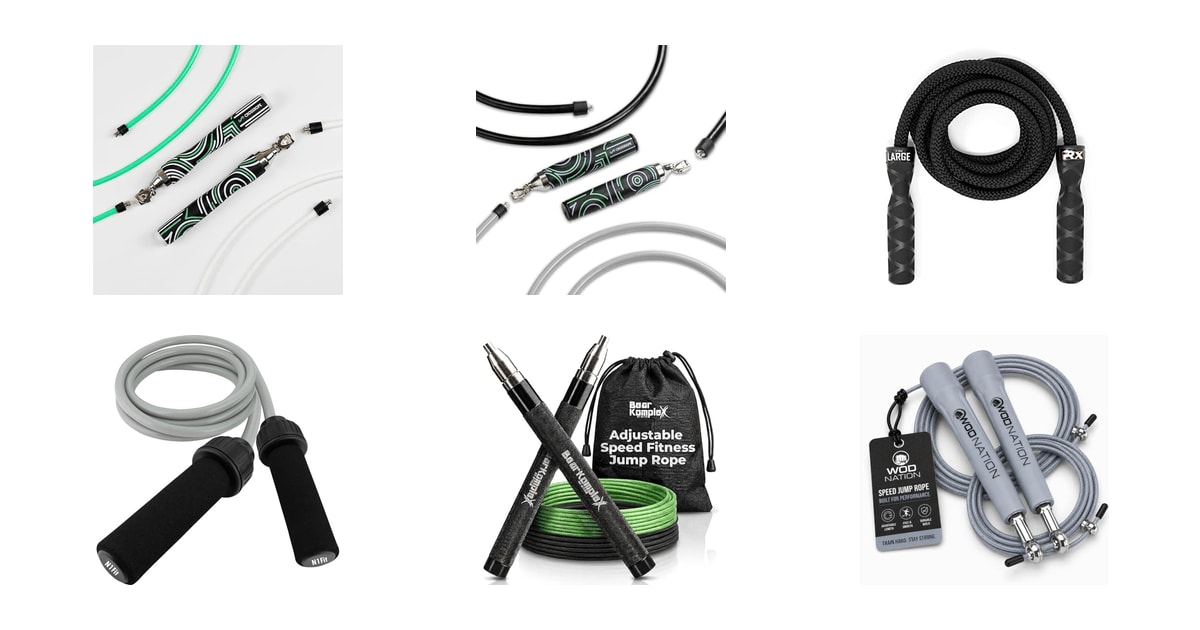
A jump rope is the simplest piece of gear in your gym bag and the one most likely to ruin your day. Double-unders show up constantly in CrossFit programming — they've appeared in the majority of Open seasons since 2012 — so the rope you own shapes how much of a workout you actually finish. Weighted ropes change the math further. The extra mass slows the rotation just enough that you can feel where the cable is, which is exactly what most people are missing when they whip through a set and catch their shins.
Here's the honest part: no rope in this category does everything. A heavy rope that teaches you rhythm will wreck your forearms in a long conditioning piece. A featherweight speed cable that flies through 100 unbroken double-unders gives you almost no feedback while you're learning, and it frays fast on the concrete floors common in CrossFit boxes. Published durability testing has found budget cables showing visible fraying within roughly 18 to 24 hours of concrete use. You're picking a trade-off, not a winner.
Length is the other thing nobody warns you about. A rope that's two inches long feels sloppy and a rope that's two inches short catches your toes, and most people never adjust past the factory setting. We think that the Crossrope Get Lean Weighted Jump Rope Set is the best weighted jump rope for CrossFit for most people, and that the Crossrope Get Strong Set is the one to buy if you already have double-unders down and want the rope to be strength work.
Everything we recommend

Two rope weights, one set of handles, and a real learning curve
Real shoulder and grip work, once the skill is already there

A fast, adjustable speed rope that survives the box floor

The cheap speed rope that's actually worth learning on

Deliberately hard: no bearings, heavy drag, pure forearm work
Prices as of Oct 27, 8:28 AM PT · Details
At a glance
| Product | Price | |
|---|---|---|
| Crossrope Get Lean Weighted Jump Rope SetTop pick | $129 |
| Crossrope Get Strong Set - Weighted JumpUpgrade pick | $169 |
| Rx Smart Gear Drag Jump Rope w/NonAlso great | $45 |
 | Weighted Jump Rope WorkoutAlso consider | $11.99 |
| Bear Komplex Speed Jump Rope Adjustable CrossRunner-up | $29.99 |
| WOD Nation Adjustable Speed Jump Rope -Budget pick | $14.98On sale |
 | Redify Weighted Jump Rope for Workout FitnessAlso consider | $25.98 |
Prices as of Oct 27, 8:28 AM PT · Details
How we picked
Rope weight range. We looked for systems covering the useful CrossFit range, roughly 1/4 lb up to 2 lb, and gave credit to designs where one set of handles takes multiple rope weights. Ropes locked to a single weight had to be excellent at that weight to make the list.
Bearing and spin. Spec sheets and published reviews consistently show sealed ball bearings sustaining faster rotation for longer than bushing-style handles. We treated bearing type as the main predictor of how a rope behaves late in a high-rep set.
Cable durability. Published durability testing shows budget cables fraying after roughly 18 to 24 hours on concrete, while coated steel cables lasted 60-plus hours. We weighted coating quality and replacement cable availability heavily, since CrossFit floors are abrasive.
Sizing and adjustment. We favored ropes that let you shorten the cable incrementally without cutting, since coaches teach athletes to start long and trim as skill improves. For fixed-length ropes, we checked whether the manufacturer publishes a clear height chart.
Handle grip. A fitness panel at Sports Illustrated Vetted found 1.25-inch handles cut forearm fatigue complaints by roughly 30 percent versus 1-inch handles in AMRAP-style sessions. We read owner feedback for grip slip and hand fatigue on every rope here.
Top pick
Two rope weights, one set of handles, and a real learning curve
Crossrope Get Lean Weighted Jump Rope Set
The Get Lean set pairs quick-connect handles with a 1/4 lb and a 1/2 lb rope, so you can warm up light and condition heavy without buying twice. The weight makes the cable's position obvious, which is the fastest way most people learn double-unders.
$129fromAmazonPrices as of Oct 27, 8:28 AM PT · Details
If you're stuck on double-unders, weight is the shortcut. A sub-ounce speed cable is invisible while it's moving — you can't feel where it is, so you can't fix your timing. A quarter or half pound changes that. Owners who came from speed ropes consistently say they trip less and stay in a set longer with these. That feedback loop is worth more than raw rotation speed when you're still building the skill.
The fast-clip system is the actual product here. Both ropes snap onto the same handles in a couple of seconds, so a workout that calls for light rope for skill work and heavy rope for the conditioning piece takes one swap, not two setups. Crossrope also sells heavier ropes that fit these same handles, so if you outgrow the Get Lean weights you're buying cable, not a whole new system.
The ropes are thick coated cable rather than bare wire, and they hang straight out of the bag instead of holding a coil. That matters more than it sounds. A coiled cheap cable slaps unpredictably for the first thirty jumps of every session. Owners report these staying tangle-free over long stretches of near-daily use, and several describe buying a second set years after the first — a decent signal on how the hardware holds up.
The app is genuinely useful, not a checkbox. It ships with structured sessions built around switching rope weights mid-workout, which is the thing most people won't program for themselves. If you're a home gym owner without a coach writing your conditioning, that's the difference between owning a rope and using one. If you already train at a box with programmed metcons, you can ignore it entirely and the ropes still stand on their own.
Flaws but not dealbreakers
This is the most expensive way to buy your first jump rope, and owners say so plainly even in their positive feedback. You're paying for the connector system and the app, not for a magic cable. If you only ever want one rope at one weight, you're overpaying for capability you won't touch.
The handles need occasional oiling. Multiple owners report a squeak developing within the first few weeks of daily use — not a failure, just maintenance nobody mentions up front. Sizing is also fixed rather than adjustable: you pick a size at purchase based on your height, so getting it wrong means a return rather than a quick trim.
The weight that helps you learn also caps your top speed. If you're chasing unbroken sets of 100-plus double-unders at competition pace, a light steel cable spins faster than any of these ropes will.
Upgrade pick
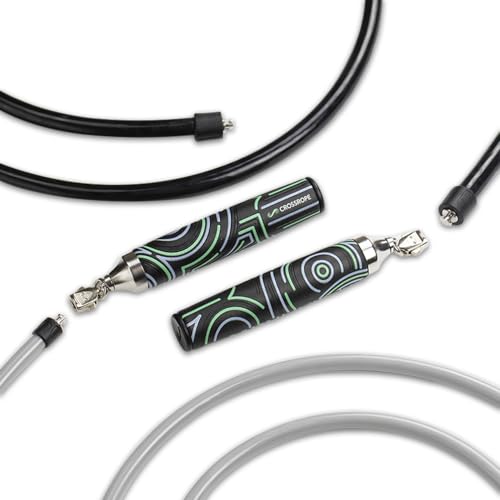
Real shoulder and grip work, once the skill is already there
Crossrope Get Strong Set - Weighted Jump
The Get Strong set swaps in 1 lb and 2 lb ropes on beefier power handles, turning skipping into upper-body conditioning. It's the wrong first rope and the right second one, once double-unders are automatic and you want the rope to actually tax you.
$169fromAmazonPrices as of Oct 27, 8:28 AM PT · Details
A one-pound rope is a different exercise, not a harder version of the same one. Crossrope's own figures put the rotational force of their 1 lb rope at roughly six times that of a standard one-ounce speed rope per revolution. You feel that in the shoulders and forearms within about ninety seconds. Research on weighted rope training backs the pattern up: a study in the International Journal of Sports Medicine found eight weeks with 1 to 2 lb ropes improved shoulder external rotation endurance by roughly 13 to 15 percent over a bodyweight control group.
It shares the Crossrope connector standard, so if you own the Get Lean set you're buying two ropes rather than a second system. That's the argument for going Crossrope in the first place. Start light, learn the skill, add the heavy ropes when singles at one pound stop feeling like a novelty. Going the other direction — buying Get Strong first — mostly buys you a rope that's too demanding to practice with.
Owners who came to these from lighter ropes describe a real change in engagement, and a few note they now use rope work as their primary cardio while a lower-body injury heals. That's a reasonable use case worth knowing about: a heavy rope at slow cadence loads the upper body hard while asking very little of your knees.
The two-pound rope is best treated as an accessory rather than a workhorse. Most people will use the one-pound rope for the bulk of their conditioning and pull out the two-pound one for short, deliberate sets. Nothing wrong with that — just don't buy this set expecting to live at two pounds.
Flaws but not dealbreakers
Double-unders at these weights are hard, and at two pounds most people won't string many together at all. If your goal is Open-style double-under volume, this set trains a supporting quality rather than the movement itself.
It's the priciest option here by a comfortable margin, and the value only makes sense if you'll genuinely use both weights. There's also scattered owner feedback about ropes arriving scuffed or looking previously handled, so give yours a look before the return window closes.
Sizing is locked at purchase like the Get Lean set. Measure honestly against Crossrope's height chart, because a heavy rope at the wrong length is more punishing than a light one.
Runner-up
A fast, adjustable speed rope that survives the box floor
Bear Komplex Speed Jump Rope Adjustable Cross
The Bear KompleX Speed Rope pairs coated steel cable with 360-degree swivel ball bearings and knurled aluminum handles. It spins fast enough for high-rep double-unders and adjusts tool-free, which makes it the sensible pick if you want speed rather than resistance.
$29.99fromAmazonPrices as of Oct 27, 8:28 AM PT · Details
Bearing quality is what sets a rope's ceiling, and this one uses genuine swivel ball bearings rather than plastic bushings. The practical difference shows up late in a set, when a bushing rope starts to drag and your rhythm falls apart. Owners who've cycled through several brands hunting for a smooth double-under rope tend to stop here. It won't make double-unders easy — nothing does — but it stops being the reason you miss.
Adjustment is the underrated feature. The tool-free clamp means you can shorten the cable a half inch at a time as your skill improves, which is exactly how coaches tell you to size a rope: start long, then trim as your form tightens. Ropes that require cutting force you to commit permanently. Owners at both ends of the height range — including athletes well over six feet — report getting a good fit without much fuss.
The cable carries a light protective coating, and the practical benefit is less sting. Missed double-unders with bare wire leave welts, which quietly makes people stop practicing. Coated cable also holds up better than uncoated wire on the abrasive floors in most boxes, though nothing survives concrete forever.
It costs a fraction of the Crossrope system and covers most of what a CrossFitter actually needs day to day. If your programming is mostly metcons with double-unders and you don't care about weighted conditioning, this does that job and stops there.
Flaws but not dealbreakers
The clamp system is the weak point. A meaningful minority of owners report the cable slipping out of the clamp during workouts, which means retightening and, in a few cases, giving up on the rope entirely. Check the clamp before each session and you'll probably avoid this, but it's a real annoyance.
There's no weight to it, so you get none of the feedback that makes a weighted rope useful for learning. Beginners often find speed cables punishing precisely because you can't feel where the rope is.
Build quality reports run less consistent than the price suggests. Most owners describe it as impressively solid; a smaller group describes it coming apart quickly.
Budget pickOn sale
The cheap speed rope that's actually worth learning on
WOD Nation Adjustable Speed Jump Rope -
The WOD Nation Adjustable Speed Rope ships with two cables, a set of hardware for each, and an 11-foot adjustment range that fits almost anyone. For a first CrossFit rope, it does the important things and skips the rest.
$14.98fromAmazonTypical pricePrices as of Oct 27, 8:28 AM PT · Details
Two cables in the box changes the value equation entirely. Speed cables are a consumable — you will fray one, especially while you're missing reps on rough flooring. Getting a spare means your first cable failure is a five-minute fix instead of a new order. Owners repeatedly describe the rope lasting years specifically because the replacement was already sitting in the bag.
The adjustment range is genuinely wide. WOD Nation lists the same 11-foot cable as fitting athletes from 4'8" to 6'8", which covers essentially everyone walking into a box, and the company says the large majority of its buyers are using the rope for CrossFit or HIIT. If you're sharing a rope in a household with a big height spread, that flexibility matters.
Handles turn on a ball-and-socket mechanism rather than sealed bearings. That's a real step down from the Bear KompleX in sustained spin speed, and you'll notice it deep into a long set. For learning double-unders and for typical workout volume, it's smooth enough that the rope isn't the limiting factor.
It's the rope we'd point a beginner to before they know what they want. Spend a few months on it, figure out whether you care about weighted conditioning or raw speed, then buy the expensive thing with an actual opinion.
Flaws but not dealbreakers
The cable coating wears fast on hard surfaces. Owners report visible damage to the rubber sheath after fairly limited use on concrete, which is exactly the flooring most CrossFit boxes have. On gym rubber it holds up considerably better.
The locking mechanism needs periodic attention. Several long-term owners mention having to re-check and re-tighten it, since it can loosen and let the cable creep over time.
The foam handles are the weakest part of the package. They work, but they get slick with sweat and they lack the knurled security of an aluminum handle.
Also great
Deliberately hard: no bearings, heavy drag, pure forearm work
Rx Smart Gear Drag Jump Rope w/Non
The Rx Smart Gear Drag Rope uses thick woven polypropylene with no swivel and no bearings, so every rotation costs you. It's a conditioning tool and a grip builder rather than a double-under rope, and it's been used in competition including the CrossFit Games.
$45fromAmazonPrices as of Oct 27, 8:28 AM PT · Details
This rope is designed to fight you. There's no bearing, no swivel, nothing smoothing the rotation — you drive the cable with your wrists and forearms through the whole arc, and the thick braided polypropylene drags through the air the entire way. Two minutes feels like something else entirely. If you want the rope itself to be the conditioning stimulus, this is the most direct version of that idea on this list.
The lack of bearings is a coaching feature, not a cost cut. Because nothing compensates for lazy wrists, sloppy mechanics show up immediately. Owners who dislike light plastic ropes for feeling unpredictable tend to like this one for the opposite reason: the rope's path is heavy and consistent, so fine control over rotation speed is actually possible. It's a useful tool for grapplers and boxers building grip endurance, too.
Rx Smart Gear makes these in the USA and offers the widest publicly documented cable range in the CrossFit rope world — from 1.5 mm ultralight speed cables up to 5 mm heavy conditioning cables. The Drag rope sits at the far heavy end of that spread. If it turns out you want the opposite extreme, the same company builds it.
Sizing is by height rather than adjustable: small covers roughly 4'8" to 5'2", medium 5'3" to 5'8", large 5'9" to 6'2". The rope stretches up to about six inches with use, which is worth factoring in when you choose.
Flaws but not dealbreakers
Taller athletes should size up carefully. Owners right at the top of a given size range report the rope feeling short even when it's technically within spec, and there's no adjustment mechanism to fix it afterward.
It's expensive for what it physically is — a woven rope and two handles — and some owners say exactly that. You're paying for the drag characteristics and the build, not for hardware.
Double-unders on this are a grind, and high-volume double-under work is essentially off the table. Treat it as a second rope, not your only one.
Who this is for
Buy one of these if double-unders show up in your programming and you're still using whatever rope lives in the gym's communal bucket. That's most CrossFitters. A rope sized to you, with decent bearings, removes an entire category of frustration — and if you're still learning the movement, a weighted rope removes more of it than a fast one does. Home gym owners get a strong case too: jump rope is one of the highest-efficiency cardio options per minute, with Healthline citing exercise science literature that puts 10 minutes of vigorous rope work in the same cardiovascular neighborhood as 30 minutes of moderate jogging.
Skip the upgrade if you already own a well-fitted speed rope you like and you're not chasing weighted conditioning — a second rope won't make you better. This guide covers handheld weighted and speed ropes for CrossFit-style training. It doesn't cover weighted-handle-only ropes marketed for general fitness, cordless ropes, smart ropes with rep-counting displays, or the rope mats and flooring you might want alongside them. And a note on expectations: no rope teaches you double-unders on its own. The rope removes obstacles; the reps do the work.
How we picked
We built the shortlist around five things. Weight range: how much of the useful 1/4 lb to 2 lb spread a rope covers, and whether one set of handles takes more than one rope. Bearings: sealed ball bearings over bushings, since bearing type sets the ceiling on sustained spin speed in long sets. Durability: cable coating and construction, because published testing shows budget cables fraying within about 18 to 24 hours on the concrete floors common in boxes while coated steel cables run past 60 hours. Sizing: clear height guidance and, ideally, tool-free incremental adjustment, since coaches teach you to start long and shorten as your form tightens. Grip: handle diameter and texture, after a Sports Illustrated Vetted panel found thicker 1.25-inch handles reduced forearm fatigue complaints by roughly 30 percent during AMRAP-style work.
Other weighted jump ropes for crossfit worth considering
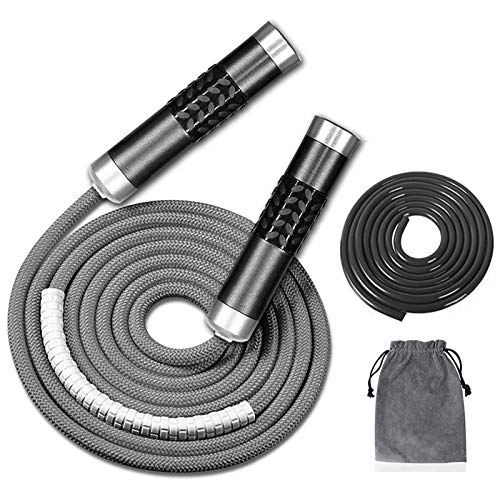
If you want a one-pound weighted rope without the premium system: The Redify Weighted Jump Rope for Workout Fitness — The Redify weighted rope gets you to a full pound with aluminum handles and double ball bearings, and it ships with two cables — a 9 mm braided cotton rope at about 0.46 lb and a 9 mm solid PVC rope at about 0.58 lb. That's a genuinely useful pair, since the cotton rope is gentler on shins and the PVC holds up better to abrasion. Owners describe the build as far more solid than the price suggests. What you give up against Crossrope is the quick-connect system, the app programming, and the option to go heavier later. Adjustment also means cutting cable with a sharp blade, so measure twice.
If you want thick PVC weight for slow, deliberate conditioning: The Weighted Jump Rope Workout — The N1Fit rope puts a full pound into a 0.35-inch PVC cable rather than the handles, which is the right place for it — weight in the rope is what you feel, weight in the handles mostly just tires your arms. It's roughly nine feet with a tangle-free ball bearing, and beginners tend to like how much the thickness slows the rotation while they're finding a rhythm. The handles are the compromise. They're bulky foam over plastic, several owners find them awkward to hold consistently, and there are reports of them failing early. It's a fine entry into weighted rope work, not a rope to build a training habit around.
The competition
This is what our research surfaced, not a survey of every rope on the market. Plenty of respected CrossFit ropes — including several premium speed cables sold direct from their makers — aren't sold in a form we could include here. What follows is the remaining product from our lineup and where it landed.
Sizing and cable care
Size the rope before you judge it. Stand on the midpoint, pull both ends straight up, and the handles should reach about armpit height — or roughly three feet above your head if you're still learning double-unders. For a 5'9" athlete that works out to about 9 to 9.5 feet of cable. Then shorten it incrementally as your form tightens, which is why tool-free adjustment beats cutting. For cable life, surface is everything: rubber gym flooring is dramatically kinder than concrete, and a cheap rope mat pays for itself in replacement cables. Store the rope hung or loosely coiled rather than knotted, keep a spare cable on hand if your rope takes them, and give Crossrope-style connectors a drop of light oil when they start to squeak.
Questions we get
What weight jump rope should I start with for CrossFit?
Start at a quarter or half pound. That's heavy enough to feel where the rope is — which is what actually teaches double-unders — but light enough that you can accumulate real volume. Move to a pound only after double-unders feel automatic. Two-pound ropes are strength work, not skill work.
Can you do double-unders with a weighted jump rope?
Yes, and at a quarter to half a pound it's often easier than with a speed rope, because you can feel the cable's position and time your jump. Above a pound it gets genuinely hard, and most people can't string long sets together. For high-volume double-under workouts, a light steel cable still wins.
Are weighted ropes better than speed ropes for CrossFit conditioning?
For conditioning and upper-body work, yes — Crossrope reports athletes using half-pound-or-heavier ropes burn over 20 percent more calories per 20-minute session than speed rope users at the same cadence. For Open-style workouts with high double-under counts, a speed rope is faster and less fatiguing. Most serious athletes end up owning both.
How do I choose the right jump rope length?
Stand on the middle of the rope and pull the ends straight up. The handles should hit around armpit height, or about three feet above your head if you're new to double-unders. A 5'9" athlete typically lands around 9 to 9.5 feet. Start on the long side and shorten as your mechanics improve.
Is Crossrope worth it for CrossFit training?
It's worth it if you'll actually use more than one rope weight. The connector system and shared handles are the whole value proposition, and the app fills a real gap if nobody is programming your conditioning. If you just need one well-fitted speed rope for metcons, the Bear KompleX or WOD Nation does that for far less.
How long do CrossFit jump rope cables last?
It depends almost entirely on your flooring. Published durability testing found budget cables showing visible fraying after roughly 18 to 24 hours of use on concrete, while better coated steel cables held up past 60 hours. Jumping on rubber matting rather than bare concrete extends cable life substantially. Keep a spare on hand.
Why you should trust us
For this guide:
- We read manufacturer specifications and sizing charts for every rope here, along with published durability testing from Garage Gym Reviews and coaching guidance from the CrossFit Journal on rope length.
- We reviewed exercise science literature on jump rope training, including a Journal of Strength and Conditioning Research meta-analysis on VO2 max gains and an International Journal of Sports Medicine study on weighted rope training and shoulder endurance.
- We compared owner feedback themes across all eight listings, paying particular attention to recurring reports about cable fraying, clamp slippage and handle durability.
- We read owner reviews on every listing, weighted toward the critical ones, because that is where the recurring failures show up.
- We have a systematic way of automatically fetching the latest prices, so the numbers on this page stay current.
- This is a research-focused guide, so the team may not own every product listed — though we often do own the top winners, which gives us extra context for the recommendations.
- We don't accept free products, and the retailer commission never changes which product we recommend.
Sources
The Best Jump Ropes of 2026 — Wirecutter, Wirecutter
Best Jump Ropes — Healthline, Healthline
Best CrossFit Jump Ropes Reviewed — Garage Gym Reviews, Garage Gym Reviews
Best Jump Ropes 2026 — Men's Health, Men's Health
Best Weighted Jump Ropes — Breaking Muscle, Breaking Muscle
Caloric Expenditure During Rope Skipping — Harvard Health Publishing, Harvard Health Publishing
Effects of Jump Rope Training on Aerobic Capacity — Journal of Strength and Conditioning Research, Journal of Strength and Conditioning Research
The Science Behind Crossrope — Crossrope, Crossrope
Rx Smart Gear Cable Specifications — Rx Smart Gear, Rx Smart Gear
Best Weighted Jump Ropes — Sports Illustrated Vetted, Sports Illustrated
Jump Rope for CrossFit: Skills and Programming — CrossFit Journal, CrossFit Journal
Amazon product listings and owner reviews for all 7 products
Manufacturer specification pages for each product
Some passages in this guide may be paraphrased with AI help.
Product prices and availability are accurate as of the date/time indicated and are subject to change. Any price and availability information displayed on Amazon.com at the time of purchase will apply to the purchase of this product.
More like this.
Continue exploring health reviews and recommendations.

The Best Jump Ropes for CrossFit
A jump rope is one of the simplest pieces of gear in your gym bag, and it's the one most likely to ruin your workout. If the cable is too long, it drags.…

The Best Battle Ropes
A battle rope is one of the few pieces of home gym equipment that earns its floor space twice over. It's cardio and upper-body work at the same time, and…

The Best Weighted Blankets for Adults
A weighted blanket works by pressing down on you the way a firm hug does. That pressure, which therapists call deep pressure stimulation, seems to quiet…

The Best Weighted Blankets
A weighted blanket does one simple thing: it presses down on you, evenly, all night. That steady pressure is called deep pressure stimulation, and the…

The Best Tow Straps and Kinetic Recovery Ropes
Getting stuck is rarely dramatic. You back down a boat ramp that's slicker than it looked, or you pull onto a soft shoulder in the rain, and suddenly your…

The Best Lithium Jump Starter Power Banks
A dead battery almost never happens at a convenient moment. It happens in a parking garage at 11 p.m., or on the first genuinely cold morning of the year,…