The Best Battle Ropes
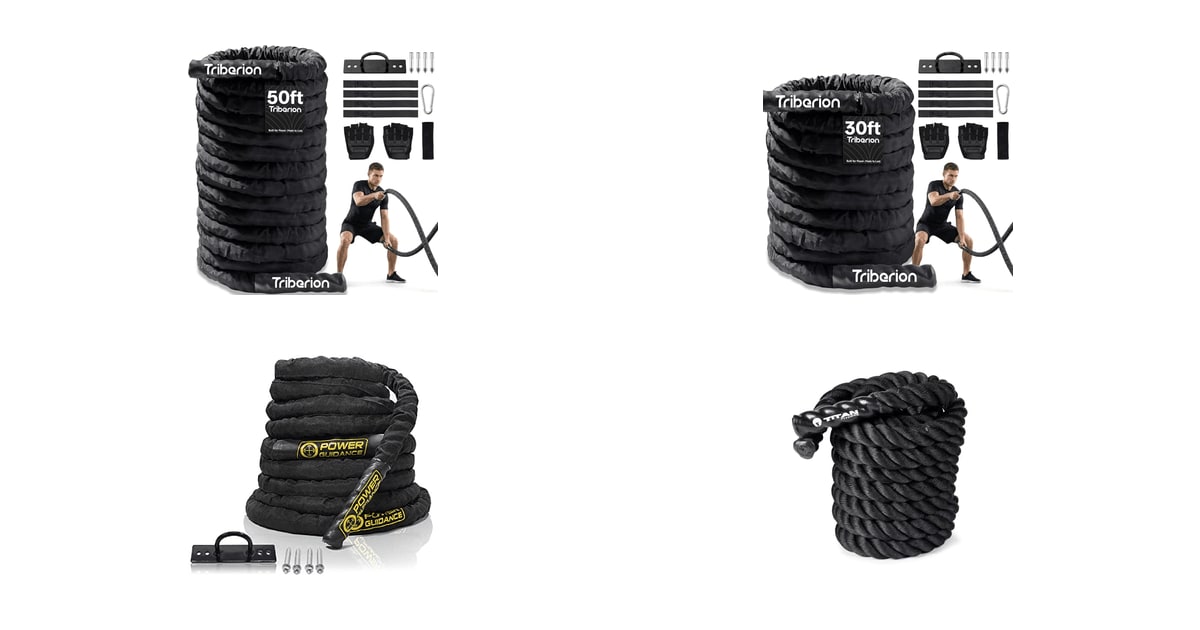
A battle rope is one of the few pieces of home gym equipment that earns its floor space twice over. It's cardio and upper-body work at the same time, and you don't have to run anywhere. Thirty seconds of hard alternating waves will spike your heart rate the way a sprint does, but your knees stay out of it. That makes ropes useful if you're rehabbing a lower-body injury, if you live in an apartment with neighbors below you, or if you just find treadmills boring. The whole setup is a coil of rope and something solid to loop it around.
Here's the honest part: every rope in this category is basically the same braided synthetic cord, and none of them solve the two problems that actually stop people. The first is space. A 50-foot rope needs about 25 feet of clear floor, and most homes don't have that. The second is the anchor. Almost no rope ships with a solution that works in a bedroom or a rented apartment, so you'll be looping it around a rack leg or buying a strap separately. Ropes also fray. Better construction slows that down, but nothing stops it.
Length and diameter matter more than brand. Get the length wrong and your waves bunch up uselessly; get the diameter wrong and you'll drop the rope before your lungs give out. We think that the Triberion 1.5-inch 50ft is the best battle rope for most people, and that the REP Battle Ropes are the one to buy if you're short on floor space or you're just starting out.
Everything we recommend

Full-length waves and a sleeve that saves your floor

A trusted brand, a real warranty, and a size for any room

Double-layer sleeve and an anchor strap, for less money

Two inches of rope for people who've outgrown 1.5

The same rope, sized for a spare bedroom
At a glance
| Product | Length | Diameter | Price | |
|---|---|---|---|---|
| Battle Rope for Home Gym Workout -Top pick | 50 FT | 1.5 Inch | $75.99On sale |
| Battle Rope for Home Gym Workout -Also great | 30 FT | 1.5 Inch | $48.29On sale |
| POWER GUIDANCE Battle RopeBudget pick | 50 Feet | 1.5 Inch | $139.99 |
| Titan Fitness Battle Rope 50ft x 2inUpgrade pick | 50 ft | 2 in | $103.99On sale |
| REP Battle Ropes - PolyDacron Battle RopeRunner-up | 30 ft | 1.5 in | $79.99 |
How we picked
Construction and braid. We compared manufacturer specifications across all five ropes and looked for three-strand poly dacron or polyester braid, which resists moisture and abrasion better than nylon or cotton alternatives. Every rope here clears that bar; the differences show up in braid density and how quickly owners report fraying.
Abrasion protection. We prioritized ropes with a nylon sleeve, since owner feedback consistently ties shedding and early failure to bare braid dragging on concrete or turf. Ropes without a sleeve had to justify it some other way.
Length and space fit. We treated usable floor space as a hard constraint and looked for lineups that cover 30, 40 and 50 feet so buyers can match the rope to the room. A rope that's too long for your space is a permanent problem, not a break-in period.
Grip and handles. We read published reviews and owner feedback on handle length and heat-shrink quality, since grip failure ends more sets than conditioning does. Handles needed to stay secure with sweaty palms and be long enough for adult hands.
Anchor and warranty. We noted which ropes include an anchor strap and which state a warranty term, because both remove a hidden cost. A rope with no anchor solution isn't usable out of the box for most home setups.
Top pickOn sale
Full-length waves and a sleeve that saves your floor
Battle Rope for Home Gym Workout -
A 50-foot, 1.5-inch polyester rope with a nylon sleeve and anchor strap included. It's the standard configuration most gyms use, and the sleeve means you can drag it across a garage slab or a rack leg without shredding the braid.
$75.99fromAmazonList priceAt 50 feet and 1.5 inches, this is the configuration battle ropes were designed around. Longer rope means each wave travels farther before it hits the anchor and bounces back. You get smoother, bigger waves and a steadier rhythm. Shorter ropes work, but they feel snappier and more reactive, which is harder to sustain when you're tired. If you have the room, this is the version to own.
The nylon sleeve is the part worth paying attention to. It runs the length of the rope and takes the abrasion that would otherwise chew through the braid — the friction at your anchor point, the scrape across concrete on every slam. Owners specifically mention it keeping the rope off their floors. If you're training on anything you care about, or on a rough garage slab, that sleeve is doing real work.
The handles are thick heat-shrink, and they're long enough for adult hands. That matters more than it sounds. Your grip is usually the first thing to fail in a rope interval, and a handle that gets slick when your palms sweat will end the set before your shoulders do. Owner feedback on grip security here is consistently positive, including from people who've used ropes at commercial gyms.
You need about 25 feet of clear floor from your anchor. That's the hard requirement. Garage, basement, backyard, or a long finished room — those work. A living room usually doesn't. Measure before you order, because a 50-foot rope in a 15-foot space doesn't just underperform, it bunches on the floor and you end up fighting slack instead of training.
Flaws but not dealbreakers
It weighs about 24 pounds. That's normal for the length, but it's not a thing you toss in a closet. Coiled up it takes real space, and you'll want a hook or a bin for it rather than a corner of the floor.
The space requirement rules this out for a lot of people, and there's no workaround. If you can't clear 25 feet, buy the 30-foot version instead of buying this and hoping. The rope will be worse in a short space than a properly sized cheaper rope would be.
Triberion isn't a household name the way REP or Titan are, and the review history here is thinner than on the long-established listings. The construction reads as solid and owners are positive, but you're buying on a shorter track record.
Runner-up
A trusted brand, a real warranty, and a size for any room
REP Battle Ropes - PolyDacron Battle Rope
REP's poly dacron rope comes in three lengths and two diameters, with an optional abrasion sleeve and a one-year replacement warranty. It's the pick if you want a known fitness company standing behind the rope you buy.
$79.99fromAmazonREP Fitness is a Colorado equipment company with a real reputation among home gym buyers, and they back this rope with a one-year replacement warranty for breakage during normal use. That's rare in this category. Most battle rope listings say nothing at all about what happens if the thing comes apart, and a written replacement policy is worth something when you're buying a product whose main failure mode is unraveling.
The size spread is the practical reason to pick this one. You choose 30, 40 or 50 feet, and 1.5 or 2 inches. If your room measures 20 feet of clear floor, the 40-foot version fits it exactly — that's the middle ground the top pick can't cover. Owners in tight spaces report the 30-foot 1.5-inch version still delivers a punishing workout, which tracks: shorter ropes carry more tension and demand more effort per wave.
The nylon sleeve is optional here rather than standard, which is a genuine decision point. REP is explicit that you should run the rope on rubber or turf to avoid friction wear — that's the condition on the warranty. If your training surface is bare concrete or you're wrapping around a rough steel upright, get the sleeve version. It's the difference between a rope that lasts and one that sheds.
Braid quality gets consistent praise from owners, and the heat-shrink ends hold the twist tight and double as the grip. One recurring note from buyers with smaller hands: the thicker grips on the 2-inch version are a lot to hold. If that's you, stay on 1.5 inches. It's the standard diameter for a reason and there's no shame in it.
Flaws but not dealbreakers
A few owners find the 1.5-inch 30-foot version too light once they've built some conditioning. That's the tradeoff of a short, standard-diameter rope — it's the most approachable configuration and also the one you're most likely to outgrow. If you're already fit and have the space, size up.
The sleeve being optional means the base version has no abrasion protection at all, and it's easy to click through without noticing. Buying the wrong one and then running it on concrete is a fast way to void the warranty condition and shred the braid.
No anchor strap is included. You'll need a rack, a post, or a separately purchased strap before this rope is usable, and that's an extra step people routinely forget until the box arrives.
Budget pick
Double-layer sleeve and an anchor strap, for less money
POWER GUIDANCE Battle Rope
POWER GUIDANCE sells a 1.5-inch polyester rope in three lengths with a double-layer nylon cover and a wide anchor strap in the box. It's the most complete starter package here, and it's the rope with by far the longest owner track record.
$139.99fromAmazonThis is the rope that's been around the longest and sold the most, and owner sentiment has stayed strong across years of buyers. That's meaningful in a category full of listings that appear and vanish. Trainers, first-timers, people building garage gyms during lockdowns — the feedback pattern is consistent, and it centers on the rope arriving exactly as described and holding up.
The box includes the anchor strap, which quietly saves you a second purchase. POWER GUIDANCE makes it 50% wider than a standard strap, which spreads the load and keeps the rope from sliding as you work. For a first rope this matters a lot. Nothing kills early enthusiasm faster than unboxing your new gear and realizing you can't actually attach it to anything.
The double-layer nylon cover is more protection than most ropes at any price offer. It takes the abrasion at the anchor and along the floor, and owners who train on gym mats specifically note the rope doesn't catch or snag. If you're training indoors on a surface you'd rather not replace, that's the feature doing the work.
The 7.5-inch heat-shrink handles are long enough to grip comfortably without your hands riding onto bare braid. Start with the 30-foot length if you're new — the shorter rope forces cleaner wave technique because you can't hide sloppy form behind rope slack. Move up to 40 or 50 feet once your form holds through a full interval.
Flaws but not dealbreakers
The braid isn't as dense as what you get from the pricier ropes, and it shows up over time rather than immediately. At two or three sessions a week you likely won't notice. At daily high-volume training, expect the ends and the cover to show wear sooner than on the top pick.
Several owners note the 50-foot version is genuinely heavier than they expected, and one flags that it takes real conditioning to handle. That's not a defect, but if you're buying your first rope, don't assume more length is more fun. It's more work.
The listing sprawls across lengths and diameters with dense bullet copy, and it's easy to order a configuration you didn't mean to. Read the size selector carefully before you check out.
Upgrade pickOn sale
Two inches of rope for people who've outgrown 1.5
Titan Fitness Battle Rope 50ft x 2in
Titan's 50-foot, 2-inch poly dacron rope weighs around 40 pounds and demands far more grip strength than a standard rope. It's a progression tool for athletes who've stopped getting a real challenge from 1.5-inch ropes.
$103.99fromAmazonList priceIncreasing rope diameter is the most direct way to make battle rope work harder, and most people never try it. Going from 1.5 to 2 inches is roughly a third more thickness, which changes how you hold the rope, not just how heavy it is. Your forearms give out well before your lungs do. If you've been doing rope intervals for a year and they've stopped being hard, this is the fix.
The weight tells the story. This rope is about 40 pounds, versus roughly 24 for a comparable 1.5-inch 50-footer. Every slam and every wave costs more. Owners who've used 2-inch ropes at commercial gyms report the same thing after switching: continuous work past 30 seconds becomes genuinely difficult even when you're in decent shape.
This is not a first rope, and it's not a second one either. The grip demand is high enough that people with smaller hands report struggling to hold it safely, and some buy a thinner rope alongside it for anyone else in the household. Poor form with 40 pounds of rope puts real load through your shoulders. Get comfortable with alternating waves, slams and lateral waves at 1.5 inches first.
Titan Fitness is a well-known home gym brand with a broad equipment catalog, and the rope uses the same three-strand poly dacron construction as everything else here, with coated handle ends. If you already own Titan gear and want a heavy rope to pair with a rack you've got bolted down, this fits that setup.
Flaws but not dealbreakers
Shedding is the recurring complaint, and it's the reason this isn't ranked higher. Several owners report visible fraying and split ends within the first few sessions, especially on abrasive surfaces like turf, and at least one describes the handles separating early. Owner sentiment on this listing is noticeably more mixed than on the other ropes here.
There's no sleeve. That's likely connected to the shedding reports — a bare braid dragged across concrete or turf will abrade fast. If you buy this, run it on rubber matting and be deliberate about your anchor wrap.
Forty pounds of 2-inch rope is awkward to store and move. You need a dedicated spot for it, and you need an anchor rated for real dynamic load. Wrapping this around an unloaded rack or a piece of furniture is a bad idea.
Also greatOn sale
The same rope, sized for a spare bedroom
Battle Rope for Home Gym Workout -
Triberion's 30-foot version has identical construction to our top pick in a package that needs only about 15 feet of clearance. At roughly 15 pounds it's easy to store, and the sleeve protects hardwood and laminate.
$48.29fromAmazonList priceIf you're training indoors on a floor you care about, this is the rope to get. Fifteen feet of clearance covers most living rooms and spare bedrooms without moving furniture. The nylon sleeve matters more here than anywhere else, because a bare rope end dragged repeatedly across hardwood or laminate leaves marks you can't buff out. One owner training in a one-bedroom apartment specifically credits the sleeve for keeping their floor intact.
The construction is identical to the 50-foot top pick: same three-strand polyester, same thick heat-shrink handles, same anchor strap kit. You're not buying a lesser rope, you're buying less of it. At around 15 pounds it's genuinely portable — you can take it to a park, a driveway, a friend's garage.
Short ropes aren't easier. There's less slack to absorb your wave, so the tension is higher and each rep takes more deliberate effort. Beginners sometimes find that stiffness frustrating for the first week or two while they learn the rhythm. Once it clicks, the higher tension is doing more for your grip and shoulder endurance than a longer rope would.
The tradeoff is ceiling. You can't generate the long, rolling waves a 50-foot rope produces, and if you eventually build a garage gym you'll probably want the longer version. But most people never leave the room they started in, and a rope that fits the room you actually have beats a better rope you can't use.
Flaws but not dealbreakers
You pay more per foot than you would for the 50-foot version of the same rope. That's how length pricing works across the category, but it's worth knowing you're buying the less economical size.
Advanced athletes will outgrow it. If you're already conditioned and have 25 feet of floor, this rope will feel short within a few months and you'll be shopping again.
Like the top pick, this is a newer listing from a brand without a long history. The construction reads well and owners are positive, but there's less accumulated evidence than on the older ropes here.
Who this is for
Buy a battle rope if you want hard cardio without running and you have a solid anchor point — a bolted or loaded rack, a structural post, a tree. It's a strong fit if you're working around lower-body injury, training in a space where a treadmill won't fit, or building a garage gym and want one more conditioning tool. Ropes reward short, brutal intervals: 30 seconds hard, 30 seconds rest, repeated. If that sounds appealing, you'll use it.
Skip it if you can't clear at least 15 feet of floor, or if you have nothing structural to anchor to. Doorframe hardware and furniture are not adequate anchors for the shock loading these movements generate. This guide covers poly dacron and polyester training ropes in 1.5 and 2-inch diameters for home use; it doesn't cover climbing ropes, sled ropes, tug-of-war ropes, or the anchor hardware and mounts you may need to buy separately.
How we picked
We built this guide around five things. Construction: three-strand poly dacron or polyester braid, with denser braid preferred, since that's what determines how long a rope holds its shape. Abrasion protection: a nylon sleeve, because owner reports tie shedding and split ends almost entirely to bare rope on rough surfaces. Length and fit: a lineup spanning 30 to 50 feet, so you can match the rope to your actual clearance rather than hoping. Grip: long heat-shrink handles that stay put when your palms sweat, since grip is usually the first thing to fail. Anchor and warranty: an included strap or a stated replacement term, both of which spare you a hidden second purchase.
The competition
This is what our research surfaced in this category, not a census of every battle rope you can buy. Battle rope listings turn over constantly, and many are the same braid sold under a different name. Every rope in this lineup ended up as a pick, which happens in a category this simple — the ropes here differ in length, diameter, sleeve and brand support more than in any fundamental way. The honest short version: pick your length first, decide whether you want the sleeve, and let brand and warranty break the tie.
Anchoring and care
Anchor to something structural. Wall anchors driven into studs or masonry are the most secure, but a heavy-duty strap looped around a bolted-down rack upright or a loaded power cage base works just as well. Never use a hollow interior door, lightweight shelving, or unsecured furniture — alternating waves and slams generate repeated shock loading that will pull anchors out of drywall or tip a rack. If your rack isn't bolted down, load the base with plates. For the rope itself, run it on rubber matting or turf where you can, and keep the sleeve positioned over the section that contacts your anchor and floor. Store it coiled on a hook rather than piled in a corner, and don't leave it in direct sun or somewhere damp for long stretches. Check the heat-shrink ends every few weeks for loosening.
Questions we get
What length battle rope should I get for a home gym?
Match it to your floor space: you need roughly half the rope's length in clear distance from the anchor. That's 15 feet for a 30-foot rope, 20 for a 40, and 25 for a 50. Measure before you order, and when you're between two sizes, go shorter. A rope that's too long bunches up and you'll spend the set fighting slack.
What's the difference between a 1.5-inch and a 2-inch rope?
Grip and weight, mainly. A 2-inch rope is about a third thicker and can weigh close to twice as much, which means your forearms fail long before your cardio does. The 1.5-inch diameter is the standard and it's right for beginners through advanced athletes. Only move to 2 inches after you've mastered alternating waves, double waves and slams with clean form.
Do battle ropes build muscle or just cardio?
Both, though neither as well as dedicated lifting or steady-state endurance work would alone. The 30-on, 30-off interval structure hits your shoulders, arms, upper back and core hard while spiking your heart rate. That hybrid stimulus is what makes ropes efficient — you're getting conditioning and upper-body endurance in the same 20 minutes.
How do I anchor a rope without drilling into a wall?
Loop a heavy-duty anchor strap around a squat rack upright, a power cage base, or a structural column. Trees and fixed poles work outdoors. If you have no rack, a ground anchor weighted with plates or kettlebells is a workable alternative. Whatever you choose, make sure it's rated for dynamic load — slams generate repeated shock forces that a static weight rating doesn't account for.
Which rope is best if I'm just starting out?
The POWER GUIDANCE in the 30-foot length. It's the least expensive way in, it includes the anchor strap so you can actually use it on day one, and the double-layer cover protects your floor. The shorter length also forces cleaner technique, because you can't mask sloppy waves behind rope slack.
How long should a rope workout be?
Fifteen to 25 minutes of structured intervals, three or four times a week, is plenty for real conditioning gains. A reliable format is 30 seconds all-out followed by 30 seconds of complete rest, for 10 to 15 rounds. If you're new, start at 20 seconds on and 40 off, then shorten the rest as you adapt. Past about 30 minutes your form breaks down and your injury risk climbs.
Why you should trust us
For this guide:
- We compared manufacturer specifications for all five ropes, including diameter, length, weight, braid construction and whether a sleeve or anchor strap is included.
- We read published equipment reviews and buying guides covering battle rope construction, sizing and anchoring for home gyms.
- We reviewed owner feedback across every listing here, paying particular attention to recurring reports of shedding, handle failure and floor damage.
- We read owner reviews on every listing, weighted toward the critical ones, because that is where the recurring failures show up.
- We have a systematic way of automatically fetching the latest prices, so the numbers on this page stay current.
- This is a research-focused guide, so the team may not own every product listed — though we often do own the top winners, which gives us extra context for the recommendations.
- We don't accept free products, and the retailer commission never changes which product we recommend.
Sources
Battle Rope Training: Effects on Cardiovascular and Muscular Endurance, Journal of Strength and Conditioning Research
Battle Rope Exercises for Full-Body Conditioning, ACE Fitness
Best Battle Ropes 2026, Garage Gym Reviews
Best Battle Ropes, BarBend
Battle Rope Training Science and Applications, NSCA
Best Battle Ropes Reviewed, SET FOR SET
Battle Rope Caloric Expenditure Study, International Journal of Exercise Science
Best Battle Ropes for Home Gyms 2026, Men's Health
Amazon product listings and owner reviews for all 5 products
Manufacturer specification pages for each product
Some passages in this guide may be paraphrased with AI help. Prices are refreshed automatically.
More like this.
Continue exploring health reviews and recommendations.

The Best Jump Ropes for CrossFit
A jump rope is one of the simplest pieces of gear in your gym bag, and it's the one most likely to ruin your workout. If the cable is too long, it drags.…

The Best Weighted Jump Ropes for CrossFit
A jump rope is the simplest piece of gear in your gym bag and the one most likely to ruin your day. Double-unders show up constantly in CrossFit…

The Best Tow Straps and Kinetic Recovery Ropes
Getting stuck is rarely dramatic. You back down a boat ramp that's slicker than it looked, or you pull onto a soft shoulder in the rain, and suddenly your…

The Best Meal Prep Containers
You spend a Sunday afternoon cooking, and then a set of plastic boxes decides whether that work survives until Thursday. Good containers seal tight enough…

The Best Shower Chairs for Seniors
A shower chair is one of the simplest safety upgrades you can make to a home, and one of the few that changes a daily routine immediately. Standing on wet…

The Best Compression Clothing for Workout Recovery
Compression gear is one of the few pieces of workout equipment you wear when you're not working out. The idea is simple: snug fabric squeezes your legs,…