The Best Tow Straps and Kinetic Recovery Ropes
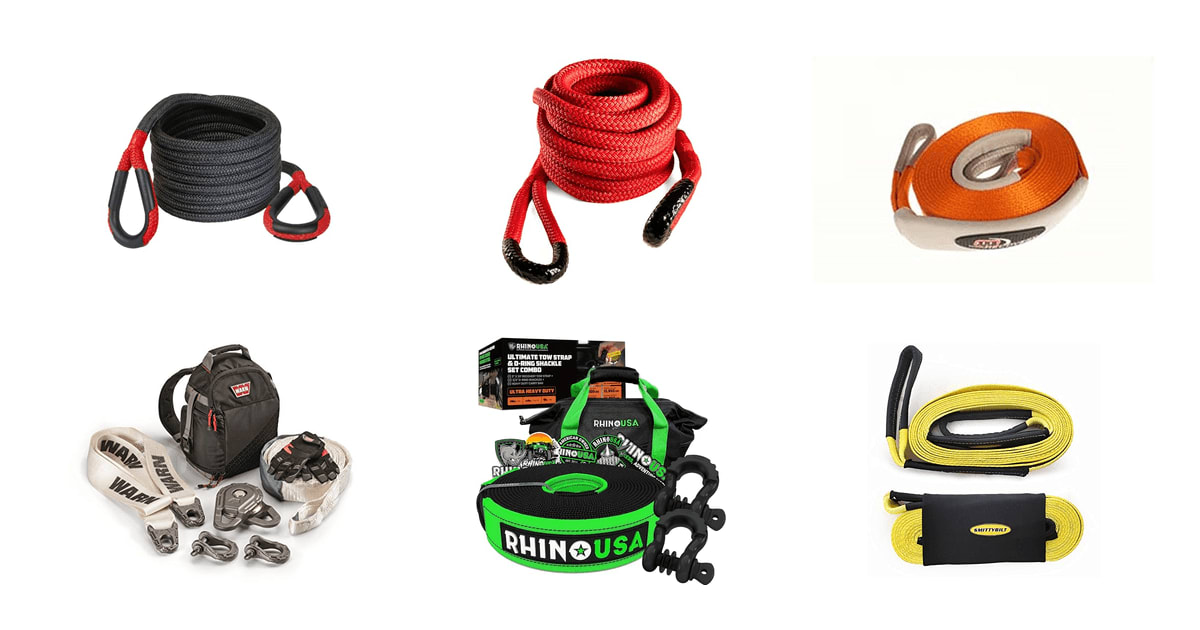
Getting stuck is rarely dramatic. You back down a boat ramp that's slicker than it looked, or you pull onto a soft shoulder in the rain, and suddenly your tires are just spinning. The thing that gets you out is a strip of woven nylon in a bag behind your seat. It costs almost nothing to carry and it turns a tow-truck afternoon into a five-minute favor from whoever drives by. But the wrong one, hooked to the wrong spot on your truck, can snap and put a chunk of steel through a windshield.
Here's the honest catch: no strap or rope makes recovery safe by itself. The gear is almost never the thing that fails. Recovery points, hitch balls and cheap hooks are what break, and they break at speed, toward people. Rated numbers on a label also mean less than you'd hope, because most brands publish break strength rather than a working load limit and the two aren't the same conversation. You'll still need to learn where your vehicle's real recovery points are, and you'll need to actually look at your strap before you use it.
So the choice comes down to what kind of stuck you expect. A low-stretch strap is for towing a dead car down a road; a stretchy kinetic rope is for yanking a sunk one out of mud or snow. We think that the Bubba Rope Original Kinetic Recovery Rope is the best recovery rope for most people, and that the Rhino USA Recovery Combo Kit is the one to buy if you mostly want a strap and shackles in the trunk for roadside emergencies.
Everything we recommend

The rope to own if you actually get stuck in things

A strap and shackles in a bag, ready for the shoulder

The certified snatch strap, if paperwork reassures you

A whole recovery kit, not just something to pull with
At a glance
| Product | Breaking Strength | Length | Price | |
|---|---|---|---|---|
| Bubba Rope BUBBA ROPE 30-FOOT Model 176680RDGTop pick | 28,600 lb | 30 ft | $230.08On sale |
 | Yankum Kinetic Recovery Rope - Heavy DutyAlso consider | — | 30 ft | $269.99 |
| ARB Snatch Strap 24000LbAlso great | 24,000 lb | — | $99.95 |
| WARN 97570 Heavy-Duty Epic Accessory Recovery KitUpgrade pick | 21,600 lb | 30 ft | $573.65 |
| Rhino USA Recovery Combo Kit - 20ftBudget pick | 31,518 lb | 20 ft | $74.90 |
 | SmittyBilt TOW STRAP 2IN X 30FT -Also in lineup | 20,000 lb | 30 ft | $32.80 |
 | Miolle Kinetic Recovery Tow Rope 3/4" xAlso consider | 19,200 lb | 20 ft | $89.99 |
How we picked
Rated strength. We compared published break strengths against the widely cited rule of at least twice a vehicle's gross weight, so we favored ropes and straps that leave real margin for half-ton and three-quarter-ton trucks. We also noted where a rating is third-party certified rather than self-reported.
Stretch and material. We separated kinetic nylon designs from low-stretch towing webbing, because they're not interchangeable. Ropes claiming 20% or more elongation were evaluated as recovery gear; low-stretch straps were judged on control during a tow.
Length and width. We treated 30 feet as the baseline for recovery, since published guidance points to it as the most versatile length for passenger vehicles. Wider webbing earned credit for spreading load across the loops and anchors.
Loops and hardware. We looked for double-stitched sewn eyes and reinforced loops over metal hook ends, and we gave weight to kits that include rated shackles. Published pull testing shows double-stitched loops hold up better than single-stitched ends.
Storage and weathering. We checked for UV-resistant coatings and an included bag, because sunlight quietly degrades nylon and polyester on gear that spends years unused. A rope stored loose in a truck bed doesn't keep its rated capacity.
Top pickOn sale
The rope to own if you actually get stuck in things
Bubba Rope BUBBA ROPE 30-FOOT Model 176680RDG
A 7/8-inch, 30-foot double-braided nylon kinetic rope rated to 28,600 pounds of break strength. It stretches like a giant bungee, which lets a running start do the work instead of a single brutal jerk on your frame.
$230.08fromAmazonList priceA kinetic rope does something a flat strap can't, and this is the one that made the category. Nylon stretches under load and gives that energy back as the stuck vehicle starts to move. Motor Trend reports that ropes in the 20–30% elongation range can cut peak snatch forces by as much as 60% versus a static strap. That's the whole argument. Less shock into your frame, less chance of a recovery point letting go.
The size is the useful part. At 30 feet you get enough run-up for the recovery vehicle to build momentum without leaving a dangerous loop of slack on the ground — Road & Track calls 30 feet the sweet spot for passenger vehicles, and that matches what most trail guides tell you. It's also long enough to keep the two trucks apart on a narrow road. Twenty-foot ropes exist for tight trails, but you'll wish you had the extra ten feet more often than not.
Bubba Rope builds this with double-braided nylon and its Gator-Ize vinyl polymer coating, which is the company's answer to the two things that quietly kill ropes: grit and sun. Bob Vila notes that UV exposure degrades both nylon and polyester over time, especially on gear that lives loose in a truck bed. A coated rope plus the included mesh bag is a real hedge if your recovery gear spends most of its life doing nothing in the weather.
The trade-off is that it's the most expensive rope here and it comes bare. No shackles, no protective sleeve — just the rope and a bag. Bubba sells soft shackles separately, and you'll need two of them plus rated recovery points on both vehicles before this rope does you any good. Budget for the whole system, not the headline item.
At 28,600 pounds break strength, this covers a lot of ground. Four Wheeler Magazine's rule of thumb is a strap rated to at least twice your vehicle's gross weight, which puts this rope comfortably in range for half-ton and three-quarter-ton pickups, most SUVs and anything Jeep-shaped. If you're recovering a loaded one-ton or a rig with a camper on the back, size up rather than hoping.
Flaws but not dealbreakers
It's the priciest option in this guide and you're partly paying for the name. Rhino USA and Miolle both publish comparable break-strength figures for less, and there's no independent certification here to point at — Bubba's claims are Bubba's claims.
Kinetic ropes need room. If your idea of getting stuck happens on a tight forest two-track where you can't back up 30 feet and take a run at it, a snatch strap or a winch does more for you. And a stretchy rope is the wrong tool for towing a dead vehicle down a road, where you want almost no give at all.
Nylon soaks up water and grit, and a rope that gets dragged through sand keeps some of it. You'll need to rinse and dry it after a muddy day, which is more upkeep than a flat strap asks for.
Budget pick
A strap and shackles in a bag, ready for the shoulder
Rhino USA Recovery Combo Kit - 20ft
A 20-foot static tow strap paired with two D-ring shackles, rated to 31,518 pounds of break strength. It's the sensible thing to keep in the trunk if you want to be helpful on a bad day rather than go looking for trouble.
$74.90fromAmazonMost drivers don't need a kinetic rope. You need something to pull a dead car off a highway shoulder, or drag a neighbor's sedan out of a snowbank at the end of a driveway. That's static-strap work, and Rhino's kit covers it for roughly half what the premium off-road brands charge. The published 31,518-pound break strength is the highest number in this lineup.
Buying the shackles with the strap is the point. A strap with sewn loops is useless if you've got nothing rated to clip it to, and this kit includes two D-rings rated to 41,850 pounds — well past the strap they're paired with. Expedition Portal's incident data consistently points at connection hardware and anchor points, not webbing, as the common failure and injury source. Solving that in one purchase is worth more than a few thousand pounds of headline rating.
Twenty feet is the compromise you're accepting. It's fine for a straight pull on pavement and it stows small. For a genuine kinetic snatch you'd want the extra ten feet, and Rhino is upfront that this is an entry-level kit for basic recovery rather than trail gear.
Rhino backs the kit with a lifetime guarantee, which is the kind of thing that matters more on inexpensive gear than expensive gear. Owner feedback on the strap skews positive on the stitching and the storage bag; the recurring gripe is that the shackle pins can gall if you overtighten them by hand.
Flaws but not dealbreakers
It's a static strap. Do not use it for a running-start snatch recovery — the shock load goes straight into whatever it's attached to, which is exactly the scenario that breaks recovery points.
The 31,518-pound figure is Rhino's own lab number, not a third-party certification, and it's break strength rather than a working load limit. Treat it as a ceiling you never approach, not a target.
Twenty feet is short enough that you'll occasionally be stuck reversing your good vehicle into the same soft ground that trapped the other one.
Rhino USA backs the kit with a lifetime guarantee.
Also great
The certified snatch strap, if paperwork reassures you
ARB Snatch Strap 24000Lb
A 24,000-pound nylon snatch strap with roughly 20% stretch, certified to Australian Standard AS4600. It's one of the very few recovery straps in the category with third-party certification behind the number on the label.
$99.95fromAmazonAlmost nobody in this category gets certified, and ARB does. AS4600 sets a minimum 15% elongation and a verified break strength, and ARB's 24,000-pound rating is checked against it. Everywhere else you're trusting a brand's own lab. If you're the kind of buyer who wants a standard rather than a marketing claim, that alone is a reason to pick this one.
A snatch strap is the flat-webbing cousin of a kinetic rope. It stretches — the listed 20% is real elongation, not marketing — but it packs flatter than a rope and it's easier to fold back into a bag with cold hands. Australian and expedition-style 4WD clubs have used this pattern for decades, and it's the reference point most recovery training is built around.
The build details are the ones that matter. Reinforced eyes with seam protectors are there because the loops are where straps chafe through, and Car and Driver notes that double-stitched sewn eyes hold up better than single-stitched ends under standardized pull testing. The bright orange isn't decoration either — a strap you can see is a strap nobody walks over mid-recovery.
At 24,000 pounds this is the lowest-rated of the serious recovery options here. Using the doubling rule, that's a comfortable margin for vehicles up to about 12,000 pounds — most SUVs, most half-ton trucks, most Jeeps. It's a thinner margin for a loaded three-quarter-ton than the Bubba rope gives you.
Flaws but not dealbreakers
Flat webbing picks up mud and grit differently from a rope, and it stays wet longer. Owners consistently mention that a soaked snatch strap is unpleasant to repack and needs drying before it goes back in the bag.
It ships bare — no shackles, no storage case in the box. You're buying webbing and nothing else.
A snatch strap has a shorter useful life than a coated rope if it lives in the sun. Nylon loses strength to UV, and flat webbing has more surface exposed than a braided, coated line.
Upgrade pick
A whole recovery kit, not just something to pull with
WARN 97570 Heavy-Duty Epic Accessory Recovery Kit
A large kit built around a 3-inch by 30-foot recovery strap rated to 21,600 pounds, plus two forged shackles, a snatch block, a tree-trunk protector and Kevlar-reinforced gloves. It's the one to buy if you run a winch.
$573.65fromAmazonThis isn't really a strap purchase. It's the box you buy when you've got a winch on the front of the truck and nothing to use it with. The snatch block lets you double your winch's pulling power or redirect a pull around an obstacle, and the 4-inch by 8-foot tree-trunk protector rated to 30,000 pounds is what keeps you from wrapping a bare cable around a live tree. Neither is optional gear if you winch seriously.
The shackles and gloves are the parts you'll actually notice. Two forged 3/4-inch shackles with a powder-coat finish handle winches up to 18,000 pounds, and the Kevlar-reinforced gloves exist because winch line frays and frayed line is sharp. Buying these piecemeal costs more and usually means you end up one item short on the day it matters.
The included 3-inch by 30-foot strap is the right shape for load distribution — wider webbing spreads the pull across a broader area at the loops and the anchor. Its 21,600-pound rating is the modest number in this kit, so treat it as the limiting component and match your pulls to it, not to the 30,000-pound tree saver.
WARN designed all of this around its own winch line, so if you already run a WARN unit the ratings and hardware sizes line up without you having to cross-check anything. That coherence is most of the value here.
Flaws but not dealbreakers
It's heavy and bulky — roughly 36 pounds in a case the size of a small duffel. That's a real chunk of a trunk, and it's overkill if you don't own a winch.
The recovery strap included is a low-stretch design meant for towing and controlled pulls, not a kinetic snatch. If you want kinetic performance you're still buying a rope on top of this kit.
It's the most expensive item in this guide by a wide margin, and much of what you're paying for is winch accessories. If there's no winch on your bumper, most of the box sits unused.
Who this is for
Buy something from this guide if you drive a truck, SUV or Jeep anywhere that gets muddy, sandy, snowy or unpaved — or if you just want to be the person who can help on a bad shoulder. If you take a rig off-road on purpose, get the kinetic rope and rated shackles; the extra stretch is the whole safety argument. If your driving is city and highway and your worst case is a friend's dead battery in a flat parking lot, a static strap with shackles covers you and you can skip the rest.
Two things this guide doesn't cover. It isn't a substitute for knowing where your vehicle's factory recovery points are — if your truck has none, adding rated points comes before buying a rope, and a hitch ball is never an acceptable anchor. And these are recovery and towing products, not flat-tow or trailer equipment. If you're pulling a car behind an RV, you want a tow bar and safety chains, not webbing.
How we picked
We weighed the same handful of things across every product. Rated strength: published break strength measured against the two-times-vehicle-weight rule, with extra credit where a third party certified the number instead of the brand. Stretch and material: nylon kinetic designs judged as recovery gear, low-stretch webbing judged as towing gear, never confused for each other. Length and width: 30 feet as the default for real recoveries, wider webbing preferred for spreading load at the loops. Loops and hardware: double-stitched sewn eyes over hooks, and bonus points for kits that ship with rated shackles rather than leaving you to source them. Storage and weathering: UV-resistant construction and an included bag, since sun and grit take the strength out of gear that mostly sits.
Other tow straps and kinetic recovery ropes worth considering
If you want the most aggressive kinetic rope: The Yankum Kinetic Recovery Rope - Heavy Duty ($269.99) — Yankum's Rattler is a 1-inch by 30-foot double-braided nylon rope with a following in the overlanding crowd for exactly one reason: it stretches hard and pulls hard. The thicker diameter over our top pick means more rope in the same length, and owners who do genuinely nasty back-country recoveries tend to end up here. Yankum is explicit that shackles aren't included and that you should never attach it to a tow ball, which is the right instinct. The catch is that this is a lot of rope for a stock truck, and Yankum's ratings — like Bubba's — are the company's own.
If you want kinetic stretch on a tight budget: The Miolle Kinetic Recovery Tow Rope 3/4" x ($89.99) — The Miolle set is the inexpensive way into kinetic recovery, and it's the only option here that ships with soft shackles in the box. The 3/4-inch by 20-foot nylon rope is rated to 19,200 pounds break strength with a claimed 7,000-pound working load limit, and Miolle lists up to 30% stretch — enough to break mud suction. The two Spectra soft shackles are rated to 20,700 pounds each. What you give up is length and margin: 20 feet leaves less room for a run-up, and 19,200 pounds only clears the doubling rule for vehicles under roughly 9,600 pounds. Fine for a Wrangler or a mid-size truck, thin for a loaded full-size.
The competition
These are the other products our research turned up, not a survey of everything sold. A few are good gear that lost to a pick on length, rating or what's in the box.
The SmittyBilt TOW STRAP 2IN X 30FT - ($32.80) — Smittybilt's SBCC230 is a 2-inch by 30-foot static tow strap rated to 20,000 pounds, and it's the plainest thing in this guide — no shackles, no frills, just yellow webbing in a good length. Smittybilt has been making Jeep gear long enough that the construction is trustworthy for occasional use. It lost to the Rhino kit because it ships bare, and a strap without rated shackles isn't a complete answer. If you already own D-rings and want a longer static strap than Rhino's 20-footer, this is a reasonable pickup. Just don't snatch with it — the 2-inch width and low-stretch design want a steady pull.
Care and inspection
Look at your strap before every single use, not once a season. Run it through your hands and watch for fraying, cuts at the sewn eyes, fibers that have fused shiny and hard from heat, and bleaching that means the sun's been working on it. Any of those retires the strap — there's no repairing webbing. Rinse mud and sand out after a recovery, because grit inside a braided rope grinds the fibers from the inside, then hang it to dry fully before it goes back in the bag. Storing it in that bag matters more than people think: UV exposure takes strength out of both nylon and polyester, so a rope living loose in a truck bed isn't holding its rated number anymore. Keep it out of direct sun, keep it dry, and replace it when you're unsure rather than finding out mid-pull.
Questions we get
What's the difference between a tow strap and a kinetic recovery rope?
A tow strap is low-stretch webbing built to pull a rolling vehicle in a straight, controlled line — think dragging a dead car off a shoulder. A kinetic rope is nylon designed to stretch 20 to 30% under load, storing energy and releasing it as the stuck vehicle starts to move. That stretch is what frees a vehicle sunk in mud or snow. Using a static strap for a snatch recovery puts the full shock into your frame and recovery points, which is how things break.
How do I know what break strength I need for my truck or SUV?
The common guidance is at least twice your vehicle's gross vehicle weight. A 6,000-pound truck should be on a strap rated to 12,000 pounds break strength or better. Find your GVWR on the door-jamb sticker, double it, and buy above that number. Remember that break strength is where the strap fails, not where you should be working it — the working load limit is a fraction of that.
Can I attach a recovery strap to my trailer hitch ball?
No. A hitch ball isn't designed for lateral or shock loads, and under a snatch load it can shear off and travel at lethal speed. Use factory-rated recovery points or a rated hitch receiver shackle mount with a proper D-ring. Community incident data consistently shows anchor points and connection hardware — not the strap itself — cause most recovery injuries.
Should I get a 20-foot or a 30-foot strap?
Thirty feet is the more versatile choice for most people. It gives the recovery vehicle enough distance to build momentum for a kinetic pull while keeping dangerous slack manageable, and it keeps the two vehicles far enough apart on narrow roads. Twenty feet is easier to store and fine for straight highway tows or tight, tree-lined trails. If you're only buying one, buy 30 feet.
Are kinetic ropes worth it if I'm just a casual driver?
Probably not. If your realistic worst case is towing a friend's car a few hundred feet on pavement, a static strap plus rated shackles does the job for less. Kinetic ropes earn their cost when you're actually sinking into mud, sand or deep snow, where the stretch does work a straight pull can't. Buy the rope when your driving starts putting you somewhere a tow truck won't easily reach.
How often should I replace a recovery strap or rope?
There's no fixed calendar — you replace on condition, not age. Retire it immediately if you see fraying, cuts near the sewn loops, hard glossy patches where fibers have fused from heat, or noticeable fading from sun exposure. Straps stored loose in the open degrade much faster than ones kept in a bag out of the light. When you're genuinely unsure whether it's still good, it isn't.
Why you should trust us
For this guide:
- We compared manufacturer specifications for every rope and strap here, including published break strengths, stated elongation percentages, webbing width and construction details.
- We read published guidance from outlets including Motor Trend, Four Wheeler Magazine, Car and Driver, Road & Track, Popular Mechanics and Overland Journal on kinetic versus static recovery, sizing rules and loop construction.
- We reviewed recurring themes in owner feedback and community incident reporting, particularly around anchor points and connection hardware as the common failure source.
- We read owner reviews on every listing, weighted toward the critical ones, because that is where the recurring failures show up.
- We have a systematic way of automatically fetching the latest prices, so the numbers on this page stay current.
- This is a research-focused guide, so the team may not own every product listed — though we often do own the top winners, which gives us extra context for the recommendations.
- We don't accept free products, and the retailer commission never changes which product we recommend.
Sources
Best Tow Straps and Recovery Ropes — Motor Trend, Motor Trend
Recovery Gear Buying Guide — Four Wheeler Magazine, Four Wheeler Magazine
Kinetic vs. Static Recovery Straps Explained — Popular Mechanics, Popular Mechanics
Best Tow Straps Tested — Car and Driver, Car and Driver
WARN Epic Recovery Strap Product Specifications, WARN Industries
Bubba Rope Original Kinetic Recovery Rope Specifications, Bubba Rope
ARB Recovery Strap Technical Data — ARB USA, ARB USA
Recovery Strap Field Test Round-Up — Overland Journal, Overland Journal
Recovery Strap Safety and Best Practices — Expedition Portal, Expedition Portal
Best Tow Straps for Trucks and SUVs — Road & Track, Road & Track
Best Tow Straps — Bob Vila, Bob Vila
Amazon product listings and owner reviews for all 7 products
Manufacturer specification pages for each product
Some passages in this guide may be paraphrased with AI help. Prices are refreshed automatically.
More like this.
Continue exploring electronics reviews and recommendations.

The Best Trailer Hitches and Towing Accessories
Towing gear is the rare purchase where the boring choice is the right one. A hitch bolts to your frame, sits in road salt and spray for years, and then…

The Best Truck Towing Mirrors
The first time you pull a trailer that's wider than your truck, you notice the problem immediately. Your factory mirrors show you the side of the trailer…

The Best Heavy Duty Jumper Cables
A dead battery almost never picks a good moment. It's the grocery store lot at closing time, or your driveway on the coldest morning of the winter. Jumper…

The Best Wheel Chocks for RVs and Trailers
A wheel chock is one of those things you don't think about until the trailer moves. Park on a slight grade, crank down the stabilizer jacks, and you'd…

The Best Noise-Cancelling Wireless Earbuds
Good noise cancellation changes what a commute feels like. The subway rumble drops away, the plane engine turns into a distant hush, and the guy on…

The Best USB Hubs And Multi-Port Adapters For Laptops
Your laptop probably has two USB-C ports, maybe three. One of them is busy charging. That leaves one port for a monitor, a mouse, a keyboard, an external…