The Best LED Headlight Bulbs
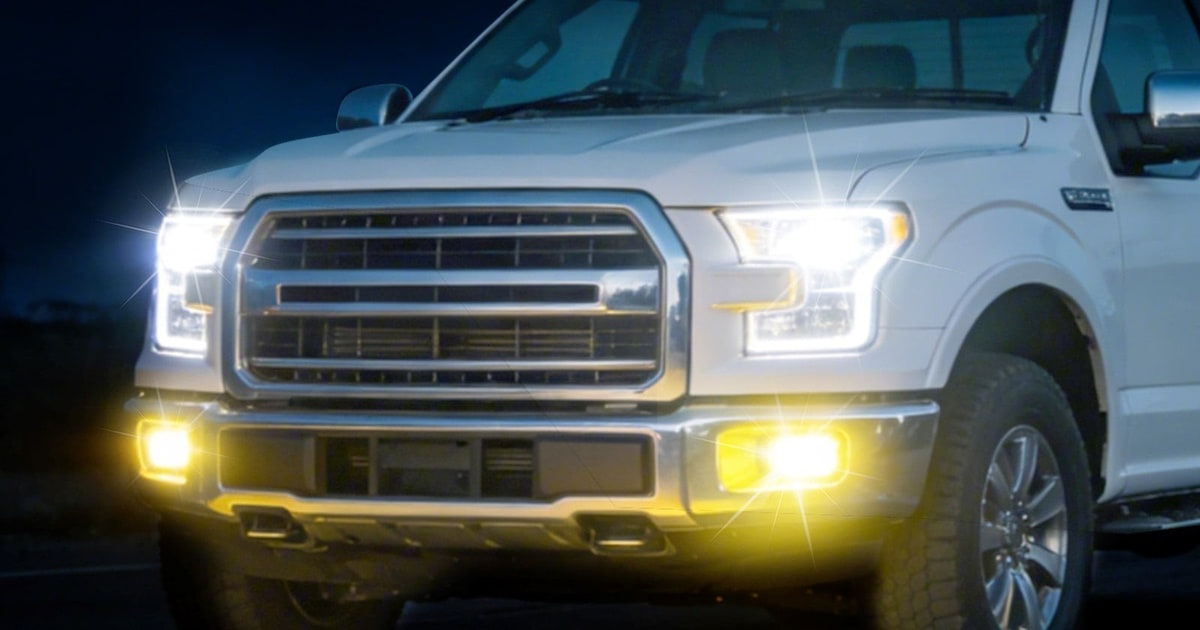
Factory halogen bulbs go dim so gradually that you stop noticing. Then one night you're on an unlit two-lane road, and a deer steps out at the edge of what you can see. Swapping in LED bulbs is one of the simplest upgrades you can make to a car, and on a dark rural road it's one of the few you'll actually feel. Good LEDs light up further down the road, come on at full brightness instantly, and give you white light that makes lane markings and road signs pop instead of washing out.
Here's the honest part. No plug-in LED bulb sold for a halogen housing is certified for that use, and lumen claims in this category are pure marketing — nobody regulates how they're measured. A bulb advertising 70,000 lumens isn't putting 70,000 lumens on the pavement. And if your car has reflector housings rather than projectors, even a well-made LED can scatter light where the optics never intended it. Chip position matters far more than any number on the box.
So we focused on the things you can verify: how close the emitter sits to the original filament position, whether a canbus decoder is built in, how the bulb sheds heat, and what owners say after a year of driving. We think that the SEALIGHT H11/H8/H9/H16 LED Fog Bulbs are the best LED headlight bulbs for most people, and that the SEALIGHT 9005/HB3 H11/H8/H9 Light Bulb Combo is the one to buy if you want to replace both your high and low beams in a single order.
Everything we recommend

Controlled beam and built-in canbus, without the fuss

Both beams handled in one order, with the same beam discipline

The easiest halogen-to-LED swap if space is tight

Solid light for less, if you have projector housings

For 9007 dual-beam cars that need a real canbus fix
At a glance
| Product | Brightness | Bulb Size | Price | |
|---|---|---|---|---|
| SEALIGHT H11/H8/H9/H16 LED Fog BulbsTop pick | 70,000LM | H11/H8/H9/H16 | $49.99 |
| HIKARI WINGS 2026 40000LM H11/H8/H9 LED BulbsRunner-up | 40000LM | H11/H8/H9 | $45.99 |
| Cougar Motor H11 BulbsBudget pick | — | H11 | $25.99 |
| AUXITO 9007 LED Bulbs ComboUpgrade pick | 40,000LM | 9007/HB5 | $39.99 |
| SEALIGHT 9005/HB3 H11/H8/H9 Light Bulb ComboAlso great | — | H11+9005 | $69.99 |
How we picked
Beam control. We prioritized bulbs whose chips sit close to the original halogen filament position, since that's what determines whether light lands on the road or in someone's eyes. Listing specs on substrate thickness and 1:1 sizing, plus owner comments about glare, did most of the work here.
Canbus behavior. We looked for a decoder built into the driver electronics rather than a separate resistor harness. Owner feedback about dashboard warnings and flickering told us more than the compatibility claims on the listings did.
Heat handling. Heat is what dims an LED over time, so we compared active fan cooling against passive aluminum sinks and noted fan speed and heat-pipe design. Bulbs with credible thermal hardware got preference over ones leaning on lumen claims.
Real-world fitment. We weighted owner reports about clearing dust boots, reaching sockets and clocking bulbs correctly, because those are the failure points that turn a fifteen-minute job into an afternoon.
Standing behind it. We treated a stated two-year warranty as the floor and read owner accounts of actual claims. A warranty nobody honors isn't a warranty.
Top pick
Controlled beam and built-in canbus, without the fuss
SEALIGHT H11/H8/H9/H16 LED Fog Bulbs
This is the H11-family bulb we'd put in most cars. A very thin copper substrate keeps the LED chips close to where the halogen filament sat, so the beam stays where it belongs, and the canbus decoder is built in rather than sold as a separate harness.
$49.99fromAmazonThe thin substrate is the whole point, not the lumen number. SEALIGHT builds these on a 0.025-inch copper substrate, which lets the chips sit about where your halogen filament used to. That's the mechanical thing that decides whether a retrofit throws a usable beam or sprays light into oncoming lanes. Owners who put these in projector housings consistently describe a focused beam that reaches well down the road. Several specifically mention that the light doesn't seem to bother oncoming drivers.
The canbus decoder is built in, so you probably won't buy a second thing. LEDs pull far less current than the halogens they replace, and a lot of cars read that as a burned-out bulb. You get a flicker, or a warning on the dash, or both. SEALIGHT integrates the decoder into the driver electronics here. That means no load-resistor harness zip-tied behind the headlight, and no second Amazon order after you've already got the bumper cover off.
Cooling is active, which matters if you drive a lot at night. A 25,000RPM fan and a copper heat pipe pull heat off the chips faster than the passive aluminum sinks on cheaper bulbs. Heat is what kills LED output over time — a bulb that runs hot doesn't burn out dramatically, it just quietly gets dimmer. If you commute in the dark or drive for a living, that's the difference between bulbs that hold up and bulbs you replace next winter.
It fits an unusually wide slice of the market. The H11 socket also takes H8, H9 and H16 bulbs, and SEALIGHT sells this same design across H1, H4, H7, 9005 and 9006 fitments. Owners report clean drop-ins on everything from a 2014 Tacoma to a 2022 Colorado to a Kenworth tractor. If you like what you get on one car, you can order the same design for the other one in the driveway.
Flaws but not dealbreakers
The 70,000-lumen claim is marketing, full stop. No standard governs how LED headlight brands measure or report lumens. Some measure at the chip before any optical loss, some don't measure at all. Treat that number as decoration and judge the bulb on beam geometry and heat management instead — which is what we did.
Installation isn't always the advertised three minutes. The bulb itself is halogen-sized, but the fan and connector housing add bulk behind it. Owners report needing to pull a battery or wrestle with a dust boot on tighter engine bays. Check how much room sits behind your headlight before you count on a quick job.
There's no independent beam-pattern certification. These carry no ECE or SAE marking for use in a halogen housing, which is true of every plug-in LED in this guide. If you live somewhere with annual safety inspections, that's a real consideration, not a technicality.
SEALIGHT covers these with a two-year manufacturer warranty.
Also great
Both beams handled in one order, with the same beam discipline
SEALIGHT 9005/HB3 H11/H8/H9 Light Bulb Combo
This four-bulb pack covers your 9005 high beams and your H11-family low beams at once. It uses the same close-to-stock sizing and aviation-aluminum-and-fan cooling as our top pick, so you get one consistent look across both positions.
$69.99fromAmazonDoing both beams at once is worth more than it sounds. If you upgrade only your low beams, your high beams suddenly look yellow and sad by comparison — owners say exactly this. This pack gives you four bulbs covering 9005/HB3 high and H11/H8/H9 low, so the color matches across positions and you're only taking the headlight apart once. On most cars that's one evening instead of two.
The 1:1 sizing keeps installation genuinely simple. SEALIGHT builds these to original bulb dimensions with no external driver box to find a home for. Owners report clean drop-ins on a 2018 CR-V, a 2018 RAV4, a 2011 Prius and a 2020 Renegade — the sort of ordinary cars this pack is aimed at. Several noted no dashboard error at all, though that depends on your car.
Beam quality holds up where it counts. SEALIGHT uses 16 chips on its L2S design and sizes the emitter to the stock position, and owners describe an even spread with no obvious dark bands. That's what you want from a reflector housing, where a badly positioned chip creates hotspots and blank patches instead of a smooth field of light.
It's the most-bought bulb in this group, and that track record matters. With no independent lab data to lean on in this category, a long history of ordinary owners installing something on ordinary cars is genuinely useful evidence. The feedback here skews strongly positive across a lot of different vehicles, which is harder to fake than a spec sheet.
Flaws but not dealbreakers
No canbus decoder is confirmed for this listing. Our top pick states a built-in decoder; this one doesn't. Plenty of owners report zero errors, but if your car monitors bulb current, budget for an anti-flicker harness and don't be surprised.
Clocking the bulbs takes patience. Several owners describe fiddling to get the chips oriented vertically, and at least one stripped a mounting screw doing it. The chips have to sit flat left-to-right or your beam pattern goes sideways. Go slow, and check the aim against a wall afterward.
A few owners saw early failures. There are reports of a beam going out within a couple of months on one side. Support eventually came through in those cases, but it's a reminder to keep your order details handy and register the warranty.
This combo carries a two-year manufacturer warranty.
Runner-up
The easiest halogen-to-LED swap if space is tight
HIKARI WINGS 2026 40000LM H11/H8/H9 LED Bulbs
HIKARI builds this to true halogen dimensions, so it drops into an H11, H8, H9 or H16 socket without brackets or adapters. It's the one to get if your engine bay is cramped or your headlights are a pain to reach.
$45.99fromAmazonTrue 1:1 sizing solves the problem people discover too late. Lots of LED bulbs are too fat to pass through the rubber dust boot behind your headlight, and you find that out with the wheel liner already off. HIKARI keeps this one at halogen dimensions. Owners specifically call out good clearance on vehicles that use dust covers, which is exactly the detail worth paying for on a tight install.
Sitting at the stock focal position keeps the beam controlled. The chips are thin and placed where the filament was, so the housing's optics do roughly what they were designed to do. Owners describe the light as landing on the road rather than scattering upward. In reflector housings, that's more valuable than raw output.
The IP68 rating is meaningful if you park outside. Headlight housings vent, and they take on humidity. A properly sealed bulb assembly handles that plus road spray and the occasional flooded intersection. If you're in the Pacific Northwest, the Gulf Coast, or anywhere with real winters and salted roads, this is the kind of spec that shows up two years later.
It's the straightforward pick for stubborn headlights. An owner with a 2018 Grand Cherokee — a car notorious for miserable bulb access — reports these went in and worked. When the hard part of the job is reaching the socket at all, a bulb that doesn't add its own complications is worth a lot.
Flaws but not dealbreakers
6000K reads bluer than some drivers like. It's a clean white in dry conditions, but the cooler tone can scatter more off rain and fog than a warmer bulb. If you drive through a lot of wet weather, you may find it fatiguing.
Installation is fiddlier than plugging in a halogen. Owners note that the heat sink and fan mean you install the bracket first, then seat the bulb — a two-step dance on a car where you're working blind. Give yourself more than five minutes the first time.
One listing, one socket family. This covers H11, H8, H9 and H16 only. If your car uses 9005 for high beams, you'll need a separate purchase, so check both fitments before ordering.
Budget pick
Solid light for less, if you have projector housings
Cougar Motor H11 Bulbs
Cougar Motor's H11 set gives you instant, clean 6500K white light without the premium price. It's the right choice for an older car with projector optics and no fussy electronics to appease.
$25.99fromAmazonIn a projector housing, this punches well above what you pay. A projector lens creates a hard cutoff line downstream of the chip, which forgives a lot of imprecision in emitter placement. So the scatter problem that hurts budget LEDs mostly disappears. Owners on F-150s and Pilots describe a big jump over tired factory halogens for a fraction of what a premium set costs.
Non-polarity wiring means no guessing at the plug. You connect it, it works. No flipping the connector around while holding a flashlight in your teeth. It sounds minor, but on a car where you're reaching past the airbox to get at the socket, not having to redo the connection is a genuine relief.
Instant full brightness changes how it feels to pull out at night. Halogens take a few seconds to reach full output. These are at full brightness the moment you flip the switch — useful when you're flashing high beams or backing out of a dark driveway.
Owners report long service on real cars. One driver put a set in at 68,000 miles and got past 147,000 on them. Another received a free warranty replacement without a hassle when a bulb failed near the end of the coverage period. For a bulb at this price, that's a better record than you'd expect.
Flaws but not dealbreakers
In reflector housings, expect scatter. Without a projector lens to clean things up, the 6500K chips throw more light sideways than you want. That's both wasted illumination and a real annoyance to oncoming drivers. If you have reflectors, go with our top pick or the HIKARI instead.
There's no canbus decoder here. On a car with bulb-out monitoring, plan on a separate anti-flicker harness. That extra purchase eats into the savings that make this the budget choice.
Warranty follow-through isn't guaranteed. At least one owner reports both bulbs burning out around the two-year mark and getting nowhere on a claim. Most feedback about support is positive, but it's not universal — keep your receipt.
Upgrade pick
For 9007 dual-beam cars that need a real canbus fix
AUXITO 9007 LED Bulbs Combo
If your car uses the 9007/HB5 dual-beam socket, your options narrow fast. AUXITO's combo handles both high and low beam from one bulb, with anti-flicker circuitry built in and a body slim enough to clear tight dust boots.
$39.99fromAmazonA 9007 bulb has to do two jobs, and most don't do them well. The HB5 socket switches between a high and low filament in a single bulb. That means the LED replacement has to change its beam pattern on command without turning both into a blur. AUXITO builds this specifically for that, with an optical layout meant to mimic the OEM halogen pattern in both positions.
Anti-flicker IC handles cars that watch their bulbs. Post-2015 GM, Ford and Chrysler vehicles commonly throw bulb-out warnings at LED swaps. The IC here keeps the current signature stable so the car stays quiet. Owners on Kia and Hyundai models report no flickering at all — a specific relief if you've already returned one set over a strobing headlight.
The compact body clears boots that stop bigger bulbs. AUXITO keeps this at halogen size, so it slips through the tight rubber dust boots on sedans and small crossovers without cutting anything. Trimming a boot to fit a fat LED voids your weather sealing and is a job you can't undo. Not having to is worth real money.
Cooling is properly overbuilt for the heat two beams generate. A 16,000RPM fan, a copper tube board and an aircraft-aluminum housing pull heat off 32 chips. A dual-beam bulb runs hotter than a single, so the extra thermal headroom isn't marketing — it's what keeps output from sagging on a long night drive.
Flaws but not dealbreakers
Clocking is genuinely hard on this one. Because the bulb replaces two filaments, orientation matters more than usual. One owner on a Crown Vic ended up with the passenger side lit brighter than the driver side because he couldn't get the chips level. Check your aim against a wall and be prepared to reseat.
It has the smallest ownership record here, and some bad ones. Feedback volume is thin compared with the other picks, and a few buyers report bulbs that wouldn't seat securely or cut out while driving. That's often a fitment issue rather than a defect, but it means less accumulated evidence to lean on.
The 9007 socket is not universal. This fits specific makes only, and it won't help you if your car runs H11 or 9005. Verify your fitment by VIN before you order.
Who this is for
Buy these if your car came with halogen headlights and you drive at night on roads without streetlights. That's where the upgrade pays off — rural highways, unlit subdivisions, gravel driveways at the end of a long day. It's also a reasonable fix if your headlights have simply aged into yellowness, which happens to every halogen. Check your bulb code first with a VIN lookup or your owner's manual, because H11, 9005, 9007 and H7 aren't interchangeable and a wrong bulb can damage the socket.
Skip this if your car already has factory LED or HID headlights — there's nothing to gain, and in HID housings a retrofit is a genuinely bad idea. Skip it too if you live somewhere with strict annual safety inspections and you'd rather not argue with an inspector, since no plug-in LED sold for a halogen housing carries certification for that use. This guide covers drop-in replacement bulbs only. Sealed OEM-style LED headlamp assemblies are a different, more expensive, and more legally settled path.
How we picked
We read listing specifications, published coverage of the category, and a lot of owner feedback, then weighed five things. Beam control: how close the chips sit to the stock filament position, since that decides whether light hits the road or oncoming traffic. Canbus behavior: whether a decoder is built in, or whether you'll be buying a harness afterward. Heat handling: fan speed, heat pipes and housing material, because heat is what quietly dims an LED over a couple of years. Real-world fitment: whether the bulb clears dust boots and seats cleanly, which owners tell you about far better than spec sheets do. Standing behind it: a stated two-year term at minimum, plus evidence that claims actually get honored.
The competition
This is what our research surfaced in the most common headlight fitments, not a census of everything sold. The LED bulb market churns constantly, with new model names attached to nearly identical hardware. Every product here made the picks, so there's nothing in this section — but that's a function of a tight lineup, not a claim that these five are the only bulbs worth owning.
Installation notes
Do two things after you install any LED bulb and you'll avoid most of the trouble people run into. First, clock the bulb so the chips sit flat left-to-right rather than up-and-down. The emitters have to occupy the same plane the halogen filament did, or your beam goes sideways. Second, aim it. Park about 25 feet from a flat wall or garage door at night and check that the cutoff line is level and not tilted upward. Most cars have a vertical adjustment screw reachable from the engine bay, no special tools needed. Also wear gloves — skin oils on a lens don't help. Ten minutes here prevents both blinding your neighbors and getting pulled over.
Questions we get
Are LED headlight bulb upgrades legal on public roads in the US?
Technically, most aftermarket LED bulbs don't meet FMVSS 108 and aren't fully street-legal in halogen housings. In practice, enforcement varies enormously by state, and plenty of places never look. If you're in an inspection state like New York, Virginia, Pennsylvania or New Jersey, an inspector usually judges beam pattern and glare rather than the packaging — so a controlled beam and correct aim matter more than anything else. None of the bulbs here carry ECE or SAE certification for this use.
Do I need a canbus adapter with LED headlight bulbs?
It depends on your car. Vehicles built after 2015, plus many European and Korean models going back to 2010, monitor bulb current and read an LED's low draw as a failure. If you get a bulb-out warning or your new lights flicker, you need either a bulb with a built-in decoder — our SEALIGHT top pick and the AUXITO both have one — or a separate anti-flicker harness at the socket. Older cars usually don't need anything.
What color temperature should I get, 5000K or 6000K?
Somewhere around 5000K to 5500K is the sweet spot for most driving. It matches modern factory LEDs, gives you good contrast on wet pavement, and doesn't look cartoonish. The 6000K to 6500K range that most bulbs here use looks sharper in dry weather but scatters a bit more off rain and fog. Anything past 6500K is aesthetics with a real visibility cost.
Can I use LEDs in reflector housings without blinding people?
Yes, if you pick carefully and aim afterward. Reflector housings are shaped around the halogen filament's exact position, so a bulb with chips in a different spot throws light where the optics never intended. Choose one with a genuinely thin substrate and stock-matched emitter placement — our SEALIGHT top pick and the HIKARI are the two here built for this. Then check the cutoff against a wall at 25 feet. Avoid stacking high-chip-count budget bulbs into reflectors; more chips compound the scatter.
Are LEDs better than halogens in rain and fog?
In rain, generally yes. You get more output, instant full brightness, and whiter light that makes lane markings easier to read. In dense fog it's murkier — the cooler color of most LEDs bounces off suspended water droplets more than warm halogen light does, which can hurt forward visibility. For real fog, a dedicated 3000K amber fog light beats both. And running high beams in fog makes things worse no matter what bulb you have.
What's the difference between H11, 9005, 9007 and H7?
They're different socket standards and they don't interchange. H11 is one of the most common low-beam fitments across Japanese, Korean and domestic cars from about 2005 on, and H8, H9 and H16 share its base. 9005 — also called HB3 — is the usual North American high beam. 9007/HB5 is a dual-filament bulb doing both beams in one unit. H7 shows up mostly on European cars. Look yours up by VIN before ordering.
Why you should trust us
For this guide:
- We read the manufacturer specifications for every bulb in this guide, focusing on substrate thickness, emitter positioning, cooling hardware and stated warranty terms rather than lumen claims.
- We compared owner feedback across thousands of reports, looking for recurring themes around dust-boot clearance, dashboard errors, clocking difficulty and how bulbs held up after a year or more.
- We cross-checked what listings claim about canbus compatibility and beam control against what owners describe actually happening on their own cars.
- We read owner reviews on every listing, weighted toward the critical ones, because that is where the recurring failures show up.
- We have a systematic way of automatically fetching the latest prices, so the numbers on this page stay current.
- This is a research-focused guide, so the team may not own every product listed — though we often do own the top winners, which gives us extra context for the recommendations.
- We don't accept free products, and the retailer commission never changes which product we recommend.
Sources
Best LED Headlight Bulbs — The Drive, The Drive
LED Headlight Bulb Comparison Test — Diode Dynamics, Diode Dynamics
NHTSA FMVSS 108 Headlamp Standards Overview, NHTSA
Headlight Brightness and Road Safety Study — AAA, AAA Newsroom
LED vs Halogen Headlights Comparison — Car and Driver, Car and Driver
Best Headlight Bulbs 2026 — AutoGuide, AutoGuide
Headlight Upgrade Guide — 1A Auto, 1A Auto
SEALIGHT LED Headlight Bulb Specifications, SEALIGHT
Amazon product listings and owner reviews for all 5 products
Manufacturer specification pages for each product
Some passages in this guide may be paraphrased with AI help. Prices are refreshed automatically.
More like this.
Continue exploring electronics reviews and recommendations.

The Best Headlight Restoration Kits
Cloudy headlights sneak up on you. One night you're driving a back road and realize the pool of light in front of the car has shrunk to a smudge. That's…

The Best Smart Light Bulbs
A smart bulb earns its keep in the small moments. You're carrying groceries and the kitchen lights come on by themselves. You're already in bed when you…

The Best Rechargeable LED Work Lights
Most of the time you need a work light, both of your hands are already busy. You're under a hood chasing a dropped bolt, or up in an attic splicing wire,…

The Best Smart RGB LED Strip Lights for Bedrooms
Bedroom light gets used in a specific way. You want a soft glow behind the headboard at night, something bright enough to find a charging cable, and a…

The Best UV LED Nail Lamps
A gel manicure only works if the gel actually cures. That's the whole job of a nail lamp, and it's why the wrong one can waste an hour of careful…

The Best Permanent LED Eave Lighting Kits
Permanent eave lights live under your roofline all year and do two jobs. Most nights they're a warm white accent that makes the house look finished and…