The Best Mandoline Slicers
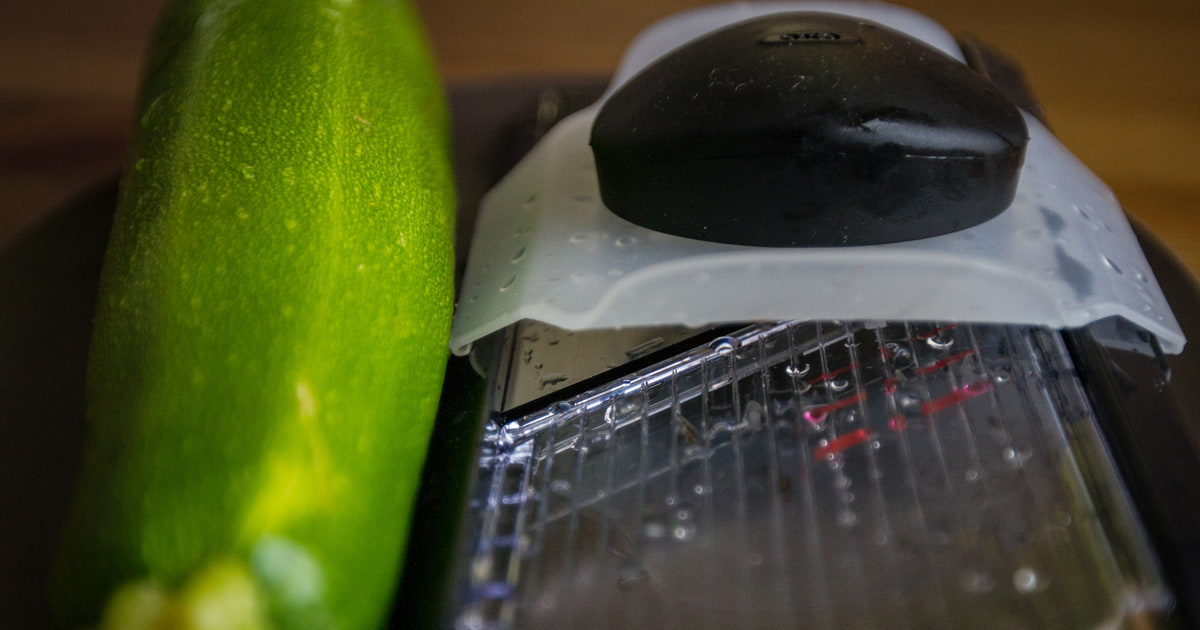
A mandoline turns a tedious job into a fast one. Potato gratin, cucumber salad, apple chips, shaved fennel — slices that would take you ten careful minutes with a knife take about one, and they come out uniform enough to cook evenly. That uniformity is the real point. Even slices brown at the same rate and layer flat. If you cook vegetables more than a couple of times a week, a mandoline earns its drawer space fast, and you'll find yourself reaching for it on weeknights.
Now the honest part: every mandoline in this category is a fixed razor blade with your hand moving toward it. No design removes that risk. Handguards help, non-slip feet help, and V-blades cut with less force — but the injuries still happen, almost always on the last inch of the vegetable, when the guard feels awkward and you're in a hurry. Plan on a cut-resistant glove no matter which one you buy. Plan on throwing away that last nub, too.
There's also a real split in what these tools are for. Some are sharp, narrow professional instruments that assume you know what you're doing. Others trade blade quality for guards and simplicity. We think that the OXO Good Grips Chef's Mandoline Slicer 2.0 is the best mandoline slicer for most people, and that the Swissmar Börner VPower V-Slicer is the one to buy if safety is the thing you care about most.
Everything we recommend

The most complete design, if you slice often enough to justify it

The safest layout here, and it cuts with less force
The sharpest blade here, for cooks who don't need hand-holding

Five blades and folding legs, with a duller edge as the trade
At a glance
| Product | Thickness Range | Blade Count | Price | |
|---|---|---|---|---|
| OXO Good Grips Chef's Mandoline Slicer 2.0Top pick | — | 2-Sided Blade | $99.99On sale |
| Benriner Mandoline Slicer with 4 BladesUpgrade pick | 0.5-8mm | 4 Blades | $35 |
| Mueller Austria Mandoline Slicer for KitchenBudget pick | 1-9mm | 5 Blades | $34.99 |
| Swissmar Börner VPower V-Slicer MandolineAlso great | — | 3 Blade Inserts | $64.95 |
 | SupMaKin Safe Mandoline Slicer for KitchenAlso consider | 0.1-8mm | — | $26.99On sale |
How we picked
Blade quality. We compared blade materials and construction across spec sheets, favoring Japanese and surgical-grade stainless steel over generic stamped blades. Published reviews and owner feedback both flag the same tell: a blade that tears rather than cuts on soft produce.
Guard design. We looked for food holders with prongs or spikes that grip produce rather than relying on friction, since owner reports of injuries cluster around holders that slip. A holder that requires downward pressure from directly above the blade counted against a model.
Frame stability. Non-slip feet, folding legs and rigid frames all reduce the chance of a slicer moving mid-stroke. We treated frame flex under pressure as disqualifying, based on published reviews that call it out repeatedly.
Thickness range. We wanted a range from roughly 0.5mm for translucent chips up to at least 8mm for thick cuts and gratins. Repeatable settings, whether dial or slider, mattered more to us than the raw number of stops.
Cleaning and storage. Dishwasher-safe parts, blade covers and fold-flat designs decide whether a mandoline gets used or shelved. Owner feedback on this point is blunt and consistent.
Top pickOn sale
The most complete design, if you slice often enough to justify it
OXO Good Grips Chef's Mandoline Slicer 2.0
The OXO 2.0 pairs a genuinely sharp Japanese stainless blade with the best food holder in this group and a frame that folds flat for storage. It's the mandoline that asks the least of you and gives back the most consistent slices.
$99.99fromAmazonList priceThe food holder is the reason to buy this one. It's spring-loaded with a wide protective rim and prongs that bite into produce, so you're pushing from behind rather than pressing down from directly above the blade. That distinction matters more than any other spec here. Most mandoline injuries come from hands drifting toward the edge under pressure, and this design keeps yours behind the food instead of over it.
The thickness range covers essentially everything you'd want to slice. An indicator window shows the setting from above in both inches and millimeters, so you're not guessing which click stop you landed on. Dial it thin for translucent potato chips, thicker for gratin layers or steak fries. If you've ever pulled a gratin from the oven with some slices still crunchy, it's usually inconsistent thickness — this fixes that.
One blade does four jobs. The two-sided blade gives you straight slices or crinkle and waffle cuts, and there are integrated julienne and French fry blades built in. You're not hunting through a drawer for the right insert or storing a separate case. For most home cooking — julienned carrots for slaw, waffle chips for a party, plain rounds for pickles — you never swap anything.
Small design choices add up during real prep. The runway is textured so potato slices don't stick and stack, and the parallel surfaces keep food from wedging partway through a stroke. A wedge is where you push harder, and pushing harder is where you get hurt. The soft non-slip handle stays put in a wet hand. It folds flat and stores in a drawer instead of eating counter space.
Flaws but not dealbreakers
It's the most expensive option here, and that's a real barrier. If you slice vegetables a few times a month, the OXO is more mandoline than you need, and a simpler model will do the job. The case for spending up is frequency: if you're prepping produce weekly, the safety design and blade quality compound over years of use.
The frame is plastic, not full stainless steel. It's sturdy plastic and the geometry is good, so it doesn't flex under normal pressure. But it doesn't feel like the heirloom tool the price suggests, and owners who expect metal are sometimes surprised in the box.
The safety design only works if you actually use it. Skip the food holder because it feels slow on the first few passes and you've thrown away the main advantage you paid for. That's true of every mandoline, but it stings more here.
Also great
The safest layout here, and it cuts with less force
Swissmar Börner VPower V-Slicer Mandoline
The Börner's V-blade engages produce from both angles, so each pass takes less pushing than a flat blade. Combined with a food holder that grips with stainless prongs, it's the design we'd hand to someone who's already been cut once.
$64.95fromAmazonThe V-blade means you push less hard, and that's a safety feature. A flat blade meets the whole width of a potato at once. The angled V splits the work, so the vegetable feeds through with noticeably less force. Less force means fewer sudden slips when something gives way unexpectedly. Owners who've moved from a conventional mandoline consistently notice the difference on dense produce.
The safety holder grips with stainless prongs rather than friction. That's the difference between a holder that stays put on a slick tomato and one that skates off it. You keep the vegetable locked to the holder through the stroke instead of re-gripping mid-pass, which is exactly when hands wander.
One tool covers about ten different cuts. It ships with a slicing plane plus 3.5mm and 7mm inserts, which get you slices, julienne, shreds and cubes. A push-button adjustment changes thickness or cut size without pulling the insert out — no handling a loose blade with wet fingers just to go from thin to thick.
Storage is handled properly. A patented safety setting shields the blade when you're done, so reaching into the drawer isn't a small act of courage. The body is ABS plastic made in Germany, it's light at half a pound, and the whole thing goes in the dishwasher.
Flaws but not dealbreakers
The blade system locks you into Börner parts. V-blades aren't standard, so replacements and extra inserts have to come from the manufacturer. Julienne and specialty blades beyond the included set cost extra, which pushes the real total above the sticker.
The frame is wide. It takes up more counter and drawer room than a Japanese-style slicer, and it's less pleasant to wrangle in a small kitchen.
The holder struggles with small pieces at the end. Once a cucumber is down to a stub, the prongs have less to bite into. Discard the last inch or switch to a glove — the same rule as every mandoline, just worth repeating.
Upgrade pick
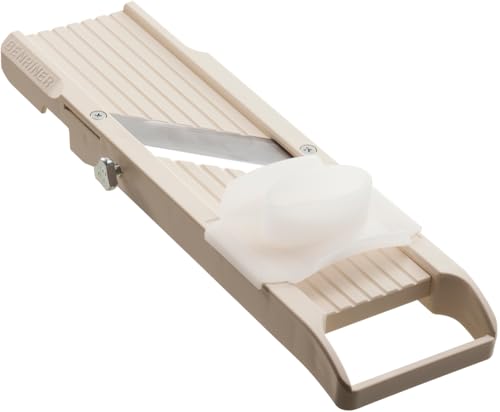
The sharpest blade here, for cooks who don't need hand-holding
Benriner Mandoline Slicer with 4 Blades
The Benriner is what restaurant prep cooks have used for decades: handcrafted Japanese stainless steel, four blades, and almost nothing in the way of safety features. If you want the cleanest possible cut and you'll wear a glove, this is it.
$35fromAmazonThe blade quality is the whole argument. Handcrafted Japanese stainless steel holds an edge far longer than the stamped blades on cheaper slicers, and the edge geometry cuts cleanly instead of tearing. You see it most on soft or fibrous things — a ripe tomato, a fennel bulb — where a duller blade crushes fibers and a sharp one parts them. Slices come off smooth-faced, not ragged.
Four blades cover the whole range of cuts. A fixed straight blade handles slicing, and three interchangeable tooth blades in coarse, medium and fine give you julienne strips at different widths. The dial adjusts from 0.5 to 8mm with repeatable numbered settings, so once you find the thickness for your potato chips you can get back to it next time.
It's compact and it hooks onto bowls. At about 12.75 by 3.6 inches and 400 grams, it stores anywhere and travels well. The safety guard hooks onto a bowl rim so slices land where you want them, and the non-skid rubber base keeps it planted. It disassembles for cleaning and the parts are top-rack dishwasher safe, though we'd hand-wash the blade to protect that edge.
It costs far less than its reputation suggests. This is professional-grade blade quality without a professional-grade price, which is why culinary students buy them by the dozen. If you already know your way around sharp tools, nothing here gives you more precision per dollar.
Flaws but not dealbreakers
The safety guard is basic, and that's a deliberate choice. It's a simple holder rather than a pronged, spring-loaded design, and it doesn't lock onto smooth-skinned produce the way the OXO's does. Tomatoes and tomatillos slip. Pair this with an ANSI-rated cut-resistant glove and treat that as required equipment, not an accessory.
The slicing surface is only 2.5 inches wide. Large fennel, whole cabbage and big squash need trimming to fit. If you regularly shave cabbage for slaw in quantity, a wider European-style bed will annoy you less.
It's not a first mandoline. New users tend to get comfortable too quickly with a blade this sharp, and the guard won't save them. Start elsewhere if you've never used one.
Budget pick
Five blades and folding legs, with a duller edge as the trade
Mueller Austria Mandoline Slicer for Kitchen
The Mueller Austria packs five blades, a 1-9mm thickness dial and folding legs into the least expensive package here. The blade isn't as sharp as the OXO's or the Benriner's, which you'll feel on raw beets and carrots.
$34.99fromAmazonYou get real breadth for very little money. Five blades handle slicing, julienne shredding, grating and cheese, so one tool replaces a few gadgets. The dial covers 1 to 9mm for slices and 6 to 9mm for julienne. For a first mandoline, having every common cut available means you actually learn what you use.
The folding legs are smarter than they sound. Unfold them and it stands over a cutting board. Fold them and you slice straight down into a bowl or onto a plate, which cuts a step out of salad prep and keeps rounds from scattering across the counter. It's a slim thing to store compared to a food processor doing the same job.
A safety food pusher comes in the box. It's a real one with a handle, not an afterthought, so finger protection isn't sold separately. It grips well on potatoes and sweet potatoes, which is what most people are slicing.
Cleanup is easy, and that matters more than people expect. The parts are top-rack dishwasher safe. Hand-washing several razor-edged blades over a sink is one of the least pleasant jobs in a kitchen, and skipping it is the reason mandolines end up unused in the back of a cabinet.
Flaws but not dealbreakers
The blade needs more pressure on hard vegetables. Raw carrots, beets and dense sweet potato take more force than they would on the OXO or Benriner. Pushing harder is how people get hurt, so slow down on hard produce or leave it to a knife.
The plastic shows its price over time. Owners report scratching, staining and a general loosening of the feel after regular use. Expect a year or two of steady service, not a decade.
The pusher can slide off smooth skins. Tomatoes and small zucchini don't hold well, and blade changes require deliberate handling around exposed edges. Neither is a dealbreaker, but neither is confidence-inspiring either.
Who this is for
Buy a mandoline if you slice vegetables regularly and want them even — gratins, chips, slaws, pickles, ratatouille, anything layered. It's also the right tool if you're cooking low-carb and shaving zucchini into ribbons a few times a week. If you slice a cucumber once a month, a sharp chef's knife is fine and safer, and you can skip this whole category. If there are kids or distracted roommates in your kitchen, buy a model with a blade cover for storage and use it every time.
This guide covers hand-operated mandoline slicers for home kitchens, from compact Japanese-style slicers to wider European frames and beginner-oriented push slicers. We're not covering electric slicers, deli meat slicers, spiralizers or food processors, all of which solve different problems. We also don't cover cut-resistant gloves as products, though we'd tell anyone buying any mandoline to get a pair rated ANSI/ISEA 105 at Level A4 or higher and treat it as part of the purchase.
How we picked
We weighted five things. Blade quality: we favored Japanese and surgical-grade stainless steel, because a dull blade tears soft produce and makes you push harder on hard produce. Guard design: food holders with prongs that bite into vegetables beat flat holders that rely on friction, since slipping holders are what owners describe when things go wrong. Frame stability: non-slip feet, folding legs and a frame that doesn't flex under real pressure. Thickness range: roughly 0.5mm at the thin end for translucent chips, at least 8mm at the thick end for gratins and fries, with settings you can return to reliably. Cleaning and storage: dishwasher-safe parts, a shielded blade for the drawer, and a shape that fits somewhere you'll actually reach for it.
Other mandoline slicers worth considering
If you want the least intimidating way to start: The SupMaKin Safe Mandoline Slicer for Kitchen ($26.99) — The SupMaKin builds the blades into the body, so there's no exposed edge to reach past and no inserts to swap with wet hands. You drop a potato in the three-inch port, set the thickness anywhere from 0.1 to 8mm, and push the handle. That's the entire operation, which makes it a reasonable gift for someone who's afraid of mandolines. It folds compact, it's dishwasher safe, and the listing states a 24-month warranty. What you give up is blade variety and edge quality — it handles cucumbers, zucchini and softer potatoes well, but dense beets and raw carrots make you lean into it, and leaning into a slicer is the habit we'd rather you not build. It's also a newer brand with less of a track record than OXO or Benriner.
The competition
Every product we looked at for this guide earned a recommendation of some kind, which is unusual — it reflects a small, well-sorted lineup rather than a thorough sweep of the market. There are plenty of mandolines we didn't look at, including ceramic-blade models and heavier all-stainless professional slicers. Treat this as what the research surfaced, not a complete map of what's for sale.
Safe use and care
Two habits prevent most mandoline injuries. First, use the food holder from the very first pass — people skip it early because it feels slow, then get cut later when they're moving fast. Second, stop when the vegetable is down to about an inch. That last nub is where nearly every serious cut happens, so either switch to a cut-resistant glove rated ANSI/ISEA 105 Level A4 or higher, or just throw it out. Keep the slicer on a damp towel if the feet don't grip your counter. Wash blades by hand even when the parts say dishwasher safe, since heat and detergent dull an edge over time, and dry everything before storing. Store with the blade covered or shielded, never loose in a drawer.
Questions we get
What's the safest mandoline for a beginner?
The Swissmar Börner VPower has the best safety layout here — the V-blade takes less force per pass and the holder grips with stainless prongs. The SupMaKin is the other good answer, since its blades are built into the body and you never handle a loose edge. Either way, buy a cut-resistant glove rated ANSI/ISEA 105 Level A4 or higher and wear it. No mandoline design makes the glove unnecessary.
How do I use a mandoline without cutting myself?
Use the food holder on every pass, including the first, and push from behind the vegetable rather than pressing down from above the blade. Keep the slicer on a non-slip surface or a damp towel so it can't shift. When the produce is down to about an inch, stop — switch to a glove or discard the nub. Slow, even strokes give you better slices and far fewer accidents than fast ones.
Are mandoline slicers dishwasher safe?
It depends on the model, and dishwasher safe isn't the same as good for the blade. The Mueller Austria and Benriner list top-rack dishwasher-safe parts, and the Swissmar Börner and SupMaKin are dishwasher safe as well. But heat and alkaline detergent dull sharp edges over time, so we'd hand-wash any blade you care about — especially the Benriner's Japanese steel. Check the manufacturer's guidance before running any part through a cycle.
Is a ceramic blade better than stainless steel?
Usually not, for home use. Ceramic is very sharp out of the box and won't rust, but it's brittle and can chip if you drop it or force it through a raw carrot. It also can't be sharpened with normal kitchen tools. Good stainless — particularly Japanese high-carbon stainless like the Benriner's — holds its edge well and can be professionally sharpened, which makes it the more practical choice.
What's the difference between a Japanese and a European mandoline?
Japanese slicers like the Benriner are narrow and simple, built around a very sharp thin blade, and they assume a skilled user. European designs like the Swissmar Börner are wider and heavier, with more emphasis on holders, guards and stability. The OXO sits between the two, pairing a Japanese-style blade with a wide bed and a serious food holder. Pick based on how confident you are, not on which sounds more professional.
Which one slices cucumbers and potatoes thinnest?
The OXO is the best all-around pick for consistent thin rounds, and its range goes low enough for translucent chip slices. The Benriner goes down to 0.5mm and its blade is arguably sharper, so it'll match or beat the OXO on cut quality — it just demands more skill and a glove. For zucchini ribbons and cucumber salad specifically, any of the picks here will do the job.
Why you should trust us
For this guide:
- We read the manufacturer spec sheets and listing details for every slicer here, comparing blade materials, thickness ranges, guard designs and included accessories side by side.
- We reviewed published evaluations from established kitchen-equipment publications and cross-referenced their conclusions about blade quality and safety design.
- We read owner feedback across these models to find the failure modes that come up repeatedly — slipping holders, blades that dull, and frames that shift on the counter.
- We read owner reviews on every listing, weighted toward the critical ones, because that is where the recurring failures show up.
- We have a systematic way of automatically fetching the latest prices, so the numbers on this page stay current.
- This is a research-focused guide, so the team may not own every product listed — though we often do own the top winners, which gives us extra context for the recommendations.
- We don't accept free products, and the retailer commission never changes which product we recommend.
Sources
The Best Mandoline Slicers, According to Our Tests — Wirecutter / NYT Cooking, Wirecutter / New York Times
Best Mandoline Slicers — Serious Eats, Serious Eats
Mandoline Slicer Reviews & Ratings — Cook's Illustrated, Cook's Illustrated
Kitchen Knife & Mandoline Injuries — CPSC NEISS Injury Data, U.S. Consumer Product Safety Commission
Best Mandoline Slicers of 2026 — Good Housekeeping, Good Housekeeping
Mandoline Slicer Buying Guide & Reviews — Food Network Kitchen, Food Network Kitchen
Best Mandoline Slicers — America's Test Kitchen, America's Test Kitchen
Cut-Resistant Glove Standards for Kitchen Use — ANSI/ISEA 105-2016, International Safety Equipment Association
Amazon product listings and owner reviews for all 5 products
Manufacturer specification pages for each product
Some passages in this guide may be paraphrased with AI help. Prices are refreshed automatically.
More like this.
Continue exploring appliances reviews and recommendations.

The Best Vacuum Sealers
A vacuum sealer earns its counter space in a fairly boring way: it stops you from throwing food out. Air is what turns a steak gray at the edges and what…

The Best Quiet Ceiling Fans With Remote Control
A ceiling fan is one of the few appliances that runs while you sleep, so noise is the thing that decides whether you love it or resent it. A good one…

The Best Kitchen Storage Containers
Kitchen storage is one of those things you don't think about until it fails. A bag of flour spills across a shelf. Last night's chili leaks into a tote…

The Best Range Hoods
A range hood earns its keep three times a day, and you barely notice it when it's doing the job. It pulls steam off a pot of pasta before your windows…

The Best Gifts for Vegans and Plant-Based Cooks
Plant-based cooking asks a lot of a kitchen. Almonds have to become milk, chickpeas have to become hummus, and tofu has to come out of something crisp…

The Best Portable Espresso Makers for Travel
Bad hotel coffee is a small daily tax on travel. A portable espresso maker is the fix: a hand-pumped cylinder that takes fine grounds and hot water and…