The Best Milwaukee Tools
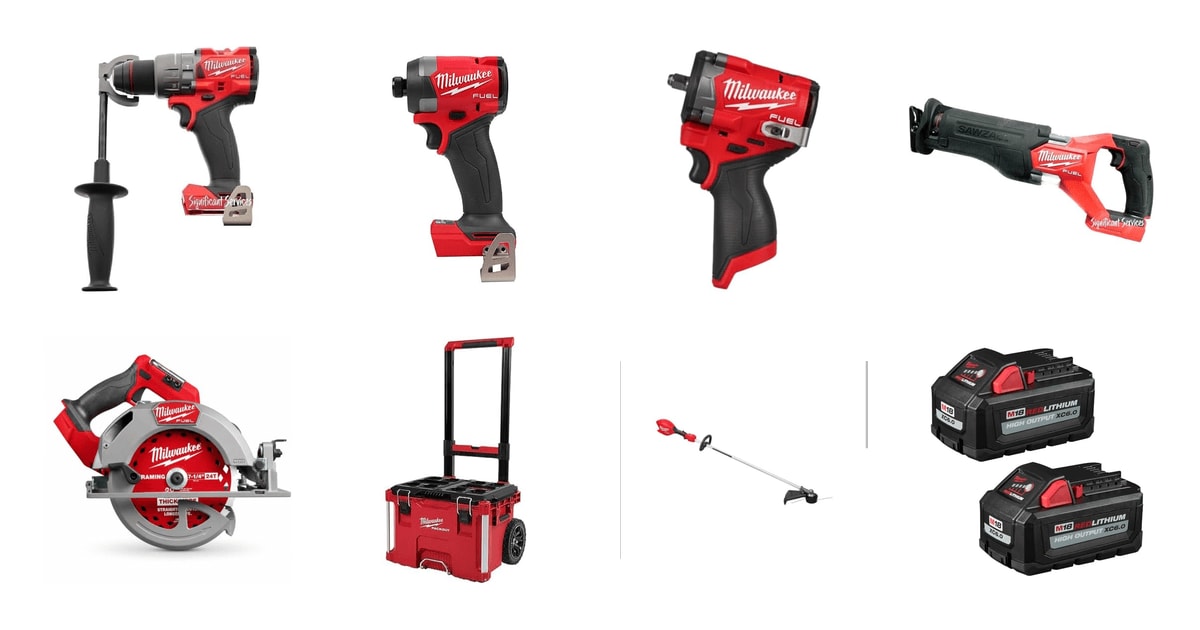
Buying a Milwaukee tool isn't really a tool decision. It's a battery decision. Once you own a couple of M18 packs, every future purchase gets cheaper, because you can buy bare tools and skip the battery-and-charger tax. That's the whole logic of a cordless platform, and Milwaukee's is one of the deepest out there. So the first question isn't which drill you want. It's whether you're building on M18, on the smaller M12, or on both.
Here's the part nobody puts on the box: these tools are heavy, and the good ones aren't cheap. A full-size circular saw with a big pack on it is a real workout overhead. Batteries wear out in a few years of hard use and cost a meaningful chunk of what the tool did. And the FUEL branding gets applied broadly enough that it's easy to overpay for power you'll never use hanging a few shelves.
We think that the M18 FUEL 1/2-inch Hammer Drill/Driver is the best Milwaukee tool for most people, and that the M12 FUEL Stubby 3/8-inch Impact Wrench is the one to buy if you spend more time under a hood than on a ladder.
Everything we recommend

Enough torque for concrete, still fine for cabinet screws

The one-handed tool you'll reach for far more than the drill

Real breakaway torque in something you can palm

Demolition speed that makes a corded saw feel pointless

Two packs at once, the smart way to enter the platform
How we picked
Platform first. We treated the battery system as the primary decision, favoring tools that build toward a coherent M18 or M12 setup. Anything that stranded you on a dead-end platform got dropped.
Brushless motors. We prioritized FUEL tools with POWERSTATE brushless motors, since Consumer Reports' durability trials and Milwaukee's own longevity figures both point the same direction. Brushed tools only made sense where cost was the whole point.
Measured performance. Where independent outlets published head-to-head numbers — Pro Tool Reviews on torque, Tools In Action on cut speed — we leaned on those rather than listing copy. A tool needed to be at or near the top of its class to make a pick.
Weight and reach. We weighed spec-sheet dimensions against what owners say about working overhead or in an engine bay. Anything over about six inches long stops being useful for tight-clearance work, no matter how strong it is.
Warranty and support. Milwaukee's five-year tool and two-year battery coverage is longer than the three-year standard common elsewhere, and we counted that toward the long-term case for the platform.
Top pick
Enough torque for concrete, still fine for cabinet screws
Milwaukee Electric - M18 Fuel. 1/2 Hammer
This is the drill most reviewers use as the yardstick for everything else. It handles anchors in a block wall, then dials down through its mechanical clutch for hinge screws without stripping them, and it runs on the battery platform you'll want anyway.
$153.89fromAmazonIf you buy one Milwaukee tool, make it this one. A hammer drill does everything a regular drill does, plus it pounds its way into masonry. Pro Tool Reviews puts this model at up to 1,200 in-lbs of torque, near the top of the compact cordless class. That means it'll set a lag bolt into a deck joist without stalling. And it means you're not shopping for a second drill in two years.
The difference between hammer mode and regular drilling is the kind of thing you only appreciate once. Owners describe trying to bore into concrete with a standard drill and getting maybe an inch after a quarter hour of leaning on it. Switch to hammer mode and the same hole takes seconds. If you've ever wanted to mount a shelf, a TV bracket or a hose reel on a masonry wall, that's the whole reason to own this.
The chuck is all-metal with carbide teeth, which matters more than it sounds like it should. Cheap plastic-bodied chucks let bits slip under load, and a slipping bit chews up its own shank. This one grips. There's also a mechanical clutch with real detents, so you can back the torque down for drywall anchors and trust it to stop where you set it.
The weight is the honest trade. At about four and a quarter pounds bare, this is not a light drill, and a big battery pushes it past five. Milwaukee's POWERSTATE brushless motor is what buys you the power in that package — the company rates its brushless motors to run up to five times longer than comparable brushed ones under heavy load, and Consumer Reports found brushless drills outlasted brushed models in continuous-use durability trials.
Flaws but not dealbreakers
It's bulky for delicate work. Getting into a cabinet carcass or between studs with this thing is awkward, and you'll notice the heft after an afternoon overhead. If most of your work is light assembly, a compact drill or an impact driver is the friendlier tool.
Listings for this one vary in what you actually get. Some owners report receiving units marked as used or refurbished when they expected new, with hand-written markings near the battery terminals. Check what condition you're buying before you click, and inspect the tool when it lands.
Milwaukee backs its M18 power tools with a five-year limited warranty.
Runner-up
The one-handed tool you'll reach for far more than the drill
Milwaukee M18 FUEL 1/4" Hex Impact Driver
An impact driver drives screws faster and with less wrist strain than any drill, and this one is small enough to work one-handed on a ladder. Pair it with the hammer drill and you've covered most of what a home or a jobsite asks for.
$146.14fromAmazonAn impact driver isn't a drill with a different name. It hammers rotationally, so the screw goes in and your wrist doesn't twist. Deck screws, ledger boards, long structural fasteners — this is the tool for all of it. Owners who drive screws all day describe it as small but disproportionately strong, and that's the right read.
Size is the real selling point. It's roughly eight and a half inches long and weighs about two and a half pounds bare, so you can run it one-handed while the other hand holds the board. On a ladder, that's not a convenience, it's the difference between doing the job and not. The quick-release hex chuck lets you swap bits with gloves on.
It shares batteries with the hammer drill, the SAWZALL and the circular saw, which is the point of committing to M18 in the first place. Buy this bare, put the pack you already own on it, and you've added a tool for the price of a tool. That math is why most people should pick a platform before they pick a product.
This is a bare tool, so the listing includes no battery and no charger. If you're starting from nothing, that's a problem — a combo kit usually works out cheaper per tool than assembling bare tools plus packs. If you already have M18 batteries in a drawer, it's the obvious way to buy.
Flaws but not dealbreakers
Impact drivers are loud. The mechanism that saves your wrist makes a sharp rattling clatter, and in a garage it's genuinely unpleasant without ear protection. There's no quiet mode that keeps the power.
The hex chuck takes 1/4" hex bits only. You can get adapters for round-shank drill bits, but they add wobble and reduce accuracy. For drilling clean, precise holes, you still want the drill.
Milwaukee backs its M18 power tools with a five-year limited warranty.
Also great
Real breakaway torque in something you can palm
Milwaukee Electric - M12 FUELTRADE Stubby 3/8
About eight inches long and two pounds, this M12 impact wrench reaches lug nuts and caliper bolts that a full-size gun can't get near. It's the tool that makes people stop dragging an air hose around the garage.
$173.85fromAmazonSize is the entire argument here, and it wins. Milwaukee's M12 stubby line is built around engine-bay and cabinet clearance, and This Old House notes the impact wrench and ratchet families are marketed specifically for spaces under six inches. This listing is rated for up to 550 ft-lbs of nut-busting torque. That's plenty for lug nuts, caliper bolts and suspension work.
If you've been holding out on air tools, this is what usually converts people. No compressor cycling in the background, no hose snaking across the floor, no coupler leaking. Owners who made the switch describe it as shorter than the air gun it replaced and no worse at the jobs that matter on a car.
It runs on M12, not M18, and that's a separate battery family. For a lot of people that's fine — M12 packs are small and cheap enough to keep two around. But go in knowing you're starting a second platform if your other tools are M18. The upside is that M12 opens the door to a whole line of compact tools for electricians, plumbers and installers.
One consistent note from owners: give it a good battery. The high-capacity M12 packs let it hit its rated numbers, while a small standard pack leaves power on the table. That's true across Milwaukee's high-draw tools, but it's most noticeable on a tool this small.
Flaws but not dealbreakers
Nut-busting torque and fastening torque aren't the same number. Breaking a rusted bolt loose is easier than torquing one down, so don't treat 550 ft-lbs as a reason to skip a torque wrench on anything that matters — wheels included.
It's a 3/8-inch drive. That's the right size for most automotive work, but heavy truck lug nuts and big suspension fasteners want a 1/2-inch drive tool, and adapters add slop and a failure point.
Milwaukee backs its M12 power tools with a five-year limited warranty.
Upgrade pick
Demolition speed that makes a corded saw feel pointless
Milwaukee M18 Fuel Sawzall Brushless Cordless Reciprocating
A reciprocating saw is the tool you buy when something needs to come apart. Tools In Action clocked this one cutting 2x lumber faster than every competing cordless recip saw in a head-to-head, and its 1-1/4" stroke is a big part of why.
$187.59fromAmazonA SAWZALL cuts things you don't intend to keep. Nail-embedded studs, old cast-iron drain pipe, tree limbs at ground level, a kitchen you're gutting. Tools In Action found this model cut through 2x dimensional lumber faster than every other cordless recip saw in its comparison, and the 1-1/4" stroke length explains most of that — a longer stroke means more blade doing work per pass.
Blade changes are where cheap recip saws waste your time. This one uses a lever-actuated clamp with a wear-resistant insert, and owners consistently point out that you can swap blades with gloves on, in seconds, without twisting a collar. When you're breaking down cabinets and switching between wood and metal blades constantly, that adds up.
The battery connection is metal-reinforced, which sounds like a spec-sheet throwaway until you've dropped a saw off a ladder. Recip saws take more abuse than any other tool in the bag. There's also a built-in LED, genuinely useful when you're cutting inside a wall cavity or under a sink.
This is a bare tool. It'll run on standard 5.0Ah packs — owners report decent runtime doing yard cleanup and stump work on those — but demolition is high-draw, and a High Output pack keeps the speed up longer. Milwaukee rates its HIGH OUTPUT HD12.0 pack at up to twice the runtime and 50 percent more power under load versus standard M18 batteries of similar size.
Flaws but not dealbreakers
It's heavy. Just under seven pounds bare, and a big pack makes it worse. Cutting overhead or lying under a sink, you'll feel every ounce, and the vibration is real over a long session.
It eats batteries. Demolition draws hard and continuously, so a single mid-size pack won't get you through a serious teardown. Plan on two packs and a charger if you're doing more than a few cuts.
Milwaukee backs its M18 power tools with a five-year limited warranty.
Budget pick
Two packs at once, the smart way to enter the platform
Milwaukee M18 REDLITHIUM HIGH Output XC 6.0Ah
Batteries are the real cost of going cordless, and buying them in a two-pack is the sensible way onto M18. These 6.0Ah HIGH OUTPUT packs give the drill and the saw enough headroom without the bulk of the biggest cells.
$169fromAmazonBuy batteries before you buy your third tool. Once you own two decent packs, every bare tool on the shelf becomes an option, and bare tools are where the savings live. Two 6.0Ah HIGH OUTPUT packs is a sensible starting point — enough capacity for a drill, an impact driver and a saw, without the weight of the biggest packs.
HIGH OUTPUT is not marketing filler. The cells are built to deliver more current and shed heat better, which is what high-draw tools like the circular saw and the SAWZALL actually need. Milwaukee's own figures for its HD12.0 pack put it at up to twice the runtime and half again the power under load compared with a standard M18 battery of similar size, and the XC HIGH OUTPUT packs sit in the same family.
REDLINK intelligence keeps the tool, the battery and the charger talking to each other, cutting power before you cook the cells or the motor. It's why a Milwaukee pack usually fails from age rather than from one bad afternoon. Owners running these in grinders and hole-hawg drills — genuinely brutal loads — report the runtime holding up.
Capacity matters more than voltage for how long you run. A 6.0Ah pack does roughly twice the work of a 3.0 before it needs a charger, on the same 18 volts. So when you're deciding between a bigger battery and a higher-voltage platform, the amp-hour number is the one to look at.
Flaws but not dealbreakers
Battery listings attract counterfeits, and this category is a known problem. Some owners have received packs that looked genuine but wouldn't hold a charge past ten minutes, and had to return them more than once. Buy from a seller you can return to, and test both packs early.
6.0Ah packs are noticeably bigger and heavier than the compact ones. On an impact driver you're holding overhead, that extra bulk is annoying. A lot of people end up owning a small pack for light work and these for everything else.
Milwaukee backs its M18 batteries with a two-year warranty.
Who this is for
This guide is for anyone starting or extending a Milwaukee cordless setup — a homeowner buying a first real drill, a mechanic tired of an air hose, an electrician who needs tools that fit inside a panel, or a contractor filling gaps in a kit. If you already own DeWalt or Makita batteries, think hard before switching. The tools here are excellent, but a second charger and a second pile of packs is a genuine cost, and the gap between the top brands is smaller than the internet suggests.
We've focused on core cordless tools, one storage box and one battery set, because those are the purchases that determine everything you buy afterward. We haven't covered hand tools, MX FUEL equipment, specialty trade tools like press tools or cable cutters, or the accessory lines. And if you use a drill three times a year to hang pictures, none of this is aimed at you — a cheap brushed drill will serve you fine and cost a fraction of what a FUEL tool does.
How we picked
Platform: We judged every tool by how well it builds toward a coherent M18 or M12 setup, because your first purchase locks in the batteries you'll buy for years. Motor: FUEL tools with POWERSTATE brushless motors got priority, backed by Consumer Reports' durability trials and Milwaukee's longevity figures. Measured performance: Where Pro Tool Reviews or Tools In Action published head-to-head torque and cut-speed numbers, we leaned on those instead of listing copy, and a pick had to land at or near the top of its class. Size and weight: We compared spec-sheet dimensions against what owners say about overhead work and engine-bay clearance, since anything much over six inches stops fitting where compact tools need to fit. Warranty: Milwaukee's five-year tool and two-year battery coverage beats the three-year standard elsewhere, and that counted.
Other milwaukee tools worth considering
If you want your tools organized and rollable: The Milwaukee 48-22-8426 Packout ($199) — PACKOUT is the thing reviewers most often name as Milwaukee's edge over DeWalt and Makita, and this 22-inch rolling box is the base of the system. Everything else in the line stacks and locks onto it, so you wheel one stack to the truck instead of carrying four bags. ToolGuyd notes the boxes are IP65-rated against dust and water and can hold up to 250 pounds stacked and locked. It's heavy empty, at over 23 pounds, and it doesn't include an interior tray — those are sold separately, which stings. Owners occasionally report a stubborn fit when first mating two stages together. But if you're accumulating tools rather than owning three, this is where they should live.
If you want yard tools on the same batteries: The Milwaukee Electric - M18 Fuel 16 INCH ($229.99) — This M18 FUEL string trimmer runs on the packs you already own, which is the whole appeal — no gas, no mixing, no pull cord, and a 16-inch cutting swath that's plenty for a suburban lot. The brushless motor and variable-speed trigger give you real control along a flower bed, and the adjustable handle helps on longer sessions. Family Handyman notes that QUIK-LOK-capable M18 trimmers let one motor drive up to seven attachments, from an edger to a pole saw, which is a strong argument if you'd otherwise buy three separate machines. This particular listing has drawn very little owner feedback so far, so we'd treat it as promising rather than proven, and at nearly ten pounds it's not light for edging a long driveway.
The competition
Milwaukee's catalog runs to hundreds of tools, and this is what our research surfaced rather than a survey of everything the brand sells. The tool below is good. It just serves a narrower job than the picks, or asks more of your battery setup than most buyers are ready for.
The Milwaukee M18 FUEL 7-1/4 Inch Circular Saw ($199.99) — The M18 FUEL 7-1/4-inch circular saw is a genuinely strong tool — Pro Tool Reviews found it matched or beat corded saws cutting engineered lumber on the bench, and its POWERSTATE motor spins to 6,000 rpm with REDLINK PLUS electronics guarding against overload. The 2-5/8-inch cut capacity handles framing lumber, and the electric brake, rafter hook and LED are the details you want on a roof. It lost to the picks on two counts. At 11 pounds it's the heaviest thing here, and owners are clear that a standard 5.0Ah pack barely keeps up — you really want a HIGH OUTPUT battery, which pushes the total cost up. If you frame, build decks or break down sheet goods regularly, buy it anyway. If you cut a few boards a year, a corded saw or a jobsite table saw makes more sense.
Batteries, storage and getting more years out of a kit
Batteries are what wear out, so treat them well. Don't leave a pack on the charger for weeks or bake it on a dashboard in July — heat is what kills lithium cells, and a pack stored hot at full charge ages fastest. If a tool is going in a drawer for the winter, pull the battery and store it around half charge somewhere room temperature. Rotate your packs rather than always grabbing the same one. On the tools themselves, blow the motor vents clear with compressed air when they clog with sawdust, since a brushless motor still needs airflow to shed heat. Keep chucks and blade clamps free of grit, and replace a worn hex bit early — a rounded bit chews up screw heads and does more damage than it saves. Milwaukee's five-year tool warranty is worth registering for.
Questions we get
Are Milwaukee tools worth the extra cost compared to DeWalt or Makita?
For daily professional use, yes — the FUEL line consistently places at or near the top of independent head-to-head comparisons, and the five-year tool warranty beats the three years many competitors offer. For occasional home use, the honest answer is that the gap between the top three brands is small. The bigger factor is which platform your friends and your existing batteries are on.
What's the difference between M12 and M18?
M12 is a 12-volt platform built around small, light tools that fit in tight spaces — engine bays, panel boxes, cabinet interiors. M18 is 18 volts and covers the full-size range, from framing saws to yard equipment. Most people build on M18 and add a couple of M12 tools if their work demands the clearance.
Are M12 and M18 batteries cross-compatible?
No. The packs are physically different and won't fit each other's tools, so committing to both means two sets of batteries and, usually, two chargers. Milwaukee does sell dual-port chargers that handle both, which takes some of the sting out. Factor that in before you buy your first M12 tool.
What does FUEL mean?
FUEL is Milwaukee's badge for tools combining a POWERSTATE brushless motor, a REDLITHIUM battery and REDLINK PLUS electronics. Brushless motors have no carbon brushes to wear down, so they run cooler, longer and with more torque — Milwaukee rates them at up to five times the runtime of comparable brushed motors under heavy load. Consumer Reports' durability trials found brushless drills outlasted brushed ones in continuous use.
Is ONE-KEY worth it for a homeowner?
Mostly not. ONE-KEY lets you track tool location over Bluetooth, set custom torque and speed limits, and get theft alerts — features aimed at contractors managing crews and tool-loss policies on commercial sites. Some jobsites now require it. In a home garage, it's a feature you'll set up once and forget.
Which tools should a first-time buyer get?
Start with a hammer drill and an impact driver on M18, plus two decent batteries and a charger — that covers most household and light construction work. Buy them as a combo kit if you own nothing yet, since kits usually work out cheaper per tool than bare tools plus separate packs. Add a recip saw or circular saw only when a project actually calls for one.
Why you should trust us
For this guide:
- We read published head-to-head comparisons from Pro Tool Reviews, Tools In Action and Consumer Reports covering torque, cut speed and brushless durability.
- We compared manufacturer specifications across the M12 and M18 lines for weight, dimensions, torque ratings and warranty terms.
- We reviewed recurring themes in owner feedback — battery runtime under high draw, tool weight overhead, and counterfeit battery reports — to identify the flaws that show up repeatedly rather than once.
- We read owner reviews on every listing, weighted toward the critical ones, because that is where the recurring failures show up.
- We have a systematic way of automatically fetching the latest prices, so the numbers on this page stay current.
- This is a research-focused guide, so the team may not own every product listed — though we often do own the top winners, which gives us extra context for the recommendations.
- We don't accept free products, and the retailer commission never changes which product we recommend.
Sources
Milwaukee M18 FUEL Hammer Drill/Driver 2904-20 Review, Pro Tool Reviews
Milwaukee M18 FUEL Impact Driver Review, ToolGuyd
Milwaukee M12 FUEL Stubby Impact Wrench Review, Pro Tool Reviews
Best Reciprocating Saws Tested, Tools In Action
Milwaukee M18 FUEL Circular Saw Review, Pro Tool Reviews
Milwaukee PACKOUT System Overview and Testing, ToolGuyd
Best Cordless String Trimmers of the Year, Family Handyman
Milwaukee REDLITHIUM HIGH OUTPUT Battery Technology, Milwaukee Tool (Official)
Cordless Power Tool Battery Platforms Compared, This Old House
M12 vs M18: Which Milwaukee Platform Is Right for You, Pro Tool Reviews
Cordless Drill Buying Guide, Consumer Reports
Milwaukee Tool 5-Year Warranty Policy, Milwaukee Tool (Official)
Amazon product listings and owner reviews for all 8 products
Manufacturer specification pages for each product
Some passages in this guide may be paraphrased with AI help. Prices are refreshed automatically.
More like this.
Continue exploring home reviews and recommendations.

The Best Indoor Air Quality Monitors
You can't see most of what you breathe at home. Cooking throws fine particles across the kitchen. A closed bedroom door pushes CO2 past the point where…

The Best DeWalt Power Tools
Most of what a power tool does for you is unglamorous, and that's the point. You hang a curtain rod. You break down a sheet of plywood in the driveway.…

The Best Ratcheting Wrench Sets
A ratcheting wrench earns its keep in the spots where a regular wrench can't move. You slip the box end over a bolt and swing the handle back without…

The Best Smart RGB LED Strip Lights for Bedrooms
Bedroom light gets used in a specific way. You want a soft glow behind the headboard at night, something bright enough to find a charging cable, and a…

The Best Snow Melting Mats for Walkways
Shoveling a walkway at six in the morning is nobody's idea of a good time, and the ice that forms afterward is worse. A heated mat sidesteps both…

The Best Toaster Oven Air Fryer Combos
A countertop oven earns its space by handling the small stuff. Reheating two slices of pizza, roasting a sheet pan of broccoli, crisping frozen fries at…