The Best Outdoor Faucet Covers
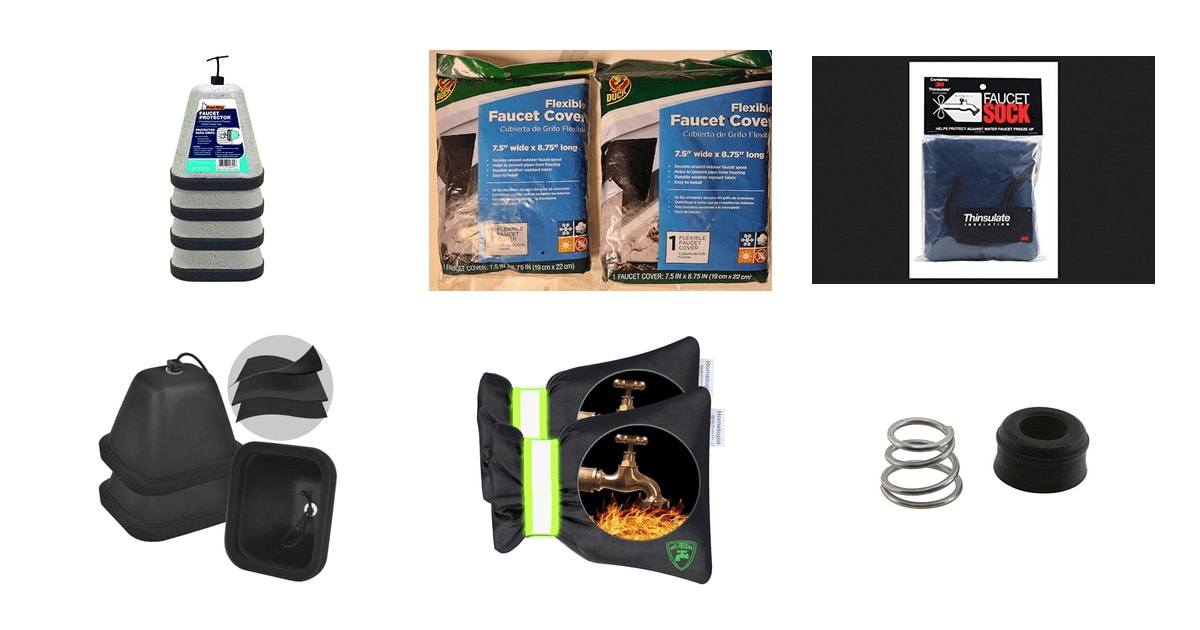
An outdoor faucet cover is one of the smallest purchases you'll ever make that can save you thousands. When a spigot freezes, the ice expands inside the pipe behind it, and the split often shows up a foot or two inside your wall. The American Red Cross flags 20°F sustained for several hours as the point where unprotected outdoor pipes are genuinely at risk. HGTV puts the practical threshold even earlier, at four hours below 28°F. If you live anywhere that hits those numbers, a cover takes about five minutes to install and asks nothing of you all winter.
Here's the honest part: no faucet cover generates heat. Every one of these works by trapping the small amount of warmth that leaks out of your house through the pipe and the wall. That means a well-insulated wall actually gives the cover less to work with, and a cover on a pipe running through an unheated crawlspace may not be enough on its own. None of them will save you if you leave a garden hose attached — This Old House and Old House Journal both point out that the hose traps water at the bib and cancels out the drainage a frost-free sillcock is designed to do. Disconnect first. Always.
We looked at insulation type and thickness, closure design, how well each one seals against siding, and how many winters owners say they survive. The differences that matter aren't subtle: a thick multi-layer sock does more than a thin foam dome, and a closure that stays cinched does more than one that slips. We think that the Hometopia Outdoor Faucet Covers are the best outdoor faucet covers for most people, and that the Frost King FC1 4-pack is the one to buy if you have several faucets and want to cover them all cheaply.
Everything we recommend

Thick, weatherproof, and it actually stays cinched
Four faucets covered for the price of one fancy one

Thinsulate and nylon, and it'll outlast the cheap ones
A hard shell that shrugs off wind and doesn't go brittle
At a glance
| Product | Insulation Type | Faucet Size Fit | Price | |
|---|---|---|---|---|
| Frost King FC1 Outdoor Foam Faucet CoverBudget pick | Foam | 5.5x5.5x6.25in | $15.19 |
 | Duck Brand Insulated Soft Flexible Faucet CoverAlso consider | Soft Flexible | 7.5x8.75in | $12.75 |
| Custom Building Products Faucet Sock Faucet CoverUpgrade pick | 3M Thinsulate | Small | $8.97 |
| ANKHOH Outdoor Faucet Covers for WinterAlso great | EVA Material | — | $17.99 |
| 2Pack Outdoor Faucet Covers for Winter -Top pick | PP Insulated Cotton | 6.7x8.3in | $6.99On sale |
 | Prime-Line MP53060 Faucet Seat and SpringAlso in lineup | — | — | $4.72 |
How we picked
Insulation and thickness. Department of Energy R-value figures for closed-cell foam — roughly R-3.7 to R-4.2 per inch — gave us a baseline for what each material actually contributes. Thickness and layer count mattered more to us than brand name.
Wind and moisture sealing. Published field comparisons show hard shells and coated fabrics hold interior temperatures higher than open foam because they block convective loss. We favored covers with a waterproof outer layer, since wet insulation stops insulating.
Closure that holds. A cover that works loose in January is a cover that failed. We preferred designs with a strap plus a cord over a single string, and we read owner feedback specifically for reports of covers slipping off.
Fit against real siding. Rigid domes assume flat walls. We looked for covers that owners report sealing well on lap siding, brick and stucco, and we noted the stated dimensions against a standard hose bib.
Seasons of service. Owner feedback on multi-year reuse separated the covers that last from the ones you replace annually. UV exposure and freeze cycles are what kill these, so we weighted reports past the first winter most heavily.
Top pickOn sale
Thick, weatherproof, and it actually stays cinched
2Pack Outdoor Faucet Covers for Winter -
A three-layer insulated sock with a 420D Oxford shell, hook-and-loop straps, and a drawstring. It seals against uneven siding better than a rigid foam dome, and owners report using the same pair for several winters running.
$6.99fromAmazonList priceThis is the cover that handles a wall that isn't flat. Foam domes assume you have smooth, even siding and a spigot that sits close to it. Lap siding, brick, stucco, or a spigot on a slight angle all break that assumption, and the dome ends up gapping at the top. The soft sock body conforms instead. Owners specifically call out that it fits around inconsistent siding better than the foam covers they replaced.
The construction is three layers doing three jobs. The outer shell is a coated 420D Oxford fabric that sheds rain and blocks wind, the middle is PP insulated batting, and the whole thing measures 6.7 inches wide by 8.3 inches tall — roomy enough to swallow a standard hose bib with a bit of margin. Blocking wind matters more than people expect. Bob Vila's field work found covers that stop convective loss ran meaningfully warmer inside than open foam.
You get two closures, and using both is the point. The hook-and-loop straps snug the body against the wall, then the cord cinches the opening down. That redundancy is why this one earns the top spot. A single drawstring can work loose over three months of wind, and once cold air can tunnel under the rim, the insulation behind it barely matters.
The extra height also buys you room. If your spigot has a short splitter or a hose timer hanging off it, the opening is generous enough that owners report fitting the cover over the faucet plus a bit of what's attached. That's not true of most rigid domes, which are sized to the faucet and nothing else.
Flaws but not dealbreakers
The soft body doesn't hold its own shape, so on a deeply recessed faucet it can slump inward and sit against the metal instead of leaving an air gap. Insulation works best with a little dead air around the bib. Pull it taut when you cinch it.
It's also bulkier to store than a stack of foam domes. Two of these take up a shoebox; four foam covers nest into each other and take up almost nothing.
Budget pick
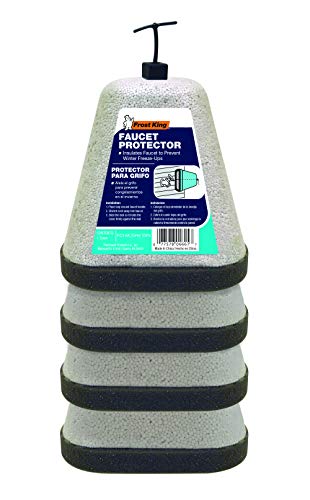
Four faucets covered for the price of one fancy one
Frost King FC1 Outdoor Foam Faucet Cover
The classic green foam dome, sold four to a pack, made in the USA by Thermwell. It slips over a standard bib in under a minute and cinches with a cord. For a house with three or four spigots, nothing gets you covered faster or cheaper.
$15.19fromAmazonMost houses have more than one outdoor faucet, and that's where the math turns in favor of a multi-pack. Front, back, garage, maybe one by the garden — buying premium covers for all of them adds up fast, and the fourth faucet is usually the one that gets skipped. This pack covers the whole house at once. Frost King is the top-selling name in the category for exactly this reason.
The foam does real work, even though it's simple. The Department of Energy rates closed-cell foam at roughly R-3.7 to R-4.2 per inch, so a standard dome is delivering meaningful resistance for something that weighs a few ounces. For the transient freezes that most of the country actually gets — a cold snap that lasts a night or two — that's enough. Owners in mild-winter states describe exactly that use case.
Installation takes about a minute per faucet with no tools, which lines up with Family Handyman's roughly five-minute estimate for a drawstring foam cover. The dome measures 5.5 by 5.5 by 6.25 inches, which fits a standard hose bib without drama. Slide it on, pull the cord until the foam presses flat to the siding, tie it off. Done.
There's a practical storage advantage too. The domes nest inside one another when the season ends, so a four-pack collapses into about the space of a single cover on a shelf. Small thing, but it's the difference between finding them next fall and buying new ones.
Flaws but not dealbreakers
Foam is the least durable material here. Owners are candid that in a rough climate these may not survive more than a season or two — sun and freeze cycles make the foam brittle, and it eventually cracks. At this price that's an acceptable trade, but plan on replacing them.
The single cord closure is the weak link. If you don't cinch it hard against the wall, wind will work it loose over a long winter and cold air tunnels straight to the spigot. Check them after the first big storm.
The rigid shape also assumes flat siding. On brick, stone, or heavily textured lap siding, the rim won't sit flush and you'll get a gap.
Upgrade pick
Thinsulate and nylon, and it'll outlast the cheap ones
Custom Building Products Faucet Sock Faucet Cover
A fabric sock using a double layer of 3M Thinsulate under waterproof nylon, secured with an attached string tie. It's the most premium material in this group, and owners report five years of use before sun exposure finally got to one.
$8.97fromAmazonThinsulate is a real upgrade over generic foam, and you can feel the difference in your hands. It's the same synthetic insulation used in winter gloves and jackets, and it holds loft while staying thin. Two layers of it under waterproof nylon gives you insulation plus a genuine weather barrier, which is more than a bare foam dome offers. Owners in Minnesota and New England describe using these through hard winters without a frozen faucet.
Durability is where this one separates itself. One owner reported getting five years out of a pair before UV finally split the nylon — that's several times the life you should expect from foam. If you're buying covers you won't have to think about again for a while, this is the pick. It also stores flat rather than taking up a shelf.
The fabric body solves the same fit problem the top pick does, and the string tie holds better than most owners expected. The recurring theme in the feedback is that hard foam cups kept slipping off, and this one didn't. A cover that falls off in December protects nothing, so staying put is not a minor feature.
Note that this is the small size, dimensioned at 7 by 6 inches. That's fine for a standard residential hose bib. If your spigot is oversized, sticks far out from the wall, or has a splitter attached, measure before you buy.
Flaws but not dealbreakers
The single string tie is the only closure. It works, but there's no backup strap the way there is on our top pick, and a string is a string — it can loosen.
UV is what eventually kills these. The nylon holds up for years, but a south-facing wall in full sun will get you there sooner than a shaded north wall.
It's sold as a single cover, so outfitting a whole house costs considerably more than a foam multi-pack.
Also great
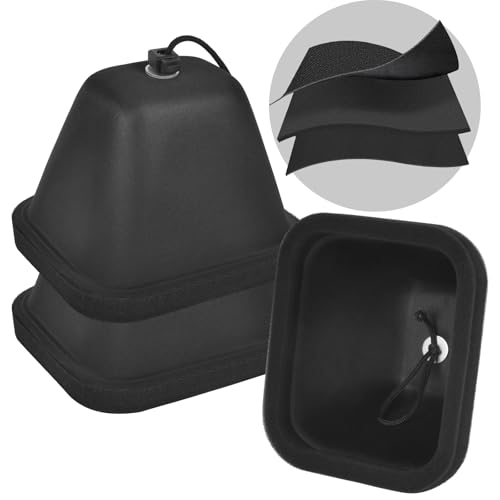
A hard shell that shrugs off wind and doesn't go brittle
ANKHOH Outdoor Faucet Covers for Winter
A rigid EVA shell in black, sold in pairs, with a zipper-and-cord closure. The hard body blocks wind the way foam can't, and it won't crack from a season in the sun the way a foam dome will.
$17.99fromAmazonWind is the quiet enemy here. A cold night at 25°F with steady wind pulls heat off a spigot far faster than the same temperature in still air, because moving air strips away the thin warm layer that insulation depends on. A rigid shell stops that. Bob Vila's field work found hard-shell covers ran notably warmer inside than foam-only covers on a 10°F night, and blocking convection is the reason.
Reusability is the real argument for hard shell. Foam gets brittle and cracks; EVA doesn't. Owners report going into a second and third season with these and not worrying about whether the cover will survive being taken off. The black shell also picks up a little solar warmth on sunny winter days, which owners have noticed — a small bonus, not a plan.
The rigid body holds an air gap around the faucet by design, which is exactly what you want. Insulation works on trapped still air, and a shell that can't collapse against the metal keeps that gap intact all winter. Soft covers can slump; this one can't.
It's waterproof, which matters more than it sounds. A cover that soaks up rain and then freezes becomes a block of ice pressed against your pipe, and wet insulation is barely insulation at all.
Flaws but not dealbreakers
The closure is the weak point. It's an adjustable zipper-and-string arrangement that owners describe as odd, and at least one reported the string pulling out of the housing on first use. It works when it works, but it's less robust than a sewn strap.
A rigid shell also needs a reasonably flat mounting surface. On rough brick or stone you'll get gaps at the rim that a fabric cover would close.
There's no size flexibility. If your bib has a splitter or timer on it, this won't go over the assembly.
Who this is for
Buy a cover if you live somewhere that regularly drops below freezing overnight — roughly USDA Zones 3 through 6, though a hard cold snap in Zone 7 or 8 will do the same damage to an unprepared spigot. First-time homeowners are the core audience here, because winterizing is one of those chores nobody tells you about until it's too late. HouseLogic estimates the whole job — draining, disconnecting hoses, fitting covers — takes under 20 minutes for a typical single-family house. That's a genuinely good return for a task you'll do once a year.
You still want a cover if you have a frost-free sillcock, especially during a deep cold snap. Frost-free designs move the shutoff back inside the heated wall, which helps, but the anti-freeze benefit disappears the moment you leave a hose attached — the hose traps water in the standpipe. If your pipe runs through an unheated crawlspace or garage, a cover alone isn't the whole answer; you'll want pipe insulation on the run as well. This guide covers the caps and socks that go over the faucet itself, not pipe sleeves, heat tape, or replacement plumbing hardware.
How we picked
Insulation: We compared materials against Department of Energy R-value data for closed-cell foam rather than trusting marketing claims, and gave credit for layer count and thickness. Wind sealing: Published field comparisons show that blocking convective loss matters as much as raw insulation, so waterproof shells and rigid bodies scored higher than open foam. Closure: A strap plus a cord beats a lone string, because a cover that works loose in a January storm protects nothing. Fit: We looked for covers owners report sealing well against lap siding, brick and stucco, not just an idealized flat wall. Longevity: Owner feedback past the first winter told us which covers survive UV and freeze cycles and which ones you'll buy again next fall.
Other outdoor faucet covers worth considering
If you want a soft cover in a two-pack and can verify the fit: The Duck Brand Insulated Soft Flexible Faucet Cover ($12.75) — The Duck Brand insulator is a flexible fabric cover at 7.5 by 8.75 inches, which makes it one of the roomier options here and a reasonable choice for a bib that sits a little proud of the wall. Owners who moved to it from styrofoam covers like that it goes on and off easily but stays put in between. The catch is that overall owner sentiment on this listing is noticeably more mixed than on our picks, with a meaningful share of low ratings and not much volume behind them. We'd take the Hometopia sock first, but if you want a soft cover in a pair and this one fits your faucet, it's a fair option.
The competition
This is what our research surfaced in this category, not a survey of everything sold. Faucet covers are a crowded, low-cost aisle with a lot of near-identical listings, and new sellers appear every fall. The products below are the ones we looked at closely and didn't recommend.
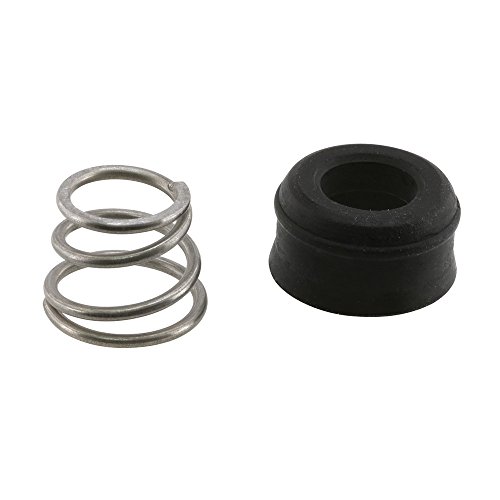
The Prime-Line MP53060 Faucet Seat and Spring ($4.72) — The Prime-Line MP53060 is a faucet seat and spring — an internal repair part for a Glacier Bay valve, not a freeze cover. Search results for faucet covers frequently surface plumbing repair parts like this one because of the shared word. If you have a dripping indoor faucet, it may well be what you need. It won't protect anything outdoors.
Installation and seasonal care
Disconnect the garden hose first — this is the step people skip, and it's the one that matters most. A hose left on traps water at the bib and blocks the drainage a frost-free sillcock depends on, so the cover ends up protecting a pipe that's already full of water. Open the spigot briefly to let it drain, then close it. Slide the cover on and cinch it tight enough that the rim presses flat against the siding; a visible gap at the top lets cold air tunnel straight to the metal. Leave it on all winter rather than pulling it off between cold snaps. In spring, let it dry fully before storing it somewhere out of the sun, since UV is what eventually cracks foam and splits nylon.
Questions we get
Do outdoor faucet covers actually prevent pipes from freezing?
They help, but they don't generate heat. A cover traps the small amount of warmth escaping through the pipe and wall, which is usually enough to get a spigot through an overnight freeze. In a sustained deep freeze, or on a pipe running through an unheated space, you'll want pipe insulation on the run behind the faucet too.
At what temperature should I cover my outdoor faucets?
The American Red Cross flags 20°F sustained for several hours as the point of significant risk, and HGTV treats four or more hours below 28°F as a hard freeze worth protecting against. The simpler rule is to install covers once nighttime lows start approaching freezing and leave them on for the season. There's no benefit to taking them off between cold snaps.
Do I need a cover if I have a frost-free sillcock?
It's still worth it in a real cold snap. Frost-free designs put the shutoff back inside the heated wall, so the water sits where it's warm. But that protection depends on the faucet draining, and a garden hose left attached traps water in the standpipe and cancels the whole design. Disconnect the hose, then add a cover for the extra margin.
Can I leave a garden hose attached under the cover?
No. This is the single most common mistake. The hose holds water against the bib and blocks drainage, so ice forms right where the cover can't help. Disconnect it, drain the faucet, and store the hose before you fit anything over the spigot.
Foam or hard shell — which is better?
Hard shell holds up better over multiple seasons and blocks wind more effectively, which matters on exposed walls. Foam is cheaper and easier to buy in quantity, and it's plenty for the transient freezes most of the country gets. If your wall is textured or your spigot sits at an odd angle, a soft fabric sock will seal better than either.
How many covers does a typical house need?
Count your exterior spigots — most single-family homes have two to four, typically front, back, and one near the garage or garden. Buy for all of them, because the forgotten one is usually the one that bursts. A multi-pack is the practical way to do it if you have three or more.
Why you should trust us
For this guide:
- We read the published specifications and listing details for every cover here, including insulation type, stated dimensions and closure design.
- We compared manufacturer claims against Department of Energy R-value data for closed-cell foam and against published field comparisons of hard-shell versus foam covers.
- We reviewed owner feedback themes across each listing, paying particular attention to reports of multi-season durability, closure failures and fit on real siding.
- We read owner reviews on every listing, weighted toward the critical ones, because that is where the recurring failures show up.
- We have a systematic way of automatically fetching the latest prices, so the numbers on this page stay current.
- This is a research-focused guide, so the team may not own every product listed — though we often do own the top winners, which gives us extra context for the recommendations.
- We don't accept free products, and the retailer commission never changes which product we recommend.
Sources
How to Winterize Outdoor Faucets — This Old House, This Old House
Outdoor Faucet Cover Buying Guide — Family Handyman, Family Handyman
How to Protect Pipes from Freezing — American Red Cross, American Red Cross
Frozen Pipe Damage Statistics and Claims Data — Insurance Information Institute, Insurance Information Institute
Average Cost to Repair Burst Pipes — Angi (formerly HomeAdvisor), Angi
Best Outdoor Faucet Covers — Bob Vila, Bob Vila
Best Outdoor Faucet Covers — The Spruce, The Spruce
Winterizing Your Home's Plumbing — HGTV, HGTV
Home Winterization Checklist — HouseLogic (National Association of Realtors), HouseLogic / NAR
Outdoor Faucet Cover Reviews and Ratings — Home Depot, Home Depot
Pipe Insulation R-Value Guide — Department of Energy, U.S. Department of Energy
Frost-Free Sillcock vs. Standard Faucet — Old House Journal, Old House Journal
Amazon product listings and owner reviews for all 6 products
Manufacturer specification pages for each product
Some passages in this guide may be paraphrased with AI help. Prices are refreshed automatically.
More like this.
Continue exploring home reviews and recommendations.

The Best Car Covers for Outdoor Protection
A car that sleeps outside takes a beating you don't really see day to day. Sun bleaches the clear coat, sap drips from whatever tree you parked under, and…

The Best Pull-Down Kitchen Faucets
A kitchen faucet is the thing you touch most and think about least. You grab it with wet hands, greasy hands, a stockpot hooked in one arm. A pull-down…

The Best Faucet Aerators
A faucet aerator is a small screen that threads into the end of your spout, and it's one of the simplest ways to cut your water bill. Swapping a standard…

The Best Outlet Covers and Plug Protectors
A crawling baby finds the outlet behind the couch faster than you'd think. Electrical outlets and cords sit near the top of the home hazard list for kids…

The Best Attic Stair Insulation Covers
A pull-down attic stair is a hole in your ceiling with a thin piece of plywood over it. That panel does almost nothing thermally - think single-pane…

The Best Window Well Covers
A window well is a small pit that fills with whatever falls into it. Leaves, rain, a stray tennis ball, the occasional frog. Left open, it collects water…