The Best Personal Finance Books for Building Wealth
Money advice fails for boring reasons. You know you should save more, you know index funds beat stock picking, and then it's Tuesday, you're tired, and the transfer doesn't happen. A good personal finance book fixes that gap in one of two ways: it changes how you think about money until the right behavior feels obvious, or it hands you a checklist so you don't have to think at all. The best ones do a bit of both. Most of the shelf does neither.
Here's the honest caveat. No book on this list knows your tax situation, your student loans, your health insurance, or whether your job is safe. They all lean on the same handful of ideas — spend less than you earn, automate it, buy broad index funds, be patient — so if you read four of them, the fourth will feel repetitive. And none of them can make you open the account. Reading is the easy part, and every author on this list would tell you the same thing.
So pick based on where you're stuck. If the problem is motivation and mindset, you want ideas. If the problem is that you've never opened a brokerage account, you want steps. We think that The Psychology of Money is the best personal finance book for most people, and that the Ramit Sethi two-book set is the one to buy if you'd rather follow a plan than absorb a philosophy.
Everything we recommend

The clearest explanation of why smart people stay broke

A step-by-step system for people who want a plan, not ideas

The index-fund case, short enough to finish in a weekend
A first investing book that assumes you know nothing
At a glance
| Product | Topic Focus | Reader Level | Price | |
|---|---|---|---|---|
| The Psychology of Money with Morgan HouselTop pick | Psychology of Money | — | Check price |
| Ramit Sethi Collection 2 Books SetRunner-up | Teach You To Be Rich | — | $33.91 |
| The Simple Path to Wealth by JlAlso great | Simple Path to Wealth | — | $1.29 |
| Your Money or Your Life by VickiAlso consider | Your Money or Your Life | — | $1.29 |
| Broke Millennial Takes on Investing by ErinBudget pick | Investing | — | $1.29 |
How we picked
Plain writing. We favored books written for a general reader over ones that read like a finance textbook. If a chapter needs a glossary to get through, it's the wrong first book for most people.
Something to do. We looked for concrete steps, worksheets, or a system you can set up in an afternoon. Books that only offer perspective had to be unusually good at it to make the list.
Reader fit. We matched each title to a specific person: a total beginner, a high earner who can't save, someone chasing early retirement. A book that's great for one of those groups is often wrong for another.
Evidence behind it. We checked the claims that the books lean on against the underlying research — SPIVA scorecards, the original millionaire study, published cost estimates — and we read the criticism financial writers have leveled at each author.
How you'll read it. Audio, print, and library availability all changed the recommendation. A book you'll actually finish on a commute beats a hardcover that stays on the nightstand.
Top pick
The clearest explanation of why smart people stay broke
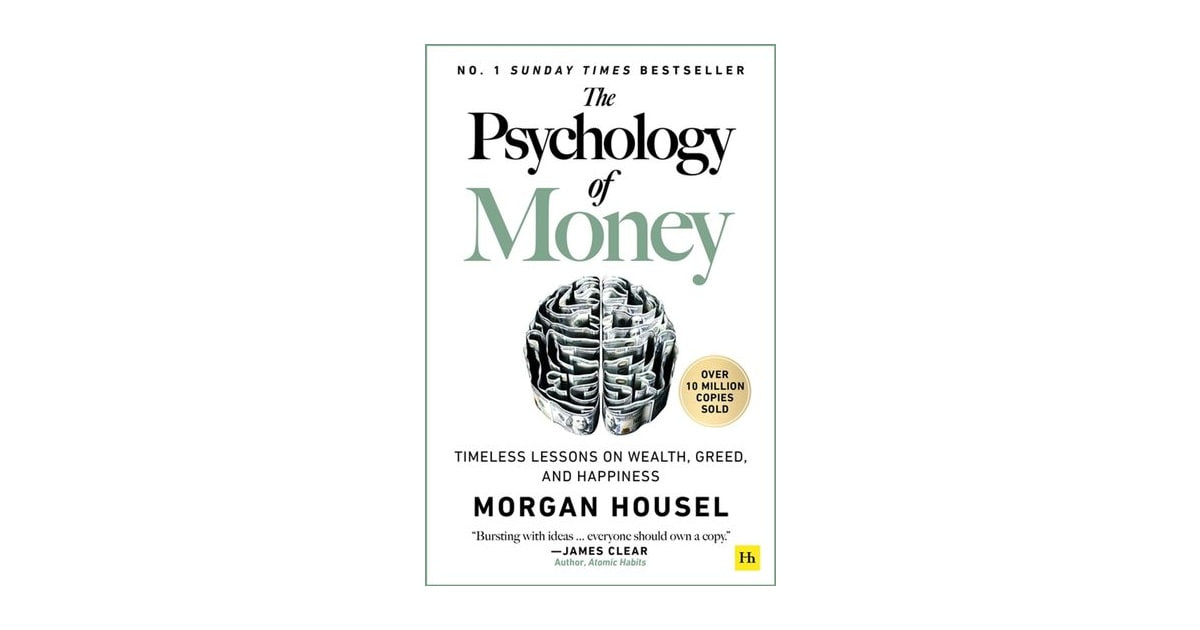
The Psychology of Money with Morgan Housel
Morgan Housel argues that wealth comes from how you behave, not how much you know. It's the rare money book you can finish in a few sittings and still think about a year later, and it's the one we'd hand to almost anyone who asks where to start.
Check priceatAmazonHousel's core argument is that behavior beats brains. He tells short stories about ordinary people who quietly got rich and brilliant ones who blew up, and the difference is almost always temperament. That reframing does real work on you. Once you accept that patience is the actual skill, you stop hunting for a clever fund and start protecting the dull habits that compound.
The book has sold more than four million copies worldwide, and it's the title that surfaces first when a newcomer asks r/personalfinance where to begin. Popularity isn't proof of anything. But it does mean you can hand this to your brother-in-law or your 22-year-old niece and expect them to finish it, which is more than most money books can honestly claim.
This listing is the Audible original recording, so Housel goes in your ears rather than on your nightstand. That suits the material. The chapters are short and self-contained, nothing here needs a pen, and you can get through a chapter on a dog walk. If you're the kind of reader who underlines and goes back, buy the print edition instead — you'll want the margins.
There's no worksheet in here, and that's on purpose. Housel won't tell you which brokerage to use or how much to put in a Roth. What he'll do is make you comfortable with owning boring investments for thirty years and ignoring the people who seem to be getting rich faster. For a lot of readers, that's the piece that was actually missing.
Flaws but not dealbreakers
The advice stays high above the ground. If you came looking for account names, contribution limits, or a debt payoff order, you'll close this book still needing another one. Pair it with something practical.
A few of the stories circle the same idea from different angles, and by the back third you may feel like you've already got the point. Readers who follow finance closely tend to find it thin. It's aimed at the person who has never thought about this stuff, and it's very good at that job.
Runner-up
A step-by-step system for people who want a plan, not ideas
Ramit Sethi Collection 2 Books Set
Ramit Sethi's book is a six-week program: automate your savings, fix your credit cards, open the right accounts, then spend guilt-free on the things you actually love. This set pairs the second edition with the companion journal, where the plan turns into your numbers instead of his.
$33.91fromAmazonMost money books tell you to budget and then leave you alone with a spreadsheet. Sethi does the opposite. He walks you through the specific moves in order — call the card company, set the automatic transfers, pick the target-date fund — so that the system runs whether or not you feel disciplined that month. If your problem is execution rather than understanding, this is the fix.
The guilt-free spending idea is the reason we'd give this to a high earner who can't figure out where the money went. Sethi's position is that you should cut hard on what you don't care about and spend freely on what you do. That's permission a lot of readers need. It also makes the plan survivable, because a system you resent is one you'll quit by March.
Charles Schwab's Modern Wealth Survey found that people who follow a written financial plan are about 2.5 times more likely to feel financially stable and on track for retirement. That's the whole case for the journal in this set. Writing the numbers down turns advice into a plan with your name on it, and the prompts keep you from stalling on the first blank page.
The set is a real object — two books, a bit over two pounds together, roughly nine inches tall. That matters more than it sounds. This is a book you work through with a pen at the kitchen table, not one you skim on a plane, and having the journal next to the chapters means you're less likely to promise yourself you'll do the exercises later.
Flaws but not dealbreakers
Sethi's voice is loud and a little smug, and some readers bounce off it hard. If confident bro energy makes you close a book, sample a chapter first.
The tactics are firmly US-centric and tied to specific account types and card perks, so some details drift out of date faster than the principles do. And if you already automate your savings and max a retirement account, the journal will feel like homework you've done.
Also great
The index-fund case, short enough to finish in a weekend
The Simple Path to Wealth by Jl
JL Collins wrote this for his daughter, so it moves fast and skips the jargon. The argument is simple: buy a broad, low-cost index fund, keep buying it through the ugly years, and stop trying to pick winners.
$1.29fromAmazonThis is the book that talks people out of stock picking. Collins doesn't argue that active management is evil, just that it loses. S&P Global's SPIVA scorecards have found that more than 85% of actively managed U.S. large-cap funds trailed the S&P 500 over a fifteen-year stretch. Once you sit with that number, paying someone to beat the market starts to look like a hobby, not a strategy.
The other half of the case is fees. John Bogle estimated that the average investor in actively managed funds gives up roughly two to three percent a year to costs, which quietly eats a huge share of a thirty-year return. Collins makes that drag feel real rather than abstract. If you understand nothing else about investing, understanding fees will save you more than any stock tip ever will.
It's also short, which is underrated. Collins came to this as a parent trying to explain money to a kid who wasn't interested, and the writing stays that plain throughout. You get the market's behavior in downturns, the case for holding through them, and a simple two-fund structure. It's a weekend, not a semester.
If you're chasing financial independence, this is the middle book in the standard stack — after Your Money or Your Life, before anything about drawdown. It's the one that answers the mechanical question the philosophy books leave hanging: fine, but what do I actually buy?
Flaws but not dealbreakers
The advice is deliberately narrow. Collins is a Vanguard partisan and the strategy is essentially one idea repeated with conviction, so if you want a discussion of bonds, real estate, or international allocation, you'll find this thin.
There's also very little hand-holding on the first steps. The book assumes you can open a brokerage account and fund it, which is exactly the wall a lot of beginners hit. Start somewhere gentler and come back.
Budget pick
A first investing book that assumes you know nothing
Broke Millennial Takes on Investing by Erin
Erin Lowry starts further back than anything else here — what a share of stock actually is, why an employer match is money you're leaving behind, what the difference between a 401(k) and an IRA means for you. If investing still feels like a language you don't speak, start here.
$1.29fromAmazonThe barrier for most people isn't disagreement with the advice. It's that the words are unfamiliar and asking feels embarrassing. Lowry writes for exactly that reader. She defines terms as she goes, keeps the tone conversational, and never assumes you already have a brokerage account or a clue what an expense ratio is.
It's also the most emotionally honest book on this list about starting late or starting small. If you're carrying student loans and wondering whether you have any business investing at all, Lowry takes the question seriously instead of waving it off. That's the difference between a book you finish and one you abandon out of guilt.
Read this first, then read JL Collins. The two fit together neatly: Lowry gets you to the point where the vocabulary makes sense and the account is open, and Collins tells you what to put in it and why to leave it alone. Doing it in the other order is how people give up on the second page.
Financial literacy isn't just a nice-to-have, either. TIAA Institute research has found that households with stronger financial literacy hold substantially more in retirement assets — on the order of a quarter more than comparable low-literacy households. A beginner's book that actually gets read is worth more than an advanced one that sits on the shelf.
Flaws but not dealbreakers
If you already know what an index fund is, this will feel slow. The explanations are thorough by design, and experienced readers will skim half of it.
It's also aimed squarely at younger readers early in a career, so the examples skew toward first jobs and first accounts. The mechanics still apply if you're 45 and starting over, but you'll be translating a little as you go.
Who this is for
This guide is for anyone who has decided to get serious about money and doesn't know which book to open first. That includes people in their twenties building a first framework, mid-career professionals who earn well but somehow never accumulate anything, and over-savers who need permission to spend on their own life. It's also a decent starting stack for couples who keep having the same argument, because reading the same book gives you shared language instead of dueling instincts.
It isn't for you if you need specific advice about a specific situation. Books can't do tax planning, they can't tell you whether to sell the rental, and they can't decide between paying down debt at a particular rate and investing instead. We also stuck to general wealth-building titles, so there's nothing here on running a small business, day trading, or estate planning. And we only wrote about books, not about third-party summaries of them.
How we picked
We started from what makes a money book stick rather than what makes it comprehensive. Writing: it has to read like a person talking, not a compliance document, because a book you don't finish teaches you nothing. Actionability: we gave real weight to books with steps, systems, or worksheets, since the gap for most readers is doing rather than knowing. Reader fit: each pick has a specific person in mind, from someone who's never opened a brokerage account to a high earner with nothing saved. Evidence: we checked the load-bearing claims against the original research and read what critics say about each author. Format: audio and library availability mattered, because the version you'll actually get through is the right one.
Other personal finance books for building wealth worth considering
If you want to rethink work, not just investing: The Your Money or Your Life by Vicki ($1.29) — Vicki Robin and Joe Dominguez ask you to convert spending into hours of your life — the life energy you traded to earn it — and then decide whether the purchase was worth the trade. It's the foundational text of the FIRE movement for a reason, and it hits differently than a book about asset allocation. Nothing else here will make you reconsider your commute. The tradeoff is that the investing guidance is the weakest part and shows its age, so read it for the reframing and get your portfolio advice from JL Collins.
The competition
This is what our research surfaced, not everything on the shelf. Personal finance is one of the busiest categories in publishing, and plenty of well-regarded titles didn't make it into this lineup — including several that get recommended constantly in the same communities we looked at. A few of the listings we reviewed turned out to be third-party study guides rather than the books themselves, and we've noted those separately below. Everything we'd actually recommend reading is above.
How to read these
Don't buy all of them at once. Pick the one that matches where you're stuck, finish it, and then do one thing before you start the next — open the account, set up the automatic transfer, write the plan down. The books overlap heavily, so reading three in a row mostly produces the pleasant feeling of progress without any actual progress. If you're working through Sethi, keep the journal open beside the book instead of promising yourself you'll do the exercises later. And check your library first. Most of these are available through Libby, and a free copy you finish beats a purchased one you don't.
Questions we get
What's the single best personal finance book for someone just starting out?
The Psychology of Money, for most people. It's short, it reads like a set of stories rather than a lecture, and it fixes the mindset problems that cause people to abandon good plans. If you'd rather have instructions than ideas, start with the Ramit Sethi set instead.
Do I really need more than one of these?
Two is usually the right number. Most readers need one book that changes how they think and one that tells them what to do, and no single title does both especially well. Reading a third right away tends to produce diminishing returns, since these authors agree with each other more than they disagree.
Which of these focus specifically on index fund investing?
The Simple Path to Wealth is the direct one — it's essentially a book-length argument for buying a broad, low-cost index fund and holding it. Broke Millennial Takes On Investing covers the same ground more gently and explains the terminology first. If you're new, read Lowry, then Collins.
What should couples read together?
Your Money or Your Life works well because it's about values rather than tactics, and most money fights are really about values. The Psychology of Money is a good second choice for the same reason. Reading the same book gives you shared vocabulary, which beats trying to explain your instincts from scratch.
Are the older classics still worth reading?
The ideas hold up better than the specifics. The original millionaire research found that about 80% of American millionaires were first-generation wealthy, having built it through ordinary saving and investing rather than inheritance, and nothing since has overturned that. Just expect the account details, tax numbers, and cultural references in older books to be stale.
Is the audiobook version as good as reading it?
It depends on the book. Housel's material is built from short, self-contained stories, so it works beautifully in audio on a commute. Anything with worksheets or step-by-step account setup — the Sethi set especially — is worth having in print, because you'll want to write in it.
Why you should trust us
For this guide:
- We read publisher descriptions, tables of contents, and author backgrounds for every title here, and we compared them to see how much the books actually overlap.
- We checked the load-bearing statistics each author relies on against the original sources, including S&P Global's SPIVA scorecards and the Schwab and TIAA Institute research on written plans and financial literacy.
- We reviewed recurring themes in published criticism and reader feedback, particularly complaints about tone and about advice that hasn't aged well.
- We read owner reviews on every listing, weighted toward the critical ones, because that is where the recurring failures show up.
- We have a systematic way of automatically fetching the latest prices, so the numbers on this page stay current.
- This is a research-focused guide, so the team may not own every product listed — though we often do own the top winners, which gives us extra context for the recommendations.
- We don't accept free products, and the retailer commission never changes which product we recommend.
Sources
Best Personal Finance Books of 2025 — NerdWallet, NerdWallet
Best Personal Finance Books — Investopedia, Investopedia
Best Money Books — The Balance Money, The Balance Money
Best Books on Financial Independence — Forbes Advisor, Forbes Advisor
Personal Finance Books Recommended by Millionaires — Business Insider, Business Insider
Best Personal Finance Books — CNBC Select, CNBC Select
SPIVA U.S. Scorecard — S&P Global Dow Jones Indices, S&P Global SPIVA
Modern Wealth Survey 2024 — Charles Schwab, Charles Schwab
Financial Literacy and Retirement Savings Outcomes — TIAA Institute, TIAA Institute
Better Money Habits Report — Bank of America, Bank of America
Amazon product listings and owner reviews for all 5 products
Manufacturer specification pages for each product
Some passages in this guide may be paraphrased with AI help. Prices are refreshed automatically.
More like this.
Continue exploring lifestyle reviews and recommendations.

The Best Self-Help Books for Personal Growth
A self-help book only works if you finish it and then do something with it. That sounds obvious. It's also the step most buyers skip. You buy the title…

The Best Books on Building Habits
Most habit advice fails you in the same place. You know what you want to do differently - move more, drink less, actually finish the side project - and…

The Best Books on Building a Career in the Age of AI
Your job is changing whether or not you've done anything about it. Tools that write, summarize, code and forecast are moving into work that used to be…

The Best Personal Blenders
A personal blender earns its counter space by being fast. You drop in frozen berries, yogurt and a scoop of protein powder, twist on the cup, press once,…

The Best Luggage Sets
A luggage set gets judged in about four minutes of your life. You lift it into the car, drag it across a parking garage, roll it down a jet bridge, and…

The Best Gifts for Coffee Lovers
Coffee is a daily ritual, which is why it's such good gift territory. The person you're shopping for already makes coffee every morning - you're not…