The Best Portable Projectors
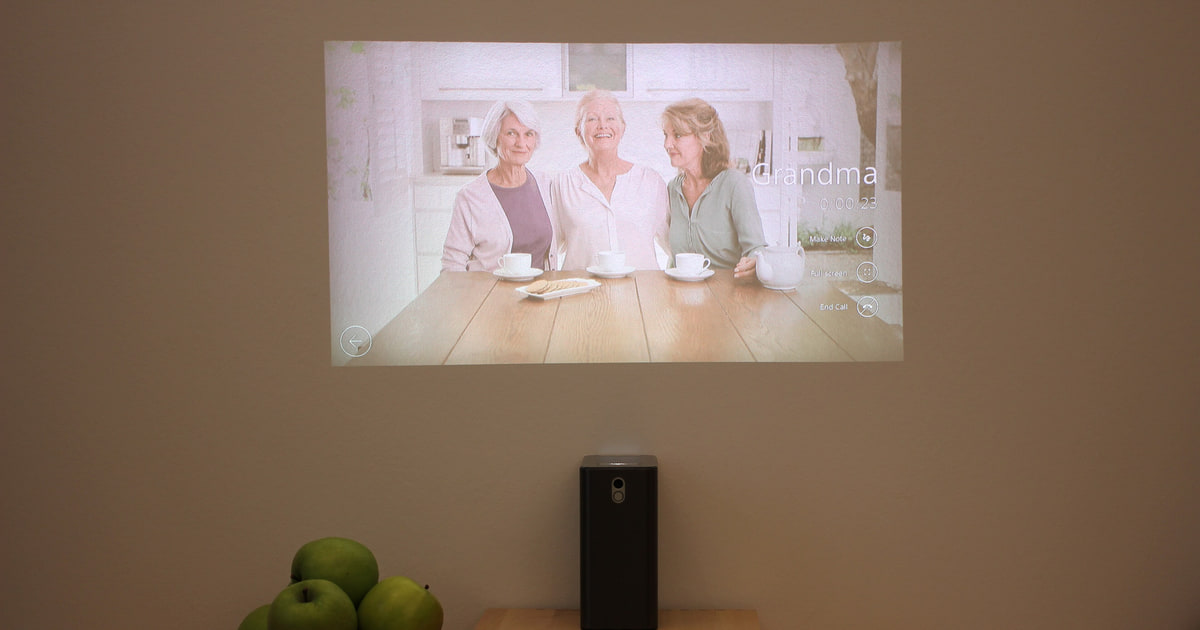
A portable projector turns a bedsheet, a garage door or a hotel wall into a screen bigger than any TV you'd carry up a flight of stairs. That's the appeal, and it's real. But the thing that decides whether you love yours or shove it in a closet isn't resolution or app count — it's brightness, and whether the projector can point itself at a wall without twenty minutes of fiddling. Get those two right and you'll use it constantly. Get them wrong and you'll only ever watch in a pitch-black room, which defeats the point.
Here's the honest part: no portable projector is a TV. Even the brightest models here fade badly once the sun's up or a lamp's on, and the physics don't care how much you spend. Battery life is the other compromise. Published testing from Tom's Guide puts battery-powered models at roughly two to three hours at full brightness, stretching to around five in eco mode — which is dimmer, so you're trading picture for runtime. And manufacturer lumen numbers are optimistic; RTINGS.com finds ISO-rated specs typically run 15 to 30 percent above measured ANSI output.
So the right pick depends on where you'll actually use it. Backyard on a summer night is a different problem than a dark dorm room, and a jacket pocket is a different constraint than a car trunk. We looked at brightness claims, light-source type, battery behavior, setup automation and what owners report after months of use. We think that the XGIMI Halo+ is the best portable projector for most people, and that the Anker Nebula Capsule 3 Laser is the one to buy if you need something that genuinely fits in a bag pocket.
Everything we recommend

Bright enough for a real room, and it sets itself up

The one that actually fits in a jacket pocket

Loud, battery-powered, and cheerful about the outdoors

The brightest of the bunch, if you can't control the light
At a glance
| Product | Brightness | Resolution | Price | |
|---|---|---|---|---|
| XGIMI Halo+ Portable ProjectorTop pick | 700 ISO Lumens | 1080p FHD | $449 |
| Nebula Anker Capsule 3 Laser 1080pAlso great | 300 ANSI Lumens | 1080p HD | $459.99On sale |
 | Samsung 30” - 100” The Freestyle 2ndAlso consider | — | FHD | $497.90 |
 | LG CineBeam Q PU600U 4K UHD SmartAlso in lineup | 600 ANSI Lumens | 4K UHD | $999.99 |
 | XGIMI MoGo 3 Pro NEW Outdoor ProjectorAlso consider | 450 ISO Lumens | 1080P | $383.12 |
 | BenQ GP20 Wireless Ultra-Lite LED 700 LumenAlso in lineup | 700 Lumens | — | $279.99 |
| Epson EpiqVision Mini EF21 Portable Smart LaserUpgrade pick | 1,000 Lumens | FHD 1080p | $448.08 |
| NEBULA Mars 3 Air Portable Outdoor ProjectorBudget pick | 400 ANSI Lumens | 1080P HDR | $519.99On sale |
How we picked
Real-world brightness. We weighted measured and rated lumen figures against Projector Central's thresholds — 300 lumens for dark rooms, 600 for dim, 1,000-plus for ambient light — and discounted ISO-rated claims because RTINGS.com finds them running 15 to 30 percent above ANSI output.
Power and battery. We looked at whether a projector has an internal battery, how long manufacturers rate it, and whether a standard USB-C PD power bank can run it. Tom's Guide's battery testing set our expectation of two to three hours at full brightness.
Setup automation. Auto-focus and auto-keystone are now table stakes, so we ruled out anything requiring full manual adjustment and favored systems that stay accurate at off-center angles.
Built-in streaming. PCMag's category reviews found projectors with a native Android TV or Google TV stack far more convenient than ones needing an external stick, so we prioritized licensed Netflix and a full app store on the device itself.
Carry weight and size. We compared published dimensions and weight against how people actually transport these — jacket pocket, daypack, car trunk — rather than treating every model under four pounds as equally portable.
Top pick
Bright enough for a real room, and it sets itself up
XGIMI Halo+ Portable Projector
The Halo+ pairs a genuinely bright 1080p image with dual 5W Harman Kardon speakers and Google TV, so you don't need a streaming stick or a Bluetooth speaker. Its 2.5-hour battery covers a movie, and the auto-focus and auto-keystone mean you just set it down and press play.
$449fromAmazonThis is the portable projector that works in a room where people are still awake. At 700 ISO lumens it isn't a daylight machine, and RTINGS.com's testing suggests the measured ANSI figure lands lower. But owners consistently describe it as noticeably brighter than the small laser models they upgraded from, bright enough for evening viewing with a lamp on across the room. That's the difference between a projector you use and one you schedule around.
The setup story matters more than the spec sheet suggests. XGIMI's Intelligent Screen Adaption handles auto-focus, auto-keystone, screen alignment and obstacle avoidance, so you can drop it on a coffee table at an angle and get a square image. Tom's Guide notes that good automatic 2D keystone correction stays accurate at angles up to 40 degrees off-center. In practice you stop thinking about placement entirely.
The audio is the quiet win. Two 5W Harman Kardon drivers put out enough clean sound that most people skip the Bluetooth speaker they assumed they'd need — a real convenience outdoors, where a separate speaker means another thing to charge and carry. Owners who use it for backyard movie nights routinely say they never bothered pairing anything.
Google TV is built in, with Netflix licensed and the Play Store attached. PCMag's reviews of this category found projectors running a full Android TV stack scored much higher on convenience than ones that need a Fire Stick hanging off the back. You'll notice it on trips: one device, one power cable, no dongle to lose in a hotel room.
Flaws but not dealbreakers
The fan gets audible after a long session. Owners mention it, usually as a minor annoyance rather than a dealbreaker, but if you watch quiet dramas in a small room you'll hear it during dialogue.
This is the heaviest of our main picks by a good margin, and several owners who bought it for travel found it bulkier than expected. It's a carry-it-to-the-backyard projector more than a throw-it-in-a-backpack one. Boot time with Google TV is also slow enough that people learn to wait rather than start pressing buttons.
Battery runtime of 2.5 hours is at reduced brightness in practice. Plenty of owners just run it plugged in at home because eco mode dims the image more than they like.
Also greatOn sale
The one that actually fits in a jacket pocket
Nebula Anker Capsule 3 Laser 1080p
The Capsule 3 Laser is a soda-can-shaped laser projector with Android TV, autofocus and a 2.5-hour battery, weighing under two pounds. It's dimmer than the Halo+, but it's the only projector here you'd carry without thinking about it.
$459.99fromAmazonList priceSize is the whole argument. At roughly 1.05 kg and 74 × 74 × 149 mm per Anker's specs, it slides into a daypack's water-bottle sleeve. If you camp, travel or want something that lives in a bag rather than on a shelf, that changes what the projector is for — you bring it because bringing it costs you nothing.
The laser light source buys you longevity and a cleaner image than the size suggests. Projector Central puts laser light sources at 20,000 to 30,000 rated hours against 2,000 to 4,000 for old lamp projectors, so bulb replacement never enters the picture. Owners also describe it as quiet and sharp, with better black levels than they expected from something this small.
It runs Android TV with autofocus and keystone correction, mounts on a standard tripod thread, and charges over USB-C PD. That last detail is the practical one: the same charger and power bank that top up your laptop will run this, which is not true of most projectors here.
You give up brightness for all of that, and it's a real trade. At 300 ANSI lumens this needs a dark room to hit a large image — Projector Central's guidance is that 300 lumens demands near-total darkness for a watchable 80-inch picture. Owners say the same thing, plainly: excellent at night, poor by day.
Flaws but not dealbreakers
Brightness is the ceiling. In a room with any light, you'll be shrinking the image to keep it looking good, and daytime use isn't realistic.
The Netflix experience draws complaints — owners report it working awkwardly compared to other apps on the same device. Battery life also drops fast when you push brightness and volume together, which is exactly what you do outdoors.
This listing is a renewed unit, so condition varies by seller and a few buyers have received units in worse shape than expected. Check the return terms before you order.
Budget pickOn sale
Loud, battery-powered, and cheerful about the outdoors
NEBULA Mars 3 Air Portable Outdoor Projector
The Mars 3 Air gives you 400 ANSI lumens, a built-in battery, Google TV and dual 8W Dolby speakers in a package built for backyards. It's the least expensive way here to get genuinely cordless projection that doesn't feel like a compromise.
$519.99fromAmazonList priceIf your main use is movies in the yard, this hits the important notes without spending much. The 8W speakers are louder than most portables, which matters when you're outside and sound just disperses into the dark. Owners who compared it against the Capsule specifically chose it for the audio, and they don't seem to regret it.
Setup is fast. Anker's Intelligent Environment Adaptation does autofocus, keystone and obstacle avoidance in a few seconds, and Google TV is built in with Netflix, so there's no stick to pack. At 400 ANSI lumens it's brighter than the Capsule but well short of the Epson — plan on dusk or later.
Anker rates 2.5 hours of video playback, which covers a movie, or about eight hours as a music speaker. That's the usual battery math for this category: Tom's Guide's testing across battery-powered models found two to three hours at full brightness is typical, so this is right in line rather than exceptional.
It's a bit chunkier than the pocket-sized models but still easy to carry one-handed, and it works well on the imperfect surfaces you get outdoors — owners report a decent image on light gray walls, not just proper screens.
Flaws but not dealbreakers
Anker asks you to update the firmware before first use, and people who skip that step hit app compatibility problems. It's a rough out-of-box experience for something aimed at casual buyers.
Some owners upgrading from older Mars models feel this one gave up ground on build quality and battery. If you loved a Mars 2, temper expectations.
A tripod makes it much more usable, and it's not included.
Upgrade pick
The brightest of the bunch, if you can't control the light
Epson EpiqVision Mini EF21 Portable Smart Laser
Epson's EF21 uses a 3LCD laser engine rated at 1,000 lumens with a 20,000-hour light source and Google TV built in. It's the only projector here with a real shot at a watchable image before the sun goes down.
$448.08fromAmazonBrightness is where portable projectors fail, and this is the answer to that. Epson rates it at 1,000 lumens of both color and white brightness, and Projector Central's guidance is that 1,000-plus lumens is what you want for a room with typical ambient light. Owners bear this out, describing a clear picture in rooms that aren't fully dark — the thing most portables can't do.
The 3-chip 3LCD design is why the color holds up when the brightness climbs. Single-chip projectors often quote a white-brightness number far above their color brightness, so images wash out as you push them. Epson rates both figures the same here, which is the technical reason the picture stays saturated rather than going pale in a lit room.
The laser light source is rated at 20,000 hours and needs no lamp changes ever, and EpiqSense handles resize, focus and alignment automatically on ordinary surfaces. It'll throw an image up to 150 inches, larger than anything else in this guide.
The catch is that this is not a cordless projector. There's no internal battery, so it's a plug-in device you move between rooms and yards rather than one you take camping. If your outdoor spot has an outlet, that's fine. If it doesn't, look at the Halo+ or the Mars 3 Air instead.
Flaws but not dealbreakers
No battery, full stop. Everything about its portability assumes power nearby.
It's the heaviest projector in this guide and one of the largest, so it's transportable rather than pocketable.
This listing is a renewed unit. A few owners also report the automatic keystone correction being fussier than the rest of the setup routine.
Who this is for
Buy one of these if you want a big picture in places a TV can't go: a backyard, a rental you can't drill into, a dorm room, a hotel wall on a work trip. They're also a genuine option for gamers and apartment dwellers who'd rather have a 100-inch image at night than a 55-inch one all day. If you mostly watch in a bright living room during daylight hours, a TV is still the better buy and it isn't close.
This guide covers battery-capable and small plug-in projectors you can carry in one hand. It doesn't cover full-size home theater projectors, ceiling-mounted installations or ultra-short-throw living room units, all of which are brighter and better for a fixed room but not something you'd move. We also assume you'll be projecting between roughly 80 and 120 inches — most models here manage a 100-inch image from about ten feet at a typical 1.2:1 throw ratio, so measure your space before you commit.
How we picked
Brightness: we treated Projector Central's thresholds as the floor — 300 lumens is a dark-room-only spec, 600 works in dim light, and you want 1,000-plus if a lamp will be on — and discounted ISO claims since RTINGS.com finds them running well above measured ANSI output. Power: we noted which models have internal batteries, which run off a USB-C PD power bank, and which need a wall outlet, because that decides where you can actually use one. Setup: auto-focus and auto-keystone are non-negotiable now, and we favored systems that hold a square image when placed off to the side. Streaming: built-in Google TV or Android TV with licensed Netflix beat anything requiring a Fire Stick, per PCMag's convenience findings. Portability: we compared real weight and dimensions rather than trusting the word portable on a box.
Other portable projectors worth considering
If you want the Halo+ experience for less: The XGIMI MoGo 3 Pro NEW Outdoor Projector ($383.12) — The MoGo 3 Pro shares XGIMI's Google TV setup, ISA 2.0 auto-alignment and dual 5W Harman Kardon speakers, but drops to 450 ISO lumens and skips the internal battery — you connect a 65W USB-C power bank or buy the PowerBase stand for cordless use. The built-in 130-degree adjustable stand is genuinely clever, letting you angle it at a ceiling without a tripod, and the metal slide rail covers the lens when you're not watching. Owners like it, though a few report focus hunting mid-show and a base that doesn't sit level on every surface. Worth the money if you're mostly indoors and near an outlet.
If you want the fastest, most foolproof setup: The Samsung 30” - 100” The Freestyle 2nd ($497.90) — Samsung's Freestyle 2nd Gen is the plug-and-play champion. Its cradle rotates 180 degrees so you can point it at a ceiling, the auto-leveling handles up to 15 degrees of tilt, and Samsung says the auto-focus lands a sharp image in under 15 seconds. Tizen OS has Netflix and Prime Video natively plus Samsung's Gaming Hub for cloud gaming with no console. But it's dim — owners describe needing a genuinely dark room — and there's no internal battery, so outdoor use means bringing a USB-C PD power bank. A handful of owners have also hit units that stopped powering on, with repairs that aren't cheap.
The competition
These are the models our research surfaced alongside the picks, not a survey of everything sold. A projector landing here usually lost on one specific thing — brightness, age or how much fiddling it demands — rather than being bad.
The LG CineBeam Q PU600U 4K UHD Smart ($999.99) — The LG CineBeam Q PU600U is the most interesting projector here that we can't yet recommend. On paper it's superb: 4K, a 3-channel RGB laser covering up to 154 percent of DCI-P3, a claimed 450,000:1 contrast ratio and 600 ANSI lumens, all in a 5.3-inch cube. Auto screen adjustment handles alignment and focus. The problem is that it's brand new with essentially no owner feedback yet, so there's nothing to check the spec sheet against — no read on fan noise, reliability or how the automatic setup behaves on a real wall. If you want 4K in something this small and you're comfortable being early, it's the obvious candidate. Most people should wait.
The BenQ GP20 Wireless Ultra-Lite LED 700 Lumen ($279.99) — The BenQ GP20 is an older LED model rated at 700 lumens, with MHL mirroring from a phone and an Auto Blank feature that cuts the light when something moves within a foot of the lens — a nice touch if small kids are around. But it predates the smart-projector era: there's no Google TV, so you'll be adding a streaming stick, and it relies on MHL cables that modern phones don't support. The bigger issue is noise. Owners repeatedly describe the fan as loud enough to hear over a movie, and focusing is manual and fussy. Consider it only if you specifically want the child-safety cutoff and don't mind an external streamer.
Setup and placement notes
Give yourself about ten feet of throw distance for a 100-inch image — that's the standard for the roughly 1.2:1 throw ratio most of these use, so measure before you rearrange furniture. A tripod is the single best accessory you can add; it solves height, angle and leveling at once, and most of these projectors have a standard tripod thread on the bottom. For outdoor nights, wait until it's properly dark rather than dusk, since even the brightest model here loses a lot to ambient light. If you're using a USB-C power bank, check that it supports the wattage the projector needs, not just the connector — a 65W PD bank is the safe baseline. And keep the vents clear. These run warm, and blocking airflow makes the fan spin up loud.
Questions we get
How many lumens do I need for a portable projector to work in a lit room?
Plan on 1,000 or more for a room with normal ambient light, per Projector Central's guidance. Around 600 works in a dim room, and 300 needs near-total darkness to look good at 80 inches. Keep in mind that ISO-rated numbers on the box usually run 15 to 30 percent higher than measured ANSI output, so a 900-ISO-lumen projector may measure closer to 700.
What's the difference between a laser and an LED portable projector?
Laser light sources are rated at 20,000 to 30,000 hours and generally give you better contrast and color accuracy. LED models are cheaper and rated around 20,000 hours, which is still far beyond the old lamp projectors at 2,000 to 4,000 hours. Either way you'll never replace a bulb — the practical difference is image quality and cost, not maintenance.
How long do portable projector batteries last on a single charge?
Tom's Guide's battery testing found two to three hours at full brightness across battery-powered models, stretching to roughly three and a half to five hours in eco or low-brightness mode. That covers one movie comfortably. Eco mode dims the image noticeably, so treat the longer numbers as a backup plan rather than the normal way to watch.
Can a portable projector replace my TV for everyday use?
For evening viewing in a room you can darken, yes — and the picture will be far bigger than any TV you'd hang on that wall. During the day, no. Even the brightest models here wash out in sunlight, and none of them match a TV for casual daytime watching. Most people who love theirs use it as a night-time and weekend device rather than an all-day one.
Which portable projectors have built-in Netflix and don't need a Fire Stick?
The XGIMI Halo+, MoGo 3 Pro, Anker Mars 3 Air, Nebula Capsule 3 Laser and Epson EF21 all run Google TV or Android TV with licensed Netflix on the device. Samsung's Freestyle 2nd Gen uses Tizen with Netflix and Prime Video built in. PCMag's category reviews found this makes a real difference to day-to-day convenience — one device, one cable, nothing to lose in a hotel room.
Is 1080p good enough for a portable projector, or do I need 4K?
For most portable use, 1080p is plenty. At the 80- to 120-inch sizes these projectors realistically hit, and at normal viewing distances, brightness and contrast affect how good the picture looks far more than pixel count. 4K is worth chasing only if you're pairing it with a dark room and a proper screen — which is a different kind of setup than most people buy a portable projector for.
Why you should trust us
For this guide:
- We compared manufacturer specifications for every projector in this guide against published measurement guidance from Projector Central and RTINGS.com, including the gap between ISO- and ANSI-rated lumen figures.
- We read published reviews and battery testing from Tom's Guide and PCMag covering brightness thresholds, keystone accuracy and the convenience of built-in streaming platforms.
- We reviewed recurring themes in owner feedback for each model — fan noise, setup reliability, real battery behavior and app quirks — and used them to shape the flaws and caveats rather than quoting anyone.
- We read owner reviews on every listing, weighted toward the critical ones, because that is where the recurring failures show up.
- We have a systematic way of automatically fetching the latest prices, so the numbers on this page stay current.
- This is a research-focused guide, so the team may not own every product listed — though we often do own the top winners, which gives us extra context for the recommendations.
- We don't accept free products, and the retailer commission never changes which product we recommend.
Sources
Best Portable Projectors 2026 — Wirecutter, Wirecutter
The Best Portable Projectors — PCMag, PCMag
Best Portable Projectors — Tom's Guide, Tom's Guide
Best Portable Projectors — CNET, CNET
Best Portable Projectors — TechRadar, TechRadar
Best Portable Projectors — Digital Trends, Digital Trends
Projector Reviews and Ratings — RTINGS.com, RTINGS.com
XGIMI Halo+ Review — RTINGS.com, RTINGS.com
Nebula Capsule 3 Laser Specifications — Anker Nebula, Anker Nebula
Samsung The Freestyle Product Page — Samsung US, Samsung
Epson EF-21 Smart Streaming Laser Projector — Epson US, Epson
Mini and Portable Projector Market Report — Grand View Research, Grand View Research
Amazon product listings and owner reviews for all 8 products
Manufacturer specification pages for each product
Some passages in this guide may be paraphrased with AI help. Prices are refreshed automatically.
More like this.
Continue exploring electronics reviews and recommendations.

The Best Mini Projectors
A mini projector's job is simple. It turns a blank wall into a hundred-inch screen, then disappears into a drawer. That's a good trade if you rent, if…

The Best Portable Air Compressors for Your Garage
An air compressor is one of those tools you buy for one job and then use for a hundred you never planned on. Topping off tires before a road trip. Blowing…

The Best Portable Car Heaters
A cold car is a visibility problem before it's a comfort problem. You get in, breathe twice, and the windshield fogs over. The factory defroster works,…

The Best Portable Kayak Fish Finders
A fish finder changes how you fish from a kayak. You stop guessing at depth and start reading the bottom - the drop-off, the weed edge, the brush pile…

The Best Portable Car Vacuums
Cleaning a car is mostly a reaching problem. The crumbs live in the seat track, the sand settles into the carpet pile, and the dog hair works its way into…

The 7 Best Portable Bluetooth Keyboards for Travel in 2026: Lightweight, Multi-Device Picks
Expert-tested portable Bluetooth keyboards for travel in 2026. Compare weight, battery life, and multi-device pairing across 7 top picks from Logitech, Keychron, nuphy, and more.