The Best Portable Tire Inflators
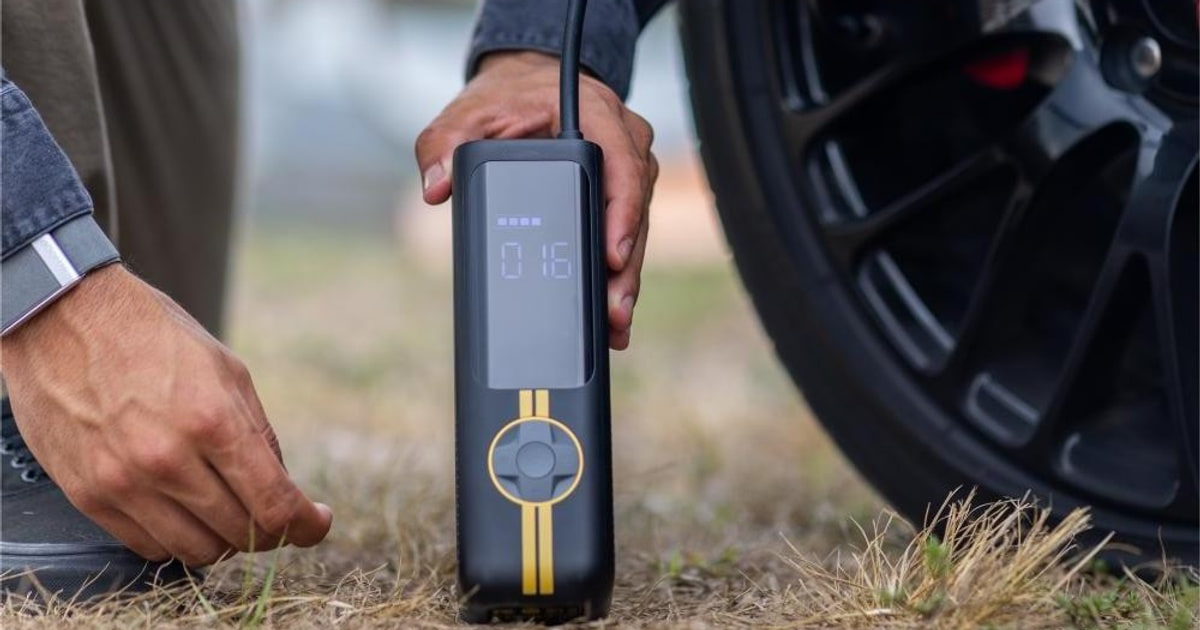
Tire pressure is one of those things you ignore until it costs you. A tire that's five pounds low wears out faster, hurts your mileage, and handles worse in a panic stop. Gas station air pumps are often broken, coin-operated, or wired to a gauge nobody has calibrated in a decade. A portable inflator in the trunk fixes all of that. You set a number, press a button, and walk away while it tops off the tire. It takes five minutes and you're done.
None of these will save you from a real flat. An inflator pushes air in; it can't seal a nail hole or a torn sidewall, so a badly damaged tire still needs a plug kit, a spare, or a tow. They're all loud, too — somewhere between a shop vac and a hair dryer at close range. Battery claims get optimistic once it's cold out, and cheaper gauges can read a couple of pounds off, so it's worth checking your work with a separate pencil gauge.
So the real question isn't which inflator is best in the abstract. It's which one matches your tires, your trunk space, and whether you already own a pile of cordless tool batteries. A commuter with a sedan needs almost nothing. A Jeep owner airing back up after a trail run needs a different machine entirely. We think that the Fanttik X8 APEX is the best portable tire inflator for most people, and that the AVID POWER 20V Cordless Tire Inflator is the one to buy if you want a 12V backup cord so a dead battery never strands you.
Everything we recommend

Fast, accurate, and small enough to live in the glove box

Slower than our top pick, but a dead battery won't strand you

Under a pound and quick, as long as you skip truck tires

Three ways to power it, at the cost of trunk space

The one for 33-inch tires and airing back up after a trail
At a glance
| Product | Max PSI | Power Source | Price | |
|---|---|---|---|---|
| Fanttik X8 APEX Tire Inflator Portable AirTop pick | 150 PSI | Cordless | $99.99 |
 | Milwaukee Electric Tools 2475-20 M12 Compact InflatorAlso consider | 120 PSI | Cordless | $98.93 |
| DEWALT Tire Inflator Portable Air Compressor 20VUpgrade pick | — | 20V/12V/110V | $137.36On sale |
 | Makita DMP180Z 18V Li-ion LXT Inflator -Also in lineup | — | 18V Li-ion | $96.03 |
 | Ryobi R18PI-0 18V ONE+ Cordless High PressureAlso in lineup | — | 18V Cordless | $68.56 |
 | CRAFTSMAN V20 Tire Inflator Portable Air CompressorAlso consider | — | 20V/120V/12V | $87.96 |
| VIAIR 88P - 00088 Portable Compressor KitAlso great | 120 PSI | 12V | $89.89On sale |
| AVID POWER Tire Inflator Portable Air CompressorRunner-up | — | 20V/12V DC | $54.99On sale |
| AstroAI L7 Tire Inflator Portable Air CompressorBudget pick | 150 PSI | Cordless | $23.49On sale |
How we picked
Speed and airflow. We compared manufacturer inflation times and airflow ratings on comparable tires, then checked published reviews for models that fell short of their own claims. A car tire top-off should take a minute or two, not ten.
Gauge accuracy. Spec sheets list tolerances from ±1 to ±3 PSI, and owner feedback tells you which gauges drift in practice. We favored inflators whose auto shut-off owners describe as landing on the number you set.
Power source. We looked at how each unit gets its power — sealed battery, tool platform, 12V socket or wall plug — because that decides whether it's useful on the shoulder, in the garage, or both.
Size and reach. We compared weights, dimensions and hose lengths against where people actually store these things. Under three pounds rides in a car; a 16-foot hose is aimed at trucks and trailers.
Durability signals. We read owner feedback for repeated complaints — overheating, gauges reading high, switches failing after a few months — and treated a clear pattern as disqualifying for a pick.
Top pick
Fast, accurate, and small enough to live in the glove box
Fanttik X8 APEX Tire Inflator Portable Air
The X8 APEX is a cordless inflator roughly the size of a water bottle, and it tops off a car tire in under a minute. It's accurate, it runs long enough to do all four wheels without a break, and it doesn't need a tool battery you don't already own.
$99.99fromAmazonIt's fast enough that you won't put the job off. Fanttik rates the X8 APEX at 56 seconds to take a 215/55 R17 tire from 28 to 33 PSI, and that's the difference between checking all four wheels on a Saturday and telling yourself you'll do it next week. Owners describe topping off a tire in less time than it takes to walk around the car.
Set a number and it hits that number. Fanttik claims ±1 PSI, helped by altitude-adjusting calibration and high-frequency sensor sampling, so the reading doesn't drift as you climb into the mountains. Cheap 12V inflators routinely miss by two or three pounds, which is enough to matter on a modern low-profile tire. You should still spot-check with a pencil gauge, but you won't be guessing.
One charge covers the whole driveway. The spec sheet lists 40 minutes of continuous run time and up to 17 tire refills per charge, with a cooling design that skips the mandatory pauses smaller inflators need. If you run a two-car household, or you're the person your neighbors ask, you can work through several vehicles in a row instead of waiting for a motor to cool.
It's small enough that you'll actually keep it in the car. The X8 APEX is about eight inches long and slips into a door pocket or under a seat. The dual LED screen shows your target and your current pressure at once, and it stays readable in daylight and at night. Presets for cars, motorcycles, bikes and balls mean one press and you're going.
Flaws but not dealbreakers
The battery is sealed in, and there's no wall mode. You can't swap in a fresh pack partway through a job, and you can't plug it into an outlet in the garage. If you already own Milwaukee, DeWalt or Ryobi batteries, an inflator on that platform gives you a flexibility this one can't match.
Cold weather and big tires are its two weak spots. Owners in cold climates report noticeably shorter run time and slower fills, and several say you have to be disciplined about recharging after every use. Fanttik rates it for tires up to 26.3 inches, so a lifted truck on 33s is out of scope. Keep it in the cabin, not the trunk, over winter.
Runner-upOn sale
Slower than our top pick, but a dead battery won't strand you
AVID POWER Tire Inflator Portable Air Compressor
The AVID POWER runs off a 20V pack or a 9.8-foot cord into your car's 12V outlet, so it works even when you forgot to charge it. It's a chunkier, slower machine than our top pick, but it fills a flat small-car tire in under three minutes.
$54.99fromAmazonList priceTwo power sources means one less way to get stuck. The AVID POWER runs off its 20V lithium pack or a long cord into your car's 12V outlet, so a flat battery costs you a few minutes of plugging in instead of your whole afternoon. That's the thing most compact cordless inflators can't do, and it's why we'd hand this one to anybody who's honest about never remembering to charge things.
It's quick from dead flat, not just for top-offs. Rated at 30 liters per minute with auto shut-off, it fills a flat 195/60 R14 in under three minutes. A full charge is good for roughly four small car tires or three midsize ones from flat, which is more than you'll ever need in a single roadside stop.
Everything about it is easy to read and hold at night. The anti-glare display shows PSI, BAR, KPA and kg/cm², and the built-in LED comes on while it's running. The rubberized handle gives you something to grip when you're crouched at a wheel in the rain. Small stuff, but it's the stuff you notice in an emergency.
The internals are heavier-duty than the shape suggests. AVID POWER uses an all-metal cylinder for faster cooling and metal gears in the drive. Owners who lean on it repeatedly — swapping pressures between autocross runs, for instance — report it keeps up. It's a chunky tool, roughly ten inches tall, and it feels like one in your hand.
Flaws but not dealbreakers
Accuracy is good, not great. The gauge is rated at ±2 PSI, double the tolerance our top pick claims. For everyday driving that's fine. If you're setting pressures for a track day or towing near a load limit, verify with a separate gauge before you trust the display.
It needs breaks, and it's not a truck tool. AVID POWER asks for a three-minute cool-down after 10 to 15 minutes of continuous use, and the listing rules out LT truck tires along with high-volume items like air mattresses, rafts and paddleboards. One stubborn 33-inch tire will push it well past its comfort zone.
A few owners report the switch or regulator acting up. The pattern shows up after the tool has sat unused for months, with the trigger or pressure control refusing to behave on the next attempt. It's not the common experience, but it's worth running the thing occasionally so you find problems in your driveway rather than on the shoulder.
Budget pickOn sale
Under a pound and quick, as long as you skip truck tires
AstroAI L7 Tire Inflator Portable Air Compressor
The L7 weighs less than a pound and still reaches 150 PSI, so it disappears into a glove box or a bike bag. It takes a 195/65R15 from 30 to 36 PSI in about a minute and a half, which is plenty for routine top-offs.
$23.49fromAmazonList priceIt's the one you'll actually carry. Under a pound and roughly the size of a large coffee mug, the L7 fits in a glove box, a backpack or a bike bag without you planning around it. Every other inflator here demands real trunk space. This one just rides along, and that's most of the battle with emergency gear.
The gauge punches above the hardware. AstroAI's TrueGauge sensor samples pressure 200 times a second, and the dual display shows your target and your current pressure together. So you watch the number climb instead of pulling the chuck off every ten seconds to check with a separate gauge.
The presets cover more than car tires. There are modes for cars, motorcycles, bikes and balls, plus a custom setting anywhere from 3 to 150 PSI and four pressure units. Road bike tires at 100 PSI, a kid's basketball, a lawn tractor tire — it handles all of them with one press. The light on top has flashlight, SOS and strobe modes.
A charge lasts longer than an emergency does. The 4000mAh battery is rated to refill up to eight 195/65R15 tires from 30 to 36 PSI, and a single top-off runs about a minute and a half. Charge it now and then and it'll be ready when the pressure light comes on at the worst possible moment.
Flaws but not dealbreakers
Skip it if you drive a truck. AstroAI says outright that the L7 isn't compatible with heavy-duty truck tires, and the small motor is built for topping off rather than filling from zero. For a sedan or a motorcycle it's plenty. For LT-rated rubber, buy something with a bigger pump.
The motor gets hot and the battery is sealed. Sustained work — several tires back to back, or one tire from completely flat — pushes a compressor this small harder than it likes, so plan on pauses. And when the built-in cell eventually wears out, you're replacing the whole tool.
Upgrade pickOn sale
Three ways to power it, at the cost of trunk space
DEWALT Tire Inflator Portable Air Compressor 20V
The DCC020IB runs on a 20V MAX battery, your car's 12V outlet, or a wall plug, which makes it as useful in the garage as on the shoulder. It's heavy and it ships tool-only, so it makes the most sense if you already own DeWalt batteries.
$137.36fromAmazonList priceThree power sources cover every situation you'll hit. The DCC020IB takes a 20V MAX pack, your car's 12V outlet, or a 110V wall plug. So the same tool tops off tires in the driveway without draining a battery, then rides in the truck for roadside work. Nothing else here is this flexible about where its power comes from.
It stays put and it lights up the work. Heavy rubber feet keep it from walking across the pavement, an LED points at the valve stem, and the threaded chuck screws onto the valve instead of clamping on. Push-on connectors are the usual source of that hissing leak halfway through a fill. Hose and adapters store on the body.
High-volume mode handles the things tire inflators usually can't. There's a separate high-volume inflate and deflate setting for air mattresses, rafts and paddleboards, which is a genuinely different job from pushing 35 PSI into a tire. Owners who bought it for the car end up using it for camping gear more often than they expected.
Owners keep this one for years. The recurring theme in owner feedback is people replacing cheap plug-in units and never looking back, with the auto shut-off stopping on the set number time after time. Reviewers describe it as the tool that stays in the vehicle permanently rather than the one that gets returned.
Flaws but not dealbreakers
It's big, and the battery isn't included. At roughly six and a half pounds and over ten inches long, this isn't glove box gear — it lives in a trunk well or on a garage shelf. It also ships tool-only, so unless you already own DeWalt 20V MAX packs, you're buying a battery and a charger alongside it.
It's not the fastest way to fill a dead-flat tire. Owners consistently note that top-offs are quick but a tire at zero takes a while, especially on the 12V setting. It's a patient, do-everything machine rather than a sprinter. If speed on the shoulder is your priority, our top pick does that job better.
DeWalt lists a three-year limited warranty on the DCC020IB.
Also greatOn sale
The one for 33-inch tires and airing back up after a trail
VIAIR 88P - 00088 Portable Compressor Kit
The 88P clamps straight to your battery and pushes 120 PSI through a 16-foot hose, so it reaches every wheel on a pickup without moving the compressor. It's the right tool for truck, Jeep and trailer tires, and complete overkill for a Civic.
$89.89fromAmazonList priceAlligator clamps beat a cigarette lighter socket. The 88P wires straight to your battery posts, which keeps voltage steady while the motor works hard at high pressure. A 12V accessory socket sags or pops a fuse under that kind of sustained load. You do need the engine running, but that's a fair trade for filling 33-inch tires without drama.
The reach is what sells it on a big vehicle. You get a 16-foot air hose and a 10-foot power cord, so from the battery you can walk to any wheel on a pickup, or down the length of a dual-axle trailer, without moving the compressor. Anyone who's dragged a short-hose inflator around a full-size truck knows why that matters.
It's rated for the tires the small cordless units refuse. VIAIR lists a 120 PSI maximum, 1.47 CFM free flow, tires up to 33 inches and a 25-minute duty cycle at 30 PSI, all from a gearless, maintenance-free motor. For trail airing-up, RV tires and heavy trailers, that combination is the entire point of the tool.
The connection doesn't leak. The brass twist-on chuck threads onto the valve stem, so it won't pop off or bleed air the way push-on chucks do at higher pressure. Three inflation tips and a Presta adapter stow on the compressor, and a work light and a carry bag come in the box.
Flaws but not dealbreakers
There's no preset and no auto shut-off. You watch the gauge and switch it off yourself, so you can absolutely overshoot if you get distracted. Every cordless pick here will hit a number for you while you check your phone. This one wants your attention for the whole fill.
It's a 12V-only tool that needs your car. No battery pack, no wall outlet, and the engine should be running for sustained high-pressure work. With the bag and the hose it's a real piece of luggage in the trunk, and it's louder than the compact cordless units. In a quiet apartment lot, everyone will hear it.
Who this is for
If you drive anything, you want one of these in the car. It's most useful for people who commute, road-trip, or run more than one vehicle, and for anyone who'd rather not stand at a gas station pump feeding it quarters. If you tow, wheel, or own a truck on LT-rated tires, buy for pressure and reach rather than pocket size. And if you already own a shelf of Milwaukee, DeWalt, Makita or Ryobi batteries, an inflator on your existing platform is usually the sensible move.
This guide covers portable inflators — small pumps that fill tires to a set pressure and stop. It doesn't cover tank compressors that run impact wrenches and nailers, permanently mounted onboard air systems for off-road rigs, or tire sealant and plug kits. None of the tools here will repair a puncture, and none will power an air tool. If that's what you need, you're shopping in a different category.
How we picked
Speed: we compared stated fill times and airflow ratings on comparable tires, because a top-off that takes ten minutes is a top-off you'll skip. Accuracy: we favored gauges rated at ±1 to ±2 PSI and auto shut-off that owners say lands on the number, since a display that reads three pounds high defeats the purpose. Power: sealed battery, tool platform, 12V clamps or a wall plug each suit a different life, so we matched each pick to where it's meant to be used. Size and reach: weight, dimensions and hose length decide whether a tool rides in the door pocket or lives in the trunk. Durability: we treated repeated owner reports of overheating, drifting gauges or failing switches as a reason to keep a product out of the picks.
Other portable tire inflators worth considering
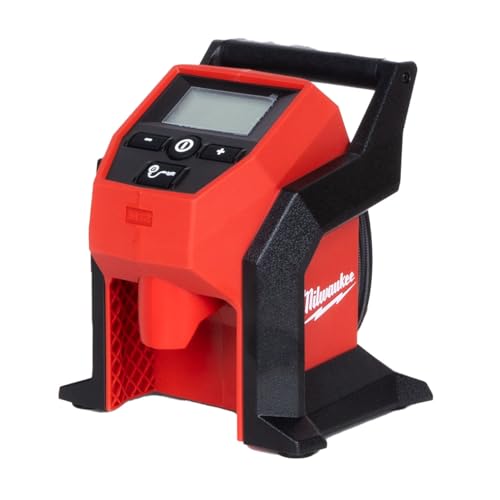
If you already carry M12 batteries: The Milwaukee Electric Tools 2475-20 M12 Compact Inflator ($98.93) — The Milwaukee 2475-20 is the one to buy, and it costs you nothing extra in charging gear. Milwaukee rates it for a car tire top-off in under a minute and an LT truck tire from 30 to 45 PSI in under four, with true 120 PSI output and a reinforced cage that shrugs off a tool bag. Two things keep it out of the picks: it's tool-only, and the gauge is rated at ±3 percent, with some owners noting it reads about a pound low and runs louder than they expected.
If you want three power modes in a lighter package: The CRAFTSMAN V20 Tire Inflator Portable Air Compressor ($87.96) — The Craftsman CMCE520B does what the DeWalt does — V20 battery, 120V wall outlet, 12V car adapter, preset auto shut-off, digital gauge — in a body a couple of pounds lighter, and it carries a three-year limited warranty. Owners report filling a tire from single digits to 36 PSI in about three minutes on wall power. The trade-offs are a plasticky feel, a gauge that several owners find reads two or three pounds high, and a battery that won't charge from the tool when it's plugged in.
The competition
This is what our research surfaced, not a census of everything sold. Both of the inflators below are competent tools that lost on fit rather than outright quality. Each is aimed squarely at people already invested in one brand's batteries, and neither gives an outsider much reason to buy in.
The Makita DMP180Z 18V Li-ion LXT Inflator - ($96.03) — The Makita DMP180Z is a tidy, well-made 18V LXT inflator with a backlit digital gauge, a memory function, an auto-stop and a maximum of 830 kPa, or roughly 120 PSI. It's light at a bit over two pounds, and the wide base keeps it steady on pavement. But it's battery-only, with no 12V or wall option, and it ships without a battery or charger, so it only makes sense if you're already in Makita's platform. Some owners also report the auto-stop failing to cut off at the target, which means watching the display rather than walking away.
The Ryobi R18PI-0 18V ONE+ Cordless High Pressure ($68.56) — The Ryobi R18PI-0 is the low-effort way into a high-pressure inflator if you already own ONE+ batteries, and there are hundreds of tools on that platform. It's the lightest body here at about 1.3 pounds, and the quick-connect coupler makes hookup fast. But owner feedback is the shakiest of this group: heavy vibration in use, an analog gauge on some units instead of a digital one, quick overheating and fast battery drain. It's body-only, and stock on this listing comes and goes. Fine for golf cart and bike tires; we wouldn't stake a roadside emergency on it.
Care and storage
Check pressure when the tires are cold. After a few miles the reading climbs by several pounds and you'll end up underfilled. The right number is on the sticker in your driver's door jamb, not the maximum molded into the sidewall. Verify your inflator once against a separate pencil gauge so you know whether it reads high or low, then remember the offset. Cordless units lose a real chunk of capacity below freezing, so keep them in the cabin rather than the trunk in winter and recharge after every use. Let the motor rest between tires, coil the hose loosely instead of kinking it, and keep the valve adapters in their case where they can't roll under a seat.
Questions we get
Can a portable inflator fill a completely flat tire?
Yes, though it takes much longer than a top-off. A strong cordless unit needs roughly three to five minutes for a passenger tire from zero, and budget 12V models can take seven to ten. But if the tire went flat because of a nail or a damaged sidewall, air alone won't fix it. You'll need a plug kit, the spare, or a tow.
Cordless or 12V plug-in — which should I buy?
Cordless is faster to deploy and easier to use on the shoulder, with no cord to route and usually a more accurate preset shut-off. The catch is that it only works if you kept it charged. A 12V unit draws from the vehicle and doesn't care how long it sat, which is why serious off-road compressors still use battery clamps. If you want both, get something with a 12V backup cord.
How much maximum PSI do I need?
For a passenger car, a 100 PSI unit is technically enough, but 150 PSI gives you headroom so the motor isn't straining at the top of its range. LT-rated truck tires often want 50 to 80 PSI and need at least a 120 PSI compressor. Off-road drivers who air down to 15 PSI on the trail should also be at 120 PSI or better.
Do these still work in cold weather?
12V units that clamp or plug into the car are largely unaffected. Lithium-ion cordless inflators lose meaningful capacity below freezing, so expect slower fills and shorter run time, and owners of compact models notice it right away. Keep a cordless inflator in the cabin instead of the trunk during winter, and top up the charge more often than you think you need to.
What's the difference between a tire inflator and an air compressor?
A tire inflator is a small pump built to reach a set pressure and shut off. An air compressor usually has a tank and enough volume to run impact wrenches, nailers and spray guns. Everything in this guide is an inflator. None of them will power an air tool, but all of them are far easier to carry and far better at hitting an exact number.
Is an inflator worth it if my car already has TPMS?
Yes. TPMS tells you a tire is low — usually only once it's about 25 percent under — and then leaves the rest to you. You still need something that puts air in. An inflator also frees you from gas station pumps, which are frequently broken or out of order, and lets you hit the exact pressure on your door sticker instead of guessing.
Why you should trust us
For this guide:
- We read the manufacturer specifications for all nine inflators and compared their stated PSI ceilings, airflow figures, duty cycles, gauge tolerances and hose lengths side by side.
- We went through published reviews and roundups of cordless, 12V and multi-power inflators to see which performance claims held up outside the marketing copy.
- We read owner feedback for every model in this guide, looking for repeated themes — motors overheating, gauges reading high, batteries fading in the cold, switches failing after months of sitting ��� rather than isolated complaints.
- We read owner reviews on every listing, weighted toward the critical ones, because that is where the recurring failures show up.
- We have a systematic way of automatically fetching the latest prices, so the numbers on this page stay current.
- This is a research-focused guide, so the team may not own every product listed — though we often do own the top winners, which gives us extra context for the recommendations.
- We don't accept free products, and the retailer commission never changes which product we recommend.
Sources
Best Portable Tire Inflators — Wirecutter, Wirecutter
Best Tire Inflators — Car and Driver, Car and Driver
Best Portable Tire Inflators — Popular Mechanics, Popular Mechanics
Best Portable Tire Inflators — Tom's Guide, Tom's Guide
Best Tire Inflators — Road & Track, Road & Track
Amazon product listings and owner reviews for all 9 products
Manufacturer specification pages for each product
Some passages in this guide may be paraphrased with AI help. Prices are refreshed automatically.
More like this.
Continue exploring lifestyle reviews and recommendations.

The Best Garage Tire Inflators
Tire pressure is the one bit of car maintenance you can actually do yourself in two minutes. Tires lose roughly a pound of pressure a month, and more when…

The Best Tire Pressure Monitoring Systems
Your tires are losing air right now. Nothing dramatic - just the ordinary seep of one to two pounds a month, according to the Tire Industry Association,…

The Best Tire Chains and Snow Traction Cables
Chains live in your trunk for years and matter for about twenty minutes. But those twenty minutes tend to happen on a dark shoulder, in falling snow, with…

The Best Tire Pressure Gauges
Air leaks out of tires slowly, and you can't see it happening. A tire can look completely normal and still be several pounds low. That's a mileage…

The Best Tire Tread Depth Gauges
Tread depth is the one safety check on your car that costs almost nothing to make and almost nothing to fix - if you catch it early. Worn tread doesn't…

The Best Portable Jump Starters
A dead battery never picks a good moment. It's the grocery store parking lot with melting ice cream in the trunk, or a work morning when you're already…