The Best Roborock Vacuums
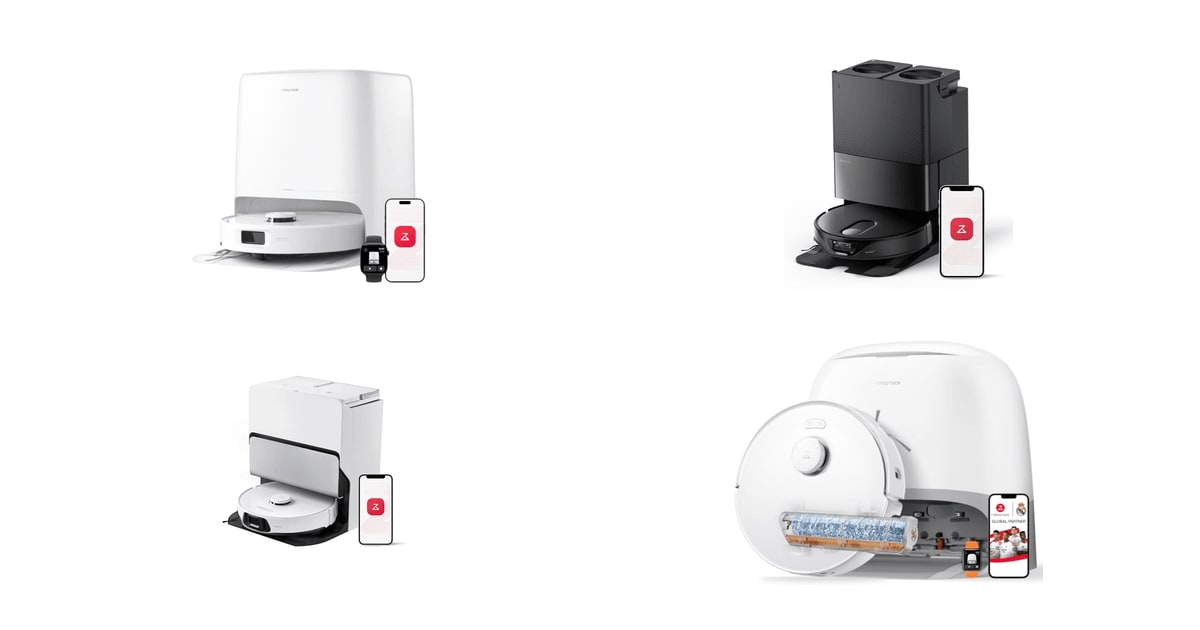
A robot vacuum earns its keep on the boring days. Crumbs under the high chair, sand tracked in from the yard, the layer of dog hair that settles by Wednesday. Roborock's lineup handles that daily upkeep well, and the newer models mop while they go, so hard floors stop feeling sticky between real cleanings. What you're really buying is a machine that runs while you're at work, plus a dock that keeps it running without much help from you.
No robot replaces a good upright on carpet. They skim the surface, and deep pile still needs a real machine a few times a year. Mopping has limits too: a damp pad lifts fresh spills and dust film, not baked-on syrup. And these docks are big. They're loud for the minute or two they empty the bin, they need an outlet and clearance, and they eat bags, filters and pads on a schedule. Owner feedback across the range also points to occasional hardware failures.
Within Roborock's own range, the differences come down to how low the robot sits, how well the mop reaches edges, how hot the dock washes the pads, and how smart the obstacle avoidance is. Suction numbers climb every generation, but past a point you won't notice. We think that the Roborock Saros 10R is the best Roborock vacuum for most people, and that the Qrevo Curv 2 Flow is the one to buy if you have mostly hard floors and want the strongest mopping.
Everything we recommend

The thinnest, most capable one here, if you can pay for it

Roller mopping that rinses as it goes, in a taller body

Nearly flagship reach and mapping, with a simpler feature set
How we picked
Floor pickup. We compared published suction ratings and brush designs across the lineup, and leaned on lab findings from review sites for how Roborock's rubber brushes handle hair. Anything with a bristled roller or a suction figure far off the current range didn't make the cut.
Mopping and edges. We looked for mop systems that lift on carpet and extend toward baseboards, since dry stripes along walls are the most common complaint about robot mopping. Dock wash temperature mattered too — Consumer Reports found hot-water docks cut pad odor roughly in half.
Getting under things. Body height decides how much of your floor a robot can actually reach, so we noted the measured profile of each model. Digital Trends estimates a sub-3.6-inch body clears about 92% of furniture, versus roughly 60% for standard robots.
Hands-off docks. We prioritized docks that empty the bin, wash and dry the pads, and refill the tank, because that's what turns a robot into something you ignore. Wirecutter reports auto-empty docks stretch bin emptying to roughly every 45 to 60 days in a two-pet home.
Owner-reported reliability. We read through buyer feedback on each listing for recurring themes rather than one-off complaints. Models with repeated reports of lidar, dock or brush failures got flagged in their flaws, not quietly ignored.
Top pick
The thinnest, most capable one here, if you can pay for it
roborock Saros 10R Robot Vacuum and Mop
The Saros 10R is Roborock's slimmest flagship, a 3.14-inch puck that maps your home without a raised laser turret and slips under beds and toe kicks. It pairs 22,000Pa suction with an arm that pushes the side brush and mop out into corners.
$899.99fromAmazonThe height is the whole point. At 3.14 inches, the Saros 10R clears the gap under most sofas, bed frames and cabinet kick plates, and the StarSight Autonomous System 2.0 maps with 3D sensing instead of a spinning mast. That mast is usually what stops a robot at the entrance to the exact spaces that collect the most dust. You don't have to rearrange the furniture to get the floor clean.
Suction runs to 22,000Pa, the top of Roborock's range, and the DuoDivide main brush splits long hair so it doesn't spool into a knot around the roller. If you live with a shedding dog or long-haired humans, that saves you the scissors-and-swearing ritual every couple of weeks. Owners with multiple pets consistently report far less brush maintenance than older bristled designs demanded.
Corners are where robots have always given up. The FlexiArm Riser side brush swings outward when the robot senses an edge, and the mop extends past the body to reach the baseboard instead of leaving a dry stripe. It's still not flawless against a tight right angle. But it beats any round bot that just circles the room and calls it done.
The dock does most of the work. It empties the bin, refills the water tank, washes the pads in 176°F water, dries them with 131°F air, and pulls the mop off entirely when you only want vacuuming. Hot water matters more than it sounds: comparison testing published by Consumer Reports found hot-wash docks cut mop-pad odor buildup roughly in half against cold-rinse docks.
The AdaptiLift chassis climbs obstacles up to about 4cm, so thresholds between rooms and the lip of a thick rug stop ending runs early. If your kitchen sits behind a raised transition, that's the difference between a finished job and a robot stranded halfway through, waiting for a rescue.
Flaws but not dealbreakers
It takes tuning. Owner feedback lands on the same theme again and again: out of the box the routing and mode choices are mediocre, and it takes a few sessions of setting no-go zones, room order and mop levels before it behaves. Plan on a week of fiddling in the app.
Reliability is the real question mark. A steady minority of owner reports describe a good first few months followed by navigation, dock or brush trouble, and service means boxing the robot up and waiting. Some owners also feel the mopping doesn't clearly beat Roborock's simpler S8 models on the same floors.
The dock is a piece of furniture. It's tall, it wants clearance and an outlet, and the full wash-and-dry cycle runs long enough that you'll want to schedule cleaning for when you're out of the house.
Runner-up
Roller mopping that rinses as it goes, in a taller body
roborock Qrevo Curv 2 Flow 2026 New
The Qrevo Curv 2 Flow swaps spinning pads for a roller mop that's scraped and rehydrated as it turns, so it isn't pushing the same dirty water around your kitchen. It matches the flagship's tangle-free brush setup and shields your rugs from the wet roller.
$699.99fromAmazonSpinning pads have one flaw you notice on a greasy kitchen floor: once the pad is dirty, it keeps going anyway. The Curv 2 Flow's roller runs against a scraper and gets clean water from eight hydration points as it spins, so the surface touching your floor stays fresher through the run. In a house with a lot of tile or vinyl plank, that's the biggest upgrade on this page.
Hair barely stands a chance. The Dual Zero-Tangle system pairs an anti-tangle side brush with the DuoDivide main brush, certified at a 0% entanglement rate. With 20,000Pa behind it, the robot pulls up sand, kibble crumbs and the drifts of fur that pile along baseboards. Pet owners are the clearest audience for this one.
Carpet handling is thoughtful. The robot lifts the mop up to 15mm and deploys a shield over the roller, which keeps a damp roller from wicking into your area rug on the way past. Lab runs published by Good Housekeeping found Roborock's mop-lift kept medium-pile carpet dry across every pass, and this is that idea taken a step further.
Obstacle avoidance is current-generation. Structured-light sensors plus PreciSense LiDAR recognize a claimed 200-plus object types, in daylight or in the dark, which in practice means charging cables, socks and dog bowls get routed around rather than dragged down the hall. The dock washes at 167°F and dries at 131°F, and its base detaches so you can rinse the gunk out yourself.
Flaws but not dealbreakers
Mopping quality is the most divisive thing about it. Plenty of owners are thrilled, but a real minority report streaking and results that disappoint next to Roborock's pad-based models. Roller mops also need the roller itself washed and eventually replaced, which is one more consumable.
It's a tall robot with a tall dock. If your goal is getting under a low bed, this isn't the one — look at the Saros 10R or the Qrevo Slim instead. Owner feedback also carries a persistent thread of hardware complaints in the first year, worth weighing given what this one costs.
Also great
Nearly flagship reach and mapping, with a simpler feature set
roborock Qrevo Slim Robot Vacuum and Mop
The Qrevo Slim is a 3.23-inch body with solid-state LiDAR, so it maps accurately without a turret and still fits under low furniture. You give up the flagship's suction ceiling and a few dock tricks, but the core cleaning and edge reach are here.
$659.99fromAmazonHeight is the reason to buy this one. The 8.2cm body slides under bed frames, media consoles and cabinet kick plates that stop a standard robot cold. Digital Trends estimates the Qrevo Slim reaches under about 92% of household furniture, against roughly 60% for normal-height bots. If your dust problem is mostly the stuff you can't see from standing height, that gap is the whole argument.
StarSight dual-light solid-state LiDAR does the navigating, building a 3D read of the room instead of leaning on a spinning laser. The payoff shows up under suspended cabinets and around narrow chair legs, where mast-based robots either bump or refuse to enter. Mapping stays accurate enough for room-by-room schedules and no-go zones in the app.
Suction tops out at 11,000Pa, well under the flagships, and on low-pile carpet you'd probably notice the gap on ground-in grit. Hard floors are a different story. The dual counter-rotating rubber brushes lift hair without wrapping it, and 11,000Pa is plenty for crumbs, litter scatter and everyday dust.
The Dock 3.0 washes the mops and dries them with warm air, and its dirt detection watches the wash water to decide how long to keep scrubbing. When your floor is genuinely filthy, it sends the robot back for another mopping pass instead of parking and calling the job finished.
Flaws but not dealbreakers
This listing is new enough that there's almost no owner feedback to lean on, so the case for it rests on the spec sheet and Roborock's record with the same brush and dock hardware. If you'd rather buy something with years of buyer reports behind it, that's a fair reason to look elsewhere in the line.
You're also giving up flagship extras. The spec sheet doesn't list the hot-water wash temperature or automatic mop removal that the Saros 10R has, and suction is roughly half. Thin robot or not, the dock is full-size, so the space savings stop at the furniture.
Who this is for
This guide is for someone who has already decided on Roborock — maybe a friend has one, maybe you like the app — and now wants to know which model to actually buy. It's most useful if you have pets, hard floors, or furniture with a low clearance you've given up on. If your home is mostly deep carpet, temper your expectations: any of these will keep the surface tidy between real vacuuming, and none of them will replace an upright.
It covers Roborock's current robot vacuum and mop models that we could confirm as complete machines, and it skips replacement brushes, filters and pad kits, which are worth buying but aren't what you're shopping for here. If you aren't committed to the brand, or you want something under a smaller budget than these command, a broader robot vacuum guide will serve you better.
How we picked
Floor pickup: we compared published suction ratings and brush designs, and gave weight to the rubber anti-tangle rollers that keep hair from spooling. Mopping and edges: we looked for mops that lift on carpet and push out toward baseboards, plus docks that wash pads in hot water rather than rinsing them cold. Getting under things: body height decides how much floor a robot can reach, so the slim models earned real credit. Hands-off docks: self-emptying, self-washing and auto-drying are what make you stop thinking about the thing. Owner-reported reliability: we read the buyer feedback for recurring failures and said so in the flaws, because a robot that quits in month eight isn't a bargain.
Other roborock vacuums worth considering
If you want most of the flagship behavior without paying flagship money: The roborock 2026 New Qrevo 2 Pro Robot ($549.99) — The Qrevo 2 Pro hits 20,000Pa, uses the same Dual Zero-Tangle brush pairing, and its FlexiArm edge mopping system reaches to within 1.85mm of the wall — the part owners tend to rave about, especially along cabinet kick plates. Its dock empties, refills, washes at 149°F and dries with 113°F air, and the robot lifts the mop up to 15mm on carpet or drops it entirely for a vacuum-only run. What you give up is the roller mop and the hotter wash of the pricier docks, and obstacle avoidance here is the simpler Reactive Tech rather than full AI recognition. Some owners also report weaker pickup on short-pile rugs.
More from Roborock
Here's the rest of what our research surfaced from Roborock's range. It isn't every model the company sells, and a listing landing here doesn't mean it's a bad robot — it means a different shopper is the right fit for it.
The roborock S8 Max Ultra Robot Vacuum and ($469.99) — The S8 Max Ultra is the previous-generation flagship, sold here as a renewed unit that's been inspected and refurbished. It runs 8,000Pa, uses dual vibrating mop pads instead of a roller, lifts the mop 20mm on carpet, and its RockDock Ultra washes with hot water up to 140°F. The FlexiArm side brush still reaches into corners, and Reactive 3D obstacle avoidance plus PreciSense LiDAR handle the mapping. This one suits a shopper who mostly has hard floors, wants proven pad-based mopping rather than a roller, and is comfortable buying refurbished to get flagship dock hardware for less. Skip it if you need the lowest possible profile or the newest object recognition.
Is Roborock worth it?
Roborock has spent several generations attacking the things that genuinely annoy robot vacuum owners: tangled brushes, dry corners, dirty mop pads, and furniture too low to clean under. Owner feedback across these listings skews positive and repeat-heavy — plenty of buyers are on their third or fourth Roborock, often after giving up on another brand — and the recurring praise is for edge cleaning, quiet running and mapping that holds up over time. The honest counterweight is hardware reliability. On the more popular listings, a steady minority of owners describe navigation, dock or lidar failures inside the first year, and while owners generally report that support handled the repair, that still means boxing the robot up and going without it. None of these listings state a warranty term, so confirm what's covered before you buy. Against rivals, Roborock tends to ship new mechanical ideas first — extending arms, roller mops, hot-water docks — and price accordingly.
Not set on Roborock?
It compares the strongest robot vacuums from every brand, so you can see where Roborock's models land against iRobot, Shark and the rest. our full robot vacuum guide →
If mopping is the whole reason you're shopping, that one weighs pad, roller and tank designs across brands rather than within a single lineup. our robot vacuum mop combo guide →
Shark's robots and uprights sit lower on the price ladder, which is worth a look if these Roborock docks feel like more machine than your floors need. our Shark vacuum guide →
Care and maintenance
These robots are low-maintenance, not no-maintenance. Every couple of weeks, pull the main brush and clear the hair wrapped around its ends, then rinse the filter and let it dry completely before it goes back — a damp filter chokes suction. Mop pads and rollers need occasional washing beyond what the dock does, and they wear out; figure on new pads a few times a year and filters about twice a year, sooner with pets. Wirecutter reports auto-empty docks stretch bin emptying to roughly every 45 to 60 days in a two-pet home, so budget for bags at about that rate. Wipe the dock's wash tray now and then, keep the tank filled with plain tap water unless Roborock specifies a solution, and leave the docking area clear so the robot can find its way home.
Questions we get
Which Roborock vacuum is best overall?
The Saros 10R is the one we'd point most people toward. It has the highest suction in the lineup at 22,000Pa, the slimmest body at 3.14 inches, an extending arm for corners, and a dock that washes pads in 176°F water and pulls the mop off for vacuum-only runs. It costs the most here, and it needs a week of app tuning before it settles in.
Which Roborock is best for pet hair?
Either the Saros 10R or the Qrevo Curv 2 Flow. Both use the DuoDivide main brush paired with an anti-tangle side brush, and the Curv 2 Flow's setup is certified at a 0% entanglement rate. That matters more than raw suction, since the usual pet-hair failure isn't weak pickup — it's hair spooling around the roller until you cut it off.
Which model has the thinnest profile for low furniture?
The Saros 10R at 3.14 inches, with the Qrevo Slim right behind it at 3.23 inches. Both drop the raised laser turret and navigate with 3D sensing instead, which is what lets them stay that low. Digital Trends estimates a body this thin reaches under about 92% of household furniture, against roughly 60% for standard-height robots.
Do Roborock vacuums work well on thick carpet?
They're fine for upkeep and not a replacement for an upright. All of these boost suction when they detect carpet, and the mid-range and flagship models lift the mop 15 to 20mm so they don't soak it. Lab runs published by Good Housekeeping found Roborock's mop-lift kept medium-pile carpet dry across every pass. Deep pile still needs a real vacuum a few times a year.
Can a Roborock clean more than one floor?
Yes. The app stores multi-level maps, so the robot recognizes which floor it's on once each level has been mapped. The catch is the dock — it stays where you install it, so on other floors you're emptying the bin and washing pads by hand. People with two-story homes often end up buying a second robot rather than carrying one up and down.
How often do mop pads and filters need replacing?
Pads and rollers usually want replacing a few times a year, filters roughly twice a year, and main brushes every six to twelve months depending on how much hair they eat. Wash the filter and let it air-dry fully between changes, since a wet one drags suction down noticeably. Docks that wash pads in hot water help the pads last longer and smell better in the meantime.
Why you should trust us
For this guide:
- We read Roborock's published specifications for every model here alongside lab findings from Consumer Reports, Good Housekeeping, Digital Trends and Wirecutter.
- We compared dock capabilities, wash temperatures, body heights and brush designs across the lineup to work out which differences actually change how a robot cleans a house.
- We read through owner feedback on each listing for recurring themes about hair tangling, mopping quality and hardware reliability.
- We read owner reviews on every listing, weighted toward the critical ones, because that is where the recurring failures show up.
- We have a systematic way of automatically fetching the latest prices, so the numbers on this page stay current.
- This is a research-focused guide, so the team may not own every product listed — though we often do own the top winners, which gives us extra context for the recommendations.
- We don't accept free products, and the retailer commission never changes which product we recommend.
Sources
Roborock Saros 10 Review, RTINGS.com
Best Robot Vacuums 2026, Wirecutter
Roborock Q Revo MaxV Review, PCMag
Roborock Qrevo Curv Hands-On, The Verge
Robot Vacuum Buying Guide 2026, Consumer Reports
Roborock Saros 10 vs Saros 10R: Which Should You Buy?, Tom's Guide
Roborock S8 MaxV Ultra Review, CNET
Best Budget Robot Vacuums, TechRadar
Roborock Qrevo Slim Review, Digital Trends
Roborock Official Product Specifications, Roborock
The Best Robot Vacuum and Mop Combos, Good Housekeeping
Roborock App and Smart Home Compatibility Deep Dive, Android Central
Amazon product listings and owner reviews for all 5 products
Manufacturer specification pages for each product
Some passages in this guide may be paraphrased with AI help. Prices are refreshed automatically.
More like this.
Continue exploring home reviews and recommendations.

The Best Whole-House Surge Protectors
Most people picture a lightning bolt when they think about surge protection. The real threat is quieter. Every time your air conditioner's compressor…

The Best Dual-Zone Heated Mattress Pads
Most bedroom fights about temperature are really fights about one thermostat and two bodies. A dual-zone heated mattress pad settles that at the mattress…

The Best Door Threshold Seals and Weatherstripping
You can feel a bad door seal before you can see it. Stand near the front door on a cold morning and there's a cool ribbon of air across your ankles. In…

The Best Rotary Hammer Drills
A rotary hammer isn't just a beefier hammer drill. It drives a pneumatic piston that hits the bit with measured force, so it bores into concrete instead…

The Best Faucet Aerators
A faucet aerator is a small screen that threads into the end of your spout, and it's one of the simplest ways to cut your water bill. Swapping a standard…

The Best Filtered Shower Heads
Your shower water carries whatever your city put in it to keep the pipes safe. That's usually chlorine or chloramine, plus whatever the pipes themselves…