The Best Sunrise Alarm Clocks
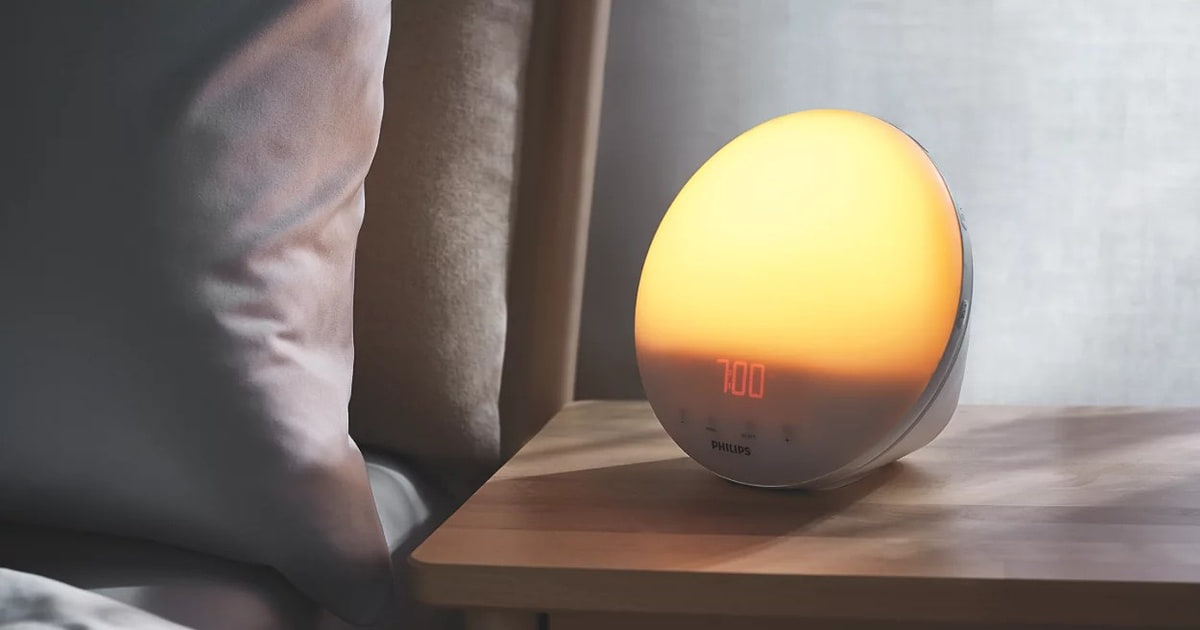
The alarm on your phone works by startling you. A sunrise alarm clock tries something gentler: it brightens your room over 20 or 30 minutes so you're drifting toward waking before any sound plays. If you've ever dragged yourself out of a pitch-black bedroom in the middle of winter, you know how much that matters. Light is the strongest cue your body clock has, and a slow ramp gives it something to respond to. Most people notice the difference in the first hour of the day, not just at the moment they sit up.
None of these are light therapy lamps, though. Consumer wake-up lights peak somewhere around 200 to 300 lux, while clinical treatment for seasonal affective disorder calls for 10,000 lux for 20 to 30 minutes. They also won't beat a genuinely heavy sleeper on light alone. If you sleep through everything, you'll end up leaning on the backup sound or a phone alarm anyway. And each one is still a glowing gadget on your nightstand, which is worth a thought if you sleep in total darkness.
So the real question isn't whether sunrise simulation works. It's how smooth you need the ramp to be, whether you want radio, sounds, an app or none of it, and how much nightstand space you can spare. We looked at seven wake-up lights, from a bare-bones panel to a flagship with Bluetooth speakers. We think that the Philips SmartSleep HF3520 is the best sunrise alarm clock for most people, and that the JALL Full-Screen Wake Up Light is the one to buy if you're trying one for the first time and want to keep the cost down.
Everything we recommend

The smoothest sunrise here, if you don't need an app

Plenty of sounds and a big light panel, on a budget

The longest, most adjustable sunrise, at a real premium

Wireless charging and a very loud backup for deep sleepers
At a glance
| Product | Sunrise Duration | Sound Options | Price | |
|---|---|---|---|---|
| Philips SmartSleep Wake-up LightTop pick | — | 5 Sounds | $108.37On sale |
 | Hatch Restore 2 Sunrise Alarm Clock &Also consider | — | — | $239.99 |
| Lumie Bodyclock Luxe 700FMUpgrade pick | 15-90 min | 20+ Sounds | $259 |
 | Lumie Bodyclock Glow 150 - Sunrise &Also consider | 20-45 min | 10 Sounds | $139 |
| JALL Full-Screen Wake Up Light Sunrise AlarmBudget pick | 10-60 min | 25 Sounds | $39.99 |
 | JALL Wake Up Light Sunrise Alarm ClockAlso in lineup | — | 7 Sounds | $107.98 |
| Dekala 5G Arches Gradual Sunrise Alarm ClockAlso great | — | 8 Sounds | $132.99On sale |
How we picked
Sunrise quality. We looked at how many brightness steps each light moves through and whether the color shifts from warm to cool the way a real dawn does. A smooth, multi-step ramp separates a wake-up light from a lamp on a timer.
Light output. Published guidance points to roughly 200 lux at peak as the threshold where a sunrise starts doing real circadian work. We noted which makers publish a figure at all, since many don't.
Sound and backup. We compared radio tuners, sound libraries and maximum alarm volume, because light alone doesn't wake everyone. A device with no credible auditory fallback is a risk for deep sleepers.
Bedside behavior. We checked whether the display dims or blacks out fully, how large the unit is, and whether it works as a reading light. A clock that glows all night undoes some of the good the sunrise does.
Evidence behind claims. We separated brands with published or sponsored research from brands making the same claims without data. That didn't disqualify anyone, but it broke ties.
Top pickOn sale
The smoothest sunrise here, if you don't need an app
Philips SmartSleep Wake-up Light
The Philips SmartSleep HF3520 brightens across 20 steps, adds FM radio and five nature sounds, and doubles as a reading lamp. It's the one wake-up light in this group with published research behind it, and it asks nothing of your phone.
$108.37fromAmazonList priceIt's the only wake-up light here with clinical research behind it. Philips sponsored a study of this design, and that's the basis for the claim printed on the box — most participants reported feeling more alert and more refreshed than with a standard alarm. Philips also states that physicians and pharmacists recommend it for building a sleep and wake routine. That's not a guarantee it'll work for you. But no other brand in this group can point to anything comparable, except Lumie.
The 20-step brightness ramp is what makes the wake feel gradual instead of staged. Cheaper lights jump between a handful of levels, and you feel every jump. This one climbs from dim amber to bright white in small increments, starting up to half an hour before your alarm. By the time the sound arrives, you're usually in a lighter stage of sleep already. A sunset mode runs the same process in reverse at bedtime.
You get real sound options without involving your phone. There's an FM tuner plus five nature sounds — birds, forest, ocean, Tibetan bowl and yoga bell. Pick one and forget about it. Snooze is a tap on the top of the housing, so you don't have to hunt for a button in the dark with one eye open. Nothing here needs an account, an app or a subscription to keep working.
It doubles as a decent reading lamp. The light dims across 20 settings, so you can leave it at a low warm glow at night and let the alarm handle mornings on its own. The clock display dims automatically too. If you're trying to cut down the clutter on your nightstand, one round object that covers lamp, alarm and radio is a genuine win.
Flaws but not dealbreakers
There's no app, no Wi-Fi and no voice control. You set everything with physical buttons, and that's the entire experience. If you want guided wind-down audio, remote schedule changes or Alexa, the Hatch or the Dekala fit better. Plenty of people will read this as a feature rather than a flaw. But if your bedside habits revolve around your phone, you'll find it limiting.
The nature sounds don't get very loud. If light alone doesn't move you and you need volume as a fallback, this isn't the strongest choice in the group. Keep a phone alarm running for the first week or two while you see how you respond. That's sensible with any wake-up light, and especially this one.
It's round, and it's bigger than it looks in photos. The housing runs close to eight inches across and wants a clear patch of surface. The display also doesn't dim all the way to black, so very light-sensitive sleepers may still catch a faint glow across the room.
Budget pick
Plenty of sounds and a big light panel, on a budget
JALL Full-Screen Wake Up Light Sunrise Alarm
The JALL Full-Screen lights up its entire front face rather than a ring, and it comes with 25 sounds, dual alarms, FM radio and a Bluetooth speaker. The sunrise isn't as refined as the Philips, but the basics are all here.
$39.99fromAmazonThe whole front face lights up, not just a ring. That flat panel spreads light across a wider area than the circular lamps in this category, which helps if your clock sits off to one side rather than directly in your eyeline. The ramp runs anywhere from 10 to 60 minutes before your alarm. You can also stretch it long if you want a slow, barely noticeable climb.
Twenty-five sounds and white noise is more than anything else here offers. You can fall asleep to rain or a fan with a sleep timer running from 10 minutes to eight hours, then wake to something entirely different. There's a built-in FM radio with auto-scan across the usual band, so setting a station as your alarm takes about a minute. For a budget device, the audio menu is unusually deep.
Dual alarms handle two people or two schedules. You can set Everyday, Weekday or Weekend routines separately, which matters if you and your partner leave the house at different times. Snooze is adjustable from 5 to 20 minutes instead of locked to one interval. Small thing, but it's the kind of flexibility cheaper clocks usually skip.
The little conveniences add up. It syncs the time over Bluetooth from your phone, so you're not resetting the clock by hand after a power cut. The 5-watt speaker is fine for podcasts while you get dressed. An L0 blackout mode kills the display entirely for sleeping, and there are 17 color options if you want it as a night light.
Flaws but not dealbreakers
Nobody publishes a lux figure for it, and there's no research behind the sunrise. JALL describes the effect but doesn't quantify peak brightness, and that's a meaningful gap when the whole point of the product is light output. If you want a number you can check, Philips and Lumie are the brands that give you one.
The ramp is coarser than what Philips does. You'll notice the light stepping up rather than sliding. For most people that's fine — it still gets you awake more gently than a buzzer. But side by side with a 20-step sunrise, the difference is real. The Bluetooth time sync also needs your phone nearby to work, which slightly undercuts the phone-free pitch.
Upgrade pick
The longest, most adjustable sunrise, at a real premium
Lumie Bodyclock Luxe 700FM
The Lumie Bodyclock Luxe 700FM stretches sunrise and sunset anywhere from 15 to 90 minutes and shifts color through mixed LEDs. Add Bluetooth speakers, FM radio and 20-plus sounds, and it's the most complete standalone unit in this guide.
$259fromAmazonNothing else here lets you stretch the sunrise to 90 minutes. Most wake-up lights stop at 30. If you want a climb so slow you never consciously notice it starting, this is the only unit that'll do it. The sunset works the same way, fading over the same range, so your evening wind-down can be just as unhurried as your morning.
Mixed LEDs shift color the way an actual dawn does. Instead of one white diode getting brighter, the Luxe 700FM moves from deep warm amber toward cool white as it climbs. That color change is a big part of why a real sunrise reads as morning to your body rather than just as a lamp switching on. Budget models with single-color LEDs can't reproduce it.
The audio is the best of any clock in this guide. You get Bluetooth speakers that are genuinely pleasant for a bedside device, an FM tuner and more than 20 sleep and wake sounds. Snooze is tap-controlled. If you actually listen to music or radio in bed rather than just using an alarm, this replaces a separate speaker.
It behaves well in a dark room. A low-blue mode cuts the alerting part of the spectrum in the evening, and the display is light-sensitive, so it dims itself as your room goes dark. A 7-day alarm schedule lets you set a different time for each day, which is the feature shift workers and anyone with an odd Wednesday will care about.
Flaws but not dealbreakers
It's the most expensive thing in this guide by a wide margin. You're paying for audio and sunrise range, and if you don't care about either, the Philips gets you most of the way for a fraction of the outlay. Be honest about whether you'll use a 90-minute sunrise before you commit.
There's no app, no Wi-Fi and no voice assistant. For a flagship at this level, that surprises people. Everything happens on the device. It's a deliberate choice on Lumie's part, but it means you can't adjust an alarm from the next room or fold it into a smart home routine.
It's a big object. At roughly nine inches wide and eight tall, it dominates a small nightstand. Stock also tends to be thin, so it can be hard to actually buy when you want it.
Also greatOn sale
Wireless charging and a very loud backup for deep sleepers
Dekala 5G Arches Gradual Sunrise Alarm Clock
The Dekala 5G Arches piles a Qi charging pad, Alexa and Google Home support, app control and a 120-decibel backup alarm into one bedside unit. It's the pick if gentle light on its own has never once gotten you out of bed.
$132.99fromAmazonList priceThe 120-decibel backup alarm is the loudest fallback here by a long way. If you've slept through sunrise lamps before, this is the honest answer. The light still does its gradual climb, but you've got a siren waiting behind it. That combination — soft ramp, hard floor — is what most self-described heavy sleepers actually need.
The built-in Qi pad may be the most practical feature on this list. Your phone charges by sitting on the clock, which removes a cable and a wall wart from your nightstand. If the main reason your phone stays next to the bed is the charger, this quietly solves that. It's the only unit in the guide that does it.
It's the only genuinely smart-home-friendly option here. It works with Alexa and Google Home, connects over both 2.4 GHz and 5 GHz Wi-Fi, and takes touch, button or app control. You can change an alarm from the couch. If you already run other connected devices, this is the one that'll join them.
The extras go well beyond an alarm. There are eight sleep sounds including white noise, brown noise, fan and waves, plus a Bluetooth speaker, nine dynamic lighting effects across 16 million colors and a weather display. Dekala calls it a six-in-one device, and for once that's roughly accurate rather than marketing math.
Flaws but not dealbreakers
Dekala is a newer name with no research or long review record behind it. Philips and Lumie have published or sponsored work supporting their sunrise claims. Dekala hasn't, and it doesn't publish a peak lux figure either. That doesn't make the light ineffective, but you're taking the sunrise quality on faith.
That 120-decibel maximum is loud enough to hurt. Set the volume deliberately before you rely on it, and don't leave it at the top of the range as a default. Waking up in a panic isn't much of an upgrade over waking up tired.
Three control methods means three things to learn. Getting the app connected, the routines built and the voice assistant linked takes an evening. Compared with the Philips, where you press buttons and you're done, there's real setup here.
Dekala lists a 365-day warranty and says it replaces units rather than repairing them.
Who this is for
Buy one of these if mornings are consistently rough, if you wake in the dark for most of the year, or if you want your bedside table to stop being a phone dock. They help most when your room starts genuinely dark, so they pair well with blackout curtains. They're also useful at the other end of the day: the sunset modes on the Philips and both Lumie models give you a screen-free wind-down cue that's easier to stick to than a resolution about screen time.
Skip them if you have diagnosed seasonal affective disorder and are shopping for treatment. That calls for a certified 10,000-lux therapy box, not a 200-to-300-lux bedside clock, and a wake-up light should only sit alongside it as a routine reinforcement. This guide covers plug-in bedside sunrise alarm clocks with built-in lights, not smart bulbs, sleep trackers or therapy lamps. And if you're the kind of sleeper who silences three phone alarms without remembering it, prioritize a loud backup over sunrise finesse.
How we picked
Sunrise quality: we favored lights that ramp through many small steps and shift from warm amber toward cool white, since that's what a real dawn does and what your body reads as morning. Light output: roughly 200 lux at peak is the point where published guidance says the effect becomes meaningful, so we noted which makers publish a number and which stay quiet. Sound and backup: radio tuners, sound libraries and maximum volume matter, because a gentle glow doesn't move everyone. Bedside behavior: the display should dim or go fully dark, the footprint should fit a normal nightstand, and doubling as a reading lamp is a bonus. Evidence: Philips and Lumie can point to research; the rest can't, which broke ties rather than settled them.
Other sunrise alarm clocks worth considering
If you want guided sleep content, not just an alarm: The Hatch Restore 2 Sunrise Alarm Clock & ($239.99) — The Hatch Restore 2 is a sunrise alarm, a sound machine and a doorway into Hatch's library of meditations, breathing exercises and wind-down stories, all run from the app. Independent measurement puts its peak brightness at 226 lux, so the sunrise itself is on par with what Philips does. The catch is the membership: without an active one, the content library shrinks a lot, and that ongoing cost stacks on top of already-premium hardware. There's no radio tuner either. Hatch has since released the Restore 3 with better audio and more on-device controls, so check which one you're actually ordering.
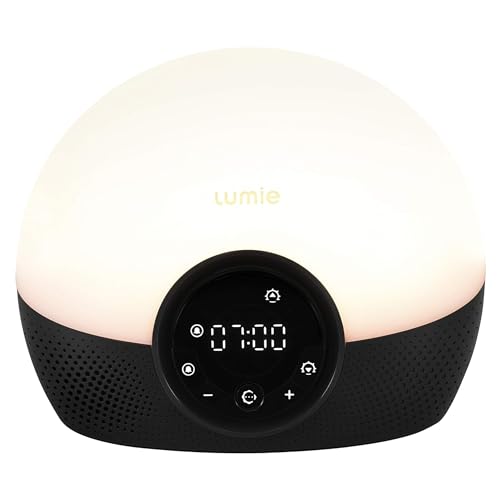
If you want Lumie's light without paying for the audio: The Lumie Bodyclock Glow 150 - Sunrise & ($139) — The Bodyclock Glow 150 is the stripped-back version of the same idea: sunrise and sunset on a 20, 30 or 45-minute schedule, reduced-blue LEDs, ten sleep and wake sounds, and an auto-dimming display. It's small and clean-looking in a way the bigger units aren't, and the fade-to-black sunset is genuinely good at signaling bedtime. You give up the radio, the Bluetooth speakers, the 90-minute range and the mixed-LED color shift. It also lands close enough to the Dekala in price that you should decide whether you'd rather have Lumie's light quality or Dekala's pile of features, because you can't have both here.
The competition
This is what our research turned up across the wake-up light category, not a survey of everything for sale. Plenty of near-identical panel clocks exist under other brand names, and new smart models appear constantly. The unit below is a real option that simply lost out to a pick on the things we weighted most.
The JALL Wake Up Light Sunrise Alarm Clock ($107.98) — The JALL Wake Up Light in wood grain is the same basic idea as our budget pick, wrapped in a finish that looks like furniture instead of a gadget. It's the nicest-looking clock here, and it covers the essentials: a full-screen LED display, dual alarms with Everyday, Weekday and Weekend modes, FM radio with auto-scan, seven nature sounds and a dimmable bedside lamp mode. Snooze is fixed at nine minutes and repeats as long as you keep pressing it, which some people love and others find maddening. It loses to the picks on two counts. It costs meaningfully more than JALL's full-screen model while dropping the Bluetooth speaker and most of the sound library, and it lands close to the Philips without any of the research or the 20-step ramp. Buy it if your bedroom's look is the deciding factor and sunrise precision genuinely isn't.
Setup and placement
Set the sunrise to begin 20 to 30 minutes before your target wake time — that's the window the research points to for easing melatonin down and cortisol up. Put the unit on your nightstand facing you, not angled toward the wall or tucked behind a stack of books, because the light has to reach your closed eyes to do anything. Blackout curtains help more than you'd expect: when the room starts from true darkness, even a modest peak brightness reads as a dramatic dawn. Turn the sunset mode on at the same time each evening so you're cueing both ends of the cycle, not just the morning. And give it two weeks at a consistent wake time before you judge it. The effect builds; it doesn't arrive on night one.
Questions we get
Do sunrise alarm clocks actually work, or is it just a gimmick?
They work, and the category has more research behind it than most sleep gadgets. A Philips-sponsored study found that a large majority of users felt more alert and more refreshed than they did with a standard alarm, and Oxford research cited by Lumie found that simulated dawn shifted the cortisol peak earlier and improved performance on morning tasks. Light is the strongest external regulator of your body clock, so a gradual brightening signal before the alarm genuinely reduces grogginess. Budget models deliver the concept; Philips and Lumie deliver the validated version.
What should I get if I sleep through everything?
Start with the Dekala 5G Arches, which has a 120-decibel backup alarm — far louder than anything else here and enough to move a very deep sleeper. The JALL Full-Screen is the cheaper route, with dual alarms and 25 sound options including white noise. Whichever you pick, start the sunrise a full 30 minutes ahead and point the unit directly at you from the nightstand. Light alone rarely does the job for heavy sleepers, so treat the sound as the primary alarm and the light as the softener.
How many lux does a wake-up light need?
Roughly 200 to 300 lux at peak is where a sunrise effect becomes meaningful. The Hatch Restore 2 has been measured at 226 lux, and the Philips and Lumie flagships meet or exceed that range. Many budget models top out closer to 80 to 100 lux, which is noticeably weaker. Don't chase the biggest number, though — the number of dimming steps and the warm-to-cool color shift matter as much as peak brightness for a gentle wake.
Can I use one to treat seasonal affective disorder?
Not as your main treatment. Clinical light therapy for SAD calls for 10,000 lux for 20 to 30 minutes each morning, and consumer wake-up lights deliver a small fraction of that. They're helpful for mild winter blues and for holding a consistent wake time, and they work well alongside a certified therapy box. If you've been diagnosed, talk to a physician and treat the sunrise clock as a supporting habit, not the intervention.
How long should the sunrise last?
Thirty minutes is the practical sweet spot for most people — long enough to shift melatonin and cortisol without setting your alarm absurdly early. Twenty minutes is the usual minimum for a noticeable effect. The Philips covers that range comfortably, and the Lumie Luxe 700FM stretches from 15 all the way to 90 minutes if you want a climb so slow you never catch it starting. Longer isn't automatically better; it just has to be gradual.
What works for couples with different wake times?
Look for dual alarms. Both JALL models let you set two separate alarms with weekday and weekend modes, which covers most households. The Lumie Luxe 700FM goes further with a full 7-day schedule, so every day can differ. If one of you is much more light-sensitive than the other, though, two smaller units on separate nightstands usually beats one shared light in the middle of the room.
Why you should trust us
For this guide:
- We read the published specifications and listing details for all seven wake-up lights, comparing sunrise duration ranges, sound libraries, display dimming and control methods.
- We compared the clinical claims Philips and Lumie make against what the other brands publish, which in most cases is no measured light data at all.
- We weighed recurring owner complaints in this category — display glow at night, alarm volume that's too quiet for deep sleepers, fiddly app setup — against what each maker promises.
- We read owner reviews on every listing, weighted toward the critical ones, because that is where the recurring failures show up.
- We have a systematic way of automatically fetching the latest prices, so the numbers on this page stay current.
- This is a research-focused guide, so the team may not own every product listed — though we often do own the top winners, which gives us extra context for the recommendations.
- We don't accept free products, and the retailer commission never changes which product we recommend.
Sources
Amazon product listings and owner reviews for all 7 products
Manufacturer specification pages for each product
Some passages in this guide may be paraphrased with AI help. Prices are refreshed automatically.
More like this.
Continue exploring home reviews and recommendations.

The Best WiFi Freeze Alarms and Temperature Sensors
A frozen pipe doesn't announce itself. It splits quietly, thaws a day later, and then, according to the American Red Cross, a single 1/8-inch crack can…

The Best Car Alarm and Security Systems
Your car spends most of its life parked and unattended. On a street, in a work lot, in a driveway you can't see from the kitchen sink. A security system's…

The Best Home Security Systems
A home security system spends almost all of its life doing nothing at all. That's the point. What you actually notice day to day is smaller stuff: whether…

The Best Random Orbital Sanders for Woodworking
Sanding is the part of woodworking nobody brags about. It's also the part that decides whether your finish looks like furniture or looks like a school…

The Best Shark Vacuums
A vacuum is a tool you use two or three times a week for years, so the small annoyances matter more than the spec sheet. Does hair wind around the…

The Best Bissell Carpet Cleaners
Carpet holds onto more than you think. Every muddy shoe, dropped bowl of spaghetti and cat hairball works its way down into the fibers, where a vacuum…