The Best Treadmills for Home Cardio
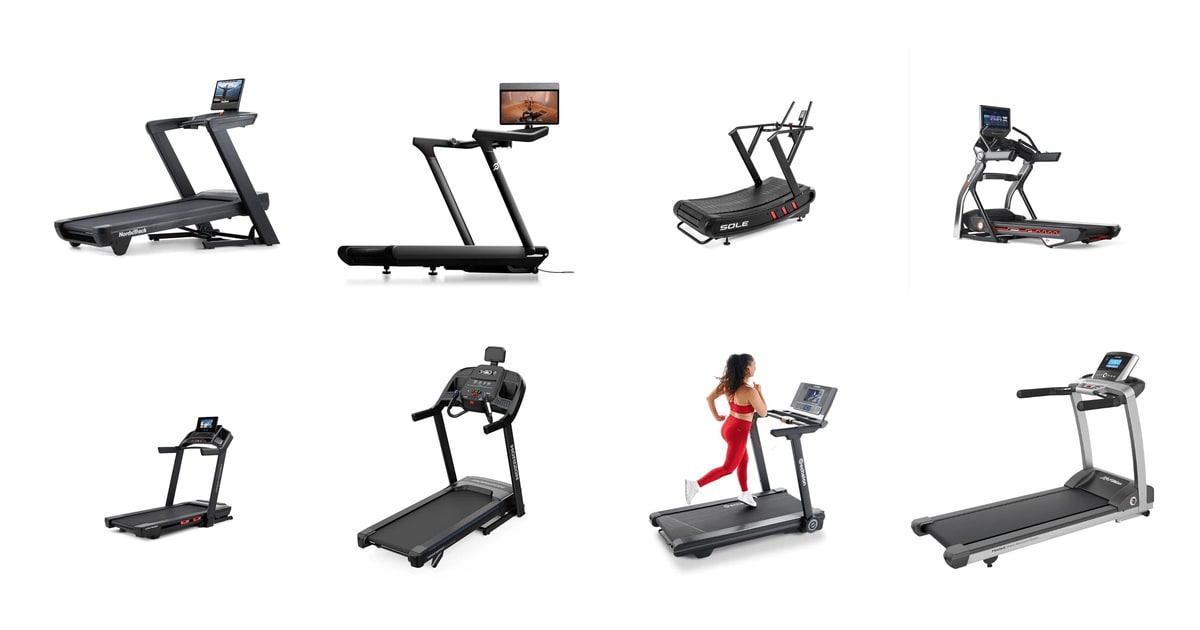
A treadmill is the rare piece of home equipment you either use four times a week or hang laundry on. What separates the two outcomes usually isn't the screen. It's whether the belt feels big enough to run on without thinking about your feet, whether the deck absorbs impact instead of punishing your knees, and whether the motor sounds calm at your usual pace. Get those right and the machine disappears under you. Get them wrong and you'll notice every stride.
Here's the honest part: nothing in this category is quiet, small, and cheap all at once. Every treadmill that folds trades some rigidity for the hinge, and Consumer Reports survey data shows folding models score about one reliability tier below non-folding ones at the same price. Every treadmill with a great screen wants a monthly membership. And every one of these machines weighs a couple hundred pounds, needs a helper to assemble, and won't move up a staircase without a fight. Plan for that before you order.
You'll also want to think honestly about how you'll use it. A walker who watches shows at a 3.5% incline needs a very different machine than someone building toward a half-marathon. We think that the NordicTrack Commercial 1750 is the best treadmill for most people, and that the Horizon Fitness 7.0 AT is the one to buy if you want a big belt and strong controls without paying for a screen or a subscription.
Everything we recommend

A big belt, a real decline, and the deepest class library

Nearly the same belt and motor, none of the subscription

A -5% to 20% range no other machine here comes close to

The quietest belt here, and classes people actually finish

Gym-floor construction and the longest warranty in the category
At a glance
| Product | Price | |
|---|---|---|
| NordicTrack Commercial 1750 Treadmill with iFITTop pick | $1,999On sale |
| Peloton TreadmillUpgrade pick | $3,295 |
 | Sole Fitness C80 Curved Manual Treadmill forAlso consider | $2,199.99 |
| BowFlex Treadmill 22Also great | $4,299.99 |
 | ProForm Carbon Pro 2000 TreadmillAlso consider | $1,199 |
| Horizon Fitness 7.0AT TreadmillBudget pick | $1,099 |
 | Echelon Stride 6S-10 Smart Foldable TreadmillAlso in lineup | $1,999.99 |
| Life Fitness T3 Treadmill with Go ConsoleRunner-up | $3,499 |
How we picked
Motor headroom. We compared published CHP ratings and ignored peak HP entirely, since peak figures describe a burst the motor can't sustain. Service data cited by Runner's World shows machines running above 80% of rated capacity fail two to three times as often, so we favored generous motors.
Belt size. We treated 20 by 55 inches as the floor for running and gave real weight to 22-by-60 decks. Spec sheets made this easy to compare, and owner feedback from taller runners confirmed where the short decks pinch.
Incline and decline. We looked for a usable incline range and treated true decline as a meaningful bonus, since it's the only way to train downhill loading indoors. Published lab work and standard MET tables back up how much incline changes the workout.
Noise and footprint. We weighed sound-level comparisons from published testing and folded footprint specs, because apartment buyers get one shot at this. Consumer Reports reliability data on folding hinges shaped how we framed that trade-off.
Warranty and support. We read the warranty tiers line by line and cross-checked them against owner reports of what happens when a claim gets filed. Coverage length told us what the manufacturer expects; owner feedback told us how the claim goes.
Top pickOn sale
A big belt, a real decline, and the deepest class library
NordicTrack Commercial 1750 Treadmill with iFIT
The Commercial 1750 gives you a 22-by-60-inch belt, a 3.75 CHP motor, and an incline range that runs from -3% downhill to 12% up. The 16-inch screen pivots so you can follow strength and yoga classes off the belt too.
$1,999fromAmazonList priceThis is the treadmill that fits the most bodies and the most workouts. The 22-by-60-inch running surface clears the 20-by-55 minimum most runners need, with room to spare for a long stride. If you're six feet or taller, that extra five inches of belt is the difference between running and carefully placing your feet. Shorter walkers won't feel lost on it either. It's simply a lot of usable deck.
The decline is the feature people underrate. Dropping to -3% loads your quads and shins the way a real downhill does, which matters if you're training for a course with hills rather than a flat track. Most treadmills at this size skip decline entirely. Going the other way, Harvard Health Publishing's calorie tables put a 155-pound runner at roughly 335 calories in 30 minutes at 6 mph flat, rising to about 488 at a steep incline — a big jump for the same half hour.
The 3.75 CHP motor matters more than the number suggests. Runner's World cites service data showing machines that run consistently above 80% of their rated capacity fail two to three times as often as those cruising below 60%. A bigger motor spends its life loafing. If you weigh more, run daily, or push long sessions, that headroom is what you're actually buying.
iFit is the reason a lot of people pick this over a Sole or a Horizon. The auto-adjust feature changes speed and incline to match what the trainer is doing, and CNET's owner survey found it was the most-used smart feature on connected treadmills — ahead of heart rate and workout syncing. Owners of this machine consistently single out the scenic guided runs and hikes as the thing that keeps them coming back.
Flaws but not dealbreakers
The membership isn't optional if you want the machine you saw in the ads. Without it, the screen falls back to manual control and the streaming apps go away. Several owners describe that as a bait-and-switch, and it's a fair complaint — budget for the subscription as part of the purchase, not a nice-to-have.
Quality control is the real weak spot. A meaningful share of owner feedback describes machines that arrived with faults on day one, and a slow, frustrating road to getting them fixed. Most people get a good unit. But test everything — incline, speed, screen, all of it — during the return window rather than three months in.
It's also 265 pounds and 80 inches long. It folds, but it doesn't shrink much. Plan on two strong people for assembly and a spot you don't intend to change.
Budget pick
Nearly the same belt and motor, none of the subscription
Horizon Fitness 7.0AT Treadmill
The 7.0 AT pairs a 3.5 CHP motor with a 20-by-60-inch deck and quick-dial controls that change speed and incline fast. There's no built-in screen and no required membership — you bring your own tablet and apps.
$1,099fromAmazonYou give up the screen, not the machine. The 7.0 AT's motor and deck put it in the same conversation as treadmills that cost considerably more, which is why Runner's World and Men's Health kept naming it the standout affordable pick. If you already have an iPad and a Peloton or Zwift account, you're not missing anything except a mounting bracket.
The QuickDial controls on the handlebars are the feature owners bring up most. You roll a dial with your thumb instead of reaching for a touchscreen mid-sprint, and the speed and incline respond fast. For interval work that's genuinely better than tapping glass. Several owners say it's the thing they didn't expect to love and now can't do without.
It connects to Apple Watch and works with Peloton, Strava, and Zwift, so your metrics land wherever you already track them. The three-zone cushioning firms up under the push-off area and softens where you land. It's not the plushest deck here, but it's a real system rather than a marketing name.
The 20-inch belt width is the one spec to check against yourself. It meets the running minimum, and the 60-inch length is generous. But if you run with a wide gait or drift toward the rails, the 1750's extra two inches is noticeable.
Flaws but not dealbreakers
Build quality gets mixed reports. Some longtime owners say the current version feels cheaper than the same model did years ago — thinner paint, more plastic in places that used to be metal. It still holds up for most people, but it doesn't feel like a gym machine.
The console is basic. The built-in fan is weak enough that owners routinely call it useless, and the grip heart-rate sensors are approximate at best. Use a chest strap or your watch if the number matters to you.
Assembly instructions frustrate people. If you're not comfortable with a two-hour build, pay for room-of-choice delivery and setup.
Also great
A -5% to 20% range no other machine here comes close to
BowFlex Treadmill 22
The Treadmill 22 climbs to a 20% incline and drops to -5% decline, the widest range in this lineup by a wide margin. JRNY's adaptive workouts and streaming apps come with it, though a membership unlocks the good parts.
$4,299.99fromAmazonIf hills are the point, nothing else here competes. Twenty percent is a serious grade — the kind you'd hike, not jog. Tom's Guide's lab work and standard MET tables put incline walking at roughly 48% higher calorie burn than the same speed on a flat belt. For anyone who wants a hard workout in 25 minutes without pounding their knees at speed, that's the fastest route there.
The decline side is just as useful and much rarer. Going to -5% trains the eccentric loading that wrecks people in the back half of a downhill race. Extended handlebar grips let you hold on at steep angles without hunching. It's a well-thought-out machine for terrain training specifically.
It's built heavy — 336 pounds, 85 inches long — and owners who've run on it daily for years describe it as genuinely durable. One caveat that comes up often: keep the belt lubricated. That's true of every treadmill, but this one gets mentioned enough that it's worth putting in your calendar.
The Bluetooth heart-rate armband is a better idea than grip sensors. It reads continuously while you run instead of only when you're clutching the handles, and it feeds the JRNY adaptive workouts so the machine adjusts to your actual effort.
Flaws but not dealbreakers
The streaming apps are gated behind a JRNY membership, and a lot of buyers didn't realize that. If you're buying this to watch Netflix while you run, you're buying a subscription too. The two-month trial softens the surprise but doesn't remove it.
Customer service and warranty support draw the harshest criticism in this whole lineup. Owners describe long waits and unresolved claims after a failure. That's a real risk on a machine this heavy and this hard to return.
It's also enormous. At 40 inches wide and 85 long, it needs a dedicated room, not a corner.
Upgrade pick
The quietest belt here, and classes people actually finish
Peloton Treadmill
Peloton's Tread runs a slat belt that Good Housekeeping's sound testing found measurably quieter than standard PVC decks at running speeds. The 24-inch screen swivels a full 360 degrees for strength, yoga, and Pilates off the belt.
$3,295fromAmazonBuy this one for the apartment and the classes, in that order. Good Housekeeping Institute compared eight treadmills for sound levels and found the slat belt runs quieter than traditional flat belts at the same pace. If you have a neighbor below you and a 6 a.m. habit, that's not a small thing. It's arguably the single best reason to pay this much.
The knobs are the other standout. Speed and incline live on physical dials on the handlebars, so adjusting mid-interval takes a flick rather than a reach. Owners also point out that there's no motor housing sticking out in front of the belt — if you've ever kicked the shroud on an older treadmill, you'll appreciate the cleaner runway.
The class ecosystem is the deepest and most social in home fitness, and the membership covers your whole household across 15-plus workout types. The screen swivels 360 degrees, which means the machine doubles as your strength and yoga setup instead of just being a treadmill.
It supports users from 4'11" to 6'4" and up to 300 pounds, with 59 inches of running space in a compact footprint. That's a bit shorter than the 60-inch decks on our top and budget picks, but the machine takes up less floor overall.
Flaws but not dealbreakers
It doesn't fold. At 258 pounds it goes where you put it and stays there, and Peloton wants nearly 79 inches of clearance behind the tread plus two feet on the other sides. Measure carefully before you commit.
The All-Access Membership is required for essentially everything worth having, and it's the most expensive subscription in this guide. Factor several years of it into your decision.
A handful of owners report units arriving dead or with incline faults, and slow resolution afterward. Get it professionally installed and confirm every function works while the technician's still in your house.
Runner-up
Gym-floor construction and the longest warranty in the category
Life Fitness T3 Treadmill with Go Console
The Life Fitness T3 is built to the same standards as the machines on a commercial gym floor, with FlexDeck cushioning and a warranty tier nothing else here matches. The Go console is deliberately simple.
$3,499fromAmazonThe warranty tells you everything about how this machine is built. Life Fitness covers the frame and motor for life and parts and electronics for five years — the longest coverage available in the consumer segment. Manufacturers don't write checks like that on machines they expect to fail. If you want one treadmill for the next decade, this is the strongest signal in the lineup.
The FlexDeck cushioning is the same system Life Fitness uses in health clubs. According to research cited by ACE and Life Fitness, a quality treadmill deck can cut peak impact forces by up to 40% compared with pavement. If your knees are the reason you moved indoors, that's the whole argument.
It's engineered for the duty cycle of a gym machine — the kind of unit that runs eight to ten hours a day and keeps going. At home, that means you're running it far below its design load, which is exactly the condition where treadmills last longest.
The Go console is where you notice the trade. There's no class library, no streaming, no auto-adjusting incline synced to a trainer. You get workouts, a display, and a belt. For some people that's a downgrade. For others it's the point — nothing to subscribe to and nothing to break.
Flaws but not dealbreakers
The console feels dated next to a 16- or 24-inch touchscreen, and there's no ecosystem behind it. If class-based motivation is what gets you on the machine, you'll be propping a tablet on the console rail.
It's a commercial product sold to homes, which usually means paying for the durability whether or not you'll ever need it. A casual walker three days a week won't get their money's worth out of a lifetime motor warranty.
Life Fitness machines are also serviced through a dealer network rather than a big-box return desk, so plan on a slower, more formal process if something goes wrong.
The T3 carries a lifetime warranty on the frame and motor plus five years on parts and electronics.
Who this is for
This guide is for anyone putting a motorized treadmill in a house or apartment for regular cardio — walking, jogging, interval work, or race training. If you're planning five or more sessions a week for years, lean toward the machines with the biggest motors and the longest warranties, because that's where the durability difference shows up. If you mostly want to walk while you watch something, almost any of these will do, and you can put the savings toward a screen mount and a tablet you already own.
You should probably wait if you haven't measured your space. These machines run 64 to 85 inches long and weigh 200 to 336 pounds, and the folding ones don't get nearly as small as the marketing photos suggest. We're not covering walking pads, under-desk treadmills, or commercial gym equipment here. We also don't cover secondhand machines, which is often the smartest buy in this category if you have a truck and a friend.
How we picked
We built the shortlist around specifications that predict how a treadmill holds up, not the ones that sell it. Motor: we compared continuous horsepower only, since peak HP describes a burst the motor can't hold, and we favored headroom because machines running near their limit fail far more often. Belt: 20 by 55 inches is the running minimum, and 22 by 60 is what we wanted for taller runners. Incline: we looked for a wide, usable range and counted true decline as a genuine advantage. Noise and footprint: we leaned on published sound comparisons and folded dimensions, and on Consumer Reports data showing folding hinges cost you a reliability tier. Warranty: the length of the motor and frame coverage told us what each manufacturer actually expects from its own machine.
Other treadmills for home cardio worth considering
If you want iFit for less: The ProForm Carbon Pro 2000 Treadmill ($1,199) — The ProForm Carbon Pro 2000 runs the same iFit ecosystem as our top pick with a 3.25 CHP motor, a 0–12% incline, and a 10-inch pivoting screen, for meaningfully less than the Commercial 1750. What you give up: the decline, the bigger motor, and screen real estate that makes a difference when you're following a strength class from the floor. It's also lighter overall at 198 pounds, which is easier to move but tells you something about the frame. The same subscription caveat applies — without a membership, the screen mostly just shows numbers, and owners of ProForm's Carbon line say that stung.
If you want sprints without a motor: The Sole Fitness C80 Curved Manual Treadmill for ($2,199.99) — The Sole C80 is a curved manual treadmill: no motor, no plug, no maximum speed. You drive the slat belt with your stride, so it accelerates the instant you do, which makes it excellent for sprint intervals and brutal in the best way. The curve nudges you toward a midfoot strike and pulls in your glutes and hamstrings. Eight levels of magnetic resistance let you dial in effort. It's quieter than anything motorized and needs almost no maintenance. But the 19-by-62-inch deck is narrow, steady-state running takes real effort, and there's no incline, no classes, and nothing to follow. This is a tool for hard intervals, not a machine for hour-long easy runs.
The competition
This is what our research turned up in the mainstream home treadmill market, not a survey of everything for sale. Plenty of solid machines from Sole, Precor, and others didn't make this lineup simply because they weren't part of the set we looked at.
The Echelon Stride 6S-10 Smart Foldable Treadmill ($1,999.99) — The Echelon Stride 6S-10 has the most appealing pitch here for small apartments: an auto-fold mechanism that collapses to a 10-inch profile, a 3.0 CHP motor, 12 incline levels, and speeds to 12.5 mph, all in a frame about 64 inches long. It holds a tablet rather than building in a screen, which keeps the price down. But it lost to the Horizon on the two things that matter most over years of use — a smaller motor and a shorter deck — and the owner feedback we found includes an incline mechanism failing inside a year, which is exactly the folding-hinge failure mode Consumer Reports data warns about. If your floor space genuinely can't hold anything bigger, it's still the machine here designed for that problem.
Installation and upkeep
Every machine here needs two people and a clear path to its final spot — these weigh 200 to 336 pounds, and none of them go up a narrow staircase easily. Pay for room-of-choice delivery if it's offered; it's usually money well spent. Once it's placed, level it and leave real clearance behind the belt, since that's where you'd land if you stumbled. Then get in a lubrication habit. Silicone belt lubricant applied underneath the belt every few months is the single biggest thing you can do for the motor's life, because a dry belt makes the motor fight friction it shouldn't have to. Wipe sweat off the console and deck after runs, vacuum under the frame a few times a year, and check the belt tracking — if it drifts toward one rail, a quarter-turn on the rear roller bolt usually fixes it.
Questions we get
What's the difference between CHP and peak HP?
Continuous horsepower is the load a motor can hold indefinitely. Peak HP is a momentary burst it can hit and not sustain, which is why marketing copy loves it. Only CHP predicts how long the machine lasts, so compare that number and ignore the other one entirely.
How much motor do I need for running versus walking?
Walking is undemanding — most modern treadmills handle it without strain. For regular running you want meaningful headroom, because service data cited by Runner's World shows machines running above 80% of rated capacity fail two to three times as often as those cruising below 60%. If you're heavier, run daily, or do long sessions, buy more motor than you think you need.
What belt size do I need if I'm six feet or taller?
Look for 22 inches wide by 60 long. The commonly cited minimum for running is 20 by 55, but a long stride eats that up fast and you'll find yourself shortening your steps to stay off the back roller. Our top pick and our budget pick both give you a 60-inch deck.
Do I have to pay a subscription to use these?
Not to run, but often to get the machine you thought you were buying. The NordicTrack and ProForm both need an iFit membership for their screens to do anything beyond basic controls, and Peloton's All-Access Membership gates essentially all of its content. The Horizon, the Life Fitness, and the Sole C80 require nothing — you bring your own apps or none at all.
Can I run on a treadmill in a second-floor apartment?
Usually, but choose carefully. Good Housekeeping's sound-level comparison found slat belts like Peloton's run measurably quieter than standard PVC belts at the same speed, and a manual curved treadmill is quieter still since there's no motor at all. Whatever you buy, put a dense rubber mat underneath — impact travels through the floor more than sound travels through the air.
How long should a home treadmill last?
A well-maintained machine with a motor that isn't working near its limit should give you many years of regular use. Motor wear is the leading cause of premature failure, and the fix is unglamorous: buy more CHP than you need and lubricate the belt on schedule. Consumer Reports data also suggests folding models trail non-folding ones on long-term reliability, mostly from hinge wear.
Why you should trust us
For this guide:
- We compared manufacturer specification sheets for every machine here — motor CHP, belt dimensions, incline range, weight capacity, and warranty tiers — line by line.
- We read published reviews and lab findings from Runner's World, Consumer Reports, Good Housekeeping, Tom's Guide, CNET, and Wirecutter, along with calorie and impact data from Harvard Health Publishing and ACE.
- We read through owner feedback for each listing to find the complaints that repeat, particularly around quality control, subscription surprises, and warranty support.
- We read owner reviews on every listing, weighted toward the critical ones, because that is where the recurring failures show up.
- We have a systematic way of automatically fetching the latest prices, so the numbers on this page stay current.
- This is a research-focused guide, so the team may not own every product listed — though we often do own the top winners, which gives us extra context for the recommendations.
- We don't accept free products, and the retailer commission never changes which product we recommend.
Sources
Best Treadmills of 2026 — Wirecutter, Wirecutter (NYT)
Best Treadmills — Consumer Reports, Consumer Reports
Best Treadmills 2026 — Runner's World, Runner's World
Best Home Treadmills — Garage Gym Reviews, Garage Gym Reviews
Best Treadmills — Good Housekeeping, Good Housekeeping
Best Treadmills — Forbes Health, Forbes Health
Best Treadmills — Men's Health, Men's Health
Best Home Treadmills — Healthline, Healthline
Best Treadmills — CNET, CNET
Best Treadmills — Tom's Guide, Tom's Guide
Amazon product listings and owner reviews for all 8 products
Manufacturer specification pages for each product
Some passages in this guide may be paraphrased with AI help. Prices are refreshed automatically.
More like this.
Continue exploring health reviews and recommendations.

The Best Home Cardio Machines
A cardio machine at home earns its floor space by being the one you'll actually use. No drive, no parking, no waiting on a stranger to finish. Ellipticals…

The Best Foldable Treadmills for Small Spaces
A treadmill in a small apartment is a negotiation. It has to be big enough that you'll actually use it, and small enough that it doesn't eat your living…

The Best Folding Treadmills
A folding treadmill has one job beyond running: it has to disappear when you're done. Most end up in a spare bedroom, a basement corner or a garage, where…

The Best Under-Desk Treadmills
Sitting still for eight hours is the default of desk work, and most of us feel it by mid-afternoon. An under-desk treadmill is a way out that doesn't…

The Best Dog Treadmills
Most dogs don't get enough exercise, and most owners know it. Work runs long, it rains for a week, the pavement hits scorching in July, and the walk gets…

The Best Pickleball Shoes for Court Support
Pickleball punishes your feet in a way running never does. You're not going forward - you're shuffling sideways, stopping hard at the kitchen line, and…