The Best Yoga Mats for a Home Studio
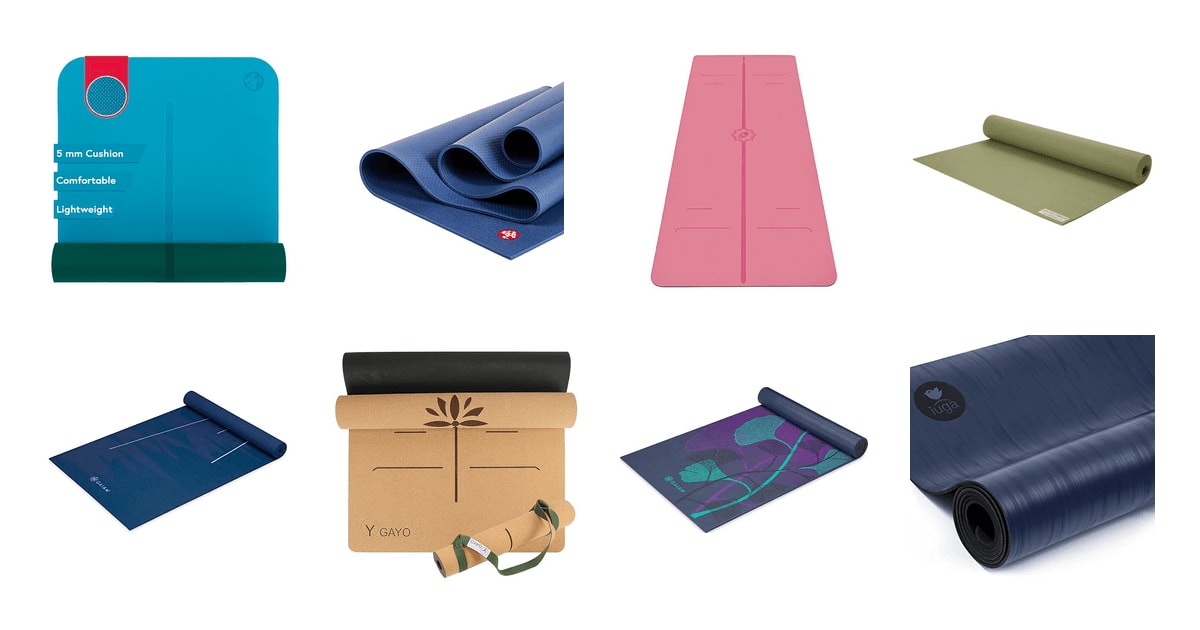
A yoga mat is the one piece of home fitness gear you touch with your whole body. Your palms slide on it in downward dog. Your knees press into it in low lunge. Your face ends up inches away from it in child's pose. So the things that actually matter are unglamorous: does it grip when your hands get damp, does it cushion your wrists on a hardwood floor, and does it lie flat instead of curling up at the corners. Everything else is decoration.
Here's the honest part. No mat does all of it. Grippy surfaces tend to be open-celled, which means they drink up sweat and need real cleaning rather than a quick swipe. Sealed surfaces wipe down in seconds but can turn slick once your palms are wet. Thick mats protect your knees and wreck your balance. Thin mats do the reverse. Heavy mats stay planted and last for years, but you won't enjoy dragging one anywhere. Pick the trade-off you can live with.
A home studio changes the math, though. You're not hauling the mat onto a train or into a locker, so weight stops being a real constraint and durability starts paying you back. A dense, heavy mat that would be miserable to commute with can be the smartest thing to leave in the corner of your living room. We think that the Manduka PRO is the best yoga mat for most home studios, and that the IUGA Pro is the one to buy if you sweat heavily and want something much lighter.
Everything we recommend

Heavy and firm, but it should outlast every other mat here
Sticky when you're soaked, and light enough to move daily

Thin and smelly out of the box, but a genuinely grippy first mat

Alignment guides and huge grip, if you don't mind a firm mat

Open-cell natural rubber with grip that shames synthetic mats
At a glance
| Product | Thickness | Weight | Price | |
|---|---|---|---|---|
 | Manduka Begin Yoga Mat 68" - 5mmAlso consider | 5mm | 2.1 lbs | $59.98 |
| Manduka PRO Yoga Mat 71" - 6mmTop pick | 6mm | 7.5 lbs | $144On sale |
| Liforme Evolve Yoga Mat - Patented AlignmentUpgrade pick | 4.2mm | 5.5 lbs | $165 |
| JadeYoga Harmony Yoga Mat- Durable & ThickAlso great | 3/16in | 4.6 lbs | $126.50 |
| Gaiam Yoga Mat Classic PrintBudget pick | 4mm | 2.2 lbs | $21.23 |
 | Y O Gayo Premium Yoga Cork MatAlso consider | 5mm | — | $69.97 |
 | Gaiam Premium Yoga MatAlso in lineup | 6mm | 3.08 lbs | $34.99 |
| IUGA Pro Yoga Mat Non Slip HotRunner-up | 0.19in | 2.5 lbs | $59.99 |
How we picked
Grip when wet. We weighted grip under sweat far more heavily than dry grip, because that's where mats fail. Published reviews and owner feedback both point the same way: polyurethane and natural rubber surfaces hold on when PVC starts sliding.
Cushion for joints. We looked for at least 5mm on any mat aimed at practitioners with sore wrists or knees, following the American Council on Exercise guidance for hard floors. Thinner mats had to earn their place on stability instead.
Materials and safety. We favored mats with documented material claims — OEKO-TEX certification, stated phthalate exclusions, natural rubber sourcing — over vague eco language on a listing. Latex content mattered too, since it rules a mat out for some people.
Size for real bodies. The 68-by-24-inch standard is short for anyone near six feet and narrow for broad shoulders. We looked closely at spec sheets for mats that run longer or wider, and noted where the extra inches go.
Lifespan and cleaning. Published durability research puts PVC mats at about a year to a year and a half of daily use, while natural rubber typically runs three to five years or more. We also compared how each surface handles sweat, since open-cell mats need more upkeep.
Top pickOn sale
Heavy and firm, but it should outlast every other mat here
Manduka PRO Yoga Mat 71" - 6mm
A dense 6mm mat with a sealed top that keeps sweat on the surface, where a towel can get it. It's firm rather than plush, it's built at 71 by 26 inches, and Manduka backs it for life against manufacturing defects.
$144fromAmazonList priceNothing else here is built to last this long. Manduka sells the PRO with a lifetime guarantee against manufacturing defects, which is rare for a mat and tells you something about the construction. Owners routinely describe practicing on the same PRO for a decade or more, and teachers pass them between studios for years. Published durability research puts a typical PVC mat at roughly a year to a year and a half of daily use before it starts flaking.
The surface is closed-cell, so sweat sits on top instead of soaking into the foam. That sounds like a small distinction until you've owned an open-cell mat that started to smell. You wipe this one down and you're finished. Manduka does ask you to use its own mat wash rather than a household spray cleaner, which is a mild annoyance but not a hard rule to follow.
The weight is a feature here, not a flaw. At 7.5 pounds this is a mat you roll out once and leave alone. It doesn't ripple under your back foot in warrior II, and the dotted underside keeps it from creeping across a wood floor. The density takes some getting used to, because it supports you rather than swallowing you. On a hard floor in crescent lunge, that firmness protects your kneecap better than something squishier.
This version runs 71 by 26 inches, longer and wider than the 68-by-24 standard most brands use. If you're tall, your heels stop hanging off into the carpet in savasana. It's also certified to OEKO-TEX Standard 100, meaning the material has been screened for phthalates, heavy metals and formaldehyde. That's worth something on a surface your face spends this much time near.
Flaws but not dealbreakers
The break-in period is real, and it's the complaint you'll hear most. Straight out of the box the top is slick, and plenty of owners slide in downward dog for the first few weeks until the surface wears in. A salt scrub speeds it up, but it doesn't skip the step. If you want grip on day one, buy something else.
It's also the heaviest option here and among the most expensive. Neither matters much if the mat lives in one room. Both matter a lot the first time you try to carry it to a class. And even broken in, it isn't the grippiest surface in this guide once your hands are genuinely wet, so hot-yoga practitioners usually pair it with a towel.
Manduka guarantees the PRO for life against manufacturing defects.
Runner-up
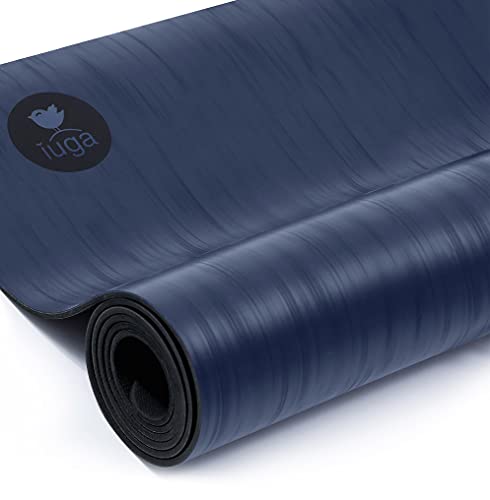
Sticky when you're soaked, and light enough to move daily
IUGA Pro Yoga Mat Non Slip Hot
A polyurethane top layer over a natural tree-rubber base, sized 72 by 26 inches and weighing only 2.5 pounds. The PU surface pulls moisture in instead of beading it, so grip holds up when your palms are dripping.
$59.99fromAmazonSweat is what breaks most mats. Twenty minutes into a heated flow, a slick PVC surface turns your hands into skis. This one does the opposite: the polyurethane top absorbs moisture and gets tackier as you go. Owners who practice hot yoga several times a week, including instructors, consistently report they've stopped putting a towel down over it.
It's the most practical mat here for a small apartment. At 2.5 pounds it's a third the weight of our top pick, so shifting it aside to vacuum takes one hand. It rolls up tight, it ships with a carrying strap, and at 72 by 26 inches you still get more room than a standard mat gives you. Nothing about owning it is a chore.
The middle layer is a tear-resistant mesh, and the base is natural tree rubber rather than PVC or EVA foam. At about 4.8mm it lands in a useful middle ground — enough padding that kneeling poses don't hurt, not so much that half moon becomes a balancing act. Owners report several years of heavy use before they think about replacing it.
Compared with the Liforme, which grips through raw surface texture, this mat grips through absorption. The practical difference is how it feels under bare skin: smoother, with less drag during transitions. If you've ever scraped a toe pivoting out of a lunge on a rough mat, you'll appreciate that.
Flaws but not dealbreakers
That absorbent surface is also the weak spot. Sweat goes into the top layer, and owners who practice hot yoga daily describe a smell that becomes hard to scrub out after a year or two. Cleaning it properly after every sweaty session, rather than giving it a quick swipe, is what separates a mat that lasts four years from one that doesn't.
The base is natural rubber, which means latex. If you're allergic, skip it. It's also softer underfoot than the Manduka PRO, so it flexes a little more when you push hard off a back foot.
Budget pick
Thin and smelly out of the box, but a genuinely grippy first mat
Gaiam Yoga Mat Classic Print
A 4mm PVC mat at the standard 68 by 24 inches, with a tacky textured face that holds bare feet on hardwood or tile. It weighs about two pounds and costs a small fraction of what the picks above do.
$21.23fromAmazonIf you're not yet sure yoga is going to stick, start here. The textured PVC surface is genuinely tacky, and owners doing downward dog on tile report their hands staying where they put them. Four millimeters is enough that a wood floor doesn't bite into your palms. It's a real mat, not the foam sheet you get in a discount bin.
Air it out before you use it. Gaiam tells you to unroll the mat and let it breathe for two or three days, and the owners who skip that step describe an aggressive plastic smell taking over the room. Give it a few days on a balcony and it fades to nothing. That's an annoyance rather than a defect, but it does mean this isn't a mat you can buy and use the same evening.
The material is PVC that's free of the six restricted phthalates, which puts it ahead of an unlabeled bargain mat without putting it in the same conversation as rubber or cork. Published durability research suggests a PVC mat gets a year to a year and a half of daily use before the surface starts peeling. If you practice a few times a week, you'll get considerably longer than that.
Flaws but not dealbreakers
Four millimeters is thin, and the buyers who expect cushion are the ones who end up disappointed. On a hard floor you'll feel it in low lunge and in any kneeling pose. The American Council on Exercise suggests at least 5mm on hard surfaces for anyone with wrist pain, so fold a towel under your knees or size up.
It gets slippery once you're actually sweating. That's fine for a slow morning flow and frustrating for anything heated.
Upgrade pick
Alignment guides and huge grip, if you don't mind a firm mat
Liforme Evolve Yoga Mat - Patented Alignment
A 72.8-by-26.8-inch mat with printed alignment markings and a polyurethane grip layer that stays tacky when wet. It's the one to buy if you practice alone and want something quietly checking your form.
$165fromAmazonPracticing at home means nobody is there to tell you your front foot is crooked. The Evolve's AlignForMe markings give you something to check against — a center line, angled guides, a horizontal reference. Line your heels up, glance down, and you can see whether your warrior II is actually square. It's a pared-back version of Liforme's original grid, which some people found too busy to read at a glance.
The grip is what people are really paying for. Liforme's eco-polyurethane surface holds when your hands are sweaty, which is precisely the moment most mats give up. Owners who practice heated classes say over and over that they've retired the towel they used to need. It's PVC free, built on a rubber base, and a carrying bag comes with it.
It's also bigger than standard, roughly 11% wider and 7% longer than the 68-by-24 mats most brands sell. That's genuine extra room. Your hands land on mat rather than floor in a wide-legged forward fold, and if you're over six feet you stop doing arithmetic about where to put your heels.
At 4.2mm it feels firmer than that number suggests, because polyurethane doesn't compress the way foam does. Some owners with sensitive wrists or hip bones find it too close to the floor for comfort. If joint padding is the problem you're trying to solve, the Manduka PRO's 6mm does more for you.
Flaws but not dealbreakers
That grippy surface is a magnet for dust, hair and lint, and it doesn't wipe clean the way a sealed mat does. Owners describe having to work at it. Keeping it rolled up between sessions helps more than any cleaning routine.
It costs as much as anything in this guide, and it's firm rather than cushioned. That's a rough combination if you came looking for padding. At 5.5 pounds it's also heavier than its thinness implies.
Also great
Open-cell natural rubber with grip that shames synthetic mats
JadeYoga Harmony Yoga Mat- Durable & Thick
A 74-inch natural rubber mat made in the USA, with an open-cell surface that grabs bare skin harder than almost anything synthetic. There's no PVC in it at all, and Jade plants a tree for every mat sold.
$126.50fromAmazonThe grip is the whole argument for this mat. Open-cell natural rubber grabs skin in a way PVC simply can't match, and owners who came from department-store mats describe the change as night and day. Published comparisons in a heated room found rubber surfaces holding on while PVC turned dangerously slick within twenty minutes. A few people find it almost too sticky, and their feet catch during quick transitions.
It's also the most straightforwardly green option here. No PVC, no phthalates, no synthetic foam — just rubber tapped from trees, biodegradable when it finally wears out. Jade plants a tree for every mat sold and has put more than two million in the ground. If the environmental story is what's driving your purchase, this is the mat that documents it best.
The 74-inch length gives tall practitioners real room, though the width stays at the standard 24 inches, so broad-shouldered folks may still feel a bit boxed in. At 4.6 pounds and roughly 5mm thick, it's easy enough to move and it meets the 5mm floor that ACE suggests for protecting your wrists on a hard surface.
Fresh out of the box it smells like a tire shop. That's the rubber itself, not an added chemical, and it does fade. Owners recommend leaving it in a spare room or a garage for a few days before you put your face anywhere near it. Give it that time and the smell stops being a factor at all.
Flaws but not dealbreakers
The surface is open-cell, which means sweat soaks in rather than sitting on top. You'll spend more time cleaning it than you would a sealed mat, and grip does drop off once it's genuinely drenched, so heavy sweaters usually end up laying a towel down anyway.
It's natural rubber, so it's latex. If you're allergic, don't buy it. Rubber also breaks down under direct sun, so don't store it on a bright porch or dry it outside.
Who this is for
This guide is for anyone setting up a mat that lives in one place — a corner of the bedroom, a spare room, a patch of floor by the window. That single fact changes what matters. Weight stops being a real problem, so heavier, denser mats that would be awful to carry become genuinely good buys. If you're mostly practicing at a studio and hauling your mat there on a bike, the lighter options here will serve you better than the top pick will.
We're covering full-size mats for yoga and general floor work, not travel mats, not thick foam exercise pads for weight training, and not towels or mat covers. If you have a latex allergy, the natural rubber options are out and you should look at the PVC and TPE mats instead. And if you already own a mat you like that hasn't started peeling, there's no reason to replace it — a good mat that's broken in usually beats a new one for the first month.
How we picked
We built the shortlist around five things. Grip: how a surface behaves once your palms are wet, since that's where most mats fail, drawn from published reviews and consistent owner feedback. Cushion: at least 5mm for anyone with wrist or knee pain on a hard floor, following ACE guidance, with thinner mats needing to justify themselves on stability. Materials: documented claims like OEKO-TEX certification or stated natural rubber sourcing, plus clear flagging of latex content. Size: whether a mat improves on the cramped 68-by-24-inch standard in length, width, or both. Lifespan: published durability research and long-term owner reports, weighted toward how each surface handles sweat over years rather than weeks.
Other yoga mats for a home studio worth considering
If you want a cork surface: The Y O Gayo Premium Yoga Cork Mat ($69.97) — Cork is the one material whose grip improves as it gets damp, which is the reverse of nearly everything else. This one puts a 5mm cork face over a natural rubber base, runs 72 by 26 inches, and includes a strap. Cork also resists bacteria and fungus on its own, thanks to the suberin in its structure, so it stays fresher than a foam mat with less effort. What you give up is portability: at more than eight pounds it's the heaviest mat here by a wide margin, which is fine for a permanent studio spot and miserable anywhere else. Cork is firm too, so it doesn't cushion like the Manduka PRO.
If you want a light, forgiving first mat: The Manduka Begin Yoga Mat 68" - 5mm ($59.98) — Manduka's entry-level mat uses 5mm TPE foam instead of PVC, which makes it noticeably lighter — around two pounds — and softer underfoot than anything else here. It's reversible, latex-free, and has a center alignment stripe to help you square up. Owners with sore knees like the give in it, and beginners report solid traction in unheated classes. But TPE foam is not a hot-yoga surface: it goes slippery once you sweat, and several owners say plainly that vigorous practice on it is a problem. Buy it for gentle flows, stretching and floor work, not for anything that leaves you dripping.
The competition
This is what our research surfaced, not a survey of every mat sold. We focused on the models that come up repeatedly in published reviews and in long-term owner reports, and there are good mats we didn't look at.
The Gaiam Premium Yoga Mat ($34.99) — The Gaiam Premium 6mm is the thicker sibling of our budget pick, and for floor work it's genuinely comfortable — owners doing abs, glutes and stretching say their knees don't complain. The extra cushion also makes it a reasonable option on hardwood if padding is your main concern. But it's still PVC at the standard 68 by 24 inches, and the same weakness shows up: owners describe it going slippery the moment they start sweating, and it needs several days of airing out first. It lost to our budget pick mainly on balance — at 6mm you sink in enough that standing poses feel less stable. Choose it over the 4mm version if you're doing more mat Pilates and stretching than standing yoga.
Care and cleaning
How you clean a mat depends on how it's built. Closed-cell surfaces like the Manduka PRO keep moisture on top, so a damp cloth handles it — Manduka asks you to use its own mat wash and skip household sprays, which can attack the surface. Open-cell mats such as the Jade absorb sweat, so they need mild soap and water and real drying time, ideally flat and out of direct sunlight, since sun degrades rubber. Never soak or submerge any of these mats, and never put one in a hot car. Polyurethane tops, on the IUGA and the Liforme, want a thorough wipe after every sweaty session rather than a quick pass, because skipping that is what makes them smell a year later. Roll your mat loosely, surface facing out on grippy mats, and store it somewhere cool and dry.
Questions we get
What thickness should I get if my knees and wrists hurt?
Go to at least 5mm on a hard floor. The American Council on Exercise recommends that minimum for cushioning the small bones in your wrists during weight-bearing poses. The Manduka PRO's 6mm is the most protective option here. If you're on carpet, you can get away with less.
What's the best mat for hot yoga at home?
Something with a polyurethane or natural rubber surface. The IUGA Pro absorbs sweat at the top layer and gets grippier as you go, and the Liforme does the same thing at a higher price. Avoid PVC entirely for heated practice — published comparisons in a 105°F room found PVC mats going slick within twenty minutes while rubber held on.
Is the Manduka PRO worth it?
If you practice regularly and the mat is staying in one room, yes. The lifetime guarantee against manufacturing defects is unusual, and owners describe using the same mat for ten or fifteen years. Spread across that lifespan it works out cheaper than replacing a PVC mat every year or so. If you practice twice a month, it's overkill.
Are cork mats better than rubber?
They're different, not better. Cork gets grippier as it gets damp and naturally resists bacteria and fungus without any chemical treatment, which rubber doesn't do. Rubber grips better dry and cushions more. Cork mats also tend to be heavy and firm, so they suit a permanent studio spot more than a mat you move around.
Can I use these mats if I have a latex allergy?
Not the natural rubber ones. That rules out the Jade Harmony and the rubber-based IUGA and Liforme mats. Stick to PVC or TPE instead — the Manduka PRO is PVC and latex-free, and both Gaiam mats and the Manduka Begin are latex-free as well.
How long should a good yoga mat last?
Published durability research puts a typical PVC mat at twelve to eighteen months of daily use before peeling and grip loss set in, while natural rubber generally runs three to five years or more. Practicing a few times a week rather than daily stretches both numbers considerably. The Manduka PRO is the outlier, with owners reporting a decade or more.
Why you should trust us
For this guide:
- We read manufacturer spec sheets for every mat here, comparing thickness, dimensions, weight, cell structure and material certifications side by side.
- We reviewed published durability and grip research, including comparisons of how rubber and PVC surfaces behave in a heated room, plus ACE guidance on cushioning for weight-bearing poses.
- We looked for recurring themes in long-term owner feedback — break-in periods, off-gassing, odor retention and grip loss over time — and weighted patterns that showed up across many buyers rather than isolated complaints.
- We read owner reviews on every listing, weighted toward the critical ones, because that is where the recurring failures show up.
- We have a systematic way of automatically fetching the latest prices, so the numbers on this page stay current.
- This is a research-focused guide, so the team may not own every product listed — though we often do own the top winners, which gives us extra context for the recommendations.
- We don't accept free products, and the retailer commission never changes which product we recommend.
Sources
Best Yoga Mats of 2026 — Wirecutter (NYT), Wirecutter
Best Yoga Mats — Consumer Reports, Consumer Reports
The Best Yoga Mats, Tested by Editors and Instructors — Yoga Journal, Yoga Journal
The Best Yoga Mats for Every Style of Practice — Self, Self Magazine
Best Yoga Mats 2026: Tried and Tested — Verywell Fit, Verywell Fit
Best Yoga Mats, According to Fitness Experts — Health.com, Health.com
Best Yoga Mats 2026 — Shape Magazine, Shape Magazine
Manduka PRO Yoga Mat Product Page — Manduka, Manduka (Manufacturer)
Jade Yoga Environmental Commitment — Jade Yoga, Jade Yoga (Manufacturer)
Global Yoga Mat Market Report 2025–2026 — Grand View Research, Grand View Research
Amazon product listings and owner reviews for all 8 products
Manufacturer specification pages for each product
Some passages in this guide may be paraphrased with AI help. Prices are refreshed automatically.
More like this.
Continue exploring health reviews and recommendations.

The Best Yoga Mats
A yoga mat is one of the few pieces of fitness gear you touch with your whole body. You kneel on it, sweat on it, press your palms into it while upside…

The Best Yoga Mats and Accessories for a Home Practice
A yoga mat is the one piece of gear that touches every part of your practice. It decides whether your hands slide forward in downward dog, whether your…

The Best Soundproofing Materials for a Home Office or Studio
Noise is the thing that ruins a home office. You can buy a great mic and a fast laptop, but if the neighbor's dog barks through every client call, none of…

The Best Yoga Wheels
A yoga wheel is a simple thing: a rigid hoop with padding wrapped around the outside. You lie back over it, let it hold the arch of your spine, and…

The Best Gifts for Yoga Lovers
Yoga gear gets used hard. A mat that lives beside the couch gets unrolled most mornings, sweated on, wiped down and rolled back up again. So the gifts…

The Best Yoga Blocks and Props for Beginners
A yoga block is just a brick you can't fall through, and that's the whole point. When your hamstrings won't let your hand reach the floor in Triangle, a…