The Best Bose Headphones and Speakers
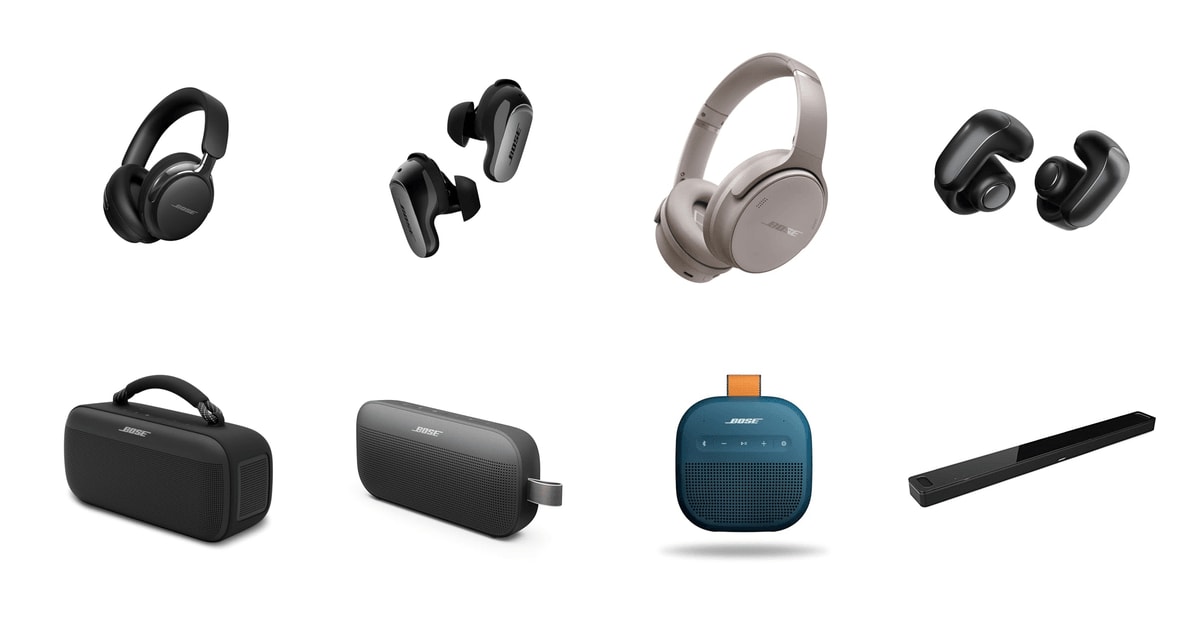
Bose sells a lot of things that make noise, and the differences between them aren't obvious from the box. Some of it is about silence — the ability to sit in seat 34B for six hours and not hear the engines. Some of it is about sound that travels: a speaker you can drop on pool tile, or a soundbar that makes a movie feel bigger than your living room. What you actually need depends less on specs than on where you'll use it. A commuter and a backyard host want almost nothing in common.
Here's the honest part. Bose asks a premium for its name, and you'll feel it most on the earbuds, where rivals match or beat the battery life for less. The app has become close to mandatory — you need it to change EQ or modes, which annoys people who wanted a simple pair of headphones. And Bose's spatial audio, called Immersive Audio, splits opinion hard. Some people leave it on forever. Others try it once, shrug, and turn it off to save battery.
We looked across Bose's current headphone and speaker lineup to sort out which model suits which person. The gaps between them are real but narrower than the price ladder suggests. We think that the Bose QuietComfort Ultra Headphones (2nd Gen) are the best Bose headphones for most people, and that the Bose SoundLink Flex (2nd Gen) is the one to buy if you want a portable speaker you can take to the beach without worrying about it.
Everything we recommend

The quietest thing Bose makes, if you can pay for it

Nearly all the quiet, without the spatial audio extras
The portable speaker to grab if you only buy one

Pocketable, tough, and louder than it looks

Real bass and a rope handle, if you host outdoors
How we picked
Noise cancellation. We leaned on lab measurements from RTINGS and in-flight comparisons from ZDNet, focusing on low-frequency reduction — engine and HVAC rumble — because that's what actually tires you out. Anything we recommend for travel had to be near the top of published ANC rankings.
Comfort over hours. We looked for published wear-comparison results, like Tom's Guide's three-hour sessions, and for recurring themes in owner feedback about clamping force and ear-cup depth. Headphones that hurt after two hours don't get recommended for flights.
Battery you can trust. We compared Bose's stated runtimes against independent measurements from SoundGuys, TechRadar and RTINGS. We favored models where the measured number matched the claim, and we say so plainly where it doesn't.
Real durability. For speakers we required an IP rating, verified against Bose's specifications, and preferred IP67 — dustproof plus brief submersion — for anything meant for a pool or a beach. Owner reports of survival after soakings backed up the rating.
Sound for the size. We read published listening assessments from CNET, TechRadar and What Hi-Fi? to judge whether each speaker sounds bigger than its footprint, since that's the trade-off you're paying for with any portable.
Top pick
The quietest thing Bose makes, if you can pay for it
Bose QuietComfort Ultra Bluetooth Headphones
These are Bose's flagship over-ear headphones, with the strongest noise cancellation in the lineup and spatial audio that makes music feel like it's coming from in front of you. Bose rates them for up to 30 hours per charge, or 23 with Immersive Audio on.
$449fromAmazonIf you fly often, this is the pair to get. RTINGS measured the QuietComfort Ultra Headphones cutting low-frequency noise — the engine drone that wears you down on a long flight — by over 40 dB, one of the best results they've recorded. ZDNet's in-flight comparison found they handled cabin rumble better in the low range than Apple's AirPods Max. That's the frequency band that matters most on a plane, and it's where Bose has been ahead for years.
Comfort is the quieter reason people stay with Bose. Tom's Guide found Bose over-ears scored better than Sony's WH-1000XM line during three-hour-plus wear sessions, and credited the lighter clamping force. If you've ever taken headphones off after a long stretch because your ears ached, that difference is the whole ballgame. Owner feedback echoes it — comfort comes up constantly, often from people who cross-shopped Apple and Sony and picked Bose for the fit alone.
Immersive Audio is the feature that separates this pair from the standard QuietComfort. It spatializes whatever you're playing, so the music sits in front of you instead of inside your skull. There's a Cinema Mode for video too. Whether you love it is genuinely a coin flip. Try it, then decide — and know that leaving it on costs you about seven hours of battery.
Call quality is the underrated part. The noise-rejecting mics and background suppression mean you can take a work call from a coffee shop without apologizing for the espresso machine. There's also a USB-C audio mode for video conferencing off a laptop. If you're on Zoom half the day, that matters more than any spec on the box.
Flaws but not dealbreakers
A number of owners report a creaking noise from the headband and hinges — it shows up when you move your jaw, turn your head, or just breathe. It doesn't affect sound and plenty of people never notice it, but if you're sensitive to that sort of thing, it's real and it's been reported repeatedly.
The ear cups are on the shallow side. If you have larger ears, they may touch the driver housing, which turns a comfortable pair into an uncomfortable one over a couple of hours. And several owners are frustrated that changing modes and EQ now leans heavily on the phone app, which is a problem if you mainly use these with a computer.
Runner-up
Nearly all the quiet, without the spatial audio extras
Bose QuietComfort Headphones - Wireless Bluetooth Headphones
The standard QuietComfort Headphones keep Bose's noise cancellation and plush fit but drop Immersive Audio. SoundGuys measured roughly 24 hours of ANC-on battery, matching Bose's claim, and you can plug in a cable when the battery dies.
$199fromAmazonFor most people, this is the smarter buy. You give up Immersive Audio and Cinema Mode. You keep the noise cancellation, the comfort, the adjustable EQ and a materially lower price. If spatial audio sounds like a gimmick to you — and for a lot of listeners it is — there's very little reason to climb to the Ultra. This pair has the largest owner base in Bose's headphone lineup by a wide margin, and satisfaction runs high.
Battery holds up under real use. SoundGuys clocked around 24 hours with ANC running, which lines up with what Bose advertises — not always a given. A 15-minute charge over USB-C buys you another couple of hours, which covers the moment you realize at the gate that you forgot to plug them in last night.
The included cable is a small thing that turns out to matter. Plug in and these work with a dead battery, an airplane seatback jack, or an older laptop that fights Bluetooth. Owners who travel a lot mention it often. The Ultra pair leans harder on wireless and the app; this one still behaves like a normal pair of headphones when you need it to.
You do lose a little at the top end. Bose's own materials position the Ultra as its best noise cancellation, and reviewers generally agree the flagship edges ahead. But it's an edge, not a gulf. On a train or in an open office, you'd be hard pressed to care.
Flaws but not dealbreakers
There's no Immersive Audio and no Cinema Mode, so if you've heard spatial audio on a friend's Ultra pair and liked it, this isn't the pair that gives it to you. The noise cancellation also sits a step below the flagship, which you'd notice mainly on a plane.
Like the rest of the current lineup, this pair leans on the Bose app for EQ and mode changes. Owners also report the usual over-ear wear pattern — the ear pads soften and flatten after a couple of years, and you'll eventually be buying replacements to keep the fit right.
Also great
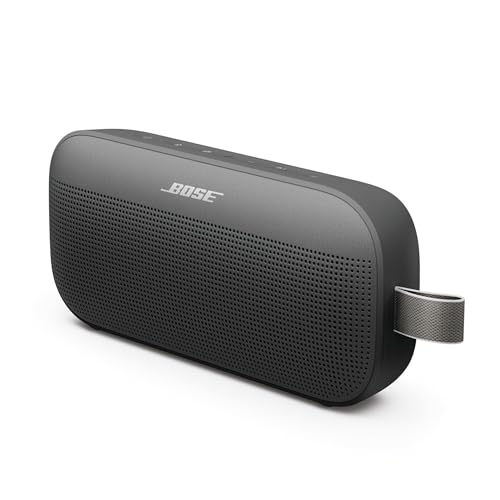
The portable speaker to grab if you only buy one
Bose SoundLink Flex Bluetooth Speaker
The SoundLink Flex is a hand-sized, IP67-rated speaker with sound that punches well above its size. Bose rates it for up to 12 hours per charge, and PositionIQ retunes it automatically depending on whether it's standing, lying flat, or hanging.
$119fromAmazonThis is the Bose speaker most people should buy. CNET found the Flex puts out bass close to speakers costing roughly twice as much, and credited PositionIQ — the sensor that figures out how the speaker is sitting and adjusts the EQ. Hang it in the shower and it sounds right. Lay it on a picnic table and it sounds right. You don't have to think about placement, which is the entire point of a speaker you throw in a bag.
The IP67 rating means dust doesn't get in and brief submersion doesn't kill it. Pool decks, sandy beaches, a downpour on the deck — all fine. The silicone-wrapped body handles drops. Among Bose owners this is the model with the least drama in feedback; the durability claims hold up in ordinary use rather than just on the spec sheet.
Twelve hours per charge covers a full beach day with room left over. If you want more volume, you can link two compatible Bose speakers for stereo or party mode, which is a cheaper path to a bigger sound than buying one large speaker. USB-C charging means one fewer odd cable in the drawer.
It's not the loudest thing here. Push it in a big backyard with people talking and it runs out of headroom before the Max does. For a kitchen, a bathroom, a campsite, or a small gathering, though, it's more speaker than you'd expect from something this size.
Flaws but not dealbreakers
Volume is the real ceiling. Outdoors with a group talking, it runs short of headroom, and there's no aux input if you want to plug something in directly — it's Bluetooth or nothing.
It's a mono speaker, so you're buying a second one if you want real stereo separation. And like every small rechargeable speaker, the battery is sealed; when it eventually stops holding a charge, that's the end of the speaker rather than a part you swap.
Budget pick
Pocketable, tough, and louder than it looks
Bose SoundLink Micro Portable Bluetooth Speaker
The SoundLink Micro clips to a backpack strap and survives whatever the day throws at it. It's IP67 rated like the Flex, now runs up to 12 hours per charge, and gives you app EQ control in something roughly the size of a coaster.
$129fromAmazonPCMag rated the earlier SoundLink Micro highly and called out its battery as plenty for a speaker this small and this affordable. The second-generation model doubles the runtime to about 12 hours, which turns it from a couple-of-hours accessory into something you can leave clipped to a bag all weekend. That's the single biggest change, and it's the right one.
Buy this one for the strap. The utility loop is the reason people keep it around — it goes on a bike handlebar, a shower caddy, a tent pole, a gym bag. If your problem is that your speaker is always in the wrong room, a Micro that lives on your backpack solves it in a way a bigger speaker can't.
Sound is genuinely surprising for the size. Owners regularly mention that it doesn't have the thin, tinny quality of most tiny speakers, and the app gives you bass, mid and treble sliders if you want to shape it. You can also pair two of them together. It won't fill a backyard, but it'll fill a bathroom or a tent.
Physics still applies. There's only so much air a speaker this small can move, so bass is present rather than powerful, and it gets strained at high volume outdoors. If you want one speaker to cover parties and picnics, spend up to the Flex.
Flaws but not dealbreakers
It's the least capable speaker here on volume and low end, and that gap widens outdoors where there's nothing to reflect the sound. Bluetooth range is quoted at around 30 feet, so leaving your phone inside while the speaker sits at the far end of the yard can cause dropouts.
Upgrade pickOn sale
Real bass and a rope handle, if you host outdoors
Bose SoundLink Max Bluetooth Speaker - Portable
The SoundLink Max is the biggest and loudest portable speaker Bose makes, with a removable rope handle and an aux input for a turntable or old MP3 player. TechRadar clocked over 20 hours of continuous playback in real-world use.
$329fromAmazonList priceGet this only if volume is the actual problem. The Max is the one Bose portable with genuine low-end weight — the kind you feel in a backyard with fifteen people talking over the music. It's also IP67 rated, shock resistant and rust resistant, so it can live outside a house rather than inside one. TechRadar's 20-plus hours of playback means it outlasts the party.
It weighs close to five pounds, which is why the rope handle exists. This isn't a speaker you clip to a bag; it's one you carry deliberately from the garage to the deck. If you were hoping for a portable you can forget you're holding, the Flex is your speaker and this one isn't.
Two details set it apart. There's a 3.5mm aux input, so a turntable or an old iPod plugs straight in — rare on modern Bluetooth speakers. And the USB-C port works in reverse to charge your phone from the speaker's battery, which is genuinely useful at a campsite on day two.
Owners consistently say it's worth spending time in the app. Several report the out-of-box tuning sounds off — thin in places, sharp in the treble — and that adjusting the EQ transforms it. The hardware is there. You may have to go get it.
Flaws but not dealbreakers
It's the most expensive portable in this lineup and the heaviest by a wide margin, which makes it the wrong choice for hiking, cycling or a crowded carry-on. A handful of owners describe disappointing sound out of the box; that mostly resolves with EQ tweaks, but needing an app to make a speaker sound right is a fair complaint.
Who this is for
This guide is for anyone who's decided on Bose and wants to know which Bose. Maybe you've heard the noise cancellation on a flight and want it for your commute. Maybe you want a speaker that survives your kids and a pool. Or you're buying a gift and want a name the recipient will recognize. The picks here sort the lineup by use rather than by price, because the most expensive model in each family isn't automatically the one you want.
If you're still comparing brands, this isn't the whole picture. Bose earbuds fall behind Apple and Sony on raw battery life per charge, and rivals often undercut Bose on price for similar features. We're also only covering headphones, earbuds, portable speakers and one soundbar — no home Wi-Fi speakers, no car audio, no wired hi-fi. And if you need something under a helmet, in a swimming pool, or for sleeping, look at a category guide instead of a brand one.
How we picked
We built the picks around a handful of things that decide whether you'll still like a purchase in a year. Noise cancellation: we prioritized measured low-frequency reduction from RTINGS and in-flight comparisons, since engine rumble is what actually wears you down. Comfort: we weighted published multi-hour wear comparisons and recurring owner themes about clamping force and ear-cup depth. Battery: we checked Bose's claims against independent measurements and flagged the gaps. Durability: speakers needed a verified IP rating, and IP67 for anything headed to a pool or beach. Sound for the size: we read published listening assessments to judge whether each model punches above its footprint. Everyday usability: app dependence, wired backup options and multipoint pairing broke ties between otherwise close models.
Other bose headphones and speakers worth considering
If you want Bose ANC in your pocket: The Bose QuietComfort Ultra Earbuds ($299) — The QuietComfort Ultra Earbuds bring the flagship noise cancellation and Immersive Audio into a true wireless design, with CustomTune scanning your ear canal to tune the fit and nine eartip-and-band combinations to get a seal. Call quality is a standout — the SpeechClarity mics handle wind and background noise well. The catch is battery: RTINGS measured just under six hours of continuous playback with ANC on, which trails AirPods Pro and Sony's rivals. They're also physically large, and a meaningful share of owners report app quirks and connection hiccups. Buy them for the quiet and the calls, not the endurance.
If you want to hear traffic while you run: The Bose Ultra Open Earbuds - Bluetooth Open ($199) — The Ultra Open Earbuds clip around your ear instead of plugging it, so you stay aware of cars, dogs and the person talking to you. The Verge noted they put out noticeably more bass than rival open-ear designs like Shokz, thanks to Bose's OpenAudio approach, and they're rated IPX4 for sweat and splashes. Battery runs about seven hours, or four with Immersive Audio. But owner feedback flags two recurring problems: call quality that disappoints callers on the other end, and occasional connection dropouts on one bud. Great for listening, shakier for talking.
More from Bose
This is the slice of Bose's lineup our research surfaced, not the company's full catalog. Bose also sells home Wi-Fi speakers, sport earbuds, sleep buds, automotive systems and older models still in circulation. The one below is a strong product that simply serves a different room in your house than the picks do.
The Bose Smart Soundbar 900 Dolby Atmos with ($617.39) — The Smart Soundbar 900 is for the home theater upgrader rather than the commuter. What Hi-Fi? gave it a full five stars and singled out how convincingly it fakes Dolby Atmos height using only up-firing drivers, with no ceiling speakers involved. TrueSpace processing upmixes ordinary stereo and older formats too, so regular TV benefits, not just Atmos content. Alexa and Google Assistant are built in, and Voice4Video can control your TV and cable box by voice. Setup is where owners struggle — several describe fighting with the app and HDMI ARC before things settled. If your living room is small and dialogue clarity is your main complaint about your TV, this is the Bose to look at, ideally with patience budgeted for the first hour.
Is Bose worth it?
Bose earns its reputation in two specific places: noise cancellation and comfort. Consumer Reports member surveys have placed Bose among the top three headphone brands for two-year reliability and owner satisfaction, and Tom's Guide found Bose over-ears more comfortable than Sony's WH-1000XM line over three-plus hours, thanks to lighter clamping force. On the speaker side, Bose's IP67 ratings hold up in practice — owners routinely report speakers surviving rain and pool splashes. Where Bose is beatable is price and battery. Rivals often deliver comparable features for less, and Bose earbuds trail Apple and Sony on runtime per charge. There's also a growing frustration in owner feedback about how much now depends on the Bose app; if you want to change EQ or modes without a phone nearby, that's a real limitation. Buy Bose for quiet, comfort and build. Don't buy it expecting to win on specs per dollar.
Not set on Bose?
If you're open to Sony, Apple or Technics, this one compares the top ANC earbuds across brands, where Bose's battery deficit becomes a real factor. our noise-cancelling earbuds guide →
This covers rugged Bluetooth speakers from every brand, including options that go louder or last longer than the SoundLink line for less money. our waterproof outdoor speaker guide →
Care and everyday use
For headphones, the ear pads are the part that wears out first — skin oils break down the cushions over a couple of years, and Bose sells replacements, which is cheaper than replacing the headphones. Wipe them down with a barely damp cloth and let them dry fully before storing. For the IP67 speakers, rinse off salt water and sand with fresh water after a beach day, then dry the USB-C port completely before charging; charging a wet port is the fastest way to kill one. Don't leave any of these in a hot car, since heat is hard on lithium batteries. And if a speaker or headphone sits unused for months, top it up every so often rather than storing it flat, which shortens the battery's usable life.
Questions we get
Which Bose headphones have the best noise cancellation?
The QuietComfort Ultra Headphones. RTINGS measured them cutting low-frequency noise by over 40 dB, among the best results they've recorded, and ZDNet's in-flight comparison found they beat the AirPods Max on cabin rumble specifically. The standard QuietComfort Headphones come close enough that most people won't notice the gap outside a plane.
Are the Ultra headphones worth it over the regular QuietComfort?
Only if you want Immersive Audio. That's the main thing you're paying for — spatial sound with head tracking, plus Cinema Mode for video. Noise cancellation and comfort are close between the two, and the standard pair still gives you adjustable EQ, roughly 24 hours of battery and a wired option. Try spatial audio somewhere before you commit to it.
What's the best Bose speaker for the beach or pool?
The SoundLink Flex, with the SoundLink Micro as the smaller option. Both carry a full IP67 rating, which per Bose's specs means dustproof and able to survive brief submersion — so sand and a drop in the shallow end are both survivable. Rinse the salt off afterward and dry the charging port before you plug it in.
What is Bose Immersive Audio, and is it worth it?
It's Bose's spatial audio: it takes the sound out of your head and places it in front of you, with head tracking so it stays put when you turn. It's on the Ultra Headphones, Ultra Earbuds and Ultra Open Earbuds. Opinions split sharply — some people never turn it off, others find it unnatural. It also costs you battery, about seven hours on the Ultra Headphones.
How long does the battery last on the Ultra Earbuds?
RTINGS measured just under six hours of continuous playback with noise cancellation on, which is roughly what Bose claims. That's enough for a workday with a charge in the case at lunch, but it trails what AirPods Pro and Sony's comparable earbuds manage. If all-day runtime without touching the case matters most, earbuds aren't where Bose wins.
Can you pair two Bose SoundLink speakers together?
Yes. Compatible SoundLink speakers link through the Bose app in either Stereo Mode, which splits left and right channels, or Party Mode, which plays the same audio from both for more volume. Two Flex speakers in stereo is often a better-sounding option than one larger speaker, and easier to carry.
Why you should trust us
For this guide:
- We read published measurements and reviews from RTINGS, SoundGuys, TechRadar, CNET, PCMag, What Hi-Fi?, Tom's Guide, ZDNet and The Verge covering these models.
- We compared Bose's own specifications for battery life, IP ratings and feature sets against those independent measurements to see where claims held up.
- We read through owner feedback for each listing to find the complaints that repeat — headband creaking, app dependence, call quality on the open earbuds — rather than one-off problems.
- We read owner reviews on every listing, weighted toward the critical ones, because that is where the recurring failures show up.
- We have a systematic way of automatically fetching the latest prices, so the numbers on this page stay current.
- This is a research-focused guide, so the team may not own every product listed — though we often do own the top winners, which gives us extra context for the recommendations.
- We don't accept free products, and the retailer commission never changes which product we recommend.
Sources
Bose QuietComfort Ultra Headphones Review, RTINGS.com
Bose QuietComfort Ultra Earbuds Review, RTINGS.com
Best Noise Cancelling Headphones 2026, Wirecutter (NYT)
Bose QuietComfort Headphones (2nd Gen) Review, SoundGuys
Bose Ultra Open Earbuds Review, The Verge
Bose SoundLink Max Review, TechRadar
Best Bluetooth Speakers 2026, CNET
Bose SoundLink Micro Review, PCMag
Bose Smart Soundbar 900 Review, What Hi-Fi?
Bose vs. Sony Headphones Comparison 2026, Tom's Guide
Consumer Reports: Wireless Headphones Ratings, Consumer Reports
Bose Official Specifications - QuietComfort Ultra Headphones, Bose (Manufacturer)
Amazon product listings and owner reviews for all 8 products
Manufacturer specification pages for each product
Some passages in this guide may be paraphrased with AI help. Prices are refreshed automatically.
More like this.
Continue exploring electronics reviews and recommendations.

The Best Headlight Restoration Kits
Cloudy headlights sneak up on you. One night you're driving a back road and realize the pool of light in front of the car has shrunk to a smudge. That's…

The Best Bluetooth Multi-Device Keyboards
A multi-device keyboard earns its keep in the small moments. You're typing an email on your work laptop, a Slack message pops up on your personal desktop,…

The Best Car Speakers and Stereo Systems
A car stereo is the one piece of gear in your car you touch every single day. You reach for it before you've backed out of the driveway, and you're still…

The Best Budget Noise Canceling Headphones
Noise canceling headphones earn their keep in the boring parts of your day. The bus that idles for ten minutes. The open-plan office where someone always…

The Best Car Bluetooth and Aux Adapters
Most cars on the road still have a stereo that can't talk to your phone. If yours has an aux jack, a small receiver bridges that gap without touching your…

The Best Under-Desk Cable Management Trays
The mess under your desk is the part of your setup nobody photographs. A power strip on the carpet, three adapter bricks piled on top of it, and a knot of…