The Best Travel CPAP Accessories

Your machine is the expensive part. The gear around it decides whether it survives the trip. A case keeps a nightstand fall or a rough baggage handler from cracking the housing. A clean filter keeps dust out of the air you breathe all night and keeps the motor from straining. None of this is glamorous. But the American Academy of Sleep Medicine ties consistent nightly use of at least four hours to better outcomes, and gear that fails on the road is one more reason to skip a night.
No travel accessory does everything well. Cases are built for one machine, so the shell that fits an AirMini won't hold a Transcend Micro, and buying the wrong shape is the most common regret here. Soft pouches pack smaller but won't save your machine in a checked bag. Filters are simple and easy to swap, yet sizes aren't interchangeable across brands. And none of it replaces the machine itself, your prescription, or the pressure settings you'll need before any of this matters.
Start by matching your machine, then decide how much protection you actually need. If you fly often and your machine rides in a bag with shoes and a laptop charger, a hard shell earns its space. If you carry it in a daypack and baby it, a pouch is plenty. Either way, pack spare filters. We think that the AirMini hard travel case is the best travel CPAP accessory for most people, and that the Transcend Micro travel pouch is the one to buy if the Micro is your machine.
Everything we recommend

Hard-shell protection for the machine you can't sleep without

Lighter, simpler protection when your bag stays with you

The spare part you'll wish you'd packed, four at a time
At a glance
| Product | Packed size | Humidification | Price | |
|---|---|---|---|---|
| Resmed Airmini Hard Travel Case - SlimTop pick | 6.5 x 4.5 x 2.5 in | — | $27 |
| Micro Travel Pouch for Transcend by SomneticsBudget pick | — | — | $19.50 |
| Devilbiss Health Care Dv8000D602 Standard Foam FilterAlso great | — | — | $18.99 |
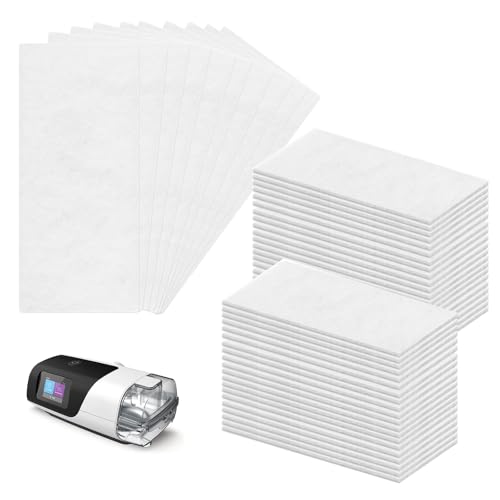 | 60 Pack for Resmed Airsense 11 FilterAlso consider | — | — | $11.99 |
How we picked
Fit for your machine. Cases and filters are model-specific, so we matched each listing's stated compatibility against the machine it names. Anything vague about which model it fits didn't make the cut.
Protection on the road. We weighed hard shells against soft pouches using listing details and owner feedback themes about what actually breaks: ports, tubing connectors, and housings. A checked bag calls for a rigid shell; a daypack usually doesn't.
Packed size and weight. The point of a travel setup is that it disappears into your bag. We favored cases whose stated dimensions stay close to the machine's own footprint.
Filter supply and interval. Manufacturers generally suggest swapping a disposable filter every couple of weeks. We looked at pack counts against how long a real trip runs, so you're not rationing or hoarding.
Top pick
Hard-shell protection for the machine you can't sleep without
Resmed Airmini Hard Travel Case - Slim
A molded hard case sized for the ResMed AirMini, small enough to slip into a backpack pocket and rigid enough to handle a checked bag. If your machine travels more than a few nights a year, this is what keeps ports and connectors from cracking.
$27fromAmazonA hard shell is the difference between a scuffed case and a cracked machine. Soft bags fold, and so does whatever's inside them when a suitcase gets stacked at the bottom of a pile. This one is made for the ResMed AirMini, so the machine sits in a shape built for it instead of sliding around. If your machine ever rides in a checked bag or the back of a truck, that's the whole argument.
It's small for what it does. The listing puts it at roughly 6.5 by 4.5 by 2.5 inches, about the footprint of a paperback and change. That slides into a backpack pocket or a carry-on corner without a fight. You're carrying a shell, so it's bulkier than a fabric sleeve. It just isn't bulky in a way you'll resent by the third airport.
The AirMini is already tiny, and that cuts both ways. A machine the size of a bar of soap is easy to bury under clothes, easy to leave in a drawer, easy to sit on. Keeping it in one dedicated case means you grab a single object on checkout morning instead of hunting for a machine, a hose, and a mask separately.
The parts that fail are the ones a rigid case covers. Owners of small travel units report the same story again and again: the machine was fine until the trip where it wasn't, and the damage started at a port or the tubing connector. Those are the fragile bits, and they're what a hard shell shields. Travel a handful of nights a year and you may never need it. Travel two weeks a month and you probably will.
Flaws but not dealbreakers
It only fits the AirMini. If you own a Transcend Micro, a Z2, or anything else, this is the wrong case, and no amount of padding changes that.
A hard shell is bulkier than a sleeve. It's a rigid rectangle, so it won't squash into the last gap in a packed bag the way fabric does. And you're buying an empty case, which sounds obvious right up until it arrives with no machine in it.
Budget pick
Lighter, simpler protection when your bag stays with you
Micro Travel Pouch for Transcend by Somnetics
A soft fabric pouch made for the Transcend Micro, light enough that it barely registers next to a machine that weighs about seven ounces. It keeps dust off and keeps your gear together, which is all most carry-on travelers actually need.
$19.50fromAmazonIf your machine is the Transcend Micro, this pouch is the simple answer. It's fabric, it's light, and it adds almost nothing to a setup that already weighs about as much as a deck of cards. You toss it in a backpack and forget it's there. For hotel-to-hotel trips, where your bag never leaves your shoulder, that's usually protection enough.
Soft protection is a real trade, not a watered-down version of the same thing. A pouch keeps dust off, keeps the hose and machine together, and stops the housing from grinding against a laptop edge. It won't stop a crush. If your bag gets checked or gate-checked, or if it's going in a van with camping gear, buy the hard shell and accept the extra bulk.
The catch is fit. This one is made for the Micro, so it's not the answer if you own an AirMini or a Z2. Match the pouch to the machine you actually have, and read the listing's stated model before you order. That sounds obvious. It's still the mistake owners make most often with travel CPAP gear.
Flaws but not dealbreakers
Fabric doesn't protect against impact. Drop a bag with this pouch inside onto a tile floor and the pouch will be fine; the machine inside might not be.
It's machine-specific, and the Micro is a niche unit. If you switch machines later, the pouch doesn't come with you.
Also great
The spare part you'll wish you'd packed, four at a time
Devilbiss Health Care Dv8000D602 Standard Foam Filter
A four-pack of replacement foam filters, the part every traveler forgets until the machine starts sounding rough. Swapping one takes seconds, and a pack covers a couple of months of nightly use or a season's worth of shorter trips.
$18.99fromAmazonA clogged filter makes your machine louder and lazier, and you won't notice it happening. Dust builds up slowly. The motor pulls a little harder, the sound shifts a little each week, and by the time you register it you've been breathing through a gray sponge for a month. Carrying spares is a small thing that fixes a problem you'd otherwise ignore.
Four is about the right number for travel. Manufacturers generally suggest a fresh disposable filter every couple of weeks, so a pack covers roughly two months of steady use or a year of occasional trips. Keep one in the machine and one in your bag. Then a dusty hotel room or a week at a campsite doesn't leave you improvising.
These are foam filters, so check that they match your machine before ordering. Foam and fine-particle filters do different jobs, and sizes don't cross over between brands. Owners who order in a hurry end up with a drawer full of filters that fit nothing they own. Two minutes with your machine's manual saves you that.
Flaws but not dealbreakers
Filters are a consumable, so this is a purchase you'll keep making. Four won't last a heavy traveler more than a couple of months.
Compatibility is on you. A pack that fits a friend's machine may not fit yours, so confirm your model before you order rather than after.
Who this is for
This guide is for people who already have a CPAP prescription and a travel machine, and who want the gear around it to hold up. That's frequent business travelers, campers and van-life folks, and anyone whose machine has started rattling around loose in a suitcase. If you're newly diagnosed, start with your sleep doctor and your home machine. Cases and filters are useless until you have a machine and pressure settings to go with them.
We're covering protection and upkeep here, not the machines themselves, and not masks, hoses, or cleaning gadgets. Every product below is tied to a specific machine, so the first question isn't which one is best. It's which one fits what you own. If you travel a few nights a year and your machine already lives in a padded backpack, a couple of spare filters may be all you need.
How we picked
We weighed each of these against the things that decide whether your gear survives a trip. Fit: every case and filter here is built for one machine, so compatibility comes before anything else. Protection: a hard shell for checked bags and rough handling, a soft pouch when your bag never leaves your side. Packed size: it should hug the machine's footprint rather than add a second machine's worth of bulk. Supply: enough filters to cover the swap interval manufacturers suggest, without stocking a decade's worth. Logistics: gear that keeps machine, hose, and mask together, so you leave a hotel room with everything you brought.
Other travel cpap accessories worth considering
If you use an AirSense 11 and want to stop reordering filters: The 60 Pack for Resmed Airsense 11 Filter ($11.99) — Sixty filters is a long time between orders. At the every-couple-of-weeks interval manufacturers suggest, this pack outlasts most people's patience for thinking about filters at all, and it's the sensible buy if the AirSense 11 is the machine waiting for you at home. The trade is commitment. Switch machines and you're left with a box that fits nothing, and filters sitting in a drawer for years aren't doing you any favors. For a travel bag specifically, a smaller pack is easier to carry and easier to replace.
The competition
Here's what our research surfaced, which isn't everything on the market. This lineup is small and it's all support gear: two cases and two filter packs, each tied to a particular machine. All of them ended up as a pick or an alternate above, so there's nothing left to rank down here. Plenty of other cases and filter packs exist, and the right one is simply whichever matches the machine you already own.
Care and maintenance
Filters are the maintenance item you'll actually notice. Manufacturers generally suggest swapping a disposable filter every two weeks, and a clogged one makes your machine work harder and sound louder. Pack a few spares in your bag, since finding the right size in an unfamiliar city is no fun. Wipe down your mask cushion daily with a damp cloth, and let your hose air-dry rather than coiling it wet. A hard case with foam padding is worth it if your machine rides in a checked bag or gets tossed in a truck bed. And keep the air inlet clear of dust, especially if you're camping.
Questions we get
Are travel CPAP machines as effective as full-size machines?
For most people, yes. Travel units deliver the same prescribed pressure, and many offer auto-adjusting algorithms just like home machines. What you give up is usually humidification capacity, a display screen, and sometimes ramp or comfort features. If your pressure is unusually high, check the machine's stated range before you buy.
What is the lightest travel CPAP machine available?
According to Somnetics, the Transcend Micro weighs about 7 ounces, which the company markets as the smallest full-service travel CPAP. ResMed lists the AirMini at roughly 10.6 ounces, or about the size of a bar of soap. Both are dramatically lighter than standard portables, which can run past 2.5 pounds.
Can I bring my CPAP as a carry-on without it counting toward my bag limit?
Yes. TSA classifies CPAP machines as medical devices, so they don't count toward your carry-on allowance and can travel separately from your bag and personal item. You'll usually be asked to remove it from its case at screening. The FAA also permits in-flight use, and most modern travel units are compliant when run on an approved battery.
Do travel CPAP machines need distilled water?
Not always. Waterless systems like ResMed's HumidX use a heat-and-moisture-exchange cartridge instead of a water chamber, so there's nothing to fill and nothing to spill. That's a real relief when you're hopping between hotels. In very dry climates, though, a heated humidifier still does a better job of keeping your nose and throat comfortable.
How long does a travel CPAP battery last on a camping trip?
Roughly 8 to 13 hours per charge, depending on your pressure setting and whether you're using humidification. Breas lists up to about 13 hours for the Z2 Auto with its optional integrated battery, among the longest in the category. Higher pressures drain the battery faster, so plan for the low end of the range if yours is on the high side.
Do I need a new prescription to buy a travel CPAP machine?
You'll need a valid prescription, though usually not a new sleep study. Most sellers accept your existing prescription and will ask for the pressure settings from your home machine. Travel CPAPs aren't sold as diagnostic devices, so there's no way to skip this step. Ask your sleep clinic for a copy before you shop.
Why you should trust us
For this guide:
- We read manufacturer spec sheets from ResMed, Somnetics, Breas, DeVilbiss, and 3B Medical for weight, noise, humidification, and battery runtime figures.
- We reviewed published TSA and FAA guidance on carrying and using CPAP equipment while traveling, plus AASM and Cleveland Clinic material on why consistent nightly use matters.
- We compared the listing details and owner feedback themes for every product in this lineup against the machines each one is built for.
- We read owner reviews on every listing, weighted toward the critical ones, because that is where the recurring failures show up.
- We have a systematic way of automatically fetching the latest prices, so the numbers on this page stay current.
- This is a research-focused guide, so the team may not own every product listed — though we often do own the top winners, which gives us extra context for the recommendations.
- We don't accept free products, and the retailer commission never changes which product we recommend.
Sources
AirMini Travel CPAP Machine - Technical Specifications, ResMed
Transcend Micro Travel CPAP Specifications, Somnetics
Z2 Auto Travel CPAP with Integrated Battery, Breas Medical
Luna G3 Mini Auto CPAP Machine, 3B Medical (BMC)
SleepCube Standard Plus Auto CPAP, DeVilbiss Healthcare
AirSense 11 AutoSet CPAP Machine, ResMed
Traveling with CPAP: What You Need to Know, Transportation Security Administration (TSA)
Can I Bring My CPAP Machine on the Plane?, Federal Aviation Administration (FAA)
CPAP Machines: How They Work and What to Know, Sleep Foundation
Obstructive Sleep Apnea Treatment Guidelines, American Academy of Sleep Medicine (AASM)
CPAP Machines: What to Know Before Buying, Verywell Health
Continuous Positive Airway Pressure (CPAP), Cleveland Clinic
Amazon product listings and owner reviews for all 4 products
Manufacturer specification pages for each product
Some passages in this guide may be paraphrased with AI help. Prices are refreshed automatically.
More like this.
Continue exploring health reviews and recommendations.

The Best Car Travel Accessories
A long drive exposes every gap in how your car is set up. Your phone slides off the seat mid-turn. The kids' snacks migrate under the seat. Somebody's…

The Best Lightweight Travel Wheelchairs
A travel wheelchair earns its keep in the ten seconds it takes to get it out of the trunk. If you're the one lifting, weight is everything. Twenty pounds…

The Best Compression Socks for Travel
Long flights are hard on your legs. You sit still for hours, the cabin pressure drops, and fluid settles in your ankles until your shoes feel a size too…

The Best Travel Power Banks
A power bank earns its place in your bag on the day everything goes wrong. The gate agent announces a three-hour delay, every outlet along the wall is…

The Best Travel Backpacks for Carry-On
A good carry-on backpack ends the part of travel you dread. No baggage claim, no gate-check roulette, no wondering whether your bag made the connection.…

The Best Travel Pillows for Neck Support
A travel pillow has one job: keep your head from falling forward while you doze upright. That sounds simple, but the physics are brutal. The American…