The Best Epoxy Resin Kits
Epoxy resin turns a scratched-up plywood bar into something that looks like poured glass. It also seals a live-edge walnut slab, coats a tumbler, or fills the gap in a river table. But the word "epoxy" covers formulas that behave nothing alike. A thin coating resin and a deep-pour casting resin are different chemistries with different heat curves, and swapping one for the other is how projects fail. So before you compare brands, figure out what you're actually pouring and how deep.
Here's the honest part: no resin in this category forgives sloppy work. Every kit here needs a measured mix ratio, a warm room, and real patience. Owners who report tacky, cloudy or bubbled surfaces almost always describe the same causes — eyeballed measurements, a cold garage, or a rushed stir. And none of these will shrug off a pan straight from the burner. Even the countertop-rated formulas want a trivet. Buy for the project, then follow the instructions exactly.
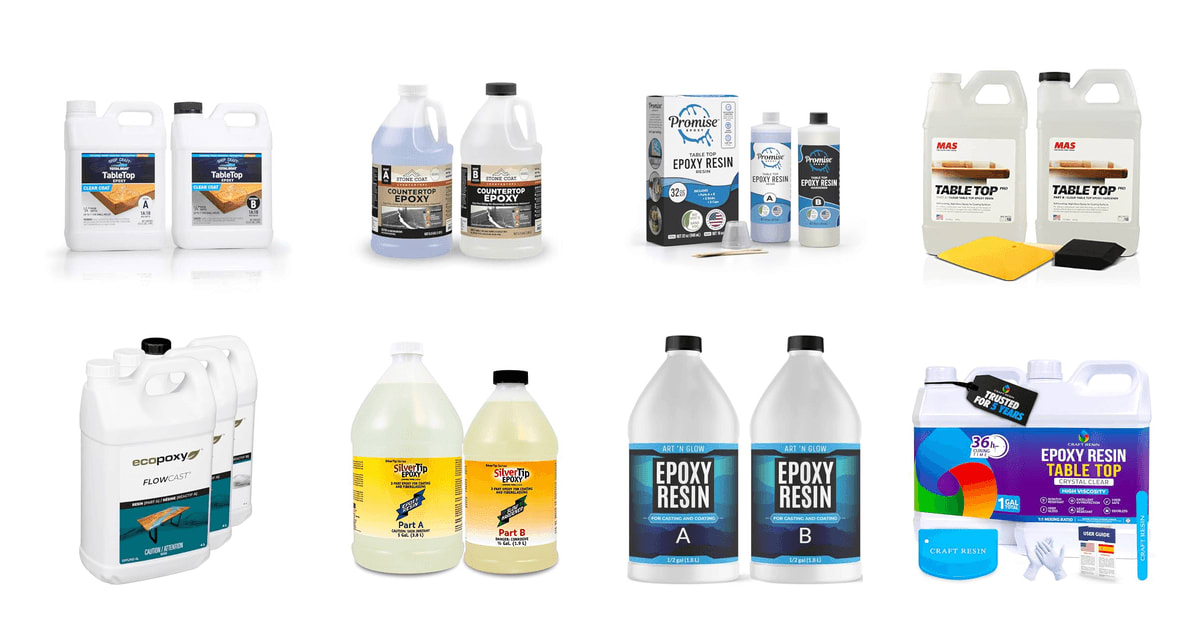
We looked at eight kits spanning table-top coating, craft casting, deep pours, low-odor indoor work and marine-grade fabrication, and sorted them by what they're actually built to do. Most people are coating a flat surface a quarter inch or less, and that's where the majority of these compete. We think that the TotalBoat Table Top Epoxy Resin Kit is the best epoxy resin kit for most people, and that the Stone Coat Countertops Clear Epoxy Resin Kit is the one to buy if you're pouring a real kitchen countertop.
Everything we recommend

Predictable, clear, and forgiving enough for a first pour

The one to use where hot pans and cleaners live
Cups, sticks and gloves included, for a first small project

The only one here that handles a two-inch single pour
At a glance
| Product | Kit Size | Mix Ratio | Price | |
|---|---|---|---|---|
| TotalBoat Table Top Epoxy Resin Kit -Top pick | 1-Gallon Kit | 1:1 | $59.99 |
| Stone Coat Countertops Clear Epoxy Resin KitAlso great | 1 Gallon | 1:1 | $126.13 |
| Promise Epoxy Table Top Epoxy Resin KitBudget pick | 32 oz | 1:1 | $25.49On sale |
 | MAS Epoxies Table Top Pro Epoxy KitAlso in lineup | 1 Gallon | 1:1 | $78.98 |
| EcoPoxy FlowCast Deep Pour Epoxy Resin KitUpgrade pick | 3.17 Gal / 12L | — | $249.96 |
 | System Three SilverTip Epoxy Resin with SlowAlso in lineup | 1.5 Gallons | 2:1 | $239.95 |
 | Epoxy Resin for Crystal Clear Casting &Also consider | 1 Gallon | 1:1 | $54.95On sale |
 | CRAFT RESIN Table Top Epoxy Resin KitAlso consider | 1 Gallon | 1:1 | $61.99 |
How we picked
Pour depth match. We separated thin coating resins from deep-pour casting resins using each manufacturer's stated maximum depth per pour, since mixing them up is the most common cause of a failed project. A kit had to be honest about its ceiling to make the guide.
Yellowing resistance. We looked for UV stabilizers and HALS additives on spec sheets, and we cross-checked against owner feedback about how pieces looked a year or more later. Resins without stabilization go amber in ambient light.
Mixing simplicity. We favored 1:1 ratios by volume, which are the most forgiving format for anyone without a digital scale. Where a kit uses a different ratio, we weighed whether the payoff justified the extra care.
Indoor safety. We checked VOC and food-safety claims against published listings and certification language, including FDA 21 CFR 175.300 compliance for anything meant for food contact. Low-odor formulas got extra weight for apartment and classroom use.
Owner failure modes. We read through owner feedback for each kit looking for repeat complaints — bubbles, slow cure, tacky surfaces — and treated recurring patterns as real characteristics rather than one-off mistakes.
Top pick
Predictable, clear, and forgiving enough for a first pour
TotalBoat Table Top Epoxy Resin Kit -
TotalBoat's table top kit mixes one-to-one, self-levels across a flat surface, and cures clear with UV stabilizers that fight yellowing. It handles bar tops, coasters, tumblers and art panels without asking you to learn a new technique first.
$59.99fromAmazonFor most projects, this is the resin that behaves the way the label says it will. Owners who've poured other brands keep coming back to that point — mix it, pour it in the evening, and it's hard and clear by morning. That predictability matters more than any single spec. A resin that cures on schedule lets you plan a second coat, and second coats are where most table tops actually get their depth.
The numbers are honest about their limits. You get a quarter inch per coat on an open surface and up to an inch in a closed mold, with about 12.8 square feet of coverage per gallon at an eighth of an inch. Work in a 70–80°F room, pour within 40 minutes of mixing, recoat after four to eight hours, and expect a full cure in 16 to 20 hours. That's fast for this category.
The 1:1 ratio by volume is the forgiving format, and it's the right call if you don't own a scale. You still need to measure — a five percent miss can leave you with a surface that never hardens. But cups with printed graduations get you there, and you don't have to do arithmetic while the clock runs.
It's BPA-free and rated for bars, restaurants and countertops, which is why it shows up on so many home bar projects. UV stabilizers are the other quiet advantage. Resins without them can go amber within a year in a sunny room, and one owner reports pieces poured years ago that still look like the day after they cured.
Flaws but not dealbreakers
Bubbles are the recurring complaint, and they're not really a defect. Owners routinely reach for a heat gun or torch after pouring, even on a thin coat. Plan on owning one.
Nothing comes in the box but resin and hardener. You'll buy graduated cups, stir sticks and gloves separately, which stings a little on a first project. And a quarter inch per coat means a deep river table is off the table — you'd be pouring layers for a week.
Also great
The one to use where hot pans and cleaners live
Stone Coat Countertops Clear Epoxy Resin Kit
Stone Coat is built for kitchen and bath surfaces rather than art projects. It's VOC-free and USDA-approved, resists heat and scratching better than general-purpose coatings, and takes metallic and mica pigments for marbled countertop effects.
$126.13fromAmazonIf you're resurfacing a kitchen or bathroom counter, buy the resin that was designed for it. Countertops face a combination nothing else does: heat, cleaning chemicals, standing water and daily abrasion, all on the same square foot. General craft resins handle none of that well over years. Owners who've done bathroom vanities, kitchen counters and even outdoor concrete with this one describe results that hold up.
It's VOC-free and USDA-approved, which is the practical reason to choose it for food-prep surfaces. That means you can work indoors without a respirator hanging off your face for a whole afternoon, and one owner specifically notes there was no odor at all. The 1:1 ratio and self-leveling behavior are the same easy format as our top pick.
Pigment compatibility is the fun part. Metallic powder, mica and glitter go straight into the mix, which is how people get the marbled and geode looks all over renovation videos. It also works on shower walls and wood slabs, so a single kit can cover a bathroom project end to end.
The brand publishes a deep library of instructional video, and owners bring it up constantly — the ones who watched first got clean results, and the ones who improvised didn't. That support is part of what you're paying for.
Flaws but not dealbreakers
It's the priciest per gallon of the general-purpose kits here, and more than one owner who tried it after a cheaper brand felt the finish wasn't different enough to justify the step up. If your project is a craft piece or a desk that never sees a hot pan, you're buying resistance you'll never use.
It scratches. Every epoxy does, and owners who love this one still say so plainly. And you'll want a torch for bubbles — that comes up repeatedly, even from people whose results turned out beautifully.
Budget pickOn sale
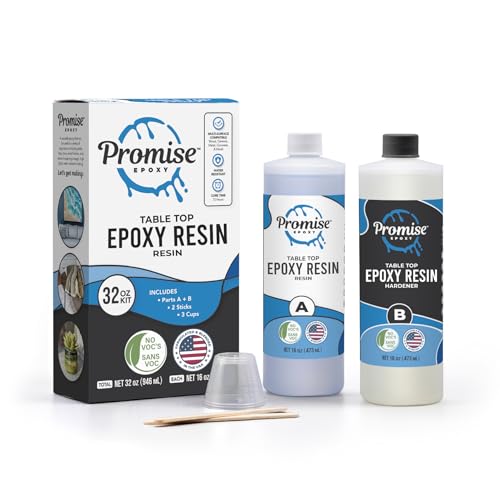
Cups, sticks and gloves included, for a first small project
Promise Epoxy Table Top Epoxy Resin Kit
The Promise Epoxy kit is a small starter bundle with mixing cups and stir sticks in the box. The formula is food-safe when fully cured, UV-resistant and self-leveling, which makes it a low-risk way to learn on coasters and trays.
$25.49fromAmazonList priceThe accessories are the whole argument here. Measuring cups and stir sticks come in the box, so a first-timer isn't guessing about what else to order. That sounds small until you've stood in a hardware aisle trying to figure out which plastic cup won't react with resin. For a first pour on a tray or a set of coasters, this removes the friction.
The formula meets FDA code 300 for food-safe finishes once fully cured, so serving trays and tumblers are fair game. It self-levels and it's UV-resistant, with the same beginner-friendly 1:1 mix ratio as the bigger kits. The brand is the combined Pro Marine and Incredible Solutions operation, so the formula itself has a long track record even if the name is newer.
Coverage is the catch. Thirty-two ounces total — 16 of resin, 16 of hardener — gets you roughly three to four square feet at a standard eighth-inch coat. That's a small table top, a tray, a few coasters or an art panel. It is not a countertop, and buying four of these instead of one gallon kit is the wrong math.
Flaws but not dealbreakers
Cure time runs long. Owners doing production craft work say it takes two to three days before pieces are ready, which is fine for a weekend project and frustrating if you're making a batch to sell.
Bubbles and working time draw the most criticism. Several owners report more bubbles than expected and less usable working time than they'd hoped — warming the bottles in water first and keeping the room at a steady 75°F helps a lot. One owner also found it less forgiving with light or translucent colors than with dark ones.
Upgrade pick
The only one here that handles a two-inch single pour
EcoPoxy FlowCast Deep Pour Epoxy Resin Kit
EcoPoxy FlowCast is a bio-based deep-pour resin for river tables, encapsulations and thick castings. Its very low viscosity lets bubbles rise out on their own, and slow curing keeps heat down so thick pours don't crack or warp.
$249.96fromAmazonDeep pours are a different problem than coating, and this is the kit that solves it. Pour a table-top resin two inches thick and it cooks itself — the exothermic reaction runs away, and you get cracking, yellowing or a ruined slab. FlowCast cures slowly with low heat buildup, which is exactly what a river table needs. Owners describe repeat success on pours around 1.75 to 2 inches thick.
The viscosity is the reason it works. It flows more like water than syrup, so trapped air rises and escapes on its own instead of staying locked in the middle of a thick casting. That's a real advantage when the bubble is an inch deep and a torch can't reach it. Working time runs up to 12 hours, which sounds absurd until you're arranging inclusions in a six-foot slab.
The bio-based, plant-derived formula is the environmental pitch, and it's a genuine one in a category built on petrochemicals. It's also UV and yellowing resistant, which matters more for a river table than for a coaster — that resin is a structural, visible part of the furniture for decades. The 3.2-gallon kit is sized for an actual table rather than a sample.
One practical note from owners: it's very thin, and it doesn't hold suspended white pigment the way thicker resins do. If you're chasing an ocean-wave look with white foam, that takes technique or a different product.
Flaws but not dealbreakers
It's the most expensive kit here by a wide margin, and it's a specialty tool. Using it as an eighth-inch countertop coating wastes material and gives you unpredictable results.
It takes forever to dry. Owners say so directly, and some describe genuine trial and error before they got pours right — temperature at the moment of pouring seems to matter a lot. If you want faster results with powdered dyes, EcoPoxy makes a quicker-curing formula instead.
Who this is for
This guide is for anyone coating or casting at home: a bar top, a resurfaced kitchen counter, a river table, tumblers, coasters, or art panels. If you've never poured resin, start small and start with a 1:1 kit — the skills transfer, and a ruined coaster costs almost nothing. If you're resurfacing a kitchen, measure your square footage first, plan on two coats, and order 10 to 15 percent extra for drips and edges. A standard 30-square-foot counter needs a lot more material than most people expect.
This isn't the guide for structural adhesives, floor coatings, or resin sold in tiny craft bottles for jewelry-scale work. We're also not covering colorants, molds, torches or respirators, though you'll want most of those. And if your room won't hold 70°F or better, wait for warmer weather. Cold is the second-most-common reason a pour never fully hardens.
How we picked
We built the picks around five things. Pour depth: the stated maximum per coat has to match what you're actually making, because a coating resin in a deep mold overheats and cracks. Yellowing: we favored formulas with UV stabilizers and HALS, then checked owner feedback about how pieces aged. Mixing: 1:1 by volume is the forgiving format, and a five percent error is enough to leave a surface permanently tacky. Indoor safety: VOC-free and low-odor formulas matter if you're working in an apartment or a classroom, and food-contact surfaces need FDA 21 CFR 175.300 compliance. Owner failure modes: bubbles, slow cures and cold-room problems come up over and over, and we treated the repeats as real.
Other epoxy resin kits worth considering
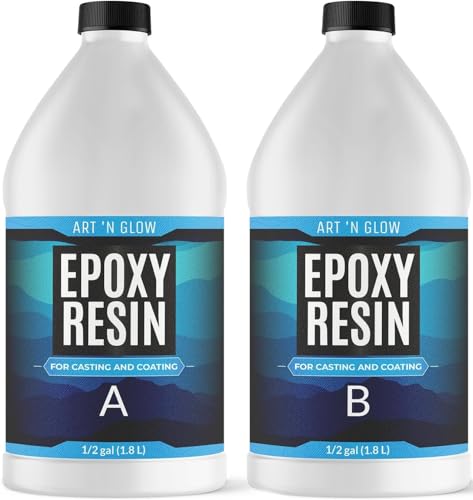
If you want the longest working time for detailed art: The Epoxy Resin for Crystal Clear Casting & ($54.95) — Art 'N Glow gives you about 40 minutes of working time, where most table-top resins gel around 20 to 25. That's the difference between calmly arranging pigment swirls and panicking. It's built to play well with craft pigments and glow-in-the-dark powders, uses proprietary bubble-release technology, and it's food safe, low odor and VOC-free at 80+ Shore D. Owners use it for everything from cheese boards to preserved wedding flowers to sealing tumblers. The trade-off is patience: a longer pot life means it takes longer to reach handling hardness than a countertop-tuned resin, and it costs more than some of the other craft-focused kits here.
If you want low viscosity at a mainstream price: The CRAFT RESIN Table Top Epoxy Resin Kit ($61.99) — CRAFT RESIN publishes a 3800 CPS mixed viscosity, among the thinnest table-top formulas in this group, and thinner resin means air escapes more easily and the surface levels itself with less fussing. It's food safe when cured, UV and scratch resistant, cures rock-hard within 36 hours and takes heat up to 203°F, with a recommended pour depth of an eighth of an inch. Owners describe a mirror finish and bubbles that pop with one quick torch pass. It ships with mixing tools, though you'll want extra gloves. The brand is newer than TotalBoat, so there's less long-term history to lean on.
The competition
These are the kits our research surfaced, not a census of the category. Epoxy is a crowded shelf, and plenty of capable brands aren't here. The ones below lost to a pick for specific reasons, but each still makes sense for a particular person.
The MAS Epoxies Table Top Pro Epoxy Kit ($78.98) — MAS Epoxies Table Top Pro is a genuinely good full-gallon kit — crystal clear, 1:1 by volume, self-leveling, and formulated for reduced VOC emissions, which matters if you're pouring in a spare bedroom or a classroom. It takes color pigments, alcohol ink and acrylics, and owners who've resurfaced worn tile counters and live-edge slabs speak highly of the finish and the company's support. It lost to TotalBoat mostly on track record and price-to-coverage rather than on any flaw. It also slows down noticeably in a room below 65°F, and no accessories come in the box. If low odor is your top priority for a coating project, this is the one to look at.
The System Three SilverTip Epoxy Resin with Slow ($239.95) — System Three SilverTip is a marine-grade epoxy that happens to be crystal clear. It cures without amine blush — the waxy white film that ruins clarity in humid or cold conditions — and its low viscosity wets out fiberglass, Kevlar, Dynel and carbon fiber. Owners building boats and working in unheated 45°F garages report clean cures where other resins would fail. It's the wrong tool for most readers here: the 2:1 ratio demands more care than 1:1, the slow hardener stretches your wait, and the blush resistance is a professional feature most craft projects never call on. If you're doing brightwork or laying glass, it's the obvious choice.
Mixing and curing notes
Two things cause most epoxy failures, and both are free to avoid. First, measure exactly — a five to ten percent miss on the mix ratio prevents the cross-linking reaction entirely, and a permanently tacky surface usually has to be sanded off completely. Use graduated cups or a scale, never your eye. Then stir a full three to five minutes, scraping the sides and bottom the whole time. Second, watch your temperature. Below about 65°F, resin cures slowly or not at all, so warm the room and the bottles before you start. For bubbles, pass a torch or heat gun six to eight inches above the surface within the first 10 to 15 minutes, before gelling starts. Expect handling hardness in a day or so, but give it around 30 days before harsh cleaners, heavy use or sustained food contact.
Questions we get
What's the difference between casting resin and table top coating resin?
Coating resins are made for thin layers — an eighth to a quarter inch per coat — and cure fast to a hard, glossy, self-leveling surface. Deep-pour casting resins are much thinner, cure slowly, and generate far less heat, which is what lets them go up to two inches in a single pour without cracking. Use a coating resin deep and it overheats and fails. Use a casting resin as a thin topcoat and you'll get an uneven, disappointing result.
Is cured epoxy actually food safe?
Epoxy that meets FDA 21 CFR 175.300 is considered food safe for incidental contact once it's fully cured, and that takes roughly 30 days — not the 24 to 72 hours it takes to feel hard. Several kits here carry food-safety certification, including Stone Coat, Promise Epoxy, Art 'N Glow and CRAFT RESIN. Check your specific product's documentation and wait out the full cure before serving anything on it.
How much resin do I need for a kitchen countertop?
Most table-top resins cover roughly 12 to 16 square feet per gallon at an eighth-inch coat. A typical 30-square-foot kitchen counter needs about 2.5 gallons per coat, and you should plan on two coats. That puts you around four to five gallons total, plus 10 to 15 percent extra for drips, edges and mistakes.
Why is my epoxy still sticky after a day?
Almost always an off mix ratio. Even a five to ten percent error stops the chemical reaction that hardens the surface, and the result never cures. The other usual suspects are a room below 65°F, under-stirring, or old hardener. A permanently tacky surface generally has to be mechanically removed, so measure precisely and stir a full three to five minutes.
Can I pour epoxy over laminate or tile counters?
Yes, as long as you prep properly. The surface needs to be clean, dry, free of grease, wax and silicone, and scuffed with 120-grit sandpaper so the resin has something to grip. On tile, skim-coat the grout lines first or they'll telegraph through the finish. Stone Coat is formulated specifically for this kind of overlay work.
Can epoxy countertops take a hot pan?
No, and you shouldn't try. Craft resins soften or discolor somewhere above 120–150°F, and a pan off the stove blows past that easily. Countertop-specific formulas handle heat better — CRAFT RESIN is rated to 203°F, for instance — but none of them are meant for direct contact with cookware out of a 400°F oven. Use trivets on any epoxy surface, always.
Why you should trust us
For this guide:
- We compared manufacturer spec sheets across all eight kits for mix ratio, maximum pour depth, coverage, viscosity, cure time and UV stabilization.
- We read published product documentation and food-safety and VOC certification claims for each formula rather than relying on marketing summaries.
- We read owner feedback across the lineup to identify which problems recur — bubbles, slow cures, cold-room failures — and weighted the repeated ones over isolated complaints.
- We read owner reviews on every listing, weighted toward the critical ones, because that is where the recurring failures show up.
- We have a systematic way of automatically fetching the latest prices, so the numbers on this page stay current.
- This is a research-focused guide, so the team may not own every product listed — though we often do own the top winners, which gives us extra context for the recommendations.
- We don't accept free products, and the retailer commission never changes which product we recommend.
Sources
Best Epoxy for Countertops — Bob Vila, Bob Vila
How to Apply Epoxy to Countertops — This Old House, This Old House
Best Epoxy Resin Kits, Tested by Editors — Popular Mechanics, Popular Mechanics
Best Epoxy Resin for Countertops — The Spruce, The Spruce
Epoxy Countertops: Pros, Cons, and Everything You Need to Know — Family Handyman, Family Handyman
Amazon product listings and owner reviews for all 8 products
Manufacturer specification pages for each product
Some passages in this guide may be paraphrased with AI help. Prices are refreshed automatically.
More like this.
Continue exploring home reviews and recommendations.

The Best Permanent LED Eave Lighting Kits
Permanent eave lights live under your roofline all year and do two jobs. Most nights they're a warm white accent that makes the house look finished and…

The Best Hurricane Preparedness Kits
A hurricane doesn't take everything at once. The power goes first, then water pressure, then the roads. What's left is you, your house, and whatever you…

The Best Aluminum Cable Deck Railing Kits
Cable railing sells itself on one thing: you stop noticing the railing and start noticing the yard. Thin horizontal cables block a fraction of the view…

The Best Concrete Crack Repair Kits for Driveways
A crack in your driveway isn't just ugly. It's an open door for water, and water is what turns a hairline into a trench. Rain seeps in, freezes, expands,…

The Best Fermentation Kits
Fermenting cabbage at home sounds complicated until you do it once. Then you realize the hard part isn't the bacteria - it's keeping your vegetables under…

The Best Dryer Vent Cleaning Kits
Your dryer vent is easy to forget. It sits behind the machine, out of sight, and it fills with lint a little more every time you dry a load. Then one day…