The Best Garmin Watches
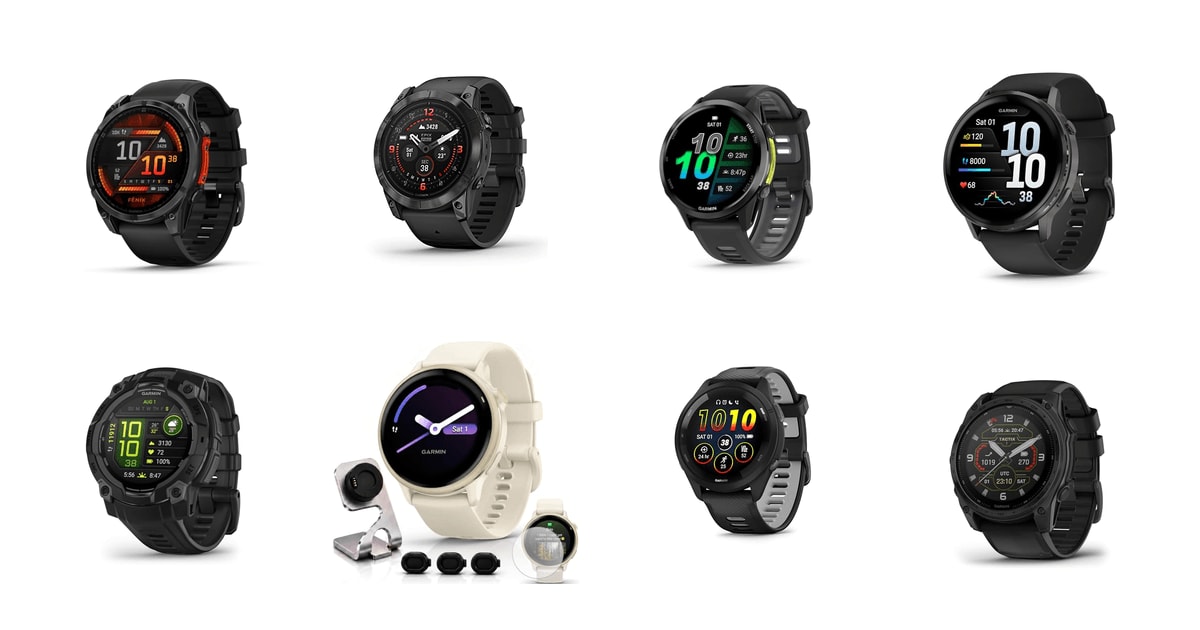
A Garmin watch earns its place on your wrist by staying out of your way. You charge it every week or two instead of every night, and it keeps counting steps, sleep, and heart rate through all of it. The data is the point: Body Battery folds HRV, stress, sleep, and activity into a single 0-100 number, and training readiness tells you whether today's hard run is a good idea. If you've bounced off watches that need a nightly top-up, this is the fix.
Garmin's catalog is genuinely confusing, though. The lineup splits across running watches, rugged outdoor watches, lifestyle watches, and tactical watches, and the feature overlap between them is enormous. Software is the other honest caveat. Owners across almost every model here mention firmware bugs, occasional freezes, and menus that take weeks to learn. Garmin ships fixes, but you should expect a settling-in period. And none of these watches match an Apple Watch for app selection or texting from your wrist.
So start with how you'll actually use it. A trail runner and a person tracking sleep want very different things, and the price spread between them is huge. We think that the Garmin fēnix 8 is the best Garmin watch for most people who want one watch to cover everything, and that the Garmin Forerunner 265 is the one to buy if you mostly run and want to spend a lot less.
Everything we recommend

Does nearly everything, if you can pay for it

Most of the running smarts for far less money

The sharpest tool for serious running and triathlon

Rugged and simple, with a screen you can finally read

Best for sleep and health if you rarely race
How we picked
Battery you'll notice. We compared Garmin's published smartwatch-mode and GPS-mode ratings against what owners report over months of daily wear. Anything under about a week of real use didn't make sense as a Garmin.
Display type and use. AMOLED now spans nearly every tier, but DC Rainmaker's analysis shows transflective panels use roughly 60-70% less power when always-on. We matched screen choice to the job rather than picking one winner.
GPS accuracy. We prioritized multi-band GPS, since DC Rainmaker measured roughly 30-50% less positional error than single-frequency chipsets in cities and dense forest. That gap matters on a wooded trail or between tall buildings.
Health metrics that act. Training readiness, HRV status, and Body Battery are what separate Garmin from Apple and Whoop, per the research. We favored models where those scores drive daily suggestions rather than just displaying a number.
Build and durability. We weighed sapphire lenses, titanium and steel bezels, and case materials against what owners say after months of wear. Scratch reports and case complaints carried real weight.
Top pickOn sale
Does nearly everything, if you can pay for it
Garmin fēnix® 8
The fēnix 8 combines a bright 1.4-inch AMOLED screen, multi-band GPS, dive and altimeter sensors, and roughly two weeks of battery in one stainless-steel package. It's the Garmin that stops you from needing a second Garmin, which is why it justifies its cost.
$960fromAmazonList priceThis is the watch you buy when you refuse to choose. Trail running, open-water swimming, recreational scuba, strength sessions, hiking with maps — it's all built in. Most of Garmin's other watches specialize. The fēnix 8 does not, and that breadth is the whole reason to spend up. If your hobbies shift every few years, you won't outgrow it.
Garmin rates it for up to 16 days in smartwatch mode and up to 47 hours with GPS running, and DC Rainmaker's testing found the 16-day figure holds up with the always-on display enabled. Owners tend to land in the 14-16 day range with normal use. That's the practical difference from an Apple Watch. CNET's comparison found Garmin devices average two to three times longer real-world battery under identical GPS workout tracking.
The 1.4-inch AMOLED is the upgrade people notice first. Owners moving up from older transflective Instinct models describe the jump in clarity as the single biggest change, and it makes maps and workout screens far easier to read mid-effort. You also get multi-band GPS, which DC Rainmaker measured as cutting positional error by roughly 30-50% versus single-frequency GPS in cities and dense forest.
The small stuff adds up. There's an LED flashlight with strobe modes, a speaker and mic for taking calls off your wrist, and off-grid voice commands that work without your phone nearby. The flashlight sounds like a gimmick until you're fumbling with a tent at 5 a.m. Training readiness pulls sleep, recovery, load, and HRV status into one score you can act on before you lace up.
Flaws but not dealbreakers
Software is the recurring complaint. Some owners report freezes and glitches serious enough to require repeated resets, and that pattern shows up in the low-star feedback more than any hardware issue. Garmin patches steadily, but you may spend your first month troubleshooting rather than training.
It's a big, expensive watch. The 47mm case is chunky on small wrists, and if you only run and sleep, you're paying for dive sensors and mapping you'll never open. The learning curve is real too — expect a few weeks before the menus feel natural.
Budget pickOn sale
Most of the running smarts for far less money
Garmin Forerunner® 265
The Forerunner 265 gives you an AMOLED touchscreen, training readiness, HRV status, and about 13 days of battery in a light 46mm case. For runners who don't need maps or titanium, it's the sensible stopping point in Garmin's lineup.
$349.99fromAmazonList priceNearly everything that makes a Garmin worth owning is here. Training readiness, HRV status, the morning report, daily suggested workouts that adapt after every run — these are the same metrics driving the flagship watches, not stripped-down versions. If you're training for a half marathon and want to know whether to push today, the 265 answers that as clearly as the fēnix does.
The battery-to-price ratio is the strongest in Garmin's range. Garmin rates it for up to 13 days in smartwatch mode and 20 hours with GPS. That covers a marathon build with a weekly long run and still leaves you charging roughly every other Sunday. RTINGS measured the AMOLED at up to 1,000 nits peak brightness, so noon sun isn't a problem.
It weighs about a third less than the fēnix 8, and runners notice. The plastic bezel and lighter build make it disappear on your wrist during a long effort, and 30+ activity profiles cover triathlon, cycling, and open-water swimming if you dabble. Owners switching from an Apple Watch consistently point to Body Battery as the feature that changed how they train.
Flaws but not dealbreakers
No built-in maps. You get breadcrumb navigation, but not the full-color routing the 970 and fēnix offer, so it's a weaker choice for unfamiliar trails. The case is also polymer rather than titanium with a sapphire lens, and it'll show scuffs sooner.
Firmware has been bumpy for some owners, with reports of Bluetooth sync trouble after updates. It generally resolves, but it's an annoyance worth knowing about.
Upgrade pick
The sharpest tool for serious running and triathlon
Garmin Forerunner® 970
The Forerunner 970 pairs Garmin's brightest AMOLED touchscreen with a titanium bezel, sapphire lens, full-color maps, and multi-band GPS. It adds running economy and running tolerance metrics that nothing else in this lineup offers.
$749.99fromAmazonIf running is the reason you're buying a watch, this is the one. Running tolerance is the standout addition — DC Rainmaker's testing found the metric tracked closely with injury-risk trends across multi-week training blocks. Running economy and step speed loss go further, though both require the HRM 600 chest monitor, sold separately. For anyone building toward a goal race, that's actionable feedback rather than trivia.
Garmin rates it for up to 15 days in smartwatch mode and 26 hours with GPS. Triathletes report roughly two weeks between charges with heavy daily use, and the built-in triathlon mode handles all three legs plus transitions without fiddling. Garmin Coach plans adapt to your performance and recovery, which matters more than another data screen.
You get full-color maps with dynamic round-trip routing, so you can wander off your planned route and the watch builds a new one at the same mileage. Combined with multi-band GPS, it's a genuinely useful tool in a new city. The titanium bezel and sapphire lens keep the weight down while resisting the scratches a polymer bezel picks up.
Flaws but not dealbreakers
It costs nearly as much as the fēnix 8 while giving up dive sensors and the rugged case. If you want one watch for running and everything else, the fēnix is the better spend.
The most interesting new metrics — running economy, step speed loss — are locked behind a chest strap you buy separately. That's an extra purchase and an extra thing to remember before a run.
Also great
Rugged and simple, with a screen you can finally read
Garmin Instinct® 3 AMOLED
The Instinct 3 AMOLED puts a bright 1.2-inch screen in a fiber-reinforced polymer case with a metal-reinforced bezel and up to 18 days of battery. It's built for job sites and trailheads where a glass-and-titanium watch makes you nervous.
$299fromAmazonThe Instinct has always been the Garmin you don't worry about. The polymer case and metal-reinforced bezel shrug off the knocks that put a scratch in a nicer watch, and owners who work with their hands keep saying it's the one they stopped babying. Now it has an AMOLED screen, which removes the main reason people skipped it.
Battery life is the reason to pick this over a fancier model. Garmin rates it for up to 18 days in smartwatch mode — longer than the fēnix 8 — in a watch that costs a fraction as much. Multi-band GPS with SatIQ is included, plus a 3-axis compass and barometric altimeter, so it navigates properly rather than approximately.
There's no touchscreen, and that's a design choice rather than a cost cut. Buttons work with gloves, wet hands, and sweat, and owners coming from Samsung and Pixel watches report adapting within a week. If you've ever fought a touchscreen in the rain, you'll understand the appeal.
Flaws but not dealbreakers
The 1.2-inch screen is the smallest here, and the interface is more basic than the fēnix or Forerunner line. Dense data screens get cramped.
You give up mapping, and the polymer case looks like sporting goods rather than a watch. That's fine on a trail and less fine in a meeting.
Runner-up
Best for sleep and health if you rarely race
Garmin Venu® 4
The Venu 4 focuses on health rather than performance: sleep coaching, a health status feature that flags unusual changes, and lifestyle logging for caffeine and alcohol. Garmin rates it for up to 12 days, in a 45mm stainless-steel case that reads as a normal watch.
$499fromAmazonBuy this if your goal is sleeping better, not running faster. Sleep coaching gives you a score plus specific recommendations, and it factors in your circadian rhythm rather than just counting hours. Tom's Guide's testing of the Venu 4 found sleep stage tracking within about 90% agreement to the polysomnography reference data Garmin cites for the feature. That's strong for a wrist device.
The lifestyle logging is the feature people underestimate. You log caffeine and alcohol, then see reports in Garmin Connect showing how those choices moved your sleep, stress, and HRV. It's less about the tracking and more about the pattern you notice after a month. Health status watches heart rate, HRV, and skin temperature for changes that might mean you're getting sick.
It looks like a watch. The stainless-steel design and 45mm case don't announce that you're training for anything, which matters if you wear it to work. Owners switching from Fitbit repeatedly cite the depth of data as the reason they don't miss it, and the built-in flashlight turns out to be the surprise favorite.
Flaws but not dealbreakers
Menu navigation frustrates owners months in — things aren't always where you'd expect. There are also scattered reports of serious failures, including screens going black and a botched reboot triggering an emergency alert.
It's the wrong watch for a serious athlete. You don't get multi-band GPS or the training-load depth of the Forerunner line, so hard training blocks will outgrow it.
Who this is for
Buy a Garmin if you care about training data and hate charging things. Runners, hikers, cyclists, swimmers, and anyone tracking recovery will get more out of these watches than out of a general-purpose smartwatch. The same goes for people who wear a watch to bed — Garmin's sleep and HRV tracking is the reason many owners here left Fitbit and Apple behind. If you're new to all of this, the mid-range models give you nearly everything without the flagship spend.
Skip Garmin if you mostly want apps, texting, and a watch that feels like a small phone. Apple and Samsung do that better, and Garmin's app ecosystem is thin by comparison. This guide covers Garmin's current GPS smartwatches across running, outdoor, lifestyle, and tactical lines. It doesn't cover Garmin's cycling computers, handheld GPS units, kids' trackers, or fitness bands, and it doesn't rank Garmin against other brands beyond noting where the differences fall.
How we picked
We built this guide from Garmin's spec sheets, published testing from DC Rainmaker, RTINGS, Tom's Guide, Wired, and CNET, and recurring themes in owner feedback. Battery: we compared rated smartwatch and GPS figures against what owners report over months, and treated anything under a week as a non-starter. Display: AMOLED spans nearly every tier now, but transflective panels use roughly 60-70% less power always-on, so we matched screen to use case. GPS: multi-band was close to mandatory, since it cuts positional error by roughly 30-50% in cities and forest. Health metrics: we favored watches where training readiness, HRV status, and Body Battery shape daily guidance. Build: sapphire, titanium, and case durability got weighed against long-term owner reports of scratches and failures.
Other garmin watches worth considering
If you want the biggest AMOLED screen and large wrists to match: The Garmin epix Pro ($597) — The epix Pro (Gen 2) Sapphire in 51mm is built for people who find most watches too small. You get the same 1.4-inch always-on AMOLED as the fēnix 8, plus a sapphire lens and titanium bezel, with hill score and endurance score layered on top of the usual training readiness and HRV tracking. Battery is the trade: DC Rainmaker puts the 47mm version at roughly 6 days with AMOLED always-on, against up to 31 days in battery saver. Owners of the 51mm commonly report 7-10 days with heavy notifications. It's an older generation than the fēnix 8, so you give up the newest dive and voice features, but the screen and build hold up. Glitchy firmware comes up here too.
If you need tactical features and the longest battery here: The Garmin tactix® 8 Solar ($1,149.99) — The tactix 8 Solar is the specialist. Wired noted it supports encrypted GPS with M-Code compatibility signaling and jam-resistant tracking, which no consumer fēnix or epix offers. You also get night vision goggle compatibility, stealth mode, a kill switch, jumpmaster, and a preloaded Applied Ballistics solver. Solar charging pushes Garmin's rating to 48 days in smartwatch mode and 149 hours with GPS, assuming roughly 3 hours daily in 50,000 lux conditions. In practice, owners with less sun report closer to 19-20 days rather than the headline figure. It's the most expensive watch here and the 51mm titanium case is heavy, so it only makes sense if the tactical toolkit is genuinely part of your job.
More from Garmin
Here's the rest of what our research turned up in Garmin's current lineup. This isn't every watch Garmin sells — it's the models that came up alongside our picks, each suited to a different kind of shopper.
The Garmin vivoactive 6 ($309.99) — The vivoactive 6 is the entry point, and it's aimed squarely at someone buying a first fitness watch. You get an AMOLED display, up to 11 days of battery, Body Battery, sleep coaching, HRV status, and more than 80 sport apps covering everything from Pilates to wheelchair activities. At 42mm it's the smallest case in this guide, which suits smaller wrists — though owners upgrading from a vivoactive 4 have been caught off guard by the size drop. This particular listing is a bundle with a charging dock and USB-C charger, and some buyers find the accessories redundant given how fast the watch charges. If you want Garmin's health tracking without training-load depth or multi-band GPS, this is where to start.
Is Garmin worth it?
Garmin's reputation rests on two things: battery life and data you can act on. CNET's comparison found Garmin devices average two to three times longer real-world battery than Apple Watch under identical GPS workout tracking, and that gap shows up constantly in owner feedback — people who switch describe not charging nightly as the change they didn't expect to care about. The health science holds up reasonably well too. RTINGS lab testing found Garmin's optical heart rate sensors stay within 5 bpm of chest-strap ECG readings during steady-state cardio on most models. Body Battery, which blends HRV, stress, sleep, and activity into a single score, is the feature owners cite most often as the reason they stay. The honest counterweight is software. Firmware bugs, freezes, and confusing menus come up across nearly every model in this lineup, and Garmin's app ecosystem is thin next to Apple's or Samsung's. You're buying a training instrument that also tells time, not a wrist computer.
Not set on Garmin?
If you're not committed to Garmin, this one compares fitness watches across brands so you can weigh app selection and phone integration against battery life. our full smart fitness watch guide →
For navigation on a bike, a handlebar-mounted unit is far easier to read at speed than anything on your wrist. our motorcycle GPS guide →
Setup and living with it
Give yourself two weeks before you judge any of these. The menus are deep, and almost every owner describes a period of hunting for settings before things click. Update the firmware right away, then again after a week — most of the freezing complaints trace back to older builds. Rinse the case and band with fresh water after swimming or a sweaty summer run, especially with silicone bands, since salt and sweat cause most of the skin irritation people report. Wear it snug enough that the optical sensor sits flat against your wrist, about a finger's width above the bone; a loose fit is the single biggest cause of bad heart rate data. Charge to full before a long trip rather than topping up daily, and turn on battery saver mode if you're heading somewhere without power. The bands on QuickFit models swap in seconds without tools.
Questions we get
What's the best Garmin watch for running?
The Forerunner 970 if you're training seriously — it adds running tolerance, running economy, and full-color maps. The Forerunner 265 covers the same core training readiness and HRV metrics for considerably less. Most runners will be happy with the 265 unless they're chasing a specific goal race.
Is the fēnix 8 worth it over the epix Pro (Gen 2)?
The fēnix 8 is the newer generation and adds dive sensors, a speaker and mic for calls, and off-grid voice commands. The epix Pro's advantage is the 51mm case, which fits large wrists better. If neither of those specifics matters to you, the fēnix 8 is the more complete watch.
Which Garmin has the longest battery life?
The tactix 8 Solar, rated for up to 48 days in smartwatch mode with solar charging — though that assumes roughly 3 hours a day outside in 50,000 lux conditions. Without that much sun, owners report closer to three weeks. Among non-solar models, the Instinct 3 AMOLED leads at up to 18 days.
What's the difference between Garmin's AMOLED and transflective displays?
AMOLED is brighter, sharper, and better in dim light. Transflective (MIP) panels use ambient light instead of backlighting and consume roughly 60-70% less power when running always-on, per DC Rainmaker's analysis. Pick AMOLED for everyday visibility and looks, transflective for multi-week battery on long trips.
Which Garmin watches have multi-band GPS?
The fēnix 8, epix Pro, Forerunner 970, Instinct 3, and tactix 8 all include it. DC Rainmaker measured roughly 30-50% less positional error versus single-frequency GPS in cities and dense forest. If you run between tall buildings or under tree cover, it's the spec worth paying for.
How accurate is Body Battery and Garmin's health tracking?
Body Battery blends HRV, stress, sleep, and activity into a continuously updated 0-100 score, according to Garmin's published health science documentation. RTINGS lab testing found Garmin's optical heart rate sensors stay within 5 bpm of chest-strap ECG during steady-state cardio on most models. Treat the numbers as good trend data, not medical readings.
Why you should trust us
For this guide:
- We read Garmin's published specifications for every watch in this lineup and compared the rated battery and GPS figures against each other.
- We reviewed testing and analysis from DC Rainmaker, RTINGS, Tom's Guide, Wired, and CNET covering battery life, GPS accuracy, heart rate deviation, and sleep tracking.
- We looked for recurring themes in owner feedback, particularly around firmware stability, screen visibility, and real-world time between charges.
- We read owner reviews on every listing, weighted toward the critical ones, because that is where the recurring failures show up.
- We have a systematic way of automatically fetching the latest prices, so the numbers on this page stay current.
- This is a research-focused guide, so the team may not own every product listed — though we often do own the top winners, which gives us extra context for the recommendations.
- We don't accept free products, and the retailer commission never changes which product we recommend.
Sources
Garmin Fenix 8 Review, DC Rainmaker
Garmin Epix Pro (Gen 2) In-Depth Review, DC Rainmaker
Garmin Forerunner 970 Review, DC Rainmaker
Best Garmin Watches Tested, RTINGS.com
Garmin GPS Accuracy Testing: Multi-band vs Standard, DC Rainmaker
Best Smartwatches and Fitness Trackers, Wired
Garmin Instinct 3 Solar Review, DC Rainmaker
Garmin Venu 4 Review, Tom's Guide
Garmin vs Apple Watch: Which Should You Buy, CNET
Garmin Tactix 8 Review, DC Rainmaker
Garmin Forerunner 265 Review, RTINGS.com
Garmin Vivoactive 6 First Look, Tom's Guide
Amazon product listings and owner reviews for all 8 products
Manufacturer specification pages for each product
Some passages in this guide may be paraphrased with AI help. Prices are refreshed automatically.
More like this.
Continue exploring electronics reviews and recommendations.

The Best Emergency Weather Radios
Severe weather doesn't wait for you to check your phone. A NOAA weather radio sits in the corner of a room and does one job: it makes noise when the…

The Best Motorcycle Bluetooth Intercoms
A good intercom changes what a ride feels like. Instead of pulling over at every fork to shout through a raised visor, you just talk. You hear…

The Best Trailer Wiring Harness Adapters
Trailer wiring is the part of towing nobody thinks about until the lights don't work. You hitch up the boat trailer at 5 a.m., flip on the turn signal,…

The Best Snow Foam Cannons
A foam cannon is the simplest insurance you can buy for your paint. It bolts onto a pressure washer, mixes soap into a thick lather, and lays that lather…

The Best Car Ramps for Low-Profile Cars
Sliding under your own car for an oil change should take twenty minutes, not an afternoon of worry. The problem with a low car is the first few inches of…

The Best GoPro Cameras and Accessories
An action camera lives a hard life. You strap it to a helmet, drop it in salt water, leave it in a hot car, and then ask it to shoot footage steady enough…