The Best Gifts for Stargazers
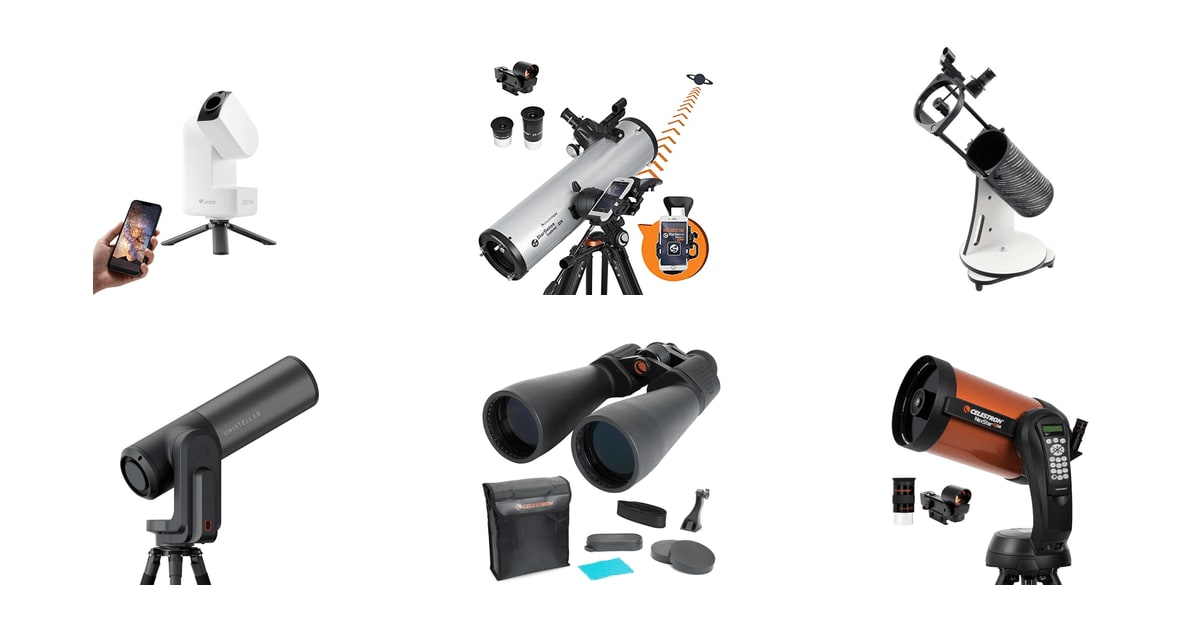
Most telescope gifts fail for the same reason. The box promises 400x magnification, and the thing inside can't show a sharp Moon. What actually matters is aperture — the width of the lens or mirror. A 130mm mirror gathers roughly four times the light of a 65mm one, per Sky & Telescope, and light is what turns a gray smudge into a galaxy. The other thing that matters is whether your recipient can point the thing at something on the first try, in the dark, without help.
No telescope hands over the Hubble picture printed on the box. From a typical backyard, planets look small and crisp, and galaxies look like faint cotton. Skies are the other problem. A study in Science Advances found that 99% of people in the U.S. and Europe live under light-polluted skies, and that 80% of North Americans can't see the Milky Way from home. Smart telescopes work around that by stacking exposures. But then your recipient is looking at a phone, not through an eyepiece, and somebody has to be fine with that trade.
So shop for the person, not the spec sheet. A tinkerer who likes learning things wants a mirror and a star chart. A photographer wants a scope that stacks images while they stand there with a coffee. A kid wants something light enough to carry outside alone. Our favorite gift here is the ZWO Seestar S30 Pro, and the Celestron StarSense Explorer DX 130AZ is the safer choice when you're not sure whether they'd rather stare at a screen or through an eyepiece.
Everything we recommend
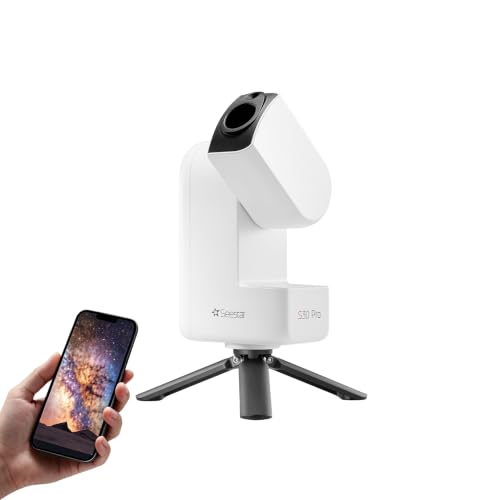
Real galaxy photos on the first clear night, no learning curve
For the friend who posts every full moon but owns no telescope
$699 from Amazon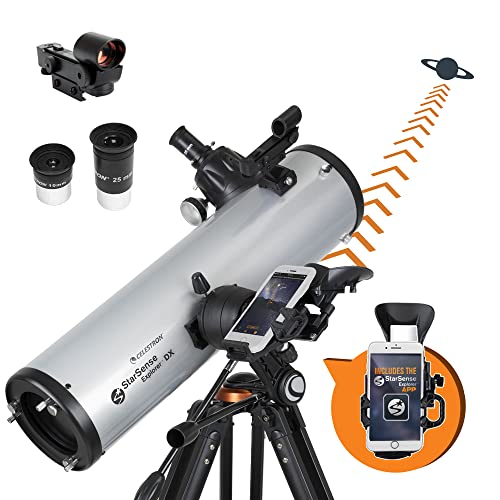
An app walks them to the target, then a real eyepiece view
For the kid who wants to look through a telescope, not a phone
$414.99 from Amazon
Serious mirror, no electronics, and it sits on the picnic table
For the tinkerer who'd rather learn the sky themselves
$305 from Amazon
Eight inches of aperture that finds and tracks targets for you
For the hobbyist ready to step up from a starter scope
$1,499.99 from Amazon
A low-commitment start that's just as useful in daylight
For the curious one who also watches hawks and shorebirds
$119.95 from Amazon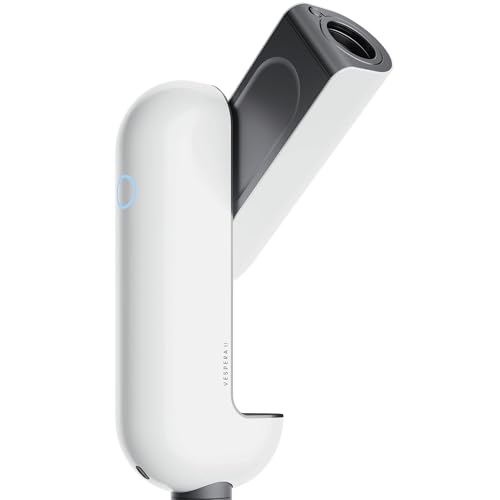
For the design-minded gadget lover with a suburban yard
$1,590 from Amazon
For the amateur who wants their data used in real research
$2,899 from AmazonHow we picked
Aperture first. We compared the actual lens and mirror diameters on every spec sheet, because light gathering scales with the square of aperture. Advertised magnification told us nothing useful, so we ignored it.
First-night setup. We favored designs that a beginner can use on the night they open the box — app-guided aiming, self-alignment, or a base that ships assembled. Published reviews and owner feedback both flagged setup as the moment people quit.
City-sky performance. Since most recipients live under light-polluted skies, we weighted live-stacking smart telescopes and built-in light pollution filters. Published reviews report recognizable galaxy and nebula images from ordinary suburban backyards.
Unwrap-and-go completeness. We looked at what's actually in the box versus what your recipient has to buy before the first clear night. Owner feedback here is loud about missing tripods, cables, power supplies and weak eyepieces.
Room to grow. We preferred gear with a sensible upgrade path — standard eyepiece sizes, accessory support, or a mount that can carry more later. A gift that gets outgrown in a month isn't much of a gift.
Our favorite gift
Real galaxy photos on the first clear night, no learning curve
ZWO Seestar S30 Pro Smart Telescope
For the friend who posts every full moon but owns no telescope
The Seestar S30 Pro finds targets, tracks them, and stacks its own exposures into color images of nebulae and galaxies on your recipient's phone. It weighs under four pounds and asks for no astronomy knowledge at all, which makes it the easiest telescope here to hand to a total beginner.
$699fromAmazonThis is the rare telescope that works on the very first night. Your recipient unfolds it, opens the app, and taps a target. The scope handles its own alignment, finds the object, and keeps tracking it as the sky turns. There's no finderscope to align, no star names to learn, no fumbling with a red flashlight and a chart. For a gift, that first-night success matters more than any number on the box.
It's also genuinely small. At about three and a half pounds, it fits in a daypack next to a water bottle, so it can go to a campsite, a beach or an apartment roof. That's the part apartment dwellers care about most. A tabletop reflector means hauling a table too; this is something you grab on the way out the door.
The photos are the whole point. The S30 Pro stacks short exposures into one brighter frame, so nebulae and galaxies come up in color on the screen instead of as gray hints in an eyepiece. Apochromatic optics and built-in light pollution filters help in bright suburbs, where most people live. Two cameras cover both deep-sky targets and wide Milky Way or star-trail shots, and the app stitches mosaics with a tap.
And it unwraps well, which isn't a small thing. It's a clean white slab with no loose eyepieces to lose, no tube to collimate, no eight AA batteries to hunt down at the last minute. If your recipient is the kind of person who shares photos, they'll have something worth sharing within an hour of opening the box.
Flaws but not dealbreakers
You can't look through it. There's no eyepiece, so the entire experience happens on a phone or tablet. Some people find that hollow, and fairly so — part of the appeal of a telescope is photons landing on your own retina. If your recipient has ever said anything wistful about peering through a real telescope, give them the StarSense instead.
The documentation is thin. Owners consistently report that the manual explains what the scope does without explaining how to do it, and a few have hit snags setting up the app account the scope needs. Anyone comfortable with a smartphone gets past that, but be available for one setup call. Planets also stay small here; this is a wide-field imager, not a planetary scope.
Best for beginnersOn sale
An app walks them to the target, then a real eyepiece view
Celestron StarSense Explorer DX 130AZ Smartphone Guided
For the kid who wants to look through a telescope, not a phone
This 130mm reflector uses your recipient's phone to recognize the star patterns overhead, then walks them to targets with arrows on screen. They get app-assisted aiming plus a true through-the-eyepiece view of Jupiter, Saturn and the Orion Nebula, without learning a single constellation first.
$414.99fromAmazonList priceYour recipient drops their phone into the dock and opens the app, which reads the sky through the phone camera and works out where the tube is pointing. Arrows appear on screen. They push the telescope until the bullseye turns green, look in the eyepiece, and Saturn is sitting there. Celestron and Wirecutter both put that alignment at under three minutes.
It's the best of both worlds for a first real telescope. The app removes the step where beginners quit — finding anything at all — while the 5-inch mirror still shows Jupiter's cloud bands and the Orion Nebula with your own eye. Entry-level motorized GoTo scopes need ten to fifteen minutes of two-star alignment and some knowledge of star names. This needs neither, and nothing on it can run out of firmware support.
The app also decides what to look at. It builds a short list of what's actually up tonight from your location, so a beginner isn't scrolling an endless catalog wondering what a globular cluster is. Dual-axis slow-motion knobs make the small nudges easy once they're on target. Both things matter more than they sound for someone who has never used a telescope before.
It is a full-size instrument, though. Figure roughly 18 pounds with the tripod and about four feet tall when set up. That's a plus for a family with a backyard and a minus for a studio apartment with one closet. Think about where it will live between clear nights before you buy it for someone.
Flaws but not dealbreakers
The tripod is the weak part. Owners who push to high magnification describe a shaky image that needs a second to settle after every touch, and planetary photography through it is frustrating for that reason. The two included eyepieces work but are plain; a better eyepiece is the natural first add-on gift.
Setup trips some people up. A minority of owners report a confusing first hour, occasional quality-control misses out of the box, and mirror collimation they weren't expecting to deal with. The app also wants a reasonably current phone to recognize star fields reliably. If your recipient isn't patient with instructions, plan on helping for the first session.
The DX 130AZ comes with a two-year US warranty and unlimited access to Celestron's US-based support team.
Best budget gift
Serious mirror, no electronics, and it sits on the picnic table
Sky-Watcher Sky-Watcher Heritage 130mm Tabletop Dobsonian 5-inch
For the tinkerer who'd rather learn the sky themselves
A 5-inch parabolic mirror in a collapsible tabletop base, assembled in the box. There's no app, no motor and no battery — just a well-made reflector that shows Saturn's rings and lunar craters to anyone willing to aim it by hand.
$305fromAmazonThe mirror is the whole story here. The Heritage 130 uses a 130mm parabolic primary, and the long-running consensus among Cloudy Nights reviewers is that it gives sharp, coma-free stars right across the field — optics you'd usually pay several times as much to get. Aperture is what reveals Saturn's rings, Jupiter's moons and the brighter star clusters, and this has plenty of it in a box you can carry with one arm.
It arrives assembled. Tube and base ship as a single tabletop unit, so all your recipient does is screw on the red-dot finder and walk outside. The truss tube collapses for storage, which matters when the scope has to share a closet. Nothing charges, updates or pairs. For someone who doesn't want another device in their life, that's the appeal.
The catch is the word tabletop. Set on the ground, the eyepiece sits around knee height, so plan on a picnic table, a cooler or a sturdy crate. Aiming is manual too: you nudge the tube, and at high power the object drifts out of view within a minute or two. Some people find that manual rhythm relaxing. Others find it maddening, so know your recipient.
Flaws but not dealbreakers
The two included eyepieces are the usual budget pair — fine for the Moon, uninspiring on planets. Most owners upgrade one of them eventually, and that makes an easy follow-up gift.
There's no app and no tracking, so this is the pick that asks the most of your recipient. A few owners describe a rough first setup and a blurry initial view, which usually comes down to focus and finder alignment rather than the optics. Pair it with a planisphere or a free sky app so they have somewhere to start.
Sky-Watcher warrants the telescope against defects in materials and workmanship for two years.
Best splurge
Eight inches of aperture that finds and tracks targets for you
Celestron NexStar 8SE Computerized Telescope
For the hobbyist ready to step up from a starter scope
The NexStar 8SE pairs 8-inch Schmidt-Cassegrain optics with a computerized mount that slews to any of 40,000-plus catalogued objects and tracks it automatically. Alignment means centering three bright stars, no names required, which puts a lot of aperture in reach of someone still learning the sky.
$1,499.99fromAmazonEight inches of aperture changes what your recipient sees. Cloud bands on Jupiter get texture, the gap in Saturn's rings becomes obvious on a steady night, and globular clusters resolve into individual stars instead of fuzz. This is the point where someone stops looking at objects and starts studying them. It's also the most expensive pick in this guide, and it should go to somebody who has already shown they're hooked.
SkyAlign is what makes a computerized scope giftable. Your recipient centers any three bright stars or planets — they don't need to know which ones — and the mount figures out where it is. After that, the hand control takes them to any object in its 40,000-plus database and the motors keep it centered while they look. Tracking matters at high power, where an untracked target crosses the field in seconds.
It packs down into a tube, a single-arm fork mount and a tripod, and the whole thing runs a little under 24 pounds. That's a two-trip carry to the driveway and an easy fit in a car trunk for a dark-sky run. Compared with a full equatorial rig, it's remarkably manageable. Compared with the Seestar, it's a commitment.
Plan on buying it a power supply. It runs on eight AA batteries out of the box, and owners are nearly unanimous that alkalines drain fast once the motors are slewing all evening. An AC adapter or a portable power pack fixes it and makes a sensible add-on to the gift. The mount also accepts Celestron's wireless and GPS accessories later, so there's room for the hobby to grow.
Flaws but not dealbreakers
The included accessories don't match the optics. The stock eyepiece and red-dot finder are basic, and the hand controller's interface feels like older technology next to a phone app — a few owners say so bluntly. Budget for one good eyepiece and, ideally, a proper finder.
The single-arm alt-azimuth mount is built for looking, not for long exposures. Serious astrophotography needs an equatorial setup, so this isn't the right gift for someone whose real goal is deep-sky imaging. It's also the bulkiest thing here, and the tube needs to cool to outdoor temperature before views sharpen up.
Celestron includes a two-year warranty and unlimited US-based technical support with the NexStar 8SE.
Safest bet
A low-commitment start that's just as useful in daylight
Celestron SkyMaster 25x70 Binoculars for Astronomy
For the curious one who also watches hawks and shorebirds
These are big 70mm binoculars with 25x magnification, meant for sweeping star fields, lunar craters and Jupiter's moons from a tripod. They're the low-pressure gift: if your recipient never gets serious about astronomy, they'll still use them for birds, boats and the far end of a stadium.
$119.95fromAmazonBinoculars are the most underrated astronomy gift. Two eyes see more comfortably than one, and there's nothing to align or collimate — your recipient looks up, points, and sees the Pleiades spread across the field or Andromeda as a soft oval. Experienced observers keep a pair around for exactly this kind of casual sweeping, long after they own a telescope.
The 70mm objectives and BaK-4 prisms are what make these work after dark. More glass means more light, and 25x is enough reach to show craters along the Moon's terminator and the four bright moons of Jupiter strung out beside it. The rubber-armored, water-resistant body also survives being tossed in a car door pocket, which is where binoculars actually live.
Give them a tripod at the same time. At 25x and well over three pounds, these are not a handheld instrument — every heartbeat shows in the view. The built-in ¼-20 socket attaches to any photo tripod in seconds, and that one accessory is the difference between a gift they use and one they shelve. No tripod comes in the box.
The real argument for these as a gift is risk. If your recipient turns out to love the night sky, they'll want a telescope next and these stay useful as a finder. If the interest fades after two clear nights, you've still given them something they'll take to a game or a trailhead. Nothing else here fails that gracefully.
Flaws but not dealbreakers
The classic astronomy recommendation is a 7x50 or 10x50, and for good reason. A 7x50 produces a roughly 7mm exit pupil that matches a fully dark-adapted eye, per Sky & Telescope, while these give about 2.8mm. Faint objects look dimmer and the field is narrower, so you're trading wide, bright sweeping for magnification and reach.
Quality control varies. Some owners report a pair that arrived out of collimation or a focus wheel with a bit of play, and their advice is to check both against a distant object in daylight right away. If something's off, Celestron's limited lifetime warranty covers it, but that's a return trip you'd rather your recipient skip.
Celestron backs the SkyMaster line with a limited lifetime US warranty and US-based technical support.
Who this is for
This guide shops for the person who keeps mentioning the meteor shower, the kid who has memorized the planets in order, and the hobbyist whose starter scope has quietly stopped coming out of the closet. It covers visual telescopes, smart imaging telescopes and astronomy binoculars — the things you'd actually wrap. It doesn't cover eyepiece sets, star projectors, meteorite fragments or the endless space-themed novelty aisle, and it isn't the place to look for observatory-grade equatorial mounts.
Match the gift to the relationship. For a close friend, partner or child, you can risk something that asks a little of them, like the tabletop Dobsonian or the app-guided reflector — you'll be around to help on the first night. For a colleague, a new in-law or anyone whose free time is a mystery, the binoculars are the graceful choice, because they stay useful even if the stargazing phase never arrives. And if your recipient lives in a fifth-floor walkup with no yard, skip the four-foot tripods entirely and give them something they can carry to the roof in one hand.
How we picked
We built the list around a few things that decide whether a telescope gets used or shelved. Aperture: we compared real lens and mirror diameters and ignored advertised magnification, since light gathering rises with the square of the aperture. First-night setup: app-guided or self-aligning designs earned priority, because finding objects is where beginners give up. City skies: with 99% of Americans and Europeans living under light pollution, we weighted live stacking and built-in filters. What's in the box: we checked whether a tripod, power supply and usable eyepieces are included or another purchase. Room to grow: standard accessories and a mount with headroom keep the hobby going past the first month.
Other gifts for stargazers worth considering
If you want a smart telescope that looks like an object worth displaying: The Vaonis Vespera II Exploration Station ($1,590) — The Vespera II is Vaonis's take on the same idea as the Seestar — a sealed, self-calibrating imaging station you run entirely from a phone — wrapped in a shape that wouldn't look out of place on a bookshelf. Its Sony IMX585 sensor and live stacking produced publication-quality nebula images from suburban skies in about 20-minute sessions in Digital Camera World's review. It's water resistant and shuts itself off in rain, which is reassuring for a device left running in a yard. What it gives up is value for the effort: owners describe slower calibration and target acquisition than the Seestar, shorter battery life than the original Vespera, and a listing that has left several people surprised that the tripod and charging cable weren't in the box. Check what your seller actually ships before you wrap it.
More good gifts
These are the other products our research surfaced in this category, not a complete census of what's for sale. Each one suits a specific recipient better than our picks do, so read them as alternatives rather than runners-up.
The Equinox 2 - UNISTELLAR Smart Telescope ($2,899) — The Unistellar Equinox 2 is the smart telescope for the recipient who wants to contribute something. Its 114mm f/4 mirror reaches a limiting magnitude around 18.2, it exports RAW and FITS files for people who process their own data, and Unistellar runs formal campaigns with the SETI Institute and NASA on asteroid occultations and exoplanet transits — amateur observations from these scopes have appeared alongside professional results in peer-reviewed papers. An 11-hour battery and 64GB of storage support long sessions. It's app-only, though, with no eyepiece at all, and owner feedback is genuinely mixed: some report excellent deep-sky results within an hour of setup, while others struggled with focus and app behavior. Give it to the methodical hobbyist who reads manuals for fun, not to the person opening their first telescope.
What else to put in the box
A telescope alone makes an incomplete gift, and the extras are cheap by comparison. A red flashlight keeps your recipient's night vision intact while they read a chart, and a planisphere or a good sky app gives them something to aim at on the first night. The Heritage needs a sturdy table; the SkyMaster needs a photo tripod; the NexStar 8SE really wants an external power supply instead of AA batteries. One better eyepiece transforms any of the visual scopes. Then add the thing nobody thinks to give: an offer to come stand outside with them for the first hour. Beginners quit because the first session goes badly, not because the gear was wrong.
Questions we get
What's the best telescope gift for someone with no astronomy experience?
Either a smart telescope like the ZWO Seestar S30 Pro or an app-guided scope like the Celestron StarSense Explorer DX 130AZ. Both eliminate the part beginners find impossible, which is locating anything in a dark sky. Pick the smart scope if your recipient would enjoy sharing photos, and the StarSense if they want to look through an eyepiece with their own eye.
Should I give binoculars or a telescope?
Give binoculars if you're not certain the interest will stick. They need no setup, work for wildlife and events in daylight, and still show the Pleiades, lunar craters and Jupiter's moons. A 7x50 or 10x50 is the classic handheld choice; the SkyMaster 25x70 reaches further and shows more, but it needs a tripod to be usable.
What magnification do you need to see Saturn's rings?
Only about 25x to 30x, according to Sky & Telescope and NASA, which surprises almost every gift buyer. Any telescope with 60mm or more of aperture and decent optics will show them on a steady night. This is why boxes advertising 400x magnification are a warning sign rather than a selling point — the number is achievable and the image at that power is mush.
Can a beginner telescope show galaxies and nebulae, or just the Moon and planets?
It can show them, but not the way the box art suggests. Through an eyepiece, the Orion Nebula and the Andromeda Galaxy appear as faint gray shapes, and your eye sees no color at those light levels. Smart telescopes get around this by stacking many short exposures into one image, which is how they produce color pictures of the same objects from an ordinary backyard.
What's the best astronomy gift for someone in a city with heavy light pollution?
A smart telescope with live stacking and built-in light pollution filters, like the Seestar S30 Pro or the Vespera II. Published reviews report recognizable galaxy and nebula images from suburban skies with these, which no eyepiece can manage under the same conditions. It's a real problem worth designing the gift around: a study in Science Advances found that 80% of North Americans can't see the Milky Way from home.
Do they need a computerized GoTo telescope, or is a manual Dobsonian better?
It depends entirely on temperament. A manual Dobsonian like the Heritage 130 puts more aperture in your recipient's hands and teaches them the sky, but they have to hunt for objects and re-aim every couple of minutes. A computerized mount like the NexStar 8SE's finds and tracks targets automatically, which is the difference between glancing at Saturn and studying it — at the cost of weight, power and setup time.
Why you should trust us
For this guide:
- We read published reviews from Space.com, Digital Camera World, Wirecutter and Sky & Telescope alongside the manufacturer spec sheets and Amazon listings for every product here.
- We compared apertures, focal ratios, mount types and included accessories on paper rather than under the sky, since this guide is built from research rather than firsthand use.
- We also read owner feedback for recurring themes — thin manuals, shaky tripods, drained batteries and accessories missing from the box — and let those patterns shape the flaws and the add-on advice.
- We read owner reviews on every listing, weighted toward the critical ones, because that is where the recurring failures show up.
- We have a systematic way of automatically fetching the latest prices, so the numbers on this page stay current.
- This is a research-focused guide, so the team may not own every product listed — though we often do own the top winners, which gives us extra context for the recommendations.
- We don't accept free products, and the retailer commission never changes which product we recommend.
Sources
Best Telescopes 2026 — Space.com, Space.com
The Best Telescopes for Beginners — Wirecutter, Wirecutter / NYT
Telescope Buying Guide — Sky & Telescope, Sky & Telescope
Best Smart Telescopes 2025 — Digital Camera World, Digital Camera World
New World Atlas of Artificial Night Sky Brightness — Science Advances, Science Advances (Falchi et al., 2016)
Best Astronomy Binoculars 2026 — Space.com, Space.com
Unistellar SETI Institute Citizen Science Program, Unistellar / SETI Institute
Celestron NexStar 8SE Product Specifications, Celestron
Cloudy Nights Forum — Sky-Watcher Heritage 130P Community Reviews, Cloudy Nights
Telescope Market Size & Growth Report 2024–2030 — Grand View Research, Grand View Research
ZWO Seestar S50 Deep Dive Review — Astronomy Technology Today, Astronomy Technology Today
Amazon product listings and owner reviews for all 7 products
Manufacturer specification pages for each product
Some passages in this guide may be paraphrased with AI help. Prices are refreshed automatically.
More like this.
Continue exploring electronics reviews and recommendations.

The Best USB Microphones for Podcasting
Your voice is the whole show. Listeners will forgive a rambling tangent, but they'll click away from a thin, echoey recording within seconds. A USB…

The Best Portable Kayak Fish Finders
A fish finder changes how you fish from a kayak. You stop guessing at depth and start reading the bottom - the drop-off, the weed edge, the brush pile…

The Best Car Seat Covers
Your car's seats take more abuse than any other surface inside it. Muddy paws, juice boxes, gym bags, work boots, sunscreen, coffee - it all lands on the…

The Best Gifts for Remote Workers
The person you're shopping for spends most of their waking hours at a desk in their own home. That's the whole opportunity here. A gift that shaves…

The Best Smart Home Devices
A smart home is really just a pile of small conveniences that add up. The lights come on before you walk in the door. The thermostat stops heating an…

The Best Wire Strippers and Crimpers for Automotive Work
Car wiring punishes sloppy work. Strip a wire with the wrong tool and you nick a few strands you'll never see again under heat shrink. Crimp a terminal…