The Best Hiking Headlamps
The last mile of a hike almost always happens in the dark. You misjudge the daylight, or the descent takes longer than you planned, and suddenly you're finding roots with your shins. A good headlamp turns that stretch from stressful into boring. It lights the trail three or four steps ahead, stays put when you tip your head down, and doesn't quit halfway to the car. Most of the time you'll run it well below full power, which is why runtime and comfort matter far more than a big lumen number on the box.
No headlamp gets everything right at once. Bright, long-lasting and featherweight is a three-way trade, and every model here gives up at least one of them. Rechargeable lamps are tidy until you're on day four with no outlet, and lithium cells sag in the cold. Buttons that are simple with bare hands get fussy with gloves on. Straps stretch out, and the elastic goes crunchy with sweat. Beam distance claims come from lab conditions, not from a wet, foggy switchback at 5 a.m.
This guide is about lamps you'd wear on a trail: day hikes that run late, dawn starts, camp chores, and multi-day trips where charging is a problem. We leaned on manufacturer specs, published comparisons and recurring owner feedback rather than a lumen arms race. If you hike a few nights a year, almost anything here will do. If you're out most weekends, the differences in battery behavior and strap comfort start to matter a lot. We think that the Petzl Swift RL is the best hiking headlamp for most people, and that the Petzl Actik Core is the one to buy if you want a backup power option for long trips.
Everything we recommend

Bright, and smart enough to manage its own battery

Simpler and lighter, with a battery you can swap in a pinch

Plenty of light for a marked trail, and it takes AAAs

Far more reach than a trail needs, for the nights you're off it

Barely there on your head, and still bright enough to hike by
Prices as of Oct 25, 6:48 AM PT · Details
At a glance
| Product | Max lumens | Battery | Price | |
|---|---|---|---|---|
| Petzl Swift RL Headlamp - OrangeTop pick | 1100 lumens | USB-C rechargeable | Check price |
| BLACK DIAMOND Spot 400 HeadlampBudget pick | 400 lumens | 3x AAA | $47.88 |
| Nitecore NU25 MCT UL 400 Lumens UltraAlso great | 400 lumens | USB-C rechargeable | $36.95 |
| Fenix HM65R V2.0 2200 Lumen USB-C RechargeableUpgrade pick | 2200 lumens | USB-C rechargeable | $100.45 |
 | BioLite Range 300 HeadlampAlso consider | 300 lumens | — | $39.95 |
 | Ledlenser MH11 Headlamp FlashlightAlso in lineup | 1000 lumens | Rechargeable battery | $179.99On sale |
| Petzl ACTIK CORE Headlamp - PowerfulRunner-up | 625 lumens | Rechargeable | $78.20 |
 | Coast FL85 615 Lumen Dual Color PureAlso in lineup | 615 lumens | — | $46.16 |
Prices as of Oct 25, 6:48 AM PT · Details
How we picked
Brightness and reach. We compared published lumen ratings and beam distances against REI's guidance that 200 to 300 lumens covers most on-trail hiking. Anything we recommend clears that comfortably, and we treated 400-plus as a feature for off-trail navigation rather than a requirement.
Battery and runtime. We looked at how each lamp is powered and what the manufacturer claims at each setting, favoring USB-C charging with a AAA or swappable fallback for long trips. Regulated output that holds steady as the cell drains mattered more to us than a headline runtime figure.
Comfort over hours. We weighed the lamps against their strap designs, since owner feedback consistently blames the band, not the ounces, for hot spots and slipping. Split or top straps and washable, moisture-wicking material moved lamps up our list.
Weather and durability. We read the IP ratings on every spec sheet and treated IPX4 as the floor for rain. Impact ratings and housing material told us which lamps tolerate a season of living loose in a pack.
Red light and controls. Every pick has a red mode you can reach without blasting white light first, because that's the difference between polite and unwelcome at a shared campsite. We also noted which interfaces owners describe as fussy with gloves on.
Top pick
Bright, and smart enough to manage its own battery
Petzl Swift RL Headlamp - Orange
The Swift RL adjusts its own brightness as you move, so you stop fiddling with modes on rough ground. It's 1100 lumens at about 100 grams, with a split headband that stays put whether you're hiking, running or scrambling.
Check priceatAmazonPrices as of Oct 25, 6:48 AM PT · Details
Reactive lighting is the reason to buy this one. A sensor on the front reads the light bouncing back at you and adjusts the output constantly, roughly a thousand times a second according to Switchback Travel. Look down at your boots and it dims. Look up the trail and it throws. You stop thumbing through modes on a rocky descent, which is exactly when you'd rather keep both hands on your poles.
That habit pays off in battery life. Petzl rates the lamp at up to 15 hours in reactive mode on mixed terrain, against about 2 hours locked at full output. Most nights you'll never need full output. The 1100-lumen ceiling is there for the moment the trail disappears and you want to sweep the treeline to find a blaze.
It weighs about 100 grams, and the split headband is the part owners keep coming back to. The two bands cradle the back of your skull instead of squeezing one line across it, so the lamp doesn't slide when you look down or bounce when you jog the last flat mile. Reflective detailing in the strap means a car sees you at a road crossing.
The small stuff is done right, too. There's continuous red light for camp, so you can find your spork without blinding the person in the next tent, plus a red strobe if you need to mark your position. The battery is a 2350 mAh lithium pack that charges over USB-C, and a five-level indicator tells you where you stand before you leave the trailhead rather than after.
Flaws but not dealbreakers
Reactive lighting has a personality. Aim it at a reflective trail sign, a wet rock or your hiking partner's puffy jacket and it dims for a beat before it settles. It's a shrug, not a dealbreaker, and you can lock it into a fixed mode when it annoys you. But some people never make peace with it.
There's no AAA fallback. When the pack is empty, you need a power bank or a wall, and that's a real constraint on a five-day trip. This is also the most expensive lamp among our picks, and the listing doesn't state a waterproof rating, so treat it as rain-resistant rather than something you'd drop in a creek.
Runner-up
Simpler and lighter, with a battery you can swap in a pinch
Petzl ACTIK CORE Headlamp - Powerful
The Actik Core does the ordinary hiking things well at 88 grams: a mixed beam, three white levels and a proper red mode. Its rechargeable Core pack can be pulled out and replaced with AAAs, which is the trick that makes it good for long trips.
$78.20fromAmazonPrices as of Oct 25, 6:48 AM PT · Details
Petzl's hybrid power setup is the whole argument here. The rechargeable Core battery drops out of the housing, and three AAAs go in its place. GearJunkie called that the most versatile power arrangement of the lamps it looked at, and on a week-long trip it's the difference between rationing light and not thinking about it. You can buy AAAs at a gas station in a trail town. You can't always find an outlet.
The beam is a sensible mix of wide and focused, so you get a pool of light at your feet and enough reach to read the trail ahead. Three white levels cover the range from max burn time to max power, and 625 lumens is more than most people use on a marked trail. There's continuous red for camp and a red strobe for signaling.
At 88 grams it's the one you'll actually keep in your pack. The tilt plate is stiff enough to hold its angle on a bumpy descent, and you can wear the lamp around your neck and tilt it up to see ahead, which is oddly useful when you're cooking. The symmetrical headband adjusts from either side, comes off for washing, and is made from recycled material.
There's a charge indicator that flashes the battery level every time you switch the lamp on or off. That sounds minor until you've guessed wrong about a headlamp at a trailhead. It won't tell you the exact percentage, but it's enough to decide whether to top off in the car.
Flaws but not dealbreakers
It doesn't have reactive lighting, so you'll be pressing the button to change levels. On technical ground that's a small tax, and it's the main thing you give up against our top pick.
The single button sits where a shoulder strap or a stuff sack can nudge it, and owners report the lamp waking up inside a pack. Stow it facing your gear rather than the fabric, or pull the battery for travel. Beam reach is fine for trails but modest if you're navigating off-trail across an open basin.
Budget pick
Plenty of light for a marked trail, and it takes AAAs
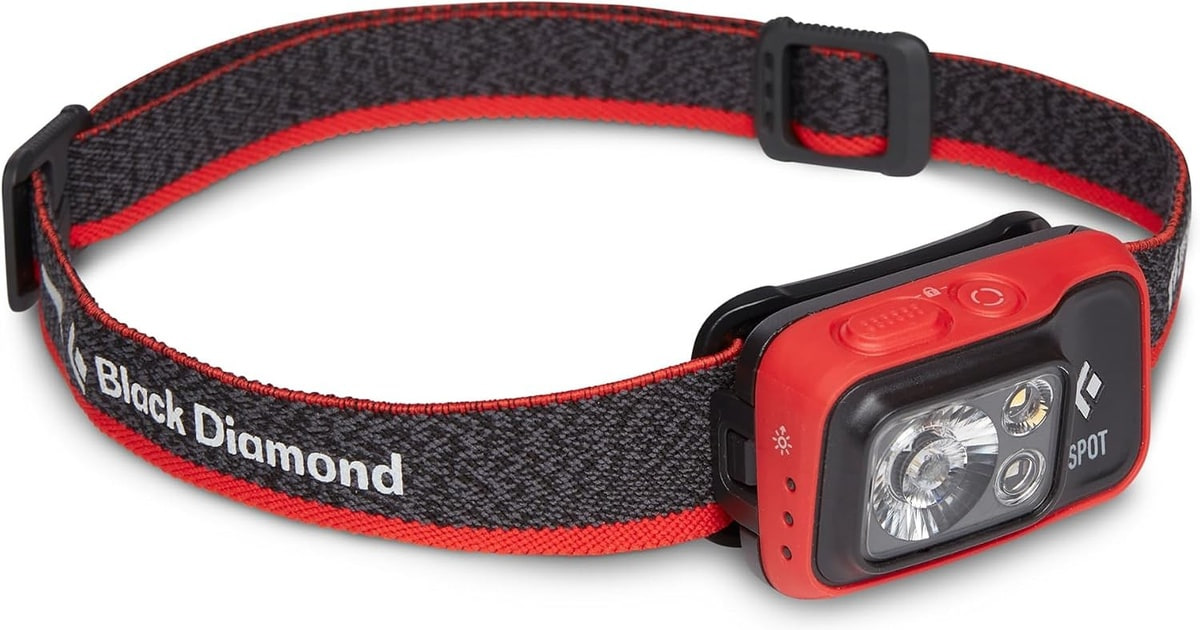
BLACK DIAMOND Spot 400 Headlamp
The Spot 400 hits 400 lumens on three AAA batteries, with a red night-vision mode and an IPX8 rating that survives a soaking. It's the sensible lamp to keep in a glovebox, a daypack and a kid's camp bag without thinking hard about it.
$47.88fromAmazonPrices as of Oct 25, 6:48 AM PT · Details
Four hundred lumens is more headlamp than most hikers use. REI's buying guide puts 200 to 300 lumens as the sweet spot for on-trail hiking and reserves 400-plus for off-trail navigation, and outdoor guides note that casual hikers spend most of their night at a fifth to half of maximum. So the Spot 400 has headroom you'll rarely touch, which mostly shows up as longer runtime at the settings you do use.
Black Diamond rates it IPX8 and says it survives submersion to a meter for half an hour. That's not a spec you plan around, but it's the difference between a bad moment and a ruined trip when your pack tips into a stream crossing. The housing is rugged enough for the kind of gear that lives in a car all summer.
It runs on three AAAs, included, which keeps it going anywhere batteries are sold. If you'd rather charge it, Black Diamond sells a rechargeable 1500 lithium pack and charger that drop into the same slot, though you buy that separately. Multiple brightness settings, a proximity mode for close work and a red night-vision mode round it out.
Flaws but not dealbreakers
The interface is the usual Black Diamond puzzle of presses and holds, and getting to red without flashing white at everyone takes practice. Owners mention the same thing regularly. It becomes muscle memory, but the first few nights are clumsy.
Alkaline output tapers as the batteries drain, so the lamp gets dimmer over an evening in a way a regulated rechargeable doesn't. Cold weather makes that worse. And the single-strap headband is fine for a few hours but not as steady as the split bands on the Petzl lamps.
Upgrade pick
Far more reach than a trail needs, for the nights you're off it
Fenix HM65R V2.0 2200 Lumen USB-C Rechargeable
The HM65R V2.0 pushes 2200 lumens and a beam out past 250 yards, with separate spot and flood emitters you can run alone or together. It's built from magnesium alloy, rated IP68, and aimed at people navigating in the dark rather than strolling a marked trail.
$100.45fromAmazonPrices as of Oct 25, 6:48 AM PT · Details
Most of the time, throw doesn't matter. Then you're standing in a boulder field at midnight trying to spot a cairn a hundred yards out, and it's the only thing that matters. Fenix quotes a maximum beam distance of 251 yards for this version, up from the older HM65R, along with a jump from 1400 to 2200 lumens. That's search-and-rescue territory, not casual hiking.
The two-emitter design is what makes it usable, not just bright. A spotlight and a floodlight sit side by side and work independently, so you can flood the ground in front of you for cooking, switch to spot for scanning a ridgeline, or run both when you want everything lit. Lamps with one LED and a zoom ring always compromise between those jobs.
The rest is built like a tool. Magnesium alloy keeps the whole thing to 5.08 ounces with the headband, and a top strap holds it steady when the lamp is heavier up front than you're used to. It's rated IP68 for water and dust and survives a 2-meter drop. There's a dedicated 140-lumen red light with high, medium, low and flash, which is more red control than almost anything else here. USB-C charging takes about two and a half hours from empty.
Flaws but not dealbreakers
It's the heaviest of our picks, and you feel it on a long night. Front-mounted weight is the kind of thing that shows up as neck fatigue after hour six, which is exactly why rear-battery designs exist.
Fenix doesn't publish runtimes in this listing, and any lamp of this class burns through its cell fast at maximum. Plan on using the lower modes and treating 2200 lumens as a burst. This version is also new enough that there isn't much owner feedback to lean on yet, so we're going mostly on specs and on the reputation of the model it replaces.
Also great
Barely there on your head, and still bright enough to hike by
Nitecore NU25 MCT UL 400 Lumens Ultra
The NU25 MCT UL weighs 1.65 ounces with everything attached and still puts out 400 lumens with a 144-yard beam. Thru-hikers who weigh their toothbrush handles keep buying it, and it charges over USB-C in about an hour.
$36.95fromAmazonPrices as of Oct 25, 6:48 AM PT · Details
Grams are the whole point. At 1.65 ounces total, this is the rare headlamp you forget you're wearing, and CleverHiker rates the NU25 family among the lightest rechargeable lamps around. If you already count ounces on your shelter and your pot, a lamp this small is easy math. It disappears in a hip belt pocket, and the included stuff sack doubles as a diffuser for a lantern glow in your tent.
Light is the usual surprise. Four hundred lumens and 144 yards of reach are plenty for finding a campsite after dark or hiking out the last hour of a long day. You also get three color temperatures on a button press: warm light that cuts through fog and rain, neutral white for close work, and cool white for contrast outdoors. There's an auxiliary red light with three levels, plus SOS and beacon modes.
It's tougher than the weight suggests. The polycarbonate shell is rated IP66 for dust and heavy spray and takes a 1-meter drop. Nitecore quotes up to 45 hours of runtime on the low end, and it refills over USB-C in a little over an hour, which is short enough to do at a diner while you eat.
Flaws but not dealbreakers
The battery is small and built in, so there's no swapping in AAAs when it's flat and no replacing the cell when it eventually stops holding a charge. On a multi-day stretch you'll need a power bank.
The thin strap doesn't spread the load like the split bands on the Petzl lamps, and it's the first thing to feel sloppy once it stretches. There's no reactive dimming either, so you're clicking through modes yourself.
Who this is for
Buy one of these if you hike, camp or run trails and there's any chance of finishing in the dark. That covers a lot of people: day hikers who lose track of sunset, backpackers doing camp chores at 9 p.m., trail runners starting before dawn, and parents who need a light for a kid's tent. If your current lamp is a decade-old AAA unit that still works and you're out twice a year, you don't need to replace it. If it's dim, if the strap sags, or if you've started leaving it home because it's annoying, upgrade.
This guide covers headlamps meant for hiking and general outdoor use, roughly 300 to 2200 lumens, in the weight range people actually wear on a trail. We're not covering caving or dive lights, helmet-mounted bike systems, industrial lamps with belt battery packs, or the ultra-cheap multi-packs that show up in seasonal bins. And we only wrote about lamps that our research surfaced and that we could confirm on Amazon, so this isn't a survey of everything for sale.
How we picked
We started from spec sheets, published head-to-head comparisons and recurring themes in owner feedback, then narrowed on five things. Brightness and reach: enough output to clear the 200-to-300-lumen band REI calls sufficient for on-trail hiking, with extra throw treated as a bonus for off-trail nights. Battery and runtime: USB-C charging as the baseline, with credit for lamps that also take AAAs or hold their output steady as the cell drains. Comfort: strap design over raw weight, because owners blame the band for hot spots and slipping. Weather and durability: a published IP rating, with IPX4 as the floor and impact resistance as a plus. Red light and controls: a real red mode you can reach without flashing white, on an interface that still works with gloves.
Other hiking headlamps worth considering
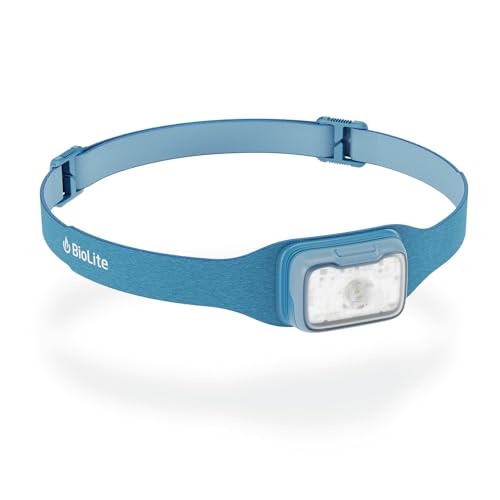
If you want a comfortable strap and a fast top-up: The BioLite Range 300 Headlamp — The BioLite Range 300 is the lamp to grab when you keep forgetting to charge things. BioLite says it goes from empty to 80 percent in half an hour, and eight minutes on a cable buys you about an hour of light, which is enough to rescue a trailhead mistake. It's IP67, runs 300 lumens with a 75-meter beam, and lasts a claimed 100 hours on low. The moisture-wicking band draws unusually warm comments from owners, including a few who put it through a washing machine by accident and got it back intact. What you give up is output and reach. Three hundred lumens is fine on a marked trail and thin if you're route-finding, and the high setting runs about four hours. Owner feedback is still limited, since it hasn't been out long.
The competition
These are the other lamps our research turned up, not a census of the market. Neither one is bad. They just lost to a pick on comfort, on beam quality or on how much you get for the weight.
The Ledlenser MH11 Headlamp Flashlight — The Ledlenser MH11 is the gadget of the group. It puts out 1000 lumens with a 320-meter beam, adds red, green and blue LEDs alongside the white one, and has a focus ring that zooms from flood to a tight spot. Ledlenser also pairs it with a phone app over Bluetooth for remote brightness and mode control, and it drops onto a magnetic charging dock. That's genuinely useful if you mount the lamp on a helmet and can't reach the button. But zoom optics trade beam quality for flexibility, the aluminum housing adds bulk up front, and owner feedback on this one runs noticeably more mixed than on the lamps we recommend. Consider it if app control and a focusing beam are the point rather than a bonus.
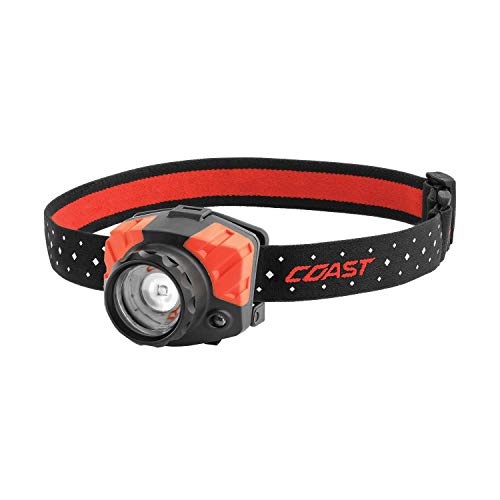
The Coast FL85 615 Lumen Dual Color Pure — The Coast FL85 is a work light that hikes. Its twist-focus optic goes from a wide flood to a tight bulls-eye spot, and it runs 615 lumens on high with 183 meters of reach, dropping to 96 lumens and about 13 hours on low. There's a red LED for night vision, a reflective strap, hinged tilt and clips for a hard hat, and Coast backs it with a lifetime warranty against defects. The trouble for hikers is weight and rating: it's the heaviest lamp here at half a pound, and IP54 means splash resistance rather than a real soaking. Buy it for a garage, a job site or car camping, where the beam control and the warranty count more than the ounces.
Care and battery habits
Headlamps die from neglect more often than from use. Rinse the strap in the sink now and then, since sweat salt is what eventually stiffens the elastic; the Petzl bands come off and go back on easily. Store a rechargeable lamp around half charged rather than dead flat, and keep it inside instead of in a freezing garage. On winter hikes, tuck it into a jacket pocket between uses, because lithium cells lose punch in the cold. Pull the AAAs out of an alkaline lamp before it sits in a closet for a season, since leaks ruin the contacts. Lock the button or reverse the battery before the lamp goes in your pack. A USB-C lamp refills from empty in under three hours on a standard 10-watt charger, so top it off the night before rather than at the trailhead.
Questions we get
How many lumens do I need for a hiking headlamp?
Less than the packaging suggests. REI's buying guide puts 200 to 300 lumens as enough for most on-trail hiking and saves 400-plus for off-trail navigation. Outdoor guides also note that casual hikers spend most of their nights running the lamp at only 20 to 50 percent of maximum. A high ceiling is still nice, because running a bright lamp at half power gives you better runtime than running a dim one flat out.
Is a rechargeable or battery-powered headlamp better for backpacking?
For trips under a few days with a power bank, rechargeable wins on convenience and steady output. For longer stretches without an outlet, AAA compatibility is the safety net, because you can buy batteries in any trail town. That's why we like hybrid lamps such as the Petzl Actik Core, where a rechargeable pack drops out and three AAAs drop in.
Why do headlamps have a red light mode?
Red light doesn't wash out your dark adaptation the way white light does, so you can read a map or find your stove and still see the trail afterward. It also keeps you from blinding the person across the tent or spooking wildlife. Look for a lamp that reaches red without flashing white first, which every one of our picks does.
Do reactive lighting headlamps actually save battery?
Yes, substantially. Petzl rates the Swift RL at up to 15 hours in reactive mode on mixed terrain, against roughly 2 hours locked at maximum brightness. The sensor dims the beam whenever you look at something close, which is most of the time. The trade-off is the occasional flicker when you glance at a reflective sign or a shiny jacket.
What's the difference between beam distance and lumens?
Lumens measure total light output, and beam distance measures how far a usable amount of it reaches. A flood beam can be bright and still fall off within a few yards, while a focused spot with fewer lumens throws much farther. For trail hiking you want a wide pool of light nearby. For route-finding in the dark, distance is what you're paying for.
Can I use a hiking headlamp for trail running too?
Most of them, yes, but the strap decides it. A single band bounces on rough ground, while split or top-strap designs like the Petzl Swift RL's stay put. Weight up front matters more when you're running, so lighter lamps feel better. Reactive dimming also helps, since you don't want to hunt for a button mid-stride.
Why you should trust us
For this guide:
- We read the manufacturer spec sheets for every lamp here and compared the lumen ratings, beam distances, waterproof ratings and battery systems side by side.
- We went through published comparisons from outlets that line up headlamps against each other, including guidance from REI, Switchback Travel, CleverHiker, GearJunkie and Treeline Review.
- We also read owner feedback across the lineup, looking for recurring themes about strap comfort, button behavior and how the batteries hold up.
- We read owner reviews on every listing, weighted toward the critical ones, because that is where the recurring failures show up.
- We have a systematic way of automatically fetching the latest prices, so the numbers on this page stay current.
- This is a research-focused guide, so the team may not own every product listed — though we often do own the top winners, which gives us extra context for the recommendations.
- We don't accept free products, and the retailer commission never changes which product we recommend.
Sources
The Best Headlamps of 2026, Switchback Travel
Best Headlamps for Hiking and Backpacking, OutdoorGearLab
Best Backpacking Headlamps of 2026, CleverHiker
Petzl Swift RL Product Specifications, Petzl (manufacturer)
Black Diamond Spot 400 Product Specifications, Black Diamond (manufacturer)
Fenix HM65R Product Specifications, Fenix Lighting (manufacturer)
Best Headlamps, Tested by Backpacker Editors, Backpacker Magazine
Headlamp Buying Guide, REI Co-op
The Best Headlamps for Hiking and Camping, Treeline Review
Ledlenser MH11 Product Specifications, Ledlenser (manufacturer)
Best Headlamps for Backpacking and Trail Running, GearJunkie
Coast FL85 Headlamp Specifications, Coast (manufacturer)
Amazon product listings and owner reviews for all 8 products
Manufacturer specification pages for each product
Some passages in this guide may be paraphrased with AI help.
Product prices and availability are accurate as of the date/time indicated and are subject to change. Any price and availability information displayed on Amazon.com at the time of purchase will apply to the purchase of this product.
More like this.
Continue exploring electronics reviews and recommendations.

The Best Hiking GPS Devices
A hiking GPS earns its place in your pack on the days your phone can't help. Cold drains a phone battery fast. Rain turns a touchscreen into a smudge. And…

The Best Hiking Poles
Hiking poles change how a trail feels. On a steep descent, they take a real bite out of what your knees absorb - research published in Clinical…

The Best Waterproof Hiking Boots
Wet feet ruin a hike faster than a steep climb does. A creek crossing, an hour of rain, a morning of soaked grass - any of them will leave you squelching…

The Best Hiking Backpacks
A backpack is the one piece of gear you never put down. Everything else - tent, stove, sleeping bag - gets used and stowed away. The pack rides on you for…

The Best Hiking Boots and Trail Running Shoes
Footwear is the one piece of hiking gear you feel with every single step. A boot that rubs at mile two can ruin a whole weekend, and a sole that slides…

The Best Hiking Daypacks
A daypack is the one piece of gear you never stop noticing. It rides on your shoulders for six hours, and every decision the designer made shows up…