The Best Home Theater Systems

Your TV's built-in speakers are thin, and you already know it. Dialogue disappears under the score, explosions sound like a phone buzzing on a table, and you end up riding the volume button all night. A real home theater system fixes that. It gives you a center channel that keeps voices anchored to the screen, a subwoofer that puts weight behind a car chase, and enough surround information that a helicopter actually seems to pass behind your couch. For most people, this is the single biggest upgrade you can make to a TV you already own.
Here's the honest part. No system here is as plug-and-play as the box promises. Every soundbar with wireless rears still needs power outlets behind your seating. Every receiver-based rig needs speaker wire run somewhere. Room calibration helps, but it can't rescue a room with a giant glass wall or a couch shoved against the back wall. And the height effects that Atmos promises depend entirely on your ceiling. If yours is vaulted, textured, or unusually high, the up-firing bounce trick loses much of its magic.
We looked at wireless soundbar ecosystems, all-in-one immersive bars, and traditional receiver-and-speaker packages, then weighed what each one asks of your room and your patience. We think that the Sonos Arc Ultra with Sub 4 and a pair of Era 300 speakers is the best home theater system for most people, and that the Samsung HW-Q990D is the one to buy if you own a Samsung TV or want every surround and height channel included in one box.
Everything we recommend

The easiest path to real surround sound without wiring

More channels in the box, especially if you own a Samsung TV

Real speakers and real dynamics, if you'll run the wire
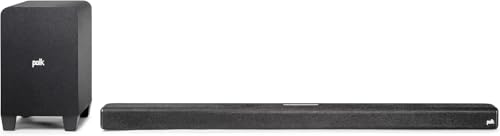
Atmos height and a wireless sub without the big outlay
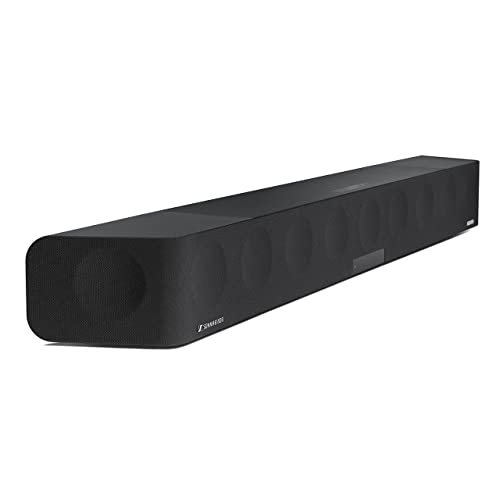
One box, no subwoofer, no satellites, still immersive
Prices as of Oct 24, 6:27 AM PT · Details
At a glance
| Product | Channels | Subwoofer | Price | |
|---|---|---|---|---|
| Sonos Arc Ultra soundbar + Sub 4Top pick | Atmos, with 2 surrounds | Sub 4, wireless | $2,808.20 |
| SAMSUNG HW-Q990D 11.1.4ch Soundbar w/Rear SpeakerRunner-up | 11.1.4 | — | Check price |
 | Bose Smart Ultra Dolby Atmos Soundbar 41"Also consider | — | Bass Module 700 | Check price |
| Sennheiser AMBEO Soundbar - 5.1.4 Channel withAlso great | 5.1.4 | None, 30Hz built in | $1,699.95 |
| Klipsch Reference R-26FA 5.1 Home Theater PackUpgrade pick | 5.1 with height | 12-inch powered | $1,198.99 |
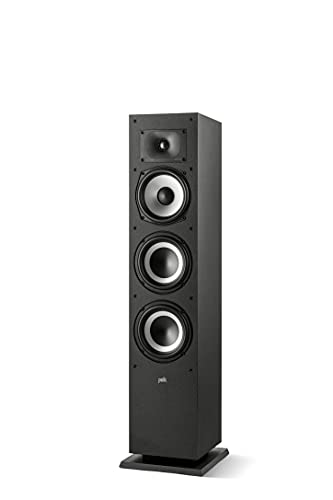 | Polk Audio Monitor XT60 Home Theater TowerAlso in lineup | — | — | $229 |
| Polk Audio Signa S4 Dolby Atmos 3DBudget pick | — | 5.9-inch wireless | $449 |
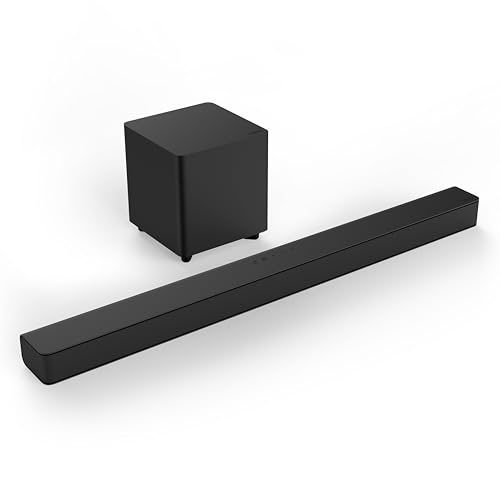 | VIZIO V-Series 2.1 Home Theater Sound BarAlso in lineup | 2.1 | Wireless | Check price |
Prices as of Oct 24, 6:27 AM PT · Details
How we picked
Immersive audio support. We required Dolby Atmos support and looked at how each system produces height, favoring dedicated up-firing drivers over virtual processing. Published reviews and blind listening panels consistently rate real drivers as more precise than simulation.
Bass and subwoofer. We compared stated low-frequency extension across spec sheets and published measurements, from about 45 Hz on the smallest wireless sub to roughly 25 Hz on the largest. Anything that can't get under 50 Hz is a stretch for movie effects.
Room calibration. Automatic correction has a measurable effect on bass response across seating positions, so we weighted systems that include it. We looked at Trueplay, SpaceFit Sound Pro, and receiver-side correction like Dirac Live and YPAO.
Setup and wiring. We separated systems that need speaker wire from those that connect over Wi-Fi, since that decides whether a system works in a rental. Owner feedback about installation difficulty carried real weight here.
Room for growth. We favored systems you can add to later, whether that's a second subwoofer, better front speakers, or wireless rears. Receiver-based rigs win here outright, and published long-term observations suggest they stay useful for longer.
Top pick
The easiest path to real surround sound without wiring
Sonos Arc Ultra soundbar + Sub 4
This bundle pairs the Arc Ultra soundbar with the Sub 4 and two Era 300 speakers, all connected over your Wi-Fi. You get lateral and overhead channels up front, dedicated rear surrounds, and app-based room tuning, with no speaker wire crossing your floor.
$2,808.20fromAmazonPrices as of Oct 24, 6:27 AM PT · Details
If you rent, or you just don't want to fish wire through a wall, this is the system to get. The Sub 4 connects over Wi-Fi, so you can tuck it beside a chair or under the sofa. The Era 300 speakers go on stands or shelves behind you and need nothing but a power outlet. Everything talks to the soundbar wirelessly, which means the only cable that touches your TV is one HDMI run to the Arc Ultra.
The height effect here is the real thing, not a simulation. Both the Arc Ultra and the Era 300 speakers include upward-firing drivers, so overhead cues get reproduced by actual drivers pointed at your ceiling rather than processed to sound that way. In practice that means a plane passing overhead reads as overhead. Bose and Sennheiser do clever things with virtual processing, but reviewers consistently place dedicated up-firing drivers ahead of it for precision.
Trueplay tuning uses the microphones in an iOS device to measure your room and adjust the EQ. This matters more than it sounds. Room correction has been shown in lab comparisons to flatten bass response across seating positions by a meaningful margin, and bass is exactly where untreated living rooms go wrong. If your couch sits in a bass null, no amount of subwoofer power fixes it. Software can.
Setup is genuinely short. You plug in power, join the speakers to Wi-Fi in the Sonos app, and the app walks you through the TV connection and remote syncing. Compare that to a receiver setup, where you're stripping wire, matching polarity, and assigning channels in a menu. If the idea of an evening with a spool of 16-gauge wire fills you with dread, that difference is worth a lot.
Flaws but not dealbreakers
This is the most expensive system here by a wide margin, and you're paying partly for convenience. A receiver and a set of tower speakers will move more air for less money. If raw output in a large open room is your priority, the Klipsch package is the better spend.
You're also locked into one company's ecosystem. Everything runs through the Sonos app, and the long-term usefulness of the system is tied to continued firmware and app support. Wirecutter's long-term observations suggest wireless bar systems tend to get replaced on a shorter cycle than receiver-based rigs, largely because software support drives the timeline rather than the drivers themselves. Trueplay also depends on having an iOS device around.
Owner feedback on this bundle is thin and mixed so far, with some buyers reporting frustration during setup and pairing. Sonos has had a rough stretch with app reliability, and while it has improved, it's fair to expect an occasional dropout or a speaker that needs a reboot to rejoin the group.
Runner-up
More channels in the box, especially if you own a Samsung TV
SAMSUNG HW-Q990D 11.1.4ch Soundbar w/Rear Speaker
The HW-Q990D is an 11.1.4-channel system with wireless rear speakers and a subwoofer included. It adds up-firing and side-firing drivers front and back, and it links up with Samsung TVs so the TV's own speakers join in rather than shutting off.
Check priceatAmazonPrices as of Oct 24, 6:27 AM PT · Details
No other system here puts this many discrete channels in a single box. You get eleven front-facing drivers, four up-firing channels, a subwoofer, and a rear speaker kit with its own up-firing and side-firing drivers. That rear kit is the part people underestimate. Rear height channels make overhead pans track properly from front to back, and most competing bars simply don't have them.
It plays loud. RTINGS measured this system at 78 dB SPL at the listening position on Atmos content, among the loudest soundbar systems they've put through that test. If you have an open-plan living room, or you like action movies at a volume that annoys people upstairs, headroom is the thing you'll miss most in a smaller bar. This has it.
Q-Symphony is the reason to buy this if you already own a Samsung TV. Instead of muting the TV speakers, it uses them alongside the bar to widen the front soundstage. It's a small thing that you notice mostly in dialogue-heavy scenes, where voices stay pinned to the screen instead of floating below it. SpaceFit Sound Pro handles the room calibration automatically, without needing a phone or a microphone accessory.
The connectivity list is complete for most households. Built-in Alexa, Chromecast, and AirPlay 2 cover casting and voice control, and Wireless Dolby Atmos lets compatible Samsung TVs send Atmos over Wi-Fi rather than HDMI. That last feature only matters if you have the matching TV, which is a running theme with this system.
Flaws but not dealbreakers
Half the appeal evaporates if you don't own a Samsung TV. Q-Symphony and Wireless Dolby Atmos both require one. On an LG or Sony set, this becomes a very good but very expensive soundbar system competing against options that cost less.
It's a lot of hardware to place. The bar is roughly four feet wide, the subwoofer is a full-size box, and the two rear speakers each need an outlet within reach of your seating. In a small apartment, that's four power cords and a lot of visible gear. The whole shipment weighs over fifty pounds.
You can't grow it. Unlike a receiver setup, there's no adding a second subwoofer or swapping in better front speakers later. What's in the box is what you have for the life of the system.
Upgrade pick
Real speakers and real dynamics, if you'll run the wire
Klipsch Reference R-26FA 5.1 Home Theater Pack
This Klipsch pack includes two floorstanding speakers with built-in height drivers, two bookshelf surrounds, a center channel, and a 12-inch powered subwoofer. Paired with a receiver you supply, it's a genuine component system you can upgrade piece by piece for years.
$1,198.99fromAmazonPrices as of Oct 24, 6:27 AM PT · Details
Soundbars compress. Not in a technical sense, but in the sense that small drivers in a slim enclosure run out of room when a scene gets loud and busy. This package doesn't have that problem. Dual 6.5-inch copper-spun woofers per tower and a 12-inch subwoofer give you the kind of dynamic swing that makes a big action sequence feel physical rather than merely loud.
The height channels are built into the towers, so you don't have to mount anything overhead. The R-26FA floorstanders have dedicated up-firing drivers on top that bounce sound off your ceiling. It's the same trick the good soundbars use, but with more driver area behind it. Several owners describe assigning those top drivers as separate channels on a receiver with enough outputs, which gives you flexibility a fixed system can't.
This is the pick that ages well. Wirecutter's long-term observations found receiver-based component systems staying useful for eight to ten years, against a shorter replacement cycle for soundbars driven by app and firmware support. Nothing here depends on a phone app. You can add a second subwoofer, swap the receiver, or upgrade the surrounds later without starting over. Klipsch covers the pack with a five-year warranty.
It's also the most room-forgiving option here, because you control placement. Surround speakers go where surrounds actually belong, not where a rear kit's power cord reaches. If your couch is against a wall or your room is an odd shape, being able to move real speakers around beats any amount of software correction.
Flaws but not dealbreakers
Installation is a project, not an afternoon. You need to buy a receiver separately, run wire to five speaker positions, set crossovers, and run whatever room correction your receiver includes. Owners are candid that this isn't a casual self-install, and several mention that the system needed meaningful tuning before it sounded right.
It's big and heavy. The shipment runs about 190 pounds, and the towers are floorstanders in the literal sense. In a small apartment or a room where furniture placement is already tight, this is a hard sell.
Klipsch's house sound leans bright, with a forward treble that some people love and others find fatiguing on long viewing sessions. Owner feedback also notes the system can sound reserved without proper calibration, so budget time for setup rather than expecting it to sing out of the box.
The Reference R-26FA 5.1 pack comes with a five-year warranty.
Budget pick
Atmos height and a wireless sub without the big outlay
Polk Audio Signa S4 Dolby Atmos 3D
The Signa S4 is a slim bar with a seven-driver array, dedicated up-firing elevation speakers, and a wireless subwoofer with a 5.9-inch driver. It sets up over one cable and slips under most TVs without blocking the screen or the remote sensor.
$449fromAmazonPrices as of Oct 24, 6:27 AM PT · Details
You get real up-firing drivers at a price where most bars only simulate height. The Signa S4 puts 2.59-inch elevation drivers on top of the bar alongside its tweeters, racetrack mid drivers, and a dedicated center. That center channel is the underrated part. It's the reason dialogue stays clear on a bar this thin, and it's what separates this from the two-channel bars that sit near it in price.
Setup takes about as long as unboxing it. One HDMI cable to your TV and the bar is running, with the subwoofer pairing wirelessly on its own. At 2.36 inches tall it fits in front of most screens without covering the bottom edge or blocking the infrared sensor, which is a mundane detail that ruins a lot of otherwise good soundbar purchases.
Polk's VoiceAdjust lets you raise dialogue independently of everything else. If you watch late at night with the volume low, or you live with someone who reaches for subtitles during every whispered scene, this is the control you'll use most. Bass Adjust gives you the same independent handle on the subwoofer, so you can pull the low end back for an apartment without gutting the rest of the mix.
The trade-off is honest. Published measurements put the Signa S4's low-frequency extension around 45 Hz with its subwoofer, which covers dialogue, music, and moderate movie bass but won't reproduce the deepest rumble. For a bedroom, an apartment, or a first upgrade from TV speakers, that's an easy compromise.
Flaws but not dealbreakers
There are no rear speakers, and you can't add them. Surround effects come from processing across the front array, so anything meant to move behind you stays in front of you. If you want true surround, you need one of the systems with actual rears.
That 5.9-inch subwoofer is small. It adds real weight compared to a TV, but it won't shake furniture, and owners in larger rooms tend to want more. Height effects are present but modest next to the bigger systems here, since the elevation drivers are small and there are only two of them.
Also great
One box, no subwoofer, no satellites, still immersive
Sennheiser AMBEO Soundbar - 5.1.4 Channel with
The Sennheiser AMBEO is a single 5.1.4-channel bar that reaches down to 30 Hz on its own, so there's no separate subwoofer and no rear speakers to place. If you want immersive sound from one object in the room, nothing else here comes close.
$1,699.95fromAmazonPrices as of Oct 24, 6:27 AM PT · Details
Some rooms can't take a system. A bedroom with one usable outlet, a den where the TV sits on a credenza, an apartment where a subwoofer would start a conversation with your downstairs neighbor. This bar is the answer to that. It's a 5.1.4-channel design in a single enclosure, and Sennheiser rates its bass extension to 30 Hz without any external sub, which is unusual for a self-contained bar.
The immersion comes from driver count and virtualization done well. PCMag counted a 13-driver array in the AMBEO line, including upward-firing and side-firing channels, and the processing was developed with Fraunhofer. The upmixing works on ordinary stereo and 5.1 material too, so you're not limited to Atmos and DTS:X content to hear the effect. Five dedicated tweeters handle the top end, and reviewers single out midrange voice reproduction as a strength.
Room calibration runs on the bar itself, adjusting the 3D presentation to your living room's characteristics. You also get a built-in equalizer and three AMBEO modes, so you can dial the effect back for dialogue-heavy TV and push it up for a movie. Streaming is well covered with Wi-Fi, Bluetooth, Chromecast, AirPlay 2, Spotify Connect, and Tidal Connect built in.
Flaws but not dealbreakers
It's enormous for a single bar. Nearly 50 inches long and close to seven inches tall, it will block the bottom of many TVs unless your stand has real clearance or you wall-mount it. It weighs about 41 pounds, which also rules out flimsy furniture.
Virtual height and virtual surround are still virtual. Blind listening panels have described this class of processing as convincing but less precise than dedicated drivers pointed where the sound is supposed to come from. Effects behind you are the weak point, and moving your head or sitting off-center degrades the illusion in a way that real rear speakers don't.
This is also the oldest design in the lineup, and its price hasn't fallen to match. Owner feedback trends positive but not uniformly so, with some buyers finding the effect oversold relative to what a system with real surrounds delivers.
Who this is for
Buy one of these if your TV's speakers are the only sound in your living room and you've noticed yourself squinting at subtitles. That's the tell. A center channel and a subwoofer solve the dialogue problem and the weightless-explosion problem in one purchase. This guide covers full systems, meaning a soundbar with a subwoofer at minimum, and preferably with surround and height channels too. If you want the quickest fix in an apartment, start with the Sonos bundle or the Polk. If you own a large room and don't mind an install, look at the Klipsch package.
Skip this for now if your seating is right up against a back wall, if your ceiling is vaulted or over about ten feet, or if you can't put anything behind your couch. Atmos height effects rely on a ceiling bounce, and surround channels rely on speakers being somewhere other than in front of you. We don't cover in-wall or in-ceiling speakers, standalone receivers, individual bookshelf pairs, or dedicated stereo music setups, all of which have different priorities than a system meant primarily for movies and TV.
How we picked
Height channels: We favored systems with dedicated up-firing drivers over virtual processing, since published listening comparisons rate real drivers as more precise. Bass: We compared stated extension across spec sheets, treating anything above 50 Hz as light for movies. Calibration: Automatic room correction measurably flattens bass across seating positions, so systems with Trueplay, SpaceFit Sound Pro, or receiver-side correction scored higher. Setup: We separated wireless systems from ones needing speaker wire, because that decides what works in a rental. Expandability: We gave credit for adding rears, height channels, or a second subwoofer later. Dialogue: A dedicated center channel or a voice-boost control was close to a requirement.
Other home theater systems worth considering
If you want Atmos in a small room with almost nothing visible: The Bose Smart Ultra Dolby Atmos Soundbar 41" — The Bose Smart Ultra bundle pairs a 41-inch Atmos bar with the Bass Module 700, and it's the most discreet real system here. TrueSpace processing upmixes non-Atmos content so ordinary TV and older movies still get a spatial treatment, which matters because most of what you watch isn't Atmos-encoded. ADAPTiQ calibration runs from an included headset and tunes the bar to your room. You give up rear speakers entirely, and blind listening panels describe TrueSpace height as convincing but less precise than dedicated up-firing drivers. It also costs more than the Polk while offering fewer channels. Bose covers it with a one-year limited warranty, shorter than what Klipsch offers.
The competition
These are the other systems our research surfaced, not a survey of everything on the market. Both are decent products that lost to a pick for specific reasons, and both make sense for a narrow set of buyers.
The VIZIO V-Series 2.1 Home Theater Sound Bar — The VIZIO V-Series V21x-J8 is a 2.1 bar with a wireless subwoofer, and it's the least expensive way to stop using TV speakers. Setup is one HDMI ARC cable, it's low enough at 2.28 inches to sit in front of most screens, and Dolby Audio and DTS Virtual:X give you a wider soundstage than the TV alone. But it has no Atmos and no height channels, and DTS Virtual:X is simulation rather than actual surround. The Polk Signa S4 adds real up-firing drivers and a dedicated center channel for not much more, which is why it takes the budget slot. Choose the VIZIO if you want the smallest, simplest upgrade for a bedroom or a guest room.
The Polk Audio Monitor XT60 Home Theater Tower — The Polk Monitor XT60 is a single floorstanding tower with a 1-inch tweeter, a 6.5-inch woofer, and two 6.5-inch passive radiators. It's a well-reviewed speaker and a sensible starting point if you're assembling a system piece by piece, since Polk timbre-matches the XT line so you can add the MXT20 bookshelves, MXT30 center, MXT90 height modules, and MXT12 subwoofer over time. It's not a home theater system on its own, though. Buying one gets you half a stereo pair and no center, surrounds, or bass. If you want a component setup in one purchase, the Klipsch pack includes everything but the receiver.
Setup notes
Two things matter more than anything you'll adjust in a menu. First, put the center channel or soundbar as close to ear height as your furniture allows, and aim it at the couch rather than the ceiling. A bar shoved into a cabinet cubby loses dialogue clarity no amount of voice enhancement recovers. Second, run the room calibration, and run it from where you actually sit, not from the middle of the room. Then leave the subwoofer somewhere you can move it. Sliding it a couple of feet along a wall often does more for bass than any setting, because room modes are physical. Finally, plug the soundbar into the HDMI port on your TV labeled eARC or ARC. It's the only one that passes audio back from the TV, and using the wrong port is the single most common reason a new system stays silent.
Questions we get
Are soundbars as good as full home theater systems?
For most living rooms, a good wireless soundbar system with real rear speakers gets close enough that you'd have trouble telling them apart on movie night. Where receivers and component speakers still win is raw dynamic range in a large room and the ability to upgrade one piece at a time. If you have a big open space or you care about playing loud without strain, go with components. Otherwise, a bar system with wireless rears is the easier and quieter purchase.
What's the best home theater system for a small apartment?
The Bose Smart Ultra bundle or the Polk Signa S4, depending on how much you want to spend. Both give you Atmos processing from a single bar plus a subwoofer, with nothing to place behind your couch and no wire to run. Keep the subwoofer off a shared wall and use the bass adjustment to pull the low end back, since neighbors hear bass long before they hear dialogue.
Do I need a subwoofer with a soundbar?
Almost always, yes. A slim bar physically can't move enough air to reproduce the bottom two octaves, so without a sub you lose the weight behind explosions, engines, and film scores. The exception is the Sennheiser AMBEO, which is rated down to 30 Hz on its own because it's a much larger enclosure. Every other bar here comes with a subwoofer for a reason.
Is Dolby Atmos worth it without ceiling speakers?
Yes, if the system has up-firing drivers and your ceiling cooperates. Bouncing sound off a flat ceiling between roughly eight and ten feet high produces a convincing overhead effect on the systems here that use real up-firing drivers. Vaulted, textured, or very high ceilings scatter that reflection and the effect largely disappears. Purely virtual height processing works but reviewers consistently rate it as less precise than dedicated drivers.
Do wireless surround speakers have noticeable audio lag?
Not anymore. Wireless surround systems from major brands now report latency under 15 milliseconds, which is well below the threshold where you'd notice lips going out of sync. What you should plan for instead is power. Every wireless rear speaker still needs an outlet near your seating, and that's the practical constraint that trips people up.
What's the difference between a soundbar system and an AV receiver setup?
A soundbar system is a finished product. You buy it, plug it in, and the channel layout is fixed for its lifetime. A receiver setup is a set of parts, so you choose the speakers, run the wire, and can swap or add pieces later. Receivers also handle video switching, so gamers who need multiple 4K/120Hz inputs often prefer them. The trade is complexity, physical space, and an afternoon of installation.
Why you should trust us
For this guide:
- We read published measurements and reviews from RTINGS, Sound & Vision, What Hi-Fi?, PCMag, TechRadar, Audioholics, Consumer Reports, and Home Theater Review, along with manufacturer specifications for every system here.
- We compared stated channel counts, driver layouts, bass extension figures, and room calibration methods across each product's listing and spec sheet.
- We read owner feedback for recurring themes around installation difficulty, app reliability, and how much tuning each system needed before it sounded right.
- We read owner reviews on every listing, weighted toward the critical ones, because that is where the recurring failures show up.
- We have a systematic way of automatically fetching the latest prices, so the numbers on this page stay current.
- This is a research-focused guide, so the team may not own every product listed — though we often do own the top winners, which gives us extra context for the recommendations.
- We don't accept free products, and the retailer commission never changes which product we recommend.
Sources
Best Soundbars of 2026 - RTINGS.com, RTINGS.com
Samsung HW-Q990D Review - RTINGS.com, RTINGS.com
Best Home Theater Systems - Wirecutter, Wirecutter
Sonos Arc Ultra Review - What Hi-Fi?, What Hi-Fi?
Denon AVR-X2800H Review - Sound & Vision, Sound & Vision
Best AV Receivers 2026 - CNET, CNET
Bose Smart Ultra Soundbar Review - TechRadar, TechRadar
Sennheiser Ambeo Soundbar Max Review - PCMag, PCMag
How Dolby Atmos Height Virtualization Works - Dolby Labs, Dolby Laboratories
U.S. Soundbar Market Penetration Report 2025 - Consumer Technology Association, Consumer Technology Association
Klipsch Reference Theater Pack Specifications, Klipsch (Manufacturer)
Room Correction Software Compared: Dirac Live vs. YPAO vs. Audyssey - Audioholics, Audioholics
Amazon product listings and owner reviews for all 8 products
Manufacturer specification pages for each product
Some passages in this guide may be paraphrased with AI help.
Product prices and availability are accurate as of the date/time indicated and are subject to change. Any price and availability information displayed on Amazon.com at the time of purchase will apply to the purchase of this product.
More like this.
Continue exploring electronics reviews and recommendations.

The Best Home Theater Receivers for 7.1 Surround Sound
A receiver is the box everything else plugs into. Your TV, your console, your streaming stick, your speakers - all of it runs through this one chassis,…

The Best Car Speakers and Stereo Systems
A car stereo is the one piece of gear in your car you touch every single day. You reach for it before you've backed out of the driveway, and you're still…

The Best Tire Pressure Monitoring Systems
Your tires are losing air right now. Nothing dramatic - just the ordinary seep of one to two pounds a month, according to the Tire Industry Association,…

The Best Car Alarm and Security Systems
Your car spends most of its life parked and unattended. On a street, in a work lot, in a driveway you can't see from the kitchen sink. A security system's…

The Best Mesh WiFi Systems
Dead zones are the whole reason mesh systems exist. One router stuck in a corner means the back bedroom drops video calls and the garage gets nothing at…

The Best GPS Navigation Systems for Cars
A dedicated car GPS does one job, and it does it without asking anything of your phone. It already has the map onboard, so it keeps calling out turns…