The Best La Roche-Posay Skincare
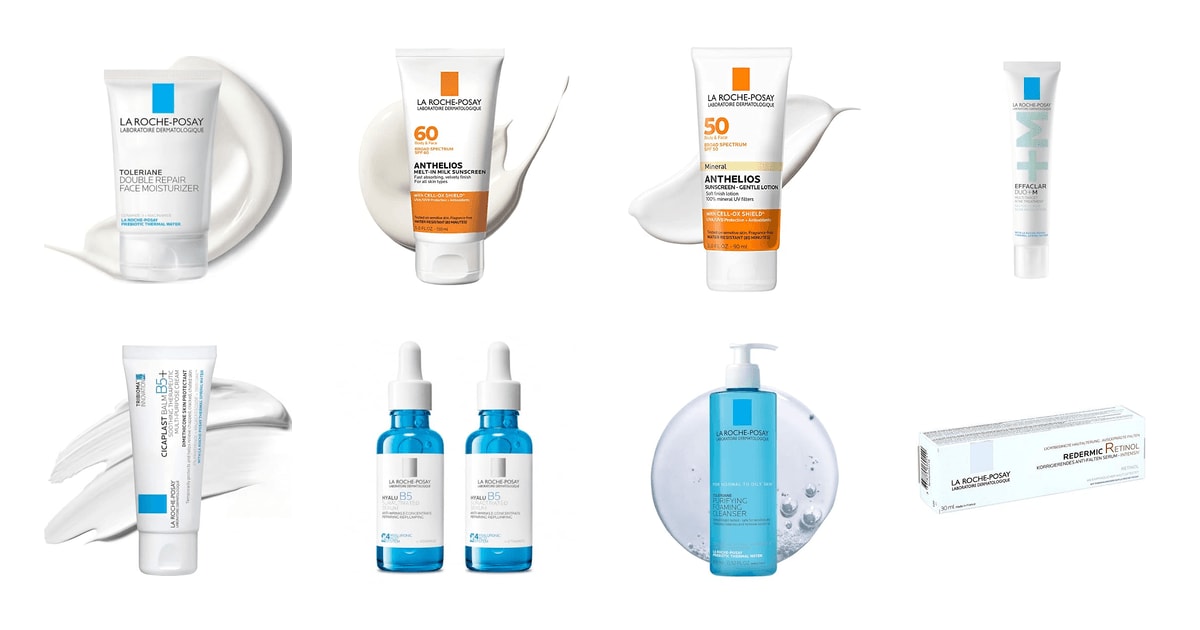
If your skin turns red, tight, or itchy at the slightest provocation, someone has probably told you to try La Roche-Posay. It's the French pharmacy brand dermatologists hand out like advice: short ingredient lists, no added fragrance in most formulas, and thermal spring water in nearly everything. It sits well below prestige skincare on price, and you can grab it at the drugstore. The catch is the lineup. There are dozens of products across a half-dozen lines, and the names don't tell you much about what's inside.
None of this is going to remake your face. A barrier cream keeps skin calm; it doesn't erase deep lines. Retinol takes weeks of consistent nights before you notice anything, and it usually makes your skin worse before it makes it better. The brand's reputation for gentleness isn't universal, either. Not every formula is fragrance-free, so read the label if scent sets you off. And the mineral sunscreen, like every 100% mineral sunscreen, leaves a cast that deeper skin tones will see.
So treat this less as a ranking and more as a map of the line. We looked at what dermatologists and beauty editors recommend most often, what the ingredient lists actually contain, and where owner feedback keeps circling the same complaint. A few products show up everywhere for good reason. A few are more specialized than the packaging suggests. We think that the Toleriane Double Repair Face Moisturizer is the best La Roche-Posay product for most people, and that the Cicaplast Balm B5 is the one to buy if you mainly need to calm cracked, irritated, or post-procedure skin.
Everything we recommend
A fragrance-free daily cream that plays well with everything

The one tube worth keeping in the medicine cabinet
Real retinol, with a gentler on-ramp than most
High protection in a texture you won't mind wearing daily
At a glance
| Product | Volume | Key Ingredient | Price | |
|---|---|---|---|---|
| La Roche-Posay Toleriane Double Repair Face MoisturizerTop pick | 3.38 Fl Oz | Ceramide-3 | $24.99 |
| La Roche-Posay Anthelios Melt-In Milk SPF 60Also great | 5 Fl Oz | SPF 60 | $28.49On sale |
 | La Roche-Posay Anthelios Mineral Sunscreen SPF 50Also consider | 3 Fl Oz | Zinc Oxide | $25.97 |
 | La Roche-Posay Effaclar Salicylic Acid Acne TreatmentAlso consider | 1.35 Ounce | Salicylic Acid | $18.79On sale |
| La Roche-Posay Cicaplast Balm B5Budget pick | 1.35 Fl Oz | Vitamin B5 (Panthenol) | $13.69On sale |
 | La Roche-Posay Hyalu B5 Pure Hyaluronic AcidAlso in lineup | — | Hyaluronic Acid | $49.99 |
 | La Roche-Posay Toleriane Purifying Foaming Facial CleanserAlso consider | 13.52 Fl Oz | Niacinamide | $19.99 |
| La Roche-Posay Redermic R Retinol Face CreamUpgrade pick | 1 oz | Retinol | $54.97 |
How we picked
Skin concern match. We sorted the line by the problem it solves — barrier repair, acne, hydration, sun, aging — rather than by hype. A product had to be the clear answer for at least one common concern to make the picks.
Ingredients that earn it. We read full ingredient lists and label claims for actives with real evidence behind them: ceramides, niacinamide, panthenol, hyaluronic acid, salicylic acid, pure retinol. Vague soothing claims without a named active didn't count.
Fragrance and irritants. Fragrance-free, non-comedogenic formulas got priority, since reactive skin is who this brand sells to. Verywell Health notes that many Toleriane and Anthelios formulas meet fragrance-free, non-comedogenic standards for eczema-prone skin, and EWG's Skin Deep rates the core formulas in its low-to-moderate hazard range.
Sun protection level. The American Academy of Dermatology recommends broad-spectrum SPF 30 or higher, so anything below that was out. We also weighed filter type, since mineral and chemical screens suit different skin.
Texture and daily use. Published reviews and owner feedback told us what a formula feels like after a week — pilling, greasiness, white cast, whether it works under makeup. A product you stop using is a product that doesn't work.
Top pick
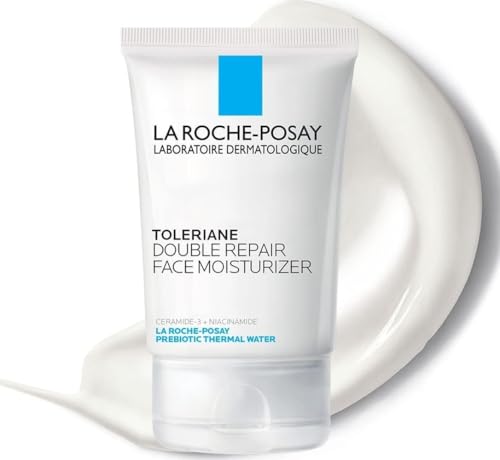
A fragrance-free daily cream that plays well with everything
La Roche-Posay Toleriane Double Repair Face Moisturizer
Toleriane Double Repair is the moisturizer most people should start with. It's oil-free, fragrance-free, and non-comedogenic, with ceramide-3 and niacinamide doing the barrier work, and it's light enough that oily skin won't feel coated but rich enough to sit under a retinoid at night.
$24.99fromAmazonThis is the rare face cream that suits oily skin and dry skin equally well. The texture is a light cream that sinks in quickly, so if you've given up on moisturizers that leave a greasy film by lunchtime, this one probably won't. But it isn't a thin lotion either. Dry, flaky skin usually gets enough from it that you won't need to layer something heavier on top, at least not in mild weather.
The ingredient list explains most of the enthusiasm. Ceramide-3 and glycerin hold moisture in, niacinamide supports the barrier and helps fade discoloration over time, and the prebiotic thermal spring water is the brand's signature soothing base. Allure has given it Best of Beauty recognition more than once, and Wirecutter names it a top pick for sensitive, acne-prone skin because it's oil-free and won't clog pores.
If you're on a retinoid, this is the cream that makes the first month survivable. Owners who use tretinoin or an over-the-counter retinol consistently say it takes the edge off the flaking and tightness without smothering their skin. You can apply it after your treatment, or before it as a buffer if you're sensitive. Either way, it doesn't fight with anything else in the routine.
It's fragrance-free, which matters more than people expect. Fragrance is one of the most common triggers for reactive skin, and it hides in a lot of creams marketed as gentle. If you've got rosacea, eczema-prone patches, or skin that stings whenever you try something new, an unscented, short ingredient list is the best first filter you can apply. This one clears it.
Flaws but not dealbreakers
The most common gripe is pilling. Layer it under sunscreen or over a serum and it can roll into little balls, especially if you don't give it a minute to absorb. Using less and waiting usually solves it. Sometimes it doesn't, and people end up saving this one for nighttime and using something else in the morning.
It also has no SPF, so it doesn't replace your sunscreen. And if your skin gets genuinely raw in a dry winter, this is a maintenance cream, not a rescue cream — that's what the Cicaplast balm is for.
Budget pickOn sale
The one tube worth keeping in the medicine cabinet
La Roche-Posay Cicaplast Balm B5
Cicaplast Balm B5 is a thick, fragrance-free repair balm built around panthenol, madecassoside, and shea butter. Dermatologists point to it after in-office procedures, but it's just as useful on cracked knuckles, a wind-chapped face, or a stubborn eczema patch, and it's cleared for babies a week old and up.
$13.69fromAmazonList priceThink about the specific problems this solves: knuckles split from a winter of hand-washing, the skin under your nose after a cold, a patch on your shin that won't stop itching, the raw corner of a healing scrape. One small tube covers all of it. That's the whole appeal — it's less a step in a routine than the thing you reach for when something has gone wrong.
Its reputation comes from post-procedure skin, not just dry patches. Real Simple points to the 5% panthenol and madecassoside as the reason dermatologists keep recommending it for barrier repair after minor irritation or in-office treatments. Owners describe the same use pattern again and again: laser or peel one day, this balm on repeat for the next several. Shea butter and glycerin round it out for plain old dryness.
It's fragrance-free, paraben-free, and lanolin-free, and the label clears it for babies from one week old, which is why it ends up in a lot of diaper bags. Parents dealing with toddler eczema tend to keep a tube going alongside whatever the pediatrician prescribed. If you're the person in your house who buys one cream for four people, this is the one that fits everybody.
A little goes a long way, and it's among the more affordable things the brand makes. That combination is why so many people repurchase it without thinking twice. Dab it, don't spread it — a rice-grain amount handles a spot, and warming it between your fingers first makes it easier to work into skin instead of sitting on top.
Flaws but not dealbreakers
It's thick and slightly tacky going on. This is not your everyday facial moisturizer if you have oily or acne-prone skin all over, and it doesn't sit gracefully under makeup. Most people use it as a targeted patch treatment or an overnight layer.
The tube is small. That's fine given how little you need per use, but if you're slathering it on hands and elbows all winter, you'll go through it faster than you'd like.
Upgrade pick
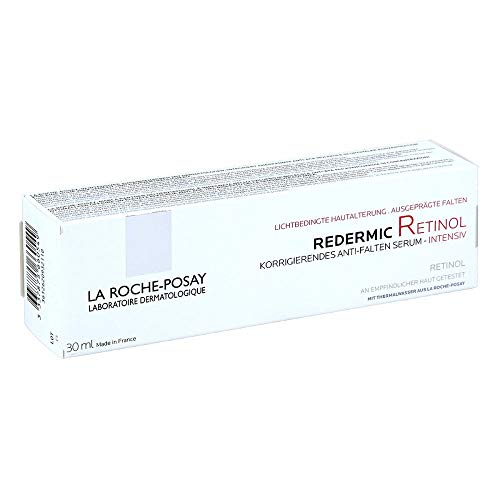
Real retinol, with a gentler on-ramp than most
La Roche-Posay Redermic R Retinol Face Cream
Redermic R uses pure retinol rather than a weaker derivative, plus lipo-hydroxy acid for light exfoliation and the brand's booster complex to blunt the sting. It's for people who want to take wrinkles and texture seriously without jumping to a prescription retinoid.
$54.97fromAmazonMost drugstore anti-aging creams lean on retinol derivatives, which are gentler but slower. Dermstore places Redermic R in the stronger over-the-counter tier because it uses pure retinol, which is why it comes up as a bridge product for people stepping down from a prescription retinoid or working their way up to one. If you've been using a mild retinol serum and seeing nothing, this is the sensible next rung.
The formula is built to make retinol tolerable, not just potent. The brand's retinol booster complex and thermal spring water are there to cut the discomfort that usually comes with this ingredient, and the micro-exfoliating lipo-hydroxy acid works on surface texture while the retinol does slower work underneath. Owners with sensitive skin repeatedly say they got through the adjustment period on this when other retinols wrecked their barrier.
The texture is light and velvety rather than heavy, and it layers under a moisturizer without pilling for most people. It's a night product — put it on clean, dry skin, wait a few minutes, then moisturize over it. Start two nights a week. If your skin stays calm after a couple of weeks, go to three, then every other night. Rushing this is how people quit.
Flaws but not dealbreakers
Retinol is retinol. Expect some dryness, flaking, or redness in the first few weeks, and expect breakouts to look worse before they look better if you're acne-prone. That's normal, but it's also the reason a lot of tubes end up abandoned in a drawer.
It makes your skin more sun-sensitive, so daily sunscreen isn't optional while you use it. And retinol is generally avoided during pregnancy and breastfeeding — check with your doctor before starting if that applies to you.
Also greatOn sale
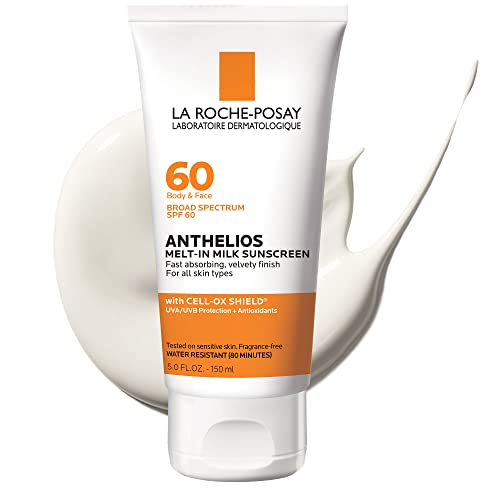
High protection in a texture you won't mind wearing daily
La Roche-Posay Anthelios Melt-In Milk SPF 60
Anthelios Melt-in Milk is broad-spectrum SPF 60 in a thin, fast-absorbing lotion that works on both face and body. It's water-resistant for 80 minutes and skips oxybenzone and octinoxate, and it's the sunscreen most likely to survive in your routine because it doesn't feel like sunscreen.
$28.49fromAmazonList priceThe best sunscreen is the one you'll actually put on every morning, and this is that sunscreen for a lot of people. It spreads thin, absorbs in under a minute, and leaves a soft, slightly hydrated finish instead of a greasy mask. Owners with brown skin consistently say it disappears without a chalky cast, which is the single biggest reason people abandon a high-SPF formula.
SPF 60 clears the American Academy of Dermatology's threshold of SPF 30 or higher by a wide margin, and it's broad-spectrum, so you're covered on UVA as well as UVB. Cell-Ox Shield adds an antioxidant complex on top of the filters. It's water-resistant for 80 minutes, which is the practical bar for a beach day or a long run, as long as you reapply after you towel off.
One bottle covering face and body is genuinely useful. You're not buying a face SPF and a body SPF and rationing the expensive one — you use the same thing on your neck, chest, and arms, which are the spots people skip and then regret. It layers under makeup better than most high-SPF lotions, though you'll want to let it set for a minute first.
It has also picked up an Allure Best of Beauty award, and it's one of the formulas that made the Anthelios line a default recommendation for sensitive and acne-prone skin. If you've broken out from sunscreen before, this is a reasonable place to restart.
Flaws but not dealbreakers
It uses chemical filters rather than a mineral screen. That's what makes it feel light and invisible, but if your dermatologist has steered you toward zinc oxide — after a procedure, or for rosacea — the Anthelios Mineral lotion below is the one you want instead.
Using it head to toe means you'll go through the bottle quickly. A proper body application is more product than most people think, and stretching it is the surest way to get less protection than the label promises.
Who this is for
This guide is for you if you've got sensitive, reactive, acne-prone, or eczema-prone skin and you want a routine that won't set it off. It's also for anyone who's been buying skincare based on packaging and wants a shortcut to the handful of La Roche-Posay products that dermatologists and editors keep naming. You don't need all eight. A cleanser, a moisturizer, a sunscreen, and one targeted treatment is a complete routine, and three of those four are picks here.
It's not for you if you're managing something serious — cystic acne, persistent eczema, melasma — on your own. Owners with mild breakouts do well with the Effaclar treatment; owners whose acne got worse say plainly that they had to move on to something prescription-strength. See a dermatologist rather than working through the shelf. We also stuck to La Roche-Posay here, so if you want to know how these compare with the rest of the market, our category guides cover that ground.
How we picked
Skin concern match: each pick had to be the obvious answer for a real problem — irritation, breakouts, dryness, sun, early wrinkles — not just a nice-smelling cream. Ingredients that earn it: we looked for named actives with evidence behind them, like ceramide-3, niacinamide, 5% panthenol, salicylic acid, and pure retinol. Fragrance and irritants: fragrance-free and non-comedogenic formulas came first, backed by EWG's low-to-moderate hazard ratings and Verywell Health's reporting on eczema-friendly standards. Sun protection: broad-spectrum SPF 30 or higher, per the American Academy of Dermatology, with both mineral and chemical options covered. Texture and daily use: published reviews and recurring owner themes told us what pills, what leaves a cast, and what you'll still be using in a month.
Other la roche-posay skincare worth considering
If you want a 100% mineral sunscreen: The La Roche-Posay Anthelios Mineral Sunscreen SPF 50 ($25.97) — Anthelios Mineral SPF 50 uses zinc oxide and titanium dioxide only, with no chemical filters. Good Housekeeping's dermatologist panel singles it out for rosacea and post-procedure skin, and it's the one to choose if your skin reacts to chemical screens or you're pregnant and want to keep things simple. The trade-off is real and the brand admits it on the label: it can leave a white cast. Owners with fair skin say it fades in a few minutes; owners with deeper skin tones say it doesn't, and they're blunt about it. Warm a small amount between your fingers and work it in section by section, or look at a tinted mineral formula instead. The 3-ounce size travels well but won't last long if you use it on your body.
If you want a spot treatment for breakouts: The La Roche-Posay Effaclar Salicylic Acid Acne Treatment ($18.79) — This Effaclar gel-cream pairs salicylic acid with LHA for exfoliation, niacinamide and Procerad for post-acne marks, and a mattifying finish that sits fine under makeup. The brand's own clinical claims put blemishes down 44% and blackheads down 66% after four weeks. Owners with oily, occasionally breakout-prone skin report calmer, less inflamed spots by the next morning, and it's less punishing than a standalone benzoyl peroxide treatment — dermatologists have long favored formulas that pair an acne active with niacinamide for exactly that reason, as InStyle has noted. It's a targeted treatment, not a full-face routine, and owners whose acne turned severe say honestly that they outgrew it and needed something stronger. Start there and escalate if you need to.
If you want a cleanser that won't leave your skin tight: The La Roche-Posay Toleriane Purifying Foaming Facial Cleanser ($19.99) — The Toleriane Purifying Foaming Cleanser is soap-free, sulfate-free, and fragrance-free, formulated at a skin-friendly pH with niacinamide and ceramide-3 in the mix. Byrdie points to that combination as the reason sensitive skin doesn't get that squeaky, stripped feeling afterward. It's a gel that foams, so it handles sunscreen and light makeup — plenty of people use it as the second step of a double cleanse — without leaving residue. The bottle is large and you need very little, so it lasts a long time. It's aimed at normal-to-oily sensitive skin; if your skin runs very dry, a cream or milk cleanser will treat you better. Nothing here is exciting, which is precisely the point of a cleanser.
More from La Roche-Posay
Here's the rest of what our research turned up in the La Roche-Posay range. It isn't every product the brand sells, and a product landing here isn't a knock — it just serves a narrower shopper than the picks above.
The La Roche-Posay Hyalu B5 Pure Hyaluronic Acid ($49.99) — The Hyalu B5 serum is the one to look at if hydration is your specific problem: skin that feels tight by afternoon, fine lines that look worse when you're dehydrated, makeup that clings to dry patches. It combines two molecular weights of hyaluronic acid with vitamin B5, a pairing Cosmopolitan has flagged in hyaluronic-acid comparisons as a way to hydrate at the surface and a little deeper at once. It's allergy-friendly and fine for sensitive skin, and it goes on under your moisturizer rather than replacing it. This particular listing comes as a two-pack, which suits someone already sold on the serum more than someone sampling it. It's also the priciest way into the line, and a hyaluronic acid serum is the most skippable step in a basic routine — if you're building from scratch, buy the moisturizer and the sunscreen first.
Is La Roche-Posay worth it?
La Roche-Posay occupies an unusual spot: it's sold on drugstore shelves but formulated more like a pharmacy brand, and dermatologists recommend it constantly as the sensible alternative to prestige skincare for sensitive skin. The consistency is what earns that. Nearly every formula is built on the brand's prebiotic thermal spring water, most skip added fragrance, and the ingredient lists stay short enough that you can figure out what's in them. That matters when your skin reacts to things. The Anthelios sunscreens in particular are treated as a default recommendation for sensitive and acne-prone skin, and EWG's Skin Deep puts the core Toleriane and Anthelios formulas in its low-to-moderate hazard range. Where it falls short of prestige rivals is novelty — you won't find the newest exotic active here, and some formulas feel dated next to what Korean and indie brands are doing with texture. Also worth checking: not every product in the wider range is fragrance-free, despite the brand's reputation.
Not set on La Roche-Posay?
If the Anthelios Mineral cast is a dealbreaker, this guide covers tinted and sheerer zinc-based options from across the market. our guide to mineral sunscreens for the face →
Worth a look before you commit to Hyalu B5, since this is a crowded category with strong options at every price. our hyaluronic acid serum guide →
If you want peptides, growth factors, or richer textures than Toleriane offers, this guide goes well beyond one brand. our anti-aging moisturizer guide →
How to layer these products
The order is simpler than the internet makes it sound. Morning: cleanser, treatment serum if you use one, moisturizer, sunscreen last, and give each layer a minute to settle so nothing pills. Night: cleanser, retinol on dry skin, then moisturizer over it. Don't start two new actives in the same week — if something stings, you want to know which thing did it. Introduce retinol two nights a week and build up slowly. Keep the Cicaplast balm out of the routine entirely and treat it as first aid, dabbed on the spots that need it. Store everything away from a sunny windowsill; heat is hard on sunscreen filters and retinol in particular.
Questions we get
Is La Roche-Posay good for sensitive skin?
That's the whole premise of the brand, and it mostly holds up. Most core formulas are fragrance-free, non-comedogenic, and built on short ingredient lists, and EWG's Skin Deep rates the main Toleriane and Anthelios products in its low-to-moderate hazard range. But sensitive skin is individual. Patch-test a new product on your jaw for a few days before you put it all over your face.
What's the difference between the Toleriane and Effaclar lines?
Toleriane is the sensitive-skin line: gentle cleansers and moisturizers meant to keep your barrier calm. Effaclar is the acne line, built around actives like salicylic acid and LHA to clear pores and fade post-acne marks. Plenty of people use both — an Effaclar treatment on breakouts, Toleriane for everything else.
What is thermal spring water, and why is it in nearly every product?
It's mineral-rich water from a single spring in France, and La Roche-Posay uses it as a prebiotic base across its formulas. The idea is that it soothes skin and supports the microbiome on your skin's surface. SELF and other brand comparisons flag it as the brand's main differentiator. Treat it as a pleasant baseline rather than the reason a product works — the ceramides, niacinamide, and retinol are doing the heavy lifting.
Which La Roche-Posay sunscreen won't leave a white cast?
The Anthelios Melt-in Milk SPF 60. It uses chemical filters in a thin lotion that absorbs fast, and owners across a range of skin tones say it sinks in without turning them gray. The Anthelios Mineral SPF 50 protects just as well but will cast, because that's what zinc oxide and titanium dioxide do. Choose the mineral version only if you specifically need mineral filters.
Which product is best for eczema-prone skin?
Cicaplast Balm B5, for flare-ups and rough patches. It's fragrance-free, paraben-free, and lanolin-free, with panthenol and madecassoside for barrier repair, and the label clears it for babies from one week old, so parents use it on kids too. Verywell Health notes that many Toleriane and Anthelios formulas also meet fragrance-free, non-comedogenic standards for eczema-prone skin. For an active flare, see your doctor — a balm supports treatment, it doesn't replace it.
Can you use Cicaplast Balm B5 on your face and lips?
Yes on your face, where people use it as an overnight patch on dry or irritated spots rather than as an all-over moisturizer. The label covers chafed, chapped, and cracked skin, which is exactly what winter lips are, and plenty of owners use it that way. It's thick, so a tiny amount is enough.
Why you should trust us
For this guide:
- We read published reviews and award coverage from Allure, Wirecutter, Byrdie, InStyle, Cosmopolitan, Good Housekeeping, Real Simple, SELF, Dermstore, and Verywell Health, along with the American Academy of Dermatology's sunscreen guidance and EWG's Skin Deep ratings.
- We compared full ingredient lists, active percentages, and label claims across every La Roche-Posay product in this guide.
- We read through owner feedback looking for recurring themes rather than one-off complaints, which is how the pilling, the white cast, and the retinol adjustment period ended up in the flaws.
- We read owner reviews on every listing, weighted toward the critical ones, because that is where the recurring failures show up.
- We have a systematic way of automatically fetching the latest prices, so the numbers on this page stay current.
- This is a research-focused guide, so the team may not own every product listed — though we often do own the top winners, which gives us extra context for the recommendations.
- We don't accept free products, and the retailer commission never changes which product we recommend.
Sources
Best Face Moisturizers, Tested by Editors - Allure, Allure
The Best Sunscreens for Your Face, According to Dermatologists - Good Housekeeping, Good Housekeeping
We Tested the Best Drugstore Skincare Products - Byrdie, Byrdie
La Roche-Posay Toleriane Double Repair Moisturizer Review, NYT Wirecutter
Sunscreen FAQs - American Academy of Dermatology, American Academy of Dermatology
The Best Acne Treatments, According to Dermatologists - InStyle, InStyle
Cicaplast Baume B5: Why Dermatologists Love It - Real Simple, Real Simple
Best Hyaluronic Acid Serums of 2026 - Cosmopolitan, Cosmopolitan
Skin Deep Ingredient Database - La Roche-Posay Product Ratings, Environmental Working Group (EWG)
Best Retinol Products for Beginners - Dermstore Blog, Dermstore
Best Body Lotions for Eczema and Dry Skin - Verywell Health, Verywell Health
La Roche-Posay Anthelios Sunscreen Line Review, SELF
Amazon product listings and owner reviews for all 8 products
Manufacturer specification pages for each product
Some passages in this guide may be paraphrased with AI help. Prices are refreshed automatically.
More like this.
Continue exploring beauty reviews and recommendations.

The Best Paula's Choice Skincare
Paula's Choice built its name on a simple promise: no fragrance, no essential oils, and a published reason for every ingredient. That matters more than it…

The Best At-Home Skincare Devices
A good at-home skincare device does one thing for your evening: it makes five minutes at the bathroom mirror feel worth it. Microcurrent wands nudge…

The Best Skincare Gift Sets
Buying skincare for someone else is a strange kind of shopping. You're picking something that goes on their face, twice a day, based on whatever you've…

The Best Cetaphil Skincare
Skincare gets complicated fast, and most of it doesn't need to be. If your face stings after washing, flakes by lunch, or breaks out every time you try…

The Best Korean Skincare Products for Beginners
Korean skincare gets sold as a ritual: ten steps, a shelf of bottles, glass skin. In practice, the part that changes how your face looks is much smaller.…

The Best Skincare Routine Sets for Beginners
A first skincare routine doesn't need ten steps. It needs three: something to wash your face with, something to put moisture back, and sunscreen every…