The Best Portable Audio Gear
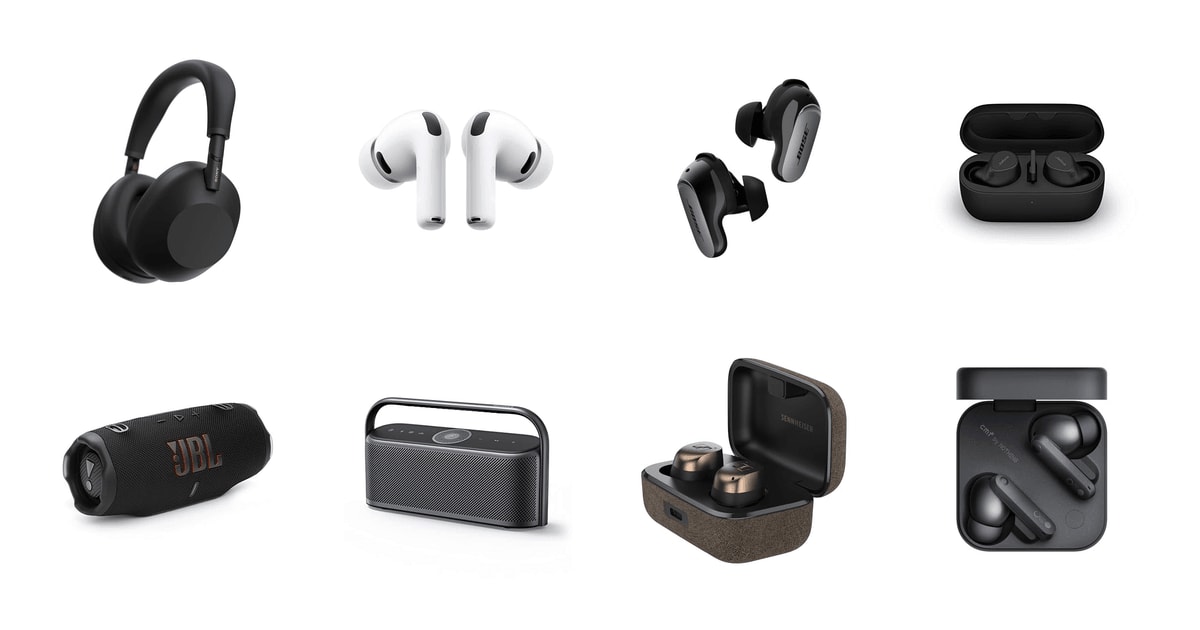
Portable audio is one of the few gadget categories where a good pick genuinely changes your day. The right noise-canceling headphones turn a screaming jet engine into a soft hush. The right earbuds let you take a call from a sidewalk without shouting. And the right speaker survives a pool deck, a dusty campsite, and a kid knocking it off a picnic table. What you actually need depends on where you'll use it — a commuter, a person on video calls all day, and someone packing for the beach want three different things.
Here's the honest part: nothing in this category is great at everything. Deep noise cancellation needs a tight seal, and a tight seal gets uncomfortable after a few hours. Small speakers can't move enough air for real bass, no matter what the marketing says. Batteries in tiny earbuds degrade after a couple of years of daily charging, and almost none of them are replaceable. Waterproof ratings are lab numbers, not promises. You'll be trading something away no matter which one you pick.
We looked at published lab measurements, manufacturer spec sheets and the patterns in owner feedback to sort out which of these actually earn a spot in your bag. We think that the Sony WH-1000XM6 is the best portable audio gear for most people, and that the Apple AirPods Pro 3 is the one to buy if you carry an iPhone and want something that disappears in your pocket.
Everything we recommend

The deepest quiet you can buy, if you can carry the case
The pocketable pick if you already carry an iPhone

The speaker that survives the pool, the sand and the drop

Nearly everything the expensive earbuds do, for far less
At a glance
| Product | Battery Life | Noise Cancellation | Price | |
|---|---|---|---|---|
| Sony WH-1000XM6 The Best Noise Cancelling WirelessTop pick | — | Noise Cancellation | $458 |
| Apple AirPods Pro 3 Wireless Earbuds withAlso great | Up to 8 Hours | Noise Cancellation | $199On sale |
 | Bose QuietComfort Ultra EarbudsAlso consider | Up to 6 Hours | Noise Cancellation | $249.99On sale |
 | Jabra Evolve2 True Wireless Earbuds - in-EarAlso in lineup | — | Noise Cancellation | $355 |
| JBL Charge 6 Portable Bluetooth SpeakerAlso great | 28-Hour Battery | — | Check price |
 | Soundcore Motion X600 Portable Bluetooth Speaker withAlso in lineup | 12-Hour Playtime | — | $109.95On sale |
 | Sennheiser Momentum True Wireless 4 Smart EarbudsAlso consider | Up to 30 Hours | Noise Cancellation | $299.95 |
| CMF Buds Pro 2 Wireless Earbuds withBudget pick | 43H Playtime | — | $49 |
How we picked
Noise cancellation. We compared published lab measurements and manufacturer attenuation claims, and weighed them against owner reports of real commutes and flights. Anything that couldn't quiet a plane cabin or an open-plan office didn't make the picks.
Sound and codecs. We looked at independent frequency-response measurements and codec support — LDAC and aptX Lossless now show up well below flagship pricing. We treated app-dependent EQ fixes as a knock, not a feature.
Battery and charging. We compared rated playback figures against published standardized drain results where they existed, plus fast-charge claims. Roughly 30 hours for headphones and 24 for speakers is the current baseline.
Fit and durability. We treated IP ratings as a hard floor — below IP54 is a red flag for anything you'll sweat in — and read owner feedback for the comfort complaints that only show up after a few hours of wear.
Calls and connectivity. We compared microphone array counts and beamforming approaches against owner reports from daily video calls, and required multipoint Bluetooth on anything meant for work.
Top pick
The deepest quiet you can buy, if you can carry the case
Sony WH-1000XM6 The Best Noise Cancelling Wireless
These over-ear headphones cancel more noise than anything else here, and they fold into a compact case for travel. Sony rates them for 30 hours, they connect to two devices at once, and the twelve-mic array keeps your voice clear on calls.
$458fromAmazonIf quiet is the whole point, over-ear wins and this is the best of them. Physics is on your side here: a big earcup seals against your head and blocks sound before any electronics get involved. Sony's QN3 processor handles the rest, working across twelve microphones. Owners describe airplane cabins, loud households and blow dryers dropping to near silence. That's the experience you're paying for.
The predecessor set the bar high. RTINGS.com measured the WH-1000XM5 attenuating 97.2% of noise at 300Hz, and Sony says the QN3 chip is seven times faster than the QN1 that powered it. Battery held up too — Consumer Reports' standardized 75dB drain test got 31.4 hours out of the XM5, about 4% past Sony's rated claim. Expect a long-haul flight and then some on one charge.
Calls are the quiet strength. Six of the mics run AI beamforming with wind resistance, so you can take a call walking down a windy street without the person on the other end asking you to repeat yourself. If you work from cafes or take meetings on the move, this matters more than another decibel of cancellation.
The case folds flat and closes with a magnet, and at just over half a pound these don't feel heavy on your head. The headband is wider and asymmetrical with a stepless slider, which is Sony's answer to the pressure points that plagued earlier models.
Flaws but not dealbreakers
The tuning splits people. Some owners find the out-of-box sound flat and lifeless until they spend time in the EQ, and anyone coming from a bass-forward brand like Skullcandy will notice the difference immediately. The EQ presets fix most of it, but you shouldn't have to reach for an app to like how your headphones sound.
Comfort isn't universal. Several long-term owners report the clamp gets noticeable after a few hours, which is exactly when you need it most on a long flight. Try them on if you can before committing.
These are the most expensive thing in this guide by a wide margin, and a set of good earbuds gets you most of the way for a fraction of the outlay.
Also greatOn sale
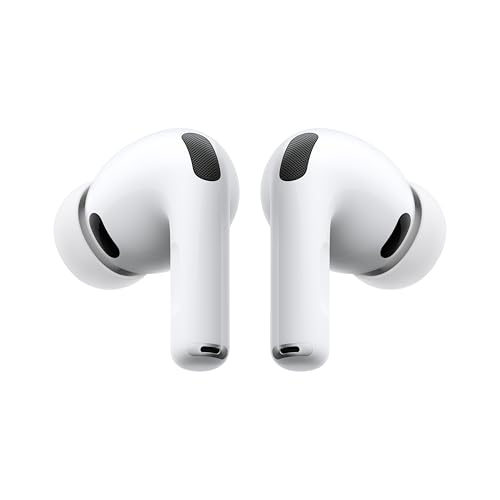
The pocketable pick if you already carry an iPhone
Apple AirPods Pro 3 Wireless Earbuds with
These slip into a pocket, pair to your Apple devices instantly, and cancel far more noise than the previous generation. The hearing aid feature has FDA clearance, which makes them the rare gadget that's also a legitimate health device.
$199fromAmazonList priceApple says these remove up to twice as much unwanted noise as the AirPods Pro 2, and the fit is a big part of why. There are now five ear tip sizes, up from three. That extra range matters more than it sounds — a good seal is most of what makes in-ear cancellation work, and owners who could never keep older AirPods in their ears report these finally staying put.
The hearing aid mode is a genuine category shift, not a spec bullet. The FDA cleared the AirPods Pro 3 as an over-the-counter hearing aid for mild-to-moderate hearing loss, which makes them the first mainstream earbuds clinically validated for it. If you or a parent has been putting off dealing with hearing loss because a real device felt like a big step, this is a far easier place to start.
The H3 chip recalculates spatial audio 48,000 times a second, double the H2's rate, so head tracking follows you without the lag that made earlier spatial audio feel like a gimmick. Add heart rate sensing across 50-plus workout types and live translation, and these do more than play music. Whether you want all that is a fair question, but it's there.
Battery runs up to 8 hours with cancellation on, or 10 hours in transparency with the hearing aid feature. That's a full workday of calls if you top off in the case at lunch.
Flaws but not dealbreakers
The tuning leans toward treble and bass with mids that some owners find recessed — vocals can sit further back than you'd like. If you mostly listen to podcasts or singer-songwriter material, that's worth knowing.
Long-term owners report the usual AirPods story: they're excellent for a year, then battery life starts sliding, and the batteries aren't user-replaceable. Budget for these as a multi-year purchase, not a decade-long one.
Outside Apple's ecosystem, you lose instant pairing, automatic device switching and most of the smart features. On Android these are just decent earbuds.
Also great
The speaker that survives the pool, the sand and the drop
JBL Charge 6 Portable Bluetooth Speaker
This is the portable speaker to grab for a backyard, a beach or a campsite. It's rated IP68 for dust and submersion, runs 24 hours on a charge, and the built-in power bank means it doubles as a phone charger.
Check priceatAmazonNothing else here handles abuse this well. JBL rates the Charge 6 for 1-meter drops and 1.5-meter submersion, and PCMag's verification testing confirmed a unit stayed fully functional after 30 minutes at that depth. If your speaker is going somewhere with sand, chlorine or clumsy hands, that's the spec that actually matters.
The battery story is generous. JBL rates 24 hours on a charge with 4 more available through Playtime Boost, and a 10-minute top-up buys you around 150 minutes of playback. The built-in power bank is the underrated part — you can bring one thing to a campsite and keep your phone alive with it.
AI Sound Boost analyzes the music in real time to push bass harder without distorting, and owners consistently describe deeper, punchier bass than the size suggests. Auracast lets you stereo-pair two Charge 6s or link a group of JBL speakers, which is the easy way to cover a bigger yard without buying something huge.
At just over two pounds and about nine inches wide, it fits in a beach bag without a fight. That's the whole appeal — it goes where a bigger speaker won't.
Flaws but not dealbreakers
It's a small speaker, and small speakers have limits. Owners are clear that it won't fill a large space or shake a room, so don't buy it expecting a party rig. Some also report an upper-midrange buzz at higher volumes that EQ won't fully remove.
There's no built-in microphone for calls, and no aux input — Bluetooth or nothing.
Budget pick
Nearly everything the expensive earbuds do, for far less
CMF Buds Pro 2 Wireless Earbuds with
These budget earbuds carry 50dB hybrid noise cancellation, LDAC hi-res streaming and multipoint pairing — features that used to require spending several times as much. The dial on the case is a genuinely good idea nobody else copied.
$49fromAmazonThe value here is hard to argue with. Third-party testing by GSMArena and SoundGuys put an earlier CMF Buds Pro at 45dB of cancellation, matching the Bose QuietComfort Earbuds II specification at a small fraction of the outlay. CMF rates this generation at 50dB. That's the kind of gap that used to define premium versus budget, and it's mostly gone.
The case dial is the feature you'll actually use every day. You twist it to change volume, tracks or noise modes without pulling out your phone or tapping precisely on a slippery earbud. Touch controls on earbuds are notoriously fiddly. A physical control you can find by feel in a coat pocket is just better.
Sound comes from an 11mm bass driver paired with a 6mm tweeter, tuned by Dirac, with LDAC for hi-res streaming from Android. Owners with large earbud collections repeatedly describe these as punching above their class — not the best they own, but startlingly close for what they cost.
Battery is generous: CMF rates 11 hours per charge and 43 hours with the case, and 10 minutes of charging buys about 3 hours. Multipoint Bluetooth 5.3 keeps them tied to your laptop and phone at once.
Flaws but not dealbreakers
The IP55 rating covers sweat and rain but not submersion. That's fine for a run in a drizzle and not fine for a pool.
Nobody claims these are the best-sounding or most comfortable earbuds around — even happy owners frame them as very good at everything rather than excellent at any one thing. If sound quality is your first priority, spend more.
There's no wireless charging, and the plastic build feels like what it costs.
Who this is for
This guide is for anyone shopping for one good piece of portable audio gear: headphones or earbuds for commuting and calls, or a speaker for outdoors. If you fly often, work in a noisy office, or want your music to survive a beach day, there's a pick here for you. If you're building a home listening setup, buying wired studio headphones, or shopping for a car stereo, look elsewhere — everything here is battery-powered and Bluetooth-first.
You should probably wait if your current gear still works well and your only complaint is sound quality. The biggest recent shifts have been in cancellation depth, hearing health features and how cheap hi-res codecs have become — not in raw audio fidelity. If your two-year-old earbuds still hold a charge and seal properly, upgrading buys you less than the marketing suggests.
How we picked
We narrowed the field on five things. Noise cancellation: published lab attenuation figures plus owner accounts of actual planes and offices, since a spec sheet can't tell you how a seal holds up in real life. Sound and codecs: independent frequency-response measurements and support for LDAC or aptX Lossless, which no longer require flagship pricing. Battery and charging: rated playback backed by standardized drain testing where it exists, with fast-charge time as a tiebreaker. Fit and durability: IP54 as a hard floor for anything you'll sweat in, and long-wear comfort complaints from owners who kept them on for hours. Calls and connectivity: microphone arrays that hold up on a windy sidewalk, and multipoint Bluetooth as a baseline, not a luxury.
Other portable audio gear worth considering
If you want the best cancellation in something that fits in your pocket: The Bose QuietComfort Ultra Earbuds ($249.99) — The Bose QuietComfort Ultra Earbuds run CustomTune, which scans the geometry of your ear canal every time you put them in — Bose says it takes under 200 milliseconds — and tunes cancellation and sound to your ears. Owners who've cycled through the competition consistently rank the quiet here at the top for an in-ear design. Nine combinations of tips and stability bands mean you can usually find a seal. What you give up is battery, at roughly 6 hours, and water resistance, at only IPX4. The case is bulky, and the app doesn't work in airplane mode, which is an odd miss on a product built for flying.
If sound quality is what you care about most: The Sennheiser Momentum True Wireless 4 Smart Earbuds ($299.95) — The Sennheiser Momentum True Wireless 4 is the audiophile choice here. SoundGuys measured the previous generation at only ±2.8dB deviation from the Harman target curve, the flattest response of any consumer true-wireless earbud they measured. Bluetooth 5.4, aptX Lossless through Snapdragon Sound, LE Audio and Auracast make it the most future-proof set in this lineup, and Sennheiser rates 30 hours with the case. But cancellation is merely fine rather than class-leading, and a meaningful share of owners report hardware failures within the first year along with frustrating warranty experiences. That risk is the reason it's not a pick.
The competition
This is what our research surfaced, not a survey of everything for sale. Portable audio turns over fast, and there are capable products from smaller brands that never came up. Here's what else we looked at and why it didn't make the cut.
The Jabra Evolve2 True Wireless Earbuds - in-Ear ($355) — The Jabra Evolve2 True Wireless is built for one job: video calls. Four microphones plus bone conduction sensors isolate your voice, a USB dongle gives you a more stable link than Bluetooth for meeting apps, and multipoint keeps your laptop and phone connected at once. Owners who use them for hybrid work genuinely like them and praise the seamless handoff between a Teams call and phone audio. But the failure reports are hard to ignore — earbuds that won't take a charge, microphones that die after a couple of months, and an aggressive sleep mode that clips the first second or two of audio when you start playing something. Jabra's second-generation model with the 10-microphone array is the one to want; enterprise testing credits that design with cutting open-plan office noise by up to 90% compared to single-mic setups. If your employer is buying and will replace a failed unit, this is still worth a look.
The Soundcore Motion X600 Portable Bluetooth Speaker with ($109.95) — The Soundcore Motion X600 is the sound-quality pick among portable speakers, and it's the one to get if you mostly listen indoors. Five drivers and five amplifiers, including an upward-firing one, produce a genuinely wide sound stage, and TechRadar measured it hitting its claimed 50W peak output. It supports LDAC for hi-res streaming and IPX7 protection against immersion. It loses on the things that make a speaker portable, though. At five pounds it's twice the weight of the JBL, the rated 12-hour battery is half as long, IPX7 means no dust protection for a beach or campsite, and there's no power bank. Owners also note the spatial effect is subtler than the marketing implies, and at least one reports a failure inside a year of heavy outdoor use. Buy it for a patio or a kitchen, not a backpack.
Care and battery life
The battery is what kills most portable audio gear, and you have some control over it. Lithium cells age fastest when they sit at full charge in a hot place, so don't leave earbuds in a car in July or store a speaker plugged in all summer. If you're putting a speaker away for a few months, charge it to roughly half first. For earbuds, wipe the tips and the charging contacts every couple of weeks — earwax buildup on contacts is the single most common reason a bud stops charging, and people replace perfectly good earbuds over it. Swap silicone tips when they lose their springiness, since a worn tip means a bad seal, and a bad seal means the noise cancellation you paid for stops working. Rinse and fully dry any water-rated speaker after it meets salt water or chlorine.
Questions we get
Which noise-canceling headphones should I get?
For the deepest, most consistent quiet, get over-ear headphones — the Sony WH-1000XM6 is our pick. A large earcup physically blocks sound before the electronics do anything, so it starts ahead of any earbud. If you need something pocketable, the Bose QuietComfort Ultra Earbuds are the closest an in-ear design gets.
Are the AirPods Pro 3 worth upgrading from the Pro 2?
If your Pro 2 still holds a charge, probably not for the sound alone. The real reasons to upgrade are the hearing aid mode, which has FDA clearance for mild-to-moderate hearing loss, and the wider range of ear tip sizes if you've struggled to get a seal. Apple also claims roughly double the noise reduction, which owners do notice.
Can wireless earbuds really work as hearing aids?
Yes, with a real caveat. The AirPods Pro 3 have FDA clearance as an over-the-counter hearing aid for mild-to-moderate hearing loss, which is a genuine clinical validation, not a marketing claim. But that's a specific range — if your hearing loss is more severe, or you haven't had it evaluated, see an audiologist first. Think of this as a low-friction starting point rather than a replacement for prescription devices.
LDAC or aptX Lossless — which is better?
aptX Lossless is technically superior. What Hi-Fi? confirmed it transmits true CD quality, 16-bit/44.1kHz with zero compression, when radio conditions allow it. LDAC tops out at 990kbps and can show audible compression artifacts at high volume. That said, both are far better than standard SBC, and which one you can use depends on your phone — aptX Lossless needs a Snapdragon Sound device, while LDAC is broadly supported on Android.
How long before earbud batteries wear out?
Expect meaningful degradation after about two years of daily charging, and a noticeable drop by three. Tiny cells get charged and drained more often than a phone battery, and almost no earbuds let you replace them. Heat accelerates it, so keeping them out of hot cars genuinely extends their life.
What IP rating do I need for workouts?
IP54 is the floor for sweat and light rain, and anything below that is a red flag now. IP55, like the CMF Buds Pro 2, handles a rainy run fine. If you want to swim or drop something in a pool, you need IPX7 or IP68 — and note that IPX7 covers water but not dust, which matters at a beach or campsite.
Why you should trust us
For this guide:
- We read published lab measurements from RTINGS.com, SoundGuys, Consumer Reports, PCMag and TechRadar covering noise attenuation, frequency response, battery drain, waterproofing and speaker output.
- We compared manufacturer specifications for every product here, including chipset claims, codec support, IP ratings and rated battery life.
- We read through owner feedback for recurring themes — comfort after several hours, long-term battery behavior, charging-contact failures and how the noise cancellation holds up on actual commutes.
- We read owner reviews on every listing, weighted toward the critical ones, because that is where the recurring failures show up.
- We have a systematic way of automatically fetching the latest prices, so the numbers on this page stay current.
- This is a research-focused guide, so the team may not own every product listed — though we often do own the top winners, which gives us extra context for the recommendations.
- We don't accept free products, and the retailer commission never changes which product we recommend.
Sources
Best Noise-Canceling Headphones 2025 – RTINGS.com, RTINGS.com
True Wireless Earbuds Roundup 2025 – The Verge, The Verge
Best Wireless Earbuds 2025 – Wirecutter (NYT), Wirecutter
Portable Bluetooth Speaker Reviews – RTINGS.com, RTINGS.com
AirPods Pro 3 Review – 9to5Mac, 9to5Mac
FDA Hearing Aid Guidance for OTC Devices 2024, U.S. Food and Drug Administration
Sennheiser Momentum True Wireless 4 Review – SoundGuys, SoundGuys
Bluetooth Audio Codec Comparison: LDAC vs aptX Lossless – What Hi-Fi?, What Hi-Fi?
Global True Wireless Earbuds Market Report 2025 – IDC, IDC (International Data Corporation)
Best Portable Speakers 2025 – PCMag, PCMag
Over-Ear Headphone Battery Life Testing 2025 – Consumer Reports, Consumer Reports
Anker Soundcore Motion X600 Review – TechRadar, TechRadar
Amazon product listings and owner reviews for all 8 products
Manufacturer specification pages for each product
Some passages in this guide may be paraphrased with AI help. Prices are refreshed automatically.
More like this.
Continue exploring electronics reviews and recommendations.

The Best Outdoor Tech Gear
Outdoor electronics live a hard life. They ride in a hip belt through a rainstorm, sit on a dashboard at 130 degrees, get dropped on granite, and then…

The Best HyperX Gaming Gear
Gaming gear lives on your desk, your head, and under your hands for hours at a time. That's why the boring stuff matters more than the spec sheet does. A…

The Best Razer Gaming Gear
Gaming gear is the part of your setup you actually touch. A mouse that fits your hand wrong will nag at you for years, and a headset that pinches will end…

The Best Fishing Gear for Beginners
Fishing asks less of you than almost any other outdoor hobby. You need something to cast with, something to tie on the end, and a place to stand. But the…

The Best Ice Fishing Tip-Ups and Hard-Water Gear
Tip-up fishing is a waiting game you play with your feet up. You set a baited line under the ice, walk away, and watch for a flag. When one pops across…

The 8 Best Snorkeling Gear Sets, Masks & Fins of 2026: Tested & Reviewed
Expert-tested snorkeling gear for every budget: complete sets, standalone masks, and fins from Cressi, TUSA, Atomic Aquatics, Mares, and more.