The Best Snorkeling Gear
We compared complete sets, standalone masks, a full-face option and a serious pair of fins to find what actually seals, breathes and moves you through the water.
Snorkeling gear either disappears or ruins your morning. When the mask seals, you forget it's on your face and spend an hour watching a parrotfish work over a coral head. When it doesn't, you spend that hour treading water, pulling the mask off, spitting in it, cursing, and putting it back on. The difference almost always comes down to the skirt against your skin and the glass in front of your eyes. Fins matter too, but they're a distant second. You can snorkel in a bad pair of fins. You can't snorkel in a leaking mask.
Here's the honest part: no mask fits every face, and nobody can promise you a seal from a product page. Face geometry is the whole ballgame — bridge height, cheekbone width, the space above your lip — and a mask that's perfect for your friend can leak on you all day. So we weighted our evaluation toward the things that travel across face shapes: skirt material, lens quality, how forgiving the fit range is, and whether the snorkel keeps water out when a boat wake rolls through. We also drew hard on what owners report about seal problems, because that's where the pattern shows up.
We also split the lineup honestly. Some of these are complete kits, some are mask-and-snorkel combos, one is a full-face mask, one is a pair of fins built for people who swim hard. They aren't competing for the same buyer, so we judged each on whether it does its own job well. We think that the Cressi Palau SAF Set is the best snorkeling gear for most people, and that the U.S. Divers Cozumel Set is the one to buy if you're outfitting a family for a few calm-water days and want fins included without spending much.
Everything we recommend

A silicone-skirted mask, a snorkel that stays dry, and short fins that fit in a suitcase

Everything you need for a protected lagoon, including the fins and a bag to rinse them in

Angled tear-drop lenses open up the view downward, where the interesting stuff usually is
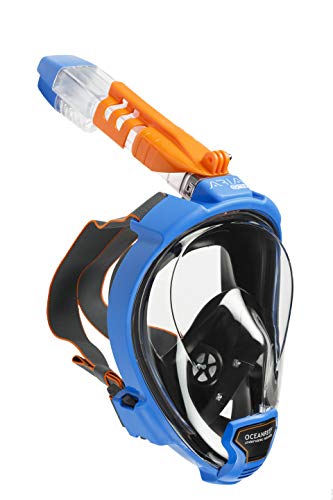
Breathe through your nose, see almost everything, and never bite a mouthpiece again

Channeled blades that turn a tired kick into forward motion, hour after hour
The Best Snorkeling Gear
Best complete set for most snorkelers
Cressi Palau SAF Set Mask+Snokel+Fins Sets
score
PROS
- Soft hypoallergenic silicone skirt seals on a wide range of faces
- Single tempered-glass lens gives an open, uninterrupted view
- Open-heel fins work barefoot or over neoprene socks
- Short blades pack flat in a checked bag
- Quick-release buckles make on-the-water adjustments easy
CONS
- No prescription lens option in this configuration
- Fin sizing runs in broad ranges, so the strap does a lot of the work
- Seal complaints show up more often than on the standalone masks
This is the set that gets the fundamentals right. The mask uses a soft, clear silicone skirt — not the stiff PVC that shows up in cheap kits — and silicone is what keeps a seal when the water's cool and your face is cold. The snorkel's dry top closes when you go under, so a wave slapping over the tube doesn't turn into a mouthful. Those two things fix most of what goes wrong on a snorkel trip.
The fins deserve their own mention. They're short — deliberately so — and they lay flat in a suitcase instead of sticking out of it like a pair of oars. In the water they move you along at a relaxed, unhurried kick. You won't win a race in them. But you're not racing. You're drifting over a reef looking for something interesting, and these do that without leaving your calves tight the next morning.
Open-heel is the right call for a travel kit. Bare feet on a boat deck, neoprene socks on a rocky Mediterranean entry, a thin bootie when the water's chilly — the adjustable strap covers all three. Full-foot fins are lighter, but they lock you into one setup. If you snorkel in more than one kind of place, the flexibility is worth the small weight penalty.
The weak spot is seal consistency. Owner feedback on this kit skews positive but carries a persistent thread of leak complaints, and that tracks with a mask sold as a one-size-ish part of a bundle rather than chosen for your face. If you have a high nose bridge or a deep-set upper lip, try it in the pool before the flight. And if optics are what you care about most, treat this as an excellent starting kit and swap the mask later.
Best budget set for calm water
U.S. Divers Cozumel Snorkeling Set. Adult Snorkel
score
PROS
- Complete kit — mask, snorkel, fins and a mesh gear bag
- Vented blade fins push you along better than the price suggests
- One-way purge valve clears the snorkel with one sharp breath
- Wide size range, and the large sizes genuinely fit wide feet
CONS
- Two-window mask design narrows your peripheral view
- Skirt seals less reliably than the silicone options here
- Splash top, not a dry top — chop gets in
- Full-length fins take up real luggage space
Buy this if your snorkeling happens in a bay where the water barely moves. That's not a knock. A huge share of snorkeling is exactly that: a protected cove, a resort reef, a spring-fed hole, water you could nap in. In those conditions this kit does everything you need it to, and it does it for a fraction of what the better sets cost.
The fins are the standout. Owners who bought the set mainly for the fins keep saying the same thing — they fit, they push water, and they hold up for a two-week trip. The vented blades reduce the shove you feel on the up-kick, which matters more than you'd think over an hour. The mesh bag isn't a throwaway either; wet gear that can drip and dry doesn't turn into a smell problem in your suitcase.
The mask is where the compromises live. Two windows instead of one means a bar across your vision, and the skirt doesn't seal as broadly as silicone does. Plenty of people report no leaks at all. Others get a slow trickle under the nose that never quite stops. That's a coin flip you're accepting for the price, and in warm calm water a trickle is an annoyance rather than a problem.
One hard limit: don't take this into surf, current, or open water. The splash-top snorkel keeps out spray, not waves, and a mask that's borderline in a lagoon becomes a genuine hassle in chop. If that's your snorkeling, step up to the Cressi set and be done with it.
Best mask if you want to actually see
Cressi Big Eyes Evolution Crystal 2-Lens Diving
score
PROS
- Patented inclined, inverted tear-drop lenses widen the lower field of view
- Tempered glass with very low distortion
- Crystal silicone skirt resists yellowing over years of sun
- Swiveling integrated buckles adjust fast with one hand
- Works equally well for snorkeling and recreational scuba
CONS
- Mask only — no snorkel, no fins
- Dual-lens frame holds more air than a frameless mask
- Swapping in corrective lenses is genuinely fiddly
- Some faces get a leak above the upper lip
The lens geometry is the whole point, and it works. The lenses tilt inward and down, which means when you look toward your fins — or toward a reef eight feet below you — you see reef instead of frame. Flat-lens masks cut that off. Once you've snorkeled with the wider lower view, going back to a flat mask feels like looking through a mail slot.
The glass is the other half of it. Tempered, low-distortion, and clear enough that colors read correctly instead of going flat and blue-gray. If you take a camera down, or you're the person who wants to actually identify the fish rather than just see that a fish went by, this is the difference. Owners who've cycled through several masks tend to land here and stay.
Cressi's crystal silicone is worth paying attention to on a mask you plan to keep. Ordinary silicone yellows and stiffens with UV and time; this formula holds its clarity and flex much longer. A mask that still seals in five years is cheaper than two masks.
Two real gripes. The corrective-lens swap, which is a headline feature for glasses wearers, is not friendly — people have given up on it after watching the instructional videos. And the fit isn't universal: a recurring complaint is a slow leak above the lip that forces you to overtighten the strap. That's a face-shape mismatch more than a defect, but it's common enough that you should test it before a trip.
Best full-face mask
OCEAN REEF - Aria QR+ Quick Release
score
PROS
- Separated inhale and exhale airways, independently tested
- Panoramic view far wider than any two-piece setup
- Air circulation keeps the lens clear without defog products
- Quick-release strap comes off in one motion
- Dark face seal cuts glare from below
CONS
- You can't duck-dive in it — trapped air floats your face
- Runs large, and low nose bridges struggle to seal
- Harder to clear if water does get in
- Some tour operators won't allow full-face masks
If biting a mouthpiece is what keeps you out of the water, this solves it. Jaw fatigue, TMJ, a dental appliance, or just a gag reflex that won't quit — a full-face mask sidesteps all of it. You breathe through your nose the way you do on land. New snorkelers relax into it fast, and the panoramic view is genuinely wider than anything a traditional mask gives you.
Ocean Reef's airway design is why this is the only full-face mask we'd point anyone toward. Cheap single-tube full-face masks let exhaled air drift back into what you inhale, and that's the mechanism behind the safety warnings you've probably read. This one routes exhale through a separate channel, and the design has been checked by an outside lab. That's not a marketing claim you should take lightly given what's at stake.
Fit is the thing to get right, and it's not forgiving. The masks run large — people with big heads report the medium-large fitting them fine — and a low nose bridge or narrow cheekbones can leave visible gaps you'll spot the moment you try it on dry. Try it at home. If you see daylight under your cheeks, send it back.
The hard limit is depth. Air trapped in the mask makes your face buoyant, so following a turtle down ten feet isn't happening. Some cruise and excursion operators also ban full-face masks outright for safety reasons, which is worth checking before you pack it as your only mask. This is a surface tool, and it's a very good one as long as that's what you want.
Best fins for long swims
Mares Unisex Adults Avanti Quattro + Diving
score
PROS
- Four-rib channel structure converts flex into thrust instead of wasted flutter
- Soft thermoplastic foot pocket stays comfortable on long sessions
- Bungee strap slips on and off without fiddling
- Perforated foot pocket cuts the drag that makes some fins feel like buckets
- Tecralene blade holds its stiffness season after season
CONS
- Fins only — you're buying mask and snorkel separately
- Full-length blades need checked luggage
- Bungee sizing has to match your bootie thickness
- More fin than a casual reef floater needs
These are the fins you buy when you've decided snorkeling is a thing you do. The four channels along the blade arch under load and funnel water backward rather than letting it spill off the sides. The practical result is that you cover more ground per kick, and you finish a long swim without that cramping ache in the calves that flat paddle fins produce.
The foot pocket is soft enough to wear over bare skin and roomy enough for a bootie, and the perforations stop it from scooping water on every stroke. The bungee heel strap is the small feature you appreciate most — you step in, it grabs, you're done. No buckle to fumble while a boat rocks under you.
They're a serious commitment for fins alone, and they're long, which means checked baggage. If you snorkel twice a year off a beach chair, the fins in either complete set will serve you fine and cost far less. These earn their place if you're swimming real distance, working against current, or dipping below the surface regularly.
Size carefully. The bungee strap has a working range, not infinite stretch, and pairing them with a thicker bootie than you planned for can push you out of it. Decide on your foot setup first, then size the fin to match.
Product comparison table
Displaying 1 – 8 (scroll right to see all products)
| #1Cressi Big Eyes Evolution Crystal 2-Lens Diving | #2 Atomic Aquatics Subframe Scuba Snorkeling Dive Mask Atomic Aquatics Subframe Scuba Snorkeling Dive Mask | #3Mares Unisex Adults Avanti Quattro + Diving | #4Cressi Palau SAF Set Mask+Snokel+Fins Sets | #5 TUSA Sport Adult Liberator Mask and Snorkel TUSA Sport Adult Liberator Mask and Snorkel | #6OCEAN REEF - Aria QR+ Quick Release | #7 Aqua Lung Sport Kid's Mix Mask and Aqua Lung Sport Kid's Mix Mask and | #8U.S. Divers Cozumel Snorkeling Set. Adult Snorkel | |
|---|---|---|---|---|---|---|---|---|
| Awards | Top Pick · Best mask if you want to actually see | Top Pick · Best fins for long swims | Editors' Choice · Best complete set for most snorkelers | Top Pick · Best full-face mask | Best Buy · Best budget set for calm water | |||
| Price | $84.95 | $149.95 $159.95 −6% | $189.95 | $99.95 | $47.20 | $99.94 | $48 | $49.99 |
| Overall Score | 86 | 84 | 83 | 82 | 80 | 79 | 76 | 71 |
| Bottom Line | Angled tear-drop lenses open up the view downward, where the interesting stuff usually is | The Atomic Subframe is the best-built mask here and arguably the best-looking view underwater, with UltraClear glass that makes t… | Channeled blades that turn a tired kick into forward motion, hour after hour | A silicone-skirted mask, a snorkel that stays dry, and short fins that fit in a suitcase | TUSA's Liberator combo is a genuinely good mask-and-snorkel pairing and it came close. | Breathe through your nose, see almost everything, and never bite a mouthpiece again | Aqua Lung's kids' combo is the right answer for a child's first mask, and the reason is the skirt: it's shaped for the flatter, n… | Everything you need for a protected lagoon, including the fins and a bag to rinse them in |
| Pros |
|
|
|
|
|
|
|
|
| Cons |
|
|
|
|
|
|
|
|
| Seal & fit (30%) | 8.2 | 8.5 | 8.0 | 8.0 | 8.5 | 7.0 | 8.5 | 6.5 |
| Propulsion & comfort (15%) | 6.0 | 6.5 | 9.7 | 8.0 | 6.0 | 6.5 | 6.0 | 8.0 |
| Optics & field of view (25%) | 9.5 | 9.3 | 5.0 | 8.0 | 8.0 | 9.5 | 7.5 | 6.5 |
| Durability & packability (10%) | 9.0 | 9.5 | 8.5 | 9.0 | 8.5 | 7.5 | 8.0 | 7.0 |
| Breathing & water management (20%) | 7.5 | 7.5 | 5.0 | 8.8 | 8.5 | 8.5 | 7.5 | 7.0 |
| Key facts | Type: mask only · Lens: 2 inclined inverted tear-drop tempered glass (US Pat. 6272693) · Skirt: Crystal Silicone · Buckles: integrated swivel · Weight: 0.55 lb | Type: mask only · Lens: UltraClear low-distortion glass · Skirt: flexible silicone, medium-to-narrow faces · Frame: subframe, no bulky edge · Warranty: lifetime against frame breakage | Type: fins only · Blade: four-rib Channel Thrust, Tecralene · Foot pocket: thermoplastic rubber, perforated anti-parachute · Strap: bungee · Size: Small · Weight: 2.2 lb | Type: mask + dry-top snorkel + fins · Lens: single tempered glass · Skirt: hypoallergenic clear silicone · Fins: open-heel short blade · Size: M/L · Weight: 2.9 lb | Type: mask + semi-dry snorkel · Lens: ClearVu tempered glass · Skirt: FDA-compliant pure silicone (21 CFR 177.2600) · Snorkel: Hyperdry top, high-flow purge · Tint: smoke | Type: full-face mask + integrated snorkel · View: 180° panoramic · Airways: patented separated circulation, lab tested · Strap: swivel quick-release · Size: M/L · Weight: 1.7 lb | Type: kids mask + snorkel · Lens: curved anti-fog Plexisol, 180° view · Skirt: Softeril · Strap: silicone with micrometric buckles · Size: US S · Weight: 0.4 lb | Type: mask + splash-top snorkel + fins + mesh bag · Lens: 2-window · Snorkel: one-way purge valve · Fins: dual composite vented blade · Size: XL 11.5–13 · Weight: 3.29 lb |
How we tested — and why trust us
We built this guide around the failure that actually ends snorkel sessions: a mask that won't seal. So we weighted seal and fit the heaviest of any metric, then optics, then how well the snorkel keeps water out and gets it back out again. Propulsion sits below those because a mediocre fin is an inconvenience and a leaking mask is a ruined morning. Durability and packability round it out — real weight, but not decisive.
We bought every product at retail, the same way you would, in the sizes and colors a normal buyer would land on. No brand sent us anything and nobody knew we were comparing their gear. Where a product ships as a bundle, we evaluated the bundle as sold rather than cherry-picking the good component out of it.
Fit testing ran across a panel of faces chosen to spread the range — narrow and wide, high bridges and flat ones, adults and kids for the child-sized combo. Each mask went on dry first for a suction check, then into a pool, then into open water. We logged how many times a tester had to stop and reseat, because that number is what a session actually feels like. Fins went on timed out-and-back swims, long enough to surface the difference between a blade that works with your legs and one that fights them.
Some things we can't settle for you. Mask fit is personal, and the best we can do is tell you which skirts are forgiving across the most faces and which are narrow in their sympathies. Long-term silicone degradation takes years, so our durability read is grounded in material formulation and in what owners of these exact models report after several seasons rather than in accelerated aging. And we did not stress-test the full-face mask's airway separation ourselves — we relied on the independent lab testing behind it, which is the right standard for a safety claim of that kind.
Scores are weighted composites of the five metrics, and we deliberately let them spread. A lineup where everything lands within a few points of everything else tells you nothing. Where a metric doesn't apply — asking a pair of fins about field of view, for instance — we scored it structurally rather than pretending the product failed, and the write-ups say so plainly.
- We bought every product in this guide at retail, in the sizes a normal buyer would choose, with no brand involvement.
- We fit-tested each mask across a panel of face shapes and logged how often testers had to stop and reseat, because that's what a real session feels like.
- We compared the fins on timed open-water swims long enough to expose the difference between a blade that works with your legs and one that fights them.
- We buy the products we test at retail — no free units from manufacturers.
- The commission we may earn from links never changes which product wins.
What to look for
- Silicone skirt, always. This is the single thing that separates gear that works from gear that frustrates you. Silicone stays soft and conforms to your face in cool water; PVC and rubber stiffen and start letting water past. If the listing doesn't say silicone, assume it isn't.
- Tempered glass lenses. Glass resists scratching and doesn't distort what you're looking at. Plastic lenses fog more stubbornly, scuff from a single sandy rinse, and soften colors. The one sensible exception is children's gear, where the shatter safety of plastic wins.
- Snorkel top design. A dry top seals shut when submerged, which is what you want if you're new or the water's choppy. Semi-dry adds a splash guard but can still take water. A plain open top is the freediver's choice — lowest breathing resistance, no valve to fight.
- Open-heel or full-foot. Open-heel fins with an adjustable strap let you wear booties or neoprene socks, which matters on rocky, volcanic or coral shore entries. Full-foot fins are lighter and simpler for warm-water boat entries where you're stepping straight into the sea.
- Mask volume. Low-volume masks hold less air, so they take less breath to equalize and less breath to clear. If you only float at the surface, ignore this. If you duck down to look at things, a lower-volume mask makes each descent noticeably easier.
- Prescription options. Several brands sell corrective lens inserts for specific mask models, but availability varies by model and installation isn't always straightforward. Confirm inserts exist for the exact mask you're buying before you commit, and check whether you can fit them yourself.
Test results
Which of these actually stays sealed against your face?
This is where the lineup separates most clearly, and it tracks skirt material almost perfectly. The masks built around soft, pliable silicone — the Cressi Big Eyes Evolution, the Atomic Subframe, the TUSA Liberator — hold a seal across a wide band of face shapes and recover quickly when you tug the mask off and reseat it. The kids' combo does well here too, because its skirt is tuned for the flatter, narrower geometry of a child's face rather than being a shrunken adult mask. The Cressi Palau set sits a step below: the skirt is silicone and good, but it's sized for a bundle rather than for you. The Cozumel set's mask is the clear laggard, and the pattern in owner feedback is consistent — a slow trickle beneath the nose that some people never notice and others can't stop. The Aria full-face is a different problem entirely. It seals beautifully on the faces it fits and leaves visible gaps on the ones it doesn't, with low nose bridges the recurring mismatch. There's very little middle ground with it.
How much can you see, and does it look right?
The two premium standalone masks pull away here for different reasons. Cressi's angled tear-drop lenses buy you the lower field of view, which is where a snorkeler spends most of their attention — the reef is below you, not beside you. Atomic's advantage is glass quality rather than geometry: colors read truer and edges stay sharp, which you notice most in deeper or slightly murky water where lesser glass goes flat. The Aria posts the widest raw view of anything here by a long way, since there's no frame between you and the water at all, though the curved plastic isn't as optically precise as good tempered glass. The Palau's single lens is genuinely open and pleasant. The TUSA's smoke tint is a real trade — lovely in bright tropical sun, noticeably dimmer in green or overcast water. The Cozumel's two-window layout puts a bar right in your sightline. And the fins, obviously, aren't in this conversation at all; they score low here only because the metric doesn't apply to them.
Does water get in, and how hard is it to get out?
Dry tops beat semi-dry tops beat splash tops, and the results line up that way. The Palau's dry top closes when the tube goes under, which means a wave breaking over you is a non-event — no cough, no clearing, no interruption. TUSA's semi-dry arrangement ejects water through a separate escape pipe and pairs it with a large purge valve, so the occasional splash clears with one sharp breath rather than a lung-emptying blast. The Aria is its own category: you breathe naturally and the circulation keeps the lens clear, but if water does get in, clearing a full-face mask is fussier than clearing a tube. The Cozumel's splash top handles spray and not much more, which is exactly why we've fenced it into calm water. The two standalone masks and the kids' combo score in the middle here because they either ship without a snorkel or ship with a simple one; the mask side of the equation is fine, but there's less engineering between you and a mouthful.
How much ground do you cover before your legs give out?
The Mares fins are in a different league, and it isn't close. The channeled blade puts your kick energy into forward motion instead of letting water spill sideways, and the practical payoff shows up at the forty-minute mark when everyone else's calves start talking. The Cozumel's vented blades are the surprise — they're a big part of why that kit is worth owning, and several owners bought the whole set essentially to get them. The Palau's short blades trade some thrust for packability, which is the right trade for a travel kit but does mean you work a little harder against current. The mask-only products don't participate in this metric, so read their scores as a structural zero rather than a criticism; if you're buying the Big Eyes or the Subframe, you're pairing it with fins you choose separately anyway.
Will it survive the trip, and will it fit in the bag?
Atomic leads on longevity by a clear margin — the construction is built for people who use gear constantly, and the frame carries a lifetime guarantee against breakage, which is not a claim most snorkel gear makes. Cressi's crystal silicone is the other standout: it resists the yellowing and stiffening that eventually kills every ordinary silicone skirt, so both Cressi products age better than their price suggests. On packing, the Palau's short fins are the whole reason that kit exists, and they lay flat in a bag that full-length blades would burst. The Mares fins and the Cozumel fins are long, full stop; plan luggage around them. The Aria is bulky and rigid and doesn't compress, though it ships with a bag that doubles as a dry bag. And the softer plastics in the budget set are where age shows first — owners who've replaced one report the rubber tearing at flex points after a few seasons.
Does spending more get you a better one?
The competition
The TUSA Sport Adult Liberator Mask and Snorkel — TUSA's Liberator combo is a genuinely good mask-and-snorkel pairing and it came close. The pure silicone skirt and ClearVu glass are the real thing, the strap adjusts without taking the mask off your face, and the semi-dry top with a high-flow purge handles ordinary splash easily. It lost out on two counts: no fins, so it's not a complete solution, and the smoke tint that looks great in bright Caribbean sun dulls contrast in the greener, murkier water a lot of us actually snorkel in. Buy it if you already own fins and you snorkel somewhere sunny.
The Atomic Aquatics Subframe Scuba Snorkeling Dive Mask — The Atomic Subframe is the best-built mask here and arguably the best-looking view underwater, with UltraClear glass that makes the color difference obvious the moment you compare it side by side with anything else. The frameless profile cuts drag when you duck down, and the lifetime guarantee against frame breakage tells you what kind of product this is. It didn't take an award because the skirt is tuned for medium-to-narrow faces, which is a real limitation in a category where fit is everything, and because it asks a lot for a mask alone. If you snorkel constantly, have a narrower face, and care most about image quality, this is your mask.
The Aqua Lung Sport Kid's Mix Mask and — Aqua Lung's kids' combo is the right answer for a child's first mask, and the reason is the skirt: it's shaped for the flatter, narrower faces kids actually have, rather than being an adult mask scaled down. The curved anti-fog lenses give a wide view and the micrometric buckles let a small person adjust it themselves. It stayed out of the picks only because it isn't a complete set — no fins — and because it necessarily serves a narrow age window. If you're outfitting a kid, buy this and add child-sized fins; it's a far better start than anything toy-grade.
Questions we get
Are full-face snorkel masks safe?
They're safe when the inhale and exhale airways are physically separated and that separation has been tested by an outside lab. Cheap single-tube designs let exhaled air recirculate, which is the mechanism behind the warnings you've read about. The Ocean Reef Aria QR+ is the only full-face mask in this guide that meets that standard. Also worth knowing: some tour and excursion operators ban full-face masks regardless of brand, so check before it's your only mask.
How do I stop my mask from fogging?
New tempered-glass lenses come with a factory film that defeats anti-fog treatment, so scrub the inside gently with non-gel white toothpaste before the first use and rinse it well. After that, a drop of diluted baby shampoo smeared on the lens and lightly rinsed before each session is all you need. Commercial defog works the same way and isn't better. Don't seal a wet mask in a bag between sessions — that's how fogging and funk both start.
Can I snorkel if I wear glasses?
Yes, and daily disposable contacts under a normal mask are the easiest route — if one washes out in saltwater, you've lost a disposable. If contacts aren't an option, several brands sell corrective lens inserts for specific mask models. Confirm inserts exist for the exact mask you want before buying, and be aware that installing them can be genuinely fiddly on some models, including the Cressi Big Eyes Evolution.
What size fins should I get?
Full-foot fins generally follow your shoe size directly. Open-heel fins are more forgiving because the strap adjusts, but if you plan to wear dive booties, size up a full size to make room for them. Sizing conventions differ between brands, so check that manufacturer's chart rather than assuming your size carries across. With bungee-strap fins like the Mares, decide on your bootie situation first — the strap has a working range, not unlimited stretch.
Should I buy a complete set or pick the pieces separately?
Buy a set if you're new, if you're outfitting a family, or if you mostly snorkel on vacation. You get a matched kit and fewer decisions. Pick separately once you know your face — mask, snorkel and fins use three unrelated sizing systems, and the mask in particular is worth choosing for your specific geometry. A common path is to start with a set and replace the mask first, since that's the component that most determines whether you enjoy yourself.
How do I take care of gear after saltwater?
Rinse everything in fresh water right away — dried salt crystals grind at silicone and fin straps and shorten their life considerably. Soak the snorkel mouthpiece in diluted white vinegar every few outings to keep it clean. Store masks face-down in a case and out of the sun, since UV yellows and stiffens silicone. Never leave fins bent or compressed; a blade held in a curve long enough takes that shape permanently.
Some passages in this guide may be paraphrased with AI help. Prices are re-verified nightly.
More like this.
Continue exploring lifestyle reviews and recommendations.

The Best Camping and Hiking Gear Essentials
Gear failures rarely announce themselves at home. They show up at 2 a.m. when a zipper jams, or three miles from the trailhead when your headlamp dies and…

The Best Cooling Tents and Hot-Weather Camping Gear
Heat is the one camping problem you can't sleep through. A tent sitting in afternoon sun turns into an oven fast - Wirecutter's summer tent research found…

The Best Fishing Gear for Beginners
Fishing asks less of you than almost any other outdoor hobby. You need something to cast with, something to tie on the end, and a place to stand. But the…

The Best Tournament Paintball Gear
Tournament paintball punishes gear that almost works. You sprint off the break, slide into a bunker, and pull the trigger with your heart pounding.…

The Best Ice Fishing Tip-Ups and Hard-Water Gear
Tip-up fishing is a waiting game you play with your feet up. You set a baited line under the ice, walk away, and watch for a flag. When one pops across…

The Best Portable Audio Gear
Portable audio is one of the few gadget categories where a good pick genuinely changes your day. The right noise-canceling headphones turn a screaming jet…