The Best Tournament Paintball Gear
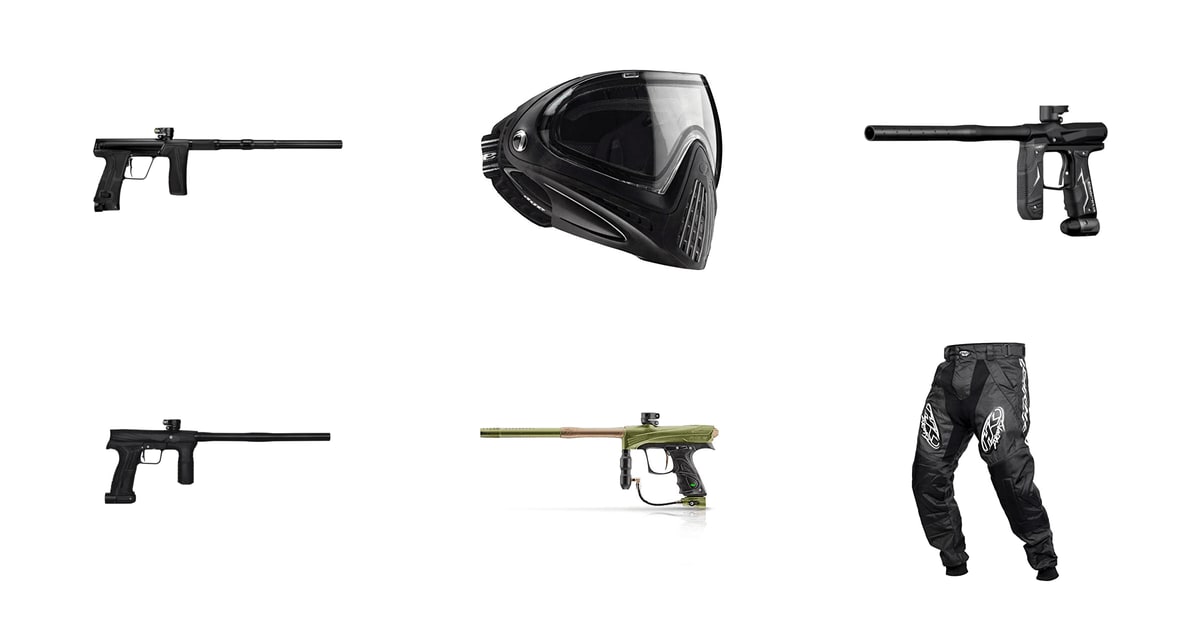
Tournament paintball punishes gear that almost works. You sprint off the break, slide into a bunker, and pull the trigger with your heart pounding. Whatever you're holding either fires clean or it doesn't. A marker that chops paint costs you the point. A mask that fogs costs you the whole game. The gap between rental gear and a real tournament setup is wider than most new players expect, and it shows up in the first five seconds of the first point.
Here's the honest part: no marker wins a game for you. Everything here shoots straight enough and stays inside the rate-of-fire cap. Above a certain point, you're paying for grams, trigger feel, and a quieter shot. Air efficiency and a gentle bolt do matter. But they matter less than a loader that keeps up and a lens that stays clear when you're breathing hard. Spend to the ceiling on a marker and a fogged goggle will still bench you.
You also can't fix a bad fit by reading a spec sheet. Masks and pants are personal, and the goggle that disappears on one face digs into another. So we leaned on what research can actually settle: operating pressure, bolt design, feed compatibility, safety certification, published reviews, and what owners complain about after a full season. We think that the Planet Eclipse CS3 Pro is the best tournament paintball marker for most players, and that the Empire Axe 2.0 is the one to buy if you're stepping off rental gear and want most of that performance for a fraction of the outlay.
Everything we recommend

The gentlest, quietest shot here, if you play enough to notice

Nearly all the performance, for a fraction of the cost

Mechanical simplicity that keeps working when boards don't
A low-profile thermal mask that stays clear when you're gassed
At a glance
| Product | Gear Type | Operating Pressure/Firing Mode | Price | |
|---|---|---|---|---|
| Planet Eclipse CS3 Pro Electronic Paintball MarkerTop pick | Marker | Electronic | $1,889.95 |
| Dye Precision I4 Thermal Paintball GoggleAlso great | Goggle | — | $159.85 |
| Empire Axe 2.0 Electronic Paintball MarkerRunner-up | Marker | Electronic | $429.95 |
| Planet Eclipse Etha 3 Mechanical Paintball MarkerBudget pick | Marker | Mechanical | $429.95 |
 | Olive DYE RIZE CZRAlso consider | Marker | 135psi | $349.95 |
 | HK Army HSTL Retro Jogger Paintball PantsAlso in lineup | Pants | — | $119.95 |
How we picked
Operating pressure. We compared published operating pressures, since lower pressure means less blowback and a gentler push on brittle paint. Anything at or under roughly 150 PSI qualified as tournament-grade.
Rate of fire and legality. The NXL rulebook caps every division at 10.5 balls per second, with ramping modes permitted. We only considered markers that can hold that cap out of the box or by design.
Feed and loader fit. A starved hopper at ten-plus balls per second causes chops and eliminations. We checked that each marker's feed neck accepts a standard force-fed loader without shims or adapters.
Eye protection standards. Goggles had to meet ASTM F1776, which requires the lens to stop a .68-caliber ball at 300 fps. We treated dual-pane thermal lenses as mandatory, not a luxury.
Field serviceability. We favored markers whose bolts come out without tools, based on manufacturer documentation and published reviews. Between points, you have a minute and a swab, not a workbench.
Top pick
The gentlest, quietest shot here, if you play enough to notice
Planet Eclipse CS3 Pro Electronic Paintball Marker
The CS3 Pro runs at one of the lowest operating pressures of any production marker, so there's less blowback, less noise, and less force shoving fragile paint through the breech. It's the marker you see most on pro fields, and it strips down without tools between points.
$1,889.95fromAmazonLow pressure is the whole story here. Planet Eclipse lists a standard operating pressure of 135 PSI for the CS3, among the lowest of any production tournament marker. Less pressure means less air shoving each ball down the barrel. You get less blowback up the feed neck, a softer push on brittle tournament paint, and a report that sounds more like a cough than a crack. Your position stays hidden a half-second longer, and half a second is a lane.
The OP drivetrain and POPS assembly are built to come apart in the pits, not on a workbench. The grips are two-piece and wrap around with no tools, the console is a sealed push-button unit, and the display sits under a magnifying lens so you can read it with a mask on. If something feels off between points, you can get inside the marker and back on the field before your next game.
Gear reports from the sport's premier event put Planet Eclipse markers, the CS3 and its LV siblings, in the hands of roughly six in ten pro-division teams. That kind of share isn't an accident, and it has a practical upside for you: parts, seals, and someone on your field who already knows the platform. If you break something at an event, the odds of finding a fix in the parking lot are good.
You're paying for refinement, not raw capability. Every marker in this guide can hold the tournament-legal cap and put paint where you point it. What the CS3 Pro adds is a quieter, softer, more consistent shot cycle, a barrel kit with a carbon-tipped insert, and Bluetooth board access from your phone. If you play a dozen events a year, that adds up. If you play three, it mostly doesn't.
Flaws but not dealbreakers
It's the most expensive marker here by a wide margin, and it's more marker than a D5 or D4 player can use. Nobody's getting eliminated because their bolt made an extra decibel. If you're still learning lanes and snap-shooting, that money does more good spent on paint, entry fees, and a loader that never starves.
Owner feedback on this specific configuration is thin, so most of what's publicly available comes from Planet Eclipse's own specifications and published reviews of the platform. It also demands an HPA tank and regular attention, since low-pressure markers are the ones that get fussy fastest when seals dry out.
Runner-up
Nearly all the performance, for a fraction of the cost
Empire Axe 2.0 Electronic Paintball Marker
The Axe 2.0's Superfly bolt gets operating pressure down near where far pricier markers live, and the whole bolt drops out with a quick-release, no tools needed. It's the marker instructors keep handing to players making their first jump out of rental gear.
$429.95fromAmazonThis is the smart first tournament marker. Reviews of the Axe 2.0 put the Superfly bolt's spring-assisted return at roughly 145 PSI, which is close to markers costing several times as much. Low pressure is why it shoots quietly and treats paint gently. Owners moving off rental markers consistently describe it as clean-shooting and hard to hear, and instructors at national camps recommend it more than anything else in its range.
Maintenance is where it earns its keep at an amateur event. The bolt pulls out with a quick release, so you can wipe a broken ball and be back on deck in a minute or two with nothing in your pocket but a swab. The aluminum body keeps it light and balanced enough for lateral movement, which is what actually tires you out over a long day of speedball.
It's also reliable in the boring, valuable way. Owners report shooting straight out of the box with no broken paint, and plenty of parents buy two, one for themselves and one for a kid, and run both all weekend. If you want a marker you think about only when you're cleaning it, this is the one.
Flaws but not dealbreakers
There's no screen. You configure firing modes and settings through LED codes, and owners find that fiddly, especially without the manual in front of them. Once you've set it the way you like, you'll rarely touch it again. But the first hour can be annoying.
A few owners report the marker cycling a ball when it's powered on with a loaded hopper, so make a habit of switching it on downrange with a barrel sock in place. Others have received units that arrived scuffed or clearly handled, which is a seller problem more than a product problem, but worth inspecting the threads and body before your first fill.
Budget pick
Mechanical simplicity that keeps working when boards don't
Planet Eclipse Etha 3 Mechanical Paintball Marker
The Etha 3 is mechanical: no board, no battery, no menu. One trigger pull sends one ball, which makes it legal everywhere without you touching a setting. For a player crossing from rec ball into a first tournament, that's a real advantage.
$429.95fromAmazonNothing on this marker can lose a charge or scramble a setting. It's mechanical from the trigger back, with a lighter return spring and an aluminum single-finger flat trigger with an adjustable back stop. You dial the trigger where your finger wants it and then forget the marker exists. Owners who play alongside friends running electros mostly report the same thing: it just runs, weekend after weekend.
The mechanical trade is worth understanding before you buy. Electronic markers let you use ramping modes, where a few fast pulls unlock assisted fire up to the legal ceiling. The Etha 3 can't do that, so at the cap you're doing the work with your finger. In amateur divisions that's a fair fight, and plenty of players prefer the honesty of it. In upper divisions, you'll feel the difference late in a point.
The rest is sensible race gear. There's a low-rise aluminum clamping feed neck that won't wobble your loader, a quick-release back cap for cleaning, and a slick composite body that shrugs off the abuse of being dropped in the dirt every point. It's the closest thing here to a marker you can hand to a junior player and not worry about.
Flaws but not dealbreakers
At three pounds, it's the heaviest marker in this guide, and several owners note the grip frame sits noticeably taller than what they're used to. Neither is a dealbreaker, but if you have small hands, try to hold one before committing.
Reliability reports aren't unanimous. A couple of owners had units that fired fine in the yard and then failed on their first real day out, needing a return. That's a minority, and mechanical markers are usually the easy ones to fix, but it's enough to argue for buying from a seller with a clean return path.
Also great
A low-profile thermal mask that stays clear when you're gassed
Dye Precision I4 Thermal Paintball Goggle
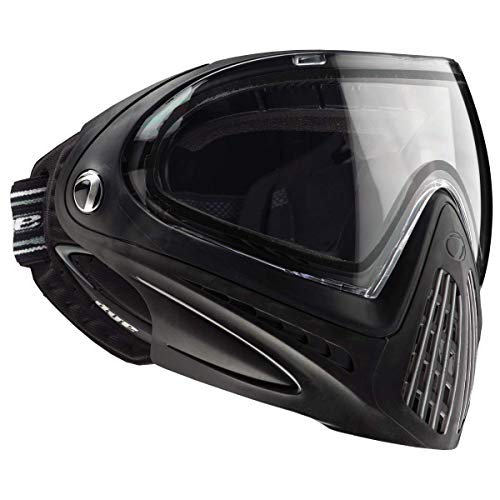
The i4 pairs a dual-pane thermal lens with one of the smallest profiles on the field, so your head is a smaller target and your view stays clear when you're breathing hard. Lenses pop out and swap in seconds with no tools.
$159.85fromAmazonThe lens is the reason to buy this mask. Tournament fields require dual-pane thermal lenses for a simple reason: single-pane lenses fog fast once you sprint. Dye's thermal lens is built to stay clear regardless of weather, and owners playing in Florida humidity report no fogging at all. The blade angling and venting keep air moving across your face, which is what stops the fog before it starts.
Safety certification isn't optional here, and it's the one spec you shouldn't shop around on. Paintball goggles have to meet ASTM F1776, meaning the lens stops a .68-caliber ball at 300 fps without penetration. Dye says the i4 is tested to twice the current ASTM and CE impact standards. Never wear a shooting-glasses substitute or a borrowed airsoft mask at a tournament, and never lift your goggles on the field.
The small profile pays off in ways you notice on the second day. It's the lightest mask many owners have worn, the dual-stage foam sits against your face without pressure points, and the compression-formed earpieces protect without the bulk that makes a mask feel like a helmet. Swapping a scratched or tinted lens takes seconds, so one mask covers a bright morning and an overcast afternoon.
Flaws but not dealbreakers
It runs small. That's the single most common owner complaint, and it's not a fit you can talk yourself into. Some larger players do fine, including owners over six feet, but if you have a broad face, try one on in a shop before ordering. A goggle that pinches at hour one is unwearable by hour six.
Replacement thermal lenses are an ongoing cost, and they scratch if you wipe them dry with a glove instead of rinsing them. A few buyers have also received units that were clearly not new, so check the foam and lens before you take it to a field.
Who this is for
This guide is for players making the jump from rental or rec gear into a tournament format, and for D4 and D3 competitors replacing a setup that's aging out. If you play at a field that runs Xball or race-to formats, everything here is legal and appropriate. Parents buying a first tournament kit for a junior player should read the budget pick and the mask section closely, because those two choices matter more than anything else for a new player's first season.
If you only play walk-on rec ball a few times a year, you don't need any of this. A field rental package and a decent thermal mask will serve you fine. We also don't cover mechanical pump play, milsim and scenario setups, HPA tanks or paint themselves, and we've limited ourselves to gear the research surfaced rather than the full market. Fit-dependent items like masks and pants are worth trying on in person if you have a shop nearby.
How we picked
We built this guide around what the specifications, published reviews and owner feedback can actually settle. Operating pressure: lower pressure means less blowback, a quieter shot, and less force on fragile paint, so we favored markers at or below roughly 150 PSI. Rate of fire: everything here holds the NXL's 10.5 bps cap without modification. Feed compatibility: a marker is only as fast as the loader on top of it, so the feed neck has to take a standard force-fed hopper cleanly. Eye protection: ASTM F1776 certification and a dual-pane thermal lens, no exceptions. Serviceability: if you can't clear a broken ball in a minute without tools, it doesn't belong on a tournament field.
Other tournament paintball gear worth considering
If you want a pro-brand electronic marker as your first real setup: The Olive DYE RIZE CZR ($349.95) — The Dye Rize CZR runs at 135 PSI, the same low pressure as markers several tiers above it, using Dye's Fusion spool valve bolt. It has an anti-chop eye system, a self-cleaning breech with integrated detents, and a fully adjustable trigger that reviewers benchmark around a 360-gram factory pull, which is featherlight for its class. Owners routinely run several thousand rounds through one without drama. It gives up the CS3's quieter cycle and refinement, it's heavier than the top pick, and some units arrive over-lubed, so wipe the bolt down before your first game. Keep it greased every couple of thousand rounds and it'll hold up.
The competition
This is what our research surfaced, not a census of everything you can buy. Tournament paintball has a deep catalog of markers, loaders, packs and apparel, and plenty of good gear didn't cross our path. The item below is worth knowing about, but it didn't make the picks.
The HK Army HSTL Retro Jogger Paintball Pants ($119.95) — The HK Army HSTL Retro Jogger pants are the only tournament apparel here, and they cover the basics: padded knees, stretch panels through the crotch and back, velcro waist adjusters, and two swab pockets on the back of the leg. The tapered jogger cut is genuinely good for sliding and lateral movement, and owners agree the padding does its job, since you barely feel hits through the knees. We're not calling them a pick because the owner feedback splits hard on durability and heat. Several buyers report the knee-pad stitching tearing within a season, sometimes in the wash, and a common complaint is that the fabric doesn't breathe well enough for summer play despite the vents. If you play mostly in cool weather and want protection over airflow, they're worth a look.
Air, maintenance and fit
The standard tournament air setup is a 68ci, 4500 PSI carbon fiber tank, which gives a well-tuned low-pressure marker roughly 1,000 to 1,200 shots per fill. That's a full day at most amateur divisions. Go carbon fiber, not aluminum: a filled carbon tank runs about 1.7 to 2.1 pounds against 3.8 to 4.5 for an aluminum equivalent, and you'll feel every ounce sprinting between bunkers. CO2 isn't permitted in tournament play, so don't buy a tank you can't use. Wipe and re-grease your bolt every couple of thousand rounds, rinse lenses with water rather than wiping them dry, and swab a broken ball out of the breech immediately instead of shooting through it.
Questions we get
Is CO2 allowed at tournament paintball events?
No. Tournament play requires high-pressure air, and the low-pressure markers used in competition are designed around it. CO2 pressure swings with temperature, which wrecks velocity consistency and can damage the seals in a modern marker. Plan on a 4500 PSI HPA tank from the start.
What's the rate-of-fire cap in tournament paintball?
The NXL rulebook caps all divisions at 10.5 balls per second. Ramping modes, where a few quick pulls unlock assisted fire, are permitted up to that ceiling. Every electronic marker in this guide includes a capped tournament mode, and mechanical markers like the Etha 3 are legal by design since one pull sends one ball.
Do I need a thermal lens mask for tournament play?
Yes, in practice. Most tournament fields require dual-pane thermal lenses, and a single-pane lens will fog within minutes once you start sprinting. A fogged lens means you either play blind or lift your goggles, and lifting your goggles on a live field is how people get hurt. Buy the thermal lens first.
How many shots does a 68ci 4500 PSI tank get?
Roughly 1,000 to 1,200 shots on a well-tuned low-pressure marker like the CS3 Pro or the Rize CZR. That covers a typical amateur tournament day without a refill mid-morning. Markers running at higher pressure, or ones with worn seals leaking air, will land at the low end of that range or below.
What's the difference between the Planet Eclipse CS3 Pro and the Etha 3?
The CS3 Pro is electronic and the Etha 3 in this guide is mechanical. That means the CS3 Pro gives you programmable firing modes, ramping, Bluetooth board access and a considerably quieter, softer shot cycle at 135 PSI. The Etha 3 has no board or battery to fail, weighs about a pound more, and costs a small fraction as much. Both are tournament legal.
How often do tournament markers need servicing?
Wipe and re-lubricate the bolt roughly every couple of thousand rounds, and pull it after any day where you broke paint in the breech. O-rings should be checked before each event and replaced when they look flattened or dry. Markers that come out without tools, like the ones here, make this a five-minute job rather than a chore you keep postponing.
Why you should trust us
For this guide:
- We compared manufacturer specifications for operating pressure, weight and bolt design across every marker in this guide.
- We read published reviews from paintball retailers and outlets, the NXL rulebook's rate-of-fire and equipment rules, and the ASTM F1776 eye-protection standard.
- We reviewed recurring themes in owner feedback, particularly around fit, early failures and long-term durability, and weighted repeated complaints more heavily than one-off reports.
- We read owner reviews on every listing, weighted toward the critical ones, because that is where the recurring failures show up.
- We have a systematic way of automatically fetching the latest prices, so the numbers on this page stay current.
- This is a research-focused guide, so the team may not own every product listed — though we often do own the top winners, which gives us extra context for the recommendations.
- We don't accept free products, and the retailer commission never changes which product we recommend.
Sources
Planet Eclipse CS3 Full Review — PaintballRuinedMyLife, PaintballRuinedMyLife
NXL Official Rulebook 2025 — Equipment Standards, National Xball League (NXL)
Dye M3+ Marker Review — Lone Wolf Paintball, Lone Wolf Paintball
Best Paintball Markers 2026 — Paintball Access, Paintball Access
Virtue Spire IV Hopper Test — Social Paintball, Social Paintball
Dye i5 Goggle System Review — ANSgear Blog, ANSgear
Empire Axe 2.0 Marker Review — Hustle Paintball, Hustle Paintball
Planet Eclipse Etha 3 First Look — Bacci Paintball, Bacci Paintball
HPA Tank Buyer's Guide for Tournament Players — Paintball Gateway, Paintball Gateway
NXL World Cup 2025 Gear Report — Social Paintball, Social Paintball
Amazon product listings and owner reviews for all 6 products
Manufacturer specification pages for each product
Some passages in this guide may be paraphrased with AI help. Prices are refreshed automatically.
More like this.
Continue exploring lifestyle reviews and recommendations.

The 8 Best Snorkeling Gear Sets, Masks & Fins of 2026: Tested & Reviewed
Expert-tested snorkeling gear for every budget: complete sets, standalone masks, and fins from Cressi, TUSA, Atomic Aquatics, Mares, and more.

The Best Fishing Gear for Beginners
Fishing asks less of you than almost any other outdoor hobby. You need something to cast with, something to tie on the end, and a place to stand. But the…

The Best Cooling Tents and Hot-Weather Camping Gear
Heat is the one camping problem you can't sleep through. A tent sitting in afternoon sun turns into an oven fast - Wirecutter's summer tent research found…

The Best Ice Fishing Tip-Ups and Hard-Water Gear
Tip-up fishing is a waiting game you play with your feet up. You set a baited line under the ice, walk away, and watch for a flag. When one pops across…

The Best Camping and Hiking Gear Essentials
Gear failures rarely announce themselves at home. They show up at 2 a.m. when a zipper jams, or three miles from the trailhead when your headlamp dies and…
The Best Agility Ladders, Cones, and Speed Training Gear
Footwork gear is cheap, portable, and easy to overthink. A ladder, a stack of cones, and a few low hurdles cover almost everything a youth coach, a high…