The Best Roasting Pans
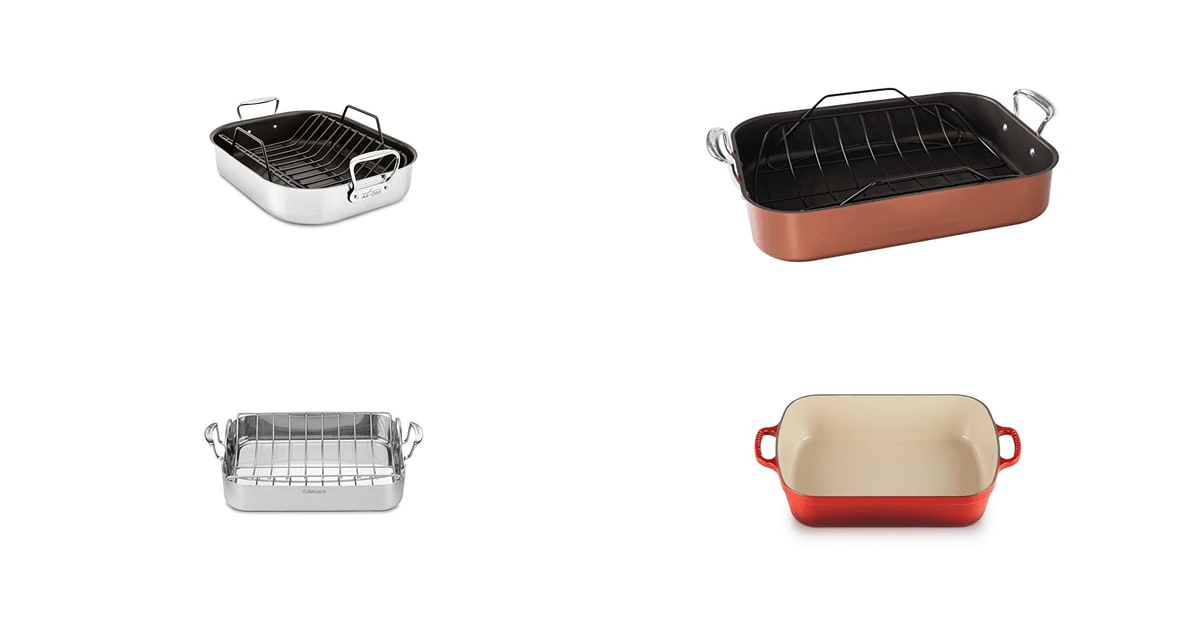
A roasting pan comes out of the cupboard a few times a year for most people, and then it has to do something no sheet pan can: hold a heavy bird, catch a quart of hot fat, and slide out of a hot oven without buckling or slipping. Good ones brown evenly, so the skin over the corners looks like the skin over the breast. They have handles you can actually grab with a thick mitt. And they're the right size for the bird you actually cook, which for many people is a chicken, not a 22-pound turkey.
Here's the catch nobody puts on the box: no roasting pan does everything. The pans that brown best and let you make gravy right on the burner are heavy, expensive, and a pain to store. The light ones that cost a fraction as much can't go on a burner at all, so your drippings get poured into a saucepan and you lose some fond in the transfer. And a pan sized for a holiday turkey is comically oversized for a weeknight chicken, where the drippings spread thin and scorch. You're picking a compromise, not a winner.
We read published cookware testing, compared spec sheets, and dug through owner feedback for each pan here. We think that the Cuisinart Multiclad Pro is the best roasting pan for most people, and that the All-Clad Specialty Stainless Steel Large Roaster is the one to buy if you want the sturdiest handles and the highest oven-temperature rating in the group.
Everything we recommend

Clad performance and stovetop gravy, without the top-tier tax

Heavier, taller-walled, and rated for broiler heat

Light, roomy, and easy to lift — but not for high heat

For chicken-sized roasts you want to bring to the table
At a glance
| Product | Pan Length | Max Oven Temp | Price | |
|---|---|---|---|---|
| All-Clad Specialty Stainless Steel Large Roaster withUpgrade pick | 13x16 In | 600°F | $169.95On sale |
| Nordic Ware Turkey Roaster with RackBudget pick | 13x18 In | 400°F | $83.99 |
| Cuisinart Multiclad Pro Triple Ply Stainless CookwareTop pick | 16-Inch | — | $159.95 |
| Le Creuset Enameled Cast Iron Signature RectangularAlso great | 9.8x13 In | — | $189.95 |
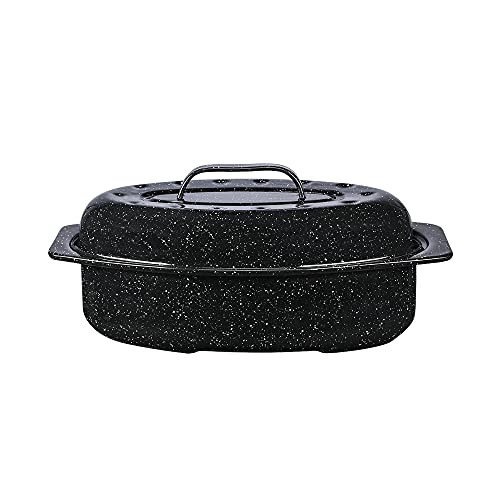 | Granite Ware 13-inch oval roaster with Lid.Also consider | 13 In | 932°F | $27.99On sale |
How we picked
Even browning. We looked for construction that spreads heat past the base — fully clad walls, heavyweight aluminum, or cast iron. Published cookware testing repeatedly ties pale corners and scorched centers to thin, single-layer pans.
Stovetop and gravy. Pans that can go on a burner let you deglaze fond in place instead of pouring drippings into a saucepan. We treated that as a major point in a pan's favor and checked each maker's cooktop compatibility, including induction.
Size versus your bird. Published guidance puts a 20-pound turkey at 16 by 13 inches minimum with walls at least 2 to 3 inches tall. We compared listed interior dimensions against that and against owner reports of what actually fit.
Handles and weight. A loaded roaster can top thirty pounds. We favored large riveted loop handles with mitt clearance, and we weighed empty pan mass as a real cost, not a footnote.
Heat ceiling. We checked each pan's maximum rated temperature against common roasting recipes. Anything rated below 425°F can't do a high-heat crisping finish, and we flagged that rather than ignoring it.
Top pick
Clad performance and stovetop gravy, without the top-tier tax
Cuisinart Multiclad Pro Triple Ply Stainless Cookware
The Cuisinart Multiclad Pro is a triple-ply stainless roaster with a pure aluminum core running through the base and up the walls. It browns evenly, goes straight onto a burner for gravy, and it's the only pan here the maker calls dishwasher safe.
$159.95fromAmazonTriple-ply construction is the thing you're actually paying for. Cuisinart bonds a pure aluminum core to a stainless interior, and the company's Heat Surround design carries that core up the sidewalls rather than stopping at the base. That matters because a roast doesn't just sit on the floor of the pan — the walls radiate heat back at it. Pans with a thick disc bottom and thin walls tend to brown the underside well and leave the shoulders pale.
Then there's the part that happens after the bird comes out. You set this pan across two burners, pour in wine or stock, and scrape up the fond that's already there. No transferring drippings, no losing half the browned bits to a saucepan you then have to wash. If you make gravy from scratch even once a year, this alone is worth more than any browning difference between good pans.
The handles are solid riveted stainless, set out from the body so they stay cooler than a handle welded flush to a hot wall. You'll still want mitts. But owners who load this thing with a prime rib consistently report it feels secure coming out of the oven, which is not a small thing when you're walking backward with thirty pounds of hot metal and fat.
It's dishwasher safe, which sounds boring until Thanksgiving night. Uncoated stainless normally means a long soak and a scrub with an abrasive powder. Cuisinart rates this one for the machine, and owner feedback backs that up — people describe it releasing baked-on residue after a soak without much fight. Combined with the mirror-polished interior, cleanup is genuinely less miserable than the category norm.
Owner sentiment here is unusually consistent for a pan this large and this heavy. The recurring theme isn't that it's spectacular — it's that people bought it after cycling through cheap roasters with flaking coatings and wobbly handles, and then stopped buying roasters. That's the profile you want from something you use six times a year and store the rest of the time.
Flaws but not dealbreakers
It's big and it's heavy. The pan measures roughly 20 inches on its longest side and weighs about ten pounds empty, so before you buy, measure your oven's interior width and the shelf you plan to store it on. More than one owner mentions storage as the real cost of ownership.
Stainless is not nonstick. Sugary glazes and dairy-based drippings will weld themselves to the surface, and you'll need a soak or a stovetop deglaze to get them off. That's the trade you make for fond, and fond is the point — but don't expect to rinse this clean the way you would an enameled pan.
Cuisinart backs the Multiclad Pro with a lifetime warranty.
Upgrade pickOn sale
Heavier, taller-walled, and rated for broiler heat
All-Clad Specialty Stainless Steel Large Roaster with
All-Clad's large roaster is built from the same clad stainless recipe as the Cuisinart but with a heavier gauge and a higher heat ceiling. It's rated to 600°F, broiler safe, sized for turkeys up to 25 pounds, and it comes with a nonstick V-rack.
$169.95fromAmazonList priceThe specification that separates this pan from everything else here is the temperature rating: oven and broiler safe to 600°F. If you finish a prime rib with a hard blast of heat, or you like to run the broiler for the last few minutes to crisp skin, most pans in this category top out well below that. This one doesn't. Note that the included rack is rated to 375°F, so it comes out before you crank the heat.
The handles are the other reason people pay up. They're large, riveted loops with real clearance underneath, which means you can hook a mitted hand through them instead of pinching a narrow tab. Owners describe wrestling this pan out of the oven fully loaded and never feeling like it might tip. When you're moving a hot bird past a countertop full of side dishes, that confidence is the feature.
It goes on the stovetop for gravy — gas, electric, and ceramic — with the same deglaze-in-place workflow as the Cuisinart. The one asterisk: All-Clad's listing says this roaster is not induction compatible. If your cooktop is induction, that's a hard disqualifier and you should look at the Cuisinart or the Le Creuset instead.
The nonstick V-rack cradles a bird at an angle rather than lying it flat, so air moves under and around the whole surface. That's the configuration that gets you browned skin on the bottom instead of the pale, steamed patch you get when a chicken sits in its own drippings. The rack lifts out, and then the pan doubles as a big baking dish for lasagna or a sheet of vegetables.
Flaws but not dealbreakers
It costs substantially more than the Cuisinart for performance that's close enough in ordinary roasting that most people won't notice the difference. If you roast twice a year, that gap is hard to justify.
No induction. This is the only pan among our picks with that limitation, and it's an odd one at this tier — worth confirming against your cooktop before you buy.
It's heavy, and stainless demands the same soak-or-scrub cleanup as the Cuisinart. Owners consistently report that a hot soapy soak plus an abrasive cleaning powder restores it, which is a fair description of the effort involved rather than a complaint.
Budget pick
Light, roomy, and easy to lift — but not for high heat
Nordic Ware Turkey Roaster with Rack
Nordic Ware's turkey roaster is aluminized steel with a nonstick coating, made in the USA, and roomy enough that owners report fitting birds well past twenty pounds. It weighs under five pounds empty, which makes a loaded pan far easier to handle.
$83.99fromAmazonWeight is the underrated variable in roasting, and this is where the Nordic Ware wins outright. At under five pounds empty, it's less than half the heft of the clad stainless pans here. Add a twenty-pound turkey and drippings and you're still managing a load you can control with two mitted hands. If you have wrist trouble, or you're doing the holiday cooking alone, that difference is not cosmetic.
Capacity is the other surprise. The pan is 18 inches long, and owner reports of fitting birds in the mid-to-high twenties come up again and again. Published guidance says a 20-pound turkey wants at least 16 by 13 inches of interior space, and this clears that comfortably. For a once-a-year holiday roaster, you're getting full turkey-scale room without the storage footprint of a ten-pound pan.
The nonstick coating is PFOA-free and does what nonstick does: cleanup is a rinse rather than a project. Owners repeatedly single out cleaning as the best part of owning it. The included rack keeps the bird up off the floor of the pan so the underside browns instead of stewing.
It's made in the USA with imported components, which is genuinely uncommon at this end of the market. That's not a performance claim, but it does correlate with the sturdier handle construction owners describe — the big loop handles are the feature people mention most after the light weight.
Flaws but not dealbreakers
The heat rating is the real limitation. Nordic Ware lists it as safe to 400°F, which is below the 425 to 450°F range a lot of roasting recipes call for, and well below what you'd want for a high-heat crisping finish. Plan your recipe around the pan, or pick a different pan.
The copper-look finish is cosmetic and fragile. Multiple owners report it scratching off the bottom against the oven rack on the very first use, revealing dark metal underneath. It doesn't affect how the pan cooks, but if you're buying it because it's pretty, adjust expectations.
Owner feedback is more mixed here than for the stainless pans. Alongside a lot of enthusiasm, there are reports of the pan flexing or failing under a heavy bird, and at least one describing a failure within minutes of loading it. Nonstick also rules out a dishwasher and rules out metal utensils, and it will wear out eventually in a way clad stainless won't.
Also great
For chicken-sized roasts you want to bring to the table
Le Creuset Enameled Cast Iron Signature Rectangular
Le Creuset's rectangular roaster is enameled cast iron with a low profile built for oven work. It holds heat longer than anything else here, cleans up with a rinse, works on induction, and looks like a serving dish because it is one.
$189.95fromAmazonCast iron takes a long time to get hot and then refuses to let go of that heat. In practice that means the pan is still warm while you're carving, which keeps a roast at eating temperature through a slow table. It also means deeper browning and better fond, because the surface doesn't drop in temperature the moment a cold bird lands on it.
The enamel is the reason to choose this over bare cast iron. It's nonreactive, so acidic pan sauces with wine or tomato won't pick up a metallic edge, and it doesn't need seasoning. Owners bring up cleanup constantly — the interior releases baked-on residue with far less soaking than the stainless pans, and it doesn't hold onto odors between a garlicky chicken and a batch of vegetables.
It works on every cooktop including induction, so the deglaze-on-the-burner workflow is available here too. And because it's a Le Creuset in a real color, it goes straight from the oven to the table. That saves you a transfer and one more dish to wash, which matters more than it sounds like when the kitchen is already full.
Flaws but not dealbreakers
It's small. At 5.25 quarts with an interior around 9.8 by 13 inches, this is a chicken pan, a lamb-rack pan, a pan for a small roast. A holiday turkey isn't going to fit, and several owners report the interior feeling tighter than they expected from the listed dimensions. Measure your bird before you commit.
It's expensive and it's heavy for its size — around eight and a half pounds empty with nothing in it. There's no rack included either, which stings at this price; you'll want to buy one separately or build a bed of chopped onion and carrot to lift the bird.
Enamel chips. A knock against a countertop edge or a blast of cold water onto a hot surface can crack it, and once the coating's compromised the pan is done for wet cooking. Treat it gently.
Le Creuset covers this roaster with a lifetime warranty.
Who this is for
This guide is for anyone who roasts a whole bird or a large cut of meat more than once in a while — a holiday turkey, a Sunday chicken, a prime rib for a birthday. If that's you a couple of times a year, the budget pick is probably enough. If you roast most weeks, or you make pan gravy from scratch and hate losing fond to a transfer, spend up for a clad stainless pan you'll keep for decades.
Skip this entirely if you mostly roast vegetables or cook for one or two people — a rimmed sheet pan handles that better and stores flat. We're covering full-size roasting pans here, not sheet pans, disposable foil roasters, electric countertop roasters, or Dutch ovens. And one honest note on sizing: every pan here except the Le Creuset is built around turkey-scale cooking, so if you're only ever roasting a four-pound chicken, a big pan will spread the drippings thin and scorch them.
How we picked
We judged these pans on the things that change how dinner comes out. Even browning: construction that carries heat up the sidewalls, not just across the floor, so the shoulders of a bird brown like the breast does. Stovetop gravy: whether you can set the pan over a burner and deglaze the fond in place, and whether that includes induction. Size: listed interior dimensions checked against published turkey-capacity guidance and against what owners report actually fitting. Handles and weight: riveted loops with room for a thick mitt, and an honest accounting of how much the empty pan adds to a thirty-pound load. Heat ceiling: the maximum rated oven temperature, because a pan capped at 400°F rules out a lot of recipes. Cleanup: whether the surface releases baked-on drippings with a soak, a rinse, or a dishwasher cycle.
Other roasting pans worth considering
If you cook for two and want a lid: The Granite Ware 13-inch oval roaster with Lid. ($27.99) — The Granite Ware oval roaster is enameled steel, weighs about a pound and a half, and comes with a self-basting cover — the only lid in this lineup. Covered roasting traps steam and gives you meat that stays moist without basting, though you'll want to pull the lid for the last stretch if you care about crisp skin. Read the capacity carefully: the maker rates it for poultry up to 7 pounds, which is a small chicken or a couple of Cornish hens, not a turkey. It's also the pan owners reach for outside of roasting entirely, for sourdough loaves and casseroles. The enamel rinses clean and it's dishwasher safe. The catches are that it can't go on a burner, it includes no rack, the thin steel base heats less evenly than heavyweight aluminum or clad stainless, and enamel chipping is a recurring complaint — some pans arrive with chips already.
The competition
This is what our research surfaced in this category, not a census of every roasting pan sold. We focused on full-size pans that come up repeatedly in published cookware testing and that have enough owner history to say something useful about how they hold up. Every product we looked at for this guide is either a pick above or discussed here.
Care and cleaning
The easiest way to clean a stainless roaster is to clean it while it's still hot. Set the pan over a burner, pour in a couple of cups of water or stock, bring it to a boil, and scrape the fond loose with a wooden spoon — you've now deglazed and half-washed the pan in one move, and you have a gravy base. For residue that survives that, a paste of abrasive cleaning powder and water, left to sit fifteen minutes, will lift it; scrub with the grain and skip steel wool, which scratches permanently. Enameled pans want the opposite approach: let them cool before they meet water, because thermal shock cracks the coating. Nonstick surfaces need soft sponges, no metal utensils, and no dishwasher, no matter what the box implies.
Questions we get
What size roasting pan do I need for a 20-pound turkey?
Published guidance puts the minimum at roughly 16 by 13 inches of interior space with walls 2 to 3 inches tall. That leaves about an inch of clearance around the bird so hot air can circulate, and the tall walls keep drippings from sloshing over. The All-Clad, the Cuisinart, and the Nordic Ware all clear that bar; the Le Creuset and the Granite Ware do not.
Do I really need a roasting rack?
Not strictly, but you need something. Without elevation, the bottom of the bird sits in pooled fat and steams instead of browning, so you get pale, soft skin underneath. A bed of roughly chopped onion, carrot, celery, and garlic works as a makeshift rack and flavors the drippings at the same time. Just pile it deep enough that the bird stays off the pan floor for the whole cook.
Is stainless steel or nonstick better for roasting?
Stainless, for two reasons. Roasting temperatures of 425°F and up will degrade most nonstick coatings over time, and more importantly, nonstick prevents fond from forming — the browned bits stuck to the pan floor are the entire flavor base of pan gravy. If you want easy cleanup without giving up too much, an enameled surface like the Le Creuset's is a better compromise than nonstick at high heat.
Can I make gravy in the roasting pan itself?
Only if the pan is stovetop safe. The Cuisinart and the Le Creuset go on any cooktop including induction; the All-Clad works on gas, electric, and ceramic but not induction. The Nordic Ware and the Granite Ware should stay off direct burner heat — aluminum-based pans can warp under concentrated flame, and thin enamel on steel can crack. With those, transfer the drippings to a saucepan.
How do I get crispy skin?
Elevate the bird on a rack so air reaches every surface, and keep liquid out of the pan base, since steam softens skin. Salt the exterior a day ahead and leave it uncovered in the fridge to dry out. Roast hot — 425°F or above — which means checking your pan's heat rating first. Preheating an empty stainless or cast iron pan for about fifteen minutes also jump-starts browning on the underside.
Is covered roasting better than uncovered?
It depends on what you're optimizing for. A lid traps steam and gives you noticeably moister breast meat, but it also stops the skin from crisping. The usual fix is to do both: roast covered for the bulk of the time, then pull the cover for the last 45 minutes or so to brown the exterior. Only the Granite Ware here includes a lid; with the others you'd tent with foil.
Why you should trust us
For this guide:
- We read published cookware testing from major kitchen-equipment outlets alongside each manufacturer's spec sheet, and compared claimed dimensions, cooktop compatibility and maximum oven temperature across all five pans.
- We reviewed owner feedback for each listing, looking for repeated failure modes — finish scratching, enamel chipping, handle security, capacity that didn't match the listing — rather than one-off complaints.
- We did not cook with any of these pans; every performance claim here traces back to a specification, a published review, or a pattern in owner reports.
- We read owner reviews on every listing, weighted toward the critical ones, because that is where the recurring failures show up.
- We have a systematic way of automatically fetching the latest prices, so the numbers on this page stay current.
- This is a research-focused guide, so the team may not own every product listed — though we often do own the top winners, which gives us extra context for the recommendations.
- We don't accept free products, and the retailer commission never changes which product we recommend.
Sources
The Best Roasting Pans, Tested and Reviewed, Wirecutter
Best Roasting Pans — America's Test Kitchen Equipment Reviews, America's Test Kitchen
Best Roasting Pans Tested by the Good Housekeeping Institute, Good Housekeeping
The Best Roasting Pans for Thanksgiving Turkey, Serious Eats
Best Roasting Pans Reviewed, The Spruce Eats
Roasting Pan Equipment Reviews, Cook's Illustrated
Best Roasting Pans Tested, Reviewed / USA Today
Let's Talk Turkey: A Consumer Guide to Safely Roasting a Turkey, USDA FSIS
Amazon product listings and owner reviews for all 5 products
Manufacturer specification pages for each product
Some passages in this guide may be paraphrased with AI help. Prices are refreshed automatically.
More like this.
Continue exploring appliances reviews and recommendations.

The Best Electric Turkey Roasters
Thanksgiving has one real bottleneck, and it's your oven. The bird sits in there for hours while the stuffing, the rolls and the pie all wait their turn.…

The Best Nonstick Cake Pans and Baking Sets
A cake pan does one job, and it's easy to take for granted until it fails you. The batter sticks to the bottom, the edges brown three shades darker than…

The Best Baking Sheets and Cookie Pans
A baking sheet is the pan you reach for more than any other. Cookies on Sunday, salmon on Tuesday, a tray of potatoes and onions on a weeknight when…

The Best Nonstick Frying Pans
A nonstick pan is the one you reach for on autopilot. Eggs on a Tuesday, a grilled cheese, reheated rice, fish that would weld itself to stainless steel.…

The 6 Best Oil Drain Pans on Amazon in 2026: Tested & Reviewed for DIY Mechanics
Find the best oil drain pan for your garage - from ultra-low-profile picks for motorcycles to 12-quart options for SUVs. Expert-tested, ranked by capacity and design.

The Best Slow Cookers
A slow cooker is the rare appliance that does its best work while you're gone. You put a chuck roast, some onions and a can of tomatoes in the pot before…