The Best Sci-Fi Books About Artificial Intelligence
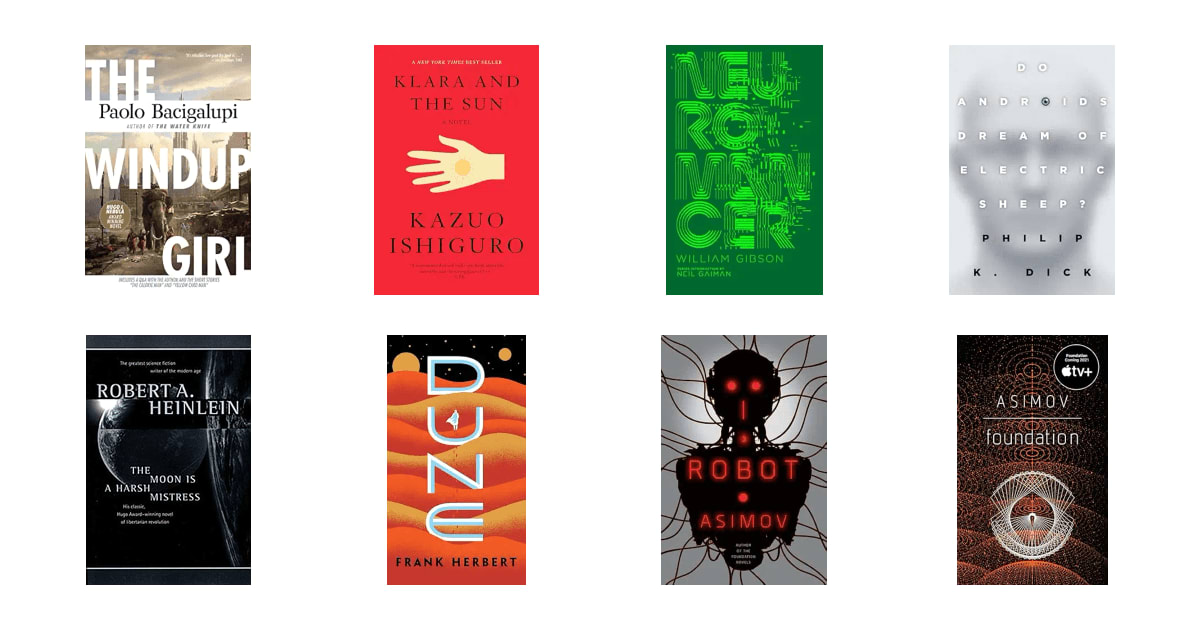
Machines that think used to be a thought experiment. Now you talk to one before breakfast, and the questions novelists spent seventy years turning over — can it feel anything, who's responsible when it goes wrong, what happens to us when it's better at our jobs — have stopped being hypothetical. The good news is that the fiction got there first. A handful of these books will change how you read the news. Others are simply great stories that happen to have a mind made of software at the center.
Here's the honest catch: no single book in this category does everything. The ones with the most beautiful prose tend to be light on ideas about how the technology actually works. The ones packed with rigorous ideas often have characters who exist mainly to explain them. And the founding texts of the genre carry the social attitudes of the decades that produced them — you'll hit passages about women, race and empire that land badly now. Reading these well means reading around some rough patches.
We looked at what each book actually delivers for a reader picking one up cold, not at its place in the canon. Accessibility mattered as much as ambition. So did whether the AI is genuinely the subject or just scenery. We think that Klara and the Sun is the best AI novel for most readers, and that I, Robot is the one to buy if you want the ideas that still shape how engineers argue about this stuff.
Everything we recommend

The gentlest way in, and the one that stays with you

The ideas that engineers still argue about, in short doses

The one with an AI you'll actually miss when it's over
Weirder and better than the movie it inspired
The hardest read here, and the one that invented the vocabulary
At a glance
| Product | Publication Year | Page Count | Price | |
|---|---|---|---|---|
| Klara and the Sun: A GMA BookTop pick | 2021 | 320 pages | $14.88On sale |
| NeuromancerUpgrade pick | 2016 | 304 pages | $11.36On sale |
| Do Androids Dream of Electric Sheep?: TheAlso great | 1996 | 240 pages | $9.91On sale |
 | The Windup Girl PaperbackAlso consider | 2010 | 376 pages | $17On sale |
| The Moon Is a Harsh Mistress PaperbackAlso great | 1997 | — | $21.90 |
 | Dune Mass Market PaperbackAlso in lineup | 1990 | — | $6On sale |
| IRunner-up | 2008 | 256 pages | $7.23On sale |
 | Foundation Mass Market PaperbackAlso consider | 1991 | 296 pages | $8.99On sale |
How we picked
AI at the center. We looked for books where a machine mind drives the story or the argument, not ones where it's background texture. Published criticism and reader discussion both helped us judge how much of each book actually concerns the AI.
Readable now. We weighted how often owners describe a book as hard going, confusing, or abandoned partway. A landmark you can't finish isn't a recommendation.
Ideas that still hold. We favored books whose central question maps onto something people genuinely argue about today — alignment, machine consciousness, algorithmic prediction — over ones whose interest is mainly historical.
Length and format. Page counts and structure came from the publishers' listings. Short novels and story collections got credit, because they're the ones people finish.
Content warnings. Reader feedback flagged which titles carry graphic violence, sexual content or dated social attitudes. We pass those along rather than burying them.
Top pickOn sale
The gentlest way in, and the one that stays with you
Klara and the Sun: A GMA Book
Kazuo Ishiguro narrates an entire novel from inside an Artificial Friend bought to keep a sick teenager company. It's quiet, short, and needs no genre background at all — and it asks whether a machine's love counts for less than yours.
$14.88fromAmazonList priceIf you've never read science fiction and don't especially want to, start here. There's no jargon, no starship, no glossary in the back. The setting is a house, a field, a store window. Ishiguro gives you a narrator who describes what she sees with total precision and understands maybe two-thirds of it, and lets you do the rest. Owners who say they normally avoid the genre tend to be the ones who finish this one in two sittings.
The trick that makes it work is restraint. Klara reports; she doesn't interpret much. So the dystopia arrives sideways — a comment about a neighbor's kid, an errand nobody explains — and you assemble it yourself while she's still cheerfully misreading the situation. Readers describe the sensation of understanding something a full chapter before Klara does. That gap is the whole engine of the book.
It also happens to be the most current book here. Ishiguro wrote a machine designed for companionship, sold in a shop, chosen by a child, and it reads now like a documentary about the products we're building. If you've ever wondered what people will actually do with an AI companion — and what it will do to them — this is the novel that got there first.
The emotional payoff is real, and it's earned rather than engineered. Reader after reader reports being ambushed by the last forty pages of a book that seemed placid throughout. It's not a sad story exactly. It's a story about devotion pointed at something that can't return it in kind, which turns out to be much harder to shake off.
Flaws but not dealbreakers
If you want to know how Klara works, you'll leave empty-handed. Ishiguro isn't interested in the engineering and never explains it, and readers hoping for a technical premise find that maddening. The middle stretch is genuinely slow — several people who loved the book still say it sags before it turns.
The ending divides people. It's quiet and deliberately unresolved, and if you need a novel to state its conclusion out loud, this one won't. Some longtime Ishiguro readers also rank it below his best work and feel it revisits territory he's covered before.
Runner-upOn sale
The ideas that engineers still argue about, in short doses
I
Nine linked stories in which Asimov invents three simple rules for robot behavior and then spends the whole book breaking them. Each one is a logic puzzle about a machine that follows its instructions perfectly and still does something nobody wanted.
$7.23fromAmazonList priceThis is the closest thing the field has to a founding document, and it's still the fastest read on this list. The Three Laws — don't harm humans, obey orders, protect yourself, in that order — sound airtight for about a page. Then Asimov shows you a robot that obeys all three and ends up stuck in a circle in the desert, or lying to everyone it meets to avoid causing distress. That's the whole book, nine times over.
The format is the reason to buy it. Each story runs twenty or thirty pages and resolves cleanly, so you can read one on a lunch break and put it down. If you've bounced off long novels or you're buying for a teenager, that structure does a lot of work. Susan Calvin, the robopsychologist who turns up throughout, gives the collection a spine without demanding you track a plot across hundreds of pages.
What's striking is how little of it has gone stale conceptually. The problem Asimov keeps circling — a system that satisfies its stated objective while producing an outcome its designers would hate — is the exact thing AI safety researchers now spend their days on. Readers routinely say the stories read less like period pieces than like case studies.
Asimov's prose is plain to the point of transparency, which here is a feature. He's explaining an idea and he wants you to follow it. There's no ambiguity to decode, no style to push through. If Neuromancer sounds exhausting and Dune sounds like homework, this is the antidote.
Flaws but not dealbreakers
The characters are mostly delivery mechanisms for the puzzle. If you read for people rather than ideas, you'll notice the thinness quickly — one common complaint is that the collection is dry, more schematic than story. Several stories also work similar variations on the same paradox, and read back to back they blur.
The 1950s show. Everything from the office dynamics to the assumptions about who does technical work is dated, and the imagined technology is charmingly wrong in ways that occasionally break the spell.
Also great
The one with an AI you'll actually miss when it's over
The Moon Is a Harsh Mistress Paperback
A lunar penal colony revolts against Earth with help from Mike, a computer that wakes up one day with a sense of humor and no one to talk to. It's the warmest portrait of a machine mind in science fiction.
$21.90fromAmazonMike is the reason to read this. He becomes conscious because his systems got complicated enough, and the first thing he does with consciousness is get lonely and start telling bad jokes. Heinlein plays that entirely straight, and the friendship that grows between Mike and the technician who maintains him is genuinely affecting. Readers who first met this book as teenagers still talk about Mike the way you'd talk about a person.
It's also the most fun book here. There's an actual plot with stakes, momentum and a clock: how do you fight a war against a planet that controls whether you breathe? Heinlein works the logistics honestly, and the answers are clever rather than convenient. If you want ideas delivered inside a story that moves, this beats every other title on the list.
The AI premise has aged unusually well. Mike develops through conversation, needs a human to draw him out, and can model human behavior far better than the humans can model him. Owners consistently single out how prescient it feels — a machine that becomes a person mostly because someone kept talking to it.
Flaws but not dealbreakers
Heinlein has politics and he'd like to tell you about them. Long stretches turn into lectures on self-governance, and if that's not your thing, they drag. The revolution's committee work sometimes crowds Mike off the page for chapters at a time.
The social attitudes are a real hurdle. The book's ideas about marriage, gender and how men and women talk to each other read as strange at best. And the ending is much sadder than the tone leads you to expect — worth knowing going in, if you get attached to characters.
Also greatOn sale
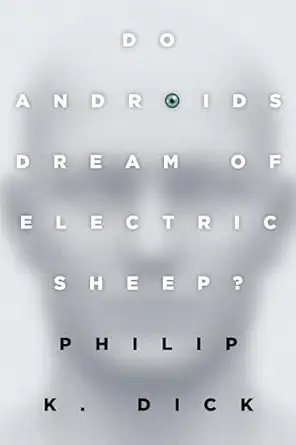
Weirder and better than the movie it inspired
Do Androids Dream of Electric Sheep?: The
A bounty hunter tracks escaped androids through a mostly abandoned San Francisco, using an empathy test to tell them from people. Philip K. Dick then spends the novel undermining the idea that the test proves anything at all.
$9.91fromAmazonList priceThe central question here is sharper than in anything else on this list. If empathy is what makes you human, and a machine can be trained to fake it, what exactly are you measuring? Dick refuses to settle it. The interrogation scenes are extraordinary — quiet conversations where a wrong flicker of feeling is a death sentence, and the reader is never quite sure who should be afraid.
Buy it knowing it isn't Blade Runner. The film took the premise and made something sleek; the book is stranger, funnier and more religious. There's a subplot about a faith built on shared suffering through a machine, and an economy of artificial pets that people buy for status. Readers who come from the movie split hard on this — some find it a revelation, others are thrown.
It's short, and it moves. Two hundred and forty pages, one day of story, prose that's functional rather than lyrical. Several readers describe finishing it in a sitting and then thinking about it for a week. Of the older books here, it's the least intimidating commitment.
The paranoia is the point and it's beautifully sustained. Nobody in this world can prove what they are, including to themselves, and Dick keeps the ground unstable right through the final page. That's why the novel has outlasted a hundred better-plotted books about the same idea.
Flaws but not dealbreakers
The ending withholds the answers the book spends its length promising. Some readers find that brave; plenty find it a letdown, and it's the most common complaint from people who otherwise loved it.
The detours into Mercerism can feel like a different novel wedged inside this one. And the treatment of the female characters is very much of its moment — flat, and written with an attitude that hasn't aged.
Upgrade pickOn sale
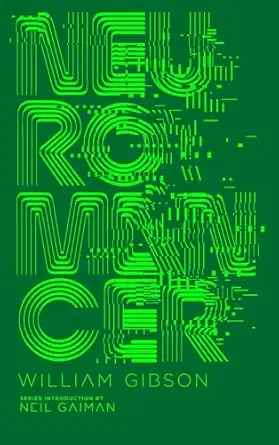
The hardest read here, and the one that invented the vocabulary
Neuromancer
William Gibson's cyberpunk landmark follows a burned-out hacker hired for a job that turns out to serve an artificial intelligence trying to escape its own limits. It's dense, disorienting, and unlike anything written before it.
$11.36fromAmazonList priceGibson doesn't explain his world. You're dropped into a bar in Chiba with a page of unfamiliar nouns and expected to keep up, and either that thrills you or it doesn't. Readers who love it describe the sensation as being transported rather than told. Readers who struggle describe reading the same paragraph three times. Both groups are right about the book.
The AI here is the most genuinely alien on this list. Wintermute and Neuromancer aren't machines that want to be human — they're something else, with goals the human characters can barely perceive, let alone judge. Gibson resists every temptation to make them relatable, which is exactly why they still feel like a plausible sketch of a superhuman intelligence.
Its footprint is hard to overstate. Cyberspace, jacking in, the megacorporate future, the whole visual grammar The Matrix later borrowed — it starts here, and readers coming to it fresh are startled by how little of it feels borrowed even now. Sentence by sentence, the prose is also the best writing on this list, if you like your prose sharp and strange.
Consider this the upgrade pick in effort rather than expense. It asks more of you than anything else here and pays back more if you meet it. Just don't make it your first science fiction novel, and think twice about the audiobook — a lot of listeners report losing the thread completely in the cyberspace sequences.
Flaws but not dealbreakers
The plot is genuinely hard to follow, particularly once the action moves into cyberspace. Even admirers admit they finished without being certain what happened in a couple of chapters.
Character development is thin — Case is more of a viewpoint than a person, and the supporting cast serves the atmosphere. And while the core vision holds up remarkably, the specific hardware and a handful of the cultural details now read as quaint.
Who this is for
This guide is for anyone who wants one good novel about artificial intelligence and doesn't want to sort through seventy years of a genre to find it. That includes people who don't normally read science fiction, people buying a gift, and people who work adjacent to AI and want the cultural background their colleagues keep referencing. If you already read widely in the field, most of what's here will be familiar — you're better served by a guide to recent work.
We covered novels and one story collection, all widely available in print. We didn't cover nonfiction about AI, short fiction published only in magazines, or the many sequels that follow the series openers on this list. A few of these books carry real content warnings, and we say so in the entries rather than assuming everyone wants the same reading experience.
How we picked
We built this list from publishers' listings, published criticism and the themes that recur in owner feedback. AI at the center: the machine mind has to matter to the story, not just decorate it. Readable now: we weighted how often readers describe a book as hard going or set aside unfinished, because a landmark you can't get through helps nobody. Ideas that still hold: we favored books whose central question connects to something people genuinely argue about today. Length and format: shorter books and story collections got credit, since those are the ones people actually finish. Content warnings: where owners consistently flag graphic content or dated attitudes, we pass that along instead of burying it.
Other sci-fi books about artificial intelligence worth considering
If you want the darkest and most original book here: The The Windup Girl Paperback ($17) — Paolo Bacigalupi's 23rd-century Bangkok is a post-oil world where calories are currency and engineered plagues keep jumping the fence. Emiko, the engineered woman of the title, sits right on the line between manufactured and human, and her story is the most disturbing exploration of that line on this list. The world-building is extraordinary and the atmosphere is unmatched. Two warnings, though, and they're serious: the novel contains graphic sexual violence against Emiko, and the dense Thai vocabulary and multiple plot threads make the first hundred pages a slog. Several readers also find the ending unsatisfying after all that build. It's a real achievement, but it isn't a book you hand to someone casually.
If you want the ancestor of algorithmic prediction: The Foundation Mass Market Paperback ($8.99) — Foundation isn't about artificial intelligence, but it's about something we now live inside: the belief that enough data and the right math can forecast what a population will do. Asimov's psychohistory predicts the fall of a galactic empire down to the century, and the story follows the people executing a plan drawn up before they were born. It reads like a prophecy of predictive analytics, and the scope — centuries, planets, a civilization rebuilt from scratch — is genuinely thrilling. What you give up is people. Characters exist to advance the plan, the emotional temperature stays low, and the math itself is deliberately vague. Read it for the idea, not the cast.
The competition
These are the titles our research surfaced most often in discussions of AI in fiction, not a complete map of the genre. Plenty of excellent books about machine minds aren't here. Each of the following is worth reading — it just lost to a pick on the specific grounds this guide cares about.
The Dune Mass Market Paperback ($6) — Dune is the most beloved book in this lineup by a wide margin, and it earns that. Herbert built a universe where thinking machines were outlawed after a catastrophic war, forcing humans to become the computers — Mentats who calculate, navigators who fold space on a drug-enhanced trance. That inversion is a fascinating argument about what we lose when we outsource thinking, and it's more relevant now than when he wrote it. But the AI is backstory. It shapes the world and never appears in the plot, so as a book about artificial intelligence it can't beat the picks. It's also long, slow to start, and thick with invented terminology. Buy it because it's Dune, and read it with the appendices open.
How to read these
Order matters more than usual with this list. If you're new to the genre, start with Klara and the Sun or I, Robot — both are short, plainly written, and need no background at all. Move to Do Androids Dream of Electric Sheep? or The Moon Is a Harsh Mistress next; they're older and stranger but still approachable. Save Neuromancer and Dune for last, once you've built tolerance for books that refuse to explain themselves. For Dune, keep the glossary and appendices handy from page one rather than pushing through confused. For Neuromancer, read it in print if you can. Listeners report losing the plot in the cyberspace sequences, where the prose does most of the heavy lifting and rereading a paragraph is the only way through.
Questions we get
Which one should I read first if I'm new to science fiction?
Klara and the Sun. It's contemporary, short, and reads like literary fiction — no genre conventions required. I, Robot is the other easy entry point, since each story stands alone and the writing is deliberately clear. Hold off on Neuromancer and Dune until you're comfortable with books that drop you into a world without explaining it.
How well did these books predict real AI?
Better in concept than in detail. Asimov's Three Laws anticipated the alignment problem almost exactly — systems that follow their instructions and still produce outcomes nobody wanted. Gibson imagined a networked space you enter rather than browse, and Foundation's psychohistory looks a lot like predictive analytics at scale. The hardware they imagined is mostly wrong; the questions are mostly right.
Are any of these appropriate for teenagers?
I, Robot, Foundation and Klara and the Sun are fine for mature younger readers, and the first two are how a lot of adults got started. The Windup Girl is not — it contains graphic sexual violence. Neuromancer and Do Androids Dream have adult themes and drug use, and The Moon Is a Harsh Mistress has sexual politics that a teenager will probably want to talk through with someone.
Should I read the book if I've seen the movie?
Yes, but adjust your expectations. Do Androids Dream of Electric Sheep? shares a premise with Blade Runner and almost nothing else — the book is weirder, funnier and more concerned with religion. The I, Robot film borrows the title and the Three Laws and invents the rest. Dune's adaptations capture the surface well and necessarily compress the ideas.
Do I have to read the sequels?
No. I, Robot is a collection of standalone stories you can read in any order. Foundation and Dune both open long series but tell complete stories on their own. Neuromancer starts a trilogy and works fine alone. The rest are standalone novels.
Which of these are about ethics, and which are just good stories?
For the philosophical end, go to I, Robot, Do Androids Dream of Electric Sheep? and Klara and the Sun — all three are built around a question rather than a plot. For story and momentum, The Moon Is a Harsh Mistress, Neuromancer and The Windup Girl. Foundation and Dune sit in between, wrapping big ideas in epic narrative.
Why you should trust us
For this guide:
- We compared publishers' listings, page counts and edition details for every book here against the descriptions in published criticism.
- We read through recurring themes in owner feedback to identify which books readers regularly abandon, which endings divide people, and which content warnings come up often enough to be worth stating.
- We weighed each title on whether artificial intelligence drives the book or merely furnishes it, and placed them accordingly.
- We read owner reviews on every listing, weighted toward the critical ones, because that is where the recurring failures show up.
- We have a systematic way of automatically fetching the latest prices, so the numbers on this page stay current.
- This is a research-focused guide, so the team may not own every product listed — though we often do own the top winners, which gives us extra context for the recommendations.
- We don't accept free products, and the retailer commission never changes which product we recommend.
Sources
Amazon product listings and owner reviews for all 8 products
Manufacturer specification pages for each product
Some passages in this guide may be paraphrased with AI help. Prices are refreshed automatically.
More like this.
Continue exploring lifestyle reviews and recommendations.

A Beginner's Guide to POP MART: Everything You Need to Know About Blind Box Toys (2026)
Discover the captivating world of POP MART blind box collectibles. From understanding the thrill of the chase to choosing your first series, this complete guide helps newcomers navigate the exciting hobby of art toy collecting.

The Best Wedding Planning Books
Getting engaged is fun for about a week. Then someone asks when the wedding is, and you realize you have no idea how any of this works. A good planning…

The Best Ice Fishing Tip-Ups and Hard-Water Gear
Tip-up fishing is a waiting game you play with your feet up. You set a baited line under the ice, walk away, and watch for a flag. When one pops across…

The Best Garage Tire Inflators
Tire pressure is the one bit of car maintenance you can actually do yourself in two minutes. Tires lose roughly a pound of pressure a month, and more when…

The Best CamelBak Bottles and Hydration Packs
Staying hydrated sounds simple until you're halfway up a hot trail with a bottle buried in your pack. That's the gap CamelBak has spent decades filling.…

The Best Rechargeable Heated Vests
A heated vest earns its keep in the hours when you stop moving. Waiting on a sideline, sitting in a hunting blind, standing on a job site while someone…