The Best Face Sunscreens for Daily Wear
Face sunscreen only works if you actually put it on, and that comes down to how it feels. A formula that stings your eyes by lunch, or leaves a chalky gray film in your bathroom mirror, is a formula you'll skip by Thursday. So texture, finish and skin compatibility matter as much as the SPF number on the front. The other thing worth knowing: UVA rays go right through window glass. If you drive to work or sit near a window all day, you're getting sun exposure without ever stepping outside.
Here's the honest part. No sunscreen in this category solves everything at once. The formulas with the most elegant, invisible finish tend to cost the most per ounce, and the ones that add real skincare actives — niacinamide, ceramides, repair enzymes — cost more still. Meanwhile most people apply about a quarter to half of what they should, which quietly cuts their real protection in half. And the SPF gap everyone argues about is small: SPF 30 blocks roughly 97% of UVB, SPF 50 about 98%.
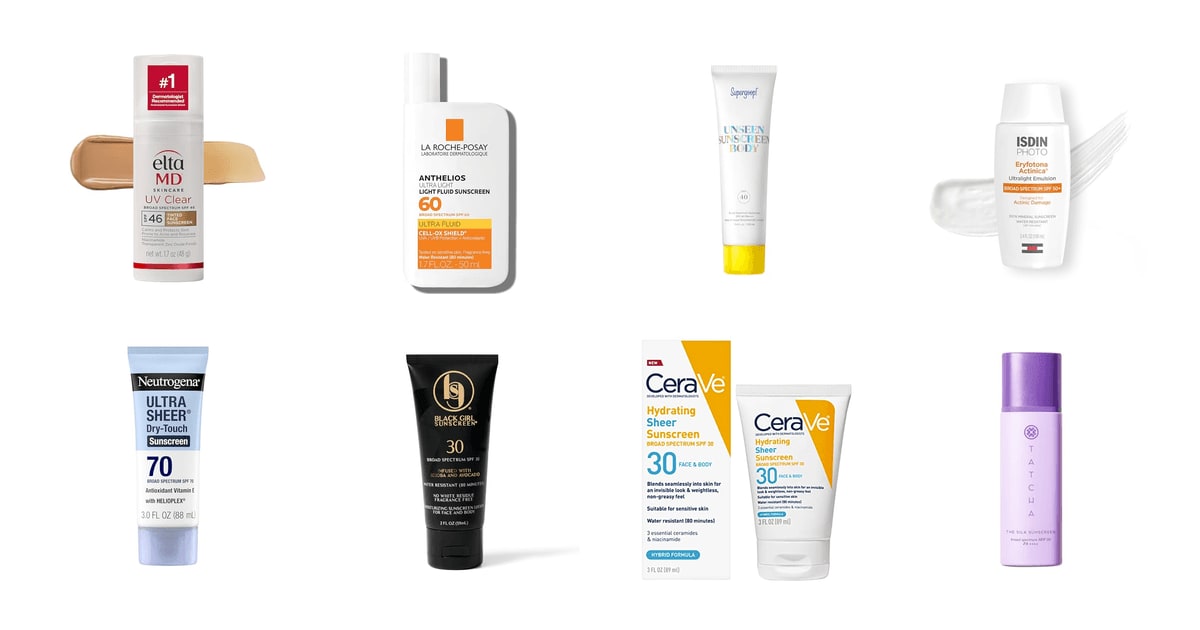
We read published dermatology guidance, manufacturer specifications and a lot of owner feedback to sort these eight out, and the pattern was clear enough. The formulas people stick with are the ones that vanish on their particular skin and don't fight their makeup. We think that the EltaMD UV Clear Tinted SPF 46 is the best face sunscreen for most people, and that the La Roche-Posay Anthelios Light Fluid SPF 60 is the one to buy if your skin reacts to almost everything.
Everything we recommend

Calms redness and blocks UV, with makeup-friendly wear

A matte, serum-thin fluid for skin that reacts to everything

No white cast on deep skin, and it costs the least here

Mineral protection plus repair enzymes, at a real premium
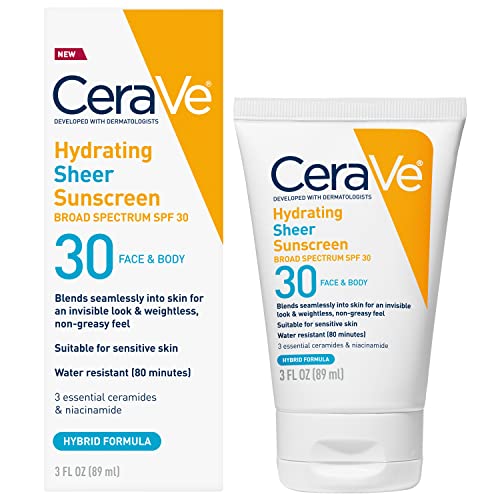
Ceramides and hydration for dry, barrier-damaged skin
At a glance
| Product | SPF | Skin Type | Price | |
|---|---|---|---|---|
| EltaMD UV Clear Tinted Sunscreen for FaceTop pick | SPF 46 | Acne-Prone Sensitive | $47 |
| La Roche-Posay Anthelios Light Fluid Facial SunscreenRunner-up | SPF 60 | — | $26.99On sale |
 | Supergoop! Unseen Sunscreen Body SPF 40 -Also in lineup | SPF 40 | All Skin Types | $44 |
| ISDIN Eryfotona Actinica SPF 50+Upgrade pick | SPF 50+ | Sensitive Skin | $73 |
 | Neutrogena Ultra Sheer Dry-Touch Sunscreen Lotion SPFAlso consider | SPF 70 | — | $9.87On sale |
| Black Girl Sunscreen SPF 30 for theBudget pick | SPF 30 | Melanin Rich Skin | $9.99 |
| CeraVe Hydrating Sheer Sunscreen with SPF 30Also great | SPF 30 | — | $13.97On sale |
 | The Silk SunscreenAlso consider | SPF 50 PA++++ | All | $64 |
How we picked
Filters and SPF. We required broad-spectrum labeling and at least SPF 30, the standard daily minimum in published dermatology guidance. We looked at spec sheets to see whether UVA coverage came from zinc oxide or a photostabilized chemical filter.
Finish on real skin. We weighted owner feedback heavily on white cast, because it's the most common reason people abandon a sunscreen. Formulas that repeatedly drew cast complaints on medium-to-deep skin couldn't be a top pick.
Makeup compatibility. We looked for consistent owner reports that foundation goes on over it without pilling or sliding. A sunscreen that fights your makeup gets skipped on the days you need it most.
Skin tolerance. We favored fragrance-free, non-comedogenic formulas with published tolerance testing, and we read owner feedback for eye stinging and breakouts — the two failure modes people report most.
Useful extras. Actives like niacinamide, ceramides or repair enzymes only counted if the manufacturer specifies them and owners describe a visible difference over weeks, not days.
Top pick
Calms redness and blocks UV, with makeup-friendly wear
EltaMD UV Clear Tinted Sunscreen for Face
A tinted, oil-free zinc oxide formula with niacinamide, so it protects and quietly evens your skin tone at the same time. It's the sunscreen dermatologists hand out most often, and owners with oily or reactive skin keep coming back to it.
$47fromAmazonIf you've given up on face sunscreen because everything breaks you out, start here. The formula is oil-free and non-comedogenic, and it's built specifically for normal, oily, rosacea-prone and acne-prone skin. Owners with genuinely oily skin describe less midday shine than they get with other SPFs, not more. That's unusual. Most sunscreens either sit greasy on oily skin or dry it into a tight, flaky mess.
The niacinamide is the part that separates this from a plain zinc sunscreen. It's a well-documented ingredient for reducing visible redness and post-inflammatory discoloration, and owners dealing with melasma or dark spots report gradual improvement over weeks of daily use. You're not just blocking new damage. You're working on what's already there, which is a rare thing to get out of a step you were going to do anyway.
The tint does real work too. It's transparent zinc, so you don't get the flat white film that gives mineral sunscreens their reputation, and the color neutralizes facial redness enough that some people skip foundation entirely. Owners consistently say makeup goes on over it without pilling or sliding. If your morning routine has to survive a commute, that matters more than another few points of SPF.
It's also a sensitive-skin formula in the specific ways that count. Fragrance-free, paraben-free, and owners with reactive skin repeatedly note it doesn't sting their eyes — the complaint that kills most face sunscreens by week two. The pump bottle is travel-size and TSA-friendly, which makes reapplication realistic if you're out for the day.
Flaws but not dealbreakers
The tint runs warm and suits light-to-medium complexions best. On very deep skin, it can read a little off, and you'd do better with the untinted version or one of the no-cast options below. A small number of owners with zinc sensitivity also mention mild stinging on first use.
It's a small bottle for a premium product, so cost per day is higher than any drugstore option here. If you're applying the full recommended amount to face and neck every morning — and you should be — you'll go through it faster than you expect.
EltaMD does not state a warranty term for this product.
Runner-upOn sale
A matte, serum-thin fluid for skin that reacts to everything
La Roche-Posay Anthelios Light Fluid Facial Sunscreen
This is a lightweight chemical sunscreen at SPF 60, with antioxidants layered in and no oxybenzone or octinoxate. It absorbs like a serum, dries genuinely matte, and owners with rosacea and sensitive skin report it doesn't set them off.
$26.99fromAmazonList priceThe texture is the whole story. It's called a fluid for a reason — it sinks in within about a minute and leaves nothing behind, no tackiness, no shine. Owners who wear full makeup daily say it's the only face SPF that doesn't change how their foundation goes on. If you've watched a sunscreen ball up under your primer, you know how rare that is.
For sensitive skin that mineral formulas still bother, this is the better bet. La Roche-Posay formulates and tests specifically for skin tolerance, and the Anthelios line has a long track record in European dermatology. It's fragrance-free, oil-free, PABA-free and non-comedogenic. Owners with rosacea — who genuinely can't skip sunscreen and genuinely can't tolerate most of it — report it works where others didn't.
SPF 60 with Cell-Ox Shield means you get broad-spectrum filters plus antioxidants that mop up free radicals, and the formula is photostable, so it doesn't degrade partway through your day. It's also oxybenzone- and octinoxate-free, which clears the Hawaii reef-safety rules if that matters to you. On medium and olive skin tones, owners report no visible cast at all.
The travel size is a practical detail worth calling out. It's small enough to live in a bag, which means reapplying at 2pm is actually something you might do rather than something you intend to do.
Flaws but not dealbreakers
These are chemical filters, so if you specifically want mineral-only — after a procedure, say, or on principle — this isn't it. And beyond the antioxidants, there are no repair actives. No niacinamide, no ceramides. It protects your skin well and doesn't do much else.
For a small bottle it costs noticeably more than the drugstore options at similar protection levels. You're paying for the texture and the tolerance testing.
La Roche-Posay does not state a warranty term for this product.
Budget pick
No white cast on deep skin, and it costs the least here
Black Girl Sunscreen SPF 30 for the
Made by and for people with melanin-rich skin, this lightweight lotion dries completely clear with no ash or gray film. It's the least expensive option in this guide and the most reliable answer to the single biggest reason people skip sunscreen.
$9.99fromAmazonThe white cast problem is not a vanity issue — it's why a lot of people stopped wearing sunscreen at all. If every formula you've tried left you looking gray in photos, you eventually just quit. This one dries clear on deep and medium-deep skin, and owners across a wide range of complexions confirm it consistently. That's the entire value proposition, and it delivers.
It's moisturizing in a way that reads as glow rather than grease. Owners describe a healthy finish rather than shine, and several with mature skin say it works as their moisturizer step too. The formula skips parabens, fragrance, oxybenzone and octinoxate, so it's a reasonable pick for skin that reacts to added scent.
It's a face-and-body lotion, which makes it flexible. You can use it on your neck, chest and arms without buying a second product, and owners report no breakouts using it on the face daily. For a sunscreen at this price, that's a lot of ground covered.
Flaws but not dealbreakers
SPF 30 is the floor, not a ceiling. It meets the standard dermatology minimum for daily use, but every other product here goes higher, and if you're fair-skinned or spending real time outdoors you should go up.
The bottle is small — 2 fl oz — and if you apply the full recommended amount to face and neck each morning, you'll empty it in about a month. Some owners note it feels pricey for the size once you factor in how fast it goes.
Black Girl Sunscreen does not state a warranty term for this product.
Upgrade pick
Mineral protection plus repair enzymes, at a real premium
ISDIN Eryfotona Actinica SPF 50+
An all-mineral zinc oxide formula with patented DNA Repairsomes — photolyase enzymes and vitamin E meant to address existing sun damage, not just block new exposure. Dermatologists recommend it for patients with a history of significant sun damage.
$73fromAmazonNothing else here does what this does. The DNA Repairsomes technology packages photolyase enzymes and vitamin E to work on UV-induced damage that's already in your skin, and ISDIN states it's clinically proven for that purpose. Every other sunscreen in this guide is purely defensive. If you have decades of accumulated sun exposure behind you, that difference is the reason to consider paying more.
The texture is what makes it usable daily. Most 100% zinc formulas feel heavy and leave a chalky finish; this one is an ultralight emulsion that owners describe as melting in. Several say it doubles as a moisturizer. On light and medium skin tones there's no visible cast, and owners with sensitive skin report no irritation and essentially no scent.
The bottle is generous — 3.4 fl oz, roughly double what most premium face sunscreens give you. That softens the price per day considerably. Owners who've used it for a year describe going through it at a reasonable pace, and dermatologists frequently recommend it to patients with a skin cancer history, which is a meaningful endorsement even before you get to the enzymes.
Flaws but not dealbreakers
It's the most expensive product in this guide by a wide margin, and if you just want solid mineral SPF 50 without the repair technology, you're overpaying. The EltaMD or the CeraVe gets you good zinc-based protection for much less.
Despite the no-white-cast claim, owners with very deep complexions report a faint luminous sheen. It's mineral, and mineral has limits. It's also stocked mainly through dermatology offices and specialty retailers, so it's less of a grab-it-at-the-store option.
ISDIN does not state a warranty term for this product.
Also greatOn sale
Ceramides and hydration for dry, barrier-damaged skin
CeraVe Hydrating Sheer Sunscreen with SPF 30
A zinc-and-chemical hybrid with three ceramides and hyaluronic acid, so it repairs your skin barrier while it protects. It's the sensible pick if your face is dry, tight or recovering from over-exfoliation, and it costs about what a drugstore lotion costs.
$13.97fromAmazonList priceSun exposure damages the ceramides that hold your skin barrier together, which is a small irony worth appreciating: the thing you're protecting against is degrading the thing that keeps your skin comfortable. This formula puts three of them back, along with hyaluronic acid. Owners with dry and sensitive skin say it hydrates enough to skip a separate moisturizer.
The hybrid approach is the smart compromise here. Blending zinc oxide with chemical filters gets you mineral benefits without the heavy, chalky feel of an all-mineral lotion. It's fragrance-free, paraben-free, ophthalmologist-tested and non-comedogenic, and it carries the Skin Cancer Foundation's recommendation for active use. Owners repeatedly note it has no smell at all, which is a bigger deal than it sounds if scent bothers you.
You get 3 ounces, and it's water-resistant for 80 minutes. Between the size and the hydration, it's an easy one to use generously on face, neck and chest without rationing — and using enough is the single biggest factor in whether your sunscreen works.
Flaws but not dealbreakers
It goes on white on purpose, to show you where you've applied it, and you have to buff it in. Several owners still see a cast afterward, especially on deeper skin. If a clean finish in thirty seconds is what you need, this isn't the one.
SPF 30 is the minimum, and a few owners find the lotion thinner and runnier than they expected. The hybrid filters also mean it won't satisfy anyone who wants mineral-only.
CeraVe does not state a warranty term for this product.
Who this is for
This guide is for anyone who wants a face sunscreen they'll wear every morning, indoors or out. That includes desk workers and drivers — UVA passes through window glass, so a daily commute adds up whether or not you ever sit in direct sun. If you have oily or acne-prone skin, rosacea, hyperpigmentation, or a complexion that most sunscreens turn gray, there's a pick here aimed squarely at you. If you already have a formula you like and use consistently, you don't need to switch. Consistency beats specifications.
We're covering daily-wear facial SPF, not beach or sport sunscreen, and not sun-protective clothing, which does more for a long hike than any lotion will. We also aren't covering makeup with SPF built in, because you'd need to apply roughly seven to ten times the normal amount of foundation to get the labeled number. Treat SPF in makeup as a bonus layer over real sunscreen, never as a replacement for it.
How we picked
Filters and SPF: every pick is broad-spectrum at SPF 30 or higher, with UVA coverage from zinc oxide or a photostabilized chemical filter per the manufacturer's specs. Finish: we weighted owner reports of white cast heavily, since a gray film is the top reason people quit a sunscreen, and we ruled out anything that drew repeated cast complaints from a top-pick role. Makeup compatibility: we looked for consistent reports that foundation sits over it without pilling. Skin tolerance: we favored fragrance-free, non-comedogenic formulas with published tolerance testing, and read owner feedback for eye stinging and breakouts. Extras: niacinamide, ceramides and repair enzymes counted only where the manufacturer states them and owners describe a real difference over time.
Other face sunscreens for daily wear worth considering
If you want the most elegant finish and you'll pay for it: The The Silk Sunscreen ($64) — Tatcha's Silk Sunscreen is a 100% mineral SPF 50 with a PA++++ UVA rating, which is the top tier under the Japanese rating system. The texture is the point — it smooths into a soft-focus, pore-blurring finish that owners describe as silky, with a faint tint that evens skin tone. Several owners with deep complexions report genuinely no cast, which is unusual for a mineral formula. It's hydrating enough to replace your moisturizer. What you give up is value: the underlying protection is comparable to products costing far less, and owners have flagged the bottle design as prone to leaking. Buy it because the wearing experience keeps you consistent, not because the SPF is better.
If you want the highest SPF for the least money: The Neutrogena Ultra Sheer Dry-Touch Sunscreen Lotion SPF ($9.87) — The Neutrogena Ultra Sheer Dry-Touch is SPF 70 with Helioplex, water-resistant for 80 minutes, and available at essentially every drugstore in the country. It's oil-free, non-comedogenic, oxybenzone-free, and owners praise how fast it absorbs to a matte finish. The catch is right in Neutrogena's own listing: some people see a slight sheen or a white cast, and it's most noticeable on medium-to-dark skin. A few owners also find it greasy on the face specifically. It's marketed as a body sunscreen, so it's heavier than the dedicated face formulas above — fine on the face for many people, but not the one to pick if you're layering makeup over it.
The competition
These are the products our research surfaced in this category, not a complete map of the market. Face sunscreen is one of the most crowded shelves in skincare, and plenty of good formulas aren't represented here. What follows is what didn't make the picks and why.
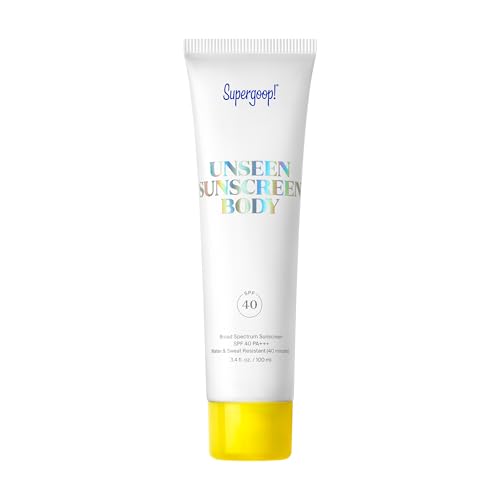
The Supergoop! Unseen Sunscreen Body SPF 40 - ($44) — Supergoop's Unseen Sunscreen has a devoted following, and the reason is simple: the clear gel formula disappears on every skin tone with no cast and no flashback in photos. Owners with sunscreen allergies report it's one of the few that doesn't trigger hives. But this particular listing is the body-optimized version, reformulated in a larger bottle for arms and legs rather than the face — Supergoop sells a separate face formula. SPF 40 is also lower than most of the picks, and the silicone-heavy base can pill under silicone-based foundations. If you want it, give it five to ten minutes to set before makeup, and know you're buying the body SKU.
How to apply it so it actually works
Most people use a quarter to half of what they should, which quietly halves the protection they think they're getting. The target is about a quarter teaspoon for face and neck — roughly two full finger-lengths of product, tip to first knuckle. A practical check: if a small bottle lasts you more than about two months of daily use, you're under-applying. Put it on 15 minutes before you head out, and reapply every two hours if you're outside. If you're wearing mineral sunscreen under makeup, give it five to ten minutes to fully set or it'll ball up. And don't forget the spots people skip — ears, hairline, the sides of your neck, and the backs of your hands on the steering wheel.
Questions we get
What face sunscreen doesn't leave a white cast on deep skin tones?
Black Girl Sunscreen is the most reliable answer — it's formulated to dry completely clear, and owners across deep complexions confirm it does. The Tatcha Silk Sunscreen is a mineral formula that some deep-skin owners also report wearing with no cast, though it costs far more. Skip the Neutrogena and be cautious with the CeraVe, since both draw cast complaints on darker skin.
What SPF do I need if I work indoors all day?
SPF 30 broad-spectrum is the standard daily minimum, and that applies to indoor workers too. UVA rays pass through window glass and drive photoaging and pigmentation over years, so a desk near a window still counts as exposure. If you commute, sit in direct window light, or have fair or photosensitive skin, go to SPF 50.
Is mineral sunscreen better than chemical for sensitive or rosacea-prone skin?
Usually, yes. Zinc oxide and titanium dioxide sit on the skin surface rather than absorbing, so they're less likely to irritate, and zinc has documented anti-inflammatory properties that help rosacea specifically. The EltaMD and ISDIN picks are both mineral. That said, plenty of people with reactive skin do fine on the La Roche-Posay chemical fluid — tolerance is individual, so a patch test beats a rule.
Can I use body sunscreen on my face?
It won't hurt you, but face formulas are lighter, more often non-comedogenic and fragrance-free, and less likely to clog pores or feel heavy under makeup. The Neutrogena and Supergoop products here are both body-optimized, and owners do use them on their faces. If you're acne-prone or you wear foundation daily, a dedicated face formula is worth it.
Which one won't pill under makeup?
The La Roche-Posay Anthelios Light Fluid is the safest bet — it absorbs like a serum in under a minute and owners say foundation goes on over it unchanged. The EltaMD tinted formula is the other reliable option, and its tint means you may need less foundation. With any mineral formula, wait five to ten minutes for it to set before applying makeup.
Does foundation with SPF count as sunscreen?
No. To hit the SPF number printed on a foundation, you'd need to apply roughly seven to ten times the amount anyone actually wears — about half a teaspoon across the face. Published dermatology guidance is consistent that dedicated sunscreen goes on underneath makeup. Treat the SPF in your foundation as a small bonus layer, nothing more.
Why you should trust us
For this guide:
- We read manufacturer specifications and ingredient listings for all eight products, comparing SPF ratings, filter types and stated actives against published dermatology guidance on daily sun protection.
- We reviewed owner feedback for each product, focusing on recurring themes around white cast, eye stinging, pilling under makeup and how long a bottle lasts in daily use.
- We did not use, apply or evaluate any of these sunscreens ourselves; every claim here traces back to a specification, published guidance or a pattern in owner reports.
- We read owner reviews on every listing, weighted toward the critical ones, because that is where the recurring failures show up.
- We have a systematic way of automatically fetching the latest prices, so the numbers on this page stay current.
- This is a research-focused guide, so the team may not own every product listed — though we often do own the top winners, which gives us extra context for the recommendations.
- We don't accept free products, and the retailer commission never changes which product we recommend.
Sources
Sunscreen FAQs — American Academy of Dermatology, American Academy of Dermatology
Sunscreen and Skin Cancer Prevention — Skin Cancer Foundation, Skin Cancer Foundation
EWG's Guide to Sunscreens 2025, Environmental Working Group
The Best Sunscreens for Your Face — Wirecutter, Wirecutter / New York Times
Best Sunscreens Rated and Reviewed — Consumer Reports, Consumer Reports
Amazon product listings and owner reviews for all 8 products
Manufacturer specification pages for each product
Some passages in this guide may be paraphrased with AI help. Prices are refreshed automatically.
More like this.
Continue exploring beauty reviews and recommendations.

The Best Sunscreens for Face and Body
Sunscreen only works if you actually wear it. That sounds obvious, but it's the whole game. The formula you like - the one that doesn't sting your eyes,…

The Best Mineral Sunscreens for Face
Sunscreen only works if you'll actually wear it. That's the whole game with a daily face SPF: it has to feel good enough that you reach for it on a gray…

The Best Journal Notebooks for Daily Writing
A journal notebook only earns its place if you actually reach for it. That sounds obvious, but it's where most notebooks fail. The paper feathers your…

The Best Sunscreens for Every Skin Type
Sunscreen only works if you actually wear it. That sounds obvious, but it's the whole ballgame. The American Academy of Dermatology says SPF 30 filters…

The Best Anti-Aging Face Moisturizers
An anti-aging moisturizer does two jobs at once. It keeps your face comfortable all day, and it carries actives - retinol, peptides, niacinamide - that…

The Best LED Face Masks and Red Light Therapy Devices
Red light therapy asks very little of you and gives back slowly. You put on a mask, sit still for a few minutes, and repeat that several times a week for…