The Best Water Filtration Pitchers
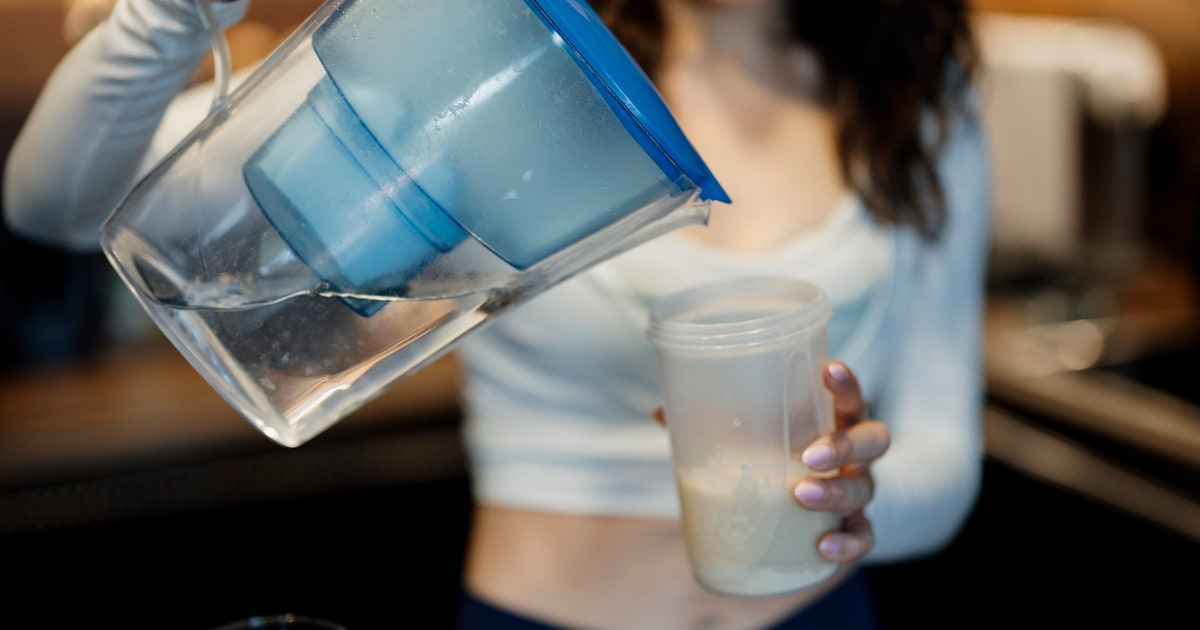
Filtered water is one of those upgrades you notice for about a week and then take for granted. The chlorine smell goes away, ice stops tasting like the freezer, and you quit hauling cases of bottled water up the stairs. What you keep noticing is the friction. A pitcher that's slow to fill, awkward to pour, or too tall for your fridge shelf ends up on the counter, then in a cabinet. So the useful question isn't which filter is strongest on paper. It's which one you'll actually keep using.
Here's the honest part: no pitcher does everything. Gravity filtration is slow by nature, and the models that pull out the most stuff are usually the slowest to pour. Filters are a subscription you didn't sign up for, and what's printed on the box never matches what you'll spend over a year. Almost none of them touch bacteria or viruses, so these are meant for municipally treated tap water, not a well. And plenty of pitchers carry no health-effects certification at all — NSF lists fewer than 20 pitchers or dispensers certified for lead reduction.
Certification is the shortcut through the marketing. NSF/ANSI 42 covers taste and odor. NSF/ANSI 53 is the one that covers health effects like lead, and it's the bar we'd want any pitcher to clear before you trust a claim on the box. We compared certifications, published lab results, filter lifespans, capacities and the complaints owners repeat. We think that the Brita Everyday Elite is the best water filtration pitcher for most people, and that the PUR Plus 7-Cup is the one to buy if your pitcher has to live in a fridge door.
Everything we recommend

The easy one to live with, and it's certified for lead

Slimmer body for a fridge door, and it's dishwasher safe

The longest contaminant list, if you can wait for the pour

Glass instead of plastic, and it handles bacteria too
At a glance
| Product | Capacity | Filter Life | Price | |
|---|---|---|---|---|
| Brita Everyday Elite Water Filter PitcherTop pick | 10 Cup | ~6 Months | $44.99 |
| PUR Plus 7-Cup Water Filter Pitcher forRunner-up | 7 Cup | — | $28.12 |
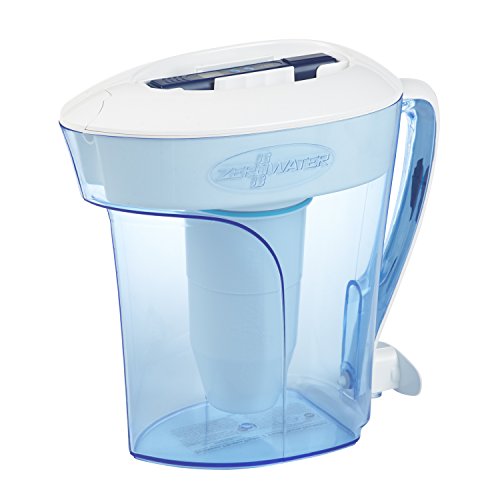 | ZeroWater 10-Cup Pitcher Water Filter Removes PFOA/PFASAlso consider | 10 Cup | — | $37.99 |
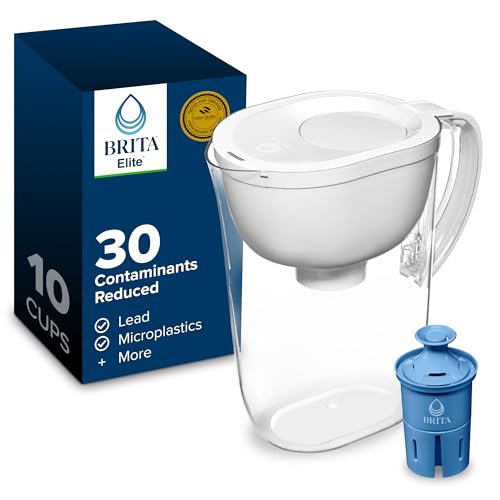 | Brita Large 10-Cup Water Filter PitcherAlso in lineup | 10 Cup | ~6 Months | $44.99 |
 | Epic Water Filters Pure Filter Pitchers forAlso consider | 10 Cup | 150 Gallons | $67.20On sale |
| LifeStraw Home Glass Water Filter PitcherAlso great | 7 Cup | 40 Gallons | $64.95 |
| Clearly Filtered Water Filter PitcherUpgrade pick | 10 Cup (80 fl oz) | 100 Gallons | $109.99 |
 | Waterdrop PT-04B Water Filter PitcherAlso in lineup | 10 Cup | 200 Gallons | $24.99On sale |
How we picked
Certification, not claims. We treated NSF/ANSI 53 or an equivalent third-party lead certification as the credibility bar, since anyone can print a contaminant count on a box. Where a brand relies on its own lab testing instead, we looked for results published in full.
Lead and PFAS. Lead reduction is the single most important health claim a pitcher can make, and PFAS is the fast-rising second. We favored pitchers with documented reduction figures for both.
Filter life and upkeep. We compared rated gallons per cartridge and how often that translates into a change, because a cartridge you swap every few weeks adds up over a year. Filters you can find locally scored better than ones you have to order.
Flow and capacity. Published testing shows pitcher flow rates ranging from about half a gallon per hour on multi-stage models to over a gallon on simple carbon filters. We weighed that against capacity, since a slow 7-cup pitcher frustrates a household of four.
Materials and fit. We required BPA-free bodies at minimum and noted glass options for anyone avoiding plastic entirely. We also read spec sheets for height and width, because a pitcher that doesn't fit your fridge is a pitcher you stop using.
Top pick
The easy one to live with, and it's certified for lead
Brita Everyday Elite Water Filter Pitcher
A 10-cup pitcher with Brita's Elite filter, which is certified to reduce 99% of lead along with chlorine taste, cadmium, mercury, benzene and asbestos. You change the filter about twice a year, and replacements sit on the shelf of nearly every grocery store.
$44.99fromAmazonThe Elite filter is what makes this pitcher worth buying. It's certified to reduce 99% of lead, plus chlorine taste and odor, cadmium, mercury, benzene, asbestos and microplastics. That's the health-effects tier of certification, not just a taste filter with good packaging. The EPA points to pitchers certified to NSF/ANSI 53 as a real way to cut lead exposure at the tap, and drinking water can account for a fifth or more of a young child's total lead exposure.
Twice a year is a filter cadence you can actually keep. Cheaper carbon-only filters want changing every month or two, and most people quietly stretch that to four. The Elite runs about six months, and an electronic indicator on the lid nags you when it's time. Fewer changes also means fewer cartridges in the trash and fewer trips to buy them.
The everyday details hold up. It takes 10 cups, which is roughly three big reusable bottles, and the easy-fill lid means you can run it under the faucet without wrestling the top off. At about 10.7 inches tall it clears most fridge shelves, though not a door bin. Brita puts the plastic waste it displaces at around 1,800 single-use bottles a year.
Availability is an underrated feature. Elite cartridges fit every Brita pitcher and dispenser except Stream, and you can find them in supermarkets, pharmacies and hardware stores. Boutique pitchers make you order filters online and wait. If your filter is a two-minute errand instead of a five-day shipment, you're far more likely to change it on time — which is the whole point.
Flaws but not dealbreakers
Brita doesn't claim PFAS reduction here, and that's the gap that matters most right now. Federal limits now exist for six PFAS compounds in drinking water, and EWG's tap water database has found PFAS in supplies serving more than 200 million Americans. If forever chemicals are your reason for filtering, look at our upgrade pick or the Epic Pure instead.
It doesn't remove fluoride, either, which is intentional but disappointing if that's what you came for. And the electronic indicator tracks time and use rather than what's actually in your water, so it's a reminder, not a measurement.
Runner-up
Slimmer body for a fridge door, and it's dishwasher safe
PUR Plus 7-Cup Water Filter Pitcher for
PUR's 7-cup pitcher is narrow enough for most refrigerator door shelves, and its filter is WQA certified to reduce lead. It's the one to get if the tall 10-cup pitchers keep knocking over your condiments.
$28.12fromAmazonFridge geometry decides more purchases than anyone admits. This pitcher is built slim on purpose, and it slots into most refrigerator door bins instead of eating a whole shelf. If you share a fridge with roommates or you're working with an apartment-sized unit, that's the difference between a pitcher you use and a pitcher you resent.
PUR's filter is certified for lead, which is the bar we care about. The PPF951K cartridge is WQA certified to reduce lead and other contaminants, and PUR's MineralClear filters are rated for more than 70 contaminants — roughly twice what a basic carbon filter handles. They leave calcium and magnesium behind, so the water still tastes like water rather than something stripped.
Small conveniences add up here. The stay-tight lid lets you pour while the top reservoir is still dripping, so you don't have to time your thirst around the filter. The pitcher is dishwasher safe, which matters more than it sounds — reservoirs get slimy, and hand-scrubbing a narrow one is a chore most people skip.
Compared with our top pick, you're trading capacity and filter longevity for a shape that fits. If you have the shelf space, the Brita is the better long-run buy. If you don't, this is the sensible answer, and it clears the same certification hurdle for lead.
Flaws but not dealbreakers
Seven cups goes fast. A household of three or four will refill it several times a day, and the reservoir empties into the pitcher slowly enough that you'll occasionally be standing there waiting.
PUR's filters are also the only ones certified for PUR systems, and owners regularly report that third-party cartridges seat badly and leak unfiltered water past the seal. Buy the real ones. It's a small tax on an otherwise inexpensive pitcher.
Upgrade pick
The longest contaminant list, if you can wait for the pour
Clearly Filtered Water Filter Pitcher
Clearly Filtered targets 386-plus contaminants at up to 99.99% removal, including fluoride, PFAS, arsenic and pharmaceuticals, with third-party lab results published in full. It's the pitcher for people who want the worry handled and will accept a slow pour.
$109.99fromAmazonNo other pitcher here goes after as much. Clearly Filtered's three-stage cartridge targets 386-plus contaminants at up to 99.99% removal, and the company publishes its third-party lab results rather than summarizing them on the box. Independent testing puts lead reduction at 99.6%, PFAS compounds including PFOA and PFOS at 99.5%, and chromium-6 at 99.9%. The pitcher itself is NSF certified to standards 42 and 372.
The list reads like a catalog of the things people actually worry about: fluoride, PFAS, arsenic, microplastics, chlorine, phthalates and pharmaceutical residues. If you're on a municipal supply with a bad history, or you've read your local water quality report and didn't like it, this is the pitcher that addresses the widest range of it without plumbing anything into your sink.
The hardware is grown-up too. It holds 80 fluid ounces, about 10 cups, and the body is medical-grade Tritan that's BPA-free, BPS-free and non-leaching. One filter handles up to 100 gallons, which works out to roughly 200 refills or about four months of daily use for a typical household. The spill-resistant lid survives being knocked in a crowded fridge.
This is the pick for parents of small kids, renters who can't touch the plumbing, and anyone who'd rather buy certainty once than research it every year. Everyone else should start with the Brita and save the money.
Flaws but not dealbreakers
It's slow. Water has to work through dense filter media, and that's the direct trade for the contaminant list — plan on filling it the night before rather than pouring on demand.
It's also heavy and bulky, at nearly three pounds empty and over 11 inches tall, so measure your shelf first. And the filters are the real expense over time; the pitcher is the cheap part of this purchase.
Worth understanding what the certification covers: NSF certifies this pitcher for chlorine taste and odor and for material safety. The broader contaminant claims rest on independent lab testing to NSF protocols, which is credible and public, but it isn't the same thing as an NSF/ANSI 53 listing.
Also great
Glass instead of plastic, and it handles bacteria too
LifeStraw Home Glass Water Filter Pitcher
A 7-cup pitcher in hand-blown borosilicate glass, so nothing plastic ever touches your drinking water. It's also the rare pitcher with a membrane microfilter that removes bacteria and parasites on top of lead, PFAS and microplastics.
$64.95fromAmazonIf plastic in contact with your drinking water bothers you, this solves it in the most direct way possible: there isn't any. The body is hand-blown borosilicate glass, so there's no BPA question and no shedding plastic to think about. It also looks like something you'd leave on the table when people come over, which no other pitcher here manages.
It's the only pitcher in this guide that removes bacteria and parasites. A membrane microfilter handles those, and a second activated carbon and ion exchange stage reduces lead, mercury, PFAS, chlorine, herbicides, pesticides and microplastics. It leaves magnesium and potassium behind, so the water doesn't taste flat. That combination is genuinely unusual at this size.
The two-stage setup has its own rhythm. The membrane microfilter is rated for 264 gallons, about a year. The carbon and ion exchange filter is rated for 40 gallons, roughly two months. You're tracking two schedules instead of one, which is more to remember, but the expensive part only comes around annually.
Seven cups is enough for one or two people who refill through the day. For a family of four it'll feel small, and you'll want the 10-cup Brita or Clearly Filtered instead.
Flaws but not dealbreakers
Glass breaks. A dropped lid or a knock against the faucet ends the pitcher, and it's heavier and more awkward wet than plastic — think twice if kids do the refilling.
The 40-gallon carbon filter is short-lived, so you'll be buying replacements every couple of months and the running cost adds up faster than the headline membrane life suggests. And the bacteria filtration doesn't make untreated water safe as a policy; it's a safety margin on treated tap water, not a license to filter creek water.
Who this is for
Get a pitcher if you rent, if you're short on counter space, or if you want better-tasting water without a plumber. It's also the sane replacement for bottled water: the per-liter cost drops to a fraction of retail, and a family of four can save a meaningful amount over a year while cutting hundreds of plastic bottles. Parents worried about lead have a specific reason to act, since drinking water can account for 20% or more of a young child's total lead exposure.
Skip pitchers if you're on well water or any untreated source. These filters are designed for municipally treated tap water, and apart from the LifeStraw's membrane stage, they don't address bacteria or viruses at all. If you need high volume, hot water, or the deepest possible contaminant removal, an under-sink carbon block or reverse osmosis system does more for less hassle per glass — this guide only covers gravity pitchers you fill by hand.
How we picked
Certification: we started with NSF/ANSI 53 or equivalent third-party lead certification and treated uncertified contaminant counts as marketing until proven otherwise. Lead and PFAS: documented reduction figures for both, since federal PFAS limits now exist and contamination is widespread. Filter life: rated gallons per cartridge and how often that means a change, plus whether replacements are easy to find. Flow and capacity: published testing puts pitcher flow anywhere from roughly half a gallon per hour to over a gallon, so we matched speed against how much water a household actually needs. Materials and fit: BPA-free at minimum, glass where you want no plastic at all, and dimensions that clear a normal refrigerator shelf.
Other water filtration pitchers worth considering
If you want fluoride out of your water: The Epic Water Filters Pure Filter Pitchers for ($67.20) — The Epic Pure is one of the few pitchers that goes after fluoride and PFAS at once. Its 6mm solid carbon block is designed and tested to reduce fluoride, PFOA, chromium-6, trihalomethanes, chloramines and lead, and the filter is rated for 150 gallons — roughly four times a basic carbon cartridge. An LED timer in the lid counts down 90 days so you're not guessing. What you give up is speed, since a block that dense pours slowly, and independent NSF certification of the full contaminant list. The tall, narrow shape also needs a taller shelf than you'd expect.
If you want to see the result on a meter: The ZeroWater 10-Cup Pitcher Water Filter Removes PFOA/PFAS ($37.99) — ZeroWater's five-stage ion exchange filter brings total dissolved solids to 0 ppm, against a U.S. tap average of roughly 150 to 400 ppm, and the pitcher ships with a TDS meter so you can check it yourself. The filter is IAPMO certified to reduce PFOA and PFOS, lead, chromium and mercury. Two catches. In high-TDS regions the cartridge exhausts much faster, which quietly raises your cost per gallon. And stripping minerals affects flavor — in published blind taste comparisons, panelists preferred Brita's water over ZeroWater's despite ZeroWater's stronger contaminant numbers.
The competition
These are the pitchers our research surfaced alongside the picks, not a survey of everything for sale. A pitcher landing here isn't necessarily bad — in a couple of cases it's nearly the same product as a pick, or it's aimed at a buyer we didn't prioritize.
The Brita Large 10-Cup Water Filter Pitcher ($44.99) — Brita's Large 10-Cup pitcher in white is effectively our top pick in a different color, with the same Elite filter, the same 99% lead reduction and microplastic claims, and the same WQA certification. Dimensions and capacity match too. Buy whichever color you like or whichever is easier to get; there's no functional reason to prefer one over the other.
The Waterdrop PT-04B Water Filter Pitcher ($24.99) — The Waterdrop PT-04B is the design-forward option: a natural wood handle, a hands-free spout lid, a slim body meant for a fridge door, and a 200-gallon filter life that beats everything else here. Third-party testing shows it cutting chlorine by up to 97.4% and helping reduce PFOA and PFOS, iron and metal ions. But its certifications are NSF/ANSI 42 and 372 — taste, odor and material safety — not the health-effects standard that covers lead. If your water is fine and you mainly want it to taste better and look good on the counter, it's a reasonable buy. If lead is the reason you're shopping, it isn't.
Care and filter changes
Flush a new filter before the first pour — most brands want a couple of discarded fills, and skipping it means carbon dust in your glass. Wash the reservoir and pitcher weekly with warm soapy water; biofilm builds up in the top chamber where nobody looks. Check whether your lid holds an electronic indicator before putting anything in the dishwasher, since those lids should be wiped, not submerged. Keep filtered water in the fridge and drink it within a day or two, because removing chlorine also removes what was keeping the water from growing things. Change filters on schedule rather than when the flow slows down. A clogged filter still passes water; it just stops removing much.
Questions we get
Do water filter pitchers actually remove lead?
The certified ones do, and the rest mostly don't. Look for NSF/ANSI 53 certification for lead reduction, or an equivalent WQA or IAPMO listing — the EPA identifies certified pitchers as an effective way to cut lead at the tap. Fewer than 20 pitchers and dispensers carry an NSF listing for lead, so most of what's on the shelf isn't in that group.
Which pitchers remove PFAS?
Clearly Filtered, Epic Pure, LifeStraw Home and ZeroWater all make documented PFAS reduction claims; Clearly Filtered's independent testing reports 99.5% removal of PFAS compounds including PFOA and PFOS. Brita's Elite filter doesn't claim PFAS reduction. This matters more than it used to, since there are now federal limits for six PFAS compounds and EWG has found PFAS in supplies serving more than 200 million Americans.
What's the real difference between Brita and ZeroWater?
Brita uses activated carbon to cut chlorine, lead and a set of specific contaminants while leaving minerals in the water. ZeroWater adds ion exchange stages that strip essentially everything dissolved, hitting 0 ppm on a TDS meter. ZeroWater removes more on paper, but it pours slower, exhausts faster in high-TDS areas, and blind taste panels in published testing preferred Brita's water.
What does NSF/ANSI 53 certification mean?
It's the health-effects standard. NSF/ANSI 42 covers aesthetics — chlorine taste and odor — while 53 verifies reduction of contaminants with health consequences, like lead, cysts and certain VOCs. A third party confirms the claim rather than the manufacturer asserting it. Treat 53 as the minimum before you trust any serious health claim on a box.
How often should I change the filter?
Follow the rated gallon life, not the taste of the water. Basic carbon cartridges run about 40 gallons, or roughly monthly for a family; Brita's Elite goes about six months; Clearly Filtered's is rated for 100 gallons or four months; Waterdrop's for 200 gallons. If your water is hard or high in dissolved solids, expect to fall short of the rating.
Can a pitcher make well water safe?
No. Pitcher filters are built for municipally treated tap water and generally do nothing about bacteria or viruses. The LifeStraw Home is the exception here, with a membrane microfilter rated for bacteria and parasites, but even that isn't a substitute for testing a private well and treating it properly. If you're on a well, get the water tested and look at a whole-house or UV system.
Why you should trust us
For this guide:
- We read manufacturer spec sheets, published third-party lab reports and certification listings from NSF, WQA and IAPMO for every pitcher here.
- We compared published flow-rate and taste testing from independent review outlets, along with EPA and EWG guidance on lead and PFAS in drinking water.
- We also reviewed recurring themes in owner feedback — filter seating and leaks, slow pours, and fridge fit — to identify the flaws that show up after the first month.
- We read owner reviews on every listing, weighted toward the critical ones, because that is where the recurring failures show up.
- We have a systematic way of automatically fetching the latest prices, so the numbers on this page stay current.
- This is a research-focused guide, so the team may not own every product listed — though we often do own the top winners, which gives us extra context for the recommendations.
- We don't accept free products, and the retailer commission never changes which product we recommend.
Sources
Best Water Filter Pitchers — Wirecutter (NYT), Wirecutter
Water Filter Pitcher Buying Guide & Ratings — Consumer Reports, Consumer Reports
NSF Water Filter Certification Standards Explained, NSF International
EWG Tap Water Database — PFAS and Contaminant Levels by ZIP Code, Environmental Working Group (EWG)
Lead in Drinking Water — Basic Information, U.S. Environmental Protection Agency (EPA)
PFAS in Drinking Water — Health Effects and Regulation, U.S. Environmental Protection Agency (EPA)
Best Water Filter Pitchers — Good Housekeeping, Good Housekeeping
Best Water Filter Pitchers 2026 — CNET, CNET
Best Water Filter Pitchers — Forbes Home, Forbes Home
Clearly Filtered Independent Third-Party Lab Test Results, Clearly Filtered (manufacturer third-party data)
ZeroWater 5-Stage Filtration Technology Overview, ZeroWater (manufacturer)
Bottled Water Market Size and Per-Liter Cost Analysis, Statista
Amazon product listings and owner reviews for all 8 products
Manufacturer specification pages for each product
Some passages in this guide may be paraphrased with AI help. Prices are refreshed automatically.
More like this.
Continue exploring home reviews and recommendations.

The Best Under-Sink Water Filtration Systems
The water coming out of your kitchen tap is probably safe to drink. It also might taste like the shallow end of a pool, and it may be carrying lead from…

The Best Salt-Free Water Softeners
Hard water shows up in small annoyances before it shows up in your wallet. There's the white crust on the showerhead, the film on your drinking glasses,…

The Best Whole House Water Softeners
Hard water doesn't announce itself. It shows up as a film on the shower glass you can't scrub off, spots on glasses that came out of a dishwasher you just…

The Best Automatic Water Shutoff Valves
A burst supply line doesn't wait for you to get home. Water runs at whatever pressure your main delivers, and it keeps running until somebody turns it off…

The Best Water Heater Insulation Blankets
Your water heater sits there all day keeping 40 or 50 gallons hot, whether you're home or not. If the tank is old, a lot of that heat leaks straight into…

The Best Smart Water Leak Detectors
A burst washing machine hose can put hundreds of gallons on your floor before you get home from work. That's the whole problem with water damage - it's…