The Best Wireless Subwoofers
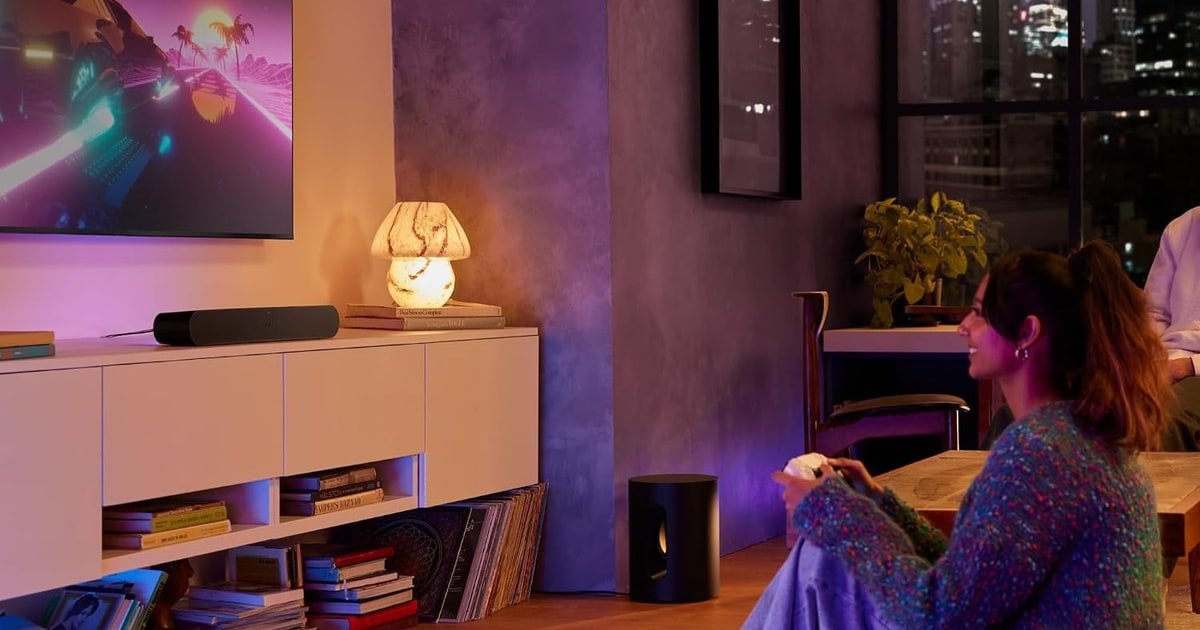
Bass is the part of a movie you feel more than hear. A soundbar alone can only move so much air, so explosions land flat and a bass line in a song just disappears. Adding a subwoofer fixes that in about five minutes. Going wireless fixes the other problem, which is that the best-sounding spot for a sub is almost never next to your TV. You can tuck it behind a couch or in a corner without stapling cable along a baseboard.
Here's the catch nobody puts on the box. Wireless means no speaker cable to your soundbar or receiver, not no cable at all. Every sub here still needs a wall outlet, so your placement freedom stops at the nearest plug. The bigger constraint is pairing. Most of these subs only talk to their own brand's gear, so a Sonos sub won't work with a Samsung bar, and a Bose module won't help a Yamaha receiver. Check what you already own before you shop specs.
We looked at manufacturer specifications, published reviews and the themes that come up repeatedly in owner feedback across proprietary subs, bundled soundbar systems and universal wireless adapter kits. We think that the Sonos Sub 4 is the best wireless subwoofer for most people, and that the SVS SB-1000 Pro with SoundPath adapter is the one to buy if you want reference-grade bass without being locked into one brand's ecosystem.
Everything we recommend

Deep, clean bass that won't rattle your floor

Reference-grade bass, no ecosystem strings attached

Small enough for an apartment, still moves real air
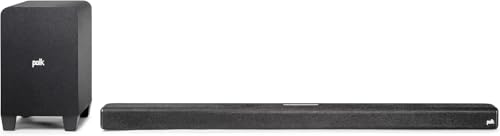
A whole Atmos system for less than most subs alone

A tidy cube that disappears next to a Bose bar
Prices as of Oct 24, 6:27 AM PT · Details
At a glance
| Product | Driver | Cabinet | Price | |
|---|---|---|---|---|
| Sonos Sub 4 - Wireless Subwoofer -Top pick | — | Ported | $899 |
| Sonos Sub Mini - Black - CompactAlso great | — | Sealed | $497 |
| SVS SB-1000 Pro Sealed 12-Inch Subwoofer BundleUpgrade pick | 12-inch | Sealed | $778 |
 | Klipsch WA-2 Wireless Subwoofer Kit with EasyAlso consider | — | — | $165.85 |
| Bose Bass Module 500 BlackRunner-up | 10-inch cube | — | $549 |
 | Yamaha Audio 10" 100W Powered Subwoofer -Also consider | 10-inch cone | Twisted flare port | $269.95 |
| Polk Audio Signa S4 Dolby Atmos 3DBudget pick | 5.9-inch | — | $449 |
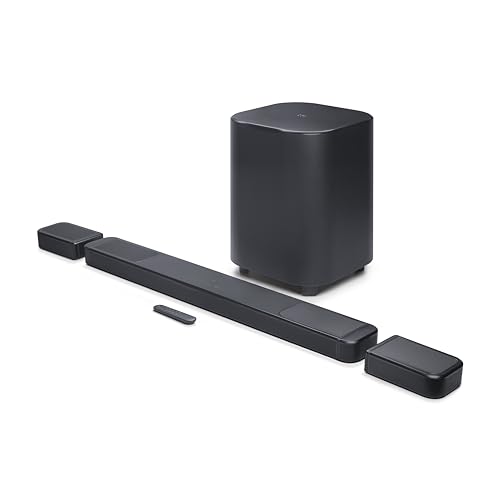 | JBL BAR1300M2 11.1.4 Channel Soundbar with DetachableAlso in lineup | 12-inch | — | $1,019 |
Prices as of Oct 24, 6:27 AM PT · Details
How we picked
Real wireless freedom. We favored subs whose only required cable is power, and we checked manufacturer specs for stated wireless range. Anything needing a speaker wire run to the bar or receiver was out.
Ecosystem compatibility. We read each maker's compatibility documentation to confirm exactly which soundbars and receivers a sub pairs with. Proprietary subs had to be clear about their limits, and universal adapters had to work with any powered sub.
Cabinet and driver design. We looked for force-canceling or dual-opposing driver layouts, since published reviews and owner feedback repeatedly flag buzz and rattle on hard floors as the top complaint. Sealed versus ported was judged by intended use, not treated as a winner.
Setup and tuning. We gave credit for app-based room correction and automatic crossover matching, because published testing methodology weights room-corrected in-room response over headline wattage. Subs that demand manual tuning had to reward the effort with real control.
Placement flexibility. We weighted footprint and shape heavily, since placement guidance from retailers indicates moving a sub a few feet can matter more than extra amplifier power. Compact and wall-friendly designs scored higher.
Top pick
Deep, clean bass that won't rattle your floor
Sonos Sub 4 - Wireless Subwoofer -
The Sonos Sub 4 pairs two inward-facing drivers in a ported cabinet, so it hits hard without shaking the furniture. If you already own an Arc, Arc Ultra or Beam, it connects over your WiFi and tunes itself in the Sonos app.
$899fromAmazonPrices as of Oct 24, 6:27 AM PT · Details
The force-canceling design is the whole reason this one works in a real house. Two Sonos-engineered drivers face each other inside the cabinet, so their motion cancels out instead of transferring into your floor. That matters more than it sounds. On hardwood or laminate, a single-driver sub buzzes the floorboards and rattles anything on a nearby shelf. This one stays put and lets you turn it up without a neighbor complaint.
Setup is the part you'll appreciate most. There's no crossover dial, no phase switch, no separate remote to lose in the couch. You add it in the Sonos app, it finds your soundbar over WiFi, and it sets its own crossover to match. If you've ever spent an evening guessing at subwoofer settings on a receiver menu, this feels like cheating.
The ported enclosure trades a little tightness for a lot more output. Sonos went this route to push low-frequency response further down and louder than a sealed box of the same size could manage. For movies, that's the right call. Big room-filling rumble is what you want during a chase scene, and the Sub 4 has plenty of it for a typical living room.
Placement is where wireless earns its keep. Crutchfield's placement guidance notes that moving a sub a few feet often changes perceived bass more than jumping to a higher-wattage model. Because this one only needs power, you can slide it into a corner, stand it behind an armchair or lay it flat under a console. Try three spots in an evening and keep the one that sounds best.
Flaws but not dealbreakers
It only works with Sonos. Pair it with an Arc, Arc Ultra or Beam and you're set, but it won't connect to a Samsung, LG or Vizio soundbar, and it won't join a traditional AV receiver. Buying this sub is really a decision to stay in the Sonos ecosystem.
It's also the most expensive proprietary sub in this guide, and the size is real. At roughly 16 inches tall and wide, it's a piece of furniture, not something you hide behind a plant. Small apartments may be better served by the Sub Mini.
Upgrade pick
Reference-grade bass, no ecosystem strings attached
SVS SB-1000 Pro Sealed 12-Inch Subwoofer Bundle
This bundle pairs SVS's sealed SB-1000 Pro with the SoundPath wireless adapter, so you get audiophile bass from a compact box that can sit almost anywhere. The adapter works with any powered sub, which means you're never locked to one brand's soundbar.
$778fromAmazonPrices as of Oct 24, 6:27 AM PT · Details
Sealed cabinets sound tighter, and that's the point here. SVS built the SB-1000 Pro as a sealed box with a high-excursion 12-inch driver and a 325-watt RMS amplifier rated past 820 watts peak. Sealed designs roll off more gently and control the driver more precisely, so bass notes start and stop where the music does. If you listen to a lot of acoustic bass or kick drum, you'll hear the difference.
The 50MHz Analog Devices DSP is what separates this from a soundbar sub. You get real in-room tuning controls rather than a single volume knob. RTINGS.com's methodology emphasizes room-corrected in-room response over headline wattage when comparing subs, and this is one of the few units here that gives you the tools to actually do that correction yourself.
The SoundPath adapter is the piece worth understanding. It's a transmitter and receiver pair that carries full-range audio to any powered subwoofer at ranges up to roughly 50 feet through typical home construction. So it's not just for this sub. If you already own a decent wired subwoofer sitting in the wrong spot, the same adapter frees it.
You give up automatic setup for control. There's no app that measures your room and dials things in for you, so you'll spend an evening with the crossover and gain. That's the trade audiophiles want and most people don't.
Flaws but not dealbreakers
This is the most involved setup in the guide. You're connecting a transmitter to your receiver's sub output, matching levels and choosing a crossover point by ear. Anyone expecting a five-minute soundbar experience will find it fussy.
The listing description is inconsistent about driver size, calling it both a 12-inch and a 10-inch sub in different places. Confirm the exact model before you order if driver size matters to you.
It's also physically the most demanding pick. A sealed cabinet with a long-throw driver is heavy and dense, and it needs a bit of breathing room from the wall to sound its best.
Also great
Small enough for an apartment, still moves real air
Sonos Sub Mini - Black - Compact
The Sub Mini is a compact sphere with two inward-facing woofers in a sealed cabinet, built to pair with a Beam or Ray. It adds genuine low end to a small room without dominating it or annoying the neighbors downstairs.
$497fromAmazonPrices as of Oct 24, 6:27 AM PT · Details
If you live in an apartment, this is the Sonos sub to buy. It's under a foot tall and about nine inches across, so it fits beside a media console or under a side table. The sealed cabinet keeps output controlled rather than boomy, which is exactly what you want in a room where the walls are close and the floor is somebody's ceiling.
Both woofers face inward, same force-canceling trick as the bigger Sub. That's the feature that keeps a sub from buzzing a hardwood floor or rattling a bookshelf. In a small room you tend to sit closer to the sub, so cabinet noise is more noticeable. This design largely removes it.
Trueplay tuning matters more here than on a larger sub. Small rooms create nasty bass peaks, especially when a sub sits against a wall. Trueplay adapts the response to your room so it doesn't turn muddy or harsh. You'll need an iOS device to run it, which is a genuine annoyance for Android households.
It's roughly half the size of the Sub 4 and costs meaningfully less. For a bedroom, a studio or a small living room, the bigger sub is more output than you'll ever use at a neighborly volume.
Flaws but not dealbreakers
It pairs with Beam and Ray, and like the rest of Sonos it won't work with another brand's soundbar. If you're not already in the ecosystem, that's a hard limit.
There's less raw extension than the Sub 4 or the SVS. In a large open-plan room you'll notice it running out of headroom during big movie scenes. It's built for small spaces and it stays honest about that.
Budget pick
A whole Atmos system for less than most subs alone
Polk Audio Signa S4 Dolby Atmos 3D
The Polk Signa S4 bundles an ultra-slim Dolby Atmos soundbar with a 5.9-inch wireless sub, so you get a complete upgrade in one box. It's the least expensive path from tinny TV speakers to actual bass you can feel.
$449fromAmazonPrices as of Oct 24, 6:27 AM PT · Details
You're buying a system, not a sub. That's the whole appeal. If your TV audio is still coming from the TV, this replaces it entirely with a seven-driver bar, a dedicated center channel and a wireless sub for less than the price of most standalone subs here.
Setup is genuinely one cable. Plug the bar into your TV's HDMI port, plug in the sub, and the two find each other. Polk says most people are running in under five minutes, and that matches what owners describe. There's no app to configure and no pairing dance.
The bar is 2.36 inches tall, so it sits in front of a TV without blocking the bottom of the screen or the remote sensor. Up-firing elevation drivers handle the Atmos height channels. It's not the same as ceiling speakers, but on a normal-height ceiling you get a sense of sound above you.
VoiceAdjust is the feature people actually use daily. Dialog gets buried in modern mixes, and this lets you push voices up without raising everything else. Bass Adjust does the same on the low end when a neighbor is home.
Flaws but not dealbreakers
The 5.9-inch driver is small, and physics doesn't negotiate. You'll get noticeably more presence than a soundbar alone, but not the chest-hitting rumble of the 10- and 12-inch subs in this guide. Deep organ notes and the lowest movie effects mostly aren't there.
The sub isn't sold as a standalone upgrade path either. You're buying it as part of the Signa S4 system, so it isn't a way to add bass to a soundbar you already own.
Runner-up
A tidy cube that disappears next to a Bose bar
Bose Bass Module 500 Black
The Bose Bass Module 500 is a 10-inch cube that connects wirelessly to Bose Smart and Ultra soundbars. If you already own one of those bars and want more low end without rearranging the room, this is the straightforward answer.
$549fromAmazonPrices as of Oct 24, 6:27 AM PT · Details
The shape is the selling point. It's a 10-inch cube built from premium materials, small enough to sit beside a cabinet or behind a chair without looking like audio equipment. Most subs are a compromise you hide. This one you can leave out.
Pairing with a Bose soundbar takes about a minute. It connects wirelessly to the Smart and Ultra bars, so there's no cable run and no menu diving. You plug it in, the bar finds it, and you're done. For anyone who bought a Bose bar precisely because they didn't want to think about audio setup, that consistency is worth something.
For a cube this size, the output is more than you'd guess. Bose tuned it to fill a normal living room rather than chase the lowest possible frequency, which is the right priority for TV and movies in an average space.
Owner feedback on this one splits more than the Sonos subs. Most people are happy, but a visible minority report pairing frustrations or units that stop connecting. It's worth buying somewhere with an easy return window.
Flaws but not dealbreakers
It only works with Bose soundbars. Outside that ecosystem it's a paperweight, and even inside it you need one of the compatible bars rather than any Bose speaker.
A 10-inch cube can only move so much air. Compared with the SVS or the Sonos Sub 4, it runs out of depth sooner during heavy movie scenes. It fills a room pleasantly rather than pressurizing it.
The reliability picture is the real caution here. A meaningful slice of owner feedback describes connection dropouts or early failures, which is unusual among the subs in this guide.
Who this is for
Buy one of these if your TV or soundbar sounds thin and you can't run speaker cable across a room. That's most renters, most apartment dwellers, and anyone whose living room layout puts the best bass position nowhere near the TV. If you already own a Sonos, Bose or Klipsch system, your decision is mostly made for you by what pairs with what. If you own a decent wired sub in a bad spot, skip the new sub entirely and buy a wireless adapter kit.
Skip these if you're building a dedicated home theater with a receiver and multiple subs. At that point wired connections are cheaper, more reliable and give you dual-sub calibration options that wireless pairing complicates. This guide covers powered subwoofers that connect wirelessly to a soundbar or receiver, plus the adapter kits that make a wired sub wireless. It doesn't cover portable Bluetooth speakers, in-wall bass systems, or battery-powered subs, which barely exist as a real product category.
How we picked
Wireless freedom: the sub should need power and nothing else, with enough range to reach across a normal room and through a wall. Compatibility: we confirmed from each maker's documentation exactly which bars and receivers a sub pairs with, since proprietary lock-in decides more purchases than specs do. Cabinet design: force-canceling and dual-opposing drivers earned points because floor buzz on hardwood is the single most common owner complaint. Tuning: app-based room correction and automatic crossover matching beat a bigger number on the amplifier spec sheet. Placement: shape and footprint mattered a lot, because a sub you can actually put in the right corner outperforms a bigger one stuck in the wrong one.
Other wireless subwoofers worth considering
If you already own a Klipsch subwoofer: The Klipsch WA-2 Wireless Subwoofer Kit with Easy — The WA-2 kit is a small transmitter that adds wireless connectivity to Klipsch and Jamo subs with a WA-2 port, covering a long list of models from the SW-110 up through the RP-1600SW. Setup is plug-and-play, and you can run up to four units in an average home. It's the least expensive way to free a sub you already like from its cable. The catch is absolute: it works only with Klipsch and Jamo hardware, so it's useless if you own anything else. For that case, buy the SVS SoundPath instead.
If you want a traditional sub for a receiver: The Yamaha Audio 10" 100W Powered Subwoofer - — Yamaha's NS-SW100 is a 10-inch, 100-watt powered sub with a twisted flare port and Yamaha's Active Servo Technology II, which is a long-standing design aimed at getting tight bass from a modest cabinet. Owner feedback on it is consistently positive, and it's a sensible match for a Yamaha receiver. But it's a wired sub, not a wireless one. You'd need to pair it with an adapter like the SVS SoundPath to get the placement freedom the rest of this guide is about.
The competition
Here's what our research surfaced, which is not everything on the market. Wireless subwoofers are unusual in that many of the best ones aren't sold separately at all. They ship bundled with a soundbar, or they only exist as an accessory to a system you already own. That shapes the field more than any spec does.
The JBL BAR1300M2 11.1.4 Channel Soundbar with Detachable — The JBL Bar 1300M2 is an 11.1.4-channel system with detachable surround speakers, a 12-inch wireless sub and 1,570 watts of maximum output. On paper it's the most ambitious thing here, and the detachable rears solve the usual surround-speaker cabling problem neatly. It lost because you can't buy the sub on its own, and because the whole package is a large, expensive commitment for anyone who just wants more bass. If you're building a full home theater in one purchase and want Dolby Atmos and DTS:X without wiring the room, it's a strong option. Owner feedback on this generation is still thin, so buy where returns are easy.
Placement and setup notes
Spend twenty minutes on placement before you touch any settings. The easiest method is to put the sub in your listening seat, play a track with a steady bass line, then crawl the perimeter of the room and listen for where the bass sounds fullest and most even. Put the sub there. Corners give you the most output but often the boomiest response, so try pulling it a foot or two out before you settle. If your sub sits on hardwood or laminate, a thin rubber mat under it cuts floor buzz cheaply. Keep the power cable away from HDMI runs, and if you use room correction like Trueplay, rerun it after you move the sub or rearrange furniture.
Questions we get
Are wireless subwoofers as good as wired ones?
For everyday TV, movies and music, yes. Modern wireless links carry full-range audio with latency low enough that you won't notice a sync problem. The real advantage goes to wireless, because you can put the sub where the room sounds best rather than where the cable reaches. Wired still wins for dedicated theaters running multiple calibrated subs.
Does a wireless subwoofer still need to be plugged in?
Yes, every one of them. Wireless means there's no speaker cable running to your soundbar or receiver, not that the sub runs on batteries. True battery-powered subwoofers barely exist as a product category. Plan your placement around the nearest outlet.
Can I add a wireless subwoofer to any soundbar?
Usually not. Proprietary subs from Sonos, Bose and Klipsch only pair with matching-brand gear, so a Sonos Sub won't connect to a Samsung or LG bar. If your soundbar has a subwoofer output jack, a universal adapter like the SVS SoundPath can send audio to any powered sub. If it has no sub output, you're limited to whatever the manufacturer sells for it.
Can I make my old wired subwoofer wireless?
That's exactly what adapter kits are for. The SVS SoundPath transmitter and receiver pair works with any powered subwoofer and reaches roughly 50 feet through typical home construction. Klipsch's WA-2 does the same job but only for Klipsch and Jamo subs with the right port. Either one is far cheaper than replacing a sub you already like.
Do wireless subwoofers add noticeable delay to movies?
Not in practice. WiSA-certified wireless audio is engineered for under 5.2 milliseconds of latency, which is below what people perceive as a lip-sync issue. Proprietary systems from Sonos and Bose handle sync automatically because the sub and the bar are designed together. If something does drift, most soundbars have an audio delay setting.
What's the best wireless subwoofer for an apartment with hard floors?
Look for force-canceling or dual-opposing drivers, which is what the Sonos Sub Mini and Sub 4 both use. Two drivers facing each other cancel out the motion that makes a cabinet buzz your floorboards. Add a rubber mat underneath and keep the sub off a shared wall. A sealed cabinet also tends to sound less boomy in a small room than a ported one.
Why you should trust us
For this guide:
- We read manufacturer specification sheets from Sonos, SVS, Bose, Klipsch, Yamaha, Polk and JBL to confirm driver sizes, amplifier ratings, cabinet types and exact pairing compatibility.
- We compared published review methodology from outlets including RTINGS.com and What Hi-Fi?, which weight room-corrected in-room response and pairing reliability over headline wattage.
- We reviewed recurring themes in owner feedback, particularly complaints about cabinet buzz on hard floors and wireless pairing dropouts.
- We read owner reviews on every listing, weighted toward the critical ones, because that is where the recurring failures show up.
- We have a systematic way of automatically fetching the latest prices, so the numbers on this page stay current.
- This is a research-focused guide, so the team may not own every product listed — though we often do own the top winners, which gives us extra context for the recommendations.
- We don't accept free products, and the retailer commission never changes which product we recommend.
Sources
Sonos Sub (Gen 3) Technical Specifications, Sonos
Sonos Sub Mini Technical Specifications, Sonos
SVS SB-1000 Pro Subwoofer Specifications, SVS
SVS SoundPath Wireless Subwoofer Adapter, SVS
Klipsch Reference Wireless Subwoofer, Klipsch
Bose Bass Module 700 Specifications, Bose
Yamaha MusicCast SUB 100 Specifications, Yamaha
Polk Signa S4 Soundbar and Wireless Subwoofer, Polk Audio
JBL Bar 1300 Soundbar System, JBL/Harman
Best Wireless Subwoofers Buying Guide, RTINGS.com
Best Soundbars with Wireless Subwoofers, What Hi-Fi?
How Wireless Speaker and Subwoofer Standards Work (WiSA), WiSA Association
Amazon product listings and owner reviews for all 8 products
Manufacturer specification pages for each product
Some passages in this guide may be paraphrased with AI help.
Product prices and availability are accurate as of the date/time indicated and are subject to change. Any price and availability information displayed on Amazon.com at the time of purchase will apply to the purchase of this product.
More like this.
Continue exploring electronics reviews and recommendations.

The Best Car Subwoofers
Factory car audio almost always gives up first at the bottom. You turn up a track with real low end, and the door speakers buzz and smear instead of…

The Best Powered Car Subwoofers
Most factory car stereos stop working somewhere around 80 to 100Hz, according to measurements published by CNET's Roadshow car audio coverage. That's not…

The Best Noise-Canceling Wireless Earbuds
Noise-canceling earbuds earn their keep in the boring moments. The drone of a plane cabin at cruising altitude. A neighbor's leaf blower during your…

The Best Wireless Charging Car Phone Mounts of 2026
Your phone is the navigation system in most cars now. It's also the thing that dies fastest when you're running maps, music and CarPlay on a long drive. A…

The Best Wireless Gaming Mice
A gaming mouse is the one piece of gear your hand touches for every second you play. Weight, shape, and how the shell fits your grip matter far more than…

The Best Wireless Earbuds for Working Out
Workout earbuds live a hard life. They get soaked in sweat, yanked out by a hoodie, bounced around during sprints, and dropped on rubber gym flooring more…