The Best Bear Canisters
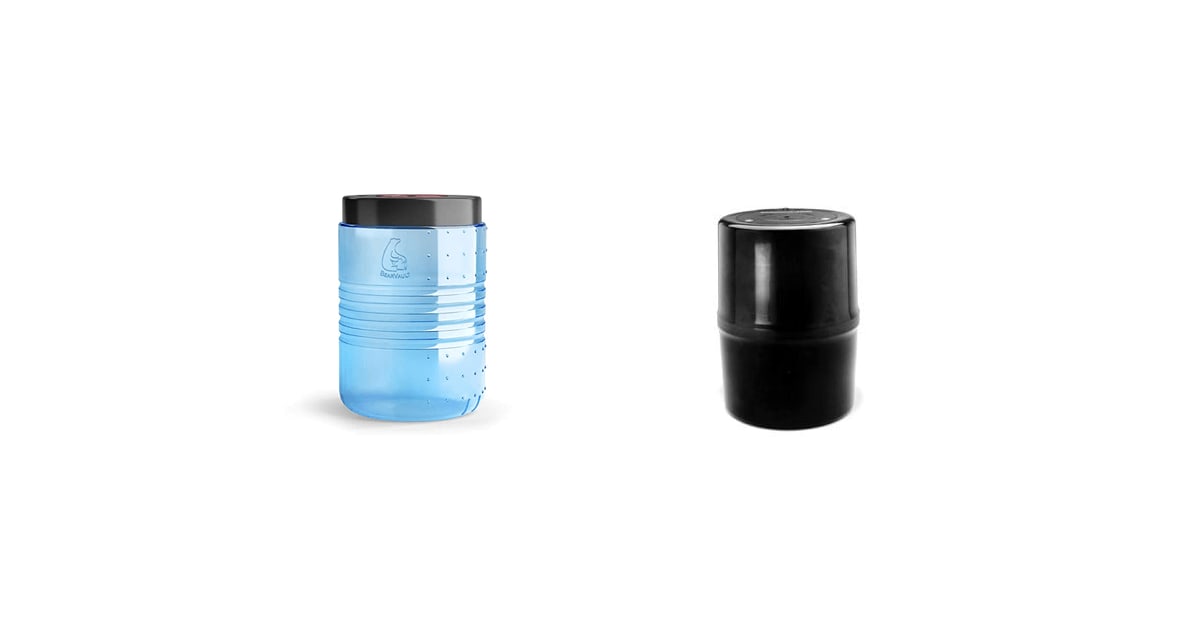
A bear canister is one of the few pieces of gear you buy because a ranger tells you to. It earns its place anyway. In the Sierra, the Tetons, and much of the Rockies, a hard-sided canister is the only food storage that reliably keeps a curious black bear out of your dinner — and keeps that bear from becoming a problem bear. Yosemite requires one in the backcountry year-round, and food storage violations there carry fines. You carry the thing, and you sleep better for it.
Here's the honest part: no canister is pleasant to carry. They're all heavy, all shaped in ways your pack doesn't like, and all of them eat room you'd rather give to a sleeping bag. None of them is bear-proof, either. The IGBC standard asks a canister to survive an adult grizzly's direct attention for at least an hour, not forever, and a determined bear can still roll one down a slope. What you're buying is time and frustration, which is usually enough.
So the choice comes down to three things: whether your destination accepts the canister, how many days of food it swallows, and how much of your weight budget you'll hand over. Everything else is comfort. We think that the BearVault BV500 Journey is the best bear canister for most people, and that the Backpackers' Cache is the one to buy if you're heading into grizzly country or your permit lists only a short set of approved models.
Everything we recommend

See what's inside without opening it, and no tool to lose

Heavier and harder to open, but accepted just about anywhere

The most food per load, if your pack and back can take it
At a glance
| Product | Volume (Days of Food) | IGBC Certification | Price | |
|---|---|---|---|---|
| BearVault BV500 Journey Bear Resistant Food ContainerTop pick | 7+ days | Grizzly (IGBC) | $99.95 |
| Backpackers' Cache - Bear Proof ContainerRunner-up | — | — | $88.95 |
| Counter Assault Bear Keg Food Storage ContainerAlso great | 716 cu in | IGBC | $104.95 |
How we picked
Approval status. We started with IGBC certification and cross-checked each canister against the food storage rules published by the parks and forests that require them. Anything a major jurisdiction rejects can't be a pick, no matter how good it is.
Capacity per day. REI and most backpacking guides put calorie-dense food at roughly 100 cubic inches per person per day, so we converted each published capacity into days. That turns a spec number into a trip length you can actually plan around.
Carry weight. Every canister is heavy, so we looked at weight relative to volume rather than in isolation. A canister that adds half a pound without adding food had to earn that back somewhere else.
Opening it cold. We weighed tool-free lids against coin and screwdriver designs, and read owner feedback for recurring complaints about stiff mechanisms. A canister you struggle with at dusk in the rain is a canister you'll be tempted to leave open.
Pack fit. We compared published dimensions against the packs most backpackers actually carry, and noted which shapes ride well and which take over a 50-liter bag.
Top pick
See what's inside without opening it, and no tool to lose
BearVault BV500 Journey Bear Resistant Food Container
The BV500 Journey holds 650 cubic inches — roughly five to six days of food for one hiker — in a transparent body you can read at a glance. The lid opens with your thumbs, so there's no coin or screwdriver to drop in the dirt at dusk.
$99.95fromAmazonThe clear body is the real reason to buy this one. You can spot the coffee, the tortillas, or the one bar you actually want without pulling everything out onto the dirt. Switchback Travel's reviewers credited that transparency with saving several minutes at every camp setup compared with opaque canisters. It sounds trivial until you're doing it twice a day, in the wind, with cold hands.
Capacity lands where most trips do. At 650 cubic inches, and using the roughly 100 cubic inches per person per day that REI and most backpacking guides suggest for calorie-dense food, you're looking at five or six days solo. Split between two people it's a long weekend. Repackage everything out of boxes and it stretches further than the number implies.
The lid is the other thing you'll appreciate. There's no coin slot and no key — you press a tab with your thumb and turn. Nothing to forget at the trailhead, nothing to lose in the pine duff. Some owners find the tabs stiff out of the box, and a few buy an aftermarket opener, but most report it becomes routine after a handful of tries.
Acceptance is where the BV500 quietly wins. BearVault lists it as certified by both the IGBC and the SIBBG, and OutdoorGearLab's multi-year evaluations put it among the two most universally accepted canisters across North American parks and wilderness areas. It's also the canister you'll see most often on the John Muir Trail, where a canister is required equipment across the Inyo, Sierra, and Sequoia units.
Small touches add up. Rounded corners and strap channels help it ride in a pack instead of fighting it, and the flat lid works as a camp stool when the only alternative is a damp log. At 2.5 pounds it isn't light, but among hard-sided canisters at this volume it's on the reasonable end.
Flaws but not dealbreakers
The lid can be genuinely stiff when it's new, and that's the single most common complaint owners raise. Cold weather makes it worse. If your hands are small or arthritic, practice at home before you're depending on it in the dark, and consider carrying one of the plastic openers that BearVault and others sell.
It's a big cylinder — about 12.7 inches tall and 8.7 inches across. In a 60-liter pack or larger it disappears fine, usually horizontally near the bottom. In a small ultralight pack it takes over. And a handful of jurisdictions have historically restricted clear-bodied canisters, so check your specific destination's approved list rather than assuming.
Runner-up
Heavier and harder to open, but accepted just about anywhere
Backpackers' Cache - Bear Proof Container
Garcia's Backpackers' Cache is the original commercially available IGBC-approved canister, and it's still the one nobody argues with at a permit desk. You give up transparency and a tool-free lid, and you carry an extra half pound for the privilege.
$88.95fromAmazonThis is the canister that started the category. Garcia's Backpackers' Cache was the first IGBC-approved bear canister sold to the public, and it has stayed in continuous production ever since. That longevity matters more than it sounds like it should: agencies wrote their approved lists around it, and it has never fallen off one.
If your permit just says "approved canister" and nothing more, this is the safe answer. OutdoorGearLab's evaluations put it alongside the BV500 as one of the two most universally accepted canisters in North America, and it's among the few explicitly cleared for grizzly country without qualifications. When you're planning a trip you can't easily re-plan, that certainty is worth more than a few ounces.
The build is blunt and reassuring. It's opaque black ABS with a recessed lid, and there's nothing on the outside for a bear to grab, chew, or pry. Owners who've carried theirs for years describe it as the piece of gear they stopped thinking about. The flat top doubles as a seat, which is the standard consolation prize for hauling three pounds of plastic.
Opening it takes a flat object — a coin, a spoon handle, a multi-tool, sometimes a fingernail if the slots are clean. Owners disagree loudly about how easy that is. The honest read: it's fine if you keep a multi-tool clipped where you can reach it, and annoying if you don't.
Flaws but not dealbreakers
Three pounds is a lot, and the capacity you get for it is comparable to lighter canisters rather than better than them. If you count grams, this isn't your canister.
You can't see inside, so every time you want one specific snack you're unpacking the whole thing. That's the trade for the black body. And needing a tool to open it means one more small item you can't afford to lose — pack a backup.
Also great
The most food per load, if your pack and back can take it
Counter Assault Bear Keg Food Storage Container
At 716 cubic inches, the Counter Assault Bear Keg swallows more food than any other widely available IGBC-approved canister — roughly ten percent more than the BV500. It's the one to buy for weeklong trips, for big eaters, or when you're carrying for two.
$104.95fromAmazonCapacity is the whole argument here. Counter Assault lists the Bear Keg at 716 cubic inches, the largest volume among commonly available IGBC-approved canisters and about ten percent more than the BV500. At the standard 100 cubic inches per person per day, that's a genuine week solo instead of five or six days. If you've ever finished a trip on half rations, you know what that margin is worth.
The bright yellow shell isn't styling. A canister gets stashed 200 feet from camp, usually at dusk, and bears do push them around overnight. Yellow is far easier to spot at first light than black plastic in duff, and owners bring it up unprompted as a practical advantage.
It closes with recessed screw fasteners you turn with a coin, and it's approved by both the IGBC and the SIBBG. Owners describe the mechanism as straightforward and secure, though it's slower than the BearVault's thumb tabs. On a long trip you'll open it maybe twice a day, so the extra few seconds matter less than the extra food.
Size is the catch. It's about 14 inches tall and 9.5 inches across, which is comfortable in an 80-liter winter pack and awkward in anything under 60 liters. Owners with smaller packs consistently report it dominating the load. Measure your pack's interior before you commit.
Flaws but not dealbreakers
At 3.5 pounds it's the heaviest canister here, and that's before you put any food in it. For a weekend trip it's simply more canister than you need — you'd be carrying an empty pound.
It's opaque and tall, so finding one item near the bottom means emptying most of it. And the coin-operated fasteners mean carrying something flat and metal, which is easy to overlook when you're packing at midnight.
Who this is for
Buy a canister if you're spending a night anywhere that requires one — the Sierra, Yosemite and the John Muir Trail corridor, much of the Rockies, and a growing list of eastern wilderness areas. Buy one even where it's only recommended if you camp in black bear country more than a couple of times a year. Renting from a ranger station works for a single trip, but the math flips fast, and rentals come in whatever size is left on the shelf.
This guide covers hard-sided, IGBC-approved food containers — the kind that satisfy a permit requirement on their own. Soft-sided bags and hanging systems are a different tool with different rules, and they're accepted in far fewer places, so we've left them out. If you're day hiking and driving home, you don't need one, though you may still need to store food in a car locker at the trailhead. And a canister isn't bear defense; that's a separate purchase and a separate conversation.
How we picked
We built the shortlist around five things. Approval: IGBC certification first, then a cross-check against what specific parks and forests actually publish on their food storage pages, because a canister that isn't on your destination's list is a paperweight. Capacity: measured in days, using the roughly 100 cubic inches per person per day that REI and most backpacking guides suggest for freeze-dried and dehydrated food. Weight: judged against volume, not on its own, since every extra ounce here is one you carry for the whole trip. Opening: tool-free beats coin-slot for most people, and we read owner feedback closely for complaints about stiff lids in cold weather. Pack fit: published dimensions checked against the packs backpackers commonly carry, because a canister that won't sit flat reshapes your entire load.
The competition
This is what our research surfaced among widely sold, IGBC-approved canisters, not a census of the market. Several well-regarded models — including carbon fiber canisters that shave close to 40 percent off the weight of comparable polycarbonate ones, and smaller solo-sized versions of the picks above — weren't part of this lineup. If you're an every-weekend backpacker counting ounces, those premium canisters are worth researching separately; the weight savings are real, and so is the cost.
Packing and camp placement
Get the food out of its packaging before it goes in. Cardboard boxes and puffy bags waste an astonishing amount of volume, and repacking meals into zip-top bags can buy you an extra day of capacity in the same canister. Pack dense items — bars, nuts, cheese — down low, and keep tomorrow's breakfast near the top. Everything scented goes in: toothpaste, sunscreen, lip balm, trash. At camp, the NPS and the Leave No Trace Center both call for storing the canister at least 200 feet from your tent, your kitchen, and any water source. Set it on flat ground, not near a slope, a cliff edge, or a creek, since bears roll canisters and you'd rather not fish yours out of a river.
Questions we get
How many cubic inches do I need for a seven-day solo trip?
Plan on about 100 cubic inches per person per day for calorie-dense freeze-dried or dehydrated food. That puts a full week around 700 cubic inches, which the 716-cubic-inch Counter Assault Bear Keg covers and the 650-cubic-inch BV500 covers only if you repackage aggressively. Big eaters and winter trips need more; if you're near the line, size up or plan a resupply.
Which places actually require a hard-sided canister?
Yosemite requires one in the backcountry year-round, and food storage violations there carry fines. The John Muir Trail crosses mandatory canister zones across its full length, and a canister is required equipment for thru-hike permits in the Inyo, Sierra, and Sequoia National Forests. Many other parks and wilderness areas have their own rules, and they change. Always check the managing agency's food storage page and its approved-model list before you go.
How do you open a BearVault BV500 without a tool?
Press the raised tab on the rim inward with your thumb while turning the lid counterclockwise past it, then repeat for the second tab. That's the whole trick — no coin, no key. Owners consistently note the tabs are stiff when new and stiffer in the cold, so work the lid a few times at home before your first trip.
Are bear canisters really bear-proof?
Not permanently. IGBC certification requires a canister to withstand direct contact and manipulation from an adult grizzly for at least 60 minutes under controlled conditions, which is a high bar but not an infinite one. The goal is to frustrate a bear until it gives up and moves on. Placement is part of the protection, which is why proper distance from camp matters as much as the canister itself.
How far from my tent should the canister go?
The NPS and the Leave No Trace Center both specify at least 200 feet — roughly 60 meters — from your tent, your cooking area, and any water source. Pace it out rather than eyeballing it. Improper placement undoes most of the canister's value, since a bear working on it right beside your tent is exactly the situation you're trying to avoid.
Do I need a canister for a day hike?
No. Canisters exist for overnight food storage, and a day hike where you carry your food out with you doesn't trigger the requirement. You may still face food storage rules at the trailhead, though — some parks require food to be locked in a provided box rather than left in your car. Check the park's page before you park.
Why you should trust us
For this guide:
- We read the IGBC's certification standard and each manufacturer's published capacity, weight, and dimension specs, then compared them against the food storage rules posted by the parks and forests that require canisters.
- We reviewed published evaluations from outlets including OutdoorGearLab and Switchback Travel, particularly their findings on which canisters are accepted across the widest range of jurisdictions.
- We also read through recurring themes in owner feedback — stiff lids, pack fit, and how these canisters hold up over years of trips — to identify the flaws that show up after the first weekend.
- We read owner reviews on every listing, weighted toward the critical ones, because that is where the recurring failures show up.
- We have a systematic way of automatically fetching the latest prices, so the numbers on this page stay current.
- This is a research-focused guide, so the team may not own every product listed — though we often do own the top winners, which gives us extra context for the recommendations.
- We don't accept free products, and the retailer commission never changes which product we recommend.
Sources
Best Bear Canisters — OutdoorGearLab, OutdoorGearLab
Best Bear Canisters 2026 — Switchback Travel, Switchback Travel
Bear Canister Buying Guide — REI Expert Advice, REI
IGBC-Approved Bear Resistant Products List, Interagency Grizzly Bear Committee (IGBC)
Bear-Resistant Food Storage Requirements — Yosemite National Park, National Park Service
Best Bear Canisters — Backpacker Magazine, Backpacker Magazine
Best Bear Canisters Reviewed — Clever Hiker, Clever Hiker
Bear Facts and Food Storage — Yosemite Nature Notes, National Park Service
Bearikade Technical Specifications — Wild Ideas, Wild Ideas (Manufacturer)
Ursack Major XL Product Page — Ursack, Ursack (Manufacturer)
BearVault BV500 Product Page — BearVault, BearVault (Manufacturer)
Keep Me Wild — Bear Safety — California Dept. of Fish and Wildlife, California Department of Fish and Wildlife
Amazon product listings and owner reviews for all 3 products
Manufacturer specification pages for each product
Some passages in this guide may be paraphrased with AI help. Prices are refreshed automatically.
More like this.
Continue exploring lifestyle reviews and recommendations.

The Best Camping Lanterns
A camping lantern is the thing you reach for when the sun drops and you still need to find the tent stakes, stir the chili, or read a few pages before…

The Best Smart Sprinkler Controllers
An in-ground sprinkler system is the one appliance in your yard that runs whether you're paying attention or not. A dial timer waters on Tuesday because…

The Best Compound Bows for Beginners
A first compound bow has one job: let you shoot enough arrows to find out whether you like archery. That means it has to fit you right now and still fit…

The Best RV Accessories and Camper Upgrades
An RV is a house that shakes at 65 miles an hour, and most of the parts that make it livable didn't come from the factory. You add them. Power that lasts…

The Best Football Tailgate Coolers
A tailgate cooler has one job: keep everything cold from the moment you back into your spot until the fourth quarter. That sounds simple. But a stadium…

The Best Archery Release Aids for Compound Bows
Your release aid is the last piece of gear touching the bowstring, and it decides how cleanly that string leaves your hand. Get it right and your groups…