The Best Makita Power Tools
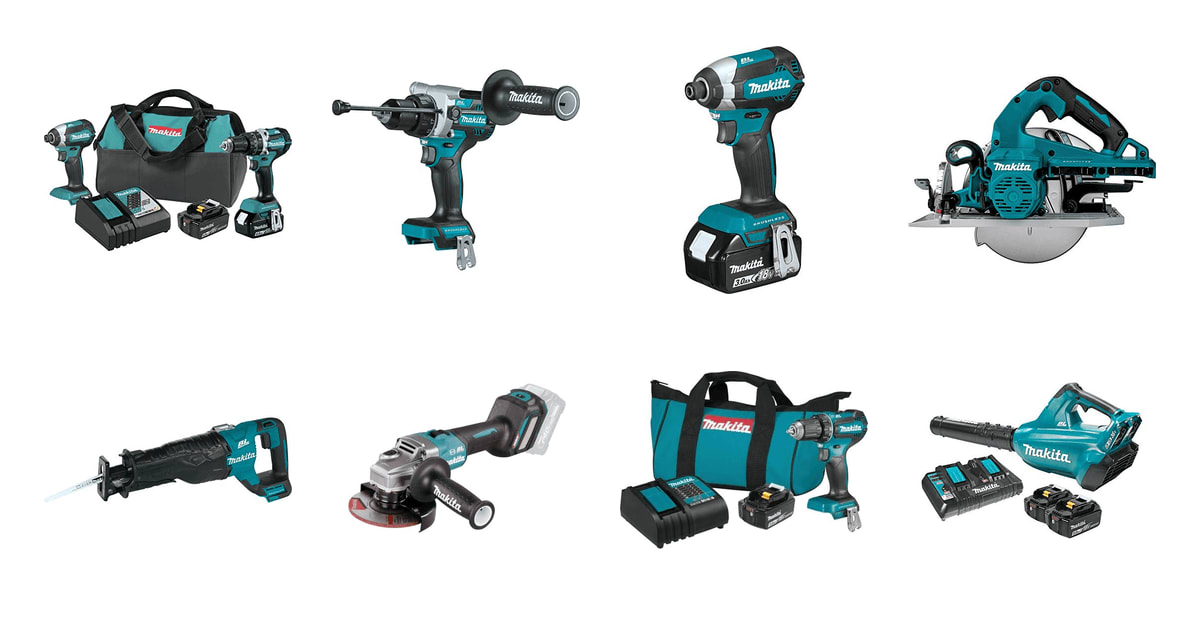
Cordless tools live or die by the battery on the bottom. Once you buy your first drill, you're not really picking a tool anymore — you're picking a battery you'll keep buying into for years. Makita's 18V LXT platform works with more than 300 tools, which is one of the largest cordless lineups any brand offers. That matters on a Saturday when you need a reciprocating saw and already own four batteries that fit it. It also matters for weight, since Makita tools tend to run lighter than the competition.
No cordless tool escapes the trade-offs, though. Batteries are heavy, they cost real money, and they wear out. Makita also runs two systems that don't share packs — 18V LXT and 40V max XGT — so buying into both means keeping two sets of batteries and two chargers on the shelf. And torque numbers on a spec sheet don't tell you how a tool feels overhead at hour three. Owner feedback on some of these tools splits sharply on masonry work, where the marketing sets high expectations.
Most people building a Makita kit should start with a combo, then add bare tools as projects demand. That's cheaper than buying piece by piece, and it gets batteries into your hands early. We think that the Makita XT269M 18V LXT Brushless 2-Pc. Combo Kit is the best Makita power tool for most people, and that the Makita XDT131 18V LXT Brushless Impact Driver Kit is the one to buy if you already own LXT batteries and mainly drive fasteners.
Everything we recommend

The whole starting kit, not one tool at a time

The one tool to add if you already own batteries

Enough drill for home projects, and lighter for it

More torque and a hammer mode, battery not included

Corded-level cutting, if you can spare two batteries
How we picked
Battery platform fit. We prioritized tools on the 18V LXT platform, since Makita lists compatibility with more than 300 tools there. A tool that shares batteries with everything else you own is worth more than a slightly stronger one that doesn't.
Brushless motors only. Makita states its brushless motors run up to 50 percent cooler and last up to 50 percent longer than comparable brushed models. We treated a brushless motor as a baseline requirement rather than a premium feature.
Power for the job. We read Makita's published torque, RPM and stroke specs against what each tool is actually asked to do. A 440 in-lb drill is fine for shelves; a framing saw needs 36V to keep up with a corded one.
Weight and reach. Published weights and tool lengths mattered as much as power. This Old House singled out Makita's lighter tools as a differentiator against DeWalt and Milwaukee, and owner feedback repeatedly points to compact bodies fitting where bigger tools can't.
Kit versus bare tool. We looked at whether each tool ships with batteries, because that changes who it's for. The Spruce found combo kits typically run 20 to 30 percent below the cost of the same tools bought separately.
Top pick
The whole starting kit, not one tool at a time
Makita XT269M 18V LXT Lithium-Ion Brushless Cordless
This pairs a brushless hammer driver-drill with a brushless impact driver, plus two 4.0Ah batteries and a charger. It covers nearly every fastening and drilling job a homeowner or remodeler runs into, and it gets you onto the LXT battery platform in one purchase.
$299fromAmazonIf you're starting from zero, buy the kit. The Spruce found that a Makita combo kit typically costs 20 to 30 percent less than buying the same tools individually. You also get two batteries and a charger, which is the expensive part of any cordless system. Add tools later as bare units and each one costs a fraction of what it would with a battery attached. That math holds for pretty much everyone.
The two tools split the work the way most jobs actually split. The hammer driver-drill handles holes, and it has a hammer mode for anchors in brick or block. The impact driver puts 1,500 in-lbs of max torque behind long screws and lags without wrecking your wrist. If you've only ever used one drill for everything, having both is the upgrade you'll feel immediately.
Weight is where Makita quietly wins. The drill comes in at 4.2 pounds with a battery and the impact driver at 3.3 pounds. This Old House called out Makita's lighter tools as a real ergonomic edge over DeWalt and Milwaukee in head-to-head impact driver comparisons. That difference is invisible on the first screw and obvious on the hundredth, especially working overhead in a ceiling.
Both tools use brushless motors, which Makita says run up to 50 percent cooler and last up to 50 percent longer than comparable brushed motors. Owners who've moved over from older brushed kits consistently notice longer stretches between charges. The 4.0Ah packs included here are a good middle ground — enough runtime for a full afternoon, not so heavy they throw off the tool's balance.
Flaws but not dealbreakers
The drill in this kit makes 530 in-lbs of max torque, which is well below the standalone XPH14Z at 1,250 in-lbs. For hanging cabinets and building a deck, that's plenty. If you plan to drill big holes with a hole saw or spade bit through framing all day, you'll want the stronger drill instead.
Two 4.0Ah batteries is a reasonable start but not a comfortable one. Run both flat on a long job and you're waiting on the charger. Most people end up buying a third pack within the first year.
Runner-up
The one tool to add if you already own batteries
Makita XDT131 18V LXT® Lithium-Ion Brushless Cordless
Makita's XDT131 puts 1,500 in-lbs of max torque into a 3.3-pound body with three selectable speed settings. It comes as a kit with a 3.0Ah battery and charger, and it's the tool most tradespeople reach for first on a job site.
$172.54fromAmazonAn impact driver is the tool you'll grab more than any other, and this is the one contractors keep buying. It drives 3-inch deck screws without stripping heads and sinks lags into a post without a pilot hole. Owners who work in the trades describe it as the default on crews where everyone brings their own tools. That kind of consensus is worth paying attention to.
The three-speed control is the feature that earns its keep. Low mode lets you start a small screw in trim without blasting through the surface. High mode gives you the full 0-3,400 RPM and 0-3,600 IPM when you're framing. Most impact drivers ask you to feather the trigger and hope; this one lets you set a ceiling and just pull.
At 3.3 pounds it's genuinely light for what it does, and that shows up in tight spots. Woodworkers moving over from corded drills mention the compact head fitting between joists and inside cabinet boxes where a full-size drill won't go. If your projects involve reaching into awkward places, the size matters more than the torque number.
Flaws but not dealbreakers
Impact drivers are loud. The hammering action makes a hard metallic rattle that carries through a house, and there's no quiet mode. If you're working while someone sleeps upstairs, use the drill instead.
It's not a drill. The 1/4-inch hex chuck takes hex-shank bits only, so you can't clamp a round-shank drill bit in it. You'll need a driver-drill alongside it, which is part of why the combo kit is the better starting point.
Budget pick
Enough drill for home projects, and lighter for it
Makita XFD131 18V LXT® Lithium-Ion Brushless Cordless
The XFD131 is Makita's entry brushless driver-drill, making 440 in-lbs of max torque with a two-speed gearbox. It ships as a kit with a 3.0Ah battery and charger, and it handles the drilling and fastening most homeowners actually do.
$169fromAmazonMost home drilling doesn't need much torque. Hanging shelves, assembling furniture, mounting a TV bracket, pre-drilling for deck screws — 440 in-lbs covers all of it with margin. Owners who've had this drill for years describe it as the one that lives in the bag and comes out for everything. If your project list looks like that list, the stronger drills are money you don't need to spend.
It's short, and that solves problems bigger drills create. The compact body fits between ceiling joists and inside cabinet carcasses where a full-length drill won't line up. Owners specifically mention buying it for tight-space work after fighting with something larger. Length is an underrated spec — you notice it every time you can't get square to a hole.
You still get the brushless motor here, not a brushed one. That means the same cooler-running, longer-lasting design as the pricier tools and up to 50 percent more runtime per charge than a comparable brushed motor. Buying entry-level in the Makita line doesn't mean buying last-generation technology, which isn't true of every brand's budget tier.
Flaws but not dealbreakers
There's no hammer mode. Drilling into brick, block or concrete means either buying a hammer drill later or wrestling with a masonry bit and a lot of patience. If you know anchors into concrete are in your future, start with the XPH14Z instead.
Several owners note the LED light sits low enough that the chuck casts a shadow right where you're drilling. It's a small annoyance, not a dealbreaker, but it's real in a dark crawlspace.
The top speed tops out at 1,900 RPM, a bit slower than the higher-end drills. Boring a lot of large holes will take longer, and the motor will work harder doing it.
Upgrade pick
More torque and a hammer mode, battery not included
Makita XPH14Z 18V LXT® Lithium-Ion Brushless Cordless
The XPH14Z makes 1,250 in-lbs of max torque, runs 0-31,500 BPM in hammer mode, and measures just 7 inches long — 14 percent shorter than the model it replaced. It's sold bare, so it's aimed at people who already own LXT batteries.
$117.41fromAmazonThis is the drill for people whose projects outgrew a drill. Boring 1-inch holes through studs, driving structural screws into a ledger board, mixing thinset — the 1,250 in-lbs of max torque handles work that stalls a lighter drill. Makita's spec sheet lists a two-speed gearbox running up to 2,100 RPM, so it's fast on small bits and strong on big ones.
The hammer mode is why most people choose this over a plain driver-drill. Setting anchors into brick, block or the mortar joints of a foundation wall is common in home renovation, and a rotary hammer is overkill for a handful of holes. At 0-31,500 BPM this gets Tapcons into block without a separate tool taking up space in your truck.
Makita shortened the body to 7 inches, which is unusual for a drill this strong. Owners upgrading from older Makita hammer drills consistently call out how much more compact it is while doing more work. The all-metal self-ratcheting chuck also holds bits better than the plastic-bodied chucks on cheaper drills — bit slip under load is a common complaint elsewhere and rarely comes up here.
Flaws but not dealbreakers
Owner feedback on masonry is genuinely mixed. Some buyers report it drills anchors easily; others expected a rotary hammer and found it underpowered in hard concrete. Hammer-drill mode is for anchors and small holes, not for breaking into a slab, and the listing language sets expectations higher than the tool can meet.
It's sold bare. No battery, no charger, no case. If you don't already own LXT packs, the real cost of getting this drill working is much higher than the tool alone suggests.
A few owners have received chucks that arrived seized in the open position and needed some persuading to free up. It seems to resolve with use, but it's an unsettling first five minutes.
Also great
Corded-level cutting, if you can spare two batteries
Makita XSH06Z 18V X2 LXT® Lithium-Ion
The XSH06Z runs two 18V LXT batteries in series for 36V output and a 6,000 RPM blade speed. Makita rates it at up to 610 crosscuts in 2x4 lumber per charge with two 5.0Ah packs, which is a full day of framing for most people.
$227.23fromAmazonCordless circular saws used to be a compromise. This one isn't, mostly because it stops pretending 18V is enough — two batteries in series get it to 36V and 6,000 RPM. Owners who've retired 30-year-old corded saws after buying this describe it as just as fast through plywood and framing lumber. If dragging an extension cord across a yard is your least favorite part of a project, that's the pitch.
The runtime numbers are the reason this replaces a cord rather than supplementing one. Makita rates up to 610 crosscuts in 2x4 spruce-pine-fir per charge on two 5.0Ah packs, or 320 in 2x10. Automatic speed change technology adjusts torque mid-cut when the blade loads up, so it doesn't bog down halfway through wet lumber the way lighter cordless saws do.
Note the blade orientation before you buy. This is a blade-right saw, which is standard for North American users but a real preference issue — if you're used to sighting your cut line on a blade-left saw, the switch takes getting used to. Left-handed users and anyone who learned on a worm drive should try one before committing.
Flaws but not dealbreakers
It eats two batteries. Every cut you make drains two packs at once, so this tool effectively doubles your battery needs. Owners with a small battery collection find themselves charging constantly.
At 10.36 pounds bare, it's not light, and adding two batteries doesn't help. Cutting sheet goods on horses is fine. Cutting overhead or from a ladder gets tiring fast.
Multiple owners report that the included blade underperforms, particularly on deep bevel cuts through doubled plywood. Budget for a good aftermarket blade and you'll be much happier with the saw.
Who this is for
This guide is for anyone deciding which Makita tools to buy first, or which one to add to a collection they already have. If you're starting from nothing, the combo kit is where to begin — it gets batteries and a charger into your hands at a lower total cost than buying tools one at a time. If you already own LXT packs, skip the kits and buy bare tools, which is where the platform pays you back. Professional contractors, remodelers and woodworkers will find the higher-torque drill and the 36V saw more relevant than the entry drill.
This is a single-brand guide, so we're only comparing Makita tools against each other, not against DeWalt, Milwaukee, Bosch or Ryobi. If you already own a different brand's batteries, switching is expensive and this guide won't tell you whether it's worth it. We also focus on cordless tools; corded tools, pneumatics, and Makita's larger outdoor equipment aren't covered. And one important warning: the 40V max XGT line does not share batteries with 18V LXT. Buying into both means maintaining two separate battery inventories.
How we picked
Battery platform: We favored 18V LXT tools because that ecosystem covers more than 300 tools, and we flagged clearly where a tool uses the incompatible 40V XGT packs instead. Motor design: We only considered brushless tools, since Makita states brushless motors run up to 50 percent cooler and last up to 50 percent longer than brushed. Power: We matched published torque, RPM and stroke figures against the real job each tool does, rather than chasing the highest number. Weight and size: Published weights and lengths carried real weight here, because a lighter, shorter tool is one you'll actually reach for; This Old House called out Makita's lighter builds against DeWalt and Milwaukee. Kit value: We noted which tools ship with batteries, since The Spruce found combo kits typically cost 20 to 30 percent less than the same tools purchased individually.
Other makita power tools worth considering
If you're tearing something out: The Makita XRJ05Z 18V LXT Lithium-Ion Brushless Cordless ($219) — The XRJ05Z reciprocating saw is the tool for demolition — cutting out joists, nail-embedded studs, old pipe, tree limbs. It runs 0-2,300 or 0-3,000 strokes per minute across two speeds, with a 1-1/4 inch stroke that clears material quickly. Tool-less blade changes matter more than they sound like they should, because you'll swap between wood and metal blades constantly on a demo day. Owners describe it as unusually good on power-to-weight for the LXT platform, though a few find it big and heavy for occasional homeowner use, where Makita's smaller recip saw would be easier to handle. It's a bare tool, so you'll need LXT batteries already.
If you want to stop buying gas cans: The Makita XBU02PT 36V — The XBU02PT blower kit runs on two 18V LXT batteries for 36V, pushing 120 MPH air velocity and 473 CFM with a rated 61 dB(A) sound pressure. OPE Reviews found Makita's 36V LXT blower competitive on air velocity with many gas handheld blowers while running significantly quieter — that's the whole appeal, since you can clear a driveway early on a Sunday without annoying the neighborhood. It ships with two 5.0Ah batteries and a charger. The catch is runtime: Makita rates about 28 minutes at mid-speed, and owners with large leafy properties say that's not enough for a full fall cleanup. It's also heavy at nearly 17 pounds, and owners note you'll be switching hands.
More from Makita
Makita's catalog runs to hundreds of tools, and what follows is the rest of the lineup our research surfaced — not everything the brand sells. Each of these suits a specific kind of buyer, so read them as a fit question rather than a ranking.
The Makita GA023GZ 40V Max Li-ion XGT 125mm ($411.46) — The GA023GZ angle grinder is the tool for someone doing metal work seriously and regularly. It's the flagship of Makita's 40V max XGT platform, spinning up to 8,500 RPM no-load and engineered to close the gap with corded grinders — Tools In Action's side-by-side grinder comparisons found XGT tools sustain higher torque under load for longer than comparable 18V LXT tools. It has a safety paddle switch with anti-restart, and it supports Makita's AWS system, which fires up a connected dust extractor the moment you pull the trigger. That's a genuinely useful thing when you're cutting rebar or concrete indoors. The reason it isn't a pick for most people is the battery: XGT packs don't fit LXT tools and LXT packs don't fit this. If you're a fabricator or you cut steel daily, it's worth starting a second battery inventory. If you're a homeowner grinding a weld once a year, it isn't.
Is Makita worth it?
Makita has one of the deepest cordless ecosystems in the industry — the 18V LXT platform covers more than 300 tools, which means a battery you buy today will still have somewhere to go in five years. That's the strongest argument for the brand and the one that matters most over time. Family Handyman notes Makita backs most 18V LXT tools with a three-year limited warranty, longer than many competitors' standard coverage, and the service network is broad enough that repairs aren't a hunt. Where Makita separates itself day to day is weight and feel: This Old House singled out the brand's lighter tools as a real ergonomic advantage over DeWalt and Milwaukee in head-to-head impact driver comparisons, and owner feedback echoes it constantly, especially from people who switched brands. The trade-off is that Makita rarely wins outright on raw torque numbers against Milwaukee's heaviest tools, and running the separate 40V XGT line alongside LXT complicates what's otherwise a clean system. For most buyers, though, lighter tools you'll actually pick up beat spec-sheet bragging rights.
Not set on Makita?
If you haven't committed to a battery platform yet, this compares drill and driver sets across brands so you can weigh Makita against the alternatives before you're locked in. our cordless drill set guide →
DeWalt's 20V Max lineup is the closest rival in breadth and the most common alternative for people cross-shopping, particularly if you want more raw torque. our DeWalt guide →
Milwaukee's M18 tools tend to run heavier but push harder, which is worth a look if your work leans toward heavy-duty trades rather than home projects. our Milwaukee guide →
Battery care and platform notes
Batteries are the part of a cordless system that wears out, so treat them like the expensive component they are. Don't leave a pack on the charger for days, don't store batteries fully drained over winter, and keep them out of a hot truck bed in July — heat is what kills lithium cells. Newer 18V LXT packs work in older LXT tools, which is the main reason the platform is worth committing to. The 40V max XGT system is the exception: XGT and LXT batteries are not interchangeable in either direction, and no adapter changes that. Also check the terminals occasionally. Sawdust packed into a battery foot causes intermittent contact that feels exactly like a dying pack. And if you're buying a bare tool, confirm you own the amp-hour rating it needs; the 36V tools want two matched batteries, not two random ones.
Questions we get
What's the difference between Makita 18V LXT and 40V max XGT?
LXT is the older, far larger platform, with more than 300 compatible tools. XGT is newer and built for heavy-duty work where more sustained power matters, like grinding and metal fabrication. The two use completely different batteries and chargers that don't cross over. Unless you specifically need XGT-level power, staying on LXT is the simpler and cheaper path.
Are Makita batteries interchangeable across all their tools?
Within a platform, yes. Newer 18V LXT batteries work in older LXT tools, and that backward compatibility is one of the main reasons people commit to the system. Between platforms, no — XGT and LXT don't mix, and there's no adapter that makes them. Some tools like the 36V saw and blower use two 18V LXT packs at once rather than a different battery.
What's the best Makita combo kit for beginners?
The XT269M is the one we'd point most people to. It pairs a brushless hammer driver-drill with a brushless impact driver and includes two 4.0Ah batteries and a charger, which covers the majority of home drilling and fastening. The Spruce found combo kits typically cost 20 to 30 percent less than buying the same tools separately. Once you own it, every tool you add can be a bare unit.
Is the 40V XGT system worth upgrading to from 18V LXT?
For most people, no. Tools In Action found XGT tools hold higher torque under load for longer than comparable LXT tools, which is real and matters for daily grinding or heavy metal work. But you'd be starting a second battery inventory from scratch, and LXT covers far more tools. Upgrade only if a specific job keeps overwhelming your LXT tools.
What's the warranty on Makita power tools?
Family Handyman notes that Makita backs most 18V LXT tools with a three-year limited warranty, which runs longer than several competing brands' standard coverage. That applies to the tool; battery coverage is typically shorter. Register your tool and keep the receipt, since service claims usually require proof of purchase.
Do I need an impact driver if I already have a drill?
If you drive long screws — deck boards, framing, ledger boards, subfloor — yes, and you'll notice the difference on the first one. An impact driver's hammering action sinks fasteners without stripping heads or twisting your wrist. A drill still has jobs an impact driver can't do, since the 1/4-inch hex chuck only takes hex-shank bits. That's why they're sold together as a kit.
Why you should trust us
For this guide:
- We read Makita's published spec sheets for torque, RPM, stroke length, air velocity and runtime figures across the 18V LXT and 40V max XGT lines.
- We compared published reviews from This Old House, Family Handyman, Tools In Action, OPE Reviews and The Spruce covering Makita's drills, impact drivers, grinders, blowers and combo kit pricing.
- We reviewed recurring themes in owner feedback for each tool, particularly around masonry performance, battery runtime, tool weight and included blade quality.
- We read owner reviews on every listing, weighted toward the critical ones, because that is where the recurring failures show up.
- We have a systematic way of automatically fetching the latest prices, so the numbers on this page stay current.
- This is a research-focused guide, so the team may not own every product listed — though we often do own the top winners, which gives us extra context for the recommendations.
- We don't accept free products, and the retailer commission never changes which product we recommend.
Sources
Makita USA — 18V LXT Lithium-Ion Cordless System, Makita USA
Pro Tool Reviews — Makita Tool Test Coverage, Pro Tool Reviews
Tools In Action — Cordless Tool Testing, Tools In Action
Family Handyman — Cordless Drill Buying Guides, Family Handyman
This Old House — Power Tool Reviews, This Old House
Fine Homebuilding — Tool Test Reports, Fine Homebuilding
OPE Reviews — Outdoor Power Equipment Testing, OPE Reviews
The Spruce — Best Cordless Drills and Combo Kits, The Spruce
Popular Mechanics — Power Tool Testing, Popular Mechanics
Amazon product listings and owner reviews for all 8 products
Manufacturer specification pages for each product
Some passages in this guide may be paraphrased with AI help. Prices are refreshed automatically.
More like this.
Continue exploring home reviews and recommendations.

The Best Bissell Carpet Cleaners
Carpet holds onto more than you think. Every muddy shoe, dropped bowl of spaghetti and cat hairball works its way down into the fibers, where a vacuum…

The Best Aluminum Cable Deck Railing Kits
Cable railing sells itself on one thing: you stop noticing the railing and start noticing the yard. Thin horizontal cables block a fraction of the view…

The Best Steam Mops for Hardwood and Tile Floors
Mopping with a bucket mostly moves dirty water around. A steam mop skips that entirely: you fill the tank with plain water, wait half a minute, and push a…

The Best Modular Closet Systems
A closet system is one of those purchases you think about for about a week and then live with for a decade. The good ones disappear into the room and just…

The Best Water Filtration Pitchers
Filtered water is one of those upgrades you notice for about a week and then take for granted. The chlorine smell goes away, ice stops tasting like the…

The Best Soundproofing Materials for a Home Office or Studio
Noise is the thing that ruins a home office. You can buy a great mic and a fast laptop, but if the neighbor's dog barks through every client call, none of…