The Best Running Shoes for Flat Feet
If your arches collapse when you stand, you already know what mile 18 feels like. The inside edge of your foot rolls in, your knee follows, and by the end of a long run something aches that didn't ache at the start. A good stability shoe won't fix your arches. What it does is limit how far your heel and ankle drift inward once you're tired, so your stride at the end of a run looks more like your stride at the beginning. Over a 16-week marathon block, that's the whole game.
Here's the honest part: no shoe cures flat feet, and no shoe guarantees you'll stay healthy. Research in the British Journal of Sports Medicine links increased rearfoot pronation to higher rates of plantar fasciitis and shin splints, and work in the Journal of Orthopaedic & Sports Physical Therapy found low-arch runners get more medial tibial stress syndrome during structured training. Shoes are one variable among many. Mileage jumps, tired calves and old shoes matter just as much. Treat a stability shoe as insurance, not a cure.
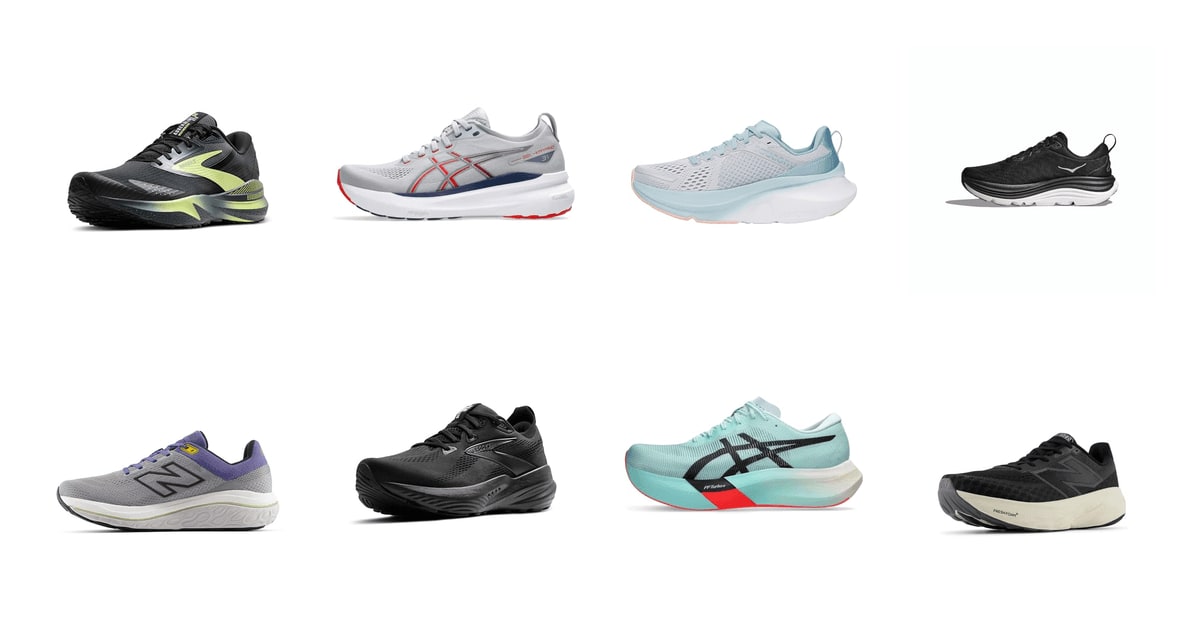
Flat feet are common — the American Academy of Orthopaedic Surgeons puts flexible flatfoot at roughly 20 to 30% of people — so there's no shortage of options, which is exactly the problem. We think that the Brooks Adrenaline GTS 24 is the best running shoe for flat feet for most people, and that the ASICS Gel-Kayano 31 is the one to buy if you want more structure underfoot and don't mind carrying a heavier shoe through your long runs.
Everything we recommend

Support that shows up only when your stride falls apart

More structure and more foam, at the cost of extra ounces

Honest overpronation control without the premium-trainer extras
The one to buy if your feet spill over normal shoes

Maximum cushioning for beat-up knees and hips
At a glance
| Product | Weight | Support System | Price | |
|---|---|---|---|---|
| Brooks Men’s Adrenaline GTS 24 Weatherized SupportiveTop pick | — | GuideRails | $99.95 |
| ASICS Men's Gel-Kayano 31 Running ShoesRunner-up | 0.0125 lbs | 4D Guidance System | $89.95 |
| Saucony Guide 17 Women's Running ShoeBudget pick | 0.50625 lbs | PWRRUN, PWRRUN+ | $99.95 |
| Hoka Men's Gaviota 5 Black/White 9.5 MediumUpgrade pick | 0.683125 lbs | — | $148.90On sale |
| New Balance Men's Fresh Foam X 860Also great | 0.5732018812 lbs | — | $97.96 |
 | Brooks Men’s Glycerin GTS 22 Supportive RunningAlso consider | 1.322773572 lbs | GuideRails | $154.04On sale |
 | ASICS Unisex METASPEED Sky Running ShoesAlso consider | 1.44 lbs | Carbon Plate | $249.95 |
 | New Balance Men's Fresh Foam X 1080Also in lineup | 1.5 lbs | — | $138.94On sale |
How we picked
Real stability structure. We looked for a documented support mechanism — GuideRails, a dual-density medial post, a torsional plate — described in manufacturer specifications rather than implied by marketing language. Shoes with no identifiable structure didn't qualify as stability picks.
Drop and stack. A 6 to 10mm heel-to-toe drop is the range commonly recommended for flat feet, since very low drops load the Achilles and plantar fascia harder. We flagged any shoe that falls outside it so you can weigh the tradeoff.
Width and volume. Flat feet splay under marathon mileage, so we prioritized shoes with real width options and accommodating toe boxes. Owner feedback about pinching and forefoot pressure carried a lot of weight here.
Long-run durability. Medial posts compress before the main midsole does, so we favored shoes with full-coverage outsoles and foams that published reviews and owner feedback describe as holding up. Thin or fast-wearing outsoles counted against a shoe.
Orthotic compatibility. Many flat-footed runners already own inserts. We looked for removable sockliners and enough interior volume that a custom orthotic doesn't turn a good fit into a tight one.
Top pick
Support that shows up only when your stride falls apart
Brooks Men’s Adrenaline GTS 24 Weatherized Supportive
The Adrenaline GTS 24 uses GuideRails along the heel to catch excess inward roll instead of propping up your arch all the time. It's the shoe podiatrists reach for first, and it handles both easy miles and marathon-pace work without feeling like a corrective device.
$99.95fromAmazonGuideRails work differently from a traditional medial post, and that difference matters over 20 miles. A classic post is a firm wedge under your arch that pushes back on every step. Brooks builds bumpers along the heel instead, and they only engage when your foot moves past its normal path. Brooks' own research ties the approach to reduced knee loading. In practice it means the shoe stays out of your way on the miles where your form is fine.
The DNA Loft v3 midsole is the reason this works as a do-it-all trainer. It's nitrogen-infused foam, soft enough for a slow Sunday long run but firm enough that it doesn't wallow when you pick up the pace. Owners with flat feet and knee pain describe it as cushioned but not mushy — closer to a well-built mattress than a pillow. If you're running five or six days a week and only want one pair, this is the ride to look for.
Fit is the other half of the flat-foot equation, and Brooks does well here. The Adrenaline comes in medium, wide and extra-wide, and owners who need 4E consistently say it's the most supportive structured shoe they've found. Feet that splay under marathon mileage need that room. A shoe that controls pronation but pinches your forefoot at mile 15 has traded one problem for another.
This particular version is the Weatherized model, with a DWR-treated knit upper and reflective detailing. If your training block runs through a cold, wet stretch, that's genuinely useful — you get better wet traction and a bit of splash resistance on dark morning runs. It's not a waterproof boot, and it will run warmer than a standard mesh upper, but the tradeoff makes sense if you train outside year-round.
Flaws but not dealbreakers
The Weatherized upper is the obvious catch. That DWR-treated knit traps more heat than the standard Adrenaline mesh, so if your marathon block lands in July, you'll notice it. Runners in warm climates should look at the regular version of this shoe instead.
Some owners find the fit snug through the midfoot and the laces on the short side. If you wear thick socks, run with orthotics, or have a high instep, size up a half or go wide. This is a shoe worth trying on before you commit to a training cycle in it.
It's a stability trainer, not a fast one. The Adrenaline is fine for tempo work but it won't feel snappy during intervals. If you want a second shoe for speed days, plan on buying one.
Runner-up
More structure and more foam, at the cost of extra ounces
ASICS Men's Gel-Kayano 31 Running Shoes
The Gel-Kayano 31 pairs a dual-density medial post with a torsional plate, so the shoe resists twisting as well as inward roll. It's one of the heavier daily trainers you can buy, and it's the right call if you want maximum structure for high-mileage weeks.
$89.95fromAmazonThe Kayano takes the opposite approach from the Adrenaline. Where Brooks limits heel motion with side bumpers, ASICS builds a 4D Guidance System — firmer foam under the arch plus a SPACE TRUSSTIC plate that keeps the shoe from wringing out like a towel. If you're a heavier runner or a pronounced overpronator, that combination gives you more to push against, especially late in a long run when your calves are done.
The tradeoff is weight, and it's not subtle. Runner's World gear lab testing puts a men's size 9 at about 10.6 ounces, which makes this one of the heaviest daily trainers in the stability category. Over 18 miles you'll feel it. What you get back is a shoe that holds its shape under load — some runners will happily take that trade, and some will find it plodding after an hour on their feet.
Underfoot it's plusher than the spec sheet suggests. FF Blast Plus Eco foam with a rearfoot PureGEL unit softens heel landings, and owners with plantar fasciitis who stand all day repeatedly credit this shoe with getting them through. That's not the same as a marathon, but it says something about how the cushioning holds up over hours.
This is also the most iterated shoe here. The Kayano line is past 30 versions, and it shows in the small stuff: an OrthoLite sockliner that doesn't pack out early, a knit heel tab, a rearfoot geometry that generally doesn't need a break-in period. If you've run in Kayanos before, this one won't surprise you.
Flaws but not dealbreakers
The engineered mesh is very breathable, which is great in August and less great in a downpour. Owners note that the upper soaks through in heavy rain and drains slowly. This is a fair-weather shoe unless you don't mind wet socks.
The heel pull tab is a known weak point — several owners report it tearing or fraying early. Grab the collar rather than yanking the tab and it's a non-issue.
At this weight, it's not a shoe most people will want for anything faster than a steady long run. Pair it with something lighter for workout days.
Budget pick
Honest overpronation control without the premium-trainer extras
Saucony Guide 17 Women's Running Shoe
The Guide 17 gives you a genuine medial post and PWRRUN cushioning for noticeably less than the premium stability shoes here. It's the shoe to buy for your first marathon block, when you need reliable support more than you need refinements.
$99.95fromAmazonSaucony reworked the medial geometry for this version, and Doctors of Running noted a smoother medial-to-lateral transition than the Guide 16, with less of the hard edge under the arch that some posted shoes have. If you've tried a stability shoe before and felt like something was jabbing your arch, this is the one that tends to fix that complaint.
For a first marathon build, this is all the shoe you need. Center Path technology plus PWRRUN foam covers the basics: it controls inward roll, it cushions long slow miles, and it doesn't ask you to spend like a Kayano. Owners with flat feet and one-sided overpronation describe pain-free four-milers straight out of the box, with no break-in period.
The fit runs accommodating through the forefoot, which matters more than people expect. Feet splay under marathon loads, and owners with wide feet report this one fits well without needing a special width. That said, sizing is a bit inconsistent — a few owners found their usual Saucony size felt off in this model.
Where it gives ground to the pricier picks is refinement rather than function. The upper materials feel more basic, the foam isn't as lively at faster paces, and there's less of the tuned-transition engineering you get from Brooks and ASICS. None of that stops it from doing the one job you bought it for.
Flaws but not dealbreakers
Sizing runs unpredictably. Several owners who wear a consistent Saucony size found this model fit differently, so order from somewhere with easy returns.
It's the least exciting shoe here to run in. The ride is competent and a little flat — fine for easy miles, unremarkable when you want to move.
Saucony's width options are thinner than what Brooks and New Balance offer. If you need a true 4E, look elsewhere.
Also great
The one to buy if your feet spill over normal shoes
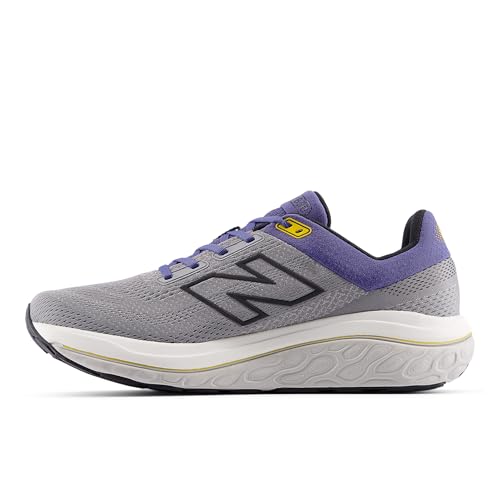
New Balance Men's Fresh Foam X 860
The Fresh Foam X 860v14 comes in narrow, standard, 2E and 4E — about the broadest width range in the stability category. If your flat feet splay wide under load, that fit range matters more than any midsole technology.
$97.96fromAmazonWidth is the flat-foot problem nobody solves with foam. A collapsed arch means your foot spreads under load, and by mile 20 it's wider than it was at the start. New Balance offers this shoe in four fittings, which is close to unmatched in the stability category. If you've spent years jamming wide feet into standard-width trainers, that alone may make this the right shoe.
The support comes from a firmer medial section paired with the Fresh Foam X midsole, and the balance lands between the Kayano's structure and the Adrenaline's lighter touch. Owners who were diagnosed with severe overpronation after a gait analysis frequently land here and stay. The shoe is also lighter than its cushioning suggests, which helps on longer efforts.
It's worth knowing this shoe takes a few runs to settle. Multiple owners describe the first outings as stiff or unfamiliar before the fit and feel click. That's common for a stability shoe with a firm medial section, but don't judge it on your first three miles.
For a marathon block, the durable rubber outsole is the practical detail. Stability shoes tend to wear unevenly on the medial side if you overpronate, and a full-coverage outsole gives you more material where you grind it down.
Flaws but not dealbreakers
Even in wide, some owners report pressure on the pinky toe. The width comes through the midfoot more than the very front of the toe box.
The break-in period is real. Give it a week of easy running before you decide.
The medial section is firm enough that mild overpronators may find it more correction than they want. If your arches are flexible rather than fully collapsed, one of the gentler picks will suit you better.
Upgrade pickOn sale
Maximum cushioning for beat-up knees and hips
Hoka Men's Gaviota 5 Black/White 9.5 Medium
The Gaviota 5 stacks 39mm of foam under the heel with an early-stage rocker, making it the most cushioned stability shoe widely available. It's the one to buy if joint pain, not pronation alone, is what limits your training.
$148.90fromAmazonList priceThe numbers tell the story: 39mm at the heel, 34mm at the forefoot, a 5mm drop and Hoka's Meta-Rocker geometry. That's more foam than anything else here by a wide margin. Biomechanics work published in Footwear Science shows highly cushioned rocker shoes reduce peak pressure at the plantar fascia insertion during prolonged running, which is exactly the tissue flat-footed marathoners tend to irritate.
If your knees or hips are the limiting factor in your training, this is the shoe to try. Owners who spend all day on concrete floors and runners recovering from plantar fasciitis both gravitate to the Gaviota, and the reasons overlap: the rocker rolls you forward so you're not pushing through a stiff toe-off, and the stack absorbs impact your joints would otherwise take.
The support here is structural rather than corrective. Instead of a firm wedge under your arch, Hoka builds a wide base and an extended heel geometry that cradles your foot. Some flat-footed runners love that. Others find it insufficient — if you're a strong overpronator, this may not hold your heel the way a posted shoe does.
One spec to weigh carefully: the 5mm drop sits just below the 6 to 10mm range commonly recommended for flat feet. Lower drops shift more load onto the Achilles and plantar fascia. The rocker geometry offsets some of that, but if you're currently managing Achilles pain, this isn't the shoe to jump into mid-block.
Flaws but not dealbreakers
Arch support is the most polarizing thing about this shoe. Plenty of owners with flat feet call it transformative; others say they felt almost nothing under the arch and developed knee pain within an hour. Your mileage will genuinely vary, so buy where you can return.
It's the heaviest and bulkiest option here. That much foam adds weight and makes the shoe feel disconnected from the ground, which some runners never adjust to.
Sizing has been inconsistent between colorways, with owners reporting up to a half-size difference between pairs of the same model.
Who this is for
This guide is for runners with flat or low arches who are training for a half or full marathon and want one or two pairs that'll carry them through the block. That covers first-timers who need a single do-it-all trainer, experienced runners chasing a personal best, and anyone dealing with plantar fasciitis or shin splints that traces back to low-arch mechanics. It's also for runners weighing whether supportive shoes can replace custom orthotics — a survey of sports podiatrists cited in the Journal of Foot and Ankle Research found most recommend trying stability footwear first, citing similar functional outcomes at lower cost.
Skip this guide if you have rigid flatfoot, severe overpronation that a clinician has flagged, or a diagnosed condition needing motion-control footwear or prescribed orthotics — that's a conversation with a podiatrist, not a shopping list. We're also only covering road shoes here, not trail models or walking shoes, and not every shoe on the market. And before you buy anything, get a gait analysis or at least do a wet-footprint test at home. Flat arches don't automatically mean you overpronate, and buying stability you don't need is its own mistake.
How we picked
Stability structure: We required a documented support system — GuideRails, a dual-density medial post, or a torsional plate — described in manufacturer specifications, not just implied by marketing copy. Drop and stack: The 6 to 10mm range commonly recommended for flat feet served as our benchmark, and we flagged shoes that fall outside it, since low drops load the Achilles and plantar fascia harder. Width and volume: Flat feet spread under marathon mileage, so real width options and a forgiving toe box mattered, informed heavily by owner feedback about pinching. Long-run durability: Medial posts compact before the main foam does, so full-coverage outsoles and foams that published reviews describe as holding their shape got priority. Orthotic compatibility: Removable sockliners and enough interior volume to fit a custom insert without cramming.
Other running shoes for flat feet worth considering
If you want the softest ride in a supportive shoe: The Brooks Men’s Glycerin GTS 22 Supportive Running ($154.04) — The Glycerin GTS 22 is the Adrenaline's plusher sibling — same GuideRails support system, but with DNA Tuned foam that uses bigger cells in the heel for softer landings and smaller ones up front for toe-off. For easy days and long slow distance in a marathon block, it's the most comfortable stability shoe here, and owners consistently say orthotics fit well in it. What you give up is a bit of ground feel and responsiveness; all that foam damps your connection to the road. It also runs snug, and enough owners have gone up a half size that you should plan on trying it before committing.
If you're racing and want a carbon plate: The ASICS Unisex METASPEED Sky Running Shoes ($249.95) — The Metaspeed Sky is a race-day shoe, and it earns that role. Peer-reviewed research in the Journal of Sport and Health Science shows carbon-plated marathon shoes improve running economy by about 4% on average, with individual gains between 2 and 6%. The FF Turbo Plus foam and curved sole are built for exactly that. But it's a neutral shoe with no stability structure, and owners describe it as unstable at slower paces. If you have flat feet and want to race in it, train in your stability shoes and log four to six weeks of adaptation runs in the plate first. Durability is also a real concern — some owners report the outsole wearing fast.
The competition
These are the other shoes our research surfaced, not a complete map of the stability market. New models arrive constantly and a shoe missing here isn't necessarily a bad one. It just didn't beat a pick for the runners this guide is written for.
The New Balance Men's Fresh Foam X 1080 ($138.94) — The Fresh Foam X 1080v13 is New Balance's plush neutral trainer, and it's a genuinely good shoe — deeply cushioned, roomy in the toe box, with a gusseted tongue that keeps grit out. It lost to the picks for one simple reason: it's neutral. There's no medial post, no guidance system, nothing built to limit inward roll, and owners specifically note the arch support could be better. If your arches are flexible rather than collapsed and a clinician has told you you don't need correction, this makes an excellent recovery-day shoe. For a marathon block on flat feet, we'd want the structure of the 860v14 instead.
Fit, sizing and when to replace
Buy a half size up from your dress-shoe size and shop late in the day, when your feet are already swollen — that's closer to how they'll be at mile 20. If you use orthotics, pull the stock sockliner out before you drop the insert in; leaving both stacks the interior and kills the fit. On replacement, the American College of Sports Medicine recommends swapping running shoes every 300 to 500 miles, but flat-footed runners in dual-density stability shoes should aim at the low end. The medial post compacts before the main midsole does, so the shoe can feel fine underfoot while quietly losing the exact support you bought it for. Track your mileage. And rotate two pairs if you can — the foam recovers between runs and both pairs last longer.
Questions we get
Should I use stability shoes or motion-control shoes for marathon training?
For most flat-footed runners, stability is the answer. Motion-control shoes are much more aggressive and are generally reserved for severe overpronation diagnosed by a clinician. Stability shoes like the Adrenaline GTS 24 or Gel-Kayano 31 limit excess motion without locking your foot into a fixed path, which is what you want across hundreds of training miles.
Can I run a marathon in neutral shoes if I have flat feet?
Possibly. Flat arches and overpronation aren't the same thing, and plenty of low-arch runners have stable gaits that don't need correction. Get a gait analysis before you decide — if your ankles stay reasonably neutral under load, a cushioned neutral shoe is fine. If your heels visibly roll inward, the structure is worth having.
Are carbon-plated racing shoes safe for runners with flat feet?
Generally yes, with preparation. Carbon plates are stiff and most race shoes have little stability structure, so they load your feet and calves differently than a trainer does. The standard advice is four to six weeks of adaptation runs in the plated shoe before race day, on top of a training block done in stability shoes. If you feel arch or Achilles pain during those runs, stop and reassess.
Do I still need orthotics if I buy a stability running shoe?
Maybe not. A survey of sports podiatrists cited in the Journal of Foot and Ankle Research found the majority recommend trying supportive stability footwear as a first-line approach for flat-footed recreational runners, citing similar functional outcomes at lower cost than custom orthotics. If you already have prescribed orthotics for a diagnosed condition, keep using them and check that the shoe has a removable sockliner.
What heel-to-toe drop is best for flat feet?
Six to 10mm is the range most commonly recommended. Lower drops shift more load onto your Achilles and plantar fascia, which are already working harder with a collapsed arch. If you're eyeing something below that — the Gaviota 5 sits at 5mm — transition gradually rather than switching mid-block.
How many miles should my stability shoes last?
Plan on replacing them closer to 300 miles than 500. The American College of Sports Medicine's general guidance is 300 to 500, but the medial post in a dual-density stability shoe compresses faster than the main midsole. The shoe still feels cushioned while the support underneath has quietly gone soft, which is the worst way to find out you needed new shoes.
Why you should trust us
For this guide:
- We read manufacturer specifications for stack height, drop, midsole construction and available widths across every shoe in this guide.
- We reviewed published biomechanics research and gear-lab coverage from sources including the Journal of Sport and Health Science, the British Journal of Sports Medicine, Doctors of Running and Runner's World.
- We read through owner feedback for recurring themes about sizing, arch support, durability and how these shoes hold up for runners with flat feet.
- We read owner reviews on every listing, weighted toward the critical ones, because that is where the recurring failures show up.
- We have a systematic way of automatically fetching the latest prices, so the numbers on this page stay current.
- This is a research-focused guide, so the team may not own every product listed — though we often do own the top winners, which gives us extra context for the recommendations.
- We don't accept free products, and the retailer commission never changes which product we recommend.
Sources
Best Running Shoes for Flat Feet — Runner's World, Runner's World
Best Stability Running Shoes — Wirecutter, Wirecutter
Flatfoot (Pes Planus) — OrthoInfo, American Academy of Orthopaedic Surgeons, American Academy of Orthopaedic Surgeons
Pronation and Running Injury Risk — British Journal of Sports Medicine, British Journal of Sports Medicine
GuideRails Technology Overview — Brooks Running, Brooks Running
Hoka Gaviota 5 Product Specifications, Hoka
ASICS Gel-Kayano 31 Full Review — Doctors of Running, Doctors of Running
Carbon-Plated Shoe Running Economy Research — Journal of Sport and Health Science, Journal of Sport and Health Science
New Balance Fresh Foam X 860v14 Width Options, New Balance
Running Shoe Replacement Guidelines — American College of Sports Medicine, American College of Sports Medicine
Saucony Guide 17 Review — Believe in the Run, Believe in the Run
Medial Tibial Stress Syndrome in Overpronating Runners — Journal of Orthopaedic & Sports Physical Therapy, Journal of Orthopaedic & Sports Physical Therapy
Amazon product listings and owner reviews for all 8 products
Manufacturer specification pages for each product
Some passages in this guide may be paraphrased with AI help. Prices are refreshed automatically.
More like this.
Continue exploring lifestyle reviews and recommendations.

The Best Hiking Boots and Trail Running Shoes
Footwear is the one piece of hiking gear you feel with every single step. A boot that rubs at mile two can ruin a whole weekend, and a sole that slides…

The Best Running Shoes for Plantar Fasciitis
Plantar fasciitis announces itself the same way for almost everyone: those first few steps out of bed feel like stepping on a stone. The band of tissue…

The Best Running Shoes for Men and Women
A running shoe is the only piece of gear that touches you on every single stride. Over an hour-long run that's thousands of landings, and a shoe that's…

The Best Hair Straighteners and Flat Irons
A flat iron is one of the few beauty tools you press directly against your hair, at temperature, over and over. So the things that matter are boring ones.…

The Best Pickleball Shoes for Court Support
Pickleball punishes your feet in a way running never does. You're not going forward - you're shuffling sideways, stopping hard at the kitchen line, and…

The Best Knee Braces for Running
Most running knee pain doesn't announce itself. It starts as a dull ache in the last mile, then shows up earlier each week, until stairs and long drives…