The Best Sleeping Bags for Cold Weather Camping
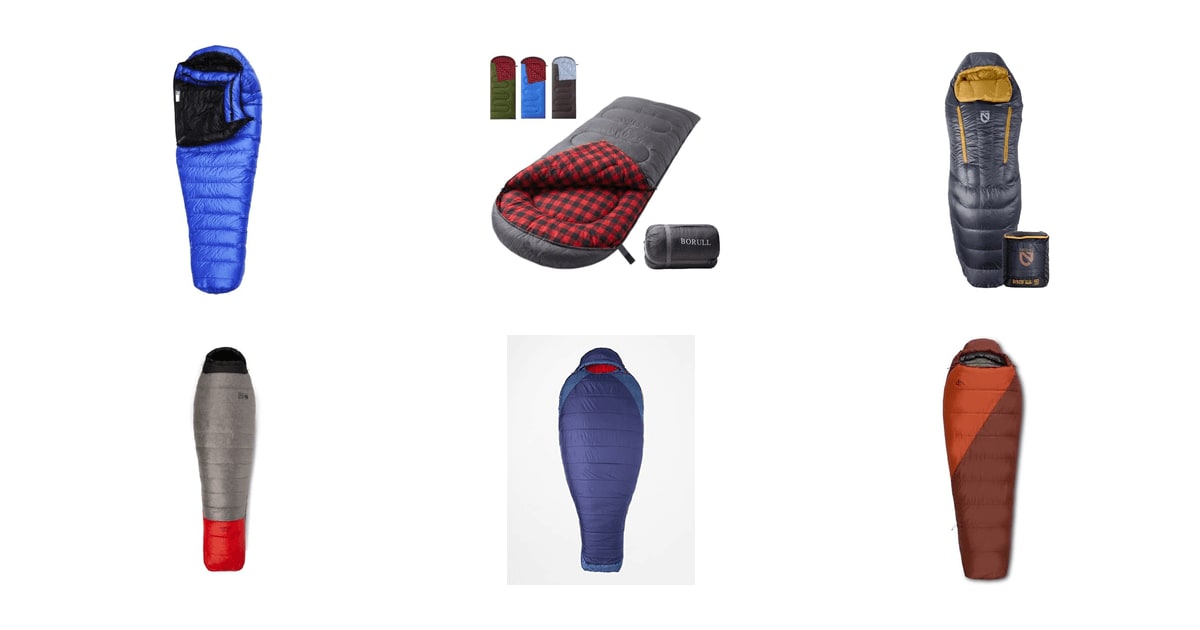
Cold-weather camping lives or dies on sleep. If you're shivering at 3 a.m., nothing about the trip works — not the summit push, not the second day of hiking, not the mood around the morning stove. A good winter bag traps the heat your body already makes and keeps drafts from stealing it, which is why the small stuff matters so much: a hood that actually cinches, a draft collar around your neck, a zipper baffle that blocks the cold seam. Warmth isn't one number on a hangtag. It's a system you climb into.
Here's the honest part. Temperature ratings are softer than they look, and no bag in this category solves that for you. Under ISO 23537, a bag sold as a 15-degree bag might carry a comfort rating closer to 25 degrees — the number most people actually feel. CleverHiker's survey of more than 2,000 backpackers found that matching your rating to your forecast low, instead of going below it, is the single most common beginner mistake. Cold sleepers, women, and anyone camping on snow should plan for a 10- to 15-degree cushion.
Your pad matters too, and no bag can rescue you from a thin one. Beyond that, it's about picking the right compromise between weight, wet-weather performance, and how much room you want to sprawl. We think that the Western Mountaineering UltraLite 20 is the best cold weather sleeping bag for most people, and that the Kelty Cosmic Synthetic 0 is the one to buy if you camp in damp cold or you're just getting started in winter.
Everything we recommend

The warmest bag you'll barely notice in your pack

Damp-cold reliability at a fraction of the price
Alpine-grade warmth in a shell built to save grams

Room to sprawl if you can't sleep locked in a mummy
At a glance
| Product | Temp Rating | Fill Type | Price | |
|---|---|---|---|---|
| Western Mountaineering Ultralite 20 Degree Sleeping BagTop pick | 20°F | 850+ FP Goose Down | $680 |
 | Winter Flannel Sleeping Bags XL for BigAlso in lineup | 32°F-43°F | Siliconized Fiber | $49.99 |
| NEMO Equipment Disco Down Sleeping Bag -Also great | 15°F | 650 FP Down | $299.95 |
| Mountain HardwearUpgrade pick | 15°F | 800-Fill Goose Down | $679.99 |
 | Marmot Trestles Elite Eco 20 Sleeping BagAlso consider | — | — | $179 |
| Kelty Cosmic Synthetic 0F Degree Mummy SleepingBudget pick | 0°F | Cirroloft Synthetic | $149.95 |
 | THE NORTH FACE Wawona Bed 20 SleepingAlso consider | 20°F | Recycled Polyester | $150 |
How we picked
Real temperature rating. We looked for bags with clear ISO 23537 or manufacturer ratings and treated the marketed number as optimistic. Any bag we recommend for winter needs to hold up when you buy 10 to 15 degrees below your expected low.
Insulation quality. For down, we wanted fill power and fill weight both published — 800-plus fill is the threshold for serious cold-weather bags per REI's guidance. For synthetics, we looked for fills that keep loft when damp instead of clumping.
Hood and draft collar. Outdoor Gear Lab's field testing found a functional draft collar worth up to 8 degrees at the same ambient temperature. Any bag without a real collar and a cinchable hood got downgraded.
Weight and packed size. We separated backpacking bags from car-camping bags rather than ranking them together. Under about 2 pounds is the bar for carrying a bag far; above 4 pounds it belongs in a trunk.
Fit and sourcing. We noted shoulder and foot girth, footbox shape, and whether the down carries Responsible Down Standard certification. Side sleepers and broader campers need different bags than the standard mummy assumes.
Top pick
The warmest bag you'll barely notice in your pack
Western Mountaineering Ultralite 20 Degree Sleeping Bag
The UltraLite packs 16 ounces of 850-plus fill power goose down into a bag that weighs 1 pound 13 ounces and lofts 5 inches. It has the details that keep you warm all night — a full down collar, an insulated draft tube, and continuous baffles you can shake to redistribute the down.
$680fromAmazonThis is the bag that spoils you for other bags. Sixteen ounces of 850-plus fill power down, 5 inches of loft, and a total weight of 1 pound 13 ounces. That combination is what separates premium down from the 550-to-650-fill bags most people start with. High fill power traps more air per ounce, so you carry less to stay just as warm. Backpacker Magazine has kept the UltraLite on its top ultralight list for over a decade.
The details are where cold nights are won or lost. The UltraLite has a full down collar around your neck and an insulated draft tube behind the full-length YKK zipper. Outdoor Gear Lab's field testing found that a functional draft collar measured up to 8 degrees warmer than an otherwise identical bag without one. That's a bigger swing than most people expect from a strip of down, and it's why we weight collar design heavily.
The continuous baffles are the sleeper feature. They run all the way around the bag from zipper to zipper at 5.25-inch spacing, so you can shake down toward the top on a frigid night or push it to the sides when it warms up. Most bags lock the down in place with sewn-through chambers. This one lets you tune the bag to the forecast, which effectively widens its useful range.
Owners who've carried this on long trails consistently report that the loft holds up after repeated stuffing — Backpacker's testers noted no loft degradation across multi-season use. That's the argument for buying once. A cheap bag that flattens after two seasons costs you more than a bag that stays fluffy for ten.
Flaws but not dealbreakers
It's the most expensive bag here by a wide margin, and that's a real barrier if you camp in winter a handful of nights a year. The math only works if you use it a lot or you're counting every ounce on a long trip.
Untreated goose down is the trade-off for that fill power. Get it soaked and it collapses; untreated down retains only roughly 10 to 20 percent of its loft when saturated, compared with up to 60 percent for hydrophobic-treated down. The 20-denier shell is weather resistant, not waterproof. In the Cascades or a leaky tent, you need to be disciplined about a dry bag and condensation.
The mummy cut is narrow — 59 inches at the shoulder, 38 at the foot. That's efficient, but if you sleep on your side with your knees drawn up, you'll feel the walls.
Budget pick
Damp-cold reliability at a fraction of the price
Kelty Cosmic Synthetic 0F Degree Mummy Sleeping
The Cosmic Synthetic is rated to 0°F with 55 ounces of Cirroloft synthetic fill, and it keeps insulating when it gets damp. It weighs about 4 pounds 6 ounces, so it's a car-camping and short-haul bag rather than a thru-hiking one.
$149.95fromAmazonIf you're stepping up from three-season camping and don't want to spend like a mountaineer, start here. You get a genuine 0-degree rating and a synthetic fill that doesn't fail when things get wet. Synthetic bags typically run 20 to 40 percent heavier than down bags of equal warmth, but they hold near-full insulating value when damp and dry much faster. For the Pacific Northwest or spring snow camping, that's the safer bet.
Synthetic is the right call more often than gear forums admit. Down wins on warmth-to-weight, full stop. But condensation inside a winter tent is relentless, and a bag that shrugs it off buys you margin on a multi-night trip. Cirroloft maintains loft evenly rather than clumping into cold spots, which is the failure mode of cheap synthetic fills after a few washes.
Kelty includes practical touches that matter more in a campground than on a summit. There's a compression stuff sack, an exterior stash pocket for your headlamp and phone, a roomy footbox, and length options fitting sleepers from 5-foot-8 to 6-foot-6. Owners camping in snow consistently report staying genuinely warm in sub-freezing temperatures, which is the whole job.
Flaws but not dealbreakers
It's heavy. At roughly 4 pounds 6 ounces in the regular size, it's more than twice the weight of our top pick, and it doesn't compress nearly as small. Owners who bought it for backpacking say so plainly. Treat this as a car-camping and basecamp bag.
The shoulders run narrow for a bag this bulky, and some owners with broad frames find the cut tight. Sizing up in length gives you a bit more room, but it's still a mummy.
Quality control isn't flawless — a handful of owners have reported crooked stitching around the footbox and hood on units they received. It's not a widespread pattern, but check the seams when it arrives.
Upgrade pick
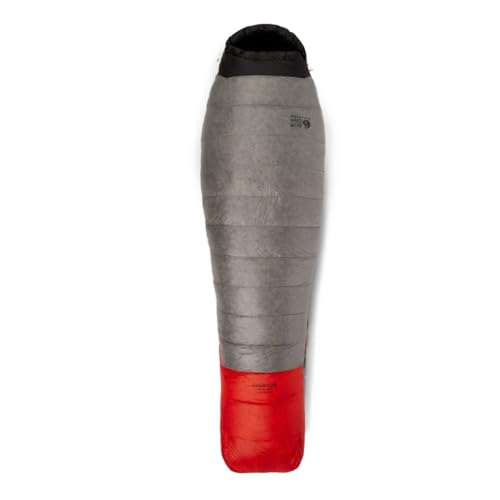
Alpine-grade warmth in a shell built to save grams
Mountain Hardwear
The Phantom 15 pairs 800-fill goose down with a 10-denier recycled shell and a performance mummy cut, all aimed at alpine trips where packed size matters. The contoured footbox keeps your feet from crushing the insulation flat.
$679.99fromAmazonMountain Hardwear built this for the trip where you're carrying a rope and a stove and still need to sleep warm. The 800-fill down does the heavy lifting, and the 10-denier recycled shell strips out weight and packs down small. If your winter camping involves approach hikes and cramped tent platforms, that packability is worth real money.
The contoured footbox is a better idea than it sounds. In a standard mummy, your feet press the down flat against the end of the bag, and flat down doesn't insulate. Shaping the footbox keeps loft where your toes are, which is where most people notice the cold first. Combined with the performance mummy cut, it means less dead air for your body to heat.
This sits between the UltraLite and the budget bags in a useful way. You get premium-tier down and a legitimately light package, without the boutique price of the top pick. For alpine backpacking specifically — where you want a bag that disappears into a pack but still handles a hard freeze — it's the most focused option in this lineup.
Flaws but not dealbreakers
A 10-denier shell is thin fabric. It saves weight, but you need to be careful about sharp rock, stove sparks, and anything with a zipper on it. This isn't a bag to drag across a granite ledge.
There's very little owner feedback on this listing, so we're leaning on published specifications more than we'd like. And like the UltraLite, the down isn't described as hydrophobic-treated, so wet conditions demand care.
Also great
Room to sprawl if you can't sleep locked in a mummy
NEMO Equipment Disco Down Sleeping Bag -
The Disco uses NEMO's spoon shape, which adds room at the elbows and knees for side sleepers. It's filled with 650-fill hydrophobic, PFAS-free, RDS-certified down and has Thermo Gill vents for dumping heat without unzipping.
$299.95fromAmazonIf mummy bags make you feel trapped, this is the fix. The spoon shape widens the bag at the elbows and knees — NEMO's published fit specs put the gain at roughly 15 percent more interior volume versus a standard mummy of the same length. You can bend a knee, roll to your side, and cross your arms. For a lot of people that's the difference between sleeping and lying there waiting for dawn.
The Blanket Fold is the other reason to like it. It's an oversized draft collar you can tuck around your neck like a comforter or fold back when you're too warm. Given that a working draft collar can be worth up to 8 degrees, having one this generous — and adjustable — extends the bag's range in both directions.
The Thermo Gill vents handle the other half of the problem. Winter camping temperatures swing, and being too hot means sweating into your insulation. The multistage zippers let you dump heat from the torso without opening the main zipper and flooding the bag with cold air. Owners who run warm consistently report using them more than they expected.
The down is 650 fill power, hydrophobic, PFAS-free, and RDS-certified. That's lower loft-per-ounce than our top pick, so the bag is heavier for the same warmth. But the hydrophobic treatment is genuinely useful — treated down can hold up to 60 percent of its loft when saturated — and the RDS certification means the down comes from farms audited for animal welfare.
Flaws but not dealbreakers
The vent and side zippers snag. Multiple owners report the fabric getting chewed at the zipper track and needing two hands to guide it every time. That's an annoying thing to deal with in the dark with cold fingers, and on a bag at this price it shouldn't happen.
Some buyers have received the bag without the compression sack they expected, which matters when you're trying to fit it in a pack. And at 650 fill power, it's noticeably bulkier than the 800-plus bags here — a fine trade for car camping and shorter trips, less so for a long approach.
Who this is for
This guide is for people sleeping outside when it's genuinely cold — winter backpackers, snow campers, shoulder-season hikers in the mountains, and car campers who don't want to be miserable at a frozen campground. If your camping tops out at summer weekends and 50-degree nights, you don't need any of this. A three-season bag plus a liner will serve you better and cost less. A silk liner adds roughly 5 to 8 degrees, fleece adds 10 to 15, and a premium thermal liner can add up to 25.
We focused on bags rated around 20°F and colder, which covers most winter camping in the lower 48 and shoulder-season alpine trips. We didn't cover expedition bags rated below -20°F, quilts, or double bags for couples. One thing this guide can't fix: your sleeping pad. Cold ground pulls heat out of you faster than cold air does, and the warmest bag on this page won't save you on a summer pad. Check your pad's R-value before you spend anything on a bag.
How we picked
Temperature rating: We treated marketed ratings as optimistic and favored bags with clear ISO 23537 or manufacturer numbers, assuming you'll buy 10 to 15 degrees below your forecast low. Insulation: For down we wanted published fill power and fill weight, with 800-plus as the bar for serious cold; for synthetics, fills that hold loft when damp. Hood and collar: A real draft collar can be worth up to 8 degrees, so bags without one dropped. Weight and packed size: We split backpacking bags from car-camping bags instead of pretending they compete. Fit and sourcing: We looked at shoulder and foot girth, footbox shape, and RDS certification on the down.
Other sleeping bags for cold weather camping worth considering
If you want to sleep like you're at home: The THE NORTH FACE Wawona Bed 20 Sleeping ($150) — The North Face Wawona Bed 20 is a rectangular bag, not a mummy, and it's built for campground comfort rather than efficiency. You get a taffeta lining, recycled polyester insulation, a DWR-treated ripstop shell, and a wraparound footbox zipper that lets the whole thing lie flat as a blanket. If you toss, turn, and sleep on your stomach, this is far more pleasant than any bag above. But at roughly 4 pounds 14 ounces in the regular size, and with all that dead air a rectangular shape creates, it's not a bag for real cold or for carrying anywhere. The regular fits sleepers up to 5-foot-8; there's a long for taller campers.
If you want synthetic warmth with recycled materials: The Marmot Trestles Elite Eco 20 Sleeping Bag ($179) — Marmot's Trestles Elite Eco 20 uses 100 percent recycled SpiraFil insulation in a 100 percent recycled polyester shell, and this version is cut for women, whose bags are typically rated 5 to 10 degrees warmer to account for how ISO comfort ratings work. It's one of the more sustainably built cold-weather bags you can get without giving up much in dry conditions. At roughly 3 pounds it splits the difference between our budget pick and the down bags — heavier than you'd want on a long carry, lighter than the Kelty. There's very little owner feedback on this particular listing, so we'd treat the fit as unverified.
The competition
Here's what our research turned up beyond the picks — not a survey of every cold-weather bag on the market, just the ones in this lineup that didn't earn a recommendation. A bag landing here isn't necessarily bad. Usually it's aimed at a different kind of camping than the one this guide covers.
The Winter Flannel Sleeping Bags XL for Big ($49.99) — The BORULL XL flannel bag is enormous — 92 by 35 inches — with a brushed flannel lining, a two-way zipper, and a hood that cinches. Owners over 6 feet consistently report it's one of the few bags they can actually stretch out in, and the flannel is genuinely pleasant against skin. But the listing's own numbers tell the story: a comfort range of 32°F to 43°F. That's a shoulder-season bag, not a winter one, and at nearly 6 pounds it's heavy for what it delivers in warmth. If you're a tall car camper doing fall trips and festivals, it's a reasonable buy. For anything at or below freezing, look at our budget pick instead.
Care and storage
Never store a down bag compressed. Stuffing it in its sack for months crushes the loft permanently, which is the fastest way to ruin an expensive bag. Hang it in a closet or keep it in the large mesh storage sack it came with. Wash it rarely — down-specific detergent, front-loading machine on gentle, no fabric softener — then tumble dry on low with a couple of clean tennis balls to break up the clumps. Plan on hours, not minutes; pulling it out damp invites mildew. On the trail, keep the bag in a dry sack even inside your pack, and unzip your tent vents at night. Most bags get wet from your own breath condensing on the fly and dripping, not from rain.
Questions we get
What temperature rating do I need for winter camping?
Buy a bag rated 10 to 15 degrees colder than your expected nighttime low. Under ISO 23537, a bag marketed as 15°F may carry a comfort rating closer to 25°F, and comfort is the number most people actually feel. CleverHiker's survey of over 2,000 backpackers found that matching the rating to the forecast — rather than going below it — is the most common beginner mistake.
Down or synthetic for cold, wet weather?
Synthetic, if you're consistently camping somewhere humid like the Pacific Northwest. Synthetic bags run 20 to 40 percent heavier than down bags of equal warmth, but they keep insulating when damp and dry far faster. Hydrophobic-treated down narrows the gap — treated down can hold up to 60 percent of its loft when saturated versus roughly 10 to 20 percent untreated — but synthetic is still the more forgiving choice.
What does the ISO 23537 rating standard actually mean?
It requires three numbers. Comfort is calibrated for a standard female sleeper, Lower Limit for a standard male sleeper, and Extreme is a survival-only figure you should ignore when shopping. Brands often market the Lower Limit as the headline number, which is why a 15-degree bag can have a 25-degree comfort rating. Look for the comfort figure and shop from that.
What's the difference between fill power and fill weight?
Fill power measures quality — 800-fill down traps about 800 cubic inches of air per ounce. Fill weight is how much down is actually in the bag. You need both to judge warmth: our top pick uses 16 ounces of 850-plus fill, which is why it lofts 5 inches at under 2 pounds. High fill power with a small fill weight makes a light bag, not necessarily a warm one.
Can a liner make my 3-season bag work in winter?
Partly, and it's a small addition next to buying another bag. A silk liner adds roughly 5 to 8 degrees, fleece adds 10 to 15, and a premium thermal liner can add up to 25. That's enough to stretch a 20-degree bag into colder shoulder-season nights. It won't turn a 30-degree bag into a snow-camping bag, though, and it adds bulk and weight in your pack.
Should I buy a men's or women's specific bag?
Women's bags are typically rated 5 to 10 degrees warmer and cut with more room at the hips and less at the shoulders, with extra insulation in the footbox. If you sleep cold, that's worth having regardless of the label on the tag. The ISO comfort rating is already calibrated to a standard female sleeper, so a women's bag is essentially the manufacturer building to that number rather than the lower limit.
Why you should trust us
For this guide:
- We compared published specifications, fill power and fill weight figures, and ISO 23537 rating explanations for every bag in this lineup.
- We read published reviews and field-testing writeups from Outdoor Gear Lab, Backpacker Magazine, REI, CleverHiker, and Switchback Travel to understand what separates a warm bag from a cold one.
- We reviewed owner feedback themes for recurring complaints — snagging zippers, missing stuff sacks, narrow shoulder cuts — and weighed them against each bag's stated design goals.
- We read owner reviews on every listing, weighted toward the critical ones, because that is where the recurring failures show up.
- We have a systematic way of automatically fetching the latest prices, so the numbers on this page stay current.
- This is a research-focused guide, so the team may not own every product listed — though we often do own the top winners, which gives us extra context for the recommendations.
- We don't accept free products, and the retailer commission never changes which product we recommend.
Sources
Best Cold-Weather Sleeping Bags 2026 — Outdoor Gear Lab, OutdoorGearLab
Best Sleeping Bags of 2026 — Switchback Travel, Switchback Travel
Best Winter Sleeping Bags — Backpacker Magazine, Backpacker Magazine
How to Choose a Sleeping Bag — REI Expert Advice, REI
Best Sleeping Bags for Cold Weather — CleverHiker, CleverHiker
Best Backpacking Sleeping Bags 2026 — Outside Magazine, Outside Magazine
Best Sleeping Bags We've Tested — Wirecutter / NYT, Wirecutter
Down vs Synthetic Sleeping Bag Insulation — Section Hiker, Section Hiker
ISO 23537 Sleeping Bag Requirements and Test Methods — ISO, International Organization for Standardization
Best Winter Sleeping Bags 2026 — The Adventure Junkies, The Adventure Junkies
Amazon product listings and owner reviews for all 7 products
Manufacturer specification pages for each product
Some passages in this guide may be paraphrased with AI help. Prices are refreshed automatically.
More like this.
Continue exploring lifestyle reviews and recommendations.

The Best Cold Weather Camping Sleeping Bags
A cold night in a tent isn't dangerous so much as it's miserable. You wake at 2 a.m. with cold feet, pull the drawcord tighter, and then lie there doing…

The Best Sleeping Bags for Camping and Backpacking
A sleeping bag is the one piece of camping gear you notice at 3 a.m. When it's right, you don't think about it at all. When it's wrong, you spend the…

The Best All-Weather Family Camping Tents
The tent that matters is the one you're stuck inside at 2 a.m. when the rain starts. That's when you find out whether the fly reaches the ground, whether…

The Best Cooling Tents and Hot-Weather Camping Gear
Heat is the one camping problem you can't sleep through. A tent sitting in afternoon sun turns into an oven fast - Wirecutter's summer tent research found…

The Best Cold-Weather Dog Coats
Cold hits some dogs much harder than others. A husky can nap in the snow. A whippet starts shivering on a 40-degree sidewalk, and a 12-year-old terrier…

The Best Cold Water Surfing Wetsuits
Cold water finds every gap. A suit that feels fine in September can turn a February session into ten shivering minutes and a long walk back to the car.…