The Best All-Season Tires
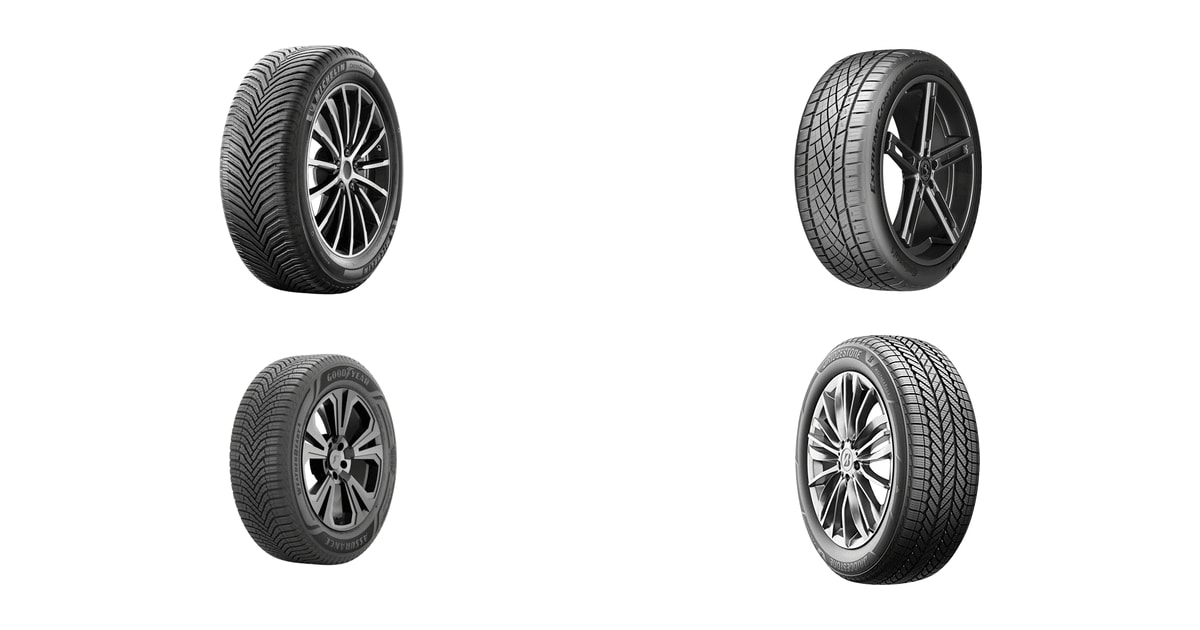
Your tires are the only thing connecting a two-ton car to the road, and most of us think about them once every few years, in a hurry, after a nail or a blowout. That's a shame, because the choice matters more than almost any other maintenance decision you'll make. A good all-season tire shortens your stopping distance in a downpour, holds its line on a cold on-ramp, and stays quiet enough that you can hear the radio at highway speed. A mediocre one does none of that, and you'll live with it for years.
Here's the honest part: no all-season tire is great at everything, and the chemistry is why. Rubber soft enough to bite into packed snow near freezing turns greasy on hot summer asphalt, so every tire here gives something up somewhere. Even the snow-certified ones trail a real winter tire on ice, and none of them belong on an unplowed mountain pass during a storm. Tires also wear based on how you drive, so treat any mileage warranty as a ceiling, not a promise.
So shop for your climate and your car, not for the brand on the sidewall. If you see snow more than a couple of times a winter, look for the three-peak mountain snowflake symbol, because the older mud-and-snow lettering is self-applied and means very little. If you mostly deal with rain, weight wet braking above everything else. We think that the Michelin CrossClimate2 is the best all-season tire for most people, and that the Goodyear Assurance WeatherReady 2 is the one to buy if you want a quieter ride and similar snow credentials for less.
Everything we recommend

The best wet and snow grip, if you're willing to pay up

Quieter and softer over bumps, with snow credentials to match

The longest tread warranty here, in a quiet touring tire
At a glance
| Product | Tire Size | Load/Speed Rating | Price | |
|---|---|---|---|---|
| MICHELIN CrossClimate2 All-Season Tire 235/55R19/XL 105VTop pick | 235/55R19 | 105V | $289.99 |
 | Continental ExtremeContact DWS06 PLUS UHP All SeasonAlso consider | 245/40ZR18 | 97Y XL | Check price |
| Goodyear Assurance WeatherReady 2 All-Season Radial TireRunner-up | 215/55R17 | 94V | $202.99 |
| Bridgestone WEATHERPEAK 225/65R17 102HBudget pick | 225/65R17 | 102H | $221.94 |
 | Pirelli Cinturato P7 All Season Plus 2Also in lineup | 225/45R17 | 94H XL | $162.40 |
How we picked
Wet braking. We leaned hardest on published braking comparisons from independent tire testers, since wet stopping distance separates the good tires from the mediocre ones by a full car length. Anything that landed mid-pack or worse in those comparisons couldn't be a top pick.
Verified snow traction. We treated the three-peak mountain snowflake as the bar for a genuine year-round tire, because that symbol reflects a standardized independent test. The mud-and-snow label is self-applied by manufacturers and involves no snow testing at all.
Tread life and warranty. We compared published treadwear warranties across the lineup, then weighed them against how each compound is tuned. A performance compound rarely reaches its warranted mileage if you drive it the way it wants to be driven.
Ride and noise. We read owner feedback and published reviews looking for recurring complaints about drone, harshness and road roar. Those are the things you notice on every commute, long after you've forgotten what you paid.
Sizes and ratings. We checked how broadly each tire's size range covers common rim diameters, load indexes and speed ratings. The best tire in the world does you no good if it doesn't come in your fitment.
Top pick
The best wet and snow grip, if you're willing to pay up
MICHELIN CrossClimate2 All-Season Tire 235/55R19/XL 105V
The CrossClimate2 is a touring all-season that stops shorter in the wet than nearly anything in its class, and it still carries a real snow certification. It's the tire to buy if you want one set on the car all year and don't want to think about the forecast.
$289.99fromAmazonWet braking is where this tire earns its keep. Independent comparison tests from the major tire testers have put the CrossClimate2 at or near the top of the all-season field for years, with stopping distances from highway speed running roughly a car length shorter than mid-pack rivals. A car length is the difference between a close call and a body shop. If you commute in rain, that's the number that should drive the decision.
The snowflake on the sidewall is a real certification, not a marketing badge. The three-peak mountain snowflake means the tire passed a standardized packed-snow traction test. The mud-and-snow lettering on cheaper tires means a brand measured its own tread grooves and decided it counted. If you get a handful of genuine snow days, you'll feel that difference the first morning you have to climb a hill from a dead stop.
Michelin built the compound to stay flexible when it's cold. Conventional all-season rubber starts stiffening below about 45°F, and stiff rubber doesn't grip. This one is formulated to stay pliable into the cold, and the V-shaped tread pushes water and slush out from under the contact patch. That's why it works on a wet 35-degree morning, which is the condition most drivers actually face.
You'll probably find it in your size. Michelin sells the CrossClimate2 across an unusually wide range of fitments, from ordinary sedan sizes up through 22-inch SUV and crossover wheels. The listing here is a 235/55R19 XL rated for 2,039 pounds per tire, which covers a lot of midsize crossovers. Check your door-jamb placard for the load index and speed rating first, then match or exceed it.
Flaws but not dealbreakers
It's the most expensive tire in this guide, and you buy four of them. Tires get sold one at a time, but nobody buys one. Multiply the CrossClimate2 by four, add mounting and balancing, and it's a real hit. The counterargument is the 60,000-mile warranty and the safety margin. If money's tight, though, the Bridgestone gets you snow certification for a lot less.
The ride is firmer than a comfort-touring tire. The sidewall is stiffer than something like the WeatherReady 2, and owners of cars on short-sidewall wheels notice it over broken city pavement and expansion joints. It isn't harsh, and it's part of why the steering feels so solid. But if your priority is a plush, hushed commute, this isn't the tire that gets you there.
It still isn't a winter tire. Snow certification is a floor, not a ceiling. In sustained deep cold, on glare ice, or on roads nobody has plowed yet, a dedicated winter tire will out-brake and out-climb the CrossClimate2 every time. If your winter regularly includes that, budget for a second set of wheels and swap them.
Michelin backs the CrossClimate2 with a 60,000-mile treadwear warranty.
Runner-up
Quieter and softer over bumps, with snow credentials to match
Goodyear Assurance WeatherReady 2 All-Season Radial Tire
The Assurance WeatherReady 2 is a snow-certified touring tire built around wet weather and comfort. It gives up some steering precision to the Michelin, but it's calmer over rough pavement, quieter at speed, and it costs less per tire.
$202.99fromAmazonIt clears the same snow bar the Michelin does. Goodyear's tread compound is designed to stay adaptable as temperatures drop, and the tire carries the severe snow designation. That means it passed the same standardized packed-snow test, not a self-graded one. You get the winter box checked on a tire you can leave on the car through summer heat, which is the whole point of buying an all-weather tire in the first place.
Standing water is where it's strongest. The sweeping grooves of Goodyear's AquaTred pattern move water and slush out of the way, and the evolving traction grooves keep opening up as the tread wears down, so the tire keeps displacing water late in its life. If you drive a crossover with a high center of gravity, hydroplaning is the failure mode that scares you most, and this is the tire that addresses it.
It's the comfortable one here. Goodyear puts comfort inserts in the construction to soak up small bumps and vibration, and the tread blocks come in varying sizes so the tire doesn't hum on one note at highway speed. Owners of touring tires complain about drone more than almost anything else. This is the pick that's least likely to give you that complaint.
The warranty holds its own against the premium tires. Goodyear covers the WeatherReady 2 for 60,000 miles of tread life, the same figure Michelin quotes on the CrossClimate2, at a lower price per tire. Rotate on schedule and keep the pressures right and you're looking at a similar service life for less money up front.
Flaws but not dealbreakers
Steering feel is soft. Turn-in is lazier and less communicative than the Michelin or the Continental, and on a twisty road the tire rolls onto its shoulder sooner. That's the price of the ride quality. If you enjoy driving quickly, you'll find this tire vague.
The size range skews toward touring fitments. Most sizes are H- or V-rated, so if your car came from the factory on W- or Y-rated rubber, you may not find a legal match. Construction also gets heavy in larger SUV sizes, and drivers sensitive to steering effort and ride motion sometimes notice the extra unsprung weight.
Goodyear backs the Assurance WeatherReady 2 with a 60,000-mile tread life limited warranty, with exclusions.
Budget pick
The longest tread warranty here, in a quiet touring tire
Bridgestone WEATHERPEAK 225/65R17 102H
The WeatherPeak is a quiet, long-wearing touring tire that still carries the three-peak snowflake for snow traction. It asks you to accept longer wet stops than the leaders in exchange for a warranty nothing else in this guide comes close to matching.
$221.94fromAmazonAn 80,000-mile treadwear warranty changes the math. That's 20,000 miles more than the Michelin and the Goodyear, and 30,000 more than the Continental. Spread the purchase across that many miles and the cost per mile lands below tires that ask less up front but wear out sooner. If you drive 20,000 miles a year, that difference is an entire extra set of tires over the life of the car.
It's snow certified, which is unusual at this end of the market. The WeatherPeak carries the three-peak mountain snowflake, so it passed the independent packed-snow traction test. The Bridgestone touring tire it replaced didn't have that. Most tires in this price neighborhood still wear only the mud-and-snow label, which nobody verifies, so this is the rare inexpensive tire you can run through a real winter.
Bridgestone built it to be quiet. This is a touring tire aimed at family sedans, minivans and daily commuters, and it behaves like one on a long highway drive. Owners who moved to it from a worn-out set consistently mention how much less road roar comes through. If your commute is an hour of interstate each way, that matters more than a tenth of a second on an on-ramp.
You get 30 days to change your mind. Tire purchases are usually final the moment they're mounted and driven on, which makes buying a set feel like a bet. Bridgestone's satisfaction guarantee gives you a way out if the tires don't suit your car or your roads. No other tire in this guide offers that.
Flaws but not dealbreakers
Wet braking trails the top of this list. Published comparisons put the WeatherPeak roughly 8 to 12 feet behind the Michelin and the Continental stopping from highway speed on a wet surface. That's about half a car length, and it's the single reason this is the budget pick and not the top one. If you drive through heavy rain regularly, pay up for the Michelin.
It's not a tire for driving quickly. The dry cornering feel is muted and the tire gives up its grip gradually rather than holding on. It's also heavy — over 36 pounds in the 225/65R17 size — which does nothing for steering response. On a minivan you'll never care. On a sport sedan you will.
Bridgestone doesn't publish much hard data. The treadwear grade and compound details are harder to find than they are with the other brands here, which makes apples-to-apples comparison shopping frustrating. You're leaning on the warranty length and the snowflake symbol rather than published numbers.
Bridgestone backs the WeatherPeak with an 80,000-mile treadwear warranty and a 30-day satisfaction guarantee.
Who this is for
This guide is for drivers who want one set of tires on the car all year. That's most people in most of the country: you get rain, you get cold mornings, you get a few snow days, and you'd rather not own two sets of wheels or pay a shop to swap them twice a year. If you drive a sedan, a crossover or a small SUV and your current tires are down near the wear bars, one of these will suit you.
It's not for everyone. If your winter means weeks of packed snow, ice and sustained deep cold, buy dedicated winter tires and run a cheap all-season the rest of the year — no all-season tire matches a winter tire once conditions get bad. If you track your car or want maximum dry grip in warm weather, buy summer tires. This guide also sticks to passenger and crossover all-seasons; light-truck, all-terrain and dedicated winter tires are a different shopping trip.
How we picked
We started with the numbers that actually change outcomes and worked down from there. Wet braking: published comparison tests from independent tire testers decided the order at the top, because a car length of extra stopping distance in the rain outweighs every other spec. Snow traction: we looked for the three-peak mountain snowflake symbol, which reflects a standardized test, and treated the self-applied mud-and-snow label as meaningless. Tread life: we compared published warranty mileages, then asked whether each compound is tuned in a way that can realistically get there. Ride and noise: owner feedback and reviews told us which tires drone on the interstate and which ones stay civil. Fitment: we checked how many common sizes, load indexes and speed ratings each tire covers, since a recommendation you can't buy isn't a recommendation.
Other all-season tires worth considering
If you want a tire that matches a sporty car: The Continental ExtremeContact DWS06 PLUS UHP All Season — The Continental ExtremeContact DWS06 Plus is the sharpest-steering tire here, and it's the one enthusiasts keep coming back to on European sport sedans and American muscle cars. Its wet braking is strong, and Continental's tread-wear letters are genuinely clever: the D, W and S in the shoulder blocks disappear in sequence as the tire wears, so you can see at a glance when dry, wet and snow capability have each dropped off. It also comes in ZR-rated sizes that touring tires simply don't offer. What you give up is winter: it's mud-and-snow only, not snow certified, so it's a compromise anywhere with real accumulation. Tread coverage tops out at 50,000 miles, and the softer performance compound wears faster in hot climates and under hard driving.
The competition
This is what our research surfaced, not a census of every all-season tire you can buy. The category is enormous, and plenty of solid tires from Cooper, Falken, Hankook and others never made it into this lineup. What follows is the one tire here that didn't earn a pick, along with why it lost and who might still want it.
The Pirelli Cinturato P7 All Season Plus 2 ($162.40) — The Pirelli Cinturato P7 All Season Plus 2 is the quiet, refined one, and it's easy to see why European carmakers ship cars on it from the factory. Pirelli tuned the tread pitch specifically to keep road noise out of the cabin, four wide longitudinal grooves handle standing water, and the lighter, low-rolling-resistance construction is meant to help fuel economy a bit. A 70,000-mile treadwear warranty is competitive too. It lost because of winter: there's no three-peak snowflake, and in published cold-weather comparisons its packed-snow braking runs meaningfully longer than the Michelin's — enough to matter in an emergency. If you live somewhere snow is a rare novelty and you drive a luxury or sport sedan where cabin quiet is the priority, it's still a smart buy, especially if your car came on Pirellis and you liked them.
Installation and upkeep
Buy four at a time if you can. Mixing a worn tire with new ones leaves your car braking and turning unevenly, which shows up at the worst possible moment, and if the budget only stretches to two, put both new tires on the same axle — never one alone. Once they're on, rotate every 5,000 to 7,500 miles and check pressures monthly against the sticker in your door jamb, not the maximum stamped on the sidewall. Those two habits do more for tread life than anything else. Running 5 psi low chews up the shoulders and builds heat, which quietly costs you thousands of miles. And when you're comparing sellers, remember mounting, balancing and disposal fees land on top of the tire price.
Questions we get
Can an all-season tire replace dedicated winter tires?
For most people in moderate climates, yes. If winter means wet roads, cold mornings and a few snow days, a snow-certified all-season like the CrossClimate2 or the WeatherReady 2 is enough to run year-round. But if you deal with sustained deep cold, heavy snow or real ice, a winter tire will beat any all-season on every snow and ice measure, because its compound stays soft at temperatures where all-season rubber turns hard.
What's the difference between all-season and all-weather tires?
Marketing uses the terms interchangeably, but there's a real distinction. All-weather generally means the tire carries the three-peak mountain snowflake and has passed an independent severe-snow traction test. All-season is the broader bucket, and it includes plenty of tires that have never been snow tested at all. Check the sidewall for the snowflake symbol rather than trusting the category label on a product page.
What does the three-peak snowflake symbol actually mean?
It means the tire passed a standardized packed-snow acceleration test and beat a reference tire by a set margin. It's an objective, repeatable certification, not a self-assessment. The mud-and-snow label is the opposite: manufacturers apply it based on their own tread geometry rules, with no snow testing involved. A tire can wear M+S and still give you almost nothing in the snow.
How long do all-season tires last?
The warranties across this guide run from 50,000 miles on the Continental up to 80,000 on the Bridgestone, and real life usually lands somewhere below the number on the box. Hard acceleration, a heavy or powerful car, and hot pavement all shorten tread life. Rotating every 5,000 to 7,500 miles and keeping pressures within a couple of psi of the door-jamb spec are the two things that most reliably get you closer to the warranted mileage.
Which of these is best for an SUV or crossover?
The CrossClimate2 and the WeatherReady 2 are the two to look at first. Both come in a wide spread of 18- through 22-inch fitments, both are snow certified, and both handle standing water well, which matters more on a tall vehicle. If you're piling on miles in a three-row SUV, the WeatherPeak's longer warranty is worth a look. If you've got a fast performance SUV, the Continental steers better, but you're accepting weaker snow capability to get it.
Is the Michelin worth paying extra for?
For most four-season drivers, yes. The wet braking advantage in published comparisons is roughly a car length over budget tires, which is a genuine reduction in crash risk rather than a spec-sheet flourish. Its snow certification also guarantees traction that mud-and-snow tires can't. And because it's warranted for 60,000 miles, the cost spread over its life is closer to a cheaper tire's than the sticker suggests — especially once you count paying to mount a replacement set sooner.
Why you should trust us
For this guide:
- We read published braking and snow-traction comparisons from independent tire testers and lined those results up against each manufacturer's own published specifications.
- We compared warranty terms, load indexes, speed ratings and size availability across all five tires in this guide.
- We went through owner feedback for each tire looking for complaints that came up again and again, rather than one-off gripes.
- We read owner reviews on every listing, weighted toward the critical ones, because that is where the recurring failures show up.
- We have a systematic way of automatically fetching the latest prices, so the numbers on this page stay current.
- This is a research-focused guide, so the team may not own every product listed — though we often do own the top winners, which gives us extra context for the recommendations.
- We don't accept free products, and the retailer commission never changes which product we recommend.
Sources
Best All-Season Tires — Independent Test Results and Buyer Reviews, Tire Rack
Best All-Season Tires Ratings & Reviews — Annual Subscriber Survey, Consumer Reports
Best All-Season Tires — Tested and Ranked by Editors, Car and Driver
Best All-Season Tires — Buying Guide and Expert Recommendations, Popular Mechanics
Best All-Season Tires Tested in Real-World Conditions, Edmunds
Best All-Season Tires for SUVs, Trucks, and Cars — Editor Picks, The Drive
Michelin CrossClimate2 Owner Ratings and Survey Data, Tire Rack
Continental ExtremeContact DWS06 Plus Owner Ratings and Survey Data, Tire Rack
Amazon product listings and owner reviews for all 5 products
Manufacturer specification pages for each product
Some passages in this guide may be paraphrased with AI help. Prices are refreshed automatically.
More like this.
Continue exploring electronics reviews and recommendations.

The Best All-Weather Car Floor Mats
Winter doesn't stay outside. Salt, slush, sand and gravel ride in on your boots and grind into the carpet every time you get in. A good all-weather mat…

The Best All-Weather Windshield Wipers
Wipers are easy to ignore until the moment you can't see. You merge onto a wet highway, a truck throws up a sheet of spray, and a worn blade smears it…

The Best All-Weather Family Camping Tents
The tent that matters is the one you're stuck inside at 2 a.m. when the rain starts. That's when you find out whether the fly reaches the ground, whether…

The Best Car Travel Accessories
A long drive exposes every gap in how your car is set up. Your phone slides off the seat mid-turn. The kids' snacks migrate under the seat. Somebody's…

The Best Smart Home Devices
A smart home is really just a pile of small conveniences that add up. The lights come on before you walk in the door. The thermostat stops heating an…

The Best Portable USB-C Monitors
A second screen changes how a laptop feels. Spreadsheets stop hiding behind browser tabs, and a video call stops covering your notes. What makes a…