The Best Stationary Exercise Bikes
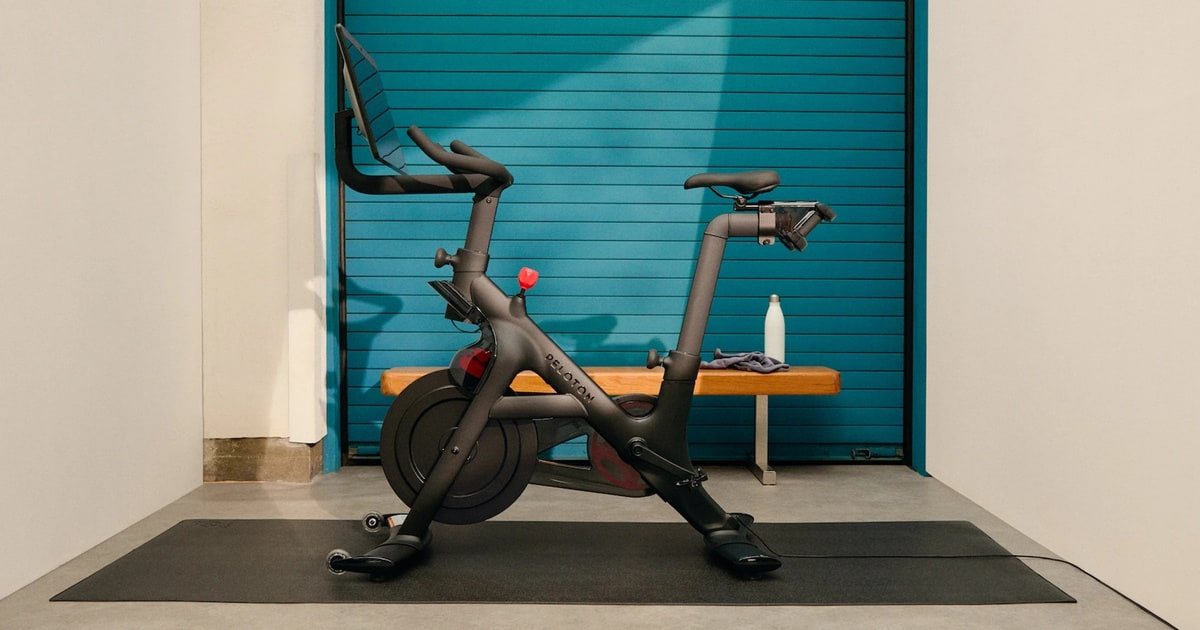
A stationary bike earns its space by being the thing you'll actually use on a gray Tuesday. It's low-impact, so your knees and back don't take the beating a treadmill hands out, and you can ride hard for twenty minutes before work without leaving the house. What separates a good bike from a frustrating one is mostly boring stuff: how smooth the resistance feels, whether the seat and bars adjust to fit you, and how much noise travels through the floor to whoever lives below you.
Here's the part nobody puts on the box. Every connected bike in this guide is big, heavy and awkward to move once it's assembled, and most of them want a monthly membership to be worth owning. The screens are locked to one company's content, so if you fall out of love with the instructors, you're left with an expensive spin bike and a tablet propped on the bars. And no bike solves the real problem, which is getting on it three times a week when you'd rather not.
So think about how you like to be motivated. If you want a person on a screen telling you what to do next, buy into a class ecosystem and plan for the membership. If you'd rather watch your own shows, or you already train with power numbers and structured plans, skip the built-in screen and put the money into hardware that lasts. We think that the Peloton Bike+ is the best stationary exercise bike for most people, and that the NordicTrack Commercial S22i Studio Cycle is the one to buy if you want real climbs and descents.
Everything we recommend

The most polished ride, if you don't mind a monthly fee

Climbs and descents you can actually feel

Rides like your road bike, right down to the shifting

Quiet, low-fuss, and built to outlast the trends
At a glance
| Product | Price | |
|---|---|---|
| Peloton Exercise Cross Training Bike+Top pick | $2,695 |
| NordicTrack Commercial Series S22i; iFIT-enabled Indoor ExerciseRunner-up | $1,891.21 |
| Keiser M3i Studio Plus Indoor BikeAlso great | $3,490 |
| WAHOO KICKR BIKE SHIFT INDOOR TRAINERUpgrade pick | $2,103.48On sale |
 | BowFlex Results Series 1090 SelectTech Single DumbbellAlso in lineup | $349.99On sale |
How we picked
Ride feel. We looked for magnetic resistance and enough flywheel inertia to keep the pedal stroke smooth during standing climbs. Bikes that reviewers describe as choppy at low cadence didn't make the cut.
Noise at home. We favored belt-drive magnetic systems, which run around conversation volume rather than the roar of a fan bike. That's the difference between riding early and waiting until everyone's awake.
Fit and sharing. Seat height plus fore-aft adjustment is the minimum, and handlebar reach adjustment matters if two people of different heights will use the bike. We checked spec sheets for how far each one actually moves.
Software lock-in. We noted whether a bike broadcasts open Bluetooth and ANT+ data or restricts you to one company's app. Owner feedback shows the frustration lands hardest years later, when a subscription price or an instructor roster changes.
Long-term durability. We weighed frame warranty length and commercial-gym track record as proxies for how long a bike survives daily use. Owner reports of frame flex or early service calls counted against a model.
Top pick
The most polished ride, if you don't mind a monthly fee
Peloton Exercise Cross Training Bike+
The Bike+ pairs a big rotating touchscreen with the deepest class library in home fitness, and the resistance sets itself to match the instructor. It's the bike most likely to still be in use a year after you buy it, which is the only spec that really counts.
$2,695fromAmazonThe screen is the whole point, and it's a good one. The 24-inch panel rotates a full 180 degrees, so you can step off the bike and follow a strength or stretch class on the floor without craning your neck. Peloton's software adds a movement-tracking camera that counts your reps and flags sloppy form as you lift. If you've ever lost count of a set halfway through, you'll like that more than you'd guess.
The class library is why people keep riding. Nothing else comes close on sheer volume or on the depth of the daily schedule. There's a live ride most hours, an on-demand catalog running from twenty-minute climbs to low-impact recovery spins, and enough instructors that you'll find one whose voice you can stand first thing in the morning. Published reviews keep landing in the same place: the hardware is good, but the content is what makes it stick.
Auto-Follow takes the fiddling out of a class. Instead of reaching for the resistance knob every time an instructor calls a number, the bike sets it for you and you just keep pedaling. It sounds like a small thing. In practice it's the difference between riding a class and managing one, and it matters most during intervals, when you're too gassed to do arithmetic.
It handles a whole household. Everyone gets their own profile, so your numbers don't get tangled up with your partner's. The seat and bars adjust in four directions, which covers a wide spread of heights and inseams without a wrench hunt every time you swap riders. And if you wear an Apple Watch, heart rate and calories sync straight into Apple Health, so the ride shows up alongside the rest of your week.
Flaws but not dealbreakers
The membership isn't really optional. You can ride without it, and the bike will still show you speed, cadence, resistance and output. But that's a costly way to own a spin bike. Stretched over a few years the subscription adds up to more than the hardware did, and it's the single biggest thing to weigh before you commit.
The frame doesn't move. There's no powered incline, so every ride happens on a flat plane no matter what the instructor says about the hill you're supposedly climbing. You get resistance instead of gradient. If replicating outdoor climbs is the thing you want, the NordicTrack does something this bike can't.
It's heavy, and it stays where you put it. Pick the spot before assembly, not after. You'll want a mat underneath to protect the floor and catch sweat, plus clearance on both sides for getting on and off. Moving it later is a two-person job, and owners who try it alone tend to regret it.
Peloton covers the Bike+ frame for five years.
Runner-up
Climbs and descents you can actually feel
NordicTrack Commercial Series S22i; iFIT-enabled Indoor Exercise
The S22i physically tilts from a 10% descent to a 20% climb while you ride, and iFIT syncs that grade to real outdoor routes. It's the closest an indoor bike gets to a road that goes somewhere, and a year of the membership comes with it.
$1,891.21fromAmazonThe powered incline is the reason to buy this one. The whole frame tilts, from a 10% downhill to a 20% climb, and it changes while you're riding. That's not a gimmick you'll use once. Steep grades push you out of the saddle and load your glutes and hamstrings differently than cranking up resistance does, and the descents give you somewhere to actually recover instead of just spinning easy.
iFIT's routes make the incline worth using. Trainers film rides on real roads across six continents, and the software matches the grade under you to the terrain on screen. SmartAdjust nudges resistance and incline to your fitness level as you go. If you're training for a charity century or a hilly gravel event, you can ride something shaped like the actual course from your basement.
The rest of the hardware holds up its end. The 22-inch touchscreen rotates for floor work, and the silent magnetic resistance keeps the noise down to roughly conversation level. The inertia-enhanced flywheel smooths out the dead spot at the bottom of each pedal stroke, so standing efforts don't feel choppy. The seat moves up, down, forward and back, and a pair of three-pound dumbbells clips on for upper-body intervals.
Flaws but not dealbreakers
The included membership runs out. After the first year you're paying monthly or yearly to keep the classes and the route library, and without it you're left with a very sophisticated flat-resistance bike. Budget for that renewal from day one rather than treating it as a surprise later.
The software feels busier than Peloton's. Reviewers consistently describe the iFIT interface as cluttered, with more menus between you and pressing start. You'll learn it. But it's not as calm as the competition, and the built-in fan gets audibly loud once you're pushing hard at high cadence.
This is the heaviest bike here by a wide margin. It weighs over 200 pounds assembled, largely because of the incline motor and the commercial-style steel frame. Assembly is a real project, and repositioning it afterward is close to a moving-day event. Measure the room and the doorway first.
NordicTrack backs the S22i frame for ten years.
Upgrade pickOn sale
Rides like your road bike, right down to the shifting
WAHOO KICKR BIKE SHIFT INDOOR TRAINER
The KICKR BIKE SHIFT is a training tool, not a class bike. Virtual shifting, programmable gearing and five points of fit adjustment let it copy the bike you ride outside, so winter work indoors carries straight over to the road.
$2,103.48fromAmazonList priceVirtual shifting is the trick that makes it feel real. You program the gearing to match your outdoor bike, right down to the number of speeds and the cassette tooth count, and pick shifter behavior modeled on Shimano, SRAM or Campagnolo. Then you shift the way you always do. Two hours into a Zwift race, that muscle memory is what keeps the session from feeling like a video game.
Five points of fit adjustment mean it can be your bike. A setup app walks you through frame, setback and reach so the saddle and bars land where they do outdoors. Get that right and long rides stop hurting in new and interesting places. It also means two riders in one house can share it, since the geometry adjusts rather than merely sliding a seatpost.
Resistance responds fast enough to trust. The brake and belt drivetrain reacts almost immediately when the road pitches up in an app, and it simulates grades from a steep climb to a long descent. For structured interval work, that responsiveness matters: when a workout calls for a hard thirty seconds, the bike is already there rather than catching up halfway through.
It plugs into the platforms serious riders already use. Bluetooth and ANT+ both work, so Zwift, TrainerRoad and Wahoo SYSTM all pair without drama. And unlike a smart trainer, there's no wheel to pull, no tire to wear out, no bolting your good bike into a frame before every session. You walk over, clip in, ride.
Flaws but not dealbreakers
There's no screen. You'll need a tablet, laptop or TV in front of it, plus a stand to hold whatever you choose. That's fine if you were headed to Zwift anyway. It's a genuine annoyance if you expected to press one button and have a class start.
Setup takes an evening. Between assembly and dialing in the fit, first-time owners generally report a couple of hours before the first proper ride. It's worth doing carefully rather than fast, because a rushed fit is the thing you'll feel in your knees a month later.
It's the most expensive machine here, and it's built for one kind of riding. This is a road and gravel training rig. If what you actually want is a music-driven studio class with an instructor shouting encouragement, you'd be paying a large premium for precision you'll never look at.
Also great
Quiet, low-fuss, and built to outlast the trends
Keiser M3i Studio Plus Indoor Bike
The M3i puts its magnetic flywheel behind the rider, which makes it the quietest bike in this guide and about as maintenance-free as gym equipment gets. There's no built-in screen, so you bring your own app and your own content.
$3,490fromAmazonIt's the quietest bike here, and that's not a small perk. The magnetic resistance and belt drive make almost no sound, and putting the flywheel at the back keeps sweat off it. If you're riding at five in the morning in an apartment, or with a baby asleep on the other side of the wall, this is the bike that won't get you in trouble.
Almost nothing on it wears out. There are no brake pads to replace, no pad dust settling on your floor, and no tension knob to recalibrate every few months. A pedal-driven generator with a supercapacitor powers the console, so you'll never hunt for batteries. Keiser has been supplying commercial studios for decades, and this is the same hardware idea, scaled to a spare bedroom.
You choose the software instead of inheriting it. Bluetooth FTMS and ANT+ broadcast live power, cadence and heart rate, so Zwift, TrainerRoad and Apple Fitness+ all read the bike properly. Ride by Color gives you power and heart rate zones at a glance on the small console. If your favorite platform changes in two years, you change platforms, not bikes.
It's the smallest and lightest of the four. At roughly 90 pounds with a compact footprint, you can tilt it onto its wheels and move it yourself when guests come over. That's a meaningful difference from the connected bikes here, which are essentially furniture once assembled.
Flaws but not dealbreakers
No screen, and the console is deliberately plain. You get speed, power zones, heart rate and METs, and that's it. Mount a tablet if you want a class. Anyone hoping to be led through a workout out of the box will find this bike cold and uninviting.
You're paying premium-bike money for hardware alone. It sits in the same range as bikes that include a large touchscreen and a year of content, and the value only makes sense if you plan to keep it for a decade or already subscribe to a third-party platform.
Fit setup rewards patience. The adjustment range is wide, and owners who take the time to dial in saddle height and fore-aft properly get a much better ride than those who eyeball it. Have someone help on the first setup if you can.
Keiser offers a lifetime frame warranty on the M3i.
Who this is for
Buy one of these if you know you'll ride at least a few times a week and you're tired of the weather, the commute, or the wait for a gym bike. These are all full-size, full-price machines built for daily use, and they make sense when the bike replaces a membership or a habit you keep skipping. If you're not sure the habit will stick, ride at a gym for a month first, or run a class app on a cheap bike with a tablet holder. That's a far less painful way to find out.
This guide covers upright indoor cycling bikes and smart training bikes, the kind you ride leaning forward with your hands on the bars. It doesn't cover recumbent bikes, which put you in a reclined seat with back support and are usually the better call for lower-back pain, hip issues or rehab work. It also skips folding bikes and air-resistance fan bikes: the folders give up flywheel weight and frame rigidity to get small, and the fan bikes are far too loud for a shared wall.
How we picked
We compared spec sheets, published reviews and patterns in owner feedback across every bike here, weighing five things. Ride feel: magnetic resistance with enough flywheel inertia that standing efforts stay smooth instead of stuttering. Noise: belt-drive systems quiet enough to use before dawn without waking the house. Fit: seat height and fore-aft at minimum, plus handlebar reach if more than one person will ride. Software lock-in: whether the bike broadcasts open Bluetooth and ANT+ data or ties you to one company's classes and one company's pricing. Durability: frame warranty length and commercial-gym history, since a bike you keep for a decade changes the math on what it cost you.
The competition
The four bikes above are what our research surfaced as the strongest options in this lineup, not a survey of everything sold. Plenty of capable machines sit below this tier, particularly screenless spin bikes that pair with a tablet and a class app, and they're worth a look if you'd rather not buy into an ecosystem at all. If a bike you're considering isn't here, check the same things we did: magnetic resistance, a flywheel heavy enough to feel steady, four-way seat adjustment, and open Bluetooth data so you aren't stuck with one app forever.
Setup and placement
Decide where the bike lives before you build it, because none of these move easily once assembled. Put a rubber mat underneath: it protects the floor, dampens vibration through to the room below, and catches the sweat that otherwise pools on the frame. Leave clearance on both sides so you can swing a leg over safely, and a couple of feet in front if the screen rotates. Wipe the frame, bars and post down after every ride, since salt is what corrodes hardware and seizes adjustment knobs. Check that the seat and handlebar clamps are snug every few weeks. And if you ride hard, level the bike properly on the first day; a small wobble becomes an annoying rock at high cadence.
Questions we get
Which stationary bike is best for most homes?
The Peloton Bike+ is the one we'd recommend to most people. The rotating screen, the resistance that follows the instructor, and the size of the class library add up to the bike you're most likely to keep using. If you want real climbs and descents instead, get the NordicTrack S22i. If you never want to pay a subscription, get the Keiser M3i and run whatever app you like.
Do you need a subscription to use these bikes?
Technically no, practically yes for the connected ones. A Peloton will run in a free ride mode showing speed, cadence, resistance and output, and NordicTrack gives you basic cycling once the included membership lapses, but both lose almost everything that makes them interesting. The Keiser M3i and the Wahoo KICKR BIKE SHIFT are different by design: they broadcast open data to third-party apps, so you pick your platform and can drop it anytime.
What's the difference between an upright, a spin bike and a recumbent?
An upright sits you roughly like a road bike, with the seat level with the pedals and a fairly relaxed posture. A spin bike, which is what most of this guide covers, puts you in a more aggressive forward lean with a heavier flywheel and a sturdier frame built for hard intervals. A recumbent reclines you into a seat with a backrest and puts the pedals out in front, which takes pressure off your lower back, hips and knees. Uprights and spin bikes push your heart rate harder; recumbents are the comfortable choice for long, easy sessions or if you're managing joint pain.
Does flywheel weight actually matter?
It matters for how smooth the pedal stroke feels, especially when you stand up or spin fast. Around 30 pounds or more is the usual benchmark for a road-like feel, and the Peloton and NordicTrack are both in that range. Lighter flywheels on inexpensive bikes tend to feel choppy at low cadence. The Keiser and Wahoo use different resistance designs, so comparing their raw flywheel numbers to a conventional spin bike tells you nothing useful.
Will one of these bother the neighbors?
Not much, if you pick a belt-drive magnetic bike. All four here run in the range of a normal conversation, which is quiet enough for an apartment or an early morning. The Keiser is the quietest of the group, and the NordicTrack's fan is the loudest thing in the lineup once you're working hard. A mat underneath does more for the person below you than anything else you can buy.
Can these bikes replace an outdoor training setup?
For fitness, absolutely. For race preparation, the Wahoo is the one built for it, since the virtual shifting and programmable gearing mean the numbers and the habits carry straight outdoors. The NordicTrack's grade simulation is the next best thing for anyone training for a hilly event. A Peloton will make you fitter, but it won't teach your legs what a real climb does.
Why you should trust us
For this guide:
- We read manufacturer spec sheets and published reviews for every bike in this guide, then compared resistance systems, screen sizes, fit adjustment and frame warranties side by side.
- We looked through owner feedback for repeated themes, such as assembly difficulty, fan noise and how bikes hold up after a year, rather than isolated complaints.
- We read owner reviews on every listing, weighted toward the critical ones, because that is where the recurring failures show up.
- We have a systematic way of automatically fetching the latest prices, so the numbers on this page stay current.
- This is a research-focused guide, so the team may not own every product listed — though we often do own the top winners, which gives us extra context for the recommendations.
- We don't accept free products, and the retailer commission never changes which product we recommend.
Sources
Best Exercise Bikes 2026 — Wirecutter (The New York Times), Wirecutter / The New York Times
Best Exercise Bikes Rated & Reviewed — Consumer Reports, Consumer Reports
Best Exercise Bikes 2026 — Tom's Guide, Tom's Guide
Best Indoor Cycling Bikes — Garage Gym Reviews, Garage Gym Reviews
Best Exercise Bikes for Home Use — Healthline, Healthline
Best Exercise Bikes 2026 — Forbes Health, Forbes Health
Best Exercise Bikes — Good Housekeeping, Good Housekeeping
Calories Burned in 30 Minutes for People of Three Different Weights — Harvard Medical School, Harvard Medical School
Amazon product listings and owner reviews for all 5 products
Manufacturer specification pages for each product
Some passages in this guide may be paraphrased with AI help. Prices are refreshed automatically.
More like this.
Continue exploring health reviews and recommendations.

The Best Stationary and Spin Bikes
A stationary bike only helps you if you actually get on it. That sounds obvious, but it's the thing most buying advice skips. The bike that wins isn't the…

The Best Exercise Bikes
A good exercise bike is the one you'll actually climb onto on a Tuesday night when it's dark and cold and you don't feel like it. That comes down to a few…

The 11 Best Electric Commuter Bikes for City Riding in 2026: Tested & Reviewed
Expert-tested guide to the best electric commuter bikes of 2026, featuring top picks from Specialized, Trek, Rad Power Bikes, Aventon, and Giant.

The Best Magnesium Glycinate Supplements for Sleep
Magnesium is one of the few supplements with a real, if modest, case behind it for sleep. Roughly half of American adults fall short of the recommended…

The Best Electric Shavers for Men
Shaving with an electric razor is a daily habit, so the small things compound. A shaver that tugs at your neck, needs three passes over your jawline, or…

The Best Magnifying Glasses for Seniors
Small print stops being a minor annoyance somewhere around 60. Pill bottles, insurance letters, the ingredient list on a soup can - they all start…