The Best Weighted Vests for Strength Training
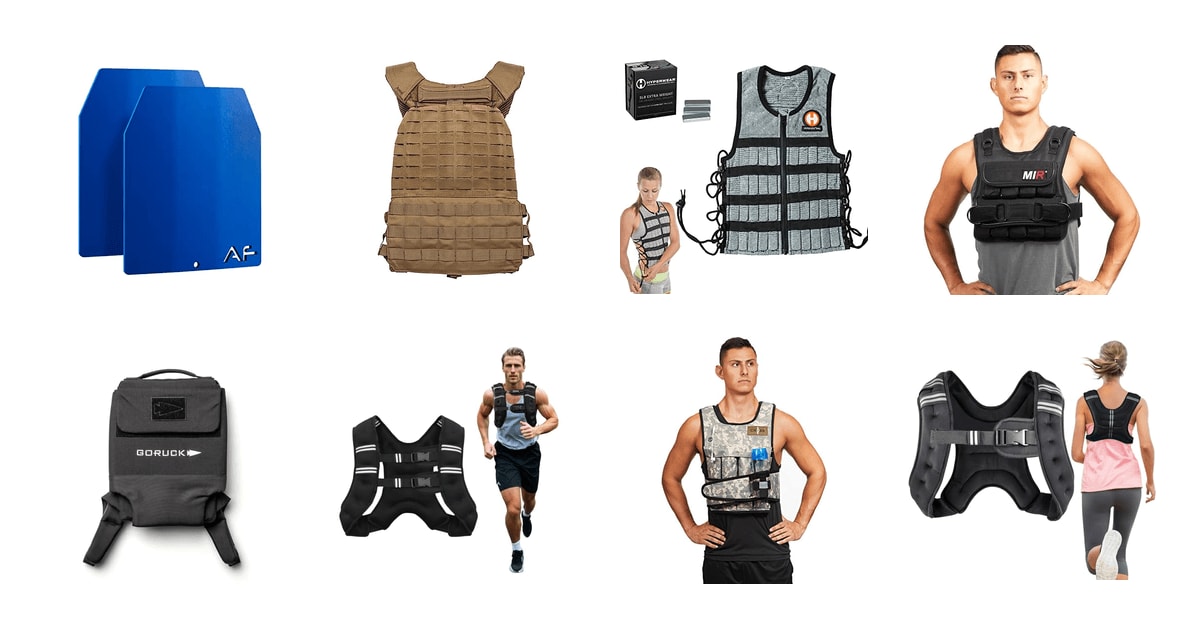
A weighted vest is the rare piece of gear that makes workouts you already do harder without taking up floor space. Add 20 pounds to pull-ups and the bar suddenly feels serious. Load a walk with 15% of your bodyweight and you burn meaningfully more calories at the same pace, according to a meta-analysis in the European Journal of Sport Science. Research in the Journal of Strength and Conditioning Research even links six weeks of vest work at 10% of bodyweight to better vertical jump and sprint times. The catch is that all of that only works if you'll actually wear the thing.
And that's where most vests fall down. No vest here is comfortable in the way a t-shirt is comfortable — you're strapping iron to your torso, and your shoulders will know it. Vests that hold the most weight bounce and chafe when you run. Vests that stay glued to your body during a run top out at loads a strong lifter will outgrow. Nothing solves both. Fit is the other trap: Men's Health testers found that a vest sized wrong for your torso scores far worse on comfort even when the weight is identical.
So pick for the workout you actually do most, not the one you imagine doing. We think that the Hyperwear Hyper Vest PRO is the best weighted vest for most people, and that the MiR Adjustable Weighted Vest is the one to buy if you want more load for less money and don't plan to run in it.
Everything we recommend

Stays put when you run, and you can wear it all day

More weight for less money, if you're not running in it

A cheap, comfortable way to find out if you like this
Tough enough for daily abuse, and it sits flat on your back

Built for rucking, with weight riding high on your back
At a glance
| Product | Weight | Max Weight | Price | |
|---|---|---|---|---|
 | AmStaff Fitness Weight Vest PlatesAlso in lineup | 17 lb | — | $74.99On sale |
| 5.11 Tactical TacTec Plate Carrier Professional VestUpgrade pick | — | — | $250 |
| Hyperwear Hyper Vest PRO Adjustable Weighted VestTop pick | 10 lb | Up to 40 lb | $239.95On sale |
| MiR Adjustable Weighted VestRunner-up | 20 lb | 20 lb | $114.37 |
| GORUCK Ruck Plate Carrier 3.0 Weighted RuckingAlso great | 10-30 lb | 30 lb | $115 |
 | Poudee Weighted VestAlso consider | 20 lb | — | $39.99 |
 | Cross101 Adjustable Weighted Vest Camouflage Workout WeightAlso consider | 20 lb | 20 lb | $39.91 |
| Henkelion Weighted Vest Weight Vest for MenBudget pick | 12 lb | 12 lb | $19.99 |
How we picked
Bounce and stability. We weighed published testing and manufacturer specs on how much a loaded vest shifts during running and jumping. Designs with rigid plates or finely distributed steel consistently move less than vests filled with sand or loose iron pouches.
Load range. We looked for vests that either hit a specific standard exactly or let you add weight over months of training. A vest you outgrow in six weeks isn't a good buy at any price.
Build and warranty. We compared shell materials — 500D and 1000D nylon, neoprene, stretch knit — against owner reports of seam and stitching failures. A published lifetime guarantee counted heavily, since stitching under load is where these fail.
Fit and comfort. Men's Health testers found that torso sizing is the single biggest factor in comfort scores, so we favored vests with real adjustment ranges or size-specific fits over one-size-fits-most designs.
Exercise fit. We checked whether each design clears a barbell and a pull-up bar, and whether it's usable for running. Very few vests do all three well, so we matched picks to specific uses.
Top pickOn sale
Stays put when you run, and you can wear it all day
Hyperwear Hyper Vest PRO Adjustable Weighted Vest
The Hyper Vest PRO holds small steel weights in a stretchy compression shell, so it moves with your ribcage instead of slapping against it. It's slim enough to wear under a shirt on a walk and stable enough for burpees and sprints.
$239.95fromAmazonList priceThis is the only vest here we'd recommend for running. The weights are 2.25-ounce steel pieces spread across dozens of pockets in a four-way stretch shell, and Hyperwear's specs put vertical vest movement under an inch at a 7-minute-mile pace. Fill a pouch vest with iron sand and you get a bag of stuff sliding around on your chest. This one just doesn't do that, which is why owners keep using it for six-mile runs.
The adjustability is finer than anything else in the lineup. You add or pull single small weights, so you can go up in tiny steps instead of jumping 2.5 or 3 pounds at a time. If you're easing into loaded push-ups after a shoulder issue, that matters a lot. Max capacity depends on size — 20 pounds in a small, 40 in an extra-large — so a bigger frame gets more headroom.
It also disappears under clothes, which sounds like vanity until you realize it's the reason people actually wear it. Owners describe putting it on for a workday at a desk, or wearing it under a shirt on errands. That's the low-impact, weight-bearing use case the bone-density research in Osteoporosis International points to, where postmenopausal women training in a vest three times a week improved hip bone mineral density.
The tradeoff is ceiling. A strong athlete doing weighted pull-ups will pass 25 pounds and want a plate carrier. This vest isn't built to hold 40-pound loads except in the largest size, and it isn't the pick for barbell work where a rigid carrier sits flatter against your back. For running, walking, HIIT and general strength work, though, it's the one you'll keep reaching for.
Flaws but not dealbreakers
Durability is the recurring complaint. Some owners report stitching giving out early, and this is the most expensive soft vest here — a bad combination. Others have gotten a decade out of theirs, so the failures seem to be inconsistent rather than universal. Still, at this price you'd want it to be a sure thing.
Sizing is unforgiving because it's a compression garment. Get the size wrong and you either can't zip it or it sags, and the side-lacing system can only do so much. Measure your chest before you order, and don't split the difference between two sizes.
Hyperwear doesn't publish a warranty term in the listing information we have.
Runner-up
More weight for less money, if you're not running in it
MiR Adjustable Weighted Vest
The MiR ships with 3-pound iron weights in pockets front and back, and you can add more as you get stronger. At 11 inches long it sits high on your torso, which keeps it clear of a barbell and out of the way on pull-ups.
$114.37fromAmazonThe short cut is the whole point. Most pouch vests hang down past your ribs and get in the way when you bend, squat or clean a bar. The MiR is only 11 inches long, so it stays up on your chest and back. Owners who use it on treadmill inclines and hikes say it doesn't slide down the way longer vests do.
It's the best value in the lineup for progressive overload. Weights come out individually in 3-pound increments, and you can buy more to keep loading as you get stronger — MiR sells configurations well past what most people will ever need. If you're 12 months into calisthenics and want a vest you won't outgrow next spring, this is the sensible buy.
Owners consistently describe the build as solid — this is the vest people mention after a cheap one ripped on them. MiR backs it with a lifetime guarantee, which is unusual in this price tier and worth something when the failure point on any vest is stitching under load.
Where it loses to the Hyper Vest PRO is bounce. Iron weights in fabric pockets shift when you're airborne. Garage Gym Reviews found soft, shifting-weight vests sway noticeably more during box jumps than rigid carriers, and that applies here. For walking, hiking, pull-ups and push-ups, it's fine. For running, it's not the right tool.
Flaws but not dealbreakers
It's a plain-looking, unisex-cut vest, and the fit is adjusted with straps rather than tailored to your torso. Smaller-framed users often need to cinch it down hard to keep it from moving, and there's no women's-specific cut here.
Twenty pounds spread across a short 11-inch panel means concentrated pressure on your shoulders. Most people adapt within a couple of weeks, but the first few sessions can feel like a lot on the traps.
MiR advertises a lifetime guarantee on this vest.
Budget pick
A cheap, comfortable way to find out if you like this
Henkelion Weighted Vest Weight Vest for Men
The Henkelion is a soft neoprene vest with iron pellets sewn in, sold in fixed weights up to 12 pounds. It's the right first vest for adding load to walks, push-ups and dips before you spend real money.
$19.99fromAmazonAlmost everyone who's curious about weighted vests should start around 5 to 10% of bodyweight, and for most people that's 10 to 15 pounds. The Henkelion lands right there. Owners overwhelmingly use it for walking — three or four miles at a stretch — and report it stays snug against the body without bouncing, which is about all you can ask of a vest in this tier.
Comfort is genuinely good for what it is. The neoprene shell is soft, the buckle closure is easy to get on and off one-handed, and the weight sits front and back rather than dragging on one shoulder. It's also filled with iron pellets rather than the loose sand cheaper vests use, which keeps the pockets from turning lumpy after a few months.
The big limitation is that the weight isn't adjustable in the way the name suggests — you pick a fixed weight and that's what you get, with a mesh back pocket if you want to stuff something extra in. So buy it for where you are now, not where you plan to be. Plenty of owners simply buy the next size up later, which is a reasonable path at this price.
Flaws but not dealbreakers
Twelve pounds is the ceiling, and it's a low one. If you're already doing sets of ten strict pull-ups, you'll blow past this in a month and be shopping again.
The vest is snug by design and runs warm. Neoprene doesn't breathe, so a summer walk gets sweaty faster than it would in a mesh or stretch-fabric vest. And read the orientation instructions — the elastic band belongs at your waist, and wearing it upside down is a surprisingly common mistake.
Upgrade pick
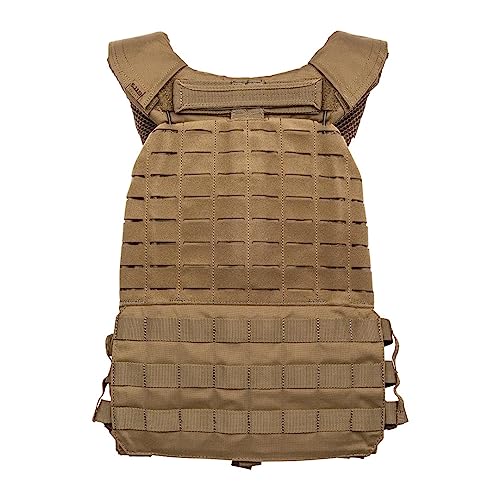
Tough enough for daily abuse, and it sits flat on your back
5.11 Tactical TacTec Plate Carrier Professional Vest
The 5.11 TacTec is a plate carrier, not a vest — you load standard 10x12 plates into it. Its 500D nylon shell and laser-cut MOLLE take a beating, and the rigid plates barely move during pull-ups and loaded carries.
$250fromAmazonIf you train in a vest every day, buy a plate carrier. Soft vests wear out at the seams because fabric pockets full of iron flex every time you move. A carrier holds two flat plates against your body and there's nothing sloshing around. BarBend's testers rated the TacTec highly for build quality, noting the 500D nylon shell and laser-cut webbing showed no fraying after more than 200 hours of accumulated use.
The reason CrossFit gyms are full of these comes down to the back panel. A carrier sits flat, so a barbell can rest on your shoulders and a pull-up bar doesn't catch on anything. Rogue notes that most of its sponsored competitive athletes use plate carriers rather than closed-cell vests for WOD training, and that's the same logic.
Practical details help. The one-handed cable release dumps the whole thing off you in a second, the shoulder straps and back yoke spread the load rather than hanging off your traps, and the stretch-panel waistband breathes. Owners describe it as noticeably better made than issued gear.
You'll need plates, which are sold separately — that's how carriers work, and it's part of the cost. It also means you control the load exactly, which is how you hit CrossFit's competition standards of 20 pounds for men and 14 for women.
Flaws but not dealbreakers
It runs small and it's a full-size carrier. Multiple owners note that larger or broader people should size up or look elsewhere entirely, and it's not a compact design under a t-shirt.
Rigid plates are the wrong answer for running. Two steel slabs strapped front and back thump with each stride, and no amount of strap adjustment fixes that. This is a strength, carry and interval vest, not a road vest.
Because the plates aren't included, the real cost is higher than the sticker suggests — factor in a set before you decide it's the affordable option.
Also great
Built for rucking, with weight riding high on your back
GORUCK Ruck Plate Carrier 3.0 Weighted Rucking
The GORUCK Ruck Plate Carrier 3.0 puts the load behind you instead of around your chest, which is what you want for long walks under weight. Its 1000D Cordura shell and lifetime promise make it the pick for people who ruck for hours.
$115fromAmazonRucking is its own thing, and a chest-loaded vest is a poor way to do it. This carrier keeps the weight high on your back — the position that's easiest to walk under for miles — and leaves your chest completely open. That matters more than it sounds. Push-ups, bear crawls and full breathing all get easier when nothing's pressing on your sternum.
The materials are the reason to pay for it. The exterior is 1000D Cordura with a reinforced 1050D ballistic bottom panel, the same fabric spec used for special-operations load-bearing gear, and GORUCK backs it with a lifetime promise against defects. The back panel and strap undersides are lined in smoother 210D Cordura so it won't shred a merino base layer or your bare skin.
It takes 10, 20 or 30-pound ruck plates, sold separately. There's no spacer mesh to trap sweat and odor, so you can rinse it and hang it to dry — a real advantage over foam-lined vests that start to smell after a summer.
Fit takes work, though, and that's the honest caveat. Owners describe spending a few sessions dialing in the straps before it rides where it should. Once it's set, most say it holds position well on hikes and doesn't creep down.
Flaws but not dealbreakers
The strap system frustrates a meaningful number of owners. There's no waist belt, so keeping the load high depends entirely on shoulder and sternum adjustment, and cranking the straps tight can dig into the ribs or rub the shoulders raw. Reports of this are common enough that we'd call it a real design weakness, not bad luck.
It's expensive and it comes with nothing — you're buying an empty carrier and then buying plates. And because it's a back-loaded pack rather than a vest, it's the wrong shape for barbell work or anything where you lie on your back.
GORUCK covers it under the SCARS Lifetime Promise against manufacturing defects.
Who this is for
Buy a weighted vest if you already train consistently with your bodyweight and the movements have gotten easy — or if you walk a lot and want those walks to do more. The research is encouraging on both fronts: loaded walking burns meaningfully more calories at the same pace, and vest training three times a week improved hip bone density in postmenopausal women in one Osteoporosis International study. Healthline also cites balance research showing older adults improved single-leg balance scores after eight weeks of loaded walking. You don't need to be an athlete for this to be worth it.
Skip it if you're brand new to training, if you have a current back, knee or shoulder problem, or if your form breaks down on unloaded reps. Load magnifies whatever you're already doing, including bad habits. This guide covers vests and plate carriers used for strength, conditioning and loaded walking. It doesn't cover body armor, weighted backpacks for hiking gear, or ankle and wrist weights.
How we picked
We built the shortlist around five things. Bounce and stability: how much the load shifts during running and jumping, based on published testing and manufacturer displacement specs. Load range: whether you can add weight over time, or whether the vest hits a fixed standard exactly. Build and warranty: shell material and stitching, weighed against owner reports of early seam failures, with published lifetime guarantees counting for a lot. Fit and comfort: real adjustment range and size-specific options, since torso sizing drives comfort more than weight does. Exercise fit: whether the design clears a barbell and pull-up bar, and whether it's tolerable at a running pace.
Other weighted vests for strength training worth considering
If you want adjustable weight and the fastest on-off: The Cross101 Adjustable Weighted Vest Camouflage Workout Weight ($39.91) — The Cross101 ships with eight 2.5-pound pouches, so you can dial the load in small steps up to 20 pounds. It's only 12 inches wide and uses a one-piece design with an attached belt, which makes it quick to get on and off mid-workout — people buy it for Murph specifically. What you give up is stability: sand-filled pouches shift, and Garage Gym Reviews found this style sways noticeably more than rigid carriers during box jumps. Owners also mention it rubs the biceps, and shoulder pads are a common add-on purchase.
If you mostly walk and want something comfortable for cheap: The Poudee Weighted Vest ($39.99) — The Poudee is a 20-pound iron-sand vest with reflective striping, and it's the most popular vest in this lineup by a wide margin among walkers. Owners describe even weight distribution and a fit that stays put on three and four-mile walks. It's not adjustable, though, so you're locked into the weight you buy, and the dye can transfer onto light clothing once you're sweating hard. For pull-ups or anything explosive, the MiR is the better call.
The competition
Here's what else our research turned up. This isn't every vest sold — it's the set of listings we could confirm and compare, and a couple of them are perfectly good products that just lost to a pick on a specific point.
The AmStaff Fitness Weight Vest Plates ($74.99) — The AmStaff plates aren't a vest — they're a pair of 8.5-pound curved steel plates that drop into a carrier you already own. If you bought the 5.11 TacTec or another standard 10x12 carrier, these are a reasonable way to fill it, and owners say the contour sits comfortably against the ribs. But you can't train with them alone, so they don't compete with anything else here. Worth knowing about only if you've already committed to a carrier.
Fit, sizing and getting started
Start lighter than you think. A common guideline is 5 to 10% of your bodyweight for walking and general work, and CrossFit's competition standard of 20 pounds for men and 14 for women is a useful ceiling to work toward rather than start at. Measure your chest before ordering anything compression-fit, and check torso length on carriers — a vest sized wrong for your torso is the single most common reason people stop wearing one. Wear a shirt underneath; bare skin under a loaded strap chafes fast. Soft vests with removable weights should have the weights pulled before washing, and neoprene models are better rinsed and air-dried than machine-washed. Give yourself two weeks of short sessions before adding load, since your shoulders and traps adapt slower than your legs do.
Questions we get
What's the difference between a plate carrier and a weighted vest?
A plate carrier is an empty shell that holds two flat steel plates, usually 10x12 inches, which you buy separately. A traditional weighted vest has fabric pockets filled with iron pellets, sand or small steel weights. Carriers hold more weight, last longer and sit flatter against your back for barbell work. Soft vests are cheaper, adjust in finer increments and are far more comfortable for running.
How heavy should a weighted vest be for a beginner?
Most people should start at 5 to 10% of their bodyweight. For a 170-pound person that's roughly 8 to 17 pounds, which is why 12 and 20-pound vests dominate the market. Add weight only after a few weeks, once your shoulders stop complaining and your form on push-ups and pull-ups holds up under load.
Is it safe to run with a weighted vest?
It's safe for most healthy people if the vest doesn't bounce and the load is modest — think 5 to 10% of bodyweight, not 20%. A vest that slaps against you with each stride changes your gait, and that's where knee and back trouble starts. Compression-style vests like the Hyper Vest PRO are built for this; plate carriers and sand-pouch vests aren't. If you have existing joint issues, walk under load instead of running.
What vest should I use for CrossFit WODs and competition?
CrossFit's rulebook specifies 20 pounds for men and 14 for women, so you need a vest that hits those numbers exactly. A plate carrier like the 5.11 TacTec loaded with matched plates is the standard choice, and it's what most competitive athletes use. The flat back panel also keeps a barbell and pull-up bar clear, which matters in a workout with cleans or chest-to-bar.
Do weighted vests actually help bone density?
The evidence is genuinely encouraging. A study in Osteoporosis International found that postmenopausal women who trained in a weighted vest three times a week for 32 weeks showed significant improvement in hip bone mineral density versus a control group. Loaded walking also appears to help balance in older adults. You don't need much weight for this — a light, comfortable vest you'll wear regularly beats a heavy one you won't.
Can I wear a weighted vest every day?
For walking at a light load, most people can. For strength work — weighted pull-ups, push-ups, loaded carries — treat it like any other training stimulus and take rest days. Your connective tissue adapts more slowly than your muscles do, so the shoulders and lower back are usually the first places you'll feel overuse. Back off if soreness lingers more than a couple of days.
Why you should trust us
For this guide:
- We read published reviews and testing writeups from BarBend, Garage Gym Reviews and Men's Health alongside each manufacturer's own specifications for shell material, weight capacity and load displacement.
- We compared peer-reviewed findings on weighted-vest training from the Journal of Strength and Conditioning Research, the European Journal of Sport Science and Osteoporosis International to understand what loads are actually useful.
- We looked for repeated themes in owner feedback — seam durability, strap comfort, sizing accuracy and bounce during running — rather than isolated complaints.
- We read owner reviews on every listing, weighted toward the critical ones, because that is where the recurring failures show up.
- We have a systematic way of automatically fetching the latest prices, so the numbers on this page stay current.
- This is a research-focused guide, so the team may not own every product listed — though we often do own the top winners, which gives us extra context for the recommendations.
- We don't accept free products, and the retailer commission never changes which product we recommend.
Sources
Best Weighted Vests — Garage Gym Reviews, Garage Gym Reviews
Best Weighted Vests for Every Type of Workout — BarBend, BarBend
Best Weighted Vests — Men's Health, Men's Health
Best Weighted Vests for Running — Runner's World, Runner's World
Best Weighted Vests — Wirecutter (NYT), Wirecutter
Weighted Vest Benefits, Uses, and Safety Tips — Healthline, Healthline
Best Weighted Vests for Women — Women's Health, Women's Health
Best Weighted Vests — Outside Online, Outside Online
Effects of Weighted Vest Training on Vertical Jump and Sprint Performance — Journal of Strength and Conditioning Research, NSCA Journal of Strength and Conditioning Research
Weighted Vest Exercise and Bone Mineral Density in Postmenopausal Women — Osteoporosis International, Osteoporosis International
Amazon product listings and owner reviews for all 8 products
Manufacturer specification pages for each product
Some passages in this guide may be paraphrased with AI help. Prices are refreshed automatically.
More like this.
Continue exploring health reviews and recommendations.

The Best Resistance Bands for Strength Training
A resistance band is the rare piece of gym gear you'll actually use. It weighs a couple of pounds, lives in a drawer, and turns a doorway or a pull-up bar…

The Best Weighted Jump Ropes for CrossFit
A jump rope is the simplest piece of gear in your gym bag and the one most likely to ruin your day. Double-unders show up constantly in CrossFit…

The Best Dog Cooling Vests
Heat sneaks up on dogs. They can't sweat through their skin the way you do, so panting is most of what they've got, and panting stops working well once…

The Best Rechargeable Heated Vests
A heated vest earns its keep in the hours when you stop moving. Waiting on a sideline, sitting in a hunting blind, standing on a job site while someone…

The Best Weighted Blankets
A weighted blanket does one simple thing: it presses down on you, evenly, all night. That steady pressure is called deep pressure stimulation, and the…

The Best Dog Anxiety Calming Vests
Thunder rolls in around dinnertime, and your dog is already under the bed. Maybe it's fireworks, maybe it's the sound of a suitcase zipper, maybe it's the…