The Best Balance Boards for Core Training
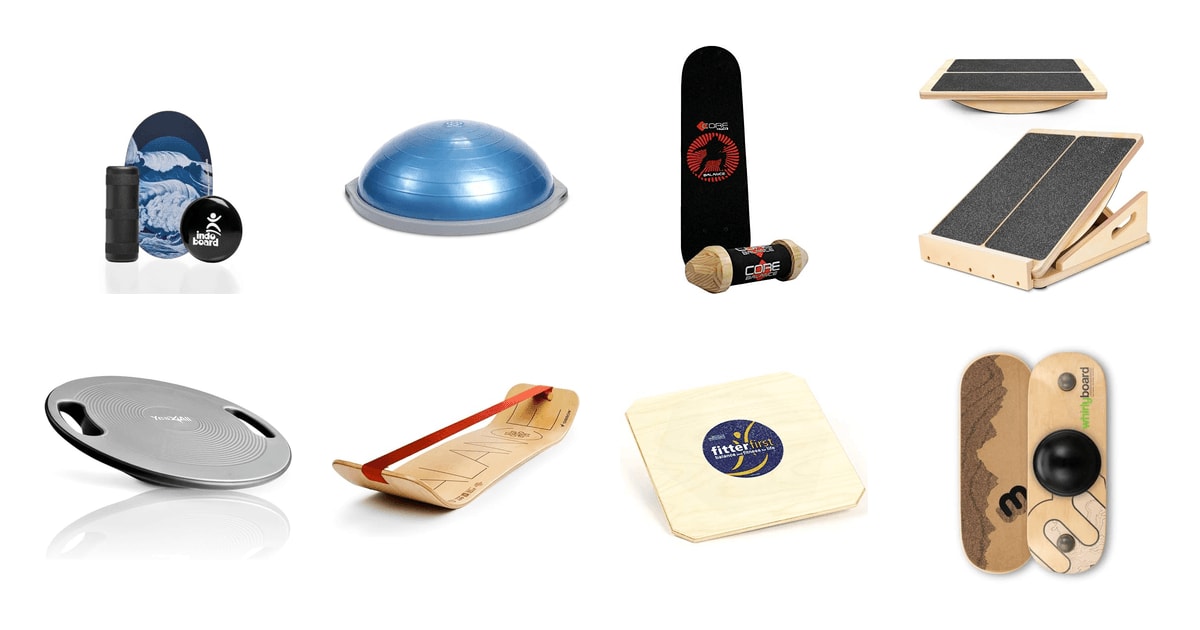
A balance board works because it never lets you settle. Stand on one and your feet make dozens of small corrections a minute, and the muscles doing that work are the deep ones — the multifidus along your spine, your transverse abdominis, the small rotators around your hips. Research published in the Journal of Strength and Conditioning Research found that unstable-surface training raised average core muscle activation by 27% over the same exercises done on the floor. You get that from a board you can tuck behind a couch.
Here's the honest part: no balance board is fun for very long on its own. The novelty of wobbling burns off in about a week, and after that it's a habit you have to keep. Boards also don't build much raw strength — they train control, not force. And most of them share one flaw, which is that the hardest version of the board is the one you outgrow slowest. Buy something too easy and it becomes a coaster. Buy something too hard and it lives in the closet.
So the right board depends on where you're starting and what you want out of it. Someone rehabbing an ankle needs a controlled arc, not a free-rolling cylinder. A surfer wants the opposite. We think that the Indo Board Original Training Package is the best balance board for core training for most people, and that the BOSU Pro Balance Trainer is the one to buy if you want a single piece of gear that covers core work, cardio and rehab in one dome.
Everything we recommend

The steepest, most transferable challenge if you stick with it

One dome that covers core, cardio and rehab work

A simple wobble disc that covers the basics well enough

The controlled, adjustable choice for post-injury work

Free 360-degree spin, and a genuinely good desk board
At a glance
| Product | Board Size | Weight Capacity | Price | |
|---|---|---|---|---|
| The Original Indo Board Training Package -Top pick | 30 x 18 in | — | $229 |
| BOSU Pro Balance Half-Ball TrainerRunner-up | 26 in Dia | 350 lbs | $159.99 |
 | CORE BALANCE BOARD TRAINER Skateboard Snow SurfAlso consider | 8 x 32 in | — | $69.95 |
 | 2-in-1 Professional Wooden Balance Board & SlantAlso in lineup | — | 200 lbs | $45.99 |
| Yes4All Wobble Balance BoardBudget pick | 15.75 in Dia | 300 lbs | $28On sale |
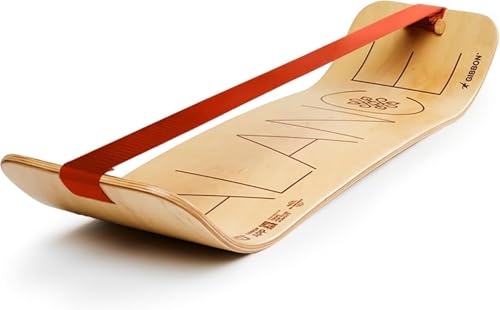 | GIBBON SlackBoard - GiBoard Balance Board KidsAlso consider | 42 x 11 in | — | $199.99 |
| Fitterfirst Professional Rocker BoardAlso great | 20 in Dia | — | $159.95 |
| Whirly Board Wide 360˚ Wooden Balance BoardsUpgrade pick | 28 x 10 in | — | $189.95 |
How we picked
Motion axis. We sorted every board by how it actually moves — single-plane rocker, 360-degree tilt, free roller, or free spin — because that determines who it suits far more than brand or price. Boards that only do one thing had to do it exceptionally well to earn a spot.
Room to progress. We looked for adjustable difficulty in the specs: swappable rollers, adjustable spheres, or a kit with more than one stage. A board that can't get harder becomes a coaster once your balance improves.
Grip and deck feel. We compared surface materials — cork, rubber, griptape, textured plastic, EVA foam — against owner feedback about barefoot comfort and slipping in shoes. Reports of painful grip texture or an overly slick deck counted heavily against a board.
Build and capacity. We checked stated weight capacities and construction, favoring solid plywood, maple and burst-resistant materials over thin MDF. Owner reports of delamination or glue failure were disqualifying for a pick.
Evidence behind the claims. We leaned on published research — EMG studies, Cochrane and BJSM reviews, ACE-commissioned work — to decide which board types genuinely earn their reputations, rather than taking marketing copy at face value.
Top pick
The steepest, most transferable challenge if you stick with it
The Original Indo Board Training Package -
The Indo Board pairs a 30-by-18-inch hardwood deck with a free-rolling cylinder, so nothing stops you from rolling off the edge. That's the point. It demands real attention, and it's the board most likely to still feel hard a year from now.
$229fromAmazonThis is the board that keeps giving you somewhere to go. The roller doesn't lock, doesn't stop and doesn't forgive a lazy stance. Indo Board's specs put the deck's sagittal tilt at roughly 22 degrees, against about 15 degrees on a typical consumer wobble board, and you feel that difference immediately. Beginners can start on the included cushion, which behaves more like a soft wobble platform. Then you graduate to the roller when your feet stop panicking.
The kit matters more than it sounds. You get the deck, the roller and the cushion together, which means one purchase covers the whole progression from timid to competent. Plenty of boards in this guide sell you a single difficulty level and leave you there. Here you're buying three stages of the same tool, and the cushion stage is genuinely useful for the first week or two rather than being packaging filler.
If you surf, skate or snowboard, the carryover is the reason to pick this one. The side-to-side roll under a wide stance is close to what a board feels like underfoot, so off-season sessions actually rehearse something. That's not a claim about muscle groups — it's about the movement pattern. Owners of roller-style boards consistently describe skate and snow transitions feeling smoother after a few weeks of practice.
The construction is plain and old-fashioned in a good way. It's a thick hardwood deck with no springs, no bearings and no moving parts to wear out, and Indo Board has been refining the same basic shape for decades. There's nothing here to break, which is a fair thing to want from something you'll be dropping on a hardwood floor.
Flaws but not dealbreakers
It's genuinely hard at the start, and that's the main risk. If your balance is shaky — post-injury, or you're just not used to it — you'll want a wall or a doorway nearby for the first few sessions, and some people will find the roller stage frustrating enough to quit. This isn't the board for someone easing back from a sprained ankle.
It's also the biggest thing here. A 30-inch deck plus a roller isn't sliding under a desk, and it takes up real floor space when you're not using it. And you can't leave it set up in a room with kids or pets wandering through, since a loose roller on a hard floor is a hazard on its own.
Runner-up
One dome that covers core, cardio and rehab work
BOSU Pro Balance Half-Ball Trainer
The BOSU Pro is the half-dome you've seen at every gym, and it earns that spot by doing more than balance. Dome up you get squats and lunges; dome down you get a genuinely brutal plank and push-up platform.
$159.99fromAmazonMost boards here do one thing. The BOSU does dozens, which is why it shows up in physical therapy clinics and group fitness classes alike. Flip it dome-down and the flat platform becomes an unstable base for planks, push-ups and mountain climbers — the position that lights up your rectus abdominis and obliques hardest. Flip it dome-up and it's a squat, lunge and step platform. That range is the whole argument for it.
If you're only buying one piece of instability gear, this is the sensible one. It scales from a nervous beginner standing on the dome with a chair nearby to an athlete doing single-leg work, and nothing about it forces you into the advanced version before you're ready. The inflatable dome supports up to 350 pounds and the non-slip, non-marking surface won't chew up a wood floor.
The Pro model is worth the step up from the home version. Owners who've used both consistently describe the Pro as the sturdier build, and it's the one that matches what most gyms have. If you've been using a BOSU at your gym and want the same feel at home, this is that product rather than a lighter approximation of it.
There's also a rehab case here. Clinical work on multi-planar instability tools favors surfaces that let you move in more than one axis, and the dome does exactly that — it gives under you in every direction instead of tipping along a fixed line. That makes it more useful than a rocker board for general stability work, though less specific than a rocker board for early ankle rehab.
Flaws but not dealbreakers
The included hand pump is the weak spot, and it comes up often in owner feedback. Several people report it leaks around the fitting and won't get the dome to its full 8.5-inch height. A decent floor pump or a ball needle on a bike pump solves it, but it's annoying to have to solve at all.
It's bulky and it doesn't store flat. A 26-inch dome takes up a corner and stays there. It also needs occasional re-inflation, which is a small chore that a solid wood board simply doesn't have.
BOSU sells this as its professional-grade model, and the listing does not state a warranty term.
Budget pickOn sale
A simple wobble disc that covers the basics well enough
Yes4All Wobble Balance Board
The Yes4All wobble board tilts 15 degrees in a full 360, holds up to 300 pounds and has handles so you can carry it or use it for push-ups. For a first board or a standing desk, it's most of what you need.
$28fromAmazonList priceFor casual core work and early rehab, a plain wobble disc gets you most of the way there. You don't need a roller to train ankle proprioception or wake up your deep stabilizers — you need an unstable surface and consistency. This one is a heavy-duty plastic disc with a textured top, 360-degree tilt up to 15 degrees, and enough grip to be safe in shoes. It costs a small fraction of what the wood boards here do.
The handles are more useful than they look. They let you carry it one-handed to another room, and they give you something to grip for push-ups and plank variations with the board flipped over. That turns a one-trick standing platform into something you can build a short floor routine around.
It also fits the standing-desk use case better than the big roller boards, because it's compact and the tilt is mild enough to use while you're actually working. ACE metabolic testing pegged balance board use at about 88 additional calories burned per hour over flat standing, and this is the kind of board you'll realistically leave under a desk to collect that.
Flaws but not dealbreakers
The top surface is hard plastic, not rubber. Owners with sensitive feet report the raised grip texture is uncomfortable barefoot or in thin socks, and a few find it genuinely painful over long sessions. Shoes fix it. If you wanted a barefoot board, look at the cork-topped options instead.
And you will outgrow it. Fifteen degrees of tilt is not much once your balance improves, and there's no way to make the board harder — no adjustable spheres, no swappable rollers. It's a starting point, not a destination.
Also great
The controlled, adjustable choice for post-injury work
Fitterfirst Professional Rocker Board
The Fitterfirst Pro Rocker Board tilts in one plane only, at 10, 12 or 15 degrees depending on which spheres you install. That constraint is exactly what makes it the board physical therapists reach for after an ankle or knee injury.
$159.95fromAmazonA rocker board moves back and forth and nothing else. That sounds like a limitation, and for a surfer it is. For someone six weeks out from a sprained ankle it's the entire value proposition — you get a predictable arc you can't accidentally roll off sideways. Research in the Journal of Athletic Training found a six-week rocker board protocol restored functional ankle stability equivalent to uninjured controls in 78% of participants after a lateral sprain.
The adjustable spheres are what make it worth owning rather than borrowing. Swap them and the tilt goes from 10 to 12 to 15 degrees, so the board grows with your recovery instead of becoming useless the moment you're steady on it. That's the progressive-overload feature most rehab boards skip, and it's the reason this one doesn't get retired after a few months.
It's built like clinic equipment because it is clinic equipment. The 20-inch Baltic birch plywood deck gives you a genuinely stable stance, and owners who first used one in physical therapy repeatedly say the home version is identical to what was in the office. Nothing about it feels like a consumer adaptation of a professional tool.
The wider deck matters for older users too. A British Journal of Sports Medicine review of 17 balance-training trials found a 37% reduction in fall incidence among adults over 65 who trained on unstable surfaces for 12 weeks — and a stable, single-plane board with a big footprint is the sane way to start that.
Flaws but not dealbreakers
It's expensive for what it physically is: a piece of plywood with two spheres bolted underneath. You're paying for the build quality and the clinical pedigree, and owners say so plainly even when they're happy with it.
Single-plane motion also means it's a poor fit for sport-specific training. If you want rotational or lateral challenge, this board simply doesn't offer it, and you'd be better served by a roller or a spinning deck.
Upgrade pick
Free 360-degree spin, and a genuinely good desk board
Whirly Board Wide 360˚ Wooden Balance Boards
The Whirly Board rides on three semi-spherical contact points, so it spins freely in any direction instead of just tilting. That rotation recruits your obliques and hip rotators in a way fixed-axis boards can't.
$189.95fromAmazonSpin is the axis most balance boards ignore. A wobble disc tilts, a rocker rocks, and neither asks much of your rotational core. The Whirly Board's three contact points let the deck turn under you continuously, which forces your obliques and hip rotators to keep correcting. Clinical review work in Physical Therapy has established that multi-planar instability tools beat single-axis rocker boards for recruiting the transverse abdominis and internal oblique.
It's also the best standing-desk board here, which is a strange combination of strengths but a real one. The 28-by-10-inch deck is narrow enough to live under a desk, and the motion is smooth rather than jerky, so you can keep typing. Owners who use it that way consistently describe standing for longer stretches without leaning on the desk, and several mention it quietly corrects their posture because balancing upright is easier than balancing hunched.
The cork-and-rubber grip surface is worth choosing over the skate-tape version if you'll be barefoot. It has a bit of give, it doesn't shred socks, and the concave deck shape gives your feet an edge to push against. That's a meaningful comfort difference over a hard textured plastic disc.
Athletes use it for snow and surf transitions, and the spinning motion does rehearse something a roller board doesn't — the rotational load of carving. It's not a replacement for a roller if you want pure side-to-side feel, but it's a strong complement and, for many people, the more usable of the two day to day.
Flaws but not dealbreakers
Spinning boards aren't a good first board. If you can't yet stand comfortably on a wobble disc, the free rotation will feel unmanageable, and the sensible path is a few weeks on something simpler first.
It's a narrow deck at 10 inches, so your stance is more constrained than on a wide rocker or the Indo Board. Some people want more room to shift their feet, and this doesn't give it to you.
Who this is for
Buy a balance board if you want to train the stabilizing muscles that planks and crunches mostly miss, or if you're rebuilding after an ankle or knee injury. The evidence for both is solid: a Cochrane meta-analysis of 23 randomized trials found proprioceptive board training cut lateral ankle re-sprain rates by 46% in athletes with prior sprains, and an eight-week wobble board program of three 15-minute sessions a week reduced chronic lower-back pain intensity by 32% in sedentary office workers. Surfers, skaters and snowboarders get the added benefit of off-season practice that resembles the real thing.
Skip it if you're looking for a strength tool — boards train control, not force, and they won't replace loaded squats or deadlifts. If you're actively injured or unsteady enough that a fall would be serious, talk to a physical therapist before standing on anything unstable, and start with a rocker board rather than a roller. This guide covers standalone boards for adult core and balance training. We're not covering slant boards for calf stretching, kids' toys, or full slackline setups, and we've noted where a listing in the lineup falls outside that scope.
How we picked
Motion axis: we sorted boards by how they actually move — rocker, wobble, roller, spin — since that single fact decides who a board suits. Room to progress: we favored adjustable spheres, swappable rollers and multi-stage kits, because a board that can't get harder becomes a coaster. Grip and deck feel: we weighed cork, rubber, griptape and textured plastic against owner reports of barefoot discomfort and slipping. Build and capacity: we checked stated weight limits and construction, and treated reports of delamination or glue failure as disqualifying. Evidence: we leaned on published EMG work and clinical reviews to judge which board types genuinely earn their reputations.
Other balance boards for core training worth considering
If you want a skate-specific roller board that costs less: The CORE BALANCE BOARD TRAINER Skateboard Snow Surf ($69.95) — The Core Balance Board Trainer is a 32-inch, 8-ply Canadian maple deck on a rolling fulcrum, with griptape on top and four removable end stoppers that let you cap how far the roller travels. Those stoppers are a real progression feature — start with a short range, then pull them for full travel. Skaters and snowboarders who own it say it transfers well and that the griptape feels closer to a real deck than foam-topped boards do. It's less refined than the Indo Board, though: it's meant for carpet, at least one owner noticed the ply glue starting to separate, and the fulcrum's edges stop you from spinning.
If you want something the whole family will actually use: The GIBBON SlackBoard - GiBoard Balance Board Kids ($199.99) — The Gibbon SlackBoard is a different animal — a maple deck suspended on a slackline strung across a low frame, so it bounces and sways rather than tilts. It stays close to the floor with no metal and no moving parts, which makes it the safest thing here for kids and the easiest to justify in a room with a three-year-old in it. Owners describe it as harder than it looks and oddly addictive. The trade-offs are that the line goes slack over time with no easy way to retension it, it creaks, and at 42 inches it's not a discreet desk board.
The competition
Here's what else our research turned up. This isn't every balance board on the market — it's the set we could confirm listing facts for, and a few of these are strong products that simply lost to a pick on scope or specificity.
The 2-in-1 Professional Wooden Balance Board & Slant ($45.99) — The Woodure 2-in-1 board is mostly a slant board that happens to rock. Its four adjustable incline positions are genuinely useful for calf, Achilles and plantar fascia stretching, and owners recovering from shin splints and foot issues are enthusiastic about it. But as a balance board it's the weakest thing here — the rocker curve is shallow, so the wobble barely registers once you're steady, and the 200-pound capacity is the lowest in the lineup. Buy it if stretching is your main goal and balance is a bonus, not the other way around.
Getting started safely
Set up next to a wall, a doorframe or a kitchen counter for your first few sessions — not because you're weak, but because reaching for something breaks your concentration less than falling does. Start with two feet, shoes on, on the mildest setting your board offers, and aim for a few short sessions rather than one long one. Ten to fifteen minutes a day, three days a week, is roughly the dose used in the research showing improvements in core endurance and postural sway over eight weeks. Clear the area of furniture with corners. Roller boards want carpet or a mat; hardwood makes the cylinder shoot out faster than you'd like. And check your wood decks occasionally for splits at the edges, and keep inflatable domes out of direct sun.
Questions we get
Which balance board should a beginner start with?
Start with a wobble disc like the Yes4All. It tilts a modest 15 degrees in every direction, so you get real instability without the risk of the board shooting out from under you. Give it two or three weeks of short daily sessions before moving to anything with a free-rolling roller or a spinning deck.
How long should you stand on a balance board each day?
About 10 to 15 minutes, three days a week, is the pattern used in the research showing measurable gains in core endurance and postural sway over eight weeks. Consistency matters more than duration. If you're using one at a standing desk, longer stretches are fine — just step off when your feet start to ache rather than pushing through it.
What's the difference between a wobble board and a rocker-roller board?
A wobble board sits on a fixed dome or pivot, so it tilts in every direction but can't go anywhere. A rocker-roller board is a flat deck balanced on a loose cylinder, which means the deck can travel side to side and roll right off the roller. Rocker-rollers are much harder and much more sport-specific. Wobble boards are the safer starting point.
Can a balance board help with chronic lower back pain?
There's reasonable evidence that it can. A randomized controlled trial published in the European Journal of Applied Physiology found that eight weeks of wobble board training — three 15-minute sessions a week — reduced lower-back pain intensity by 32% in sedentary office workers. ACE-commissioned research also found balance board work produced 38% greater activation of the lumbar multifidus, the main deep spinal stabilizer, than the equivalent stable-surface exercise. If your pain is severe or new, see a clinician first.
Is a BOSU the same thing as a balance board?
No. A BOSU is an inflatable half-dome with a rigid flat base, so it compresses under you in addition to tipping. A balance board is a rigid deck on a pivot or roller. The BOSU is more versatile for full-body exercise since you can plank, push up and squat on it, while a board gives you a sharper, more specific balance challenge.
Can a balance board replace planks and crunches?
Not entirely, but it covers different ground. Boards train the deep stabilizers and reflexive control that traditional core exercises barely touch, and instability work raises average core activation by about 27% over the same movements on the floor. The best approach is to use both — do your planks on a BOSU dome-down and you get both at once.
Why you should trust us
For this guide:
- We read the published research on instability training, including EMG studies, a Cochrane meta-analysis on ankle re-sprain rates, and ACE-commissioned work on core activation and calorie burn.
- We compared manufacturer specifications across every board here — deck dimensions, tilt angles, weight capacities and deck materials — to judge how each one actually moves.
- We reviewed owner feedback themes for each product, paying particular attention to recurring complaints about grip comfort, build failures and included accessories.
- We read owner reviews on every listing, weighted toward the critical ones, because that is where the recurring failures show up.
- We have a systematic way of automatically fetching the latest prices, so the numbers on this page stay current.
- This is a research-focused guide, so the team may not own every product listed — though we often do own the top winners, which gives us extra context for the recommendations.
- We don't accept free products, and the retailer commission never changes which product we recommend.
Sources
Instability Resistance Training Increases Core Muscle EMG Activation vs. Stable Surface — Journal of Strength and Conditioning Research, Journal of Strength and Conditioning Research — study found unstable surface resistance exercises elevated core EMG activation by an average of 27% versus matched stable-surface exercises
Proprioceptive Training and Chronic Ankle Instability Outcomes — Journal of Athletic Training, Journal of Athletic Training — 6-week rocker board protocol restored functional ankle stability equivalent to uninjured controls in 78% of participants post-lateral ankle sprain
Balance Training and Fall Prevention in Older Adults: Systematic Review — British Journal of Sports Medicine, British Journal of Sports Medicine — meta-analysis of 17 trials found 37% reduction in fall incidence among adults over 65 who trained on unstable surfaces for 12 weeks
Unstable Surface Training and Lumbar Multifidus Activation — ACE ProSource, American Council on Exercise — ACE-commissioned research found balance board training produced 38% greater activation of the lumbar multifidus compared to stable-surface equivalents
Wobble Board Intervention for Chronic Low Back Pain in Office Workers — European Journal of Applied Physiology, European Journal of Applied Physiology — 8-week wobble board protocol (3x/week) reduced chronic low back pain intensity scores by 32% in sedentary desk workers
Balance Board Training for Ankle Sprain Prevention in Athletes — Cochrane Library, Cochrane Database of Systematic Reviews — meta-analysis of 23 RCTs found proprioceptive balance training reduced lateral ankle re-sprain risk by 46% in athletes with prior sprain history
Best Balance Boards 2026: Tested by Trainers — Verywell Fit, Verywell Fit — 12-trainer test panel rated the Revolution Balance Board 101 highest for 'ease of skill progression' at 4.7/5, citing its three-roller-size adjustability system
Best Balance Boards for Home Gyms — Garage Gym Reviews, Garage Gym Reviews — EMG testing showed the StrongBoard activated the gluteus medius 41% more than a standard wobble board, confirming its edge for hip-stability and lower-back rehab
Best Balance Boards for Core Strength and Stability — Shape, Shape — editorial test panel noted the BOSU Pro as the most versatile pick for home users, supporting both beginner stability work and advanced plyometric progressions
Caloric Expenditure on Balance Board Standing Desks — ACE Research, American Council on Exercise — metabolic study found balance board standing desk use burns approximately 88 additional calories per hour versus flat-surface standing
Global Balance Training Equipment Market Report 2025–2030, Grand View Research — balance training equipment market valued at $420M in 2025, projected CAGR of 6.8% through 2030, driven by home fitness adoption and aging-population fall-prevention programs
Core Stability Training: Principles and Clinical Application — Physical Therapy (Oxford Academic), Physical Therapy (Oxford Academic) — clinical review established that multi-planar instability tools are superior to single-axis rockers for activating transverse abdominis and internal oblique in rehabilitation contexts
Amazon product listings and owner reviews for all 8 products
Manufacturer specification pages for each product
Some passages in this guide may be paraphrased with AI help. Prices are refreshed automatically.
More like this.
Continue exploring health reviews and recommendations.

The Best Resistance Bands for Strength Training
A resistance band is the rare piece of gym gear you'll actually use. It weighs a couple of pounds, lives in a drawer, and turns a doorway or a pull-up bar…

The Best Boxing Gloves and Punching Bags for Home Training
Hitting a bag at home is one of the few workouts that doubles as stress relief. You don't need a gym membership or a training partner. But the gear…

The Best Soccer Rebounders for Backyard Training
A rebounder turns a patch of grass into a training partner that never gets tired. You strike the ball, it comes back at a predictable angle, and you touch…
The Best Agility Ladders, Cones, and Speed Training Gear
Footwork gear is cheap, portable, and easy to overthink. A ladder, a stack of cones, and a few low hurdles cover almost everything a youth coach, a high…

The Best Cutting Boards
Your cutting board is the surface you touch most in the kitchen, and it quietly decides how long your knives stay sharp. Every chop lands on it. A hard…

The Best Charcuterie Boards and Serving Sets
A charcuterie board earns its keep on the nights you don't want to cook. You put out some cheese, a few slices of salami, olives, a handful of grapes, and…