The Best Car Emergency Kits
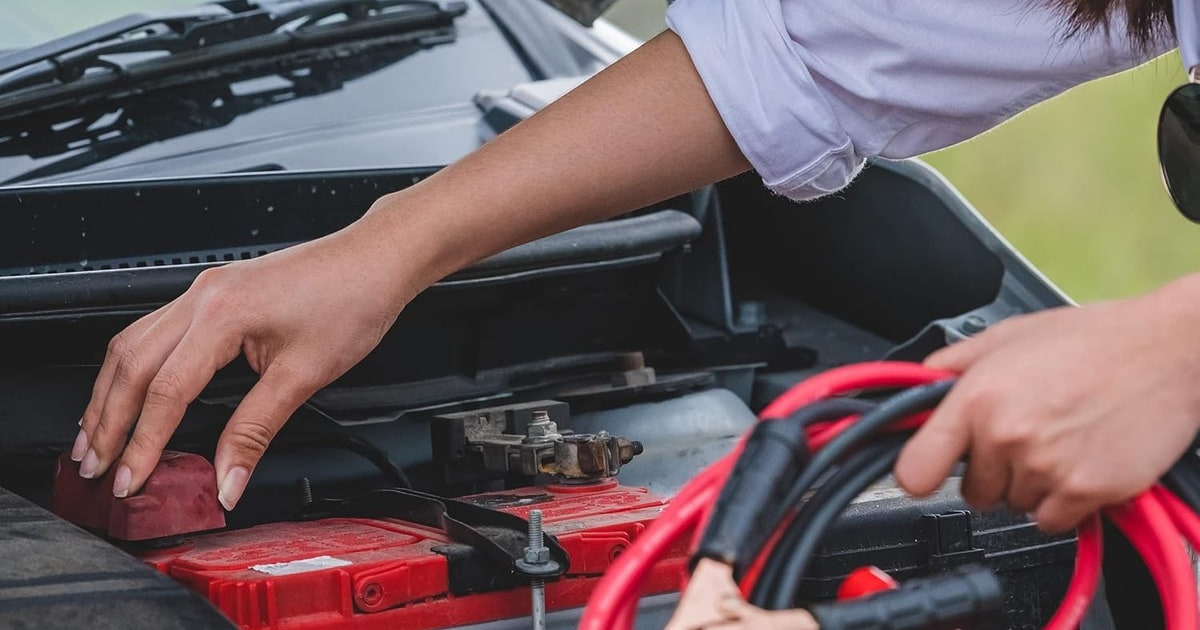
A dead battery in a grocery store parking lot doesn't care how new your car is. Neither does a nail in your sidewall on a two-lane road with no shoulder. AAA responds to roughly 32 million roadside assistance calls a year, and dead batteries, flat tires and lockouts account for most of them. Every one of those situations goes better if you have jumper cables that actually reach, a light that works, and something reflective to put behind your car. That's the whole job of an emergency kit.
Here's the honest part: no pre-made kit is complete. The bundled first aid supplies are thin, the jumper cables in cheap kits are often 16-gauge, and nothing in a box will change a tire for you. Kits also expire quietly — antiseptics and bandages carry 3–5 year shelf lives, and the American Red Cross suggests checking yours once a year. Treat any kit as a starting point you add a phone cable, your medications and a season's worth of extras to.
We looked at both halves of this category: the all-in-one bags that cover a little of everything, and the lithium jump starters that solve the single most common breakdown better than cables ever will. We think that the NOCO Boost GB40 is the best car emergency kit for most people, and that the Thrive Roadside Emergency Car Kit is the one to buy if you want a full bag of supplies rather than a battery in a box.
Everything we recommend
Solves the most common breakdown without a second car

The broad supply bag, if you'd rather cover everything

Covers the basics for a second car or a first car

The one that starts diesel pickups and farm equipment
At a glance
| Product | Piece Count | Weight | Price | |
|---|---|---|---|---|
| Thrive Natural Care Reef Safe Sunscreen SPF50Runner-up | 104 Piece | 4.5 lbs | $34.95 |
| NOCO Boost GB40 12V 1000A UltraSafe PortableTop pick | — | 2.4 lbs | $94.95 |
| NOCO Boost GB70 2000A UltraSafe Jump StarterUpgrade pick | — | 4.4 lbs | $189.95 |
 | Stalwart 75-CAR1033 Emergency Roadside Assistance Tool andAlso consider | 30 Piece | 2 lbs | $22.78 |
 | Ready America 72 Hour Deluxe Emergency KitAlso in lineup | — | 20.8 lbs | $139.99On sale |
| AUTODECO Car Roadside Emergency KitBudget pick | — | 3.6 lbs | $24.98On sale |
How we picked
Jump capability. For jump starters we compared manufacturer peak amperage and engine-displacement ratings against the engines people actually drive. For cable-based kits, we weighted gauge and length, since 10-gauge cable handles roughly 200–250 amps while 16-gauge tops out near 100.
First aid quality. We looked for kits whose first aid contents are described as meeting ANSI/ISEA Z308.1-2015, the baseline standard for kit contents. Non-compliant kits routinely skip CPR shields and burn treatment.
Visibility gear. A reflective triangle or vest is what keeps you from being hit while you wait. FMCSA requires commercial drivers to set triangles at 10, 100 and 200 feet behind a disabled vehicle, and safety experts recommend the same habit for everyone.
Parts over piece count. We discounted headline piece counts, which are inflated by individual bandages, and read owner feedback for the components that fail first — cables, clamps, zippers and flashlights.
Size and storage. The kit you keep is the kit that fits. We favored bags and units small enough to live in a sedan trunk or spare tire well without competing with luggage.
Top pick
Solves the most common breakdown without a second car
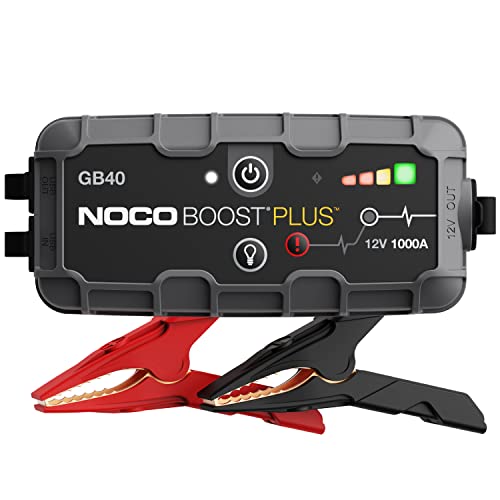
NOCO Boost GB40 12V 1000A UltraSafe Portable
The GB40 puts out 1,000 amps of peak lithium power and is rated for gas engines up to 6.0L and diesel up to 3.0L. It weighs about 2.5 pounds, fits a glove box, charges your phone, and doesn't need a stranger's car to work.
$94.95fromAmazonA jump starter beats jumper cables because it doesn't need anyone else. Cables are only useful if a second driver stops, pops the hood and lets you clamp onto their battery. In an empty lot at night, or a garage where you can't get a car nose-to-nose, that's a long wait. The GB40 turns a dead battery into a two-minute problem you solve alone. That's the single biggest upgrade you can make to a car kit.
The specs cover most of what people drive. NOCO rates it at 1,000 amps peak, good for gas engines up to 6.0 liters and diesel up to 3.0 liters, with up to 20 starts per charge. That's every sedan, crossover and small truck on a normal commute. Owners routinely report starting V6 crossovers and cars that had been sitting for weeks, and a fair number mention using it on other people's cars more often than their own.
Cold is where lithium pulls ahead. A lead-acid battery can lose up to 60% of its cranking power at 0°F, which is exactly when you need it most. Lithium jump starters hold roughly 70–80% of their charge after a year in storage. If you park outside in a place with real winters, that difference is the whole argument.
The extras aren't filler. There's a 100-lumen LED with seven modes including SOS and strobe, so you get a work light and a visibility signal in the same box. The USB power bank matters more than it sounds — if you're stranded, a phone at 4% is its own emergency. The IP65 housing and rubber over-molding mean it survives living in a trunk.
Flaws but not dealbreakers
It's not a kit. There's no first aid, no reflective triangle, no gloves, no tow strap. If a tire goes flat, the GB40 does nothing for you. Most people should pair it with a supply bag, which is why we also recommend one below.
It self-discharges, and owners bring this up more than any other issue. Leave it in a trunk for a year without topping it off and you may find it low exactly when you need it. Set a reminder to recharge it every few months. A related annoyance: the flashlight can be bumped on in a bag and quietly drain the pack.
It stops at 6.0L gas and 3.0L diesel. That's fine for nearly everything, but if you drive a heavy-duty diesel pickup, you want the bigger unit.
Runner-up
The broad supply bag, if you'd rather cover everything
Thrive Natural Care Reef Safe Sunscreen SPF50
This 104-piece Thrive kit is the classic all-in-one bag: jumper cables, first aid supplies, tools and safety gear in a 600D nylon case that fits under a trunk floor. It's the one to buy if you want coverage across many small problems rather than one big one.
$34.95fromAmazonMost roadside trouble isn't dramatic. It's a scraped hand, a loose bumper clip, a tarp that needs tying down, a bad headache two hours from home. A stocked bag handles that spread, and the Thrive is the version of it we'd point most people toward. At 4.5 pounds and about 12.6 by 6.8 by 5 inches, it disappears into a trunk corner instead of eating your cargo space.
The bag itself is the part cheap kits get wrong. Thrive uses 600D nylon canvas with a water-resistant shell and separate compartments, which sounds like marketing until you've had a zipper split and dumped 80 loose pieces into a spare tire well. Owners consistently describe the case as the reason they'd buy it again, and several mention repurposing it as a household first aid bag.
It's a genuinely good gift for a new driver. Parents buying for a teenager come up repeatedly in owner feedback, and it makes sense: a 17-year-old isn't going to assemble this themselves, and having a bag in the trunk beats having nothing when they call you from a shoulder.
Add to it and it gets much better. Owners who like this kit tend to describe what they added — a mylar blanket, a folding shovel, road flares, a window-breaking tool. That's the right instinct for any pre-made kit. A mylar blanket alone reflects up to 90% of body heat and weighs under two ounces.
Flaws but not dealbreakers
Piece count flatters kits like this. A lot of the 104 pieces are individual adhesive bandages. Judge it on the cables, the case and the tools, not the number on the label.
The jumper cables are the usual compromise. AAA recommends 12–16 feet so cables can reach between vehicles that aren't perfectly aligned, and thin-gauge cables struggle on six-cylinder and larger engines. If you drive anything with real displacement, treat the cables here as a backup to a jump starter.
The first aid contents aren't stated as ANSI/ISEA Z308.1-2015 compliant, and one recurring owner complaint is that there are no cones or triangles in the box. Buy a reflective triangle separately — it's cheap, reusable and legal everywhere.
Budget pickOn sale
Covers the basics for a second car or a first car
AUTODECO Car Roadside Emergency Kit
The AUTODECO kit hits the essentials — jumper cables, tow rope, reflective vest, safety hammer, emergency blanket and a small first aid pouch — in a 3.6-pound bag. It's the one to put in a car that mostly does short trips around town.
$24.98fromAmazonList priceYou don't need a premium kit in every vehicle you own. If you have a second car, a commuter that never leaves a 20-mile radius, or a kid heading to college, this covers the situations that actually come up. The bag runs about 14 by 8.7 by 6.4 inches and 3.6 pounds, so it rides in a back seat or a spare tire well without you thinking about it.
The item list is smarter than most cheap kits. A tow rope and a safety hammer aren't standard at this level, and both matter — one gets you off a shoulder, the other gets you out of a car after a wreck. There's also a reflective vest, which is the item people forget and the one that keeps you visible when you're standing next to traffic.
Buy it understanding what it is: a first layer, not a last one. Owner feedback is broadly positive but candid, with a recurring note that the components feel built for a single use. For an emergency kit that's a fair trade — you'd rather have adequate cables in the trunk than excellent cables you never bought.
Flaws but not dealbreakers
Component quality is the obvious compromise. Several owners describe the contents as low-grade and wouldn't count on getting repeated use out of any one piece. That's tolerable for a backup kit and not what you want as your only kit on a long trip.
The listing doesn't specify jumper cable gauge or length. Assume they're thin, and assume they're better suited to a four-cylinder sedan than a V8 truck.
Upgrade pick
The one that starts diesel pickups and farm equipment
NOCO Boost GB70 2000A UltraSafe Jump Starter
The GB70 doubles the GB40's output to 2,000 peak amps, rated for gas engines up to 8.0L and diesel up to 6.0L, with up to 40 starts per charge. If your truck's engine is bigger than most cars, this is the version to buy.
$189.95fromAmazonDisplacement is the whole reason this exists. The GB40 tops out at 6.0L gas and 3.0L diesel, which covers cars and light trucks and stops short of heavy-duty pickups. The GB70's 2,000 amps and 8.0L gas / 6.0L diesel rating clears that bar. If you tow, plow, farm, or drive a diesel three-quarter-ton, this is the one that starts on a cold morning.
It's also a better tool in the dark. The LED steps up from 100 to 400 lumens, which is the difference between finding a battery terminal and actually seeing what you're doing under a hood at 6 a.m. Same seven modes, same SOS and strobe. The IP65 housing and rubberized shell carry over too.
Professional mechanics and people with equipment fleets are a visible chunk of owner feedback here, which is a decent signal for a device you're trusting once a year. Owners describe using it across multiple vehicles, farm machinery and coworkers' cars over years of ownership. At 40 starts per charge, it's a shared resource, not a personal one.
The trade-off is size and charge time. It's about 4.4 pounds and 8.8 by 6 by 2.8 inches — still glove-box adjacent, but noticeably more object than the GB40. It takes 6 hours to recharge instead of 3.
Flaws but not dealbreakers
It costs meaningfully more than the GB40 for capability most drivers will never use. If your biggest engine is a V6 crossover, you're paying for headroom that sits idle.
It has the same storage self-discharge behavior as the GB40, so it needs the same periodic top-off. And like every jump starter, it does nothing for a flat tire, a first aid situation or visibility — it's one tool, not a kit.
A recurring owner frustration is that replacement batteries aren't sold separately, so a pack that degrades after a few years becomes a whole-unit replacement.
Who this is for
Buy one of these if you drive a car that's more than a few years old, park outside in winter, commute alone, or regularly drive somewhere with thin cell coverage. New and teen drivers are the clearest case — they're the least likely to have jumper cables or a plan, and a bag in the trunk removes a decision from a bad moment. Families taking long road trips should carry both a jump starter and a supply bag, since the failure modes are different.
This guide covers automotive roadside kits and portable jump starters. It doesn't cover home disaster preparedness, tire inflators, full tool sets or roadside assistance memberships. Skip these entirely only if you already keep quality cables, a triangle, a real flashlight and first aid supplies in your car — in that case you're done. And if you have AAA, a kit still earns its space: coverage doesn't help when you're waiting 90 minutes on a shoulder in the dark.
How we picked
We built the shortlist around what fails on the road and what's in the box to answer it. Jump capability: peak amperage and engine-displacement ratings for lithium starters, cable gauge and length for kits — 10-gauge handles roughly twice the current of the 16-gauge cable bundled in cheap sets. First aid quality: contents that meet ANSI/ISEA Z308.1-2015 rather than a pile of adhesive bandages. Visibility gear: a reusable reflective triangle or vest, since FMCSA's 10/100/200-foot triangle protocol is good practice for any driver. Parts over piece count: we read owner feedback for the components that break first instead of trusting the number on the label. Size and storage: anything that has to compete with luggage eventually gets left at home.
Other car emergency kits worth considering
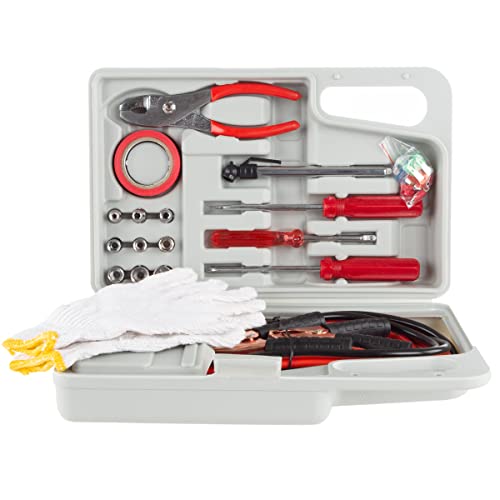
If you want the smallest, simplest bag for a compact car: The Stalwart 75-CAR1033 Emergency Roadside Assistance Tool and ($22.78) — The Stalwart 75-CAR1033 is a 30-piece kit in a hard case at about 2 pounds and 11.6 by 7.5 by 3 inches — the least trunk space of anything here. It's the right shape for a Corolla-sized car where every cubic foot counts, and owners buying it as a gift for a new driver tend to be happy with it. What it gives up is real: the jumper cables are noticeably thin and owners flag them specifically as unsuitable for trucks or large SUVs, and the case's socket holes are loose enough that pieces spill when you open it. Treat it as a starter kit you upgrade the cables in.
The competition
This is what our research surfaced, not a survey of everything sold. Car emergency kits are a crowded, fast-churning category, and dozens of near-identical bags exist under names that change every year. The product below is a legitimate emergency kit — it just isn't a car kit.
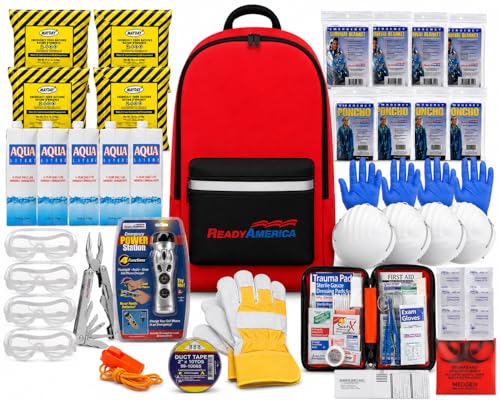
The Ready America 72 Hour Deluxe Emergency Kit ($139.99) — The Ready America 72 Hour Deluxe Emergency Kit is a well-regarded 4-person, 3-day disaster go-bag: 2,400-calorie food bars, Aqua Literz water cartons, a 107-piece first aid kit, a hand-crank radio-flashlight-charger, ponchos and survival blankets. It's built for earthquakes, evacuations and multi-day outages, not for a dead battery on the interstate. There are no jumper cables, no tow strap and no reflective triangle, and at nearly 21 pounds and 16 by 12 by 9 inches it takes a real bite out of a trunk. If you live somewhere with wildfire or earthquake risk and want a bag that stays in the car for evacuation, it's a strong choice — just buy it alongside a roadside kit, not instead of one.
Care and maintenance
A car kit fails quietly, so put it on a calendar. Recharge any lithium jump starter every three to six months — owners of both NOCO units consistently report finding them low after long storage, and a dead jump starter is just a brick with clamps. Once a year, dump the bag out and check dates: antiseptic wipes, bandages and ointments typically carry 3–5 year shelf lives, and the American Red Cross recommends an annual inspection with immediate replacement of anything expired or used. Add what the kit skipped — a phone cable that matches your phone, any medications you take, and a reflective triangle if there isn't one. Then swap seasonally. Ice scraper, hand warmers and traction sand going into winter; extra water and sunscreen going into summer. Store the bag where you can reach it without unpacking the trunk.
Questions we get
What should every car emergency kit contain?
At minimum: a way to start a dead battery, a reflective triangle or vest, a real flashlight, first aid supplies, work gloves and a mylar blanket. Add a tire pressure gauge and a tow strap if there's room. Then personalize it with a phone charging cable and any medications you take — those are the two things no pre-made kit can include for you.
Do I need a portable jump starter or traditional jumper cables?
A jump starter, if you're only buying one. Cables require a second vehicle and a willing driver, which is a real problem in an empty parking lot or a tight garage. Jump starters also handle cold better — lead-acid batteries can lose up to 60% of their cranking power at 0°F, while lithium packs hold roughly 70–80% of their charge after a year in storage. Cables are still a fine backup, as long as they're 10-gauge and at least 12 feet.
What's the best kit for trucks, diesel engines and large SUVs?
The NOCO Boost GB70. It's rated for gas engines up to 8.0 liters and diesel up to 6.0 liters at 2,000 peak amps, which covers heavy-duty pickups that the smaller GB40 doesn't reach. If you tow or run equipment, the extra headroom is the point. Pair it with a supply bag for everything a jump starter can't do.
How long does a kit last before things need replacing?
First aid supplies are the clock. Antiseptics, bandages and ointments generally carry 3–5 year shelf lives, and the American Red Cross recommends checking your kit annually. Batteries in flashlights and jump starters need attention more often than that — top off a lithium jump starter every few months. Hardware like cables, triangles and gloves lasts until it visibly wears out.
Are pre-made kits better than building your own?
Pre-made kits win on the thing that matters most: you'll actually buy one. Building your own gets you better components — thicker cables, a proper ANSI-compliant first aid kit, a better flashlight — but most people never finish the list. The practical answer is to start with a pre-made bag and upgrade the weak pieces over time, which is exactly what long-time owners of these kits describe doing.
Do I still need a kit if I have AAA?
Yes. Roadside coverage handles the tow and the jump, but not the wait, and AAA fields around 32 million calls a year. A kit is what keeps you visible, warm and patched up in the meantime, and it often means you don't have to make the call at all. Think of the two as complements — the membership covers what you can't fix, the kit covers what you can.
Why you should trust us
For this guide:
- We compared manufacturer specifications for peak amperage, engine-displacement ratings, dimensions and weight across every jump starter and kit in this lineup.
- We read published guidance from AAA, FMCSA, the American Red Cross and the ISEA on cable length, warning-triangle placement, first aid shelf life and the ANSI/ISEA Z308.1-2015 standard.
- We read owner feedback for recurring themes — self-discharge in storage, thin jumper cable gauge, missing warning triangles and case durability — and weighted those over one-off complaints.
- We read owner reviews on every listing, weighted toward the critical ones, because that is where the recurring failures show up.
- We have a systematic way of automatically fetching the latest prices, so the numbers on this page stay current.
- This is a research-focused guide, so the team may not own every product listed — though we often do own the top winners, which gives us extra context for the recommendations.
- We don't accept free products, and the retailer commission never changes which product we recommend.
Sources
Best Car Emergency Kit — Wirecutter (NYTimes), Wirecutter
Best Roadside Emergency Kits — Popular Mechanics, Popular Mechanics
Best Car Emergency Kits — Car and Driver, Car and Driver
Best Car Emergency Kits — Good Housekeeping, Good Housekeeping
Best Roadside Emergency Kits — The Drive, The Drive
Best Car Emergency Kits — Bob Vila, Bob Vila
Best Roadside Emergency Kits 2026 — CNET Roadshow, CNET
What to Keep in Your Car Emergency Kit — AAA, AAA
ANSI/ISEA Z308.1-2015: Minimum Requirements for Workplace First Aid Kits and Supplies, International Safety Equipment Association (ISEA)
NOCO Boost Plus GB40 — Manufacturer Product Specifications, NOCO
NOCO Boost HD GB70 — Manufacturer Product Specifications, NOCO
Tire-Related Crashes and Safety Data — NHTSA, National Highway Traffic Safety Administration (NHTSA)
Amazon product listings and owner reviews for all 6 products
Manufacturer specification pages for each product
Some passages in this guide may be paraphrased with AI help. Prices are refreshed automatically.
More like this.
Continue exploring electronics reviews and recommendations.

The Best Car Paint Protection Film Kits
Paint damage on a car almost never arrives all at once. It shows up as a rash of tiny chips on the leading edge of the hood, a scuff where your kid swings…

The Best Car Detailing Kits
A good detailing kit changes how your car looks from ten feet away. Road film, brake dust and water spots build up in layers, and a quick run through an…

The Best Emergency Weather Radios
Severe weather doesn't wait for you to check your phone. A NOAA weather radio sits in the corner of a room and does one job: it makes noise when the…

The Best Headlight Restoration Kits
Cloudy headlights sneak up on you. One night you're driving a back road and realize the pool of light in front of the car has shrunk to a smudge. That's…

The Best Electric Bike Conversion Kits
Most bikes sitting in American garages are perfectly good bikes. They just don't get ridden, because the hill between you and the office feels steeper on…

The Best Wireless Backup Camera Kits
Backing up is where most parking-lot damage happens, and mirrors alone won't show you the toddler's scooter lying behind your bumper. A wireless backup…