The Best Satellite Messengers and Two-Way Communicators
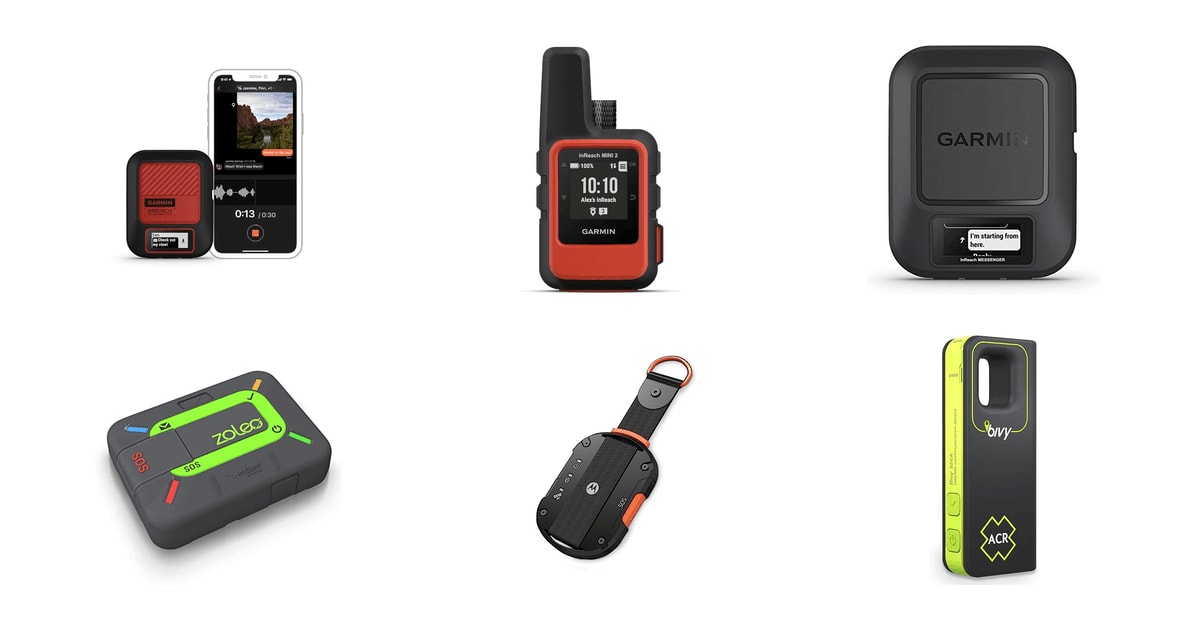
The moment your phone drops to no service, a satellite messenger becomes the only thing standing between you and a very long walk out. These devices talk to satellites instead of cell towers, so they work in canyons, on glaciers, and 30 miles offshore. Most let you text back and forth with family, share your location on a map, and trigger an SOS that reaches a staffed rescue coordination center. For a solo hiker, a backcountry skier, or anyone whose spouse worries, that's a lot of peace of mind in something the size of a car key fob.
Here's the catch nobody puts on the box: you're buying a subscription, not just a device. Plans run monthly or annually, and over a year or two the service usually costs more than the hardware did. Messages are slow, too — expect several minutes for a text to go out, sometimes longer under tree cover or canyon walls. And none of these devices give you a real conversation. You get short bursts of text, delivered when the satellite geometry cooperates. Treat them as safety gear, not a phone replacement.
We think that the Garmin inReach Mini 2 is the best satellite messenger for most people, and that the ZOLEO Satellite Communicator is the one to buy if you'd rather type on your phone and pay less each month.
Everything we recommend

The lightest device that works without your phone
Longer messages and a smoother app, if you'll carry a phone

Field-replaceable batteries and a simple safety net
A full topo navigator and a messenger in one case

SOS with no subscription, ever — but no messaging at all
At a glance
| Product | Weight | Subscription | Price | |
|---|---|---|---|---|
| Garmin inReach® Mini 2Top pick | — | Required | $317On sale |
 | Garmin inReach® Messenger Satellite CommunicatorAlso consider | 0.25 lbs | Required | $273.22On sale |
| Garmin 010-01735-10 inReach Explorer+Upgrade pick | 0.5 lbs | Required | $469.99 |
| ZOLEO Satellite CommunicatorRunner-up | 0.75 lbs | — | $149 |
 | Spot X with Bluetooth 2-Way Satellite MessengerAlso in lineup | 0.44 lbs | Service Plan | $249.95 |
| Spot Gen 4 Satellite GPS MessengerBudget pick | 0.31 lbs | Required | $149.95 |
| ACR ResQLink 400 PLB - Satellite SOSAlso great | 0.33 lbs | — | $409.95 |
How we picked
Satellite network. We compared published coverage maps and network specifications for Iridium and Globalstar. Iridium's 66-satellite constellation covers the entire globe pole to pole, and we weighted that heavily for anyone traveling far north or offshore.
Two-way or one-way. We looked at whether a device can receive messages during an emergency, not just send them. Being able to describe an injury and get a reply changes how a rescue unfolds, so two-way capability was a strong preference.
Phone dependence. We checked each spec sheet for what the device can do on its own. Devices that send messages and trigger SOS without a paired phone scored higher, since phone batteries fail exactly when you need them.
Battery and weight. We compared manufacturer battery ratings across tracking intervals and pulled listed weights for every unit. Anything over about half a pound had to earn its place with features an ultralight device can't match.
Subscription flexibility. We read plan structures for message allowances, tracking intervals, and suspend options. Service costs typically exceed the hardware within a year or two, so plans that pause in the off-season mattered.
Top pickOn sale
The lightest device that works without your phone
Garmin inReach® Mini 2
The inReach Mini 2 weighs 3.5 ounces, runs on the Iridium network's pole-to-pole coverage, and sends messages and SOS alerts on its own. You don't need a phone in your pocket for it to do the job that matters.
$317fromAmazonList priceIf a satellite messenger only does one thing well, it should work when your phone is dead. The Mini 2 sends preset messages, custom texts, and an interactive SOS straight from the device. No pairing, no app, no dependency on a battery you've been draining all day taking photos. Plenty of cheaper devices skip this, and it's the single biggest reason we'd hand this one to a friend heading out alone.
It weighs 3.5 ounces and measures about 3.9 by 2.0 by 1.0 inches, which puts it in the same category as a granola bar. That matters more than it sounds. On a thru-hike or a multi-week expedition, gear you resent carrying is gear you leave in the car — and a safety device you left behind isn't a safety device. Clip it to a shoulder strap and you'll stop noticing it by day two.
Battery life holds up for real trips. Garmin rates it at up to 14 days of tracking at 10-minute intervals, and up to 30 days at 30-minute intervals. Owners routinely report finishing week-long trips with most of the charge left. Pair that with Iridium's 66-satellite constellation, which covers the entire globe including both poles, and you get a device that works in Alaska, Patagonia, and the middle of the Pacific alike.
The SOS side is where Garmin's reputation was built. Alerts go to a 24/7 monitoring center that coordinates with local search and rescue, and — critically — you can keep texting during an active rescue. That two-way channel means you can describe a broken ankle versus a cardiac event, and responders can tell you whether to stay put. Owner accounts include rescues that turned out well, and that track record is worth paying for.
It also does more than message. TracBack routing walks you back along your own path, the digital compass gives you a heading while standing still, and it syncs waypoints and topo maps through the Garmin Explore app. It's not a replacement for a real GPS handheld. But if you've wandered off a faint trail at dusk, TracBack alone can save you an unpleasant hour.
Flaws but not dealbreakers
The screen is tiny and monochrome, and typing a custom message on the device itself is genuinely tedious — you're scrolling through characters one at a time. Most people pair a phone for anything longer than a few words, which somewhat undercuts the standalone selling point in daily use. Presets and check-ins are painless, though, and those cover most of what you'll actually send.
It's expensive for the hardware, and the subscription stacks on top. Some owners find the setup process fussy: multiple apps, account registration, and a learning curve that's best worked through at your kitchen table rather than at a trailhead. Practice before you need it.
Standard inReach messages cap out at 160 characters, which feels cramped if you're used to real texting. You can compose longer messages in the paired app, but the device on its own keeps you terse.
Runner-up
Longer messages and a smoother app, if you'll carry a phone
ZOLEO Satellite Communicator
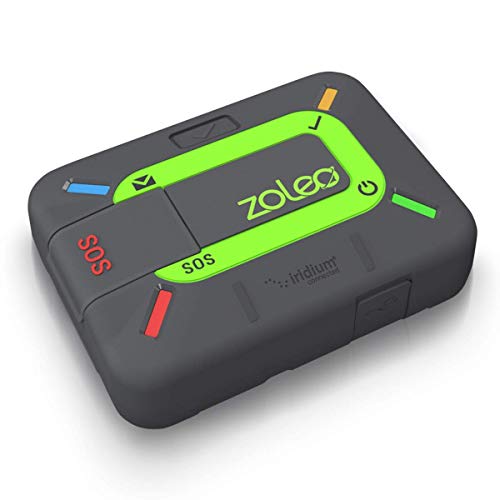
ZOLEO hops between Iridium satellite, cellular, and Wi-Fi automatically, so texting feels closer to normal messaging than anything else here. It supports messages up to 950 characters and gives you a dedicated SMS number your contacts can text directly.
$149fromAmazonZOLEO is the only device here that switches networks on its own. When you're in cell range it sends over cellular or Wi-Fi; when you're not, it falls back to Iridium. You never think about it, and you don't burn satellite messages on texts that could have gone out for free. If your trips mix towns and backcountry — road trips, overlanding, international travel — this is the design that fits.
Messages can run up to 950 characters, roughly six times the standard inReach limit. That sounds like a small thing until you're trying to explain a changed pickup time and a route detour in 160 characters. You get a dedicated SMS number and email address too, so friends text you like a normal person instead of learning a special app.
Owners consistently describe the app as the most natural texting experience in this category, and the check-in feature is unlimited on every plan. Plans also tend to be more flexible than Garmin's, with suspend options for the off-season. If you only get out a few weekends a year, the ability to pause service without canceling changes the math considerably.
The SOS goes to a 24/7 monitoring center, and there's a Medical Assist option for situations that aren't full emergencies — a nasty cut, a question about whether symptoms warrant evacuation. Optional Global Rescue field rescue membership is available as an add-on if you want evacuation coverage layered on top.
Flaws but not dealbreakers
You need your phone for anything beyond a check-in or SOS. The device itself has three buttons and no screen for composing text. If your phone dies or gets soaked, you're down to preset check-ins and the emergency button — which is not nothing, but it's less than the Mini 2 gives you.
It's heavier and bulkier than the Garmin, at roughly 5.3 ounces. And setup trips people up: several owners describe the instructions as vague and the billing as confusing, with activation fees that catch buyers off guard. Read the plan terms carefully before you activate.
Budget pick
Field-replaceable batteries and a simple safety net
Spot Gen 4 Satellite GPS Messenger
The SPOT Gen4 does tracking, check-ins, and SOS — no two-way texting. It runs on four AAA lithium batteries you can swap in the field, and both the device and its plans cost less than anything else here.
$149.95fromAmazonNot everyone needs a conversation. If you day-hike, ride ATVs, or fish a few weekends a year and just want someone to know where you are and be able to call for help, the Gen4 covers that. It sends preset check-in messages and location updates, and the SOS button reaches emergency responders. That's the whole product, and the simplicity is part of the appeal.
The AAA lithium batteries are a real advantage on long trips. Every other device here charges over USB, which means carrying a power bank and hoping it survives the cold. The Gen4 runs up to 7 days of continuous tracking, and when it runs out you swap cells in about a minute. For winter trips, where lithium batteries hold up better than internal cells, that's genuinely useful.
Owners who've cycled through several SPOT generations say this one transmits faster and more reliably than the older units, and the tracking is the feature most families actually use. If the goal is letting someone at home watch a dot move across a map, this does it for the lowest ongoing cost of any subscription device we looked at.
Flaws but not dealbreakers
It's one-way. You can send but not receive, which means when you press SOS you get no confirmation that help is coming and no way to describe what's wrong. In a real emergency that gap matters — you're broadcasting into the dark and hoping.
It runs on Globalstar, not Iridium, and coverage has real gaps in polar regions and parts of the oceans. Comparison work by GearJunkie found SPOT's Globalstar devices failed to deliver from 3 of 10 remote Alaskan test sites where Garmin's Iridium units got through all 10. If your trips head far north or well offshore, this isn't the right network.
The software gets consistent complaints. The app does noticeably less than the website, firmware updates have frustrated Mac users, and the setup instructions leave gaps. The hardware works; the surrounding experience is rough.
Upgrade pick
A full topo navigator and a messenger in one case
Garmin 010-01735-10 inReach Explorer+
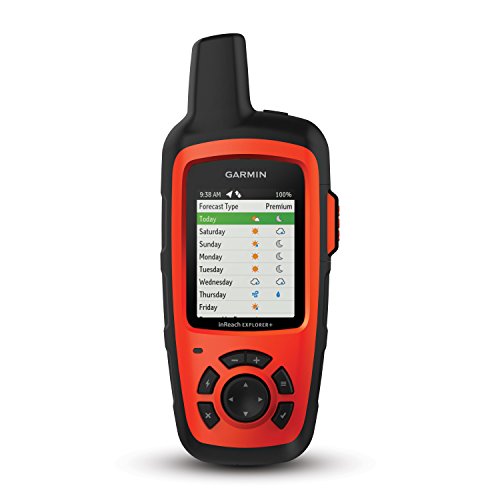
The inReach Explorer+ adds preloaded 1:24,000-scale TOPO maps, on-screen routing, a barometric altimeter, and a real navigation interface to Garmin's satellite messaging. It's the one device here you could navigate a peak with and leave the phone at home.
$469.99fromAmazonThis is the pick for anyone who wants one device instead of two. It carries preloaded DeLorme TOPO maps for the contiguous United States at 1:24,000 scale, supports downloadable maps for other regions, and routes on-screen. Add the built-in compass, barometric altimeter, and accelerometer and you've got a genuine backcountry navigator that also happens to send satellite texts.
Mountaineers and expedition leaders are the obvious audience. So are search and rescue volunteers — several owners describe researching this category hard before landing here, precisely because it does both jobs without a phone in the loop. When you're above treeline in weather, pulling out a glass slab to check your position is a bad plan.
Everything good about the Mini 2's messaging carries over. Same Iridium network with 100 percent global coverage, same 24/7 monitored interactive SOS, same location tracking and sharing. You're not trading away safety features to get the maps. You're adding the maps on top.
The screen is big enough to read a map on, and the button-driven interface works with gloves on. Owners report the battery holds charge for weeks when the device is powered off, which matters if you keep it in a pack between trips rather than remembering to top it up every month.
Flaws but not dealbreakers
It's heavy and bulky next to the Mini 2 — about 8 ounces and roughly the size of an old handheld GPS. On an ultralight setup, that difference is real and you'll feel it. This is a device for people whose packs already have a navigation slot to fill.
The design is older than Garmin's newer models, and it shows in the interface and the screen. It also uses an older charging port rather than USB-C, so it's one more cable to remember. Owners are clear that this is not a normal GPS: without an active subscription, the messaging and SOS features simply don't work.
Also great
SOS with no subscription, ever — but no messaging at all
ACR ResQLink 400 PLB - Satellite SOS
The ACR ResQLink 400 is a personal locator beacon, not a messenger. It transmits on the 406 MHz international distress frequency to the COSPAS-SARSAT satellite system, carries no monthly fee, and sits in a life vest pocket for years waiting.
$409.95fromAmazonIf you want an emergency signal and nothing else, this is the one device here you can own for years without a recurring bill. There's no subscription. You register the beacon for free with NOAA's 406 MHz database, and that's the last bill you get. For offshore sailors, pilots, and people who venture out rarely but seriously, the long-run math is hard to argue with.
It transmits at a minimum of 5 watts on 406.028 MHz, the internationally standardized distress frequency monitored by government search and rescue worldwide. It also broadcasts a homing signal, and it carries both an LED and an infrared strobe to help crews find you at night. GPS and Galileo GNSS pin down your position for the alert.
Registration does more than record your name. It gives SAR teams your contact details so they can screen an alert before launching an expensive deployment — a step estimated to save millions annually in false-alarm response costs. Fill out the form properly and keep it current.
Owners who sail and fish offshore describe clipping it to a life vest and forgetting about it for years, running the annual self-test and finding it still passes. That's exactly the use case: gear you hope stays unused, that doesn't nag you for a monthly payment to stay ready.
Flaws but not dealbreakers
There's no messaging, no tracking, and no confirmation. Press it and you've told the world's SAR system that someone is in serious trouble at these coordinates. You can't say what's wrong, you can't check in with family, and you won't know whether help is on the way. It's a one-shot flare, not a communication device.
That also means it's the wrong tool for routine reassurance. If the reason you're shopping is a spouse who wants to see a dot move on a map, a PLB won't help. Many offshore sailors carry one alongside a messenger rather than instead of one.
Documentation is thin — the manual lives online rather than in the box — and a few owners note the antenna can work loose in its stowed position.
Who this is for
Buy one of these if you regularly go where cell service stops: solo backpacking, backcountry skiing, offshore boating, remote hunting, overlanding, or international trekking. It's also worth it if someone at home needs to see that you're okay — the tracking and check-in features do more for family anxiety than any amount of reassurance before you leave. If you hike busy front-country trails with reliable bars, you probably don't need one, and a fully charged phone plus a shared itinerary covers you.
This guide covers dedicated satellite messengers, two-way communicators, and one personal locator beacon. We're not covering satellite phones, in-car emergency systems, or the satellite SOS features now built into some smartphones — those are useful but work differently and come with their own caveats. Every device here except the ResQLink requires an active subscription to function at all, so budget for the service, not just the purchase.
How we picked
We weighed a handful of things against each other. Network: Iridium's pole-to-pole coverage beats Globalstar's, which has real gaps in polar and some oceanic regions. Two-way messaging: being able to receive a reply during an SOS matters more than any spec on the box. Phone independence: a device that works with a dead phone is a device that works. Battery and weight: we compared manufacturer ratings across tracking modes and listed weights, since every ounce compounds on a long trip. Subscription terms: message allowances, tracking intervals, and whether you can suspend service in the off-season.
Other satellite messengers and two-way communicators worth considering
If you want Garmin messaging with a bigger screen and USB-C: The Garmin inReach® Messenger Satellite Communicator ($273.22) — The inReach Messenger is Garmin's newer, more focused device. It has a larger 1.3-inch display than the Mini 2, charges over USB-C, and Garmin rates it at up to 28 days of battery in expedition tracking mode — the longest here. Group messaging through the Garmin Messenger app is genuinely handy for trips with several people, and preset check-ins don't count against your message allowance. What you give up is navigation: there's no TracBack routing and no digital compass, so it's a communicator rather than a navigation tool. Owners love the battery life, though several found the multi-app setup confusing enough that it's worth practicing at home.
The competition
These are the other devices our research turned up, not a complete survey of the category. Each one lost to a pick for a specific reason, but a couple of them are the right answer for narrow situations.
The Spot X with Bluetooth 2-Way Satellite Messenger ($249.95) — The SPOT X with Bluetooth is the only affordable two-way messenger with a physical QWERTY keyboard, and it carries its own US mobile number so contacts can text it directly. If typing on a device without a phone appeals to you, nothing else here does that. But it weighs 7.1 ounces, runs on Globalstar rather than Iridium, and owner feedback is the most mixed of any device in this guide — reports of intermittent tracking and inconsistent message delivery come up often enough to matter. If your trips stay within North America, Europe, or Australia and the keyboard is the deciding factor, it's a reasonable choice. Anywhere farther afield, we'd take the Iridium coverage instead.
Setup and field practice
Do the setup at home, not at the trailhead. Nearly every complaint in owner feedback traces back to someone activating a device the night before a trip: accounts unregistered, apps not downloaded, plans not actually started. Register the device, activate the subscription, install the companion app, and send a few real messages from your driveway so you know what a successful send looks like. Add your emergency contacts and, for a PLB, complete the NOAA registration — an unregistered beacon still works, but it slows rescuers down. Then practice the SOS sequence without triggering it, so your hands know the motion under stress. Charge before every trip, keep the device somewhere with sky view rather than buried in a pack, and expect several minutes for a message to clear under trees or canyon walls.
Questions we get
What's the difference between a PLB and a satellite messenger?
A personal locator beacon like the ACR ResQLink 400 does one thing: it broadcasts a distress signal with your coordinates on 406 MHz to government search and rescue satellites. There's no subscription and no messaging. A satellite messenger adds two-way texting, location tracking, and check-ins, but requires a monthly or annual plan. Many offshore sailors carry both.
Does the Garmin inReach Mini 2 work without a cell phone?
Yes. It sends preset and custom messages, shares your location, and triggers an interactive SOS entirely on its own. Typing a custom message on the device is slow since you scroll through characters one at a time, so most people pair a phone for longer texts. But if your phone dies, the Mini 2 keeps working.
Which satellite messengers work at the poles?
Anything on the Iridium network — the Garmin inReach models and ZOLEO. Iridium's 66 low-earth-orbit satellites provide genuine pole-to-pole coverage. Globalstar, which SPOT devices use, has meaningful gaps in polar regions and parts of the oceans, so we wouldn't take a SPOT above the Arctic Circle.
Can I message someone who doesn't have a satellite device?
Yes, and this is the normal way these work. Your messages go out as SMS texts or emails to any regular phone number or address. ZOLEO and the SPOT X assign you a dedicated mobile number, so contacts can reply directly from their phone without installing anything. Garmin devices route replies through their app or a link, which some contacts find slightly more awkward.
Do these work in deep canyons and dense forest?
Usually, but slower. These devices need a view of the sky, and canyon walls or heavy tree canopy cut down how many satellites they can reach. Owners report messages still getting through from slot canyons and thick pine cover, just with delays of several minutes to a quarter hour. Set the device on a pack or rock with the antenna pointed up and give it time.
Is a subscription worth it if I only go out a few times a year?
It depends on how remote those trips are. If you're heading somewhere a broken ankle means a serious problem, yes — and look at plans you can suspend in the off-season, which ZOLEO and Garmin both offer. If you genuinely only need an emergency signal and never want a bill, a PLB like the ResQLink 400 is the better economics since registration is free and there's no recurring cost.
Why you should trust us
For this guide:
- We compared manufacturer specification sheets for every device here, focusing on weight, battery ratings across tracking intervals, message character limits, and what each unit can do without a paired phone.
- We reviewed published coverage documentation for the Iridium and Globalstar networks, along with a GearJunkie comparison of message delivery success across remote Alaskan locations.
- We read through owner feedback themes for each device to identify recurring complaints about setup, app quality, and message reliability.
- We read owner reviews on every listing, weighted toward the critical ones, because that is where the recurring failures show up.
- We have a systematic way of automatically fetching the latest prices, so the numbers on this page stay current.
- This is a research-focused guide, so the team may not own every product listed — though we often do own the top winners, which gives us extra context for the recommendations.
- We don't accept free products, and the retailer commission never changes which product we recommend.
Sources
Best Satellite Communicators 2026 — Switchback Travel, Switchback Travel
Garmin inReach Mini 2 Long-Term Review — Outside Online, Outside Online
Satellite Messenger Comparison Guide — REI Expert Advice, REI Expert Advice
Best Satellite Messengers Tested — GearJunkie, GearJunkie
Satellite Communicators Buyer's Guide — Backpacker Magazine, Backpacker Magazine
PLB vs. Satellite Messenger: Which Should You Buy? — Wirecutter, Wirecutter (NYT)
ACR ResQLink 400 Review — West Marine, West Marine
Garmin inReach Subscription Plan Breakdown — DC Rainmaker, DC Rainmaker
SPOT X vs. Garmin inReach: Side-by-Side Comparison — Adventure Alan, Adventure Alan
Zoleo Review: Satellite Communicator Field Test — The Trek, The Trek
Amazon product listings and owner reviews for all 7 products
Manufacturer specification pages for each product
Some passages in this guide may be paraphrased with AI help. Prices are refreshed automatically.
More like this.
Continue exploring lifestyle reviews and recommendations.

The Best Ways to Display Collectibles in a Small Apartment
Collections grow faster than apartments do. The average US apartment has shrunk from 941 square feet in 2015 to about 882, and studios in big cities often…

The Best Avalanche Beacons
An avalanche transceiver spends almost all of its life doing nothing. It rides in a harness under your jacket, pulsing away on 457 kHz, and you forget…

The Best Heated Ski Glove Liners
Cold fingers end ski days early. You can be dressed perfectly everywhere else and still be the person jamming both hands into a jacket pocket at the top…

The Best Hiking Backpacks
A backpack is the one piece of gear you never put down. Everything else - tent, stove, sleeping bag - gets used and stowed away. The pack rides on you for…

The Best Camping Cots
A camping cot solves a problem that a sleeping pad never quite does. It gets you off the ground, so roots and rocks stop mattering, and you can sit up to…

The Best Deer Feeders With Timers
A deer feeder does one job: put corn on the ground at the same time every day so deer learn to show up then. That sounds simple, and the hopper part…